



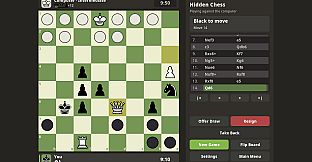
Hidden Chess is a strategy game that transforms the familiar rules of chess into something unpredictable. Instead of relying on memorized openings, every match begins with pieces whose identities remain unknown until they move or are captured. This setup levels the playing field between experienced players and newcomers by emphasizing analysis, risk assessment, and adaptation over preparation.
Gameplay
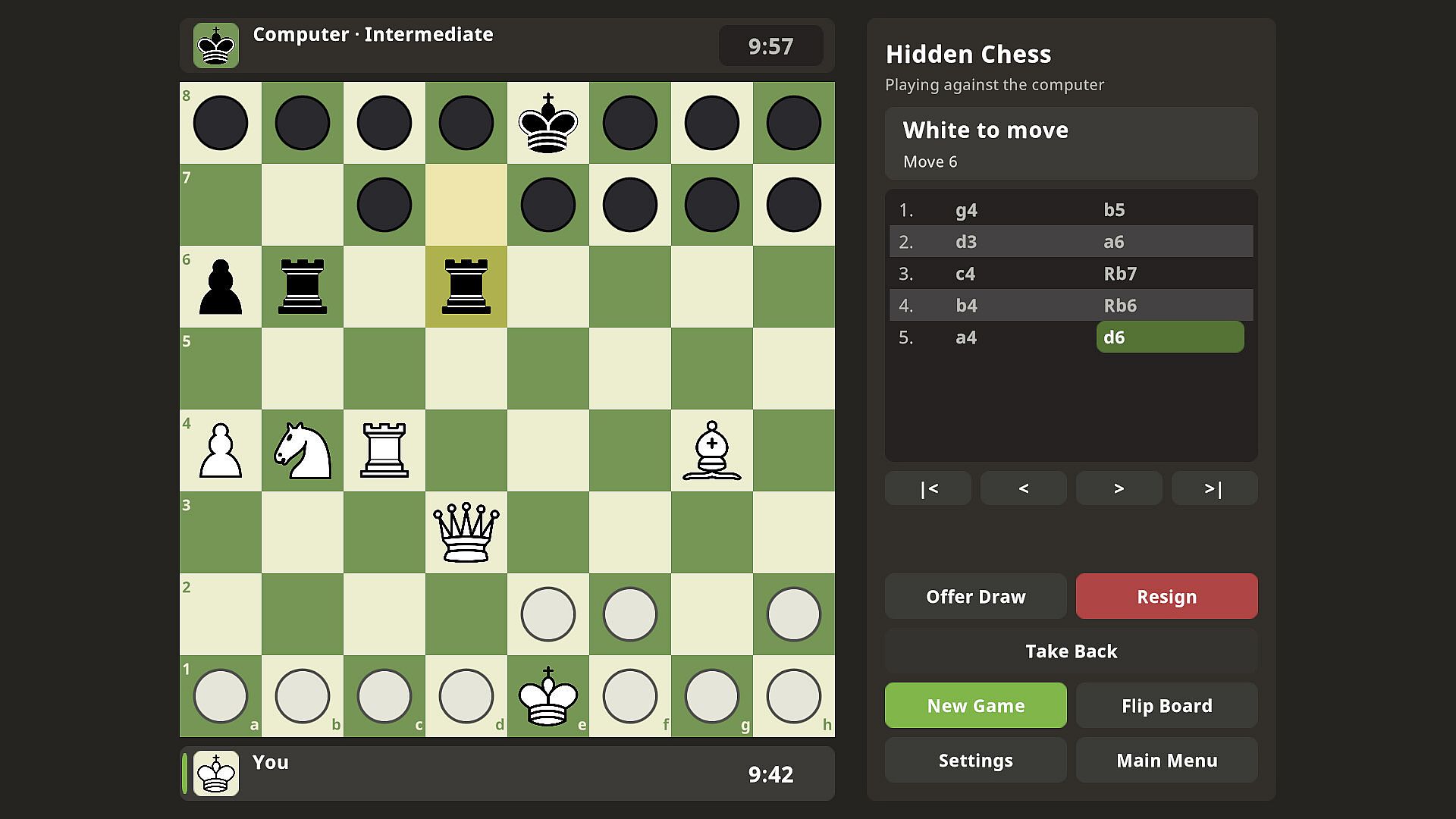
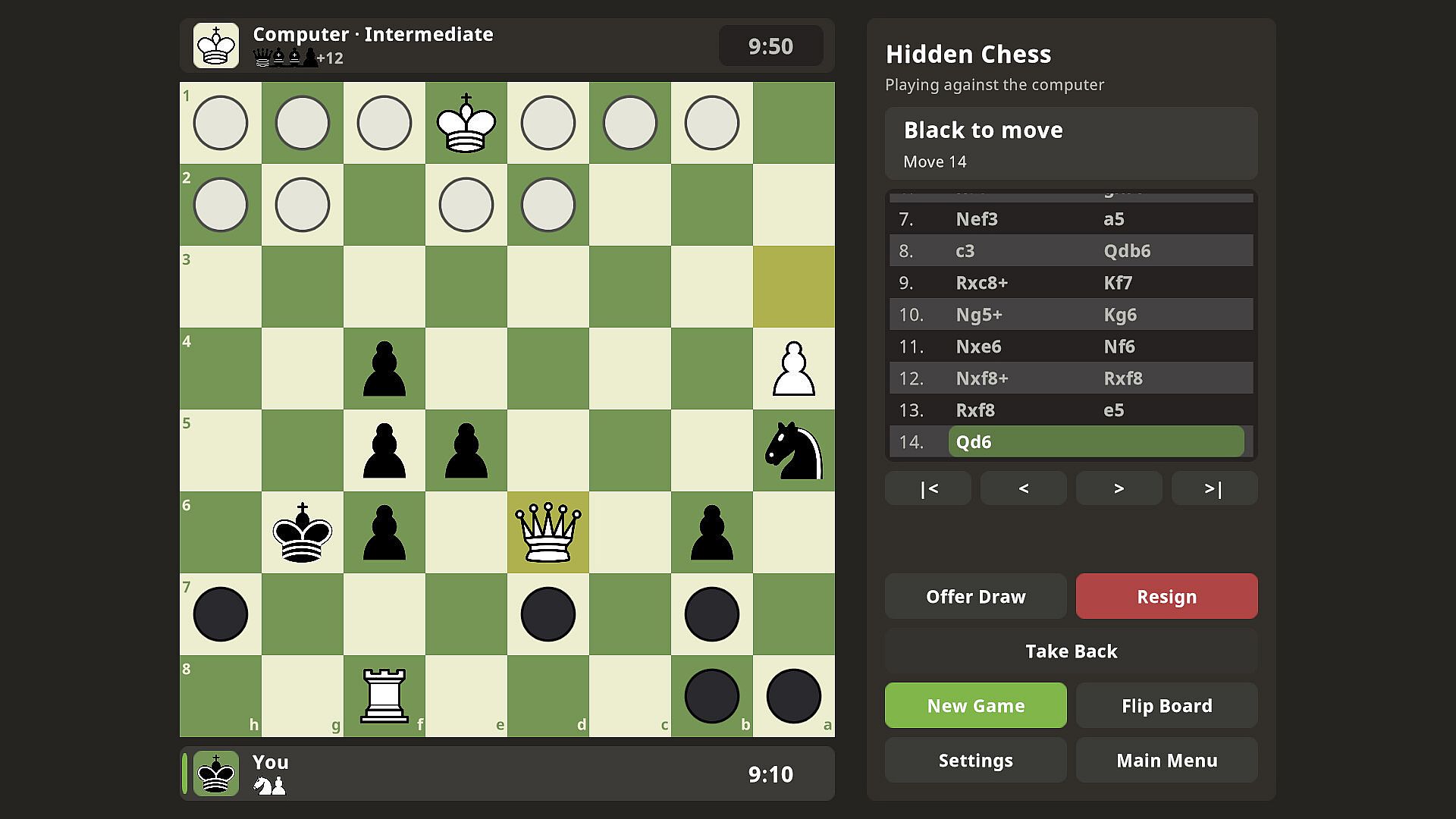
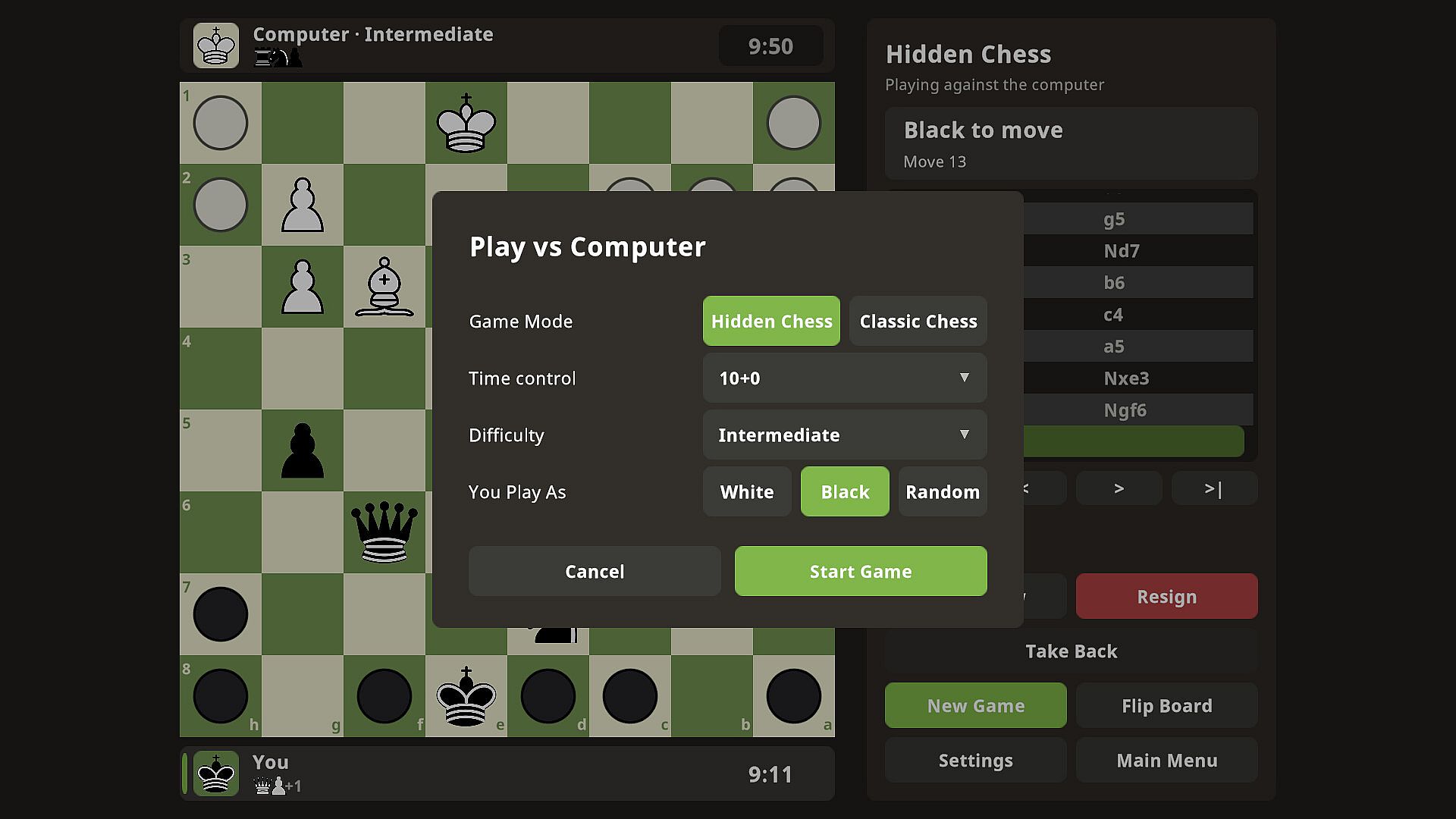
Each side begins with fifteen hidden pieces alongside the two kings, which stay visible at all times. The hidden pieces consist of one queen, two rooks, two bishops, two knights, and eight pawns. These pieces occupy the standard starting squares but are secretly shuffled, so no player knows the true identity of any piece except the kings. A hidden piece moves according to the type normally associated with its starting square until it makes its first move, at which point its real identity is revealed. From that moment forward, it follows the movement rules of its actual type. Capturing a hidden piece also reveals what it was. When a piece revealed as a pawn reaches the final rank, the player may choose its promotion as usual. The element of uncertainty extends to captures and potential promotions, forcing constant reevaluation of threats and opportunities. Luck influences outcomes through the initial shuffle, yet skill in reading bluffs and adjusting plans determines long-term success.
Game Modes
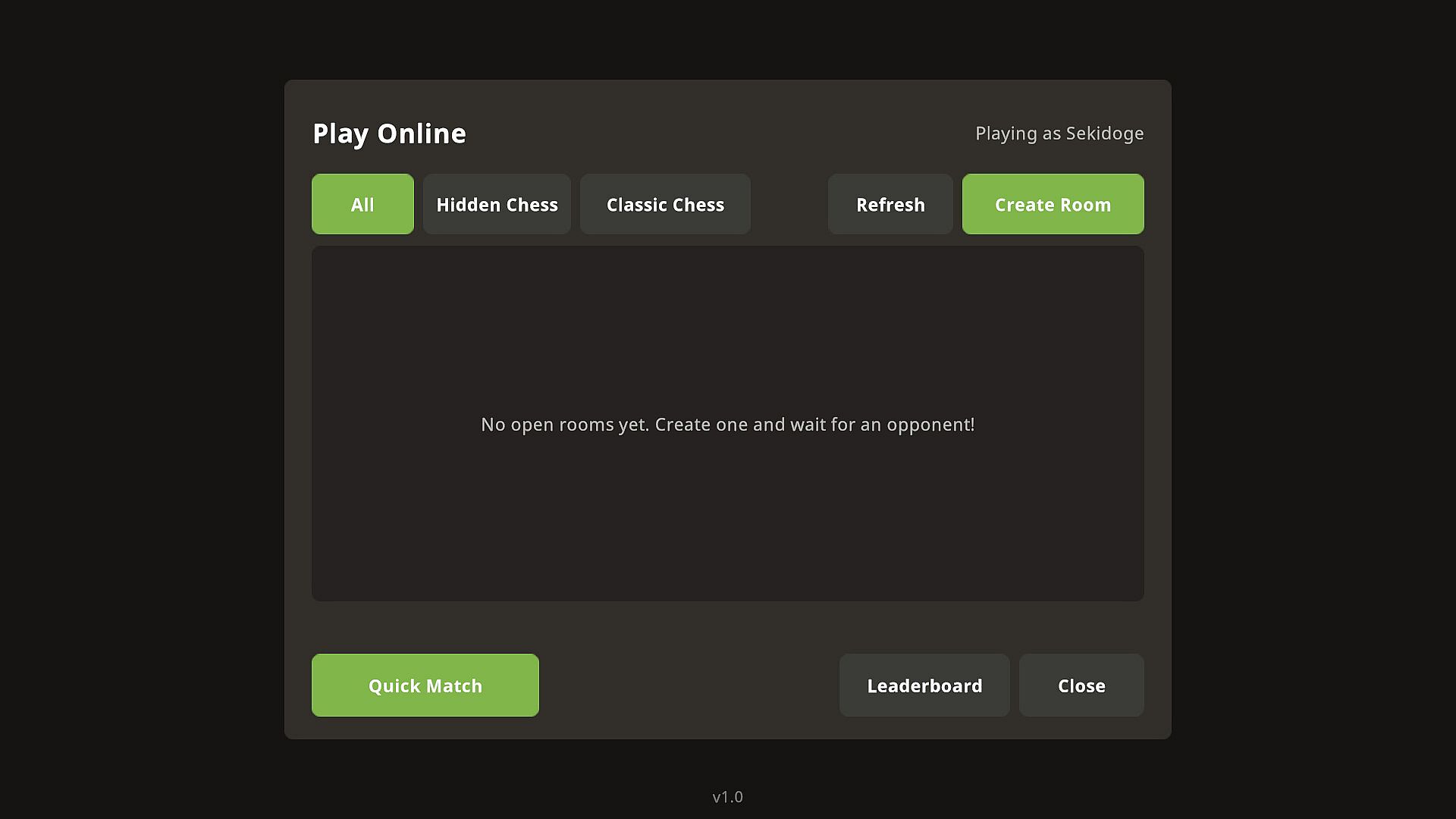
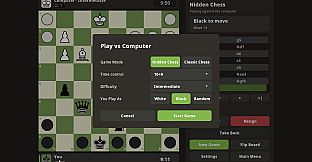
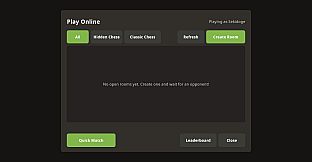
Players can choose between Hidden Chess and standard Classic Chess. Both variants support play against computer opponents or other people. Against the computer, six difficulty levels range from Beginner to Master, and the artificial intelligence must also operate without full knowledge of hidden pieces. Online matches allow creation of public or friends-only rooms, quick pairing with random opponents, or direct invitations. A chess clock applies to both online and computer games. In matches against the computer, players can review previous moves, take back actions, and save progress to resume later. If an online connection drops, the game supports reconnection to continue the session without loss of state.
Controls and Accessibility
Movement uses either drag-and-drop or click-to-select mechanics with smooth piece animations. Four board themes provide visual variety in green, brown, blue, and purple. Additional options include board flipping and coordinate labels for easier orientation. A built-in guide explains the rules and mechanics. The game supports twelve languages, making it accessible to a broad audience regardless of primary language.
Is It Worth Playing?
Hidden Chess appeals most to players who enjoy chess but grow frustrated with heavy reliance on opening theory. The hidden-piece system and randomized setups create fresh positions every game, rewarding quick thinking and tactical flexibility. Those who prefer standard chess can switch to Classic mode within the same package. Features such as adjustable computer difficulty, online matchmaking, move review tools, and reconnection support enhance both solo practice and competitive sessions. The combination of core strategy depth with reduced emphasis on memorization makes it suitable for busy players seeking engaging matches without extensive study time. Availability on PC with these options positions it as a solid choice for anyone looking to refresh their chess experience through uncertainty and adaptation.