




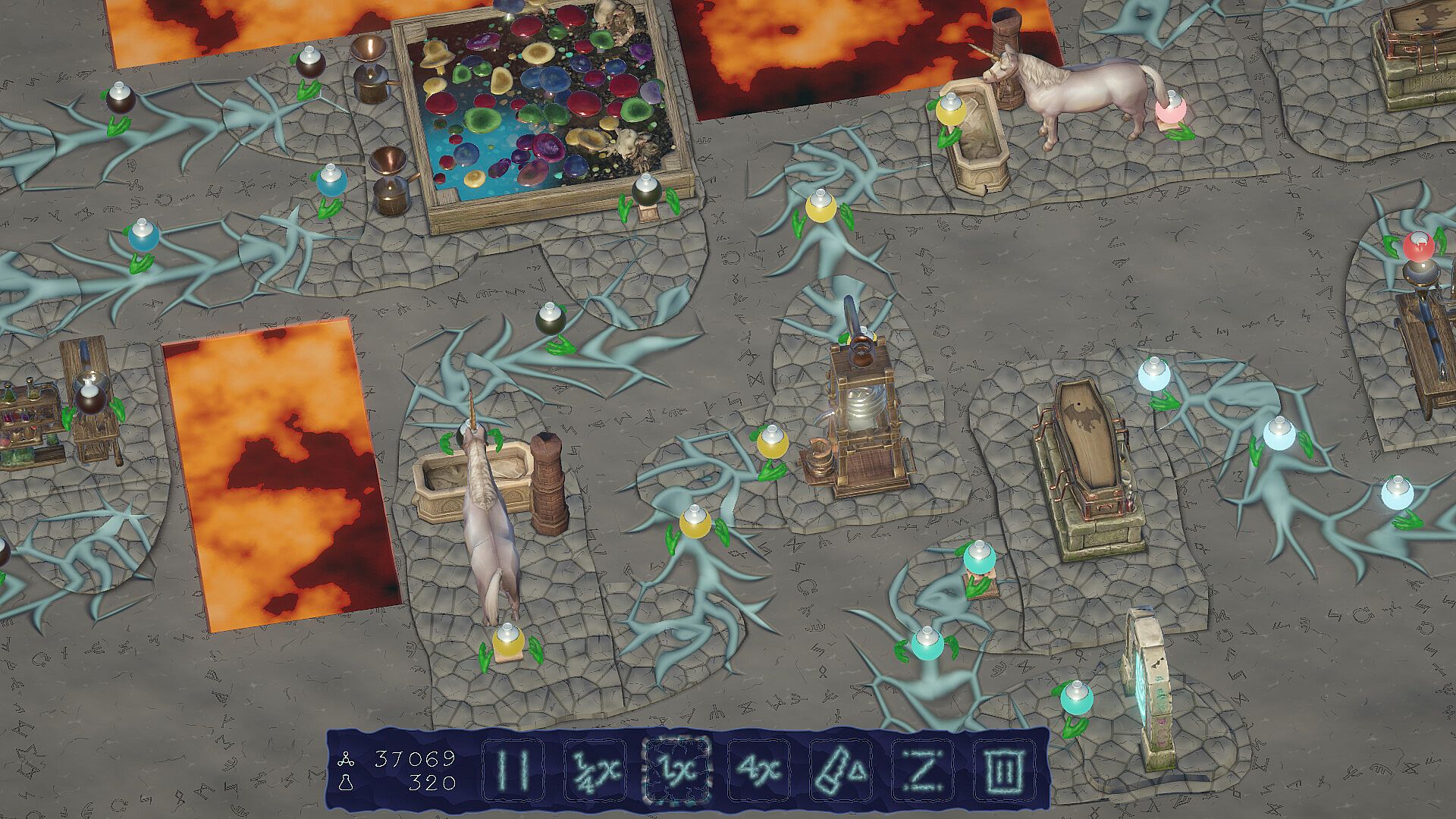
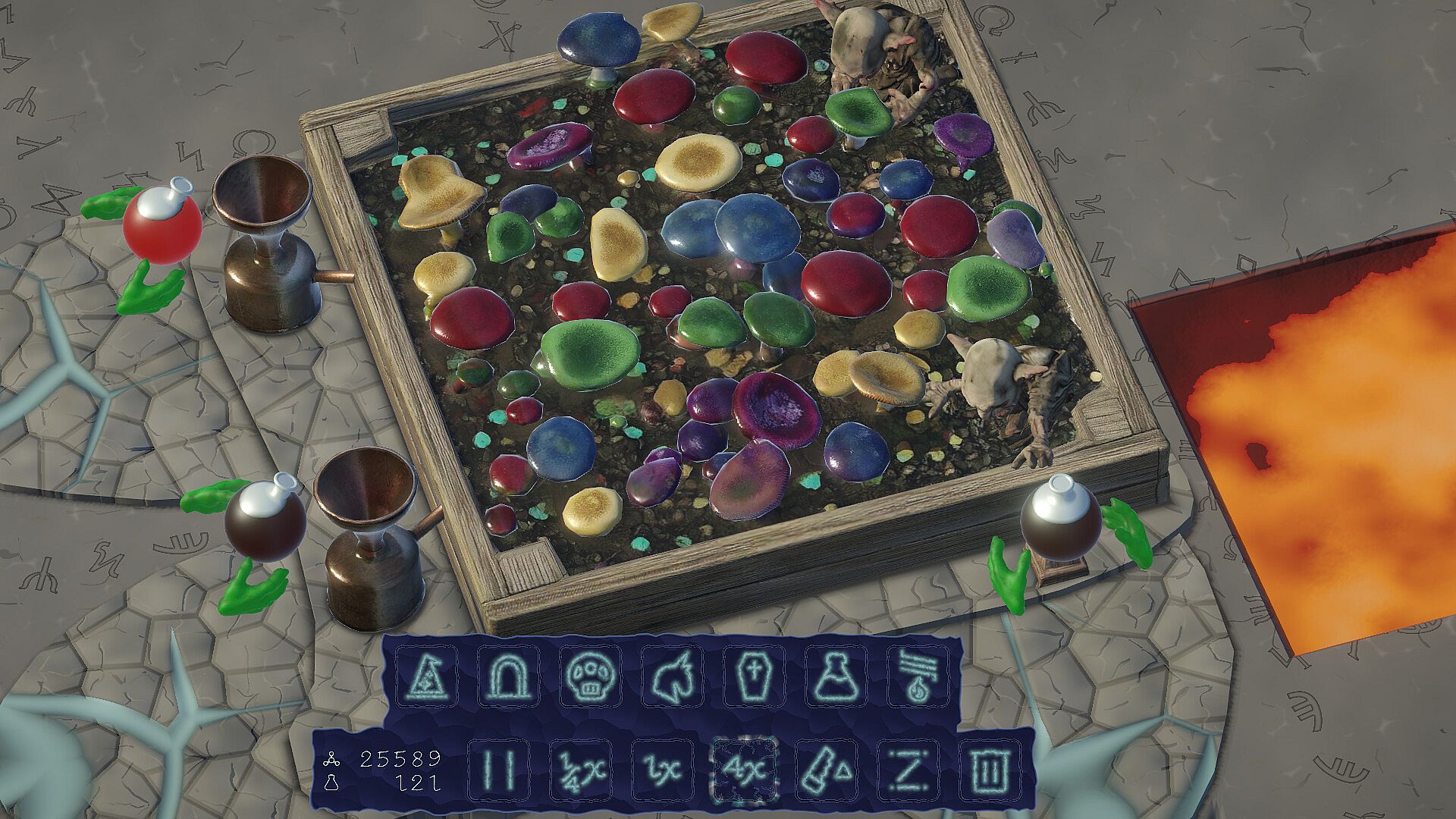
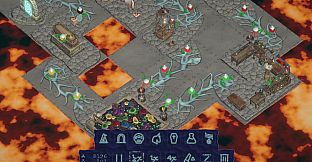
Hell's Kitchen is a strategy and simulation game developed for PC that puts players in charge of an underworld factory dedicated to crafting magical item properties. The core premise revolves around overseeing production lines for enchanted weapons, cursed artifacts, and other mystical goods under the direction of a demanding Dark Lord. Rather than direct combat or exploration, the experience centers on efficient resource management, workforce coordination, and process optimization in a compact, grid-based environment.
Gameplay
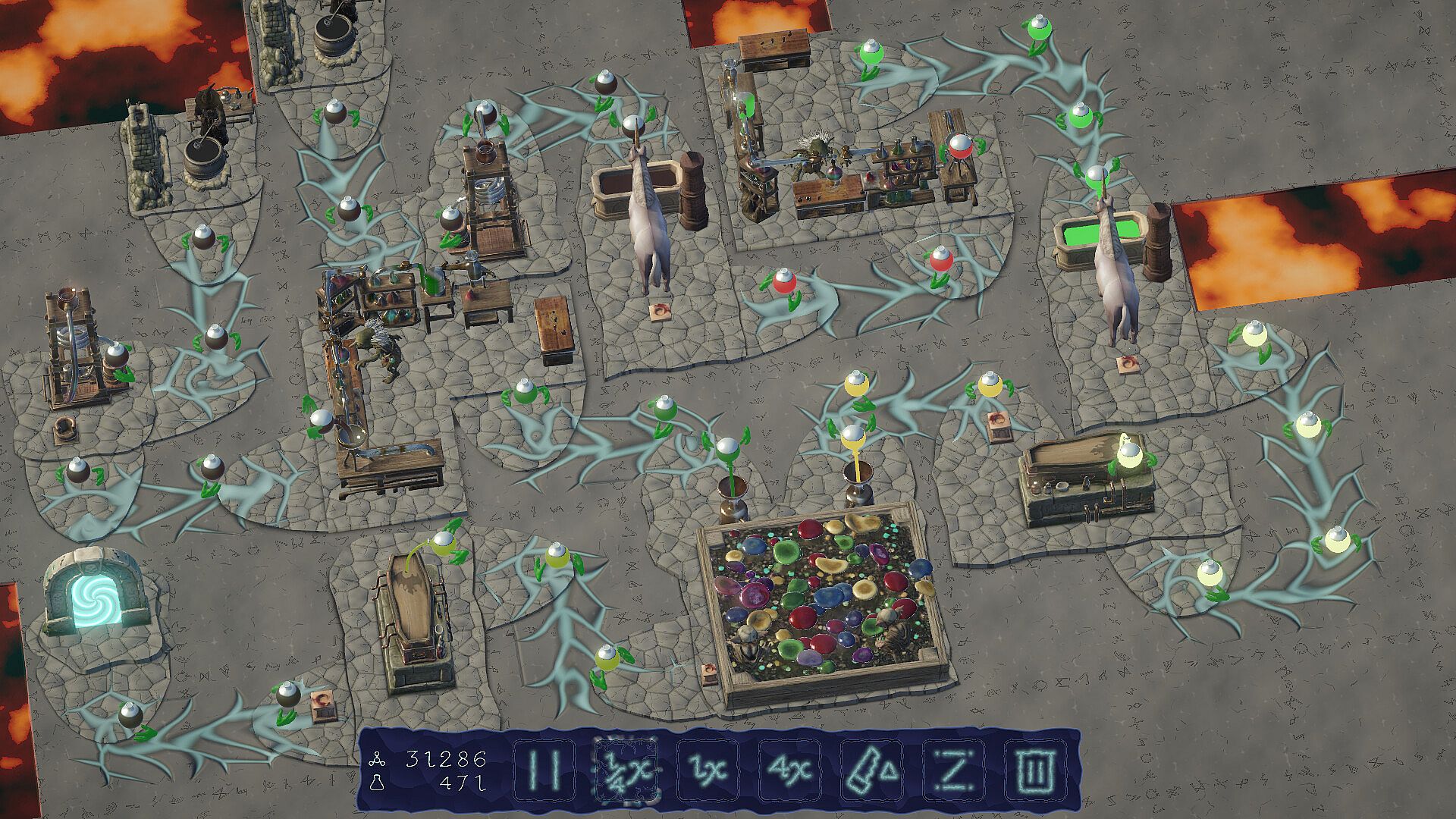
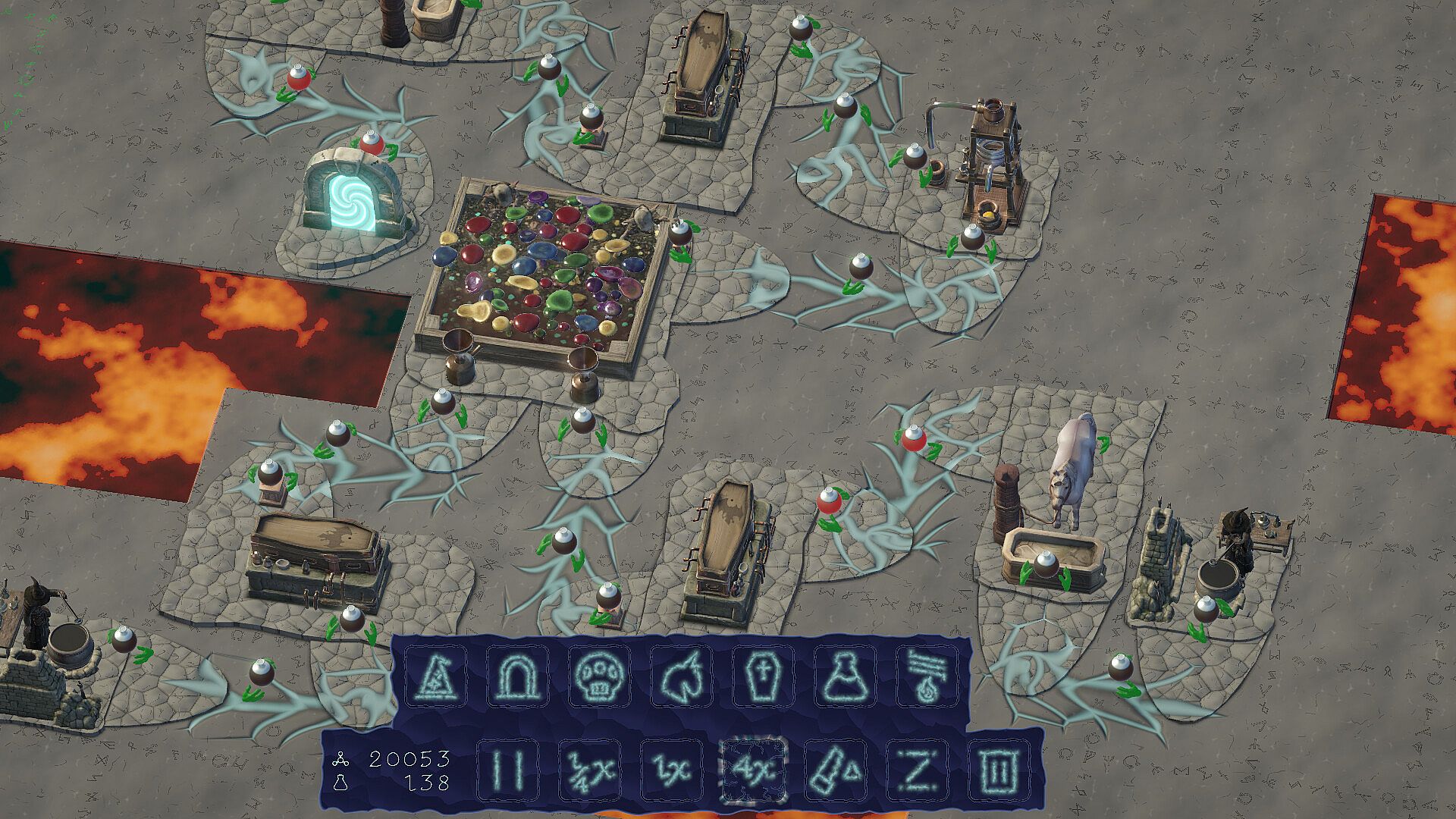
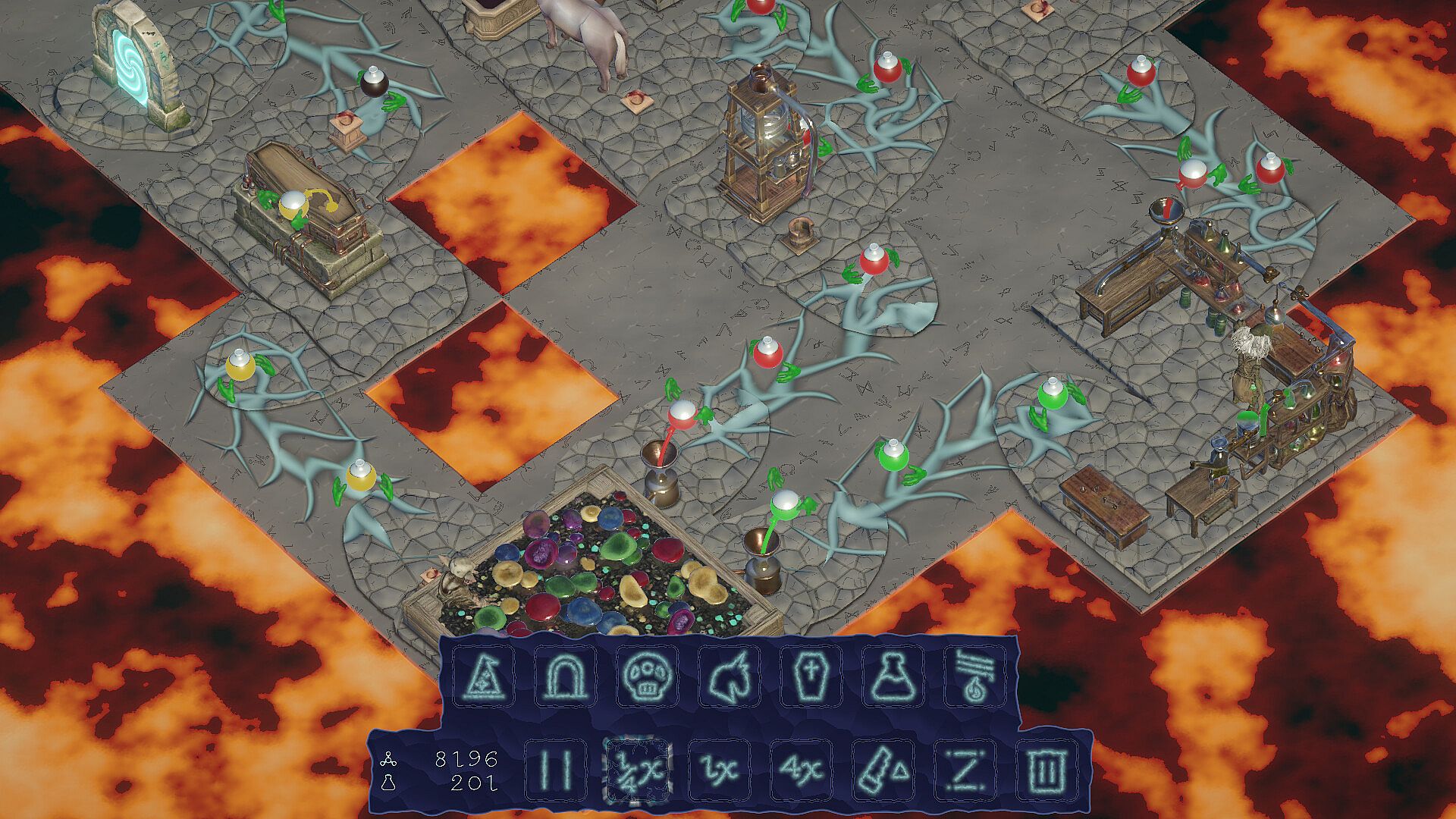
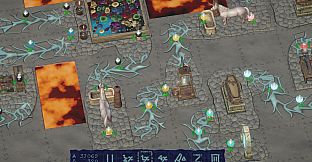
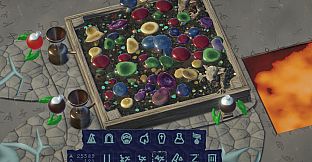
Players design and expand a factory floor using a grid layout to position alchemical stations and connect production chains. The focus lies in routing materials and directing goblin workers to transport phials of magical liquids between stations while maintaining steady output. Limited space requires careful planning to avoid bottlenecks, with each placement affecting overall flow and efficiency. Temperature, purity levels, and timing at individual stations determine the exact magical properties produced, turning routine tasks into precise balancing acts. Beyond basic goblins, players recruit specialists such as witches and ogres, each bringing unique abilities to specific stations along with distinct behaviors that influence daily operations and safety considerations.
The loop emphasizes iterative improvement. Initial setups handle simple property brewing, but expanding ambitions demand more complex chains that integrate multiple station types and worker types. Goblins handle repetitive carrying duties reliably yet can be inconsistent, requiring oversight to keep everything moving. The result is a hands-on simulation where small adjustments to layouts or assignments yield noticeable gains in productivity and property quality.
Game Modes
Hell's Kitchen structures its challenges around ongoing factory management rather than discrete named modes. The primary experience involves building and refining production empires on the grid, with progression tied to fulfilling orders for increasingly sophisticated magical properties. Players balance workforce deployment, station upgrades, and chain optimization in a single continuous campaign focused on empire growth. Recruitment of specialists adds layers of customization, allowing different approaches to the same production goals depending on which professionals join the operation. The emphasis remains on long-term efficiency and adaptation within the core factory environment.
Key Mechanics and Features
Grid-based placement forms the foundation, encouraging experimentation with station arrangements to create seamless workflows. Production chains rely on precise timing and environmental controls at each station to achieve desired outcomes. The goblin workforce serves as the mobile element, ferrying resources while specialists provide stationary expertise with added personality. Space constraints force trade-offs between expansion and optimization, keeping decisions meaningful throughout. These systems combine to create a simulation that rewards observation and incremental refinement over flashy action.
Is It Worth Playing?
Hell's Kitchen suits players who enjoy factory-building simulations and resource management games with a distinctive fantasy twist. The grid layout and workforce direction offer satisfying depth for those who appreciate optimizing systems under constraints. The inclusion of quirky specialists and the underworld theme provide flavor without complicating the core loop. Availability on PC makes it accessible for simulation fans seeking a focused, single-player experience centered on production chains rather than combat or narrative branches. If grid-based planning and steady empire expansion appeal, the game delivers a coherent package built around those strengths. Those preferring fast-paced action or extensive multiplayer options may find the deliberate pace less engaging. Overall, it stands as a niche title for strategy and simulation enthusiasts drawn to its unique manufacturing premise.











