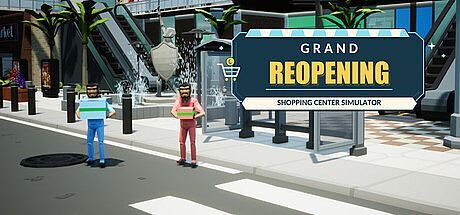


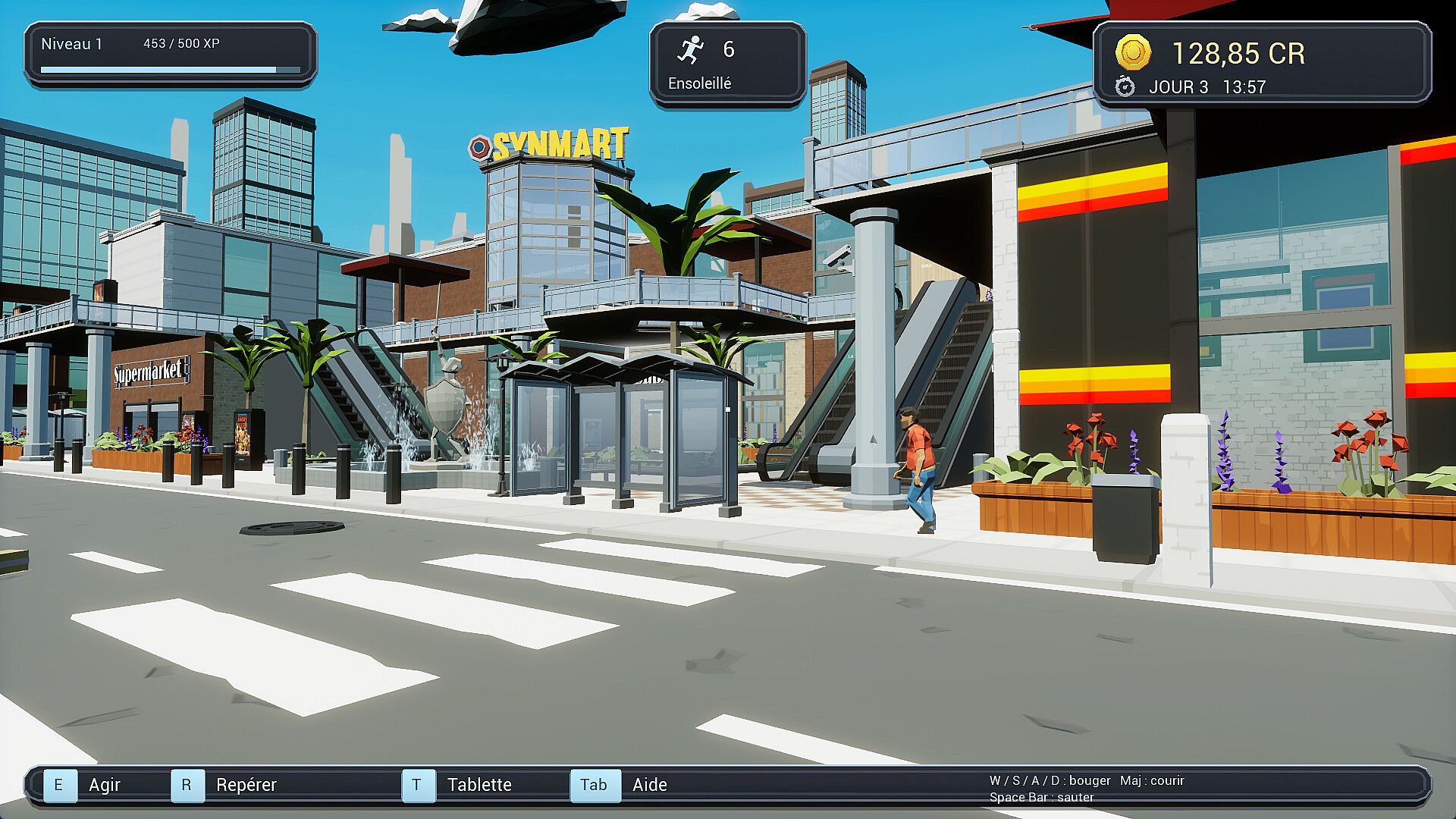
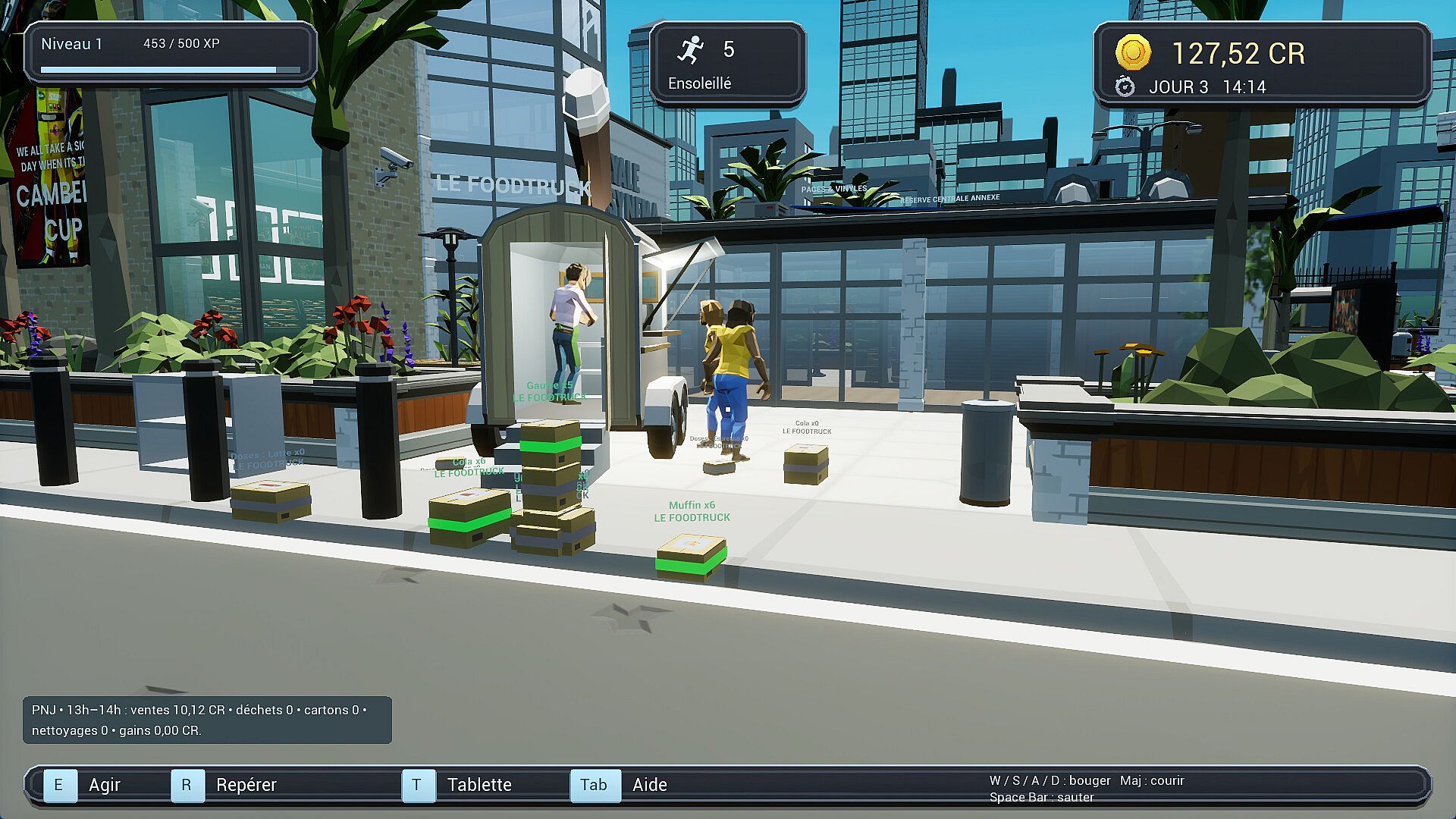
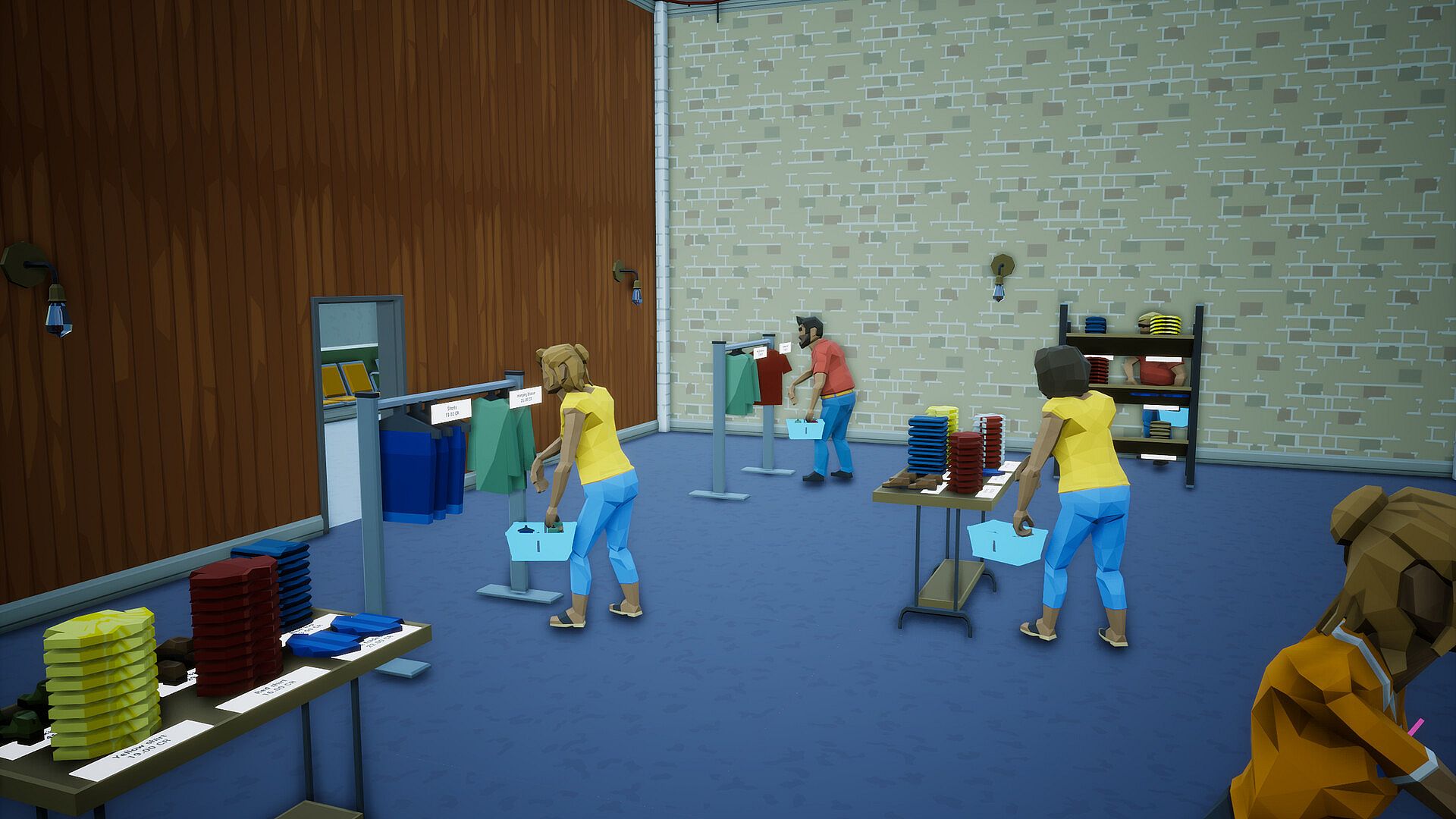
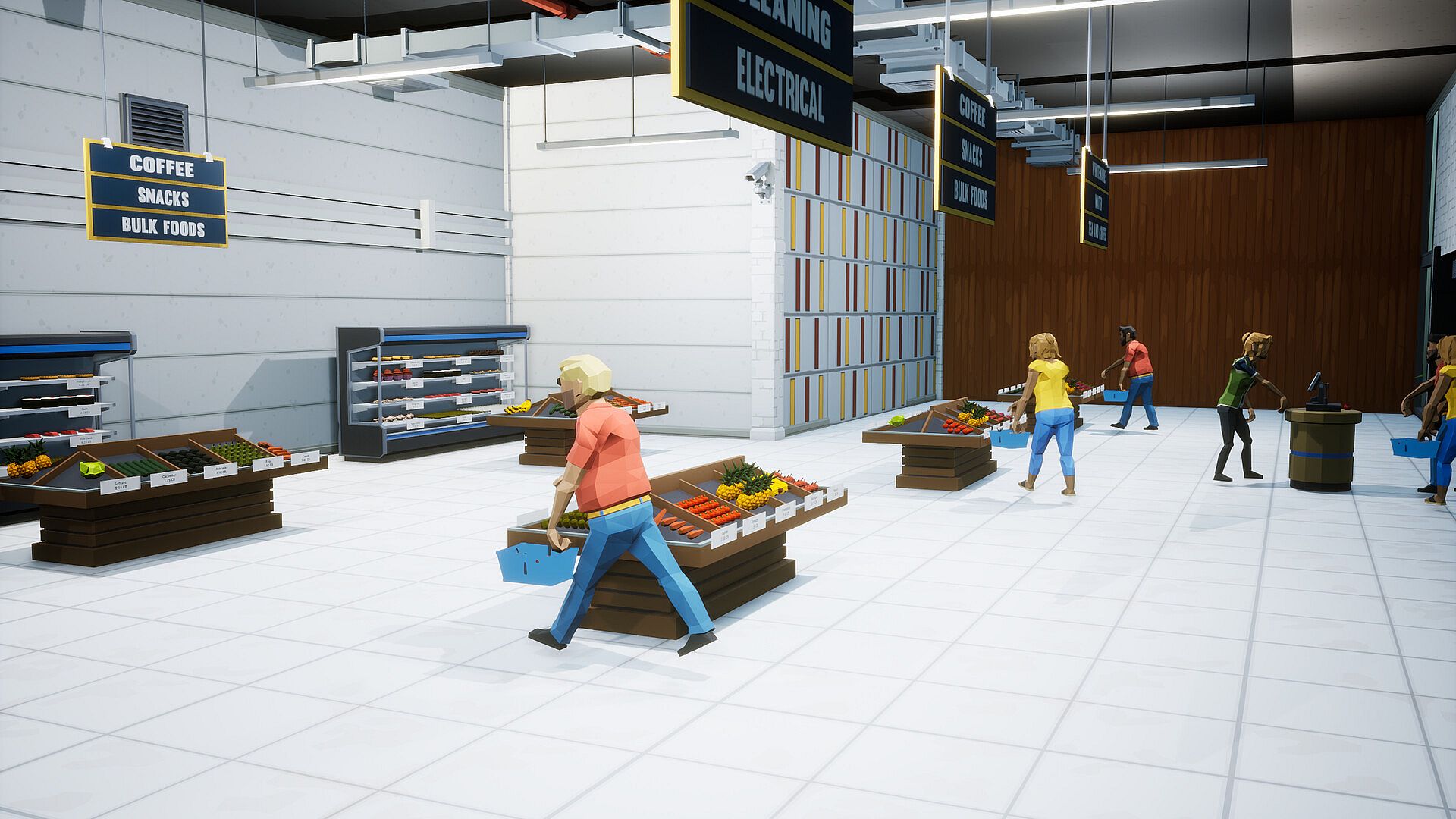
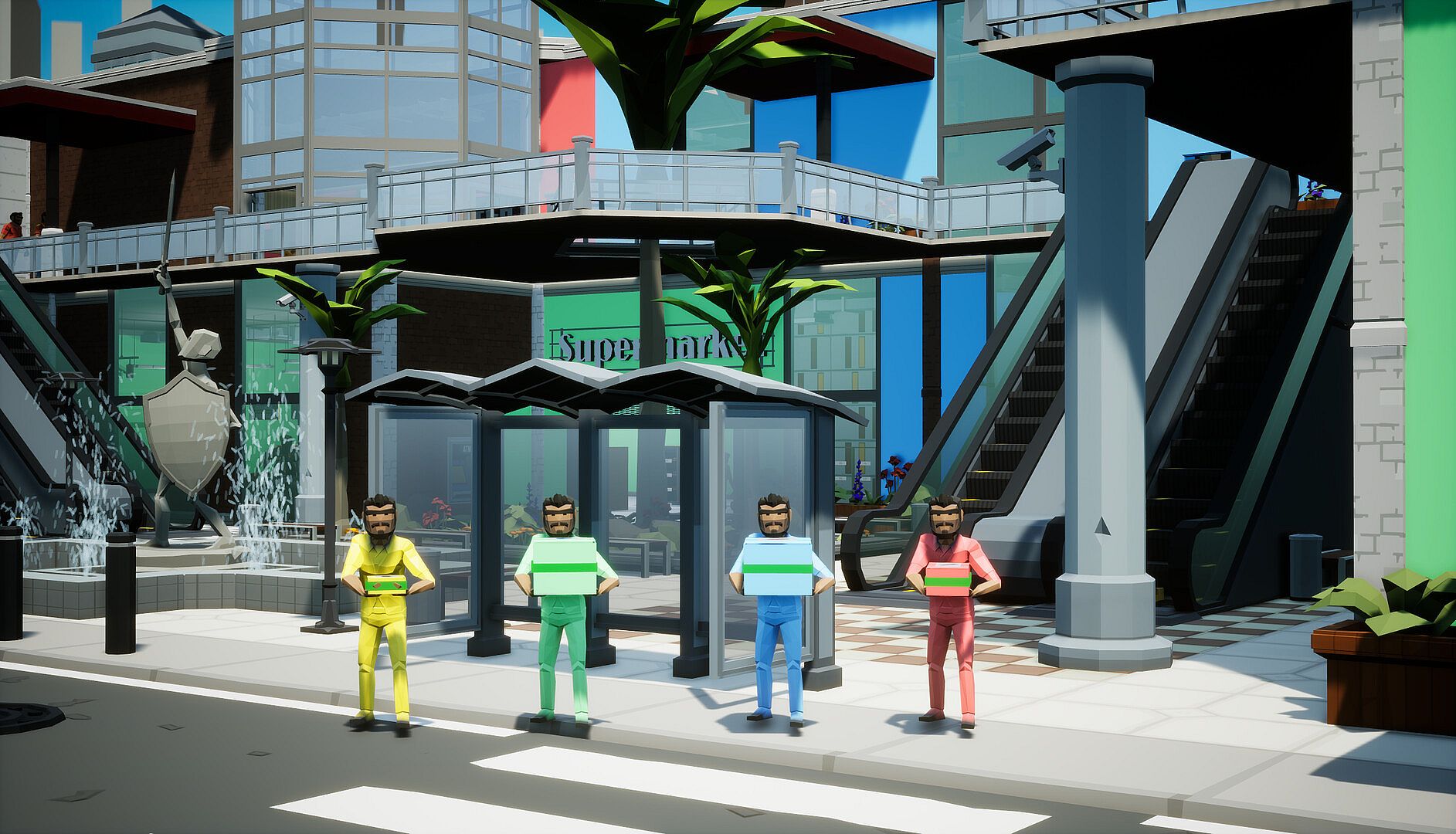
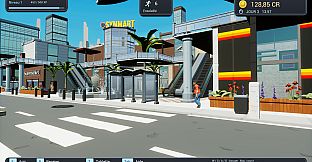
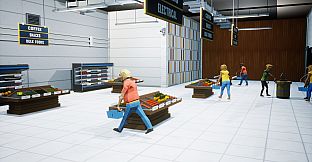
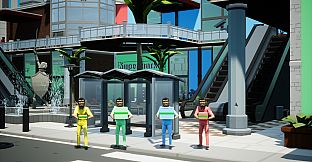
Grand Reopening: Shopping Center Simulator is a casual simulation game for PC where players restore an abandoned shopping mall to profitability through hands-on management. The experience centers on first-person tasks that range from clearing debris and purchasing store spaces to arranging merchandise and serving customers directly. Success depends on balancing inventory, pricing, and daily operations while expanding across multiple retail types including markets, clothing outlets, toy shops, electronics stores, jewelry counters, flower vendors, food trucks, cinemas, and arcades.
Gameplay
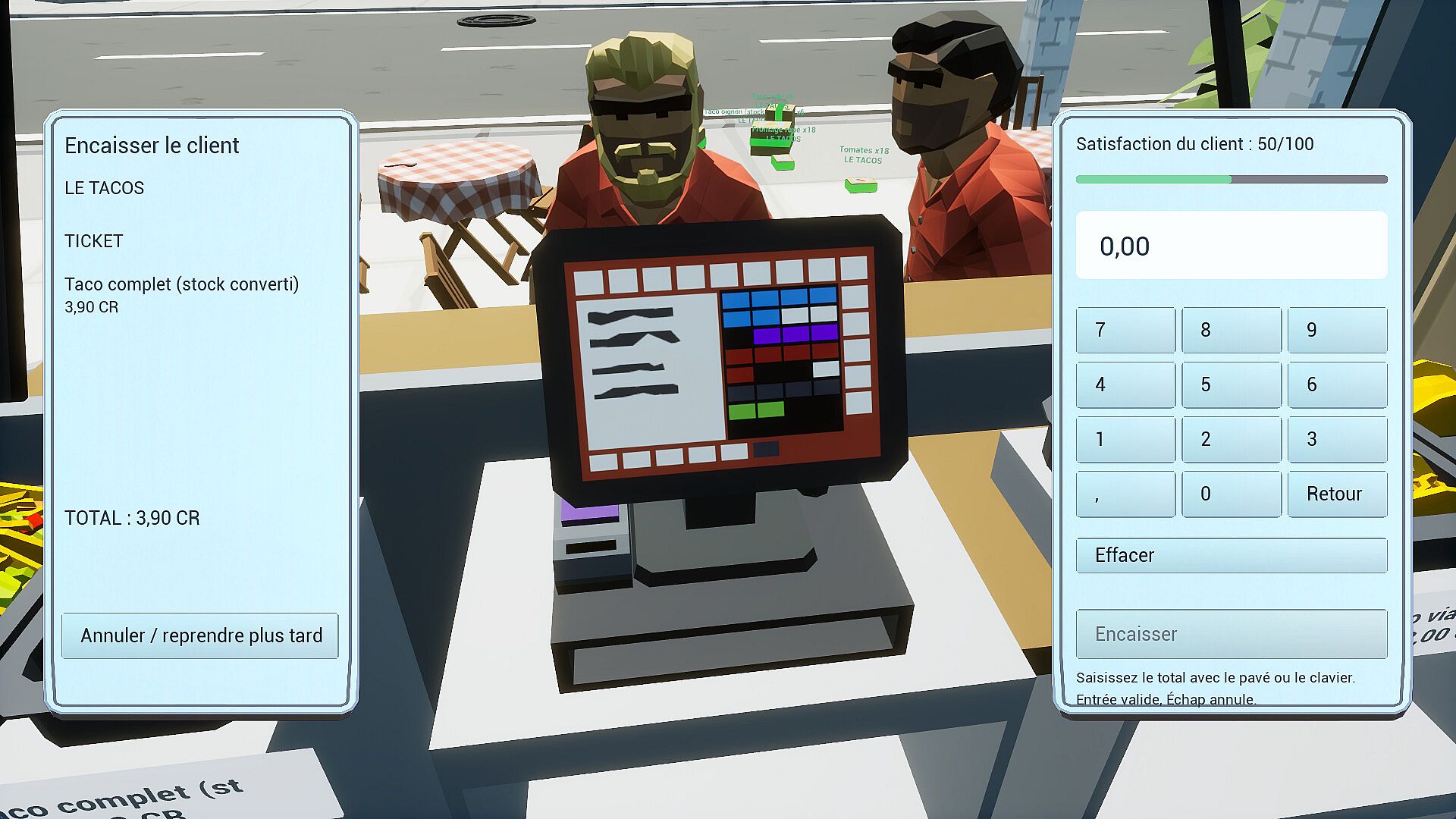
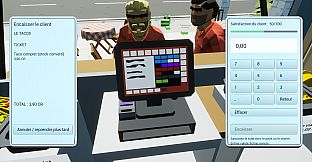
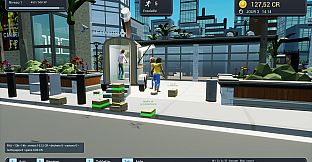
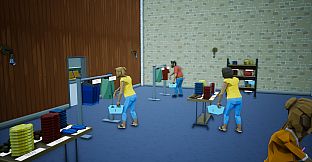
Core play involves physical labor inside the mall. Players receive deliveries, carry boxes, stock shelves, and operate registers to complete sales. Inventory tracking prevents empty displays, and organized storage keeps operations efficient. Certain businesses incorporate order preparation through mini-games, such as assembling pizzas or tacos and serving patrons with precise timing. Hiring staff allows delegation of routine duties like cashier work, restocking, and cleaning, while players set schedules and manage payroll to free time for further expansion. Profits fund new locations and upgrades, with each store type generating revenue through distinct customer flows and product strategies.
Game Modes
Single-player campaigns let individuals grow the mall at their own pace. Cooperative sessions support up to four players who divide responsibilities across deliveries, stocking, order fulfillment, and customer assistance. Unexpected events require quick coordination to maintain smooth operations. Versus mode introduces direct competition, either free-for-all or in 2-on-2 teams. Participants vie for prime store locations, disrupt rivals by intercepting or redirecting deliveries, and deploy chest bonuses or sabotage tools. Rounds can follow a race-to-riches structure or a fixed time limit, blending steady management with opportunistic tactics.
Business Expansion and Daily Operations
Empty mall spaces become viable stores after cleaning, purchasing, and outfitting with displays and products. Pricing decisions and reinvestment drive growth, while monitoring stock levels avoids lost sales. Staff assignments and schedule planning keep individual outlets running without constant oversight. Different retail categories reward varied approaches: high-volume food service contrasts with slower luxury item turnover in jewelry or electronics. The first-person perspective keeps every action grounded in the physical mall environment rather than abstract menus.
Is It Worth Playing?
The game suits players who enjoy detailed store management simulators with a strong emphasis on manual tasks and light multiplayer interaction. Recent patches have addressed co-op synchronization and tutorial clarity shortly after the October 2026 release. With only a handful of early reviews available, reception remains limited, yet the verified mechanics of hands-on stocking, hiring, and competitive versus play provide a focused loop for those drawn to casual simulation titles. Solo progression offers steady expansion goals, while group sessions add coordination challenges and versus rounds introduce strategic disruption. Those seeking straightforward business building without heavy combat or narrative elements will find the core systems align closely with the described gameplay.