






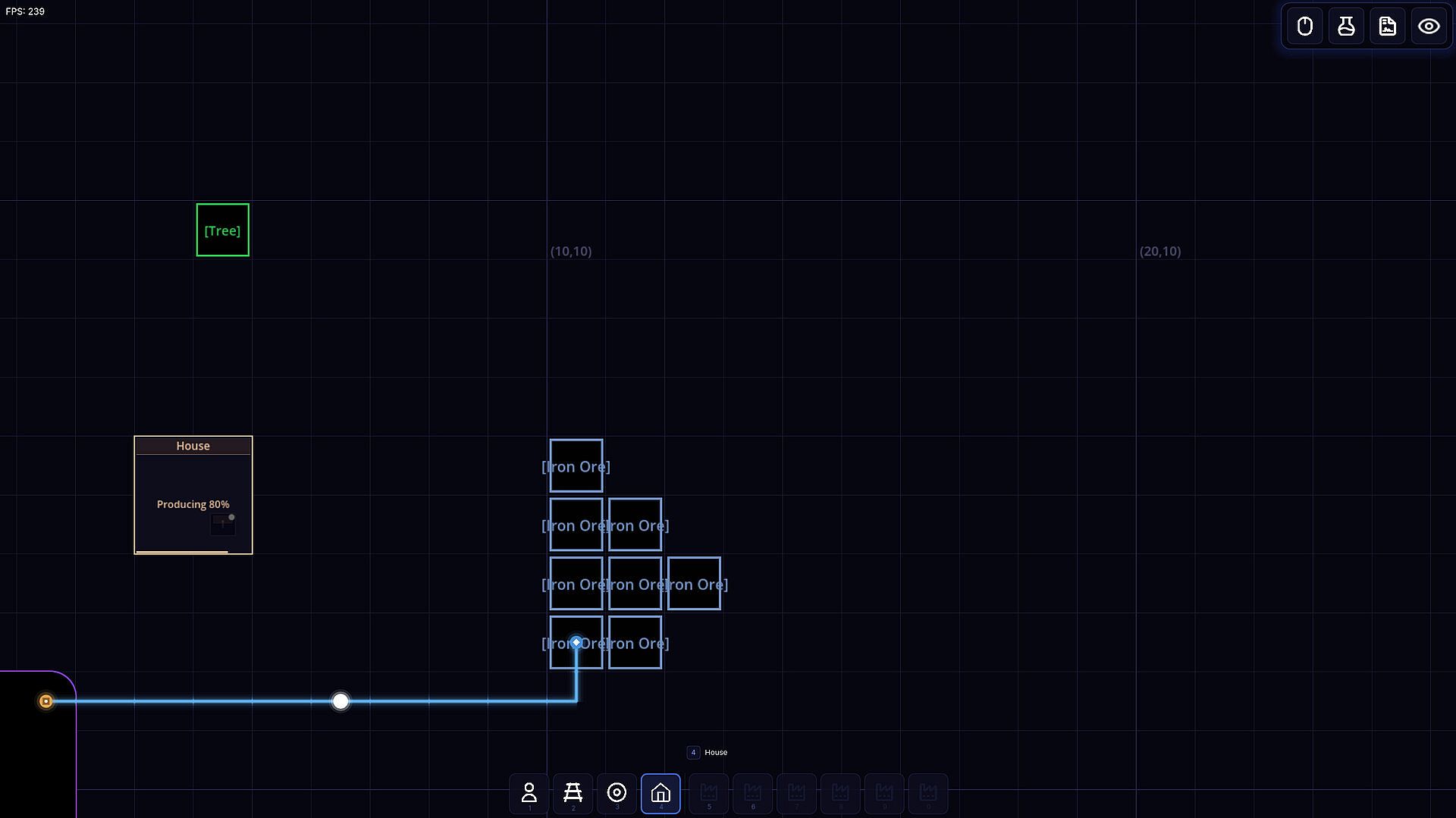
Genesis Factory is a strategy, indie, and simulation title built around factory construction and automated production on PC. Players arrive on a resource-poor planet and must establish a complete manufacturing operation from raw extraction through to finished goods using a distinctive system for directing individual workers.
Gameplay
The core loop centers on gathering scarce resources such as ore, wood, oil, coal, and water, then processing them through successive stages into components and end products. Mining, logging, and extraction feed into smelting, plating, electronics assembly, and petrochemical refinement, creating long interconnected chains that demand careful layout planning to maintain steady throughput.
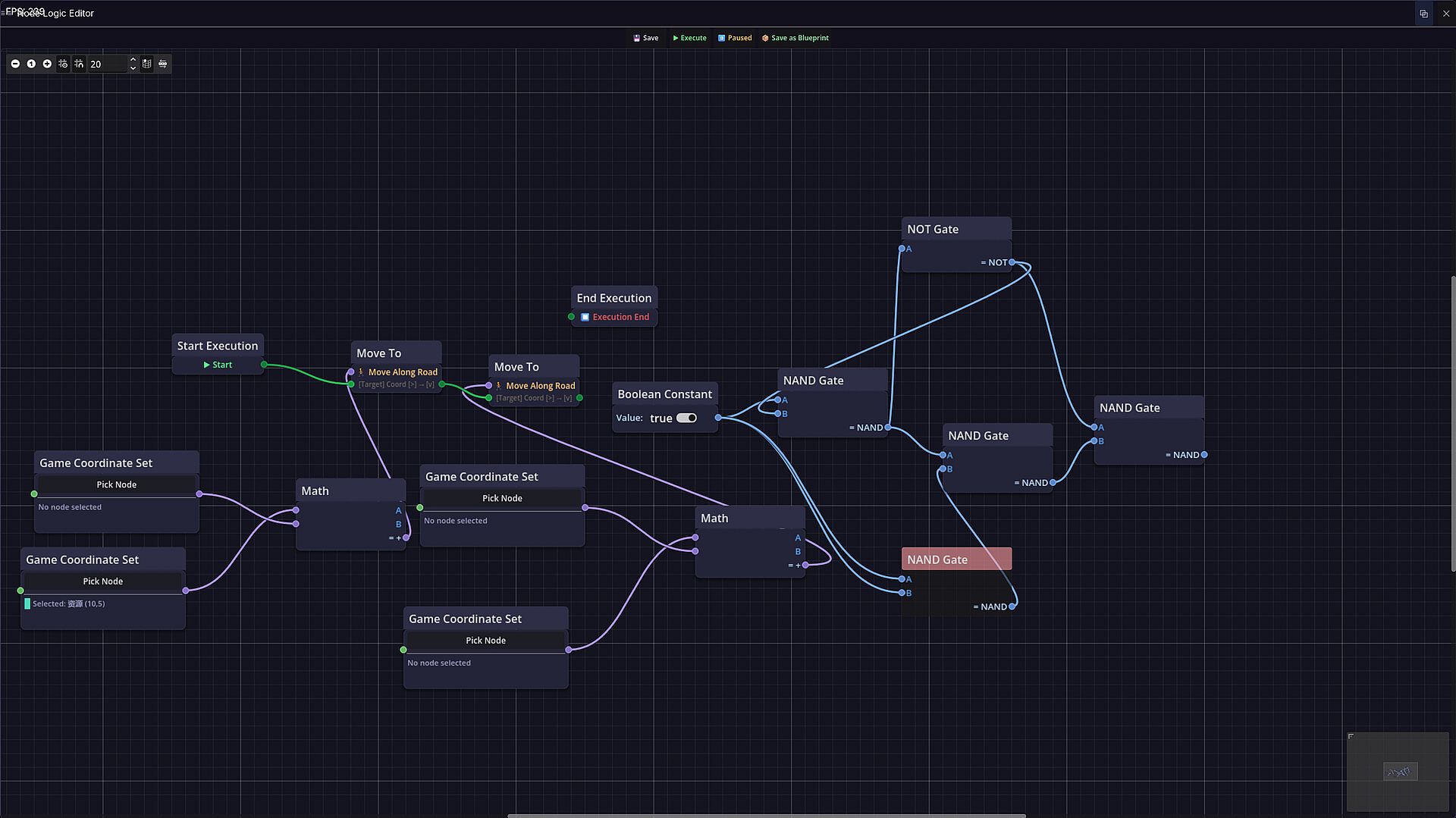
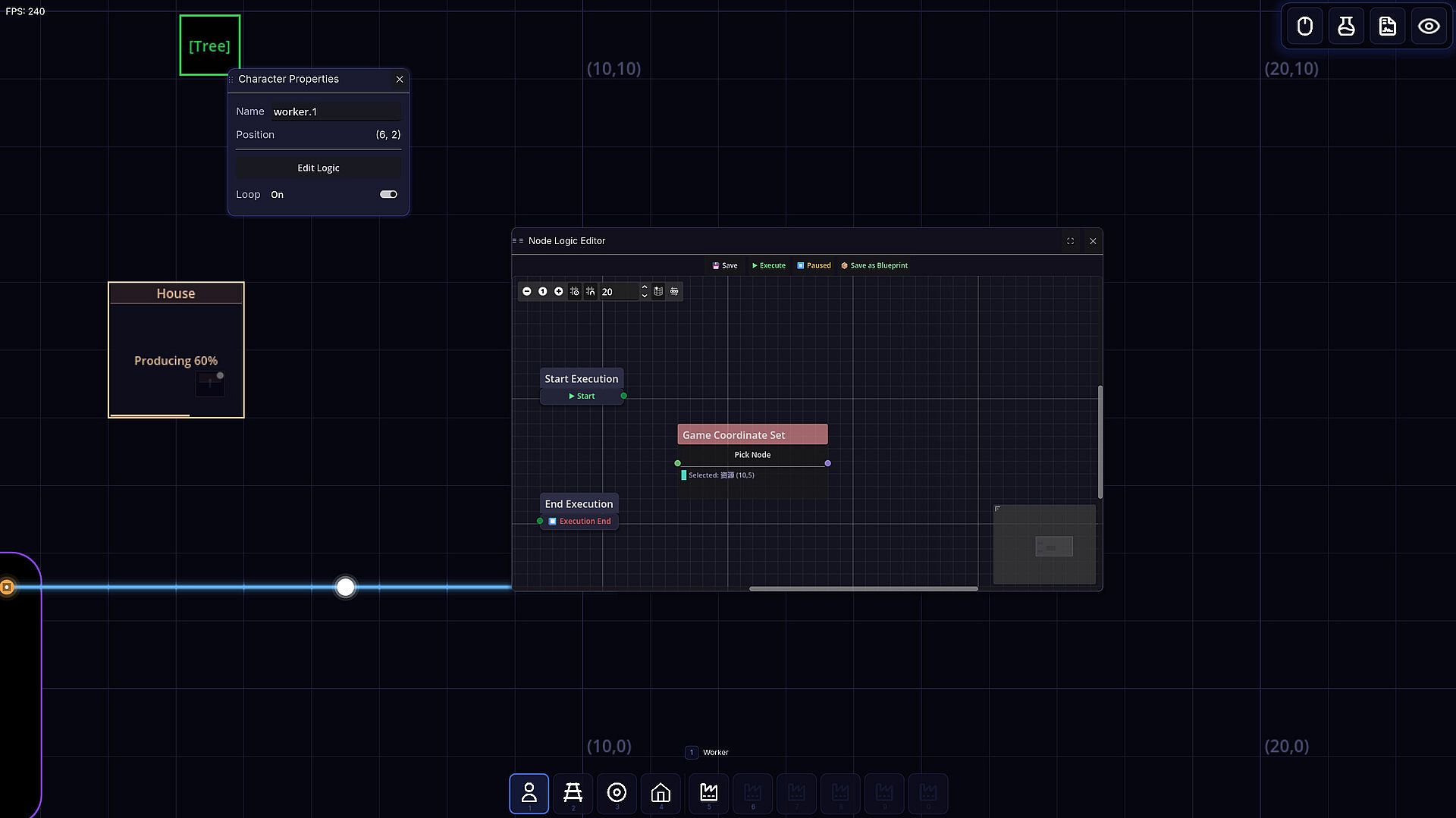
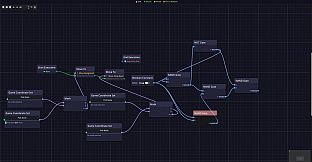
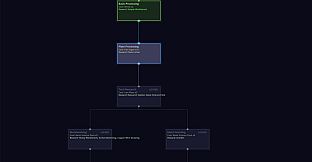
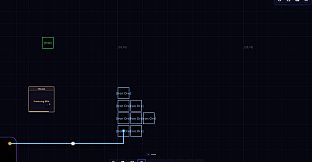
Workers form the heart of every line. Instead of issuing repeated manual orders, players design behavior using a node-based flowchart interface. Nodes handle movement, item pickup, task execution, conditional branching, looping, and logistics signals, allowing each worker to operate independently once the logic is set. This approach turns the workforce into a programmable assembly system that runs continuously without further input.
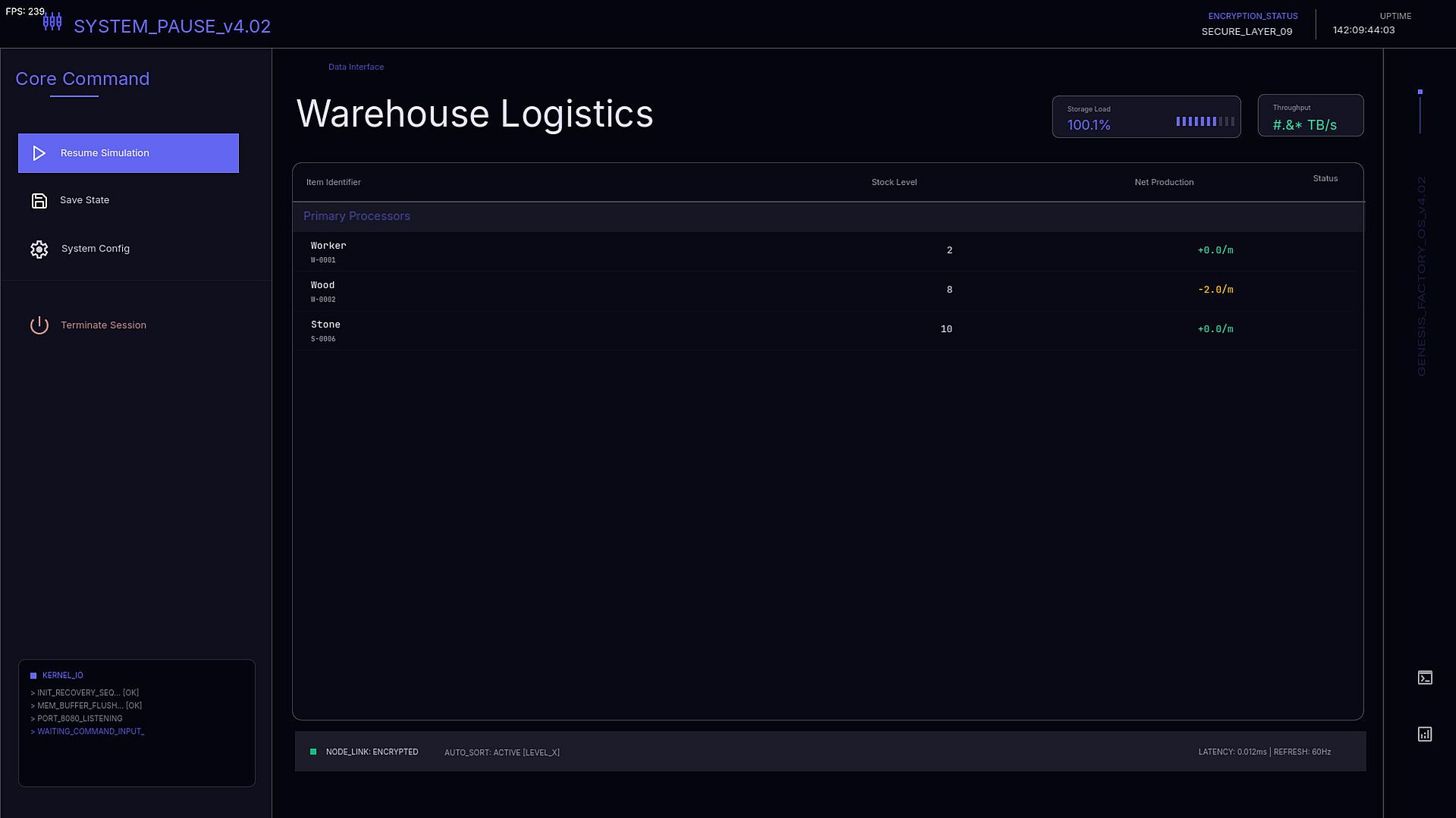
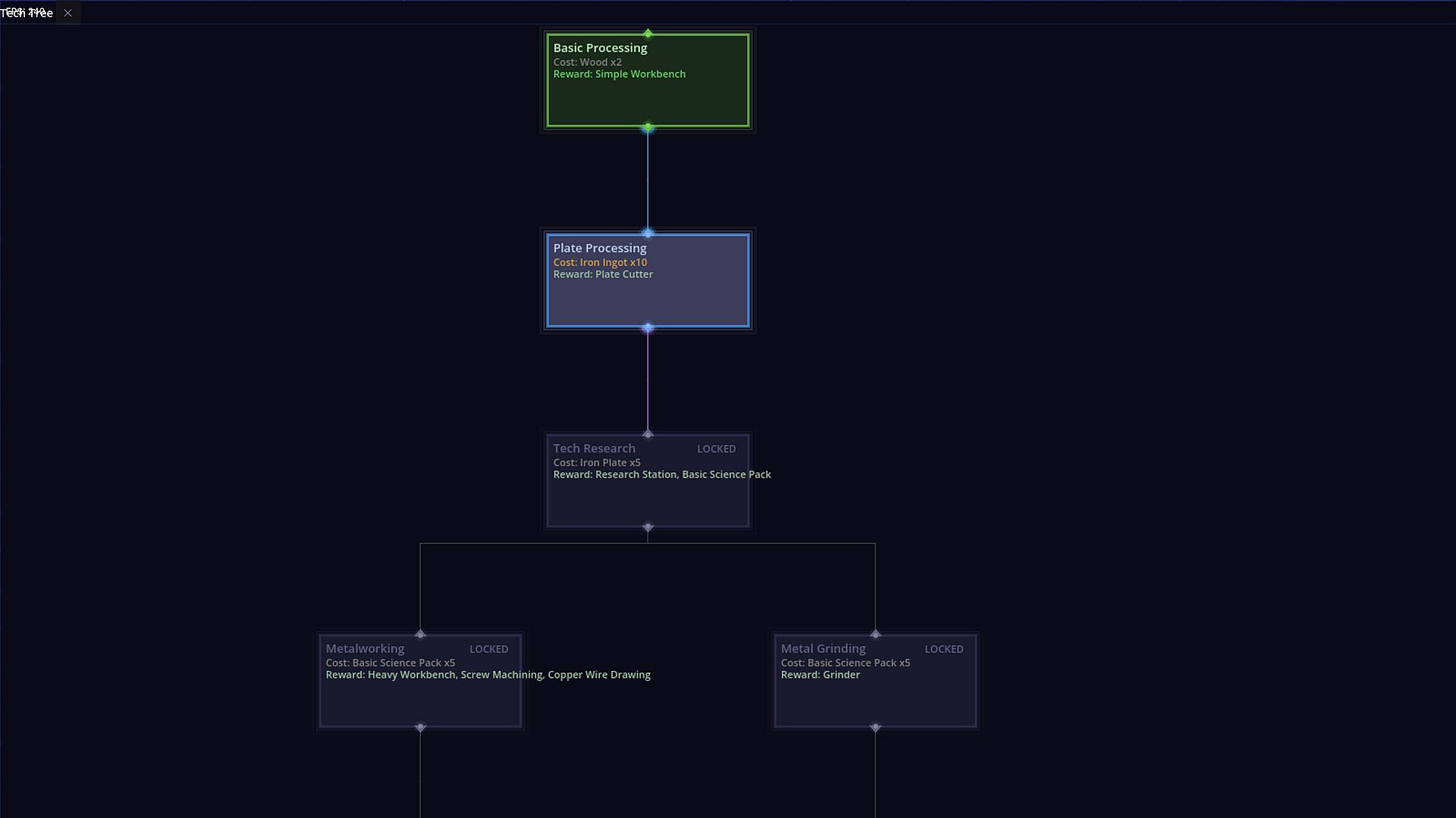
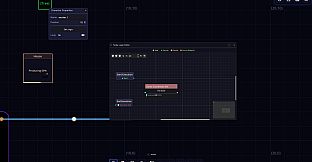
Supporting systems include logistics boxes that manage supply and demand thresholds, along with cargo trucks and drones that move materials between storage and production points. Blueprints let players save optimized sections of a factory for quick duplication, while a dedicated sandbox editor supports free experimentation before applying designs to the main world. Tech research unlocks progressively more advanced buildings, recipes, vehicles, and transport options, expanding the scale of possible operations.
Game Modes
Genesis Factory focuses on open-ended sandbox construction rather than structured campaigns or competitive scenarios. The sandbox editor serves as the primary space for testing production layouts, refining worker programs, and iterating on chains without resource constraints or external pressures. Blueprints carry successful designs between sessions or across different areas of a growing facility, supporting repeated experimentation and scaling.
Progression occurs through tech unlocks that gradually introduce new tools and processes, encouraging players to expand from basic extraction into complex, self-sustaining networks. No separate multiplayer or story-driven modes appear in the available information, keeping emphasis on solitary creative building and optimization.
Production Systems and Logistics
Every stage of manufacturing follows realistic step-by-step conversion. Early operations involve direct resource gathering that feeds into intermediate processing such as smelting and basic component creation. Later tiers incorporate electronics and petrochemical outputs, requiring precise balancing of inputs and outputs across the entire network.
Logistics rely on threshold-based storage boxes that automatically request or supply items as needed. Trucks and drones handle transport, reducing the need for manual routing once the system is established. The node programming for workers integrates directly with these logistics tools, letting scripted behaviors respond to signals from boxes or other machines for fully hands-off operation.
Progression and Customization
Research trees advance from fundamental processing techniques to vehicle engineering and advanced materials like polymers. Each unlock adds buildings, recipes, and transport options that support larger and more efficient factories. Blueprints and the sandbox editor give players tools to prototype and refine ideas before committing resources in the main environment, promoting iterative improvement over trial-and-error in live production.
Multi-language support covers Chinese, English, Japanese, Korean, Spanish, French, German, and Portuguese, making the interface accessible to a wide audience interested in detailed automation mechanics.
Is It Worth Playing?
Genesis Factory suits players who enjoy methodical factory building and the satisfaction of watching self-running systems operate without constant oversight. The visual programming for workers offers a fresh layer of depth compared with purely belt-and-machine automation titles, rewarding careful logic design with reliable, scalable output.
Those drawn to long-term optimization, chain balancing, and creative layout work will find substantial depth in the production recipes and logistics options. The sandbox focus and blueprint tools lower the barrier to experimentation, while tech progression provides clear goals for expansion. If the appeal lies in building intricate, automated operations from scratch on a single-player basis, the game delivers a focused experience centered on those strengths.











