


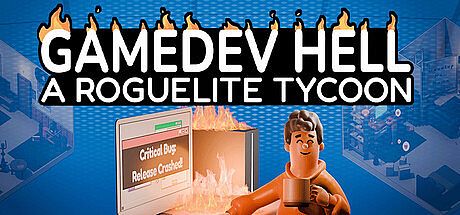


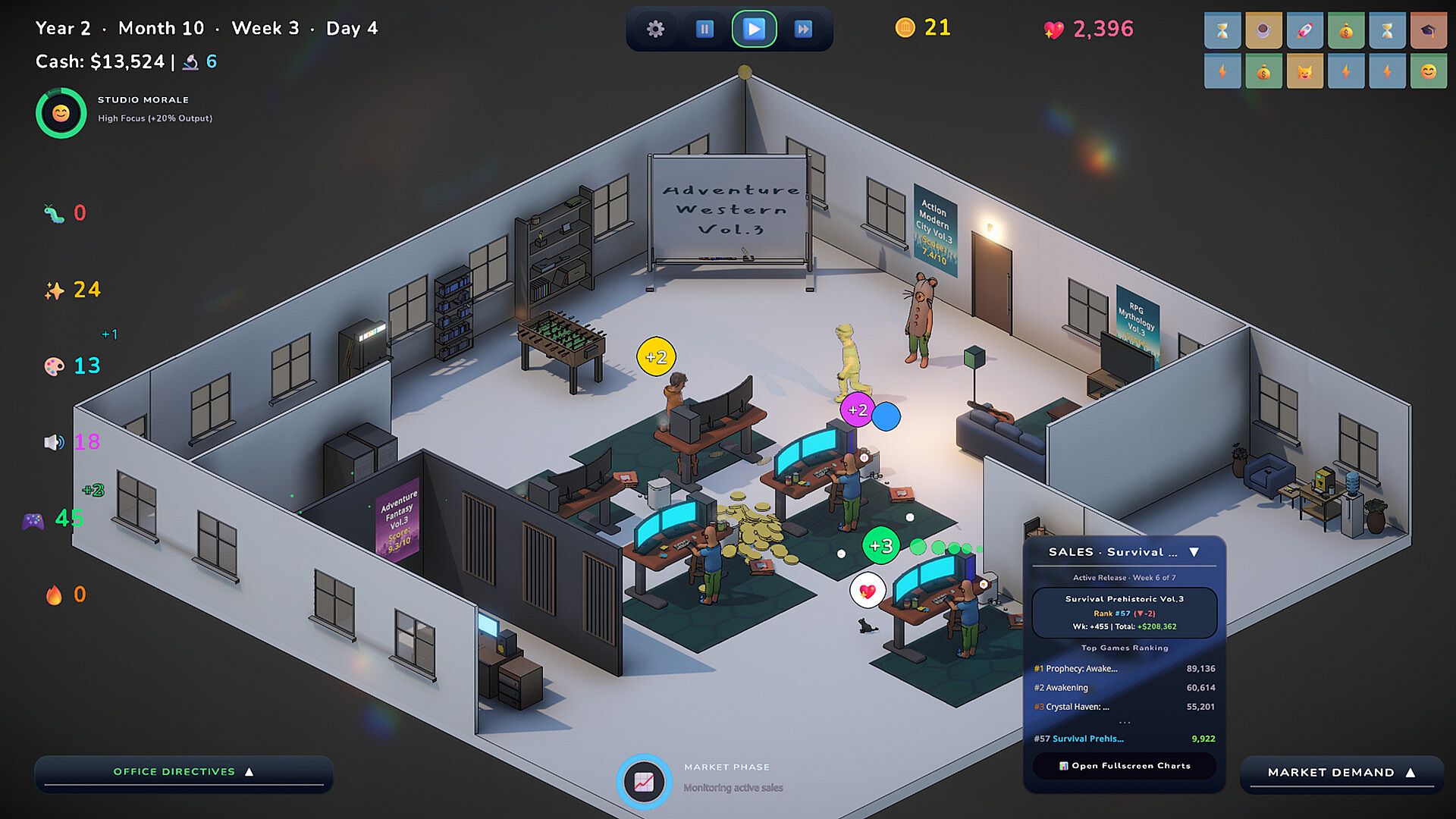
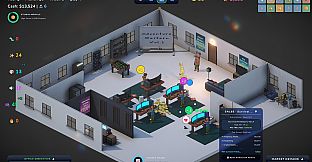
Gamedev Hell: A Roguelite Tycoon blends strategy and simulation into a single-player experience centered on managing a game development studio through repeated short runs. Players start with limited resources in a cramped space and attempt to ship titles while handling deadlines, team management, and market shifts before financial collapse resets the cycle with lasting benefits.
Gameplay
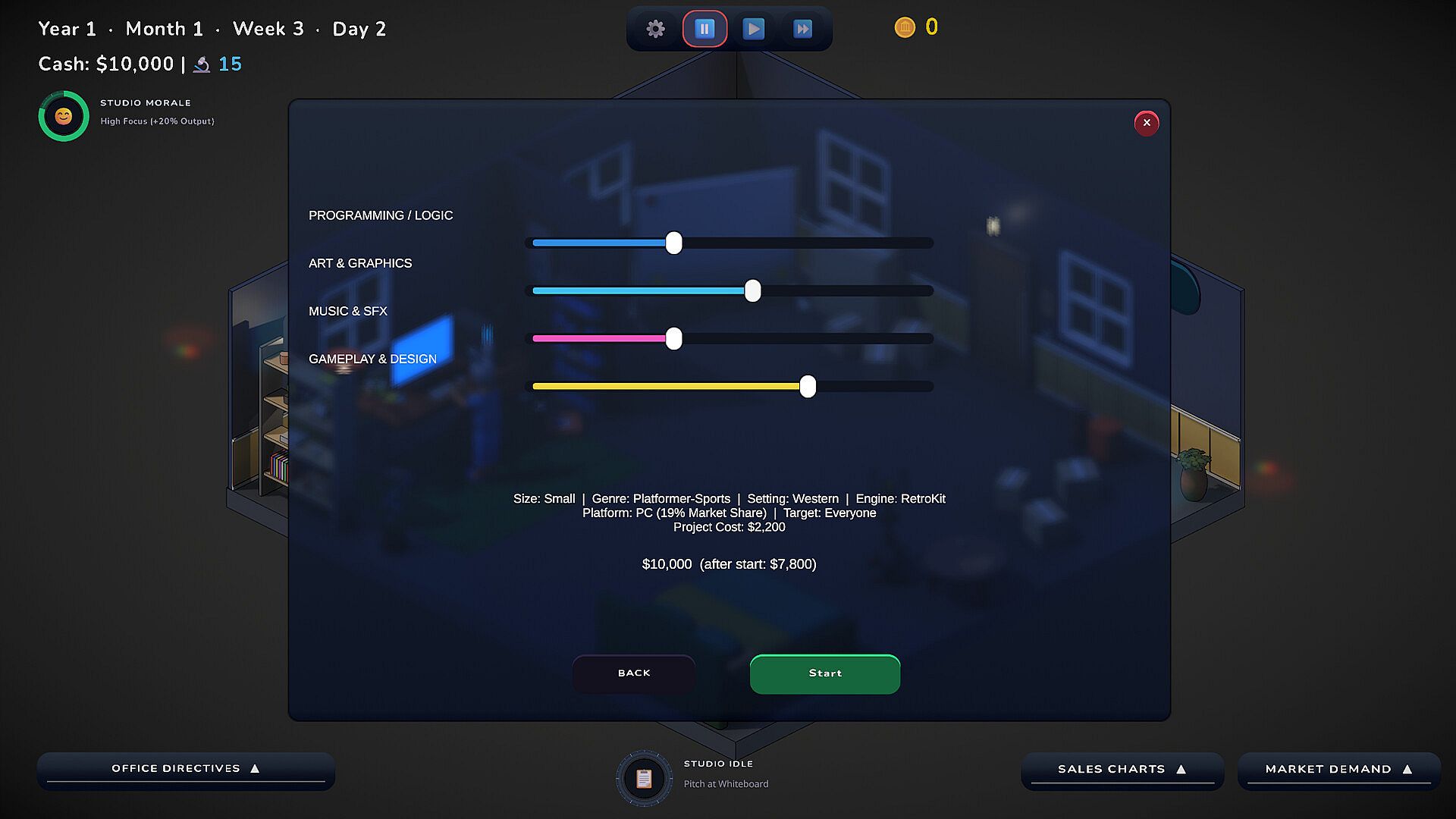
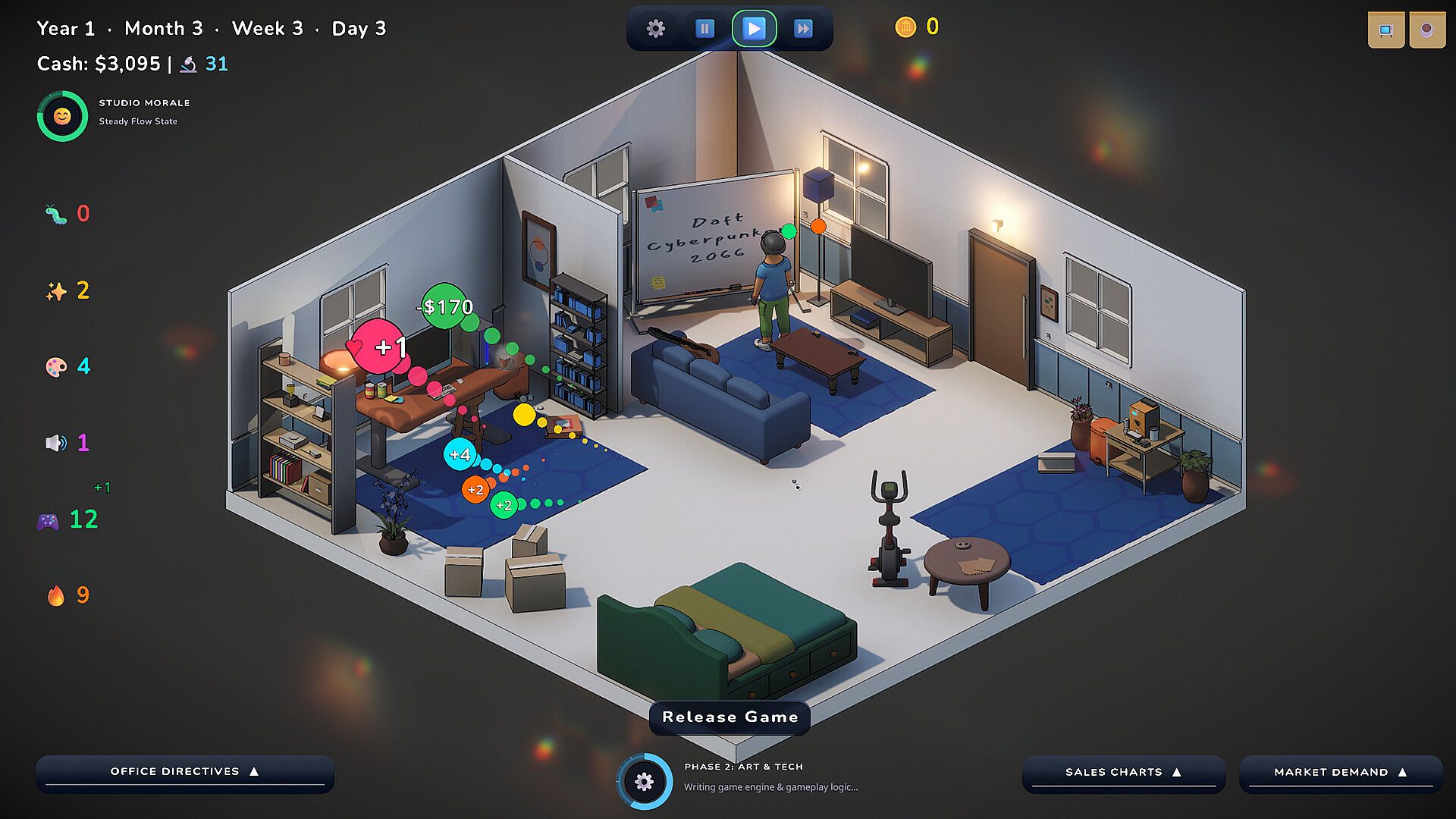
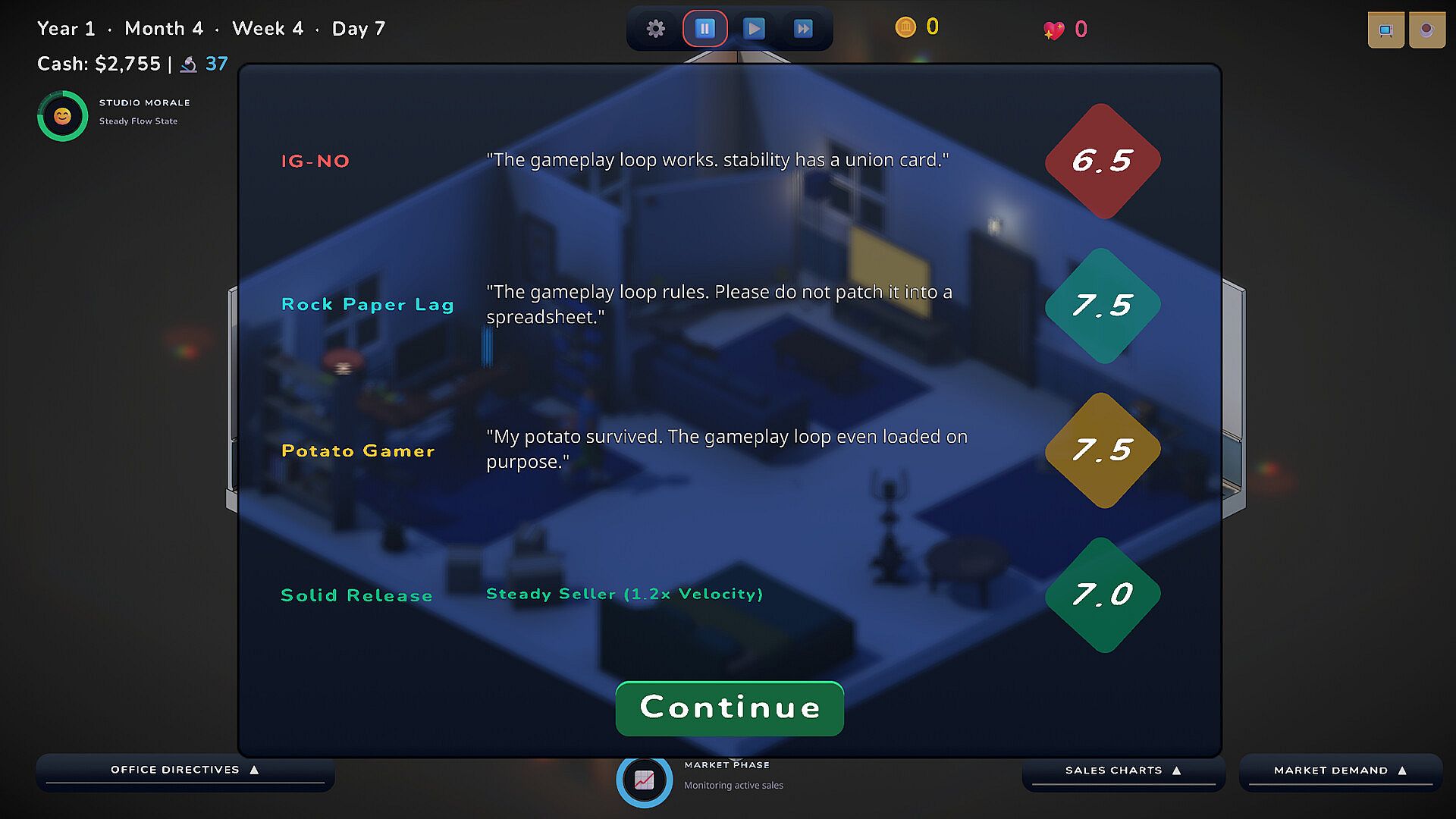
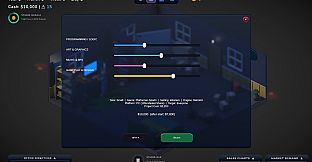
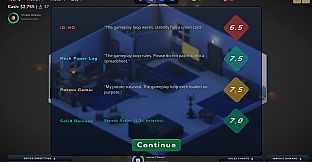
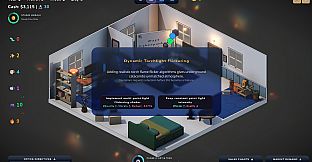
The core loop revolves around allocating resources across code, art, sound, and design sliders under time constraints. Each decision influences the final product, which then faces simulated user reviews that reflect those exact choices. Post-mortems and feedback reveal genre affinities, helping refine future pitches. Market trends change dynamically, pushing players to adapt from tactical sci-fi shooters one cycle to retro fishing racers the next.
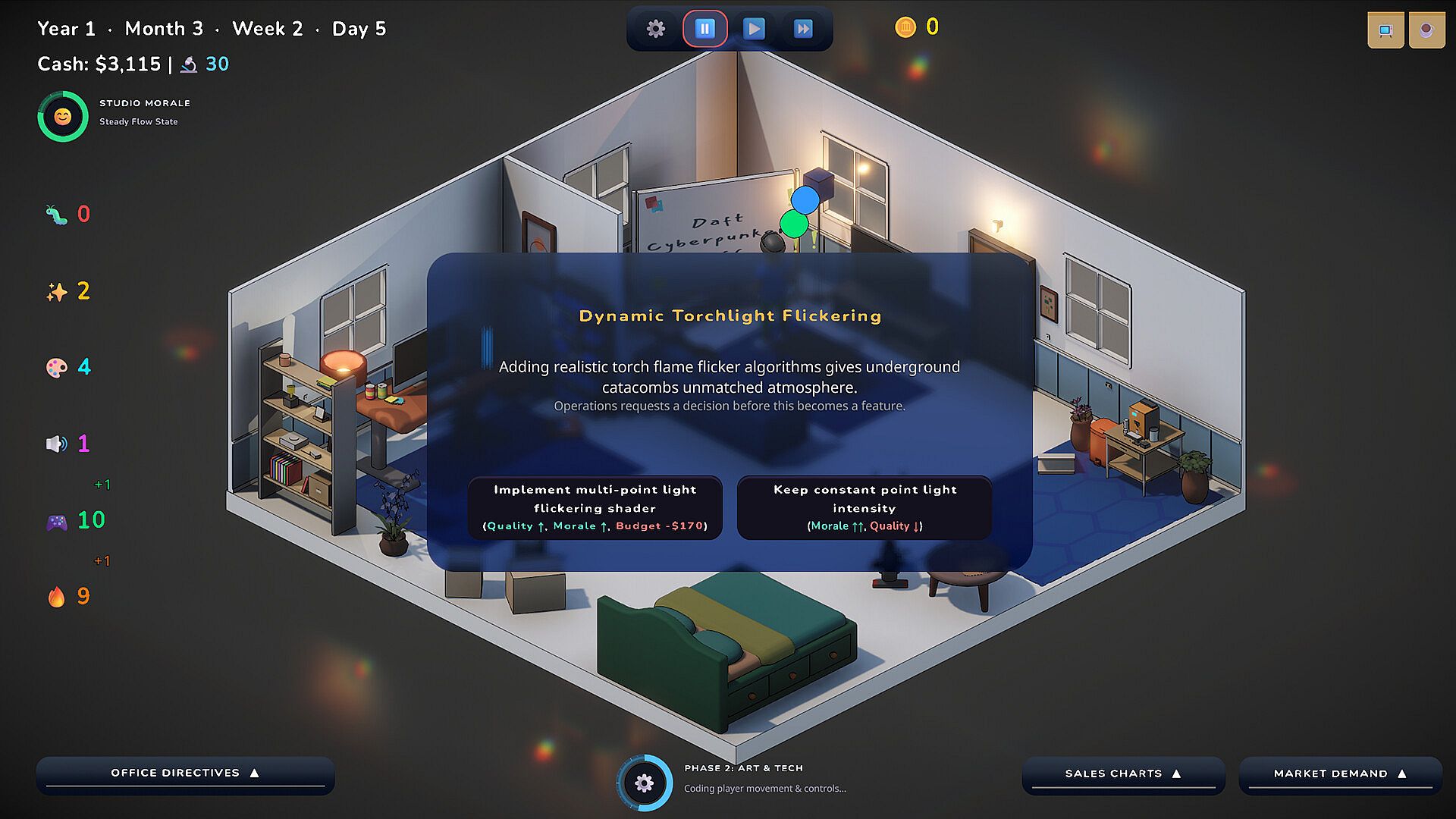
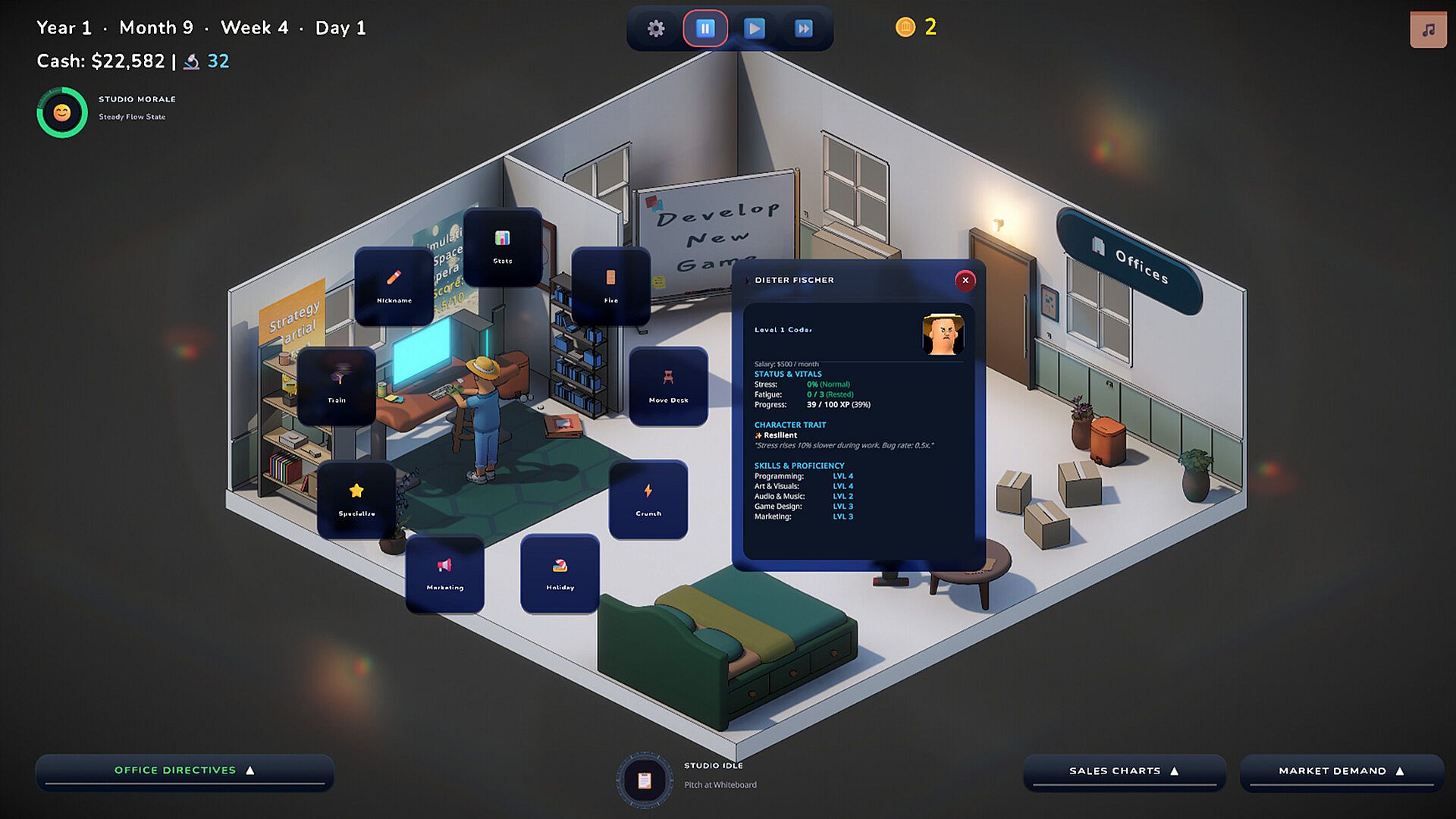
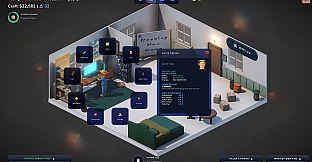
Recruiting and retaining developers adds another layer, as each team member brings unique traits and morale considerations. Payroll costs rise quickly, forcing careful balancing against incoming revenue. Studio expansion unlocks larger teams and bigger projects once early successes provide the capital. Unfiltered events interrupt the flow with hardware failures, asset gambles, or sudden crises that demand immediate responses.
Game Modes
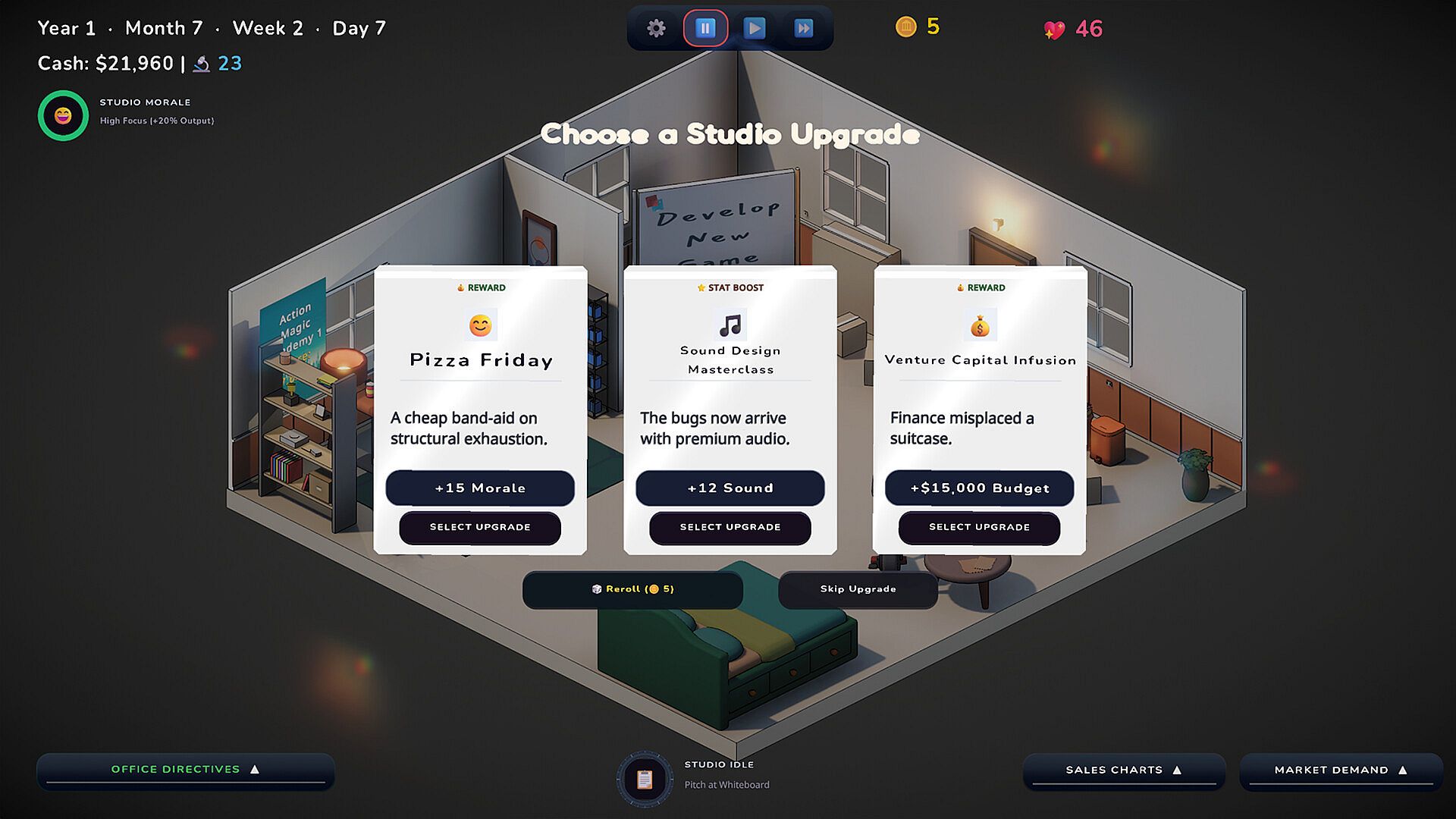
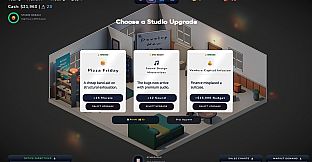
The game operates through a single roguelite structure built around repeated studio runs. Each attempt lasts 20 to 40 minutes and ends in bankruptcy, which converts into permanent meta-coins for upgrades. These coins fund studio improvements, expanded genre options, and starting advantages for subsequent attempts. Veteran developers can carry over across runs when their salary demands are met, creating continuity amid the resets.
Modifier systems allow mid-run pivots that alter core rules. Options include skipping quality assurance in favor of bug-driven viral attention, prioritizing visuals at the expense of mechanics, hiring low-contribution relatives to reduce overall costs, or targeting niche audiences for higher margins on smaller sales. These choices reshape how each run unfolds without introducing separate modes.
Meta-Progression and Studio Management
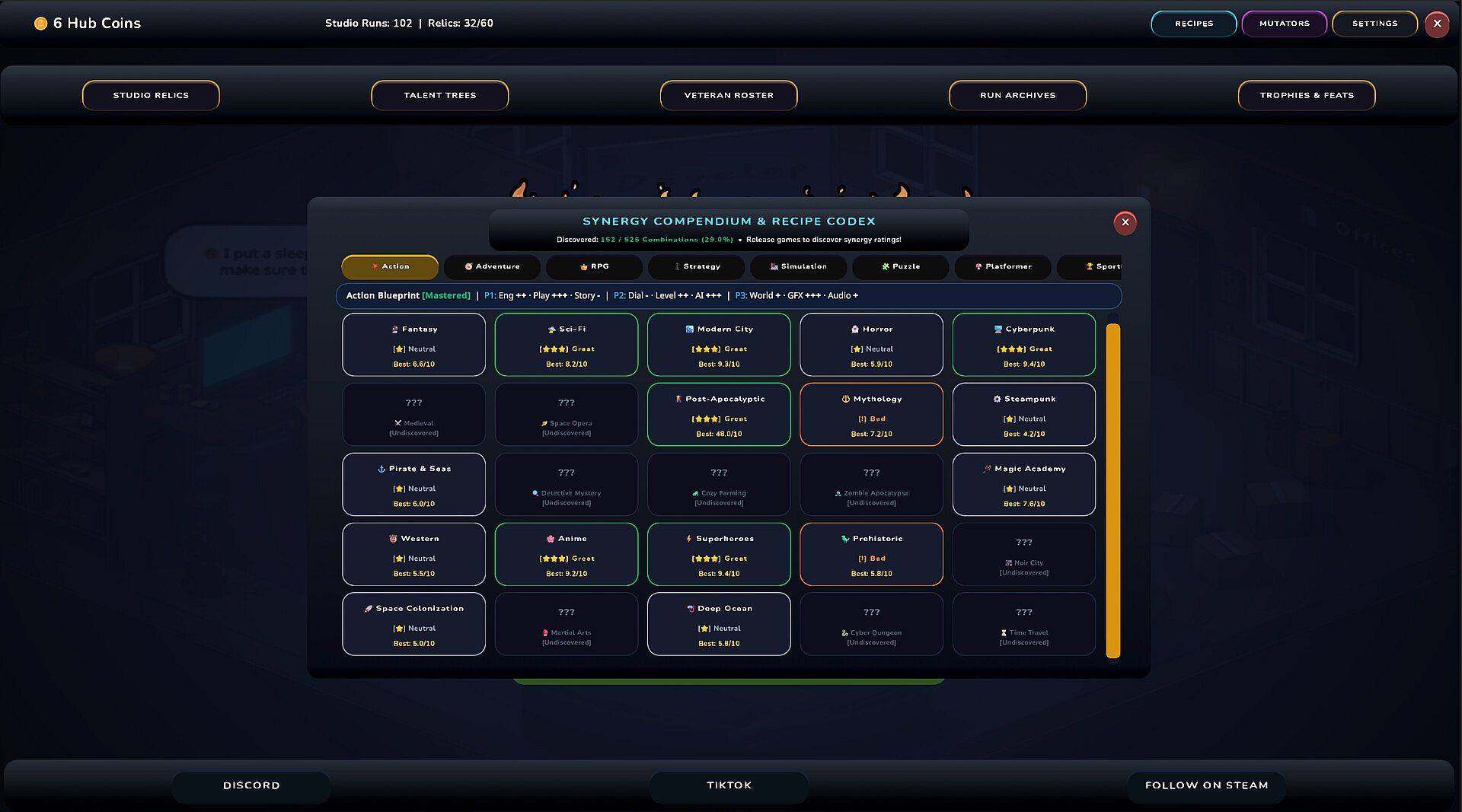
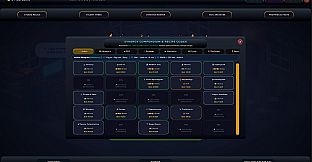
Every completed game and every collapse contributes to long-term growth through meta-coins. Spending these unlocks buffs that improve future runs, such as better starting conditions or new genre pools. The progression encourages experimentation because failure directly strengthens the next studio setup.
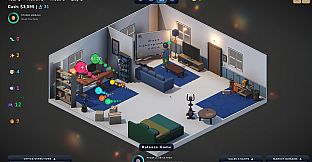
Team building emphasizes traits and morale alongside raw skill. Developers demand higher pay as they gain experience, creating tension between retaining talent and maintaining cash flow. Office upgrades provide additional slots and scale, moving the operation from a student apartment into professional spaces that support larger ambitions.
Is It Worth Playing?
This title suits players who enjoy roguelite repetition combined with tycoon-style resource allocation and simulation depth. The short run length supports quick sessions while the meta layer rewards persistence across multiple attempts. Feedback systems tied directly to development choices create a learning curve focused on player decisions rather than external guides. No public reviews or ratings exist yet, as the game remains in development with a planned demo appearance in February 2027. Those drawn to management challenges, procedural market shifts, and humorous takes on industry pressures will find the mechanics align closely with that interest. The emphasis on adapting to failure and building from wreckage gives the experience a distinct identity within the strategy and simulation genres.










