

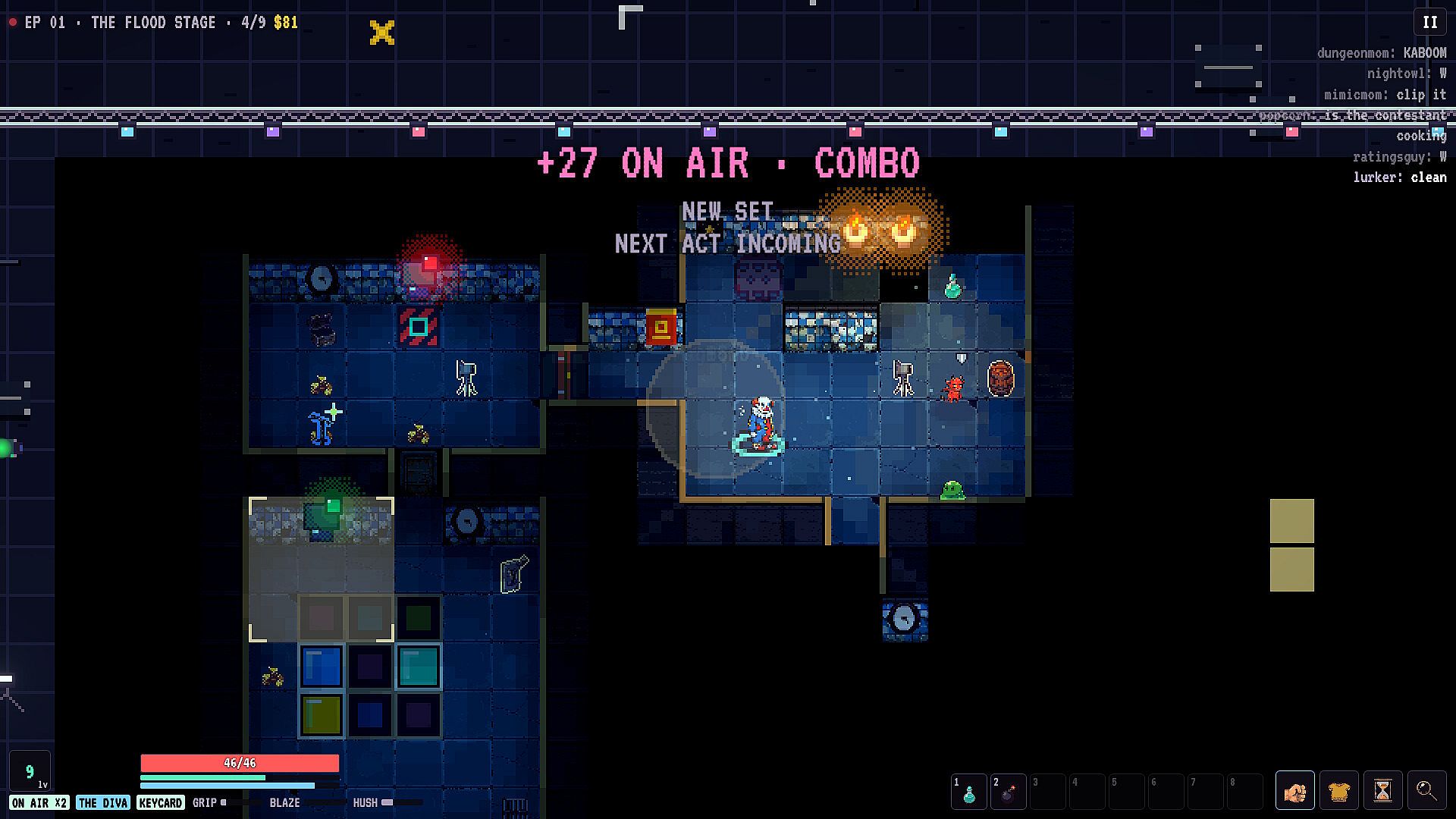
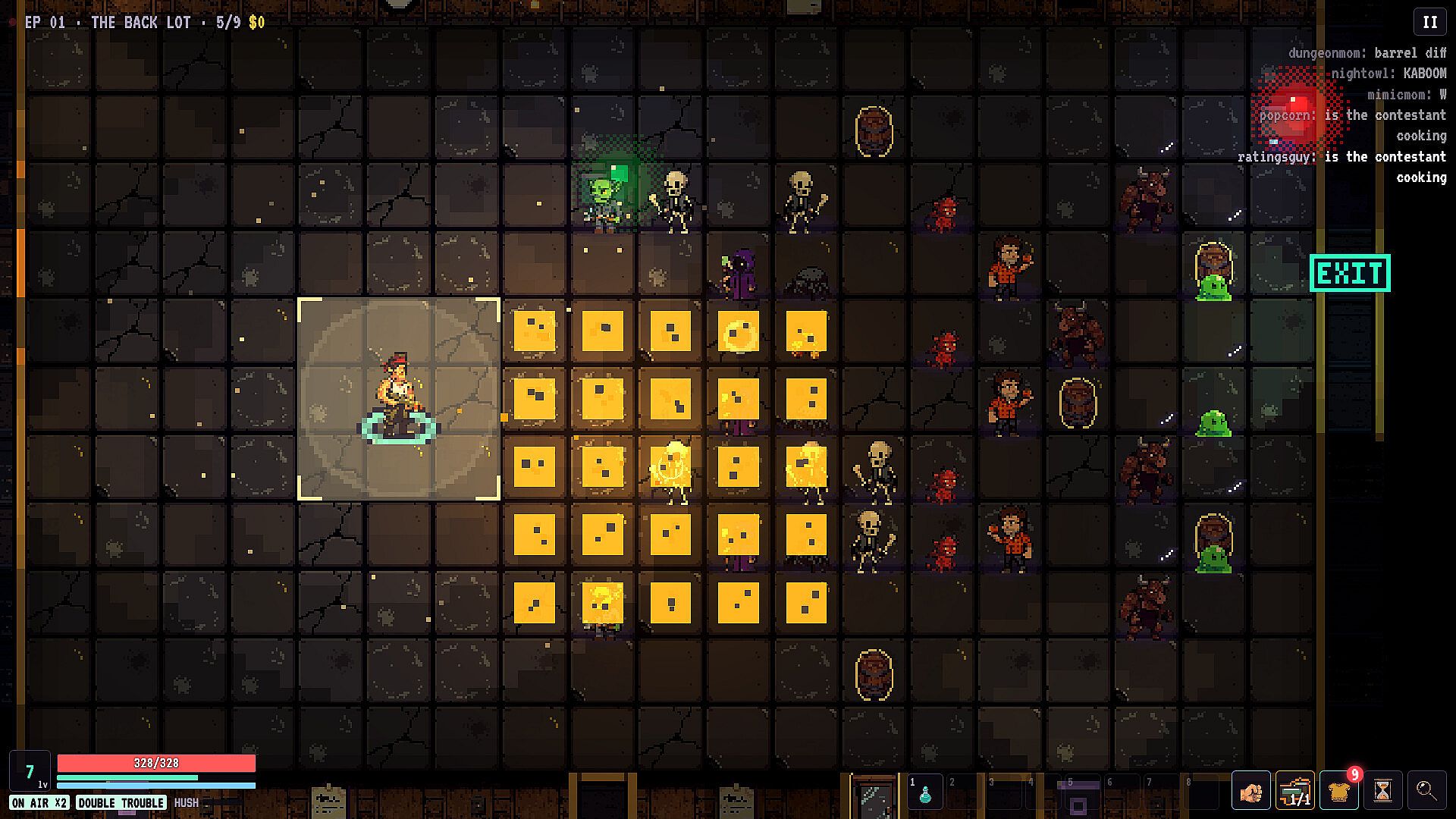
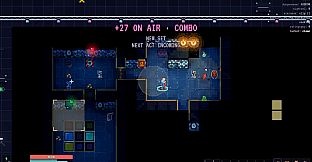
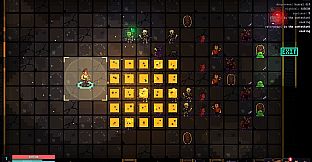
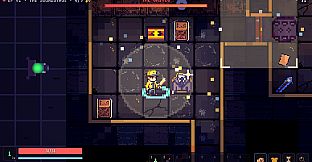
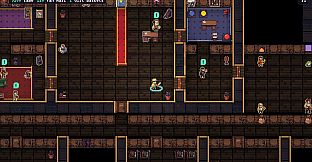
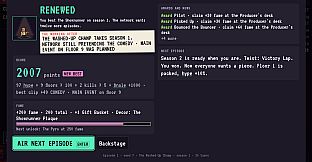
Floor Show is a turn-based roguelike RPG set on a live television game show. Players navigate nine floors divided into three acts, facing escalating threats while building hype through precise actions and strategic choices. The format emphasizes patience and positioning, as nothing moves until the player does, turning each episode into a deliberate puzzle of movement, environmental hazards, and enemy manipulation.
Gameplay
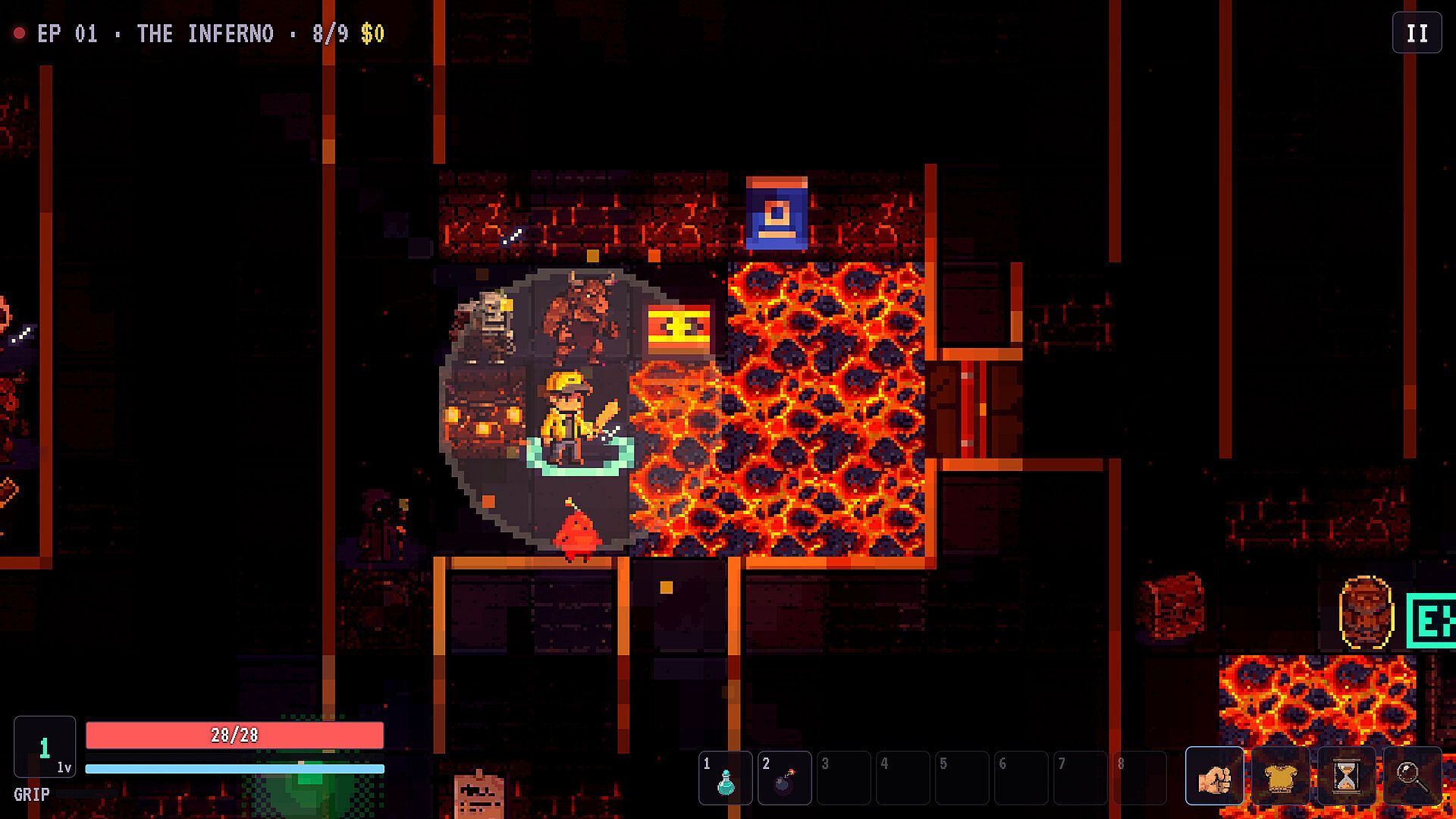
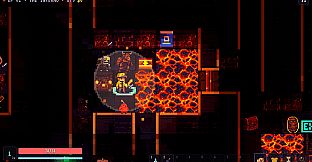
The core loop revolves around advancing floor by floor while managing hype as a resource for upgrades. Standing still draws additional monsters from producers, so constant forward pressure is essential. Players shove enemies into walls or each other for chain reactions, ignite barrels that trigger neighboring ones, and spread fire through tall grass. Environmental dangers like lava and spikes damage foes as readily as the player, rewarding clever positioning over direct confrontation.
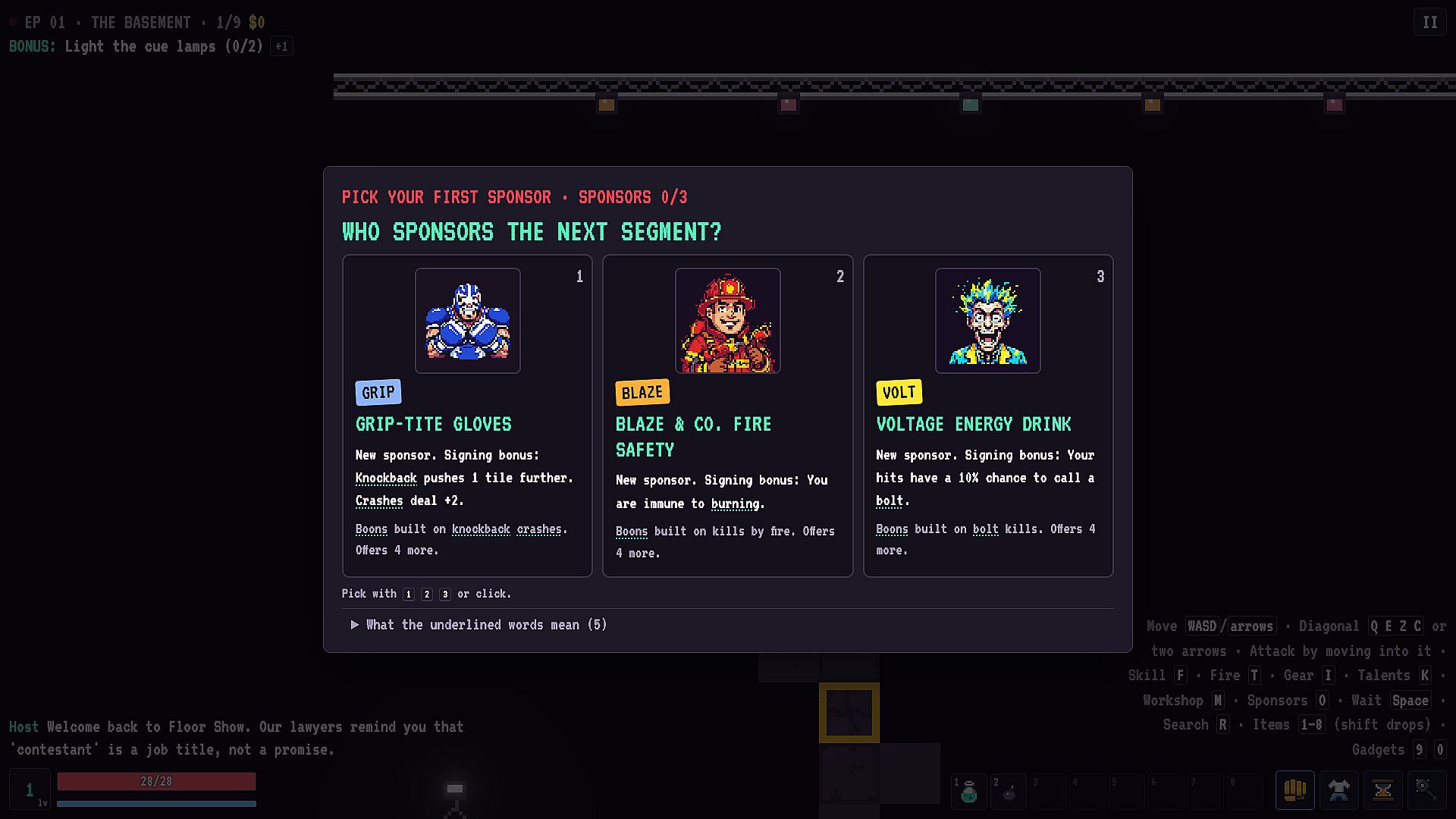
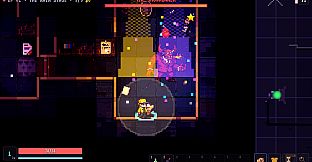
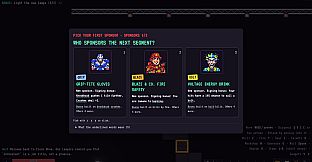
Optional producer requests on each floor offer extra hype for completing specific tasks. Sponsors appear between floors, with up to three selectable at once. Each sponsor delivers an immediate signing bonus plus a perk, such as immunity to burning from Blaze & Co. or triple hype for on-air kills from Studio Lights. Some perks require pairing two sponsors, and boons alter attacks in targeted ways, from the Rookie's extended shove to the Clown's area stun or the Trick Shot's pinning effect.
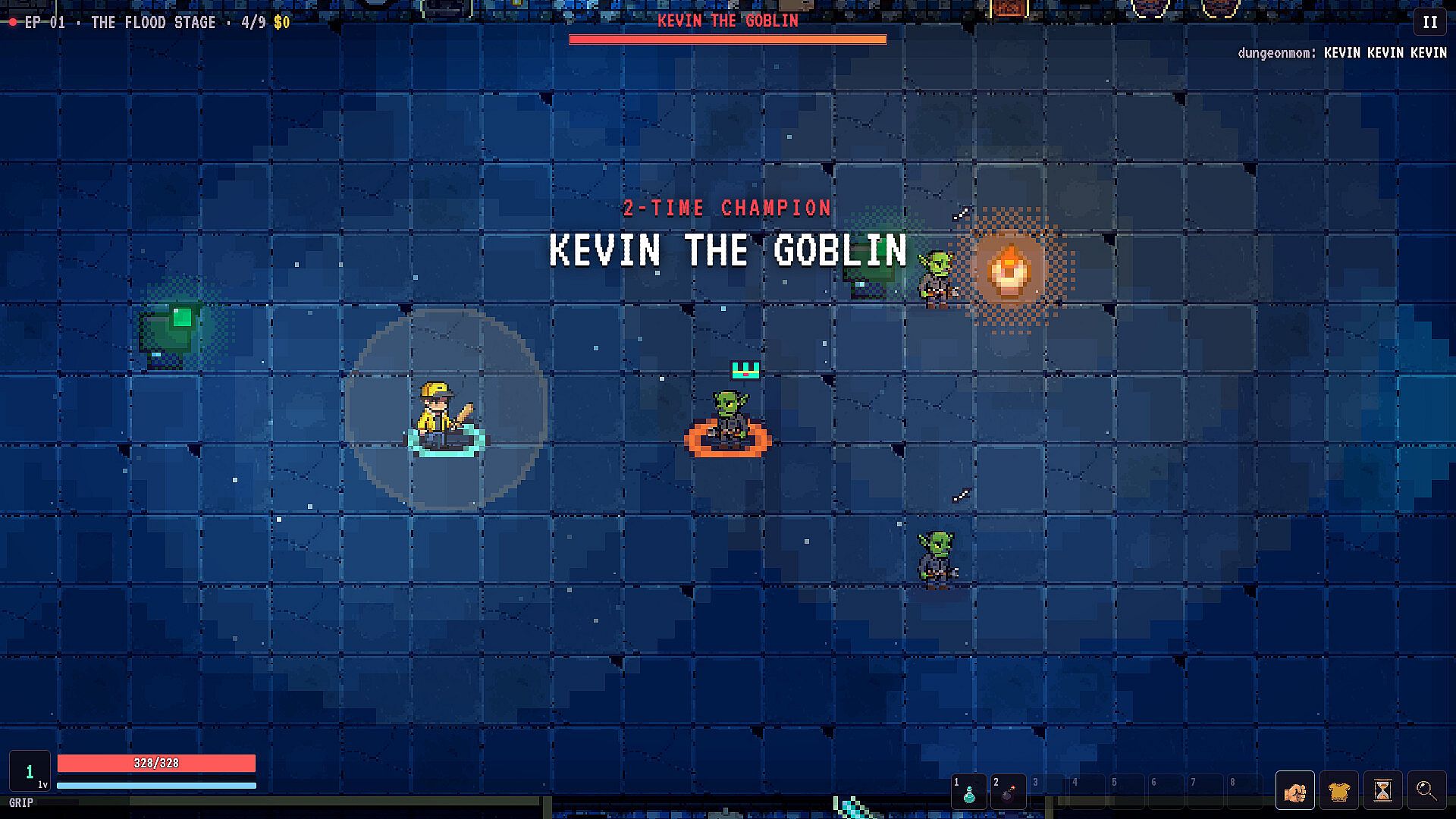
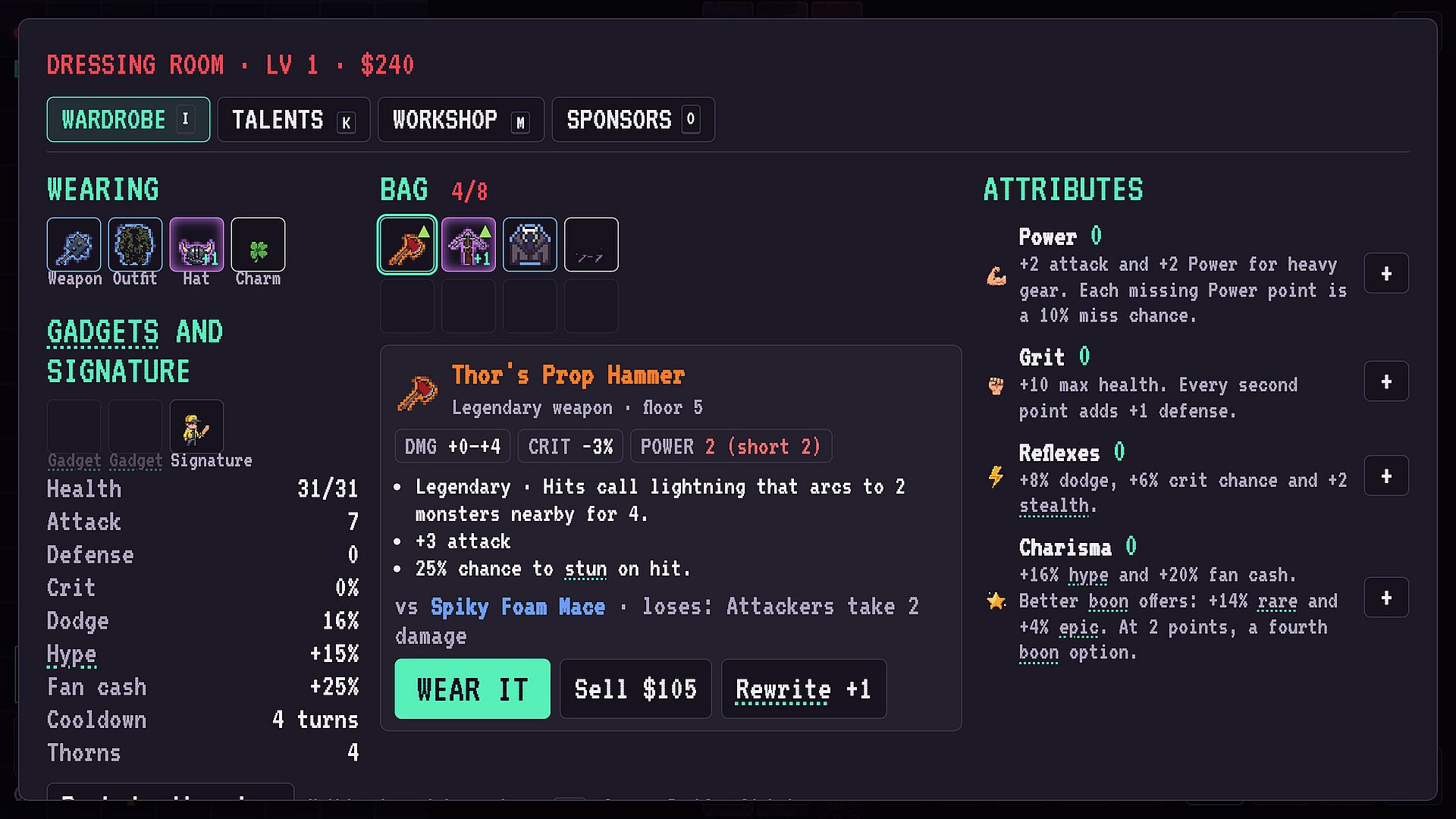
Ten distinct contestants bring unique skills and starting kits, while dozens of talents, gear pieces, and legendary items expand build options across runs. Death carries consequences: whatever defeats the player returns in future episodes as a named rival that levels up with each victory. Escaped rivals at low health reappear scarred and often gain resistances, such as fireproofing after repeated burns. Progression spans ten seasons, with early ones providing accessible entry points and later ones ramping difficulty sharply. Most attempts conclude before reaching the finale.
Game Modes
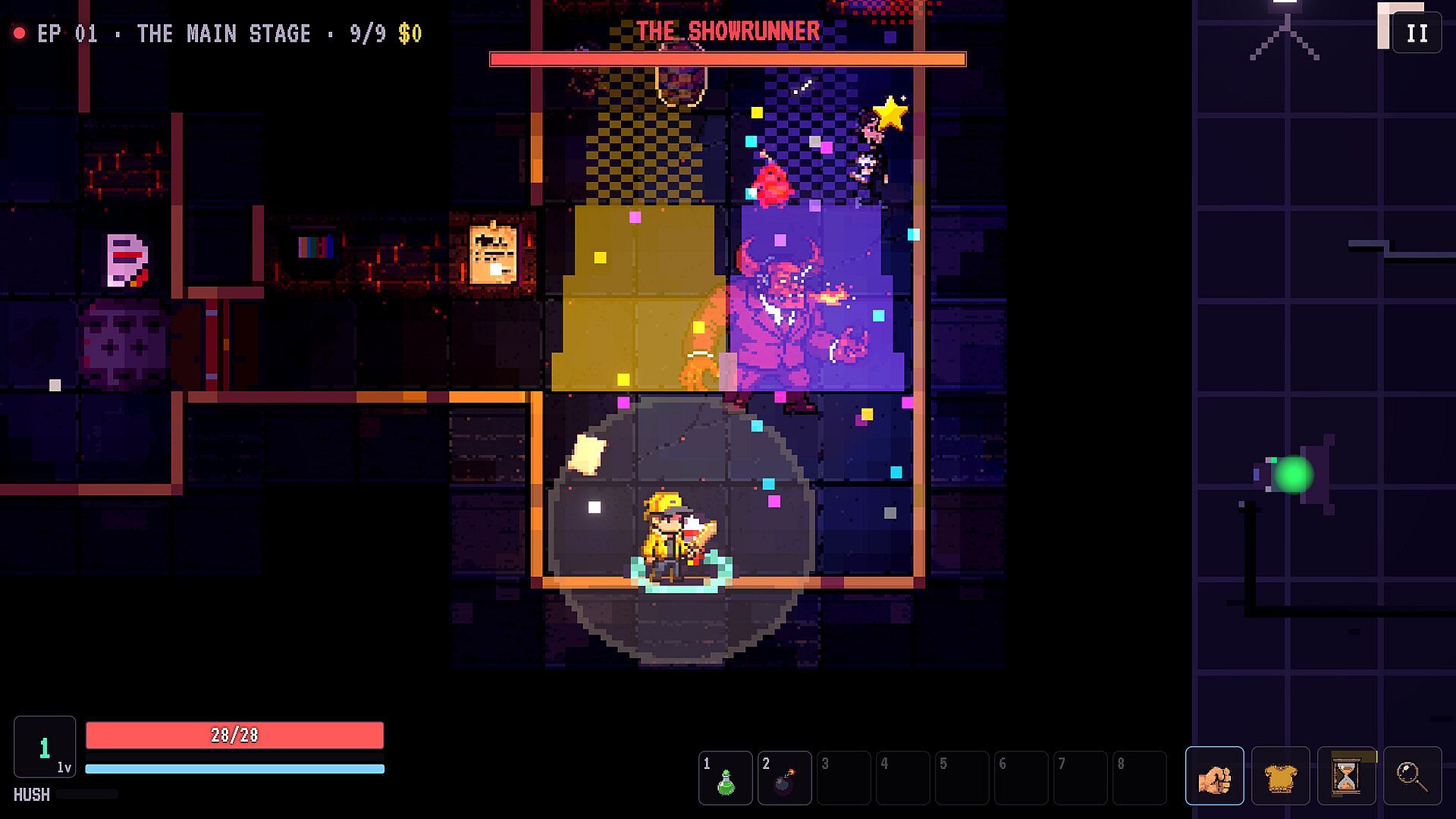
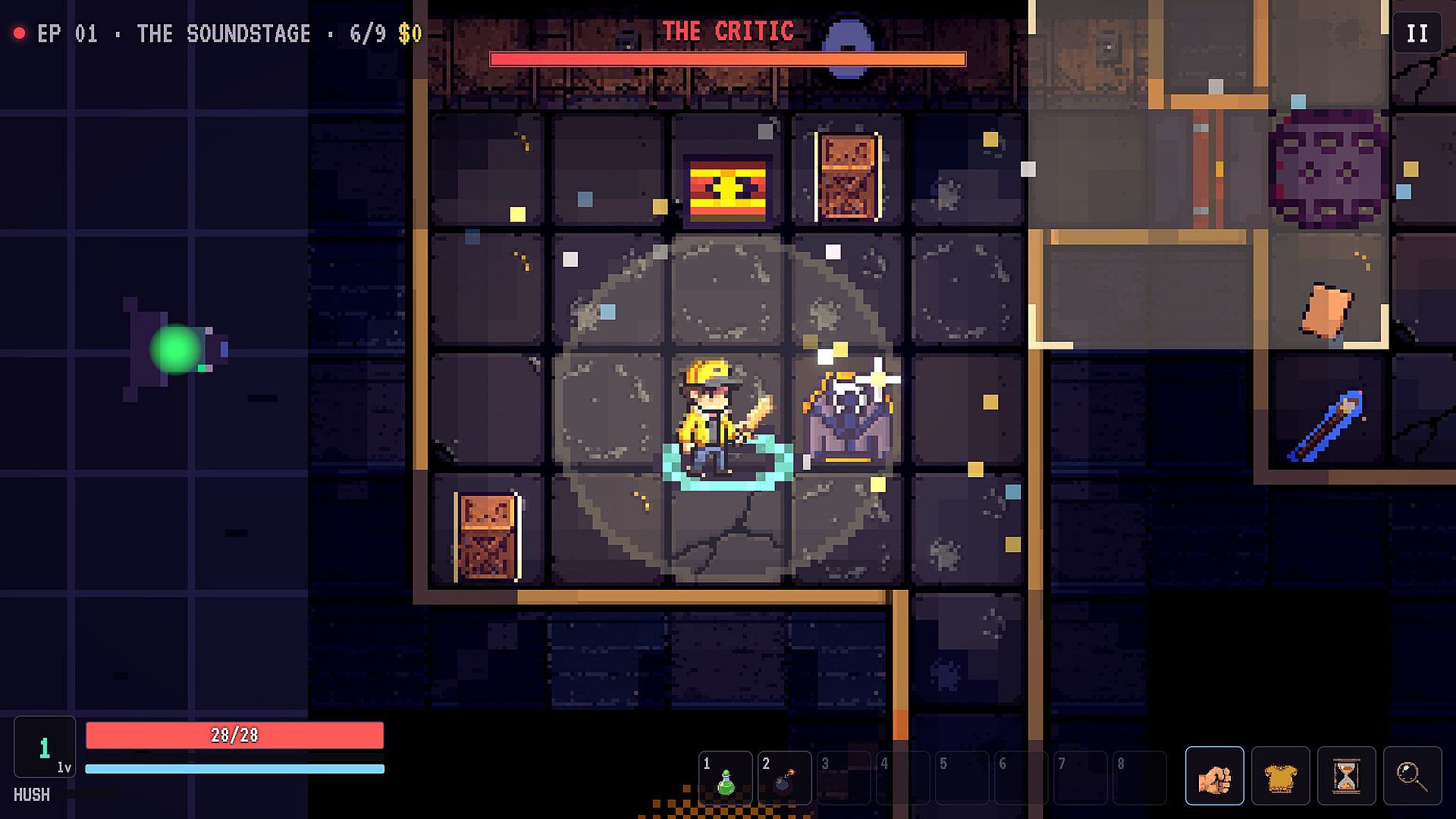
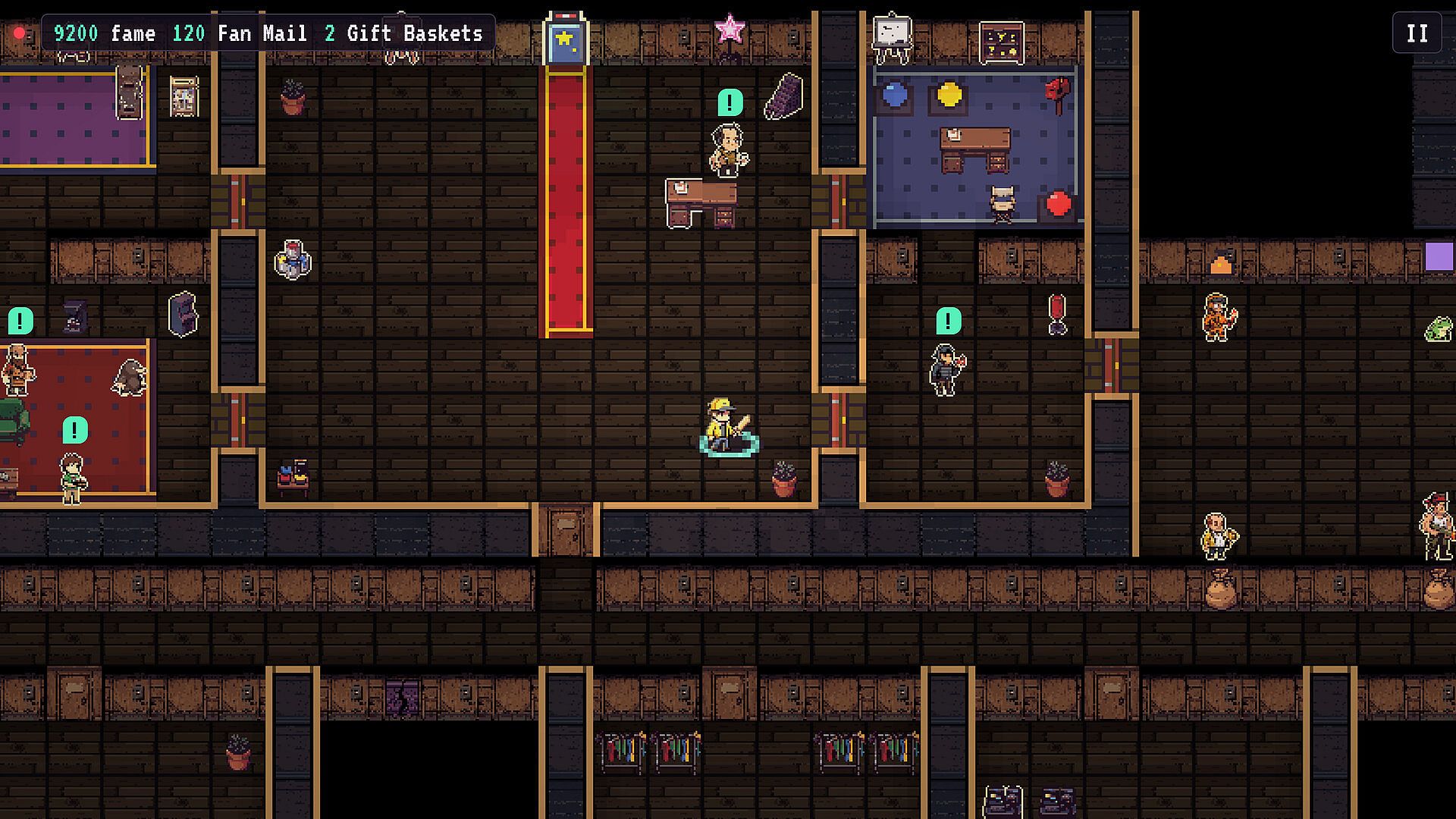
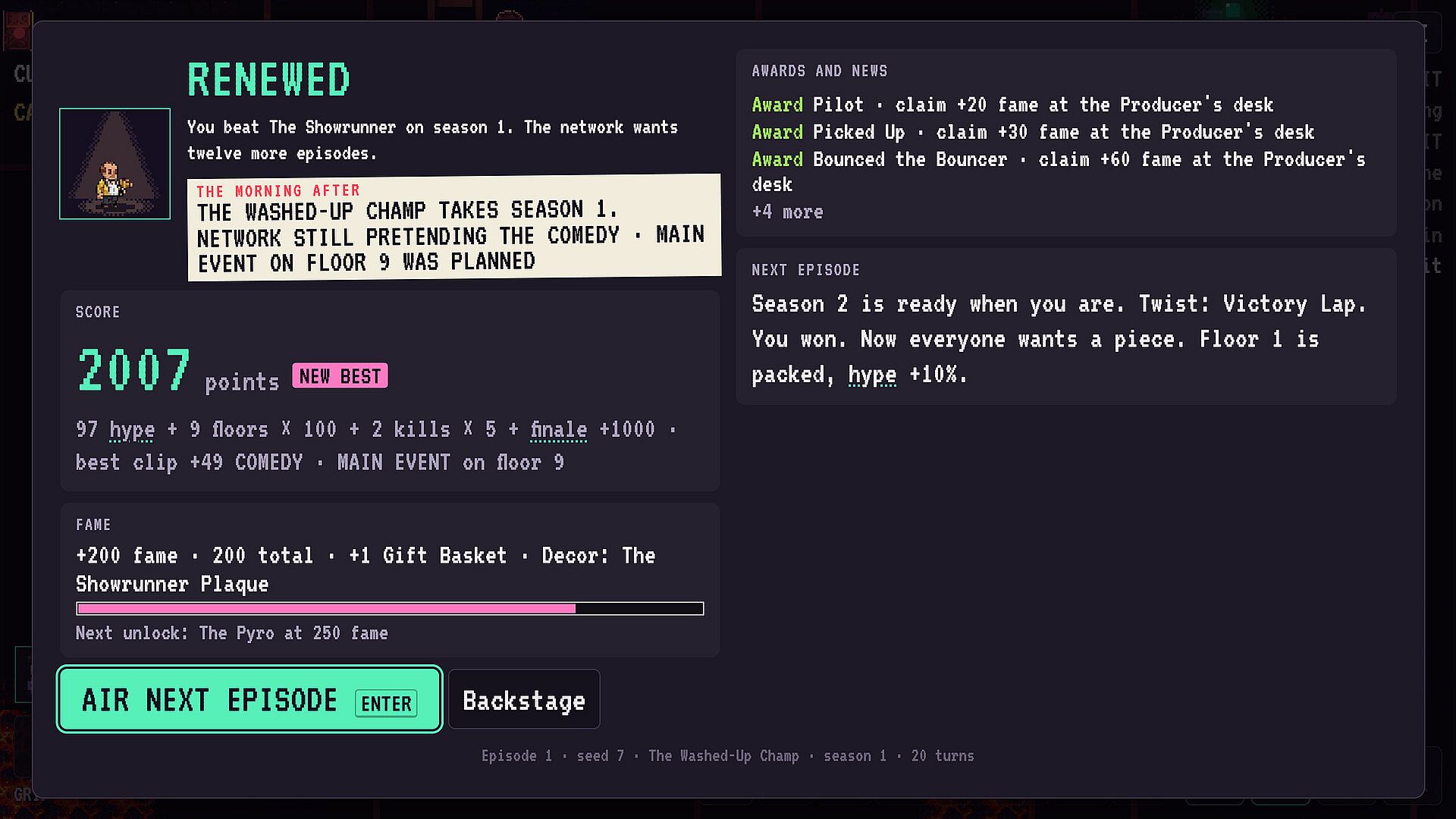
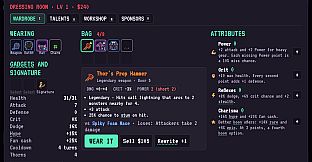
Episodes form the primary structure, each consisting of nine floors across three acts closed by bosses known as the Bouncer, the Critic, and the Showrunner. Between episodes, players explore a backstage area to spend fame on new contestants, sponsors, costumes, and renovations, while fan mail funds training upgrades. Seven optional challenges add variety to standard runs, and ten seasons provide escalating campaigns that unlock progressively tougher conditions.
A daily episode uses the same seed for all players, complete with a shared leaderboard for competition. Twitch chat integration allows viewers to vote on drafts and mystery boxes without requiring any login. The end card automatically captures and saves a clip of the player's standout moment from the run. Mod support arrives through simple JSON patches, and the game includes full controller support along with Steam Deck fullscreen compatibility.
Progression and Systems
Season advancement tracks overall success, moving the player from season one through ten as wins accumulate. Backstage management adds a layer of long-term planning, where earned fame unlocks permanent options and fan mail refines individual contestant performance. Rival persistence creates recurring threats that adapt based on prior encounters, encouraging varied strategies across multiple attempts.
Environmental interactions and sponsor synergies form the heart of tactical depth. Chain reactions from barrels or fire spread can clear groups efficiently, while sponsor boons enable specialized playstyles such as area control with the Ringmaster's summoned critters or sustained fire from the Pyro. The 23 monsters and three bosses scale with season difficulty, and the 46 gear types plus 14 legendaries support extensive experimentation within the roguelike framework.
Is It Worth Playing?
Floor Show suits players who enjoy deliberate, turn-based roguelikes with strong emphasis on positioning, environmental tactics, and build crafting through sponsor and boon combinations. The single-player focus with daily seeded runs and optional challenges provides consistent replayability without requiring multiplayer. Those who appreciate persistent rivals that evolve and a clear progression through ten seasons will find meaningful long-term goals. The game rewards careful planning and creative use of mechanics over fast reflexes, making it a strong fit for fans of puzzle-like combat and incremental unlocks in an indie RPG package.