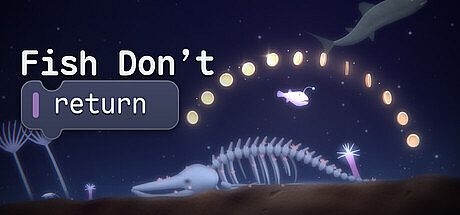


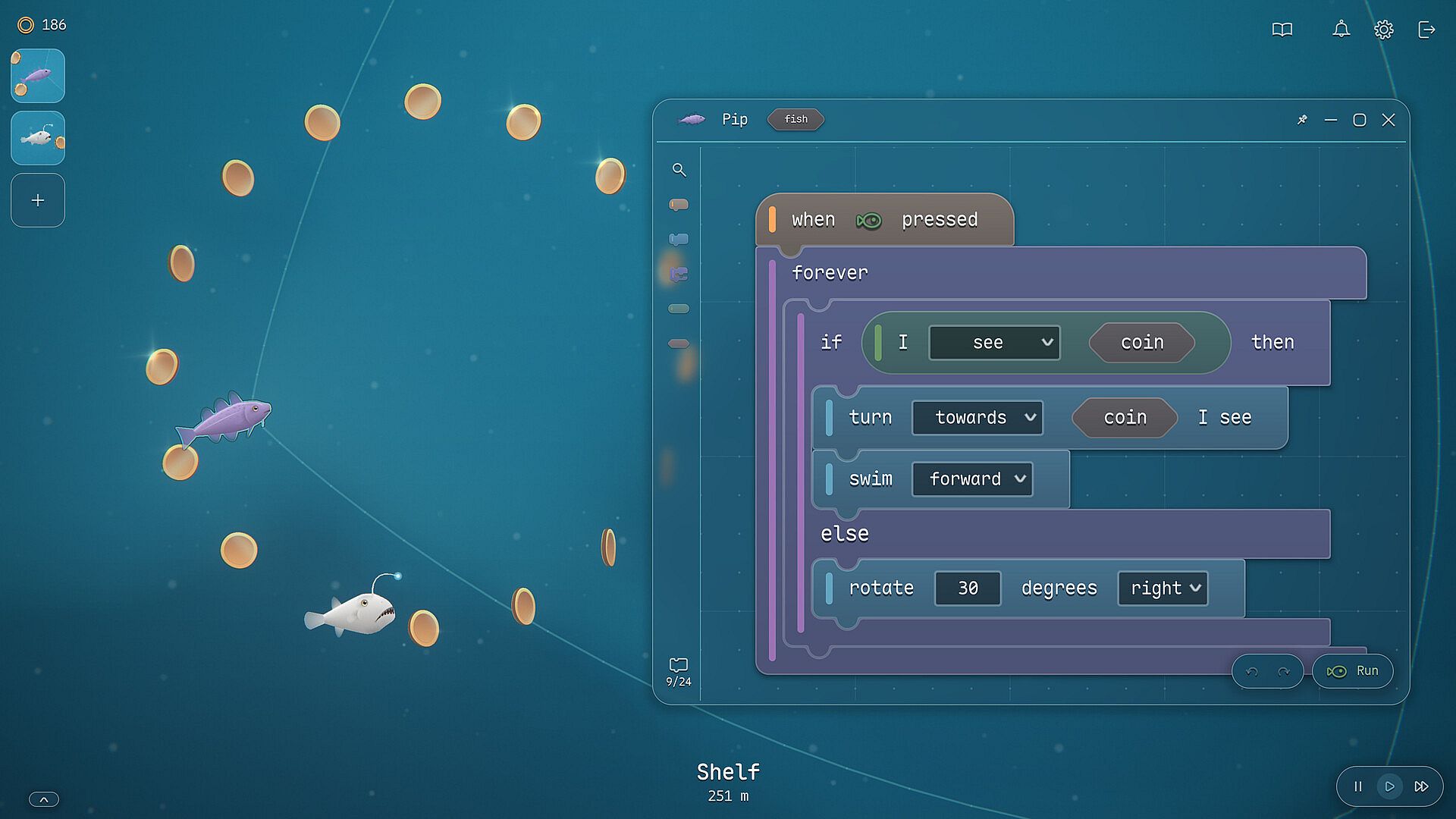


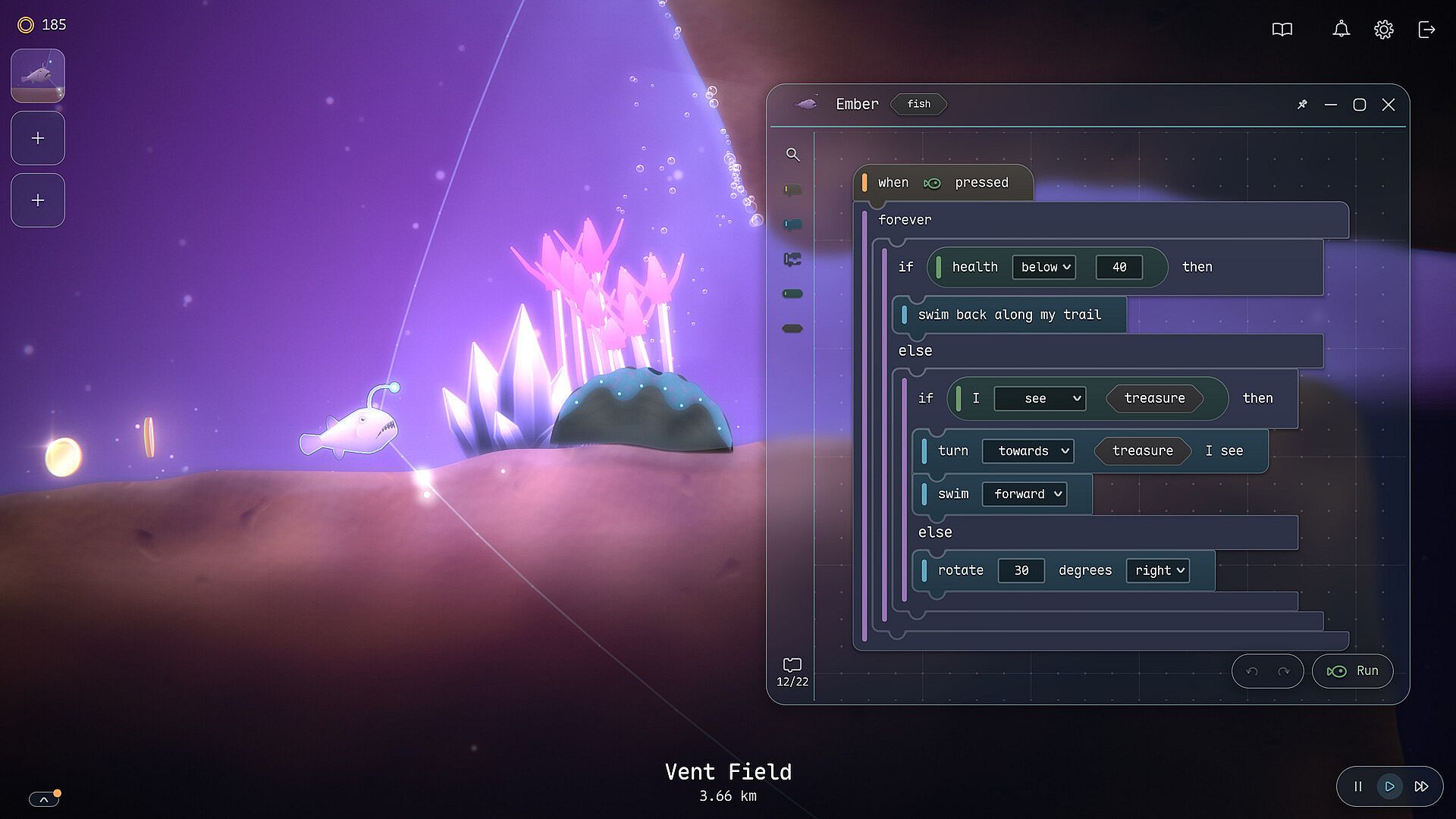
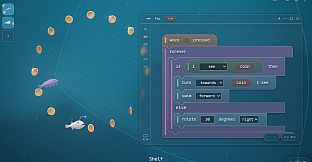





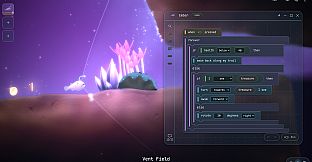
Fish Don't Return is an indie simulation game for PC in which players program fish to explore the depths of the Mariana Trench. The experience centers on purchasing fish with collected coins, assembling visual block-based programs, and sending them downward to gather resources while navigating hazards. Programs consist of readable sentence-like instructions that snap together without typing or syntax errors, making the system accessible for those new to programming.
Gameplay
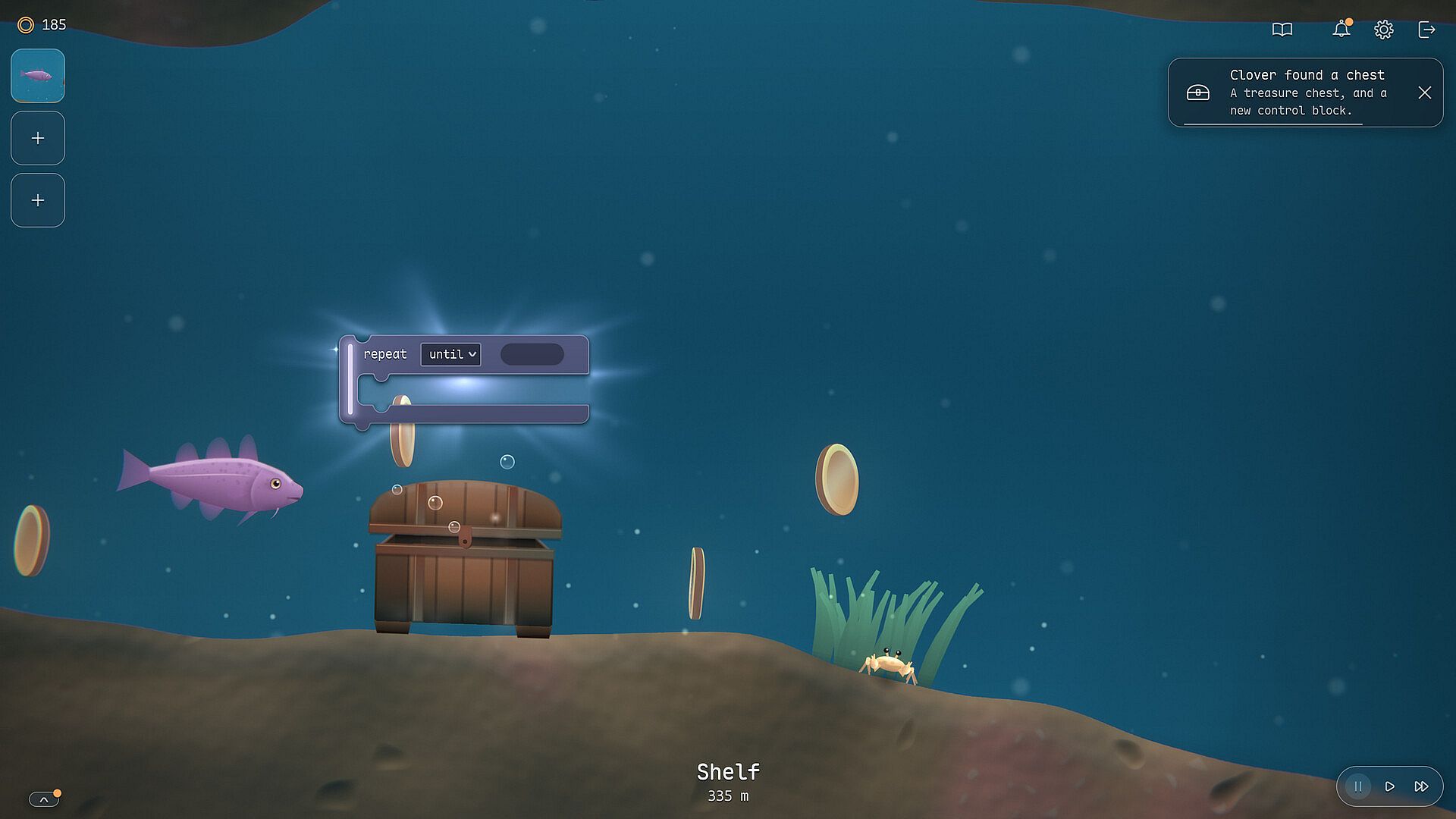
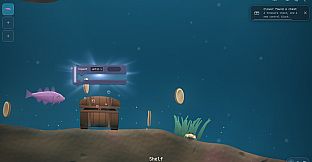
The core loop begins at the surface where players select a fish and build its program from available blocks. Once released, the fish follows the instructions independently, swimming after coins and treasure chests while the player observes from above. Coins fund additional fish, and chests unlock new blocks along with different fish types. A basic program might instruct a fish to turn toward any visible coin and swim forward, or else rotate steadily to search. Deeper programming options allow actions such as diving past 2,000 meters, waiting for threats to pass, retracing a path when health is low, or emitting ripples to summon other fish.
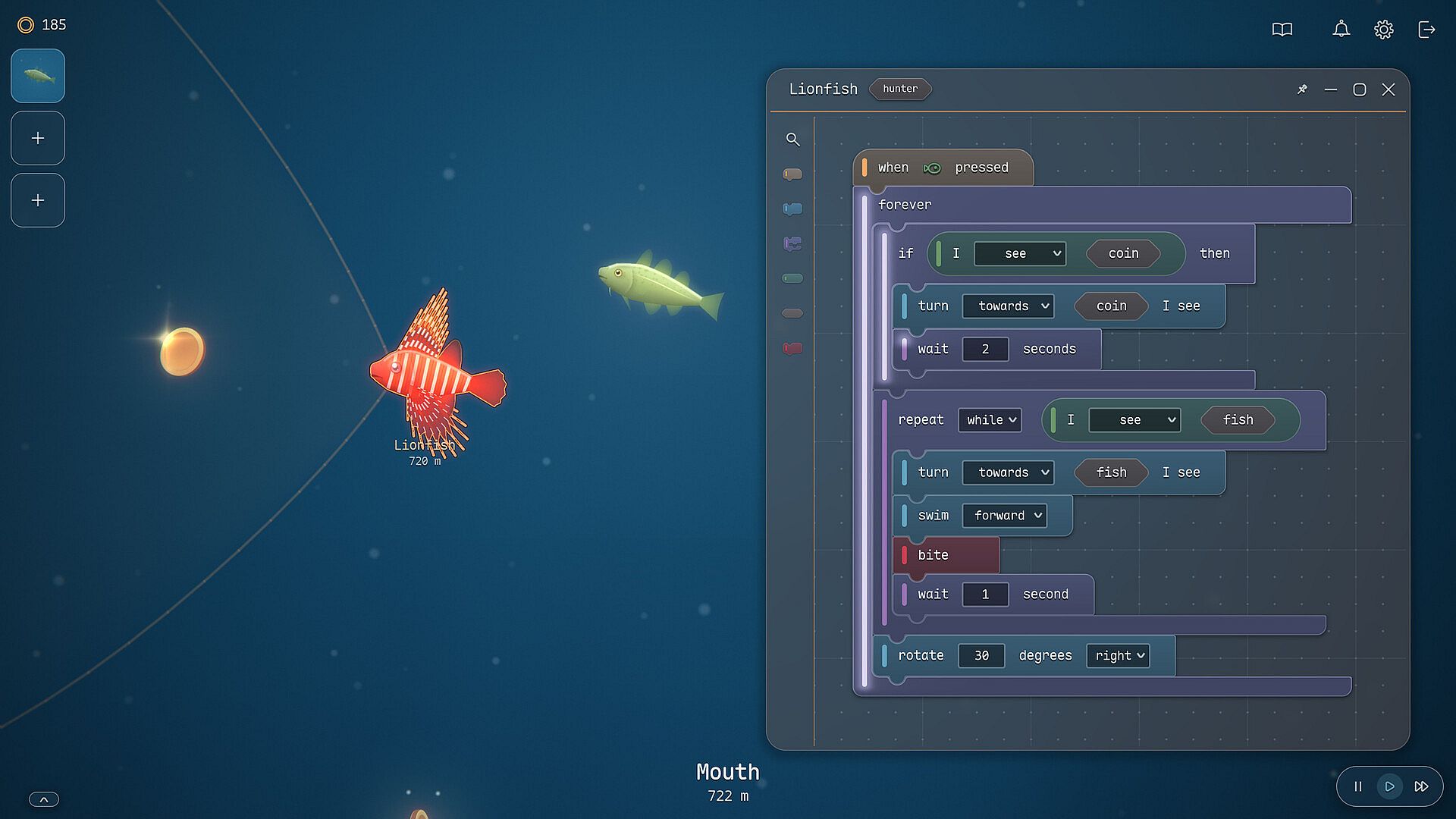
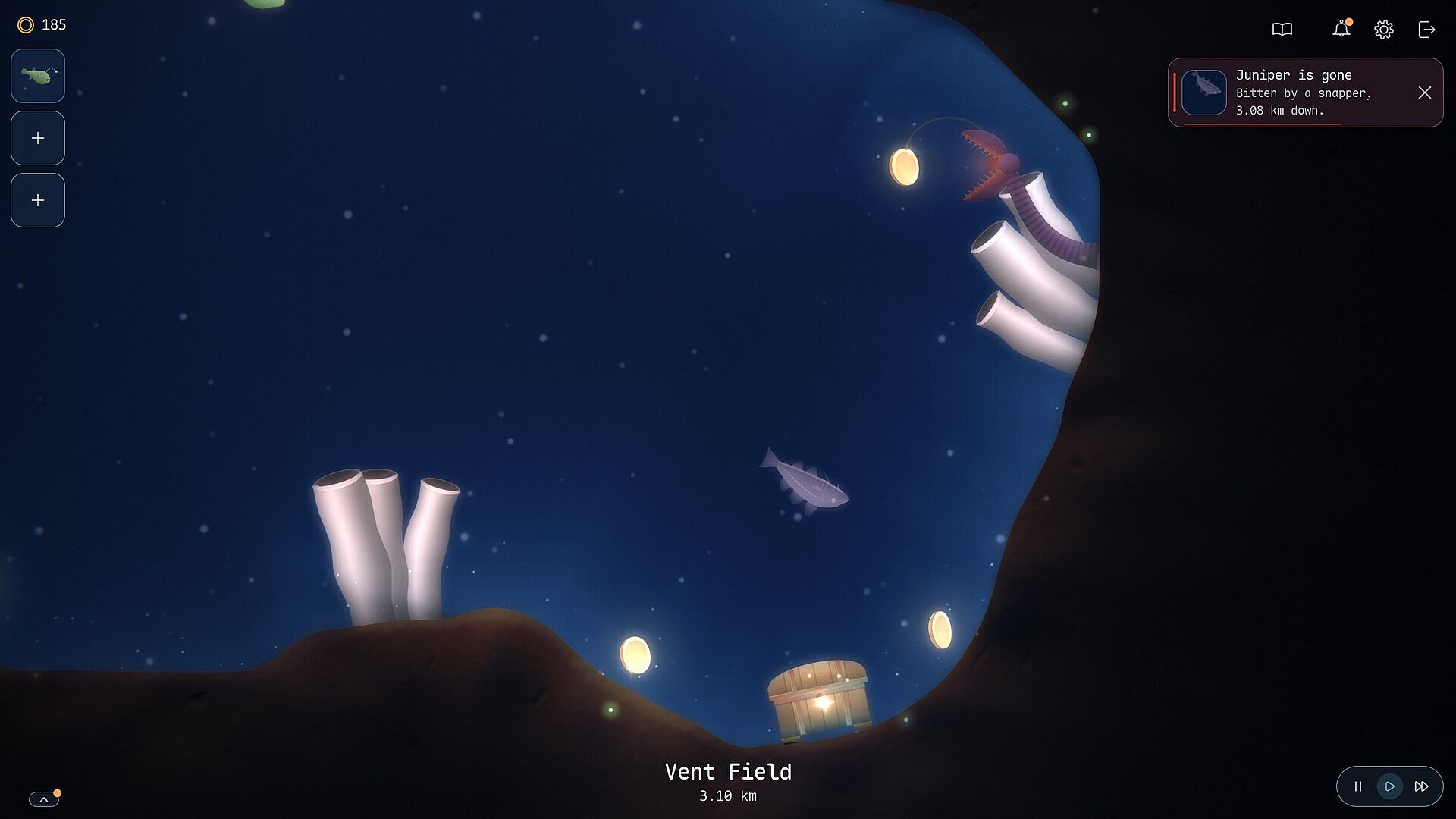
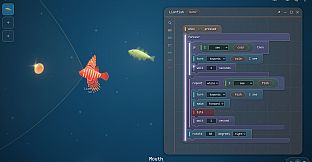
Hunters in the trench operate under the same block system, and players can inspect their programs in advance to anticipate behavior. Examples include a lionfish that pauses at coins, a marlin that pauses before charging, or an anglerfish whose light draws in programmed fish. Stationary threats like snappers and clams also follow readable programs that players can examine. At greater depths, program changes are restricted to areas lit by violet crystals, forcing reliance on the initial instructions elsewhere. Lost fish remain in place for later inspection, revealing exactly where their program led them astray.
Game Modes
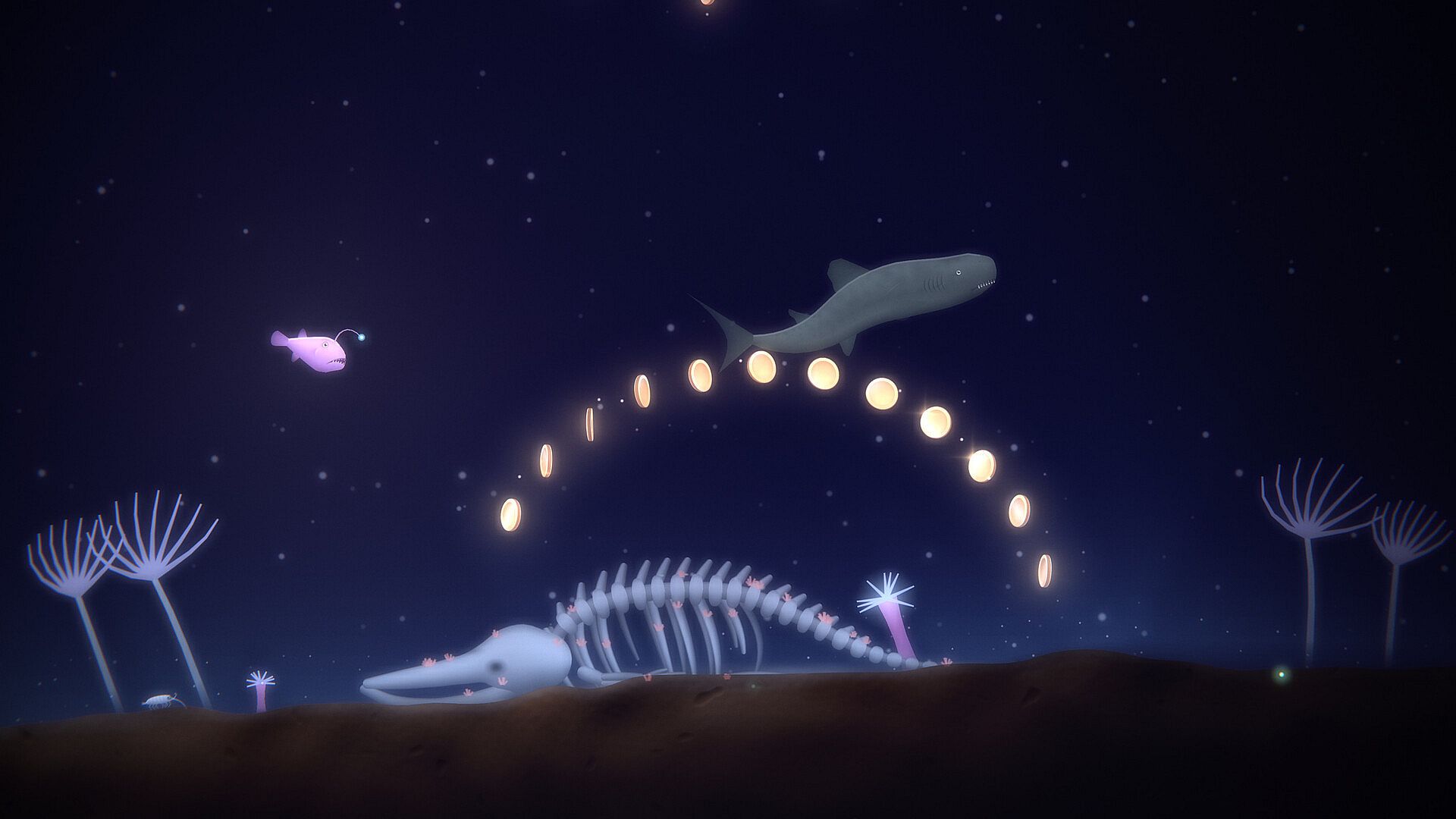
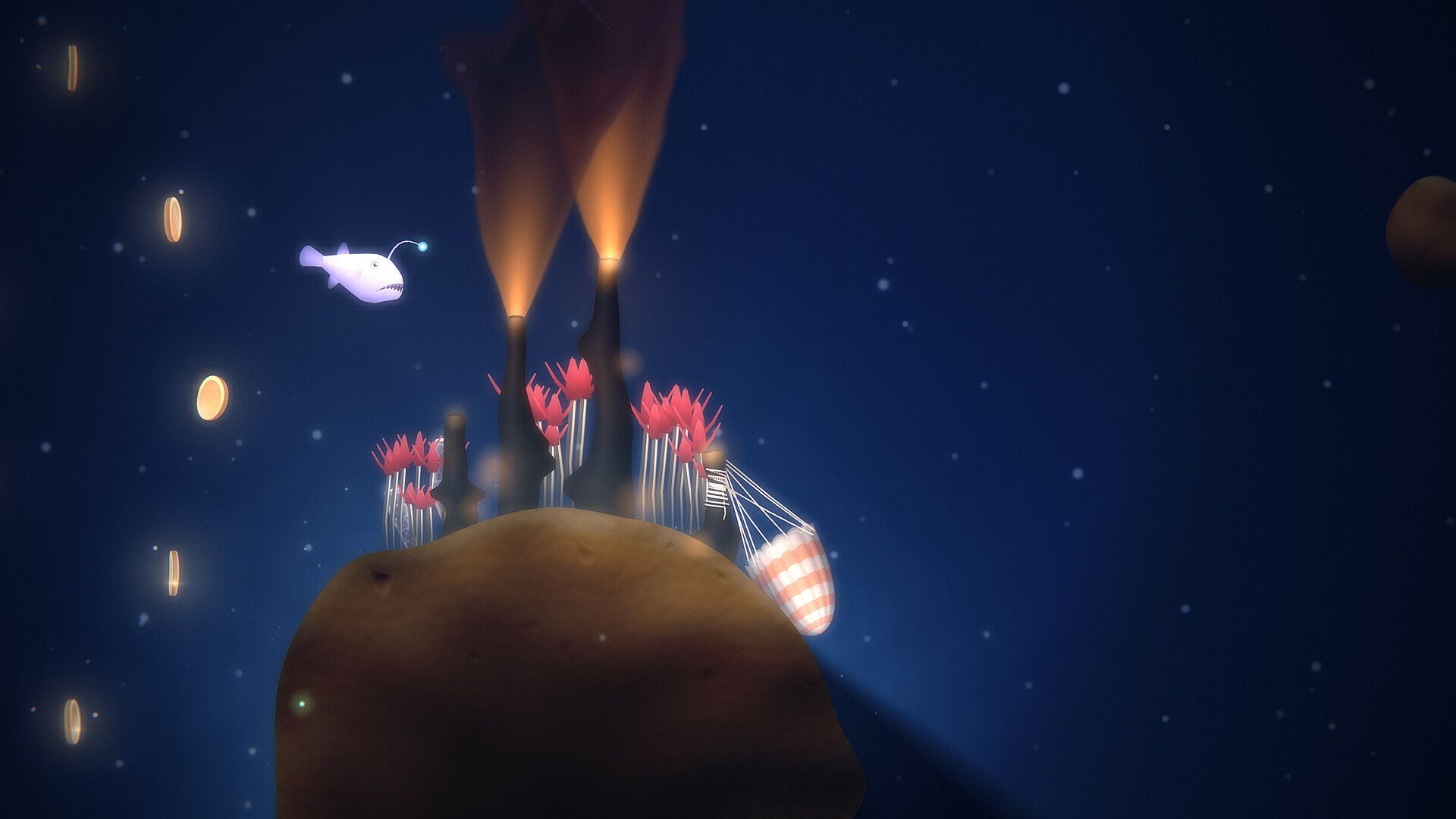
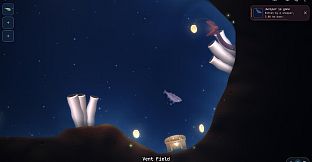
The game presents a single continuous descent through one fixed cross-section of the trench, identical for all players. This structure blends programming, resource collection, and observation into one uninterrupted session that spans from sunlit surface waters down nearly 11 kilometers to the seafloor. Regions feature distinct environments, from kelp forests and schools of fish near the top to black smokers, tube worms, whale skeletons, and glass sponges in the dark. Piano music composed and performed by the developer shifts with depth, and coin pickups add matching notes to the ongoing piece.
Progression occurs naturally through repeated fish runs that unlock deeper blocks and fish varieties. The experience remains single-player focused, with emphasis on iterative programming and learning from each fish's outcome rather than separate competitive or cooperative modes.
The Trench and Its Dangers
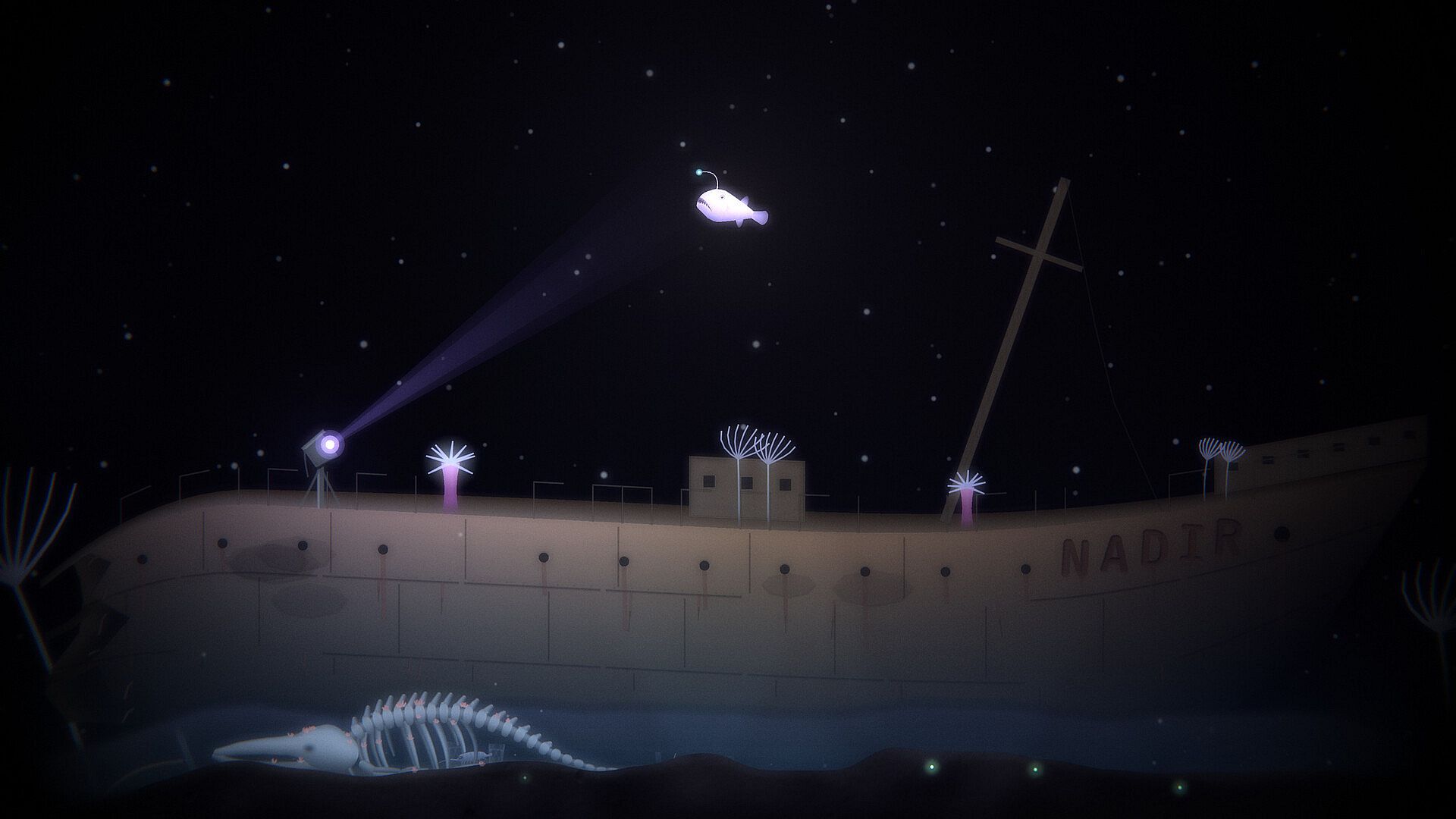
The hand-crafted map reveals its layers gradually as fish reach new sections. Upper areas offer bright water and marine life, while mid-depths introduce hydrothermal vents and skeletal remains. The lowest zones rely on bioluminescence from the fish themselves and local creatures. Hunters and fixed dangers test program quality, rewarding designs that evade, distract, or counter specific behaviors. The broken ship Nadir lies at the bottom, its scattered pieces revealing a short narrative when reached in sequence, culminating in an ending for those who guide fish that far.
Is It Worth Playing?
Fish Don't Return suits players interested in visual programming puzzles and patient observation within a simulation framework. Its block system removes barriers for beginners while allowing complex behaviors to emerge from simple instructions. The fixed trench encourages repeated attempts to refine programs against consistent challenges, with each lost fish providing direct feedback on what went wrong. Those who enjoy building systems that operate autonomously and uncovering layered environments through incremental progress will find the mechanics rewarding. The game runs on PC and centers on thoughtful iteration rather than fast reflexes or social features.