


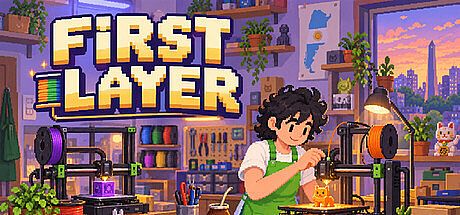


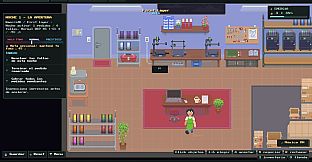
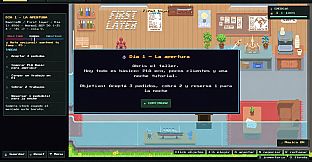
First Layer is a 2D indie simulation game centered on running a 3D printing workshop on PC. Players handle customer orders, material purchases, and machine maintenance across a day and night cycle while balancing resources and reputation to grow the business.
Gameplay
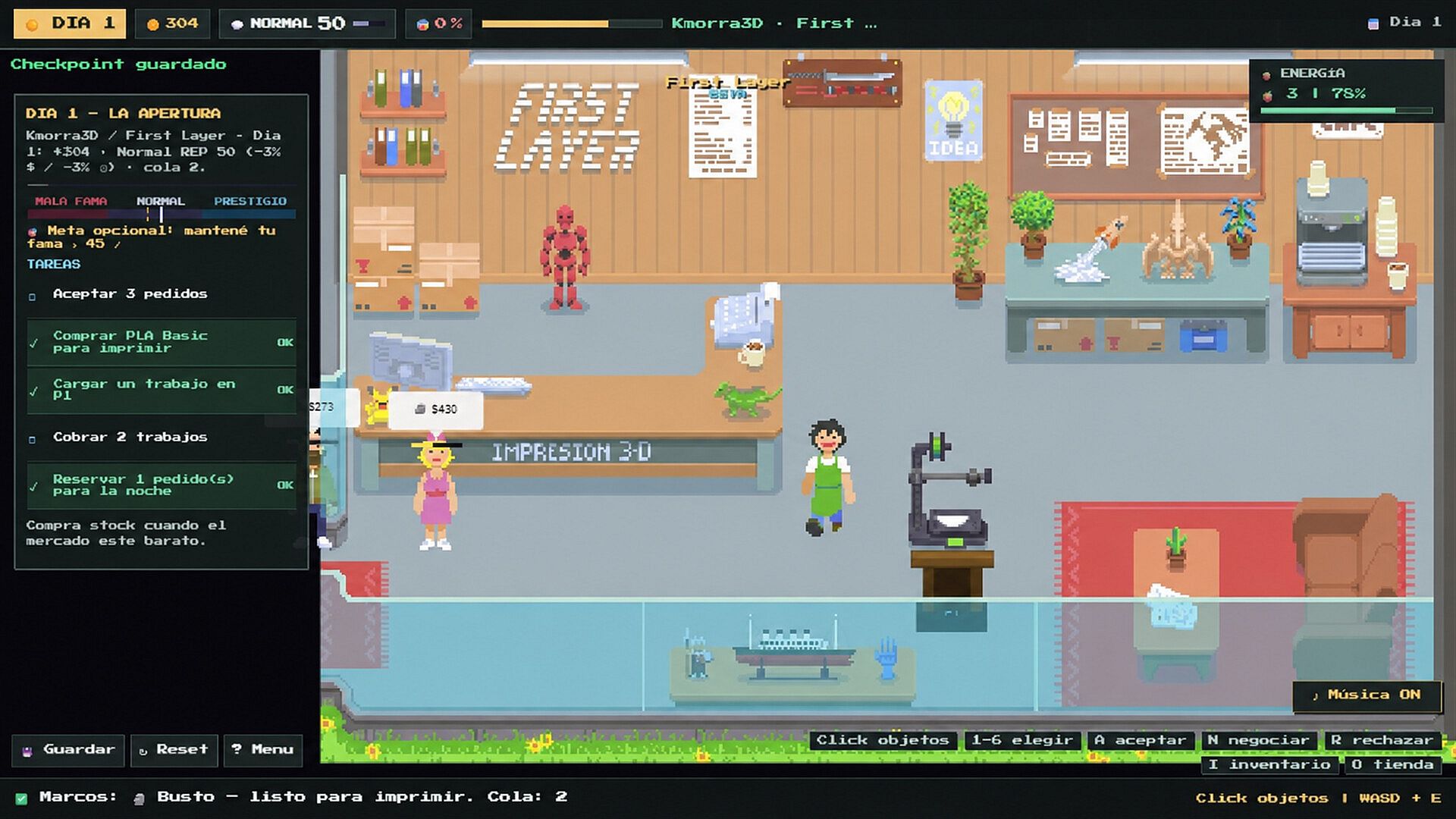
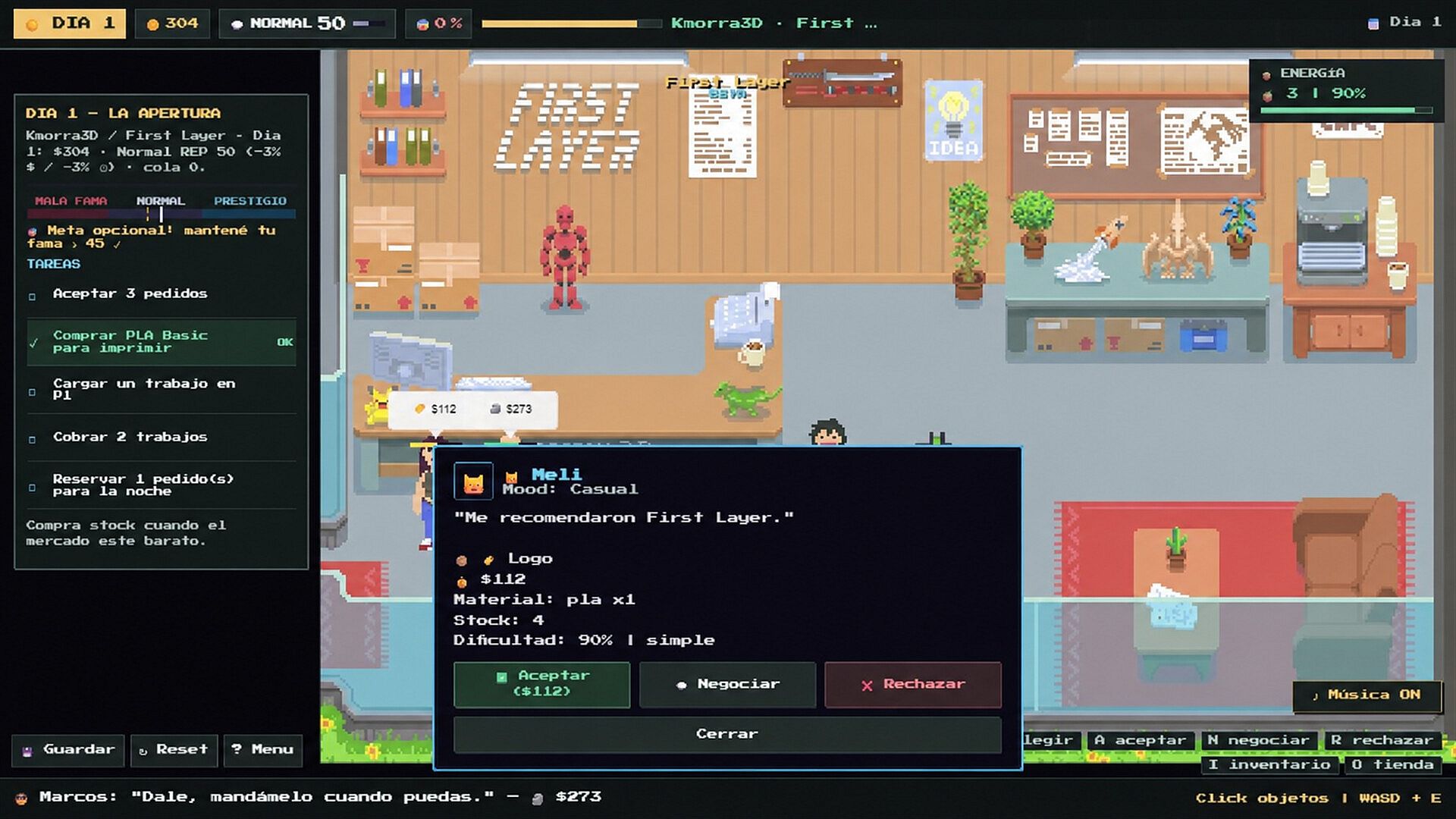
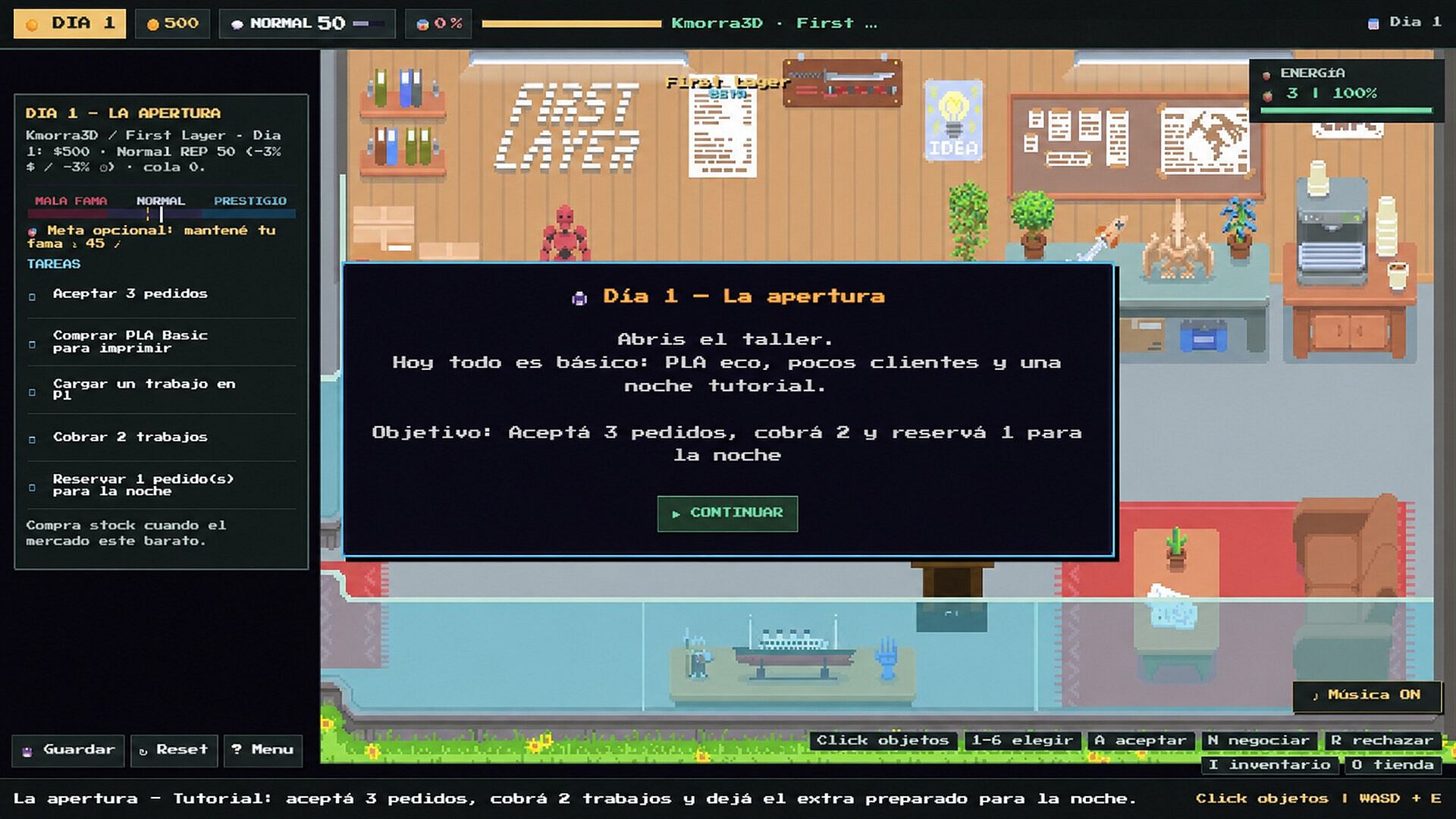
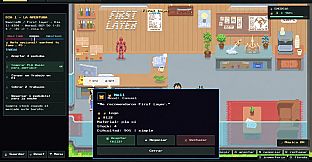
The core loop splits between daytime customer service and nighttime production oversight. During the day the workshop opens to clients who present orders with varying personalities, deadlines, and requirements. Decisions involve accepting, negotiating, or declining jobs while purchasing filament and preparing jobs for the printers. Resource management and reputation tracking influence which commissions prove feasible without overextending capacity.
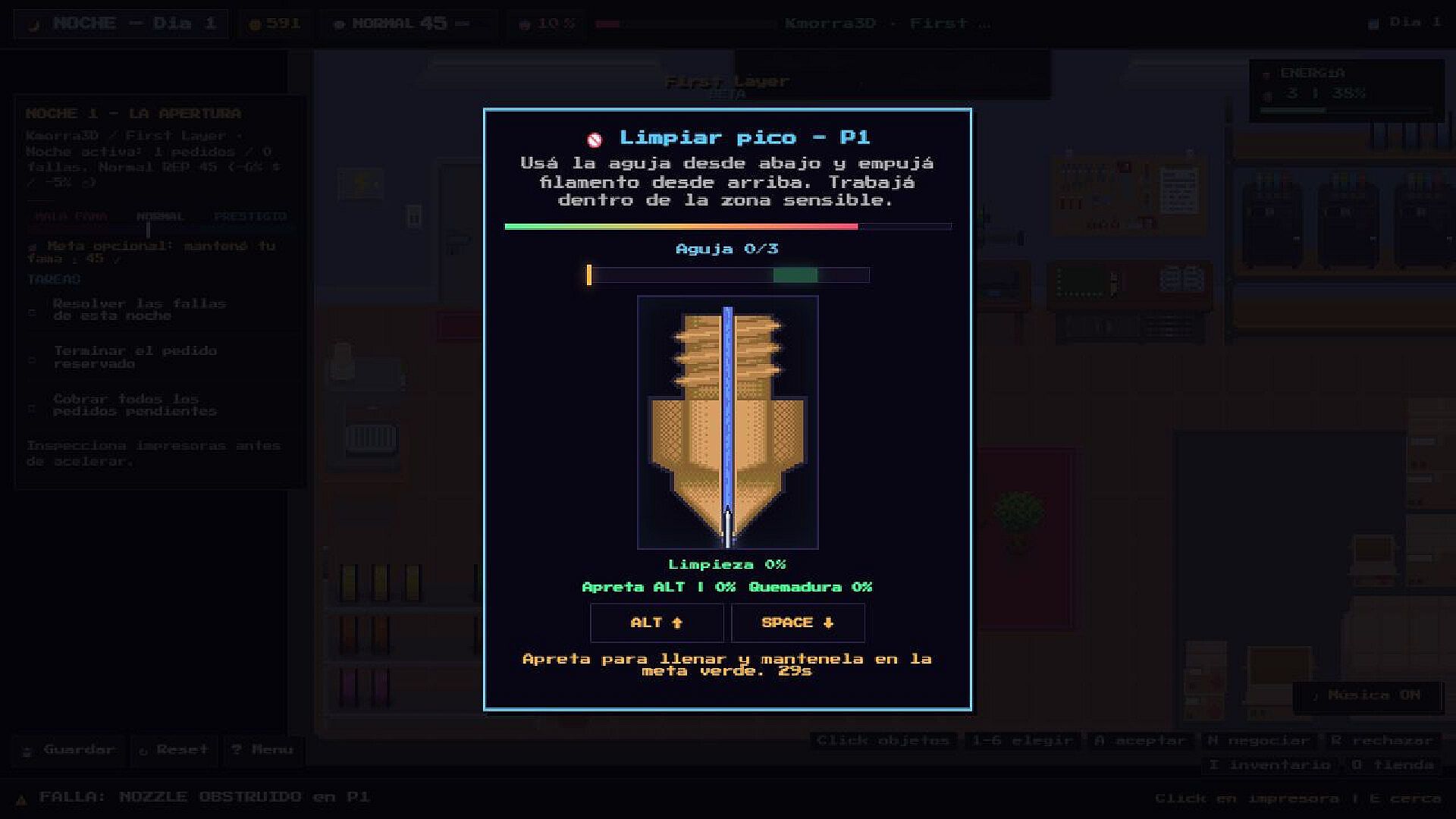
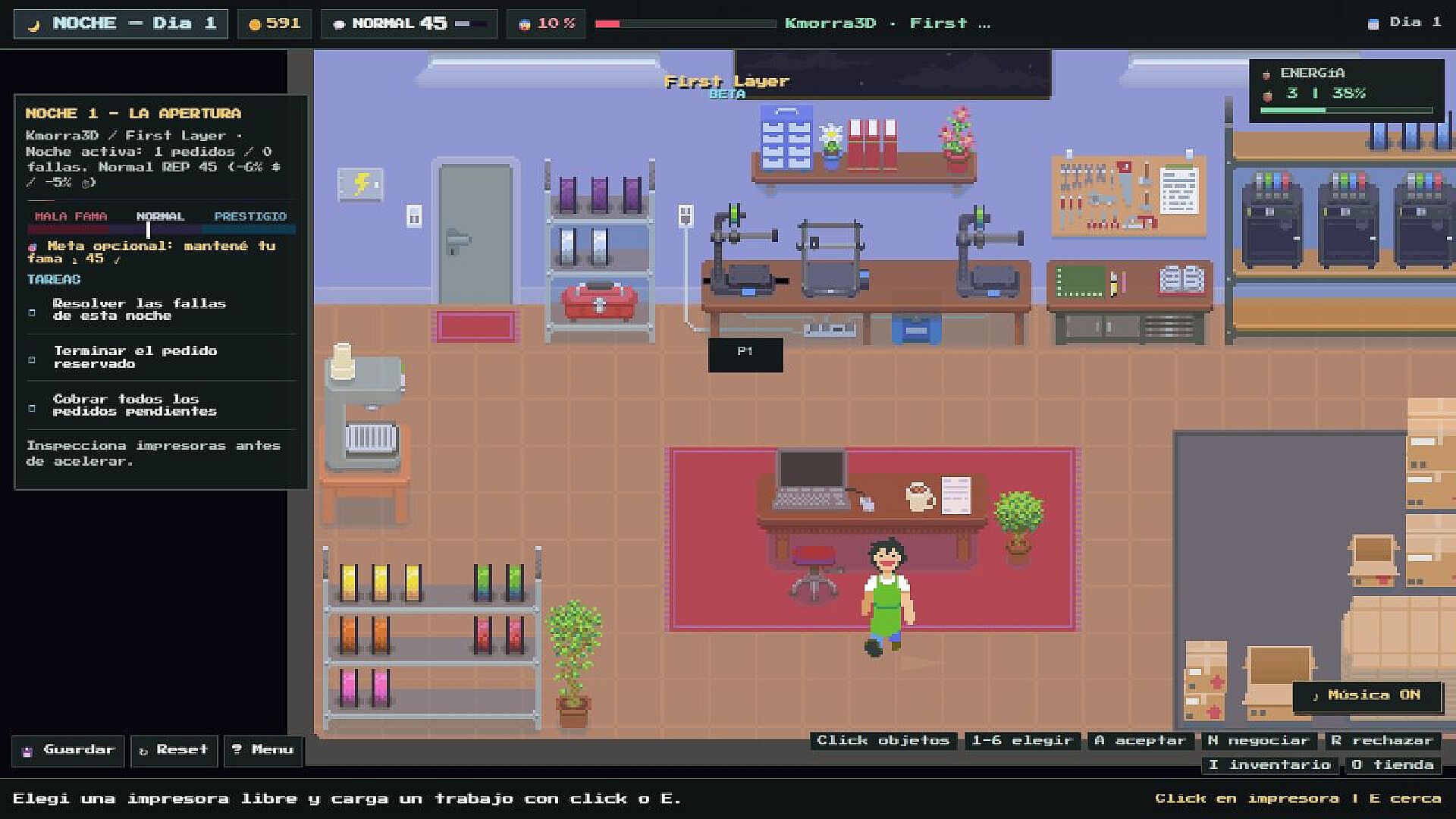
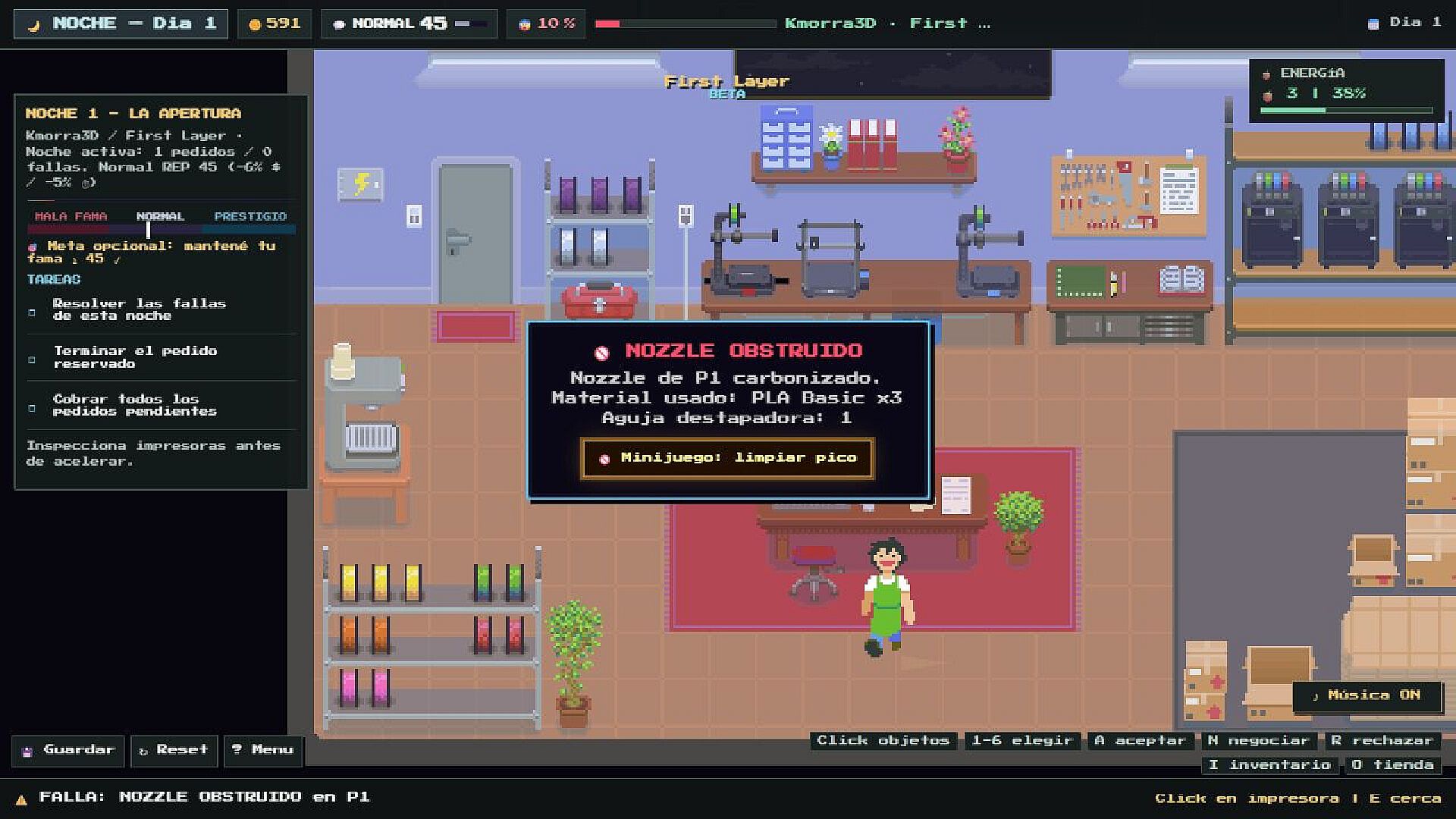
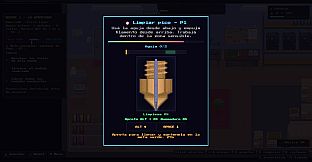
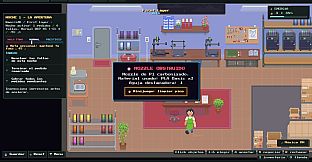
At night attention shifts to the machines themselves. Players move through the workshop to address common failures such as filament jams, clogged nozzles, poor bed adhesion, and sudden power outages. Each issue must be resolved before it ruins an ongoing print or delays the next batch. The 2D perspective keeps navigation straightforward while requiring constant movement between stations to keep multiple printers running simultaneously.
Progression comes through reinvestment. Earnings fund additional printers and upgrades that increase output or reduce failure rates. The challenge lies in scaling operations without letting material costs or machine downtime erode profits. Every accepted order adds workload that must be completed before the next day begins, creating steady pressure on planning and prioritization.
Game Modes
First Layer presents a single cohesive single-player experience built around the repeating day and night phases. There are no separate competitive or cooperative modes. The entire game focuses on managing one workshop through successive shifts, with growth measured by expanded printer capacity and improved equipment rather than external rankings or leaderboards.
Is It Worth Playing?
Players who enjoy deliberate resource management and workshop simulation will find a focused loop that rewards careful scheduling and quick troubleshooting. The day phase emphasizes interpersonal decisions with customers while the night phase tests spatial awareness and problem solving under time pressure. Growth feels incremental yet meaningful as each new printer or upgrade expands what the workshop can handle.
The game suits those interested in realistic hobby simulations without combat or exploration elements. Its strength lies in the contrast between customer-facing choices and hands-on machine maintenance, both of which tie directly into long-term business decisions. Because the experience remains contained within one persistent workshop, it appeals to players who prefer steady progression over episodic content or multiplayer sessions.
Availability on PC makes it accessible for those with an interest in 3D printing themes or management sims that emphasize daily routines over spectacle. The absence of additional modes keeps the focus narrow, which benefits players seeking a self-contained challenge rather than varied playstyles.












