










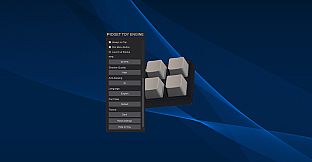




Fidget Toy Engine is an indie casual simulation game built for PC that places a collection of interactive desktop toys in a compact transparent window. Players open the app to access satisfying distractions they can manipulate while working, studying, or taking short breaks, with each toy offering distinct physical responses and sounds.
Gameplay
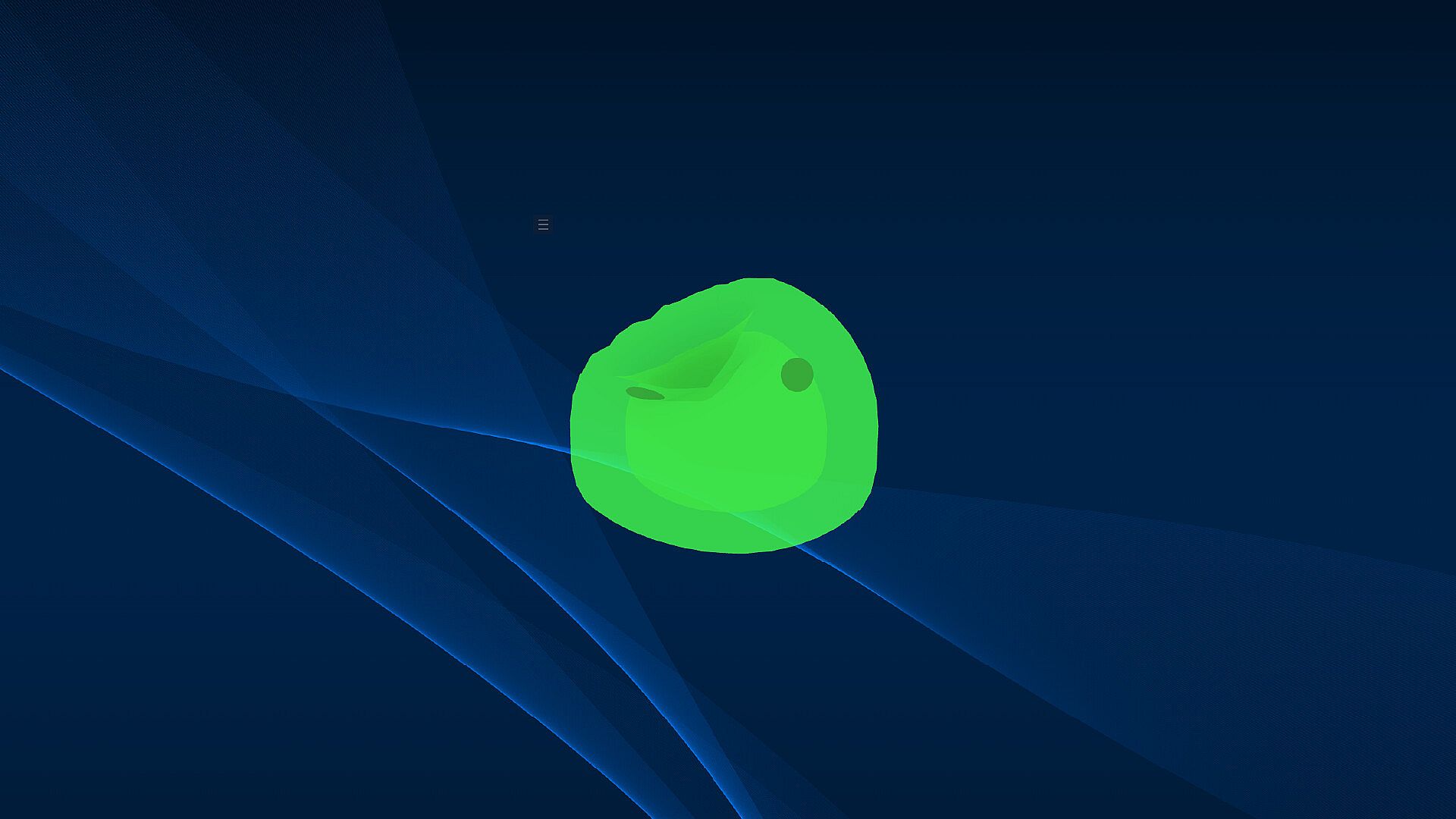
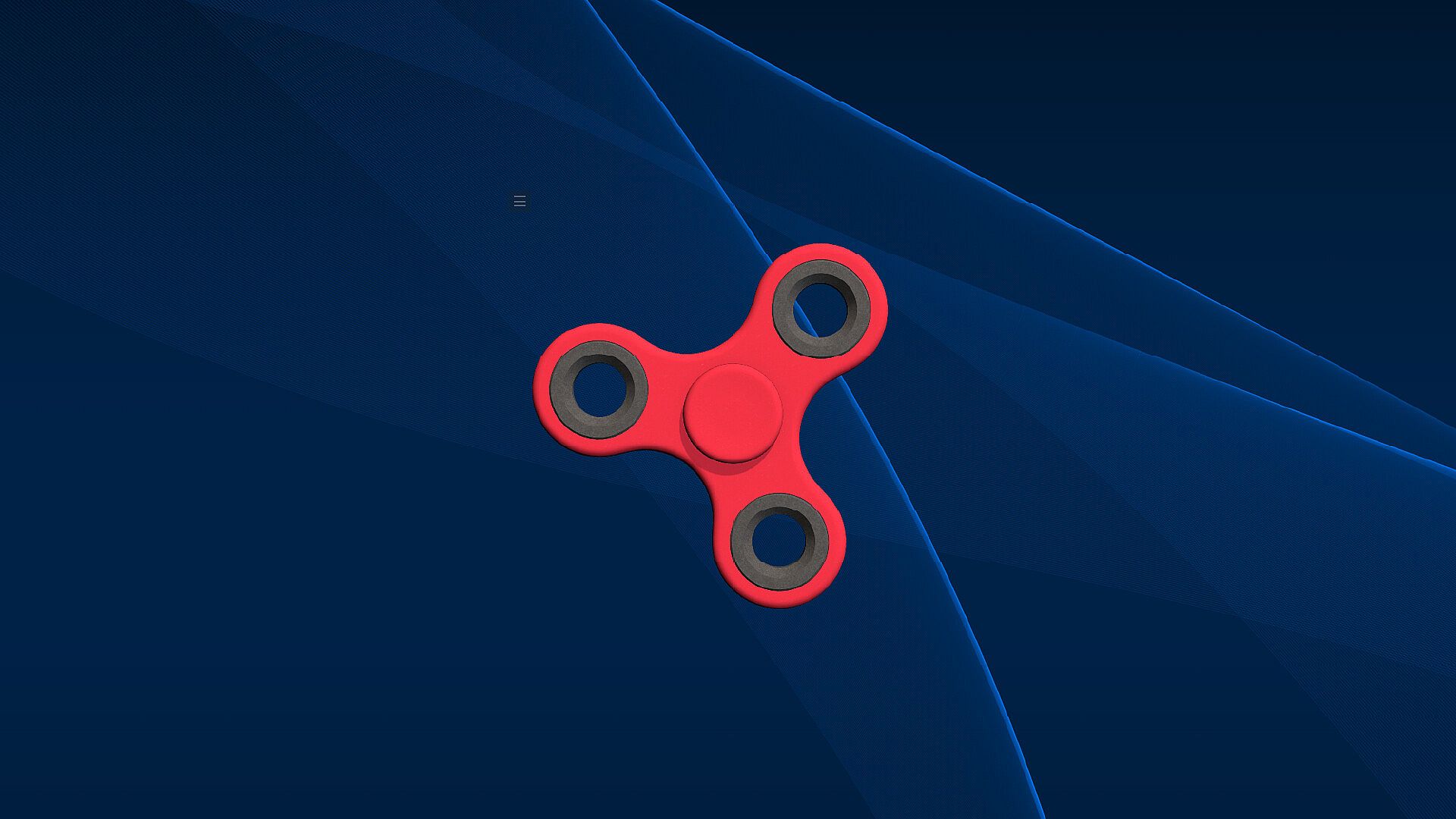
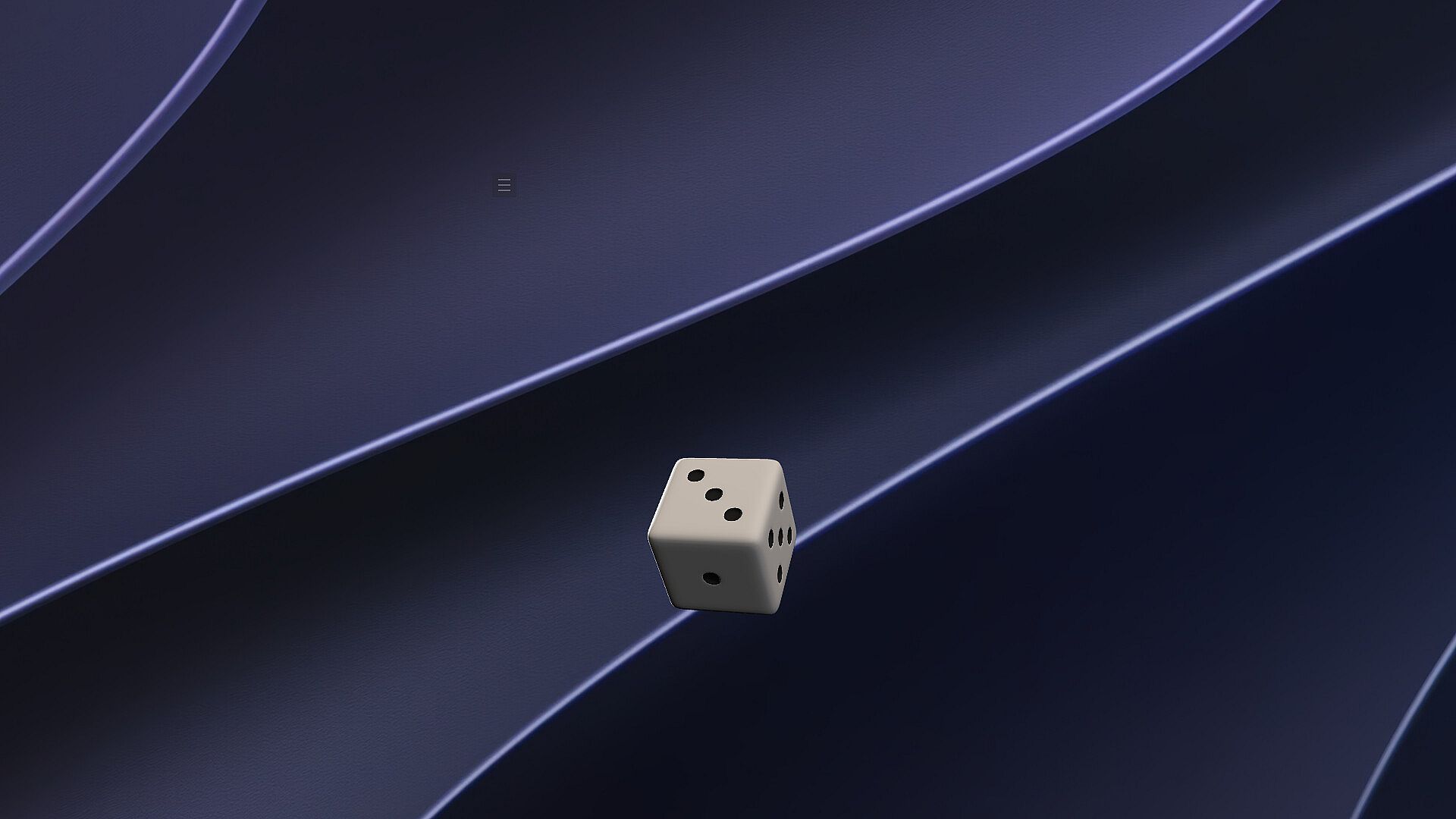
The core loop centers on selecting and interacting with individual toys inside the always-available window. Users spin objects like fidget spinners or shurikens, squish virtual slime, tap keys on a miniature keyboard, roll dice, launch projectiles from a slingshot, guide a ball around a roulette wheel, or observe a bouncing DVD logo. Each toy responds with its own movement patterns, reactions, and audio cues that shift based on window position for stereo effect.
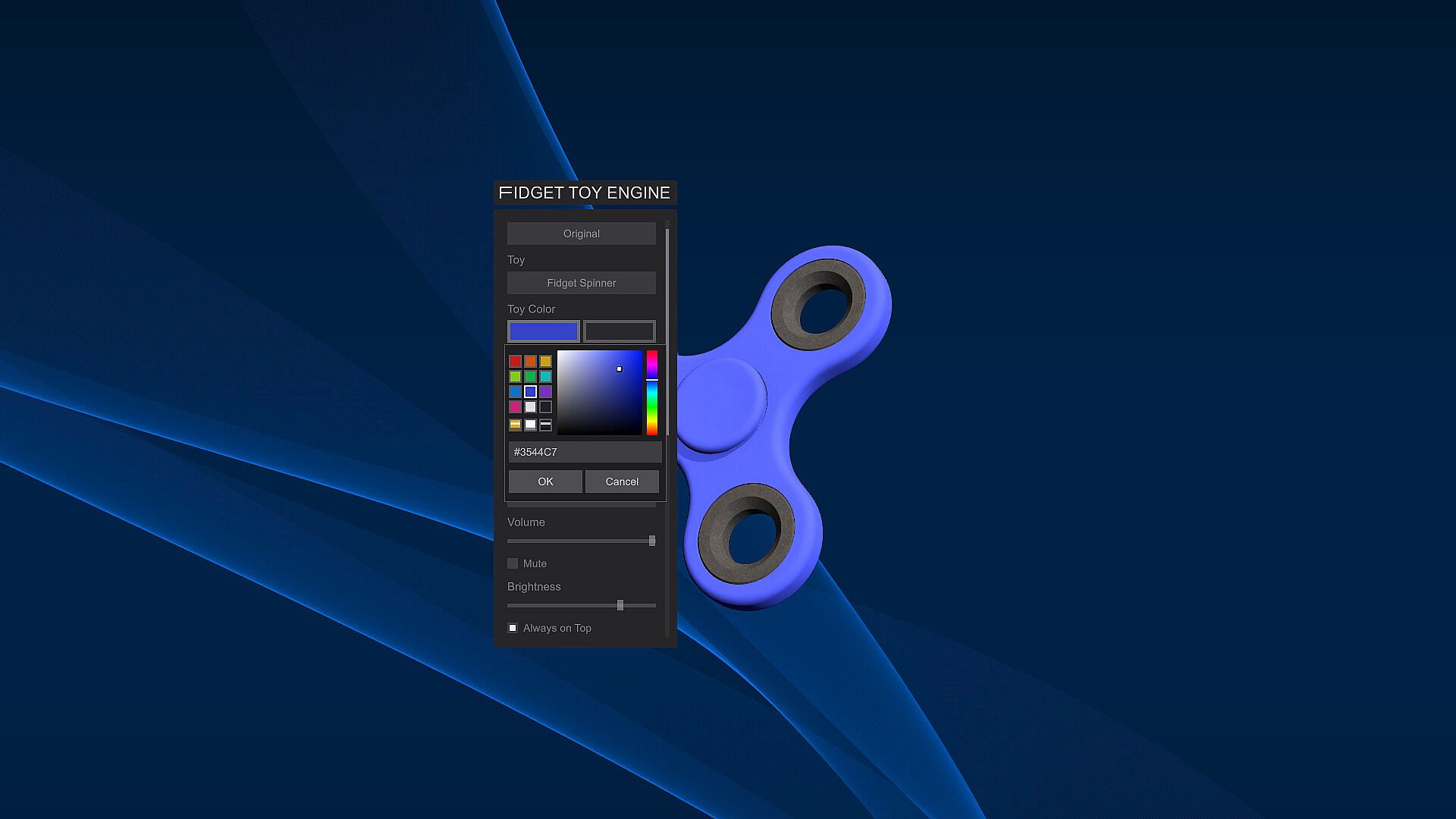
Customization extends to resizing the window, adjusting overall volume and brightness levels, and applying custom colors plus metallic finishes to selected toys. Favorites can be saved for quick access while a random selector provides variety without manual choice. The transparent overlay stays above other applications or minimizes to the system tray, and automatic launch on startup keeps it ready at the desktop edge.
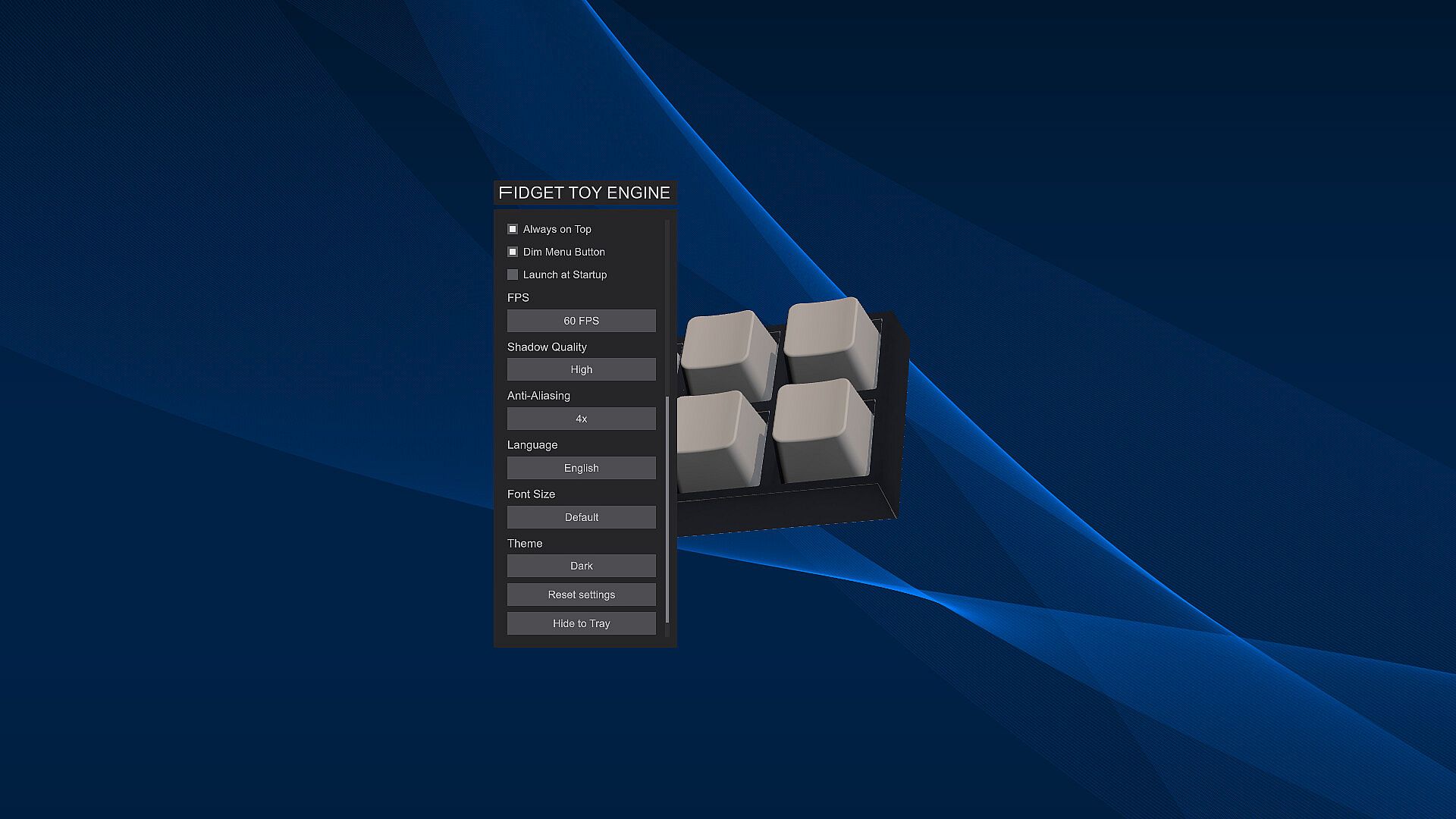
Performance options include dark or light themes, enlarged interface text, and adjustable frame rate, anti-aliasing, and shadow quality to suit different hardware setups. The entire experience runs as a lightweight single-player application with no required progression or timers.
Game Modes
Play occurs through flexible interaction styles rather than structured competitive formats. Short sessions involve quick taps or spins on one toy for immediate feedback, while longer use keeps a chosen toy active in the background during other tasks. Random selection serves as one approach to cycling through options, and saved favorites create personalized setups that persist across sessions.
Steam achievements track specific playful milestones such as repeated interactions or combinations of toys. Steam Cloud synchronizes supported preferences like colors and settings across devices. Leaderboards appear among the listed features, though they tie into achievement-based tracking rather than direct player-versus-player competition.
The design supports both focused attention on a single toy and passive presence beside other work, with no fixed session length or required objectives beyond personal enjoyment of the mechanics.
Customization and Accessibility
Recoloring tools let users experiment with hues and finishes on supported toys, creating visual variety that matches personal preferences. Window placement adapts to any screen position, and the app supports ten languages for the interface. Frame rate and visual quality sliders help maintain smooth performance on varied PC configurations.
Sound design incorporates positional audio that changes subtly as the window moves, adding immersion without demanding full attention. Theme choices between light and dark reduce eye strain during extended desktop use, and text scaling improves readability for different display sizes.
Future Updates and Current State
The collection starts with a variety of toys and is built to expand through planned additions in future updates. As a single-player experience focused on desktop companionship, it emphasizes ongoing variety rather than seasonal content cycles or major overhauls.
System requirements remain modest, supporting Windows 10 and macOS 11 or later with basic hardware, making it accessible on most modern PCs without demanding dedicated graphics power.
Is It Worth Playing?
Fidget Toy Engine suits users seeking a lightweight, always-on casual simulation for brief mental breaks or background fidgeting during work or study. Its verified features include 22 interactive toys at launch, extensive customization of colors and settings, Steam achievements, Steam Cloud support, and compatibility with ten languages.
Those who enjoy simple mechanical interactions and desktop overlays will find value in the responsive toys and flexible placement options. The absence of complex systems or multiplayer elements keeps the focus narrow on satisfying, repeatable toy play without pressure to engage for long periods.
With its upcoming release and emphasis on growth through updates, the game appeals primarily to players looking for a personal distraction tool rather than traditional game progression. Single-player accessibility and low system demands further support its role as a casual addition to any PC routine.











