







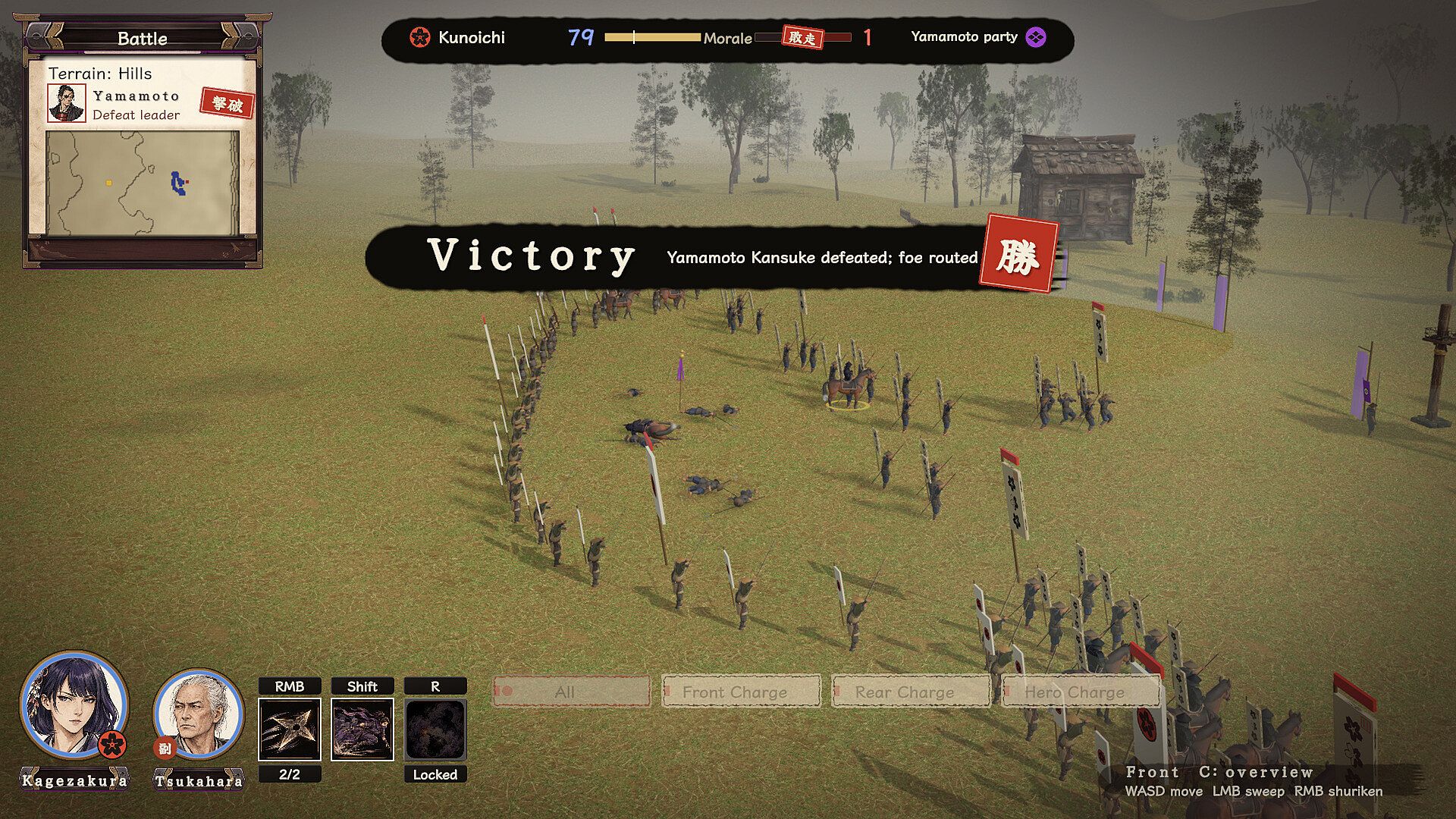
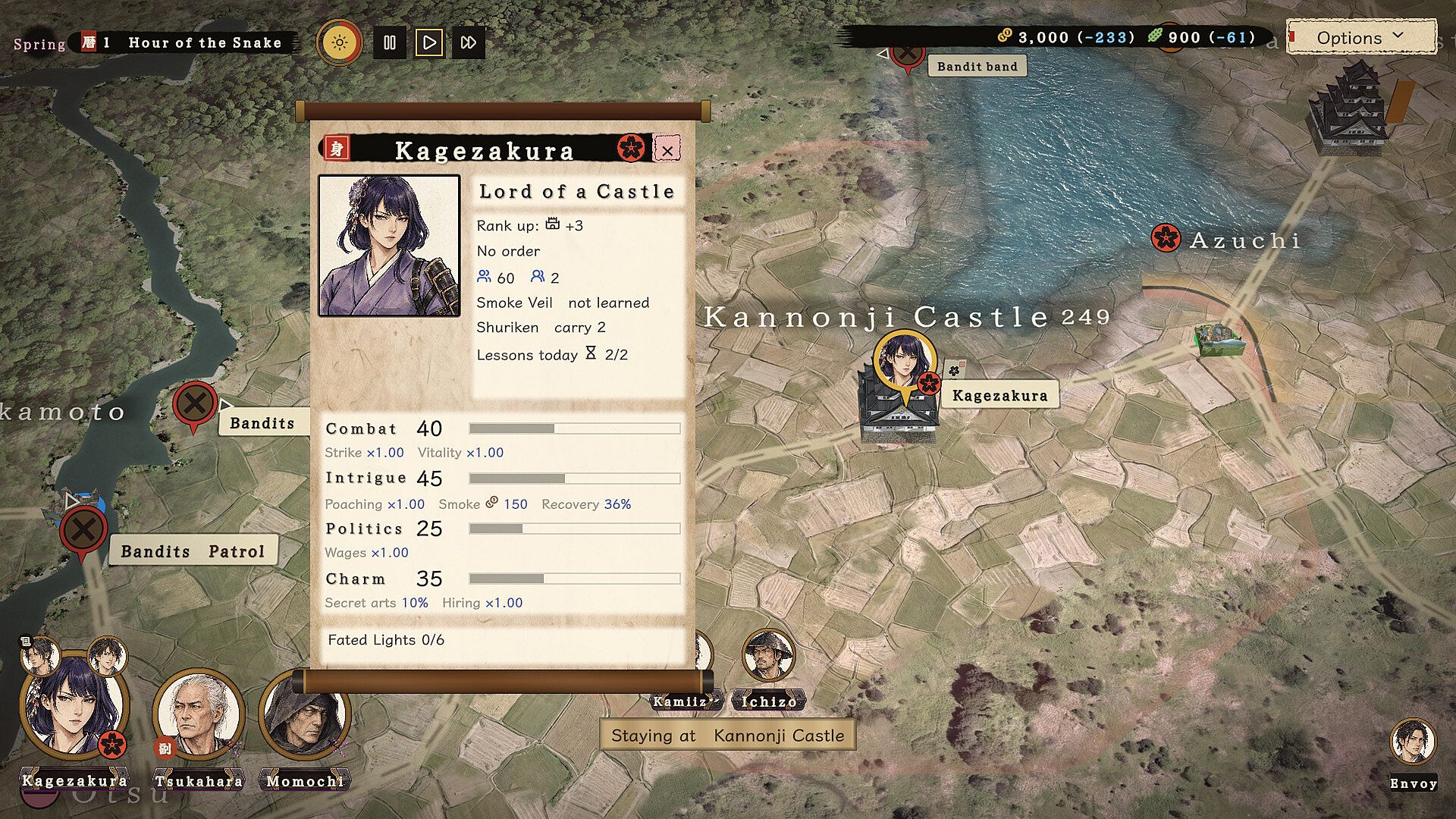
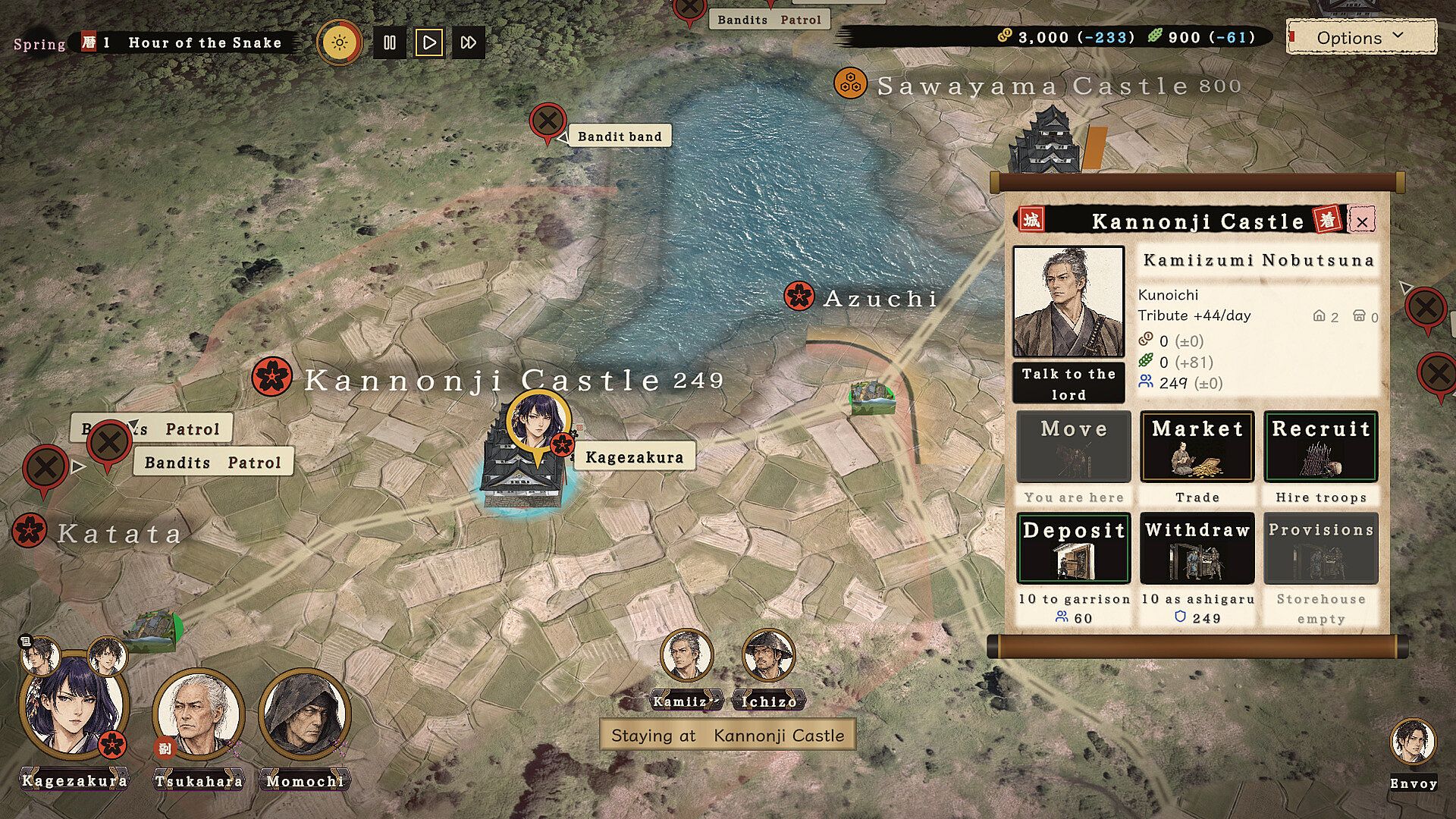
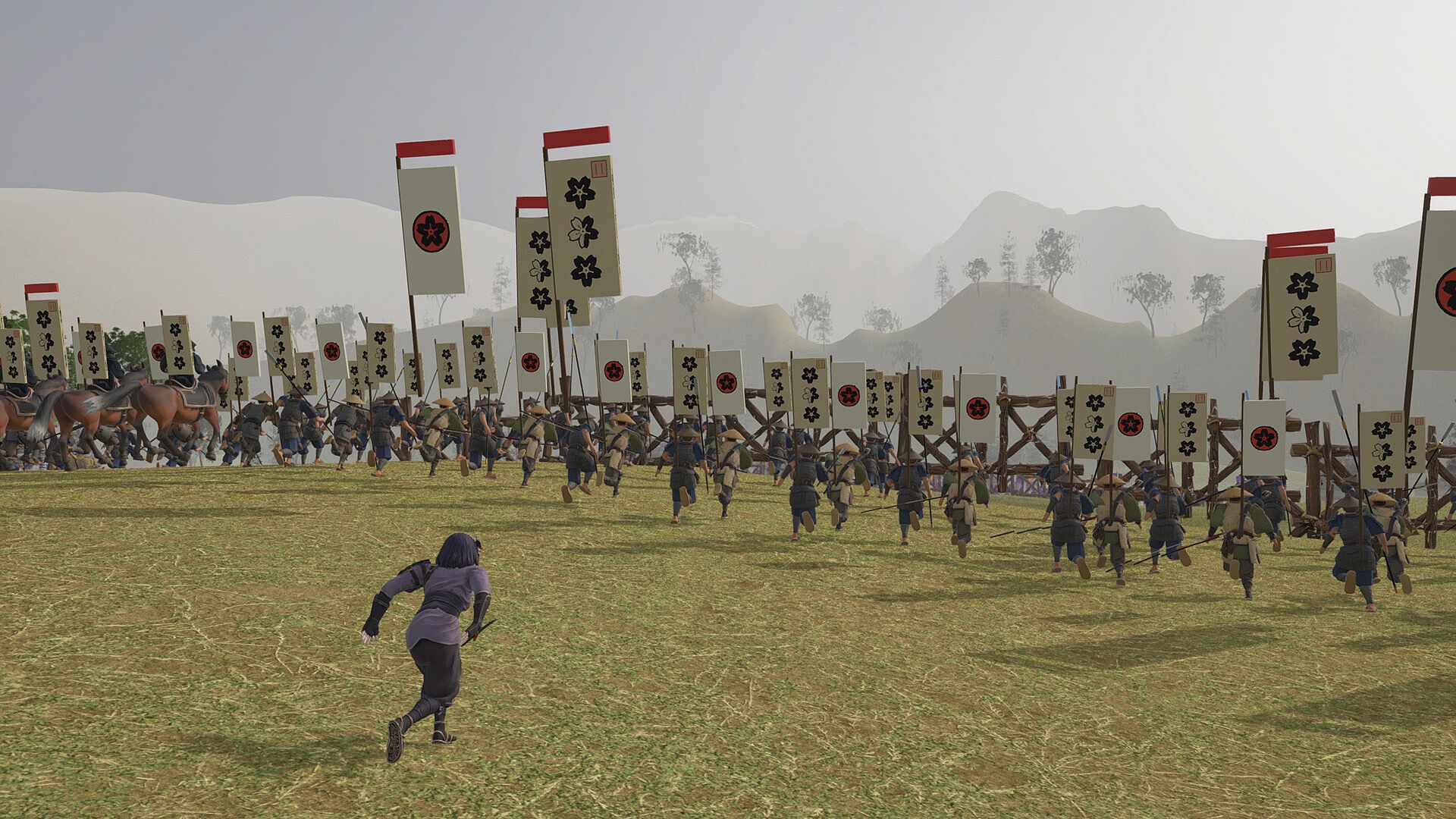

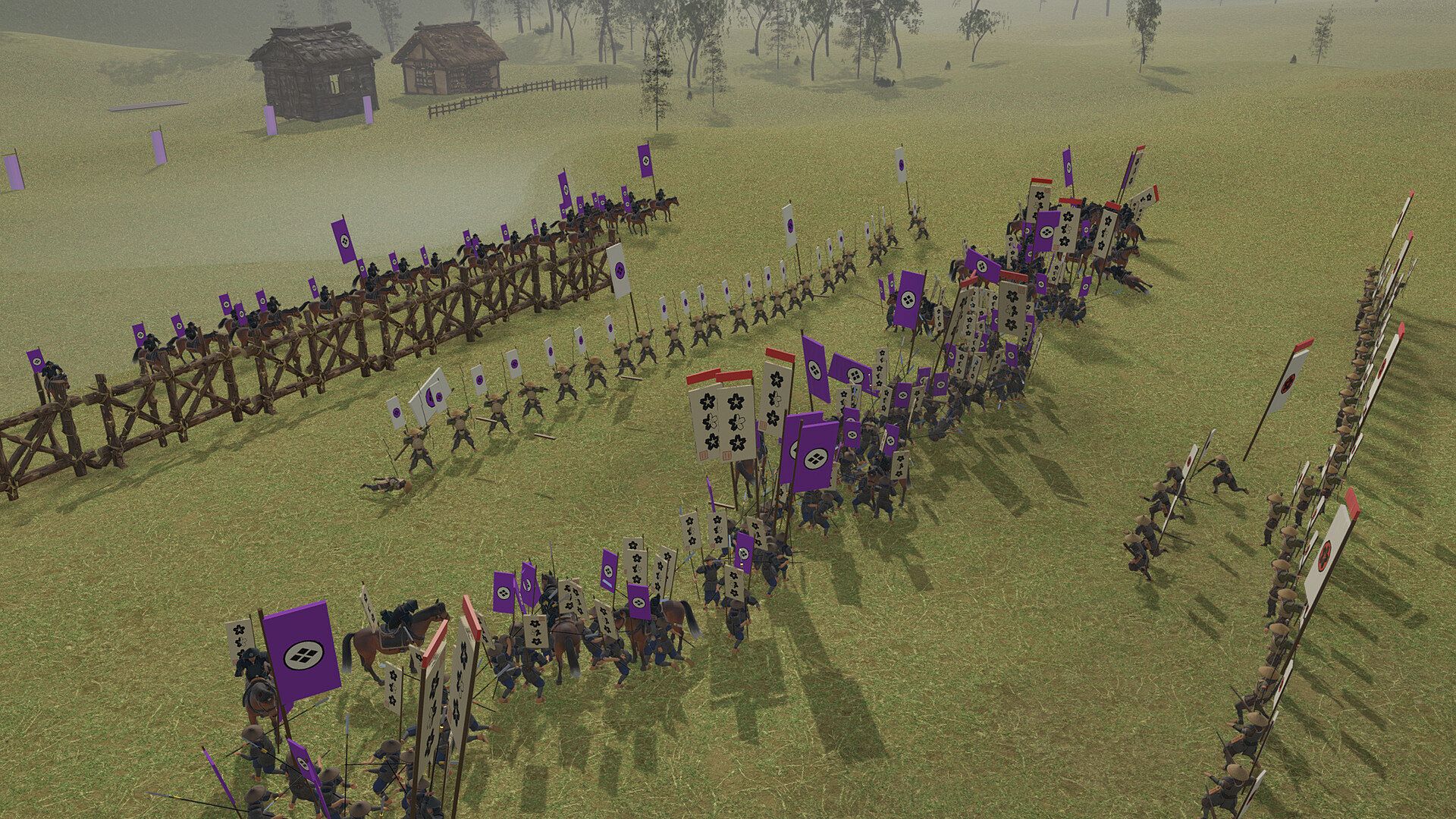
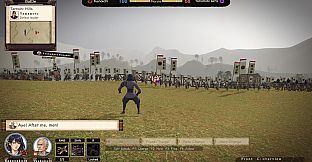
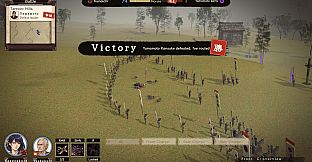
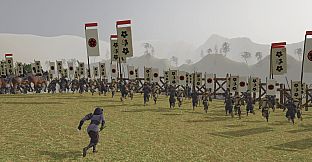
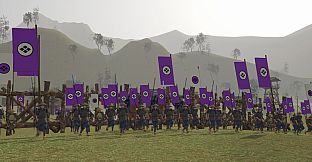
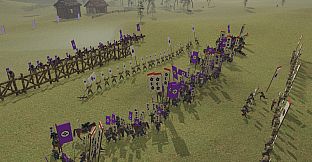
Eiroku: Path of the Wanderer is a strategy simulation game set in the Sengoku era of feudal Japan. Players manage a warband across a detailed map while navigating alliances, recruitment, and territorial control in a singleplayer experience.
Gameplay
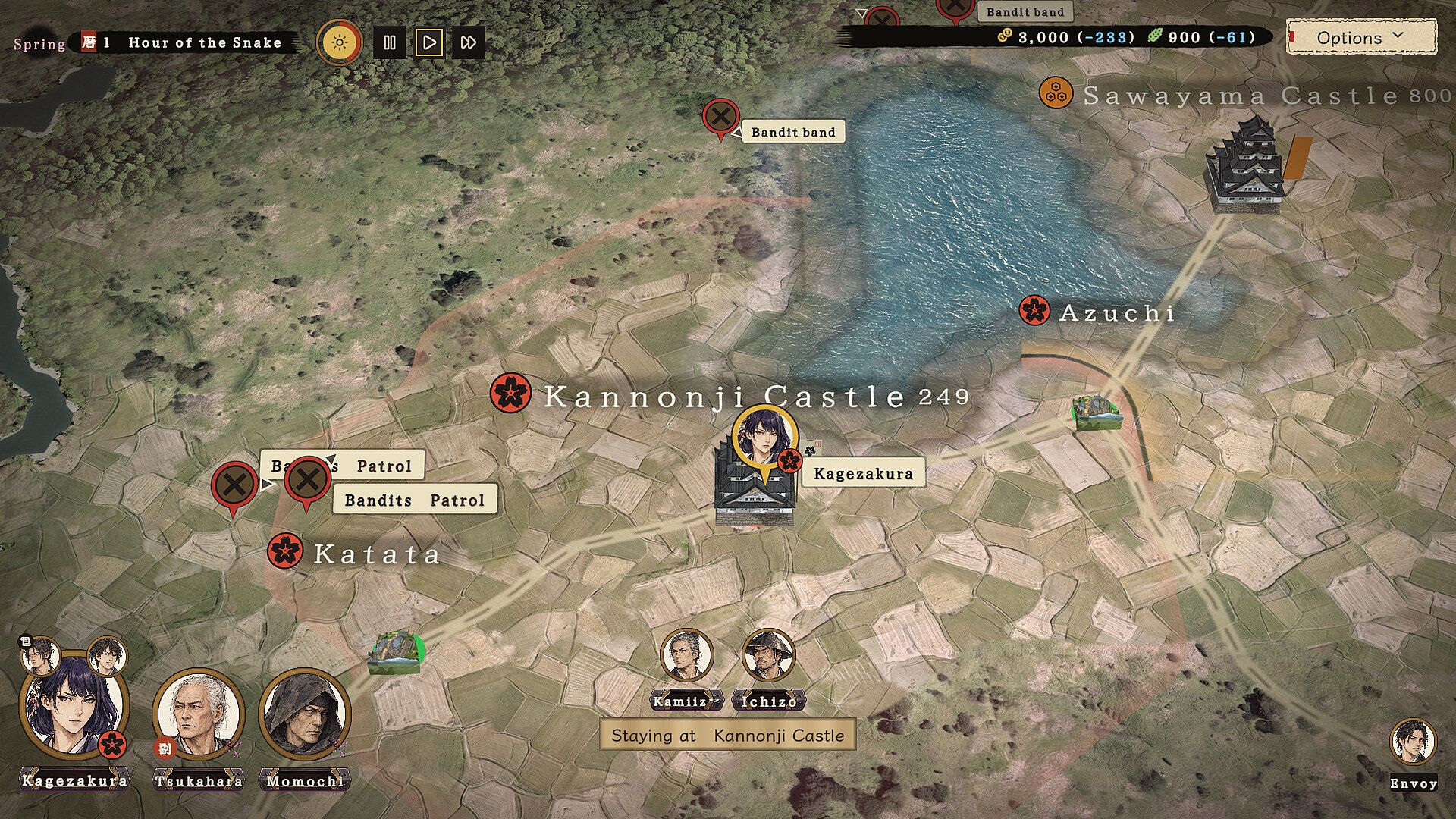
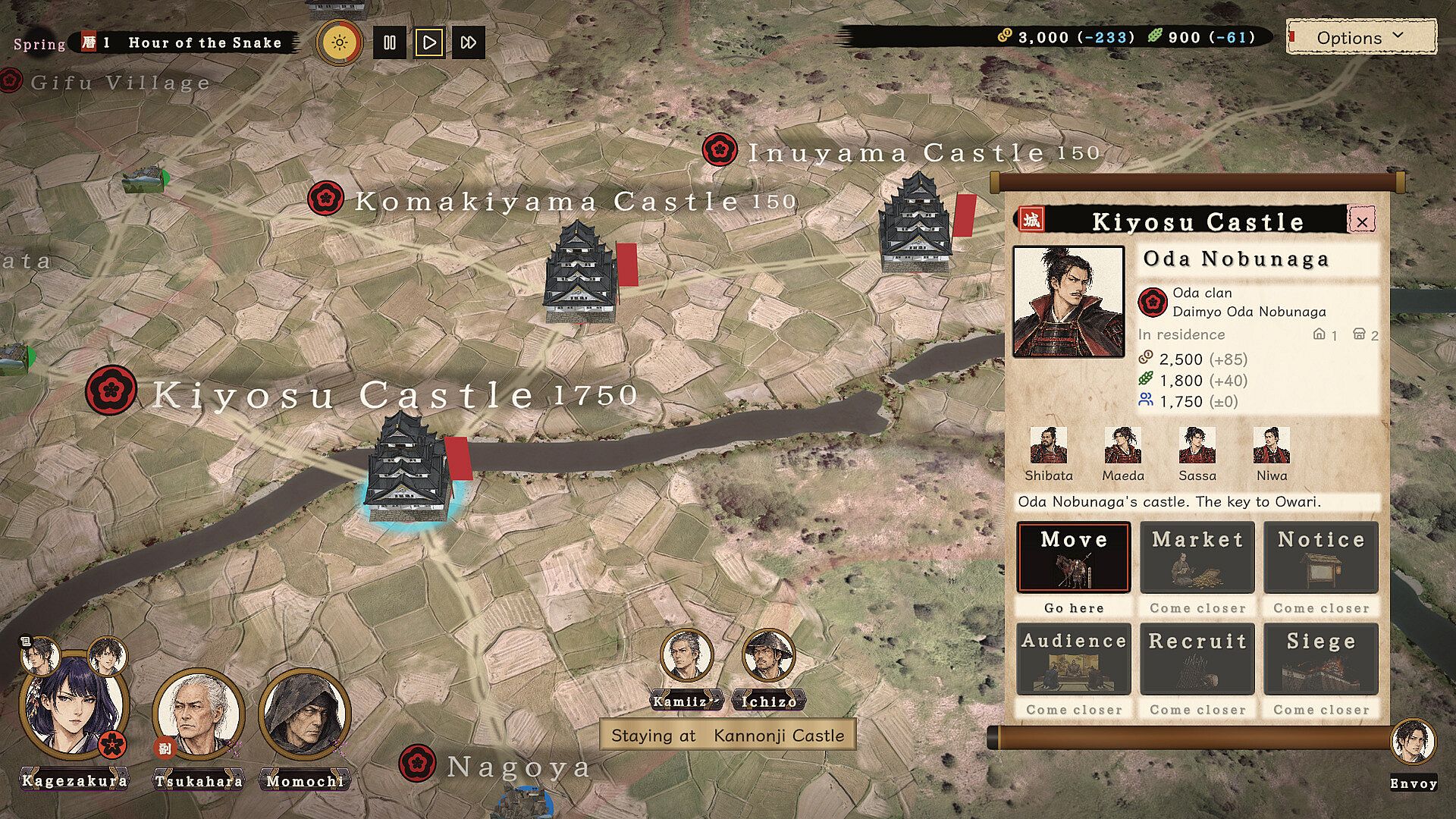
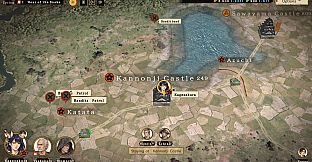
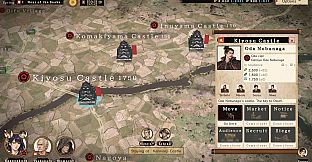
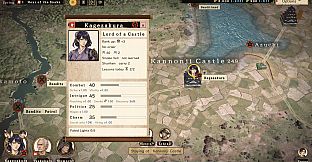
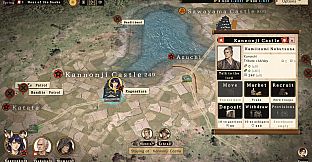
The core loop centers on a living map of Japan rendered in traditional ink-wash painting style. This map includes twenty-three daimyo clans and one hundred ninety-five locations such as castles, towns, farming villages, ninja hamlets, and shrines. Seasons and times of day shift across the map, influencing the environment and available opportunities.
Recruitment depends on location. Ashigaru come from villages, samurai from towns, mounted samurai and horse archers from castles, warrior monks from shrines, and shinobi along with kunoichi from ninja hamlets. Surviving troops gain experience and advance through branching promotion paths, such as ashigaru becoming archers then arquebusiers or horse archers, or spear cavalry reaching elite Red Guard or White Guard status, and genin rising to chunin and jonin.
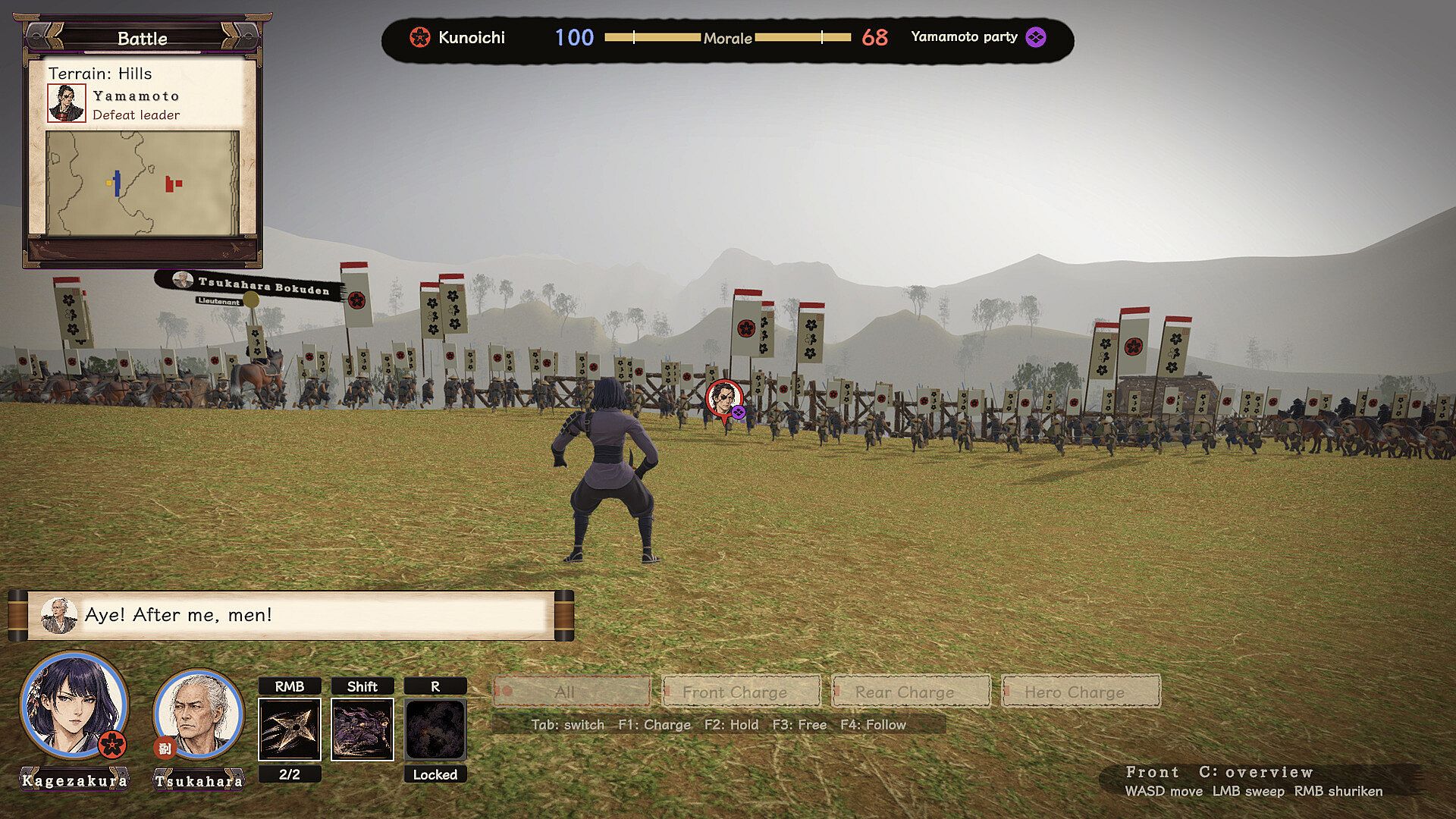
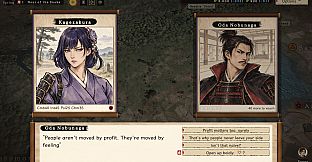
Every soldier requires daily wages and provisions, so army size directly affects resources. Players also recruit warlords who fill roles like quartermaster, strategist, or recruiter and lead troops in battle as lieutenants. Over one hundred historical commanders appear for interaction, with bonds that can lead to recruitment as retainers.
Game Modes
The simulation supports different career paths within its singleplayer framework. One approach involves entering service under a feudal lord to secure a stipend and access to stronger backing. Another path focuses on claiming an ownerless castle, raising a personal banner, and establishing an independent clan.
These choices shape long-term strategy around army composition, resource management, and political positioning. The experience emphasizes careful planning of troop types, promotions, and retainer assignments rather than separate named modes.
Strategic Depth and Map Systems
Position on the map determines both recruitment options and tactical considerations during conflicts. The ink-wash style presentation highlights seasonal changes that affect visibility and movement alongside daily cycles that alter activity at locations. Resource costs for maintaining forces encourage balanced growth instead of unchecked expansion.
Retainer assignments add layers to command structure, allowing specialized support in logistics or battlefield leadership. Historical commanders provide opportunities for relationship building that tie into recruitment and loyalty mechanics.
Is It Worth Playing?
This title suits players who enjoy detailed strategy simulations with historical Japanese themes and management of forces across a large map. The combination of location-based recruitment, experience-driven promotions, and retainer systems creates a focused loop around army building and decision-making. Those interested in Sengoku-era settings or simulation games that reward planning over rapid action will find the mechanics align with that preference. The singleplayer structure centers on personal progression through the two main career directions without additional confirmed features or updates at this time.











