

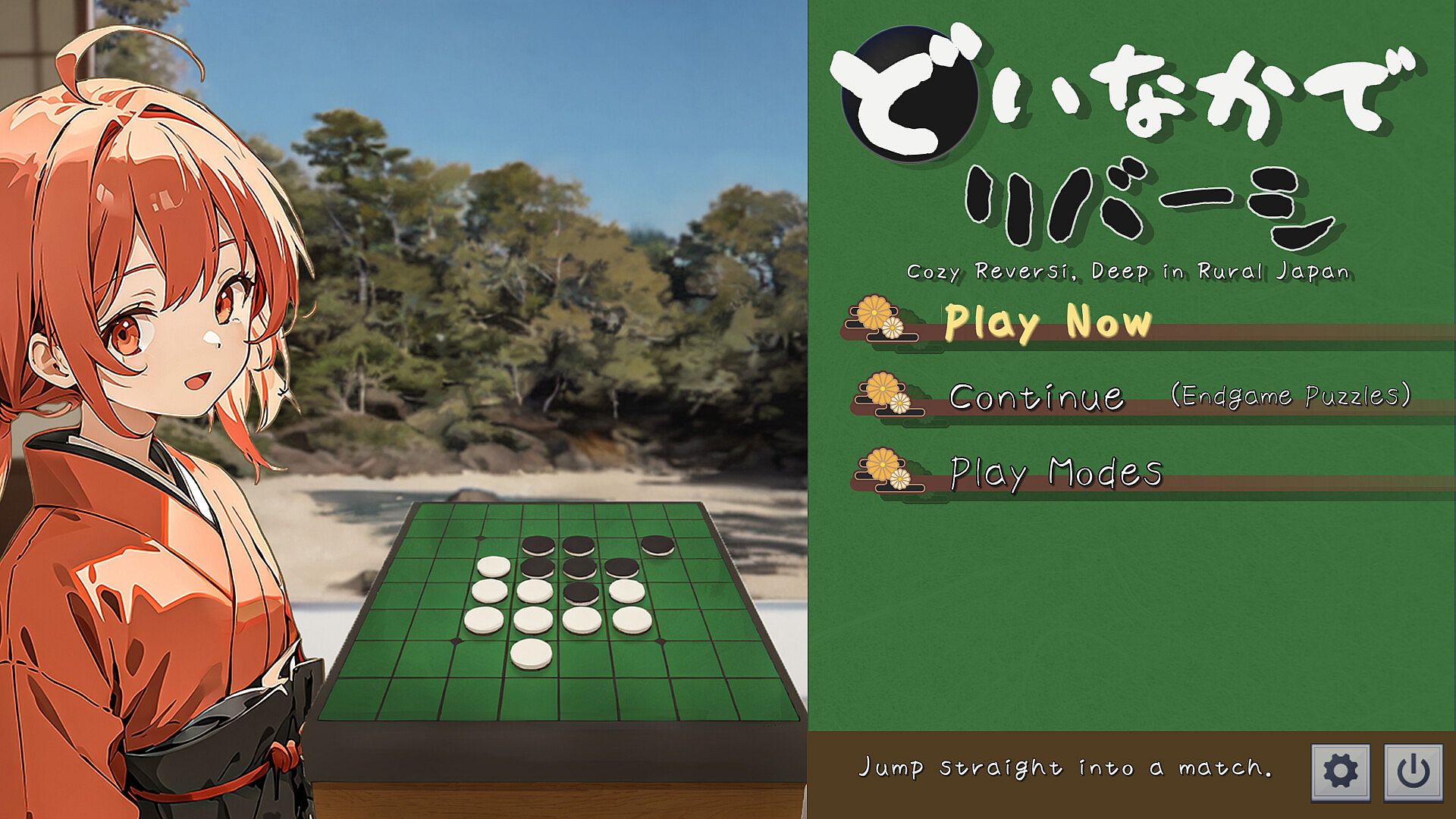
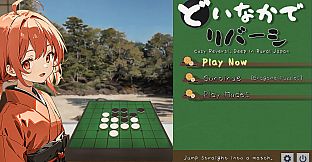
Doinaka de Reversi è un gioco da tavolo strategico che ambienta il classico Reversi in un tranquillo scenario rurale giapponese. I giocatori interagiscono con personaggi in stile nipponico attraverso partite e dialoghi all'interno di una villa di campagna, per un'esperienza rilassata incentrata sulla riflessione anziché sull'azione frenetica. Il titolo è disponibile su PC e propone sessioni brevi ma ricche di spunti strategici, ideale per chi cerca le meccaniche dei giochi da tavolo in modalità single-player con elementi narrativi.
Gameplay
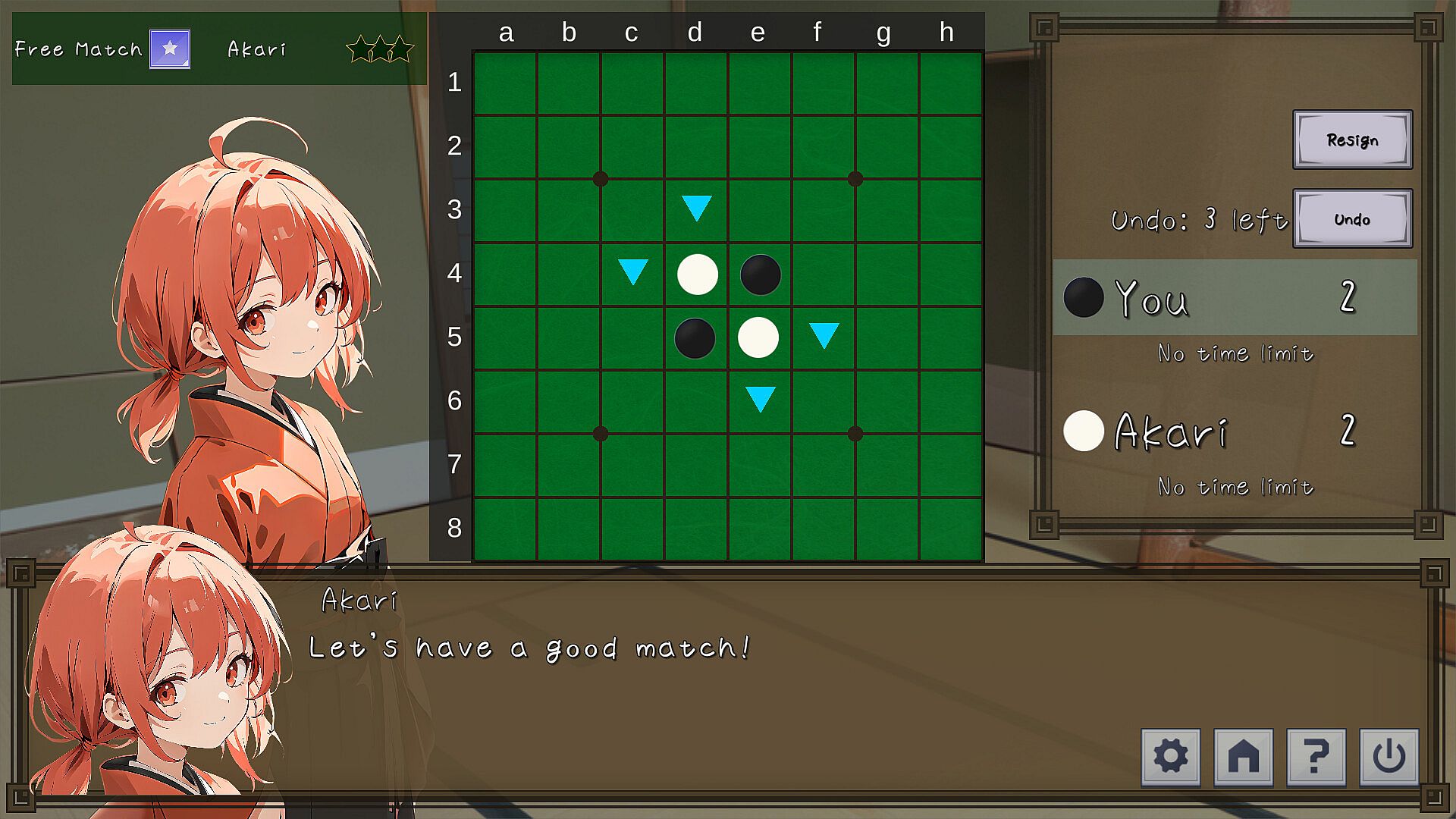
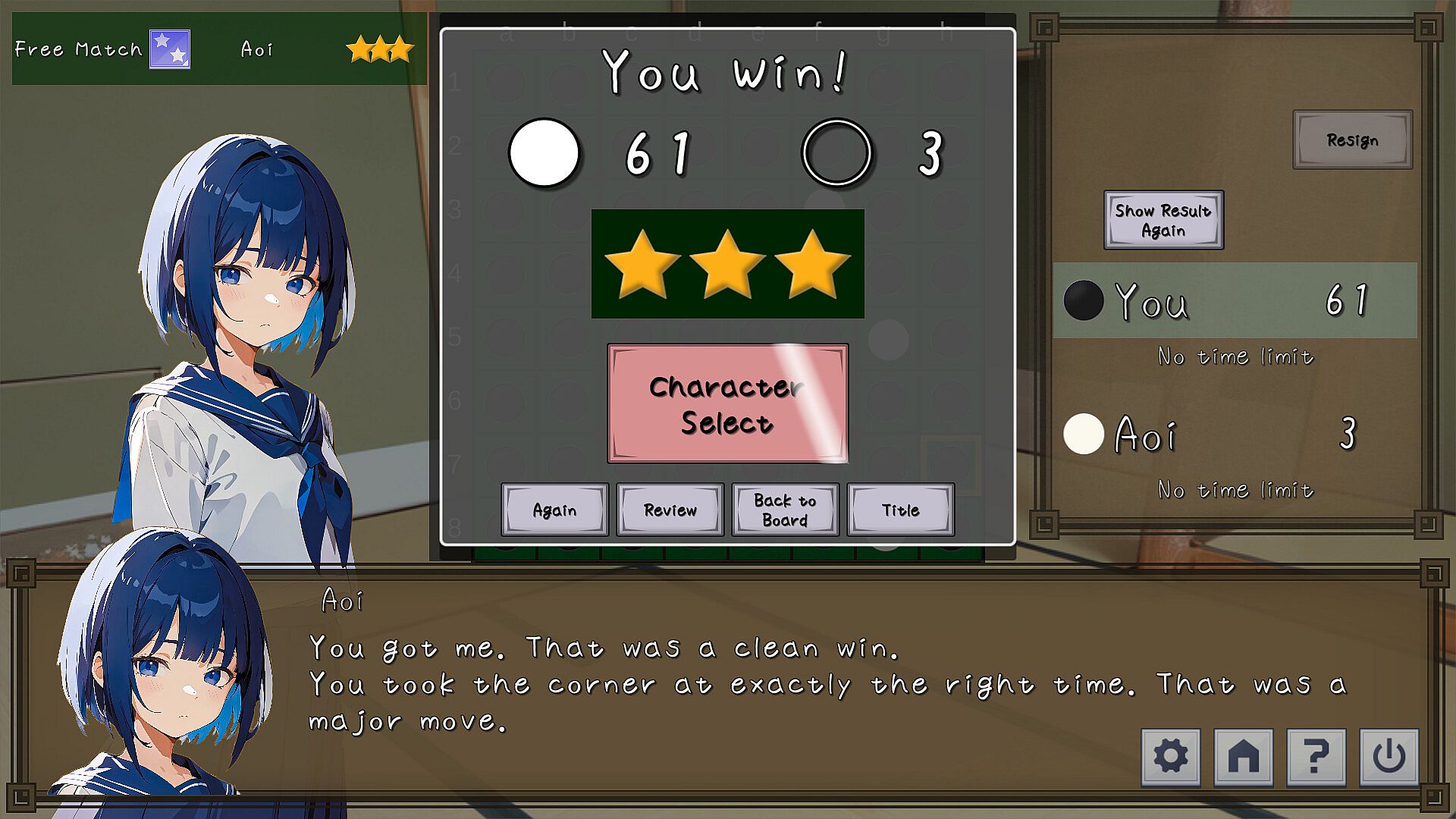
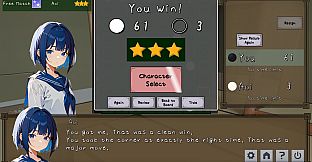
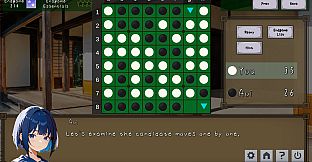
Al centro dell'esperienza c'è il Reversi: due giocatori si alternano nel posizionare dischi su una scacchiera 8x8 per capovolgere quelli dell'avversario lungo linee rette. La partita termina quando non restano mosse legali e vince chi possiede più dischi del proprio colore. Le regole classiche sono arricchite da conversazioni con i personaggi che aggiungono personalità senza modificare la meccanica del tabellone. Durante le partite casuali si può scegliere tra CPU di diversi livelli di difficoltà, consentendo sia round veloci sia riflessioni più approfondite. Il sistema registra i risultati e permette di rivedere le mosse effettuate.
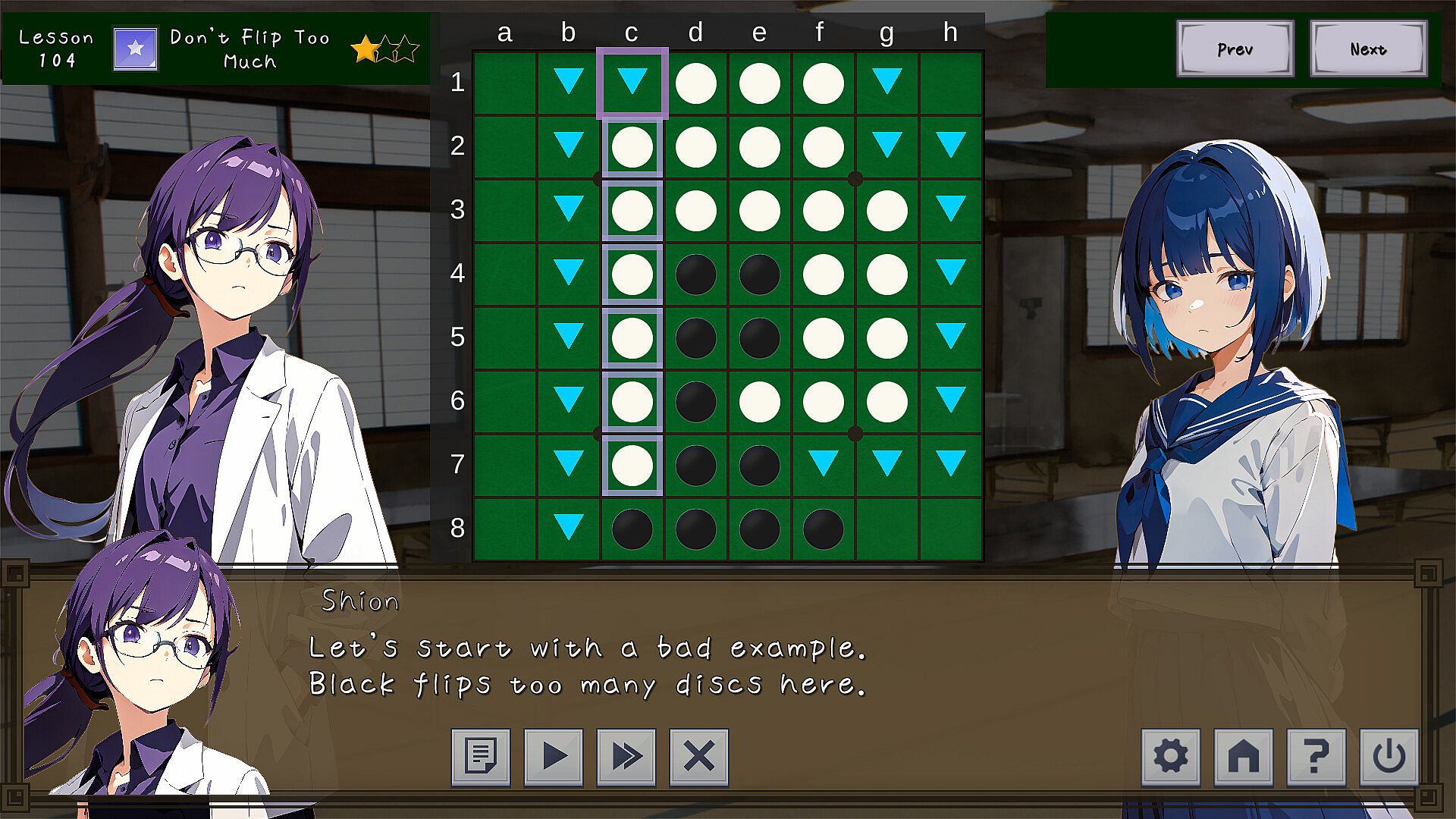
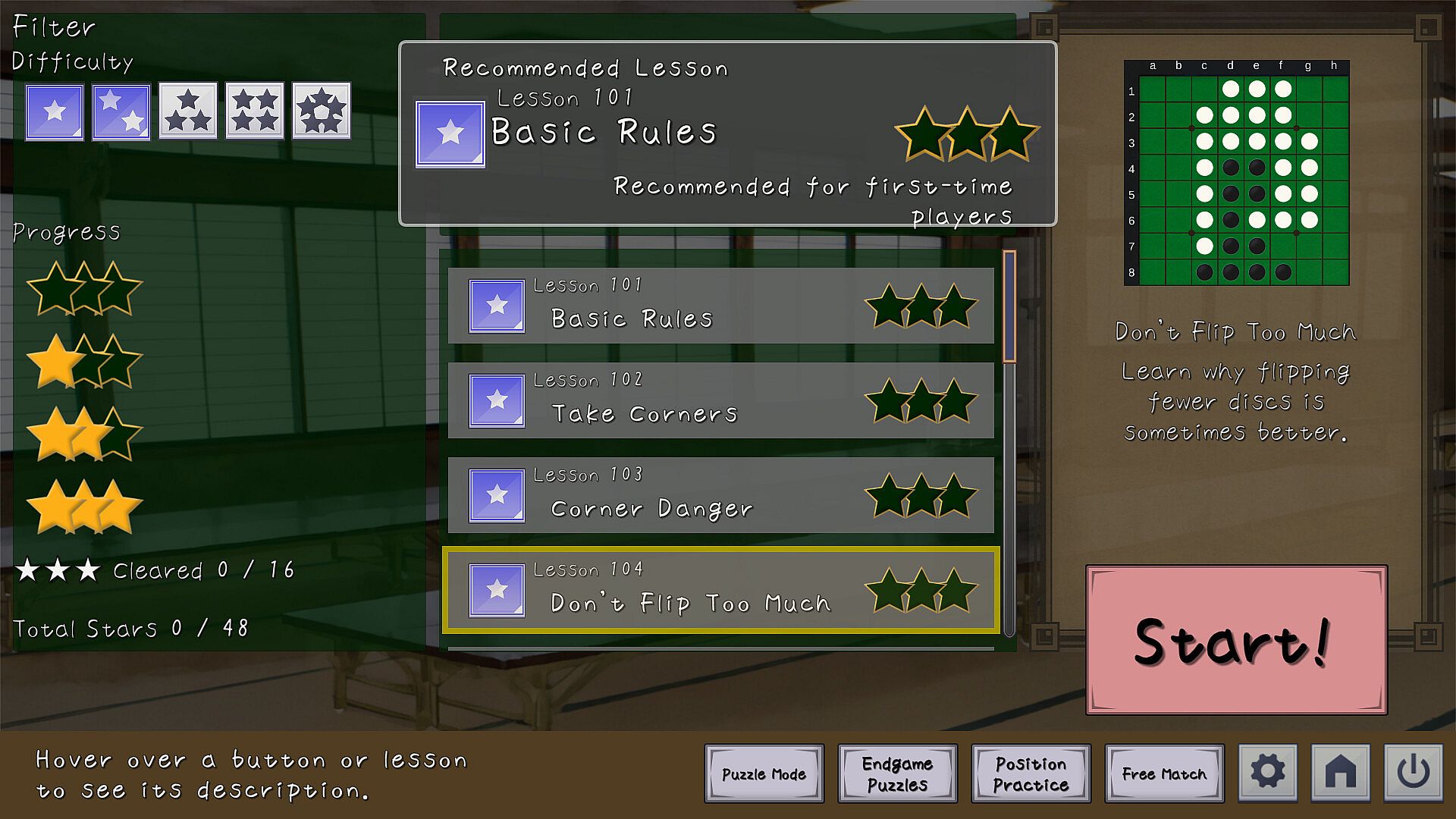
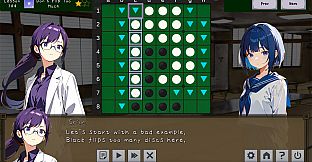
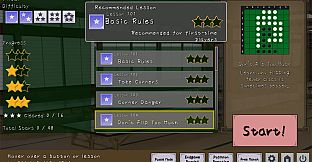
Gli aspetti strategici vengono spiegati in modo esplicito attraverso lezioni su angoli, bordi, caselle centrali e pianificazione del finale. Questi concetti vengono integrati direttamente nell'esperienza tramite spiegazioni dialogate che accompagnano passo passo i giocatori alle prime armi. Il ritmo complessivo si adatta sia a sessioni brevi sia a periodi più lunghi di analisi, mantenendo l'attenzione sul tabellone mentre l'atmosfera rurale giapponese fa da sfondo costante.
Modalità di gioco
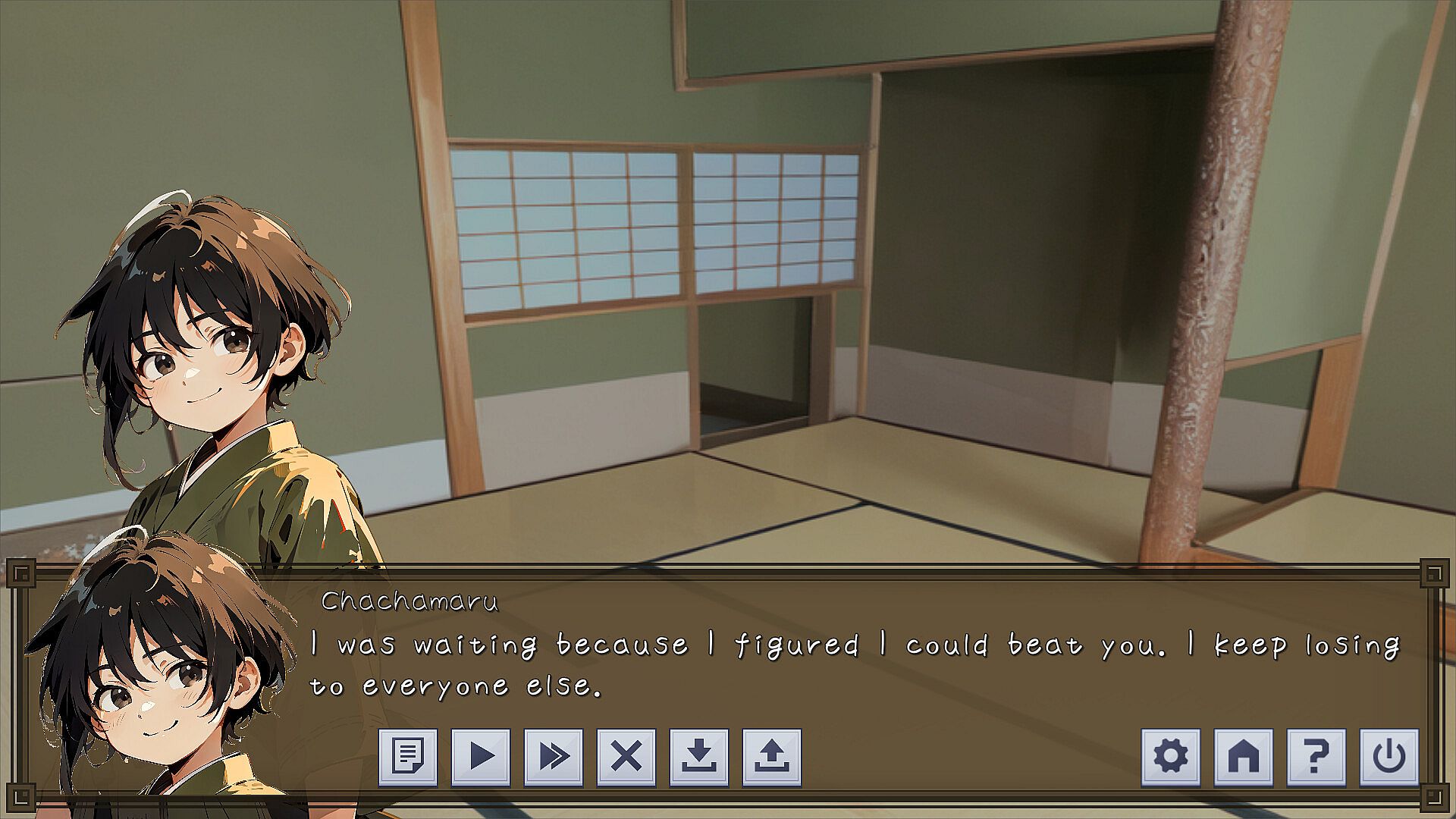
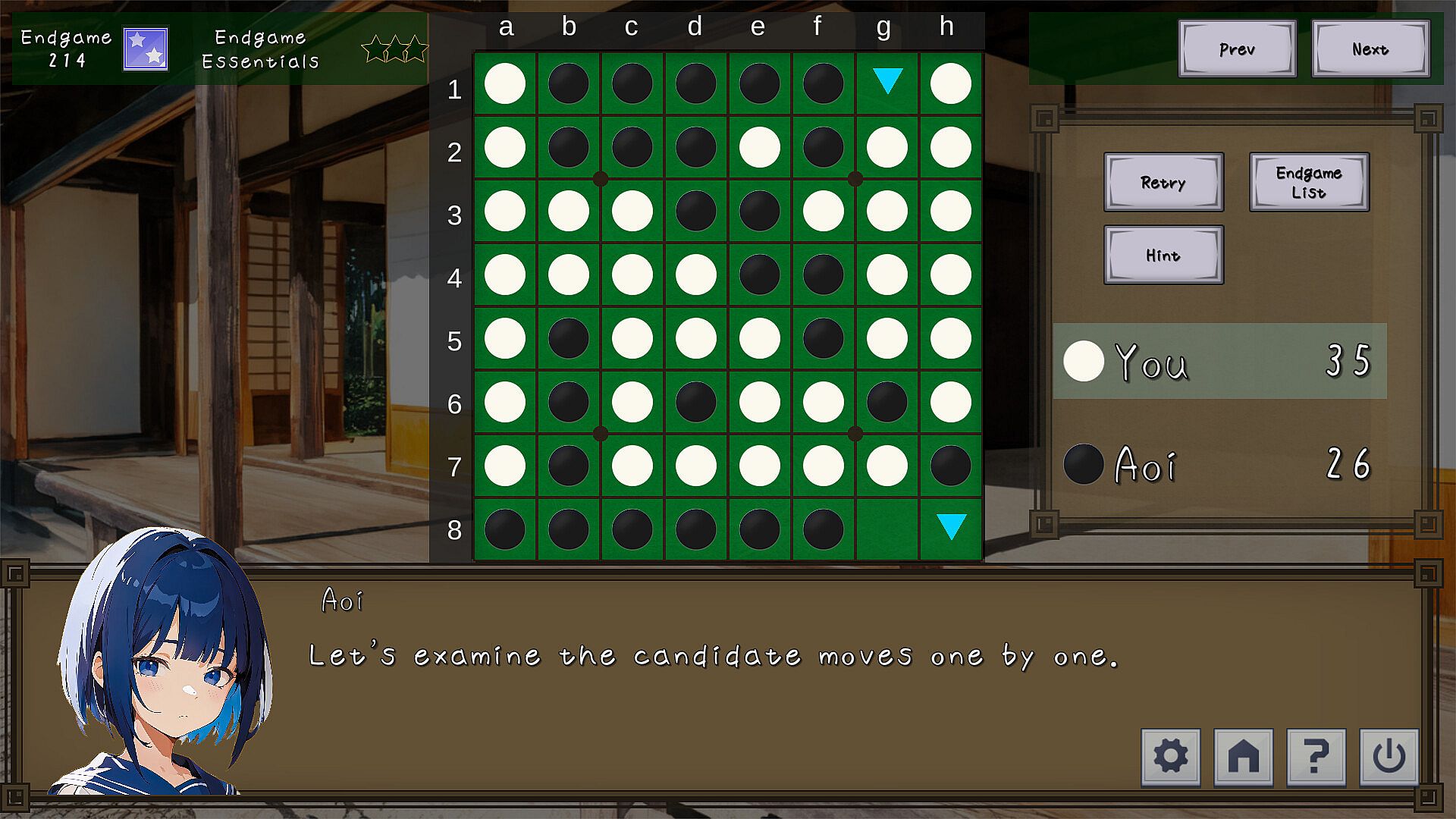
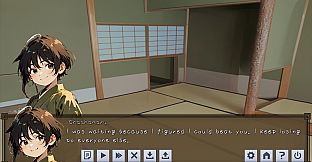
Partita Libera permette di affrontare CPU di forza variabile in incontri autonomi, veloci o più meditati. Modalità Storia segue un filo narrativo ambientato in una villa di campagna abitata da parenti, con dialoghi e sfide a Reversi che fanno avanzare la trama. Modalità Tutorial introduce le regole in modo progressivo, coprendo piazzamento base, controllo degli angoli, strategia sui bordi, mosse interne e valutazione del finale attraverso lezioni dialogate pensate per i principianti.
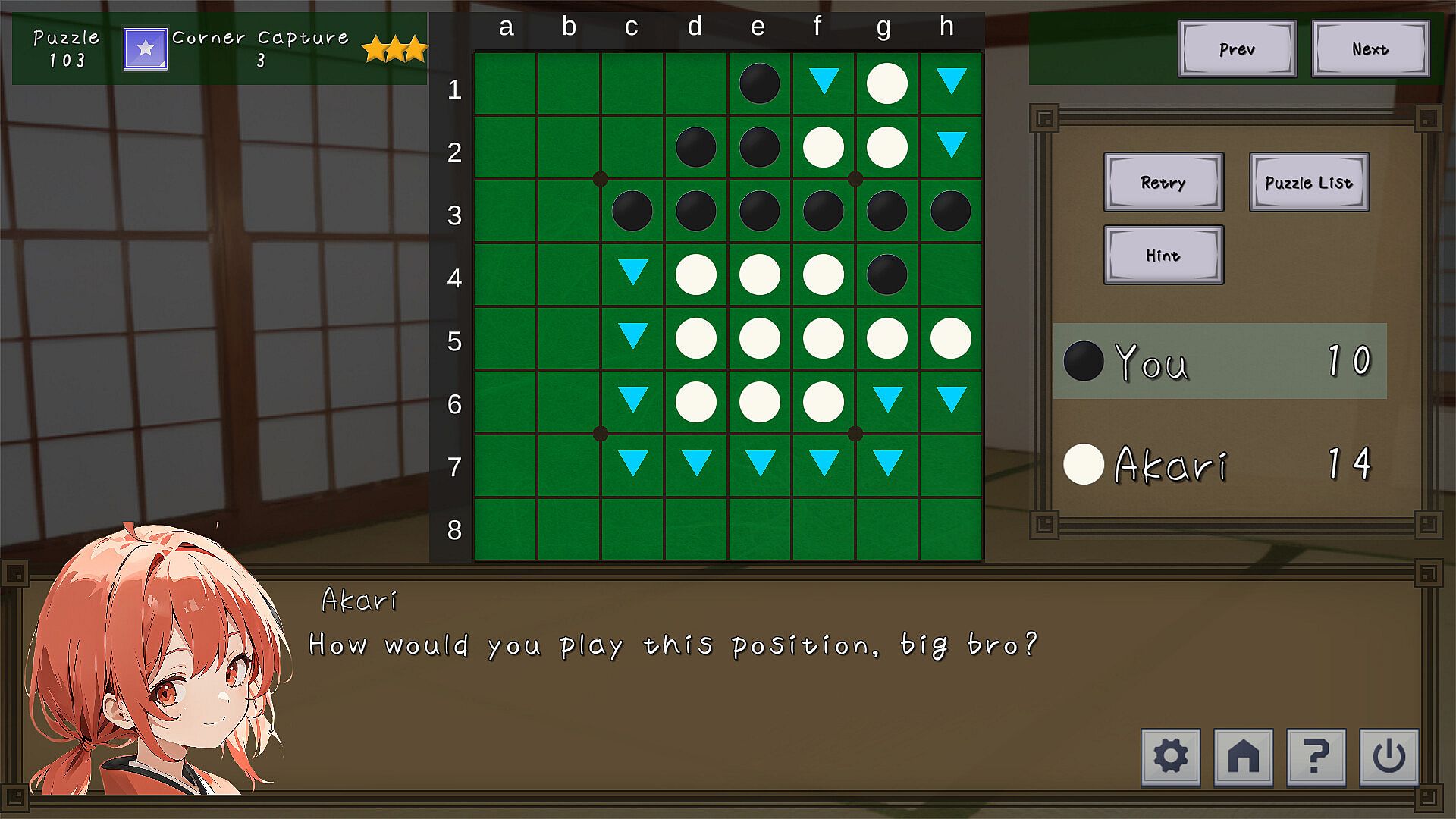
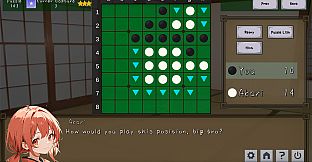
Modalità Puzzle propone posizioni specifiche in cui trovare la mossa migliore. Modalità Puzzle Finale concentra l'attenzione sulle decisioni a fine partita, richiedendo scelte che garantiscano il risultato ottimale quando restano pochi dischi. Queste modalità, unite alle conversazioni durante le partite e agli strumenti di revisione, supportano sia l'apprendimento sia il gioco ripetuto a ritmo personale.
Apprendimento e pratica
I sistemi di tutorial e puzzle sviluppano la comprensione in modo graduale. I principianti partono dalle regole fondamentali per poi passare a concetti posizionali come il controllo degli angoli e la gestione delle mosse finali. Ogni lezione utilizza il dialogo per spiegare le idee mentre il tabellone resta visibile, rendendo concreta la strategia astratta. Le sfide a puzzle rafforzano questi insegnamenti isolando decisioni chiave e consentendo tentativi ripetuti senza la pressione di una partita completa.
Chi preferisce un allenamento strutturato può alternare tra lezioni e serie di puzzle per affinare abilità specifiche. Le spiegazioni sono mantenute accessibili, così concetti come il controllo dei bordi o il conteggio finale diventano familiari attraverso la ripetizione anziché solo attraverso testi densi.
Vale la pena giocarci?
Il gioco è pensato per chi apprezza il Reversi e titoli simili di strategia astratta in un ambiente senza pressioni. La combinazione di partite libere contro CPU regolabili, progressione narrativa e modalità dedicate all'apprendimento offre diversi modi per avvicinarsi al titolo senza richiedere un multiplayer competitivo. È prevista una demo con alcune modalità e problemi della versione completa, per permettere ai giocatori interessati di provare l'esperienza di base.
Chi cerca un gioco strategico single-player accogliente con ambientazione rurale giapponese e supporto integrato per i nuovi arrivati troverà una struttura che facilita l'approccio. L'enfasi su partite brevi e puzzle più complessi si adatta a diversi impegni di tempo e livelli di abilità. Il titolo si presenta come un'esperienza mirata nel genere Reversi, che privilegia l'accessibilità e il gioco ripetuto rispetto a strati aggiuntivi.