

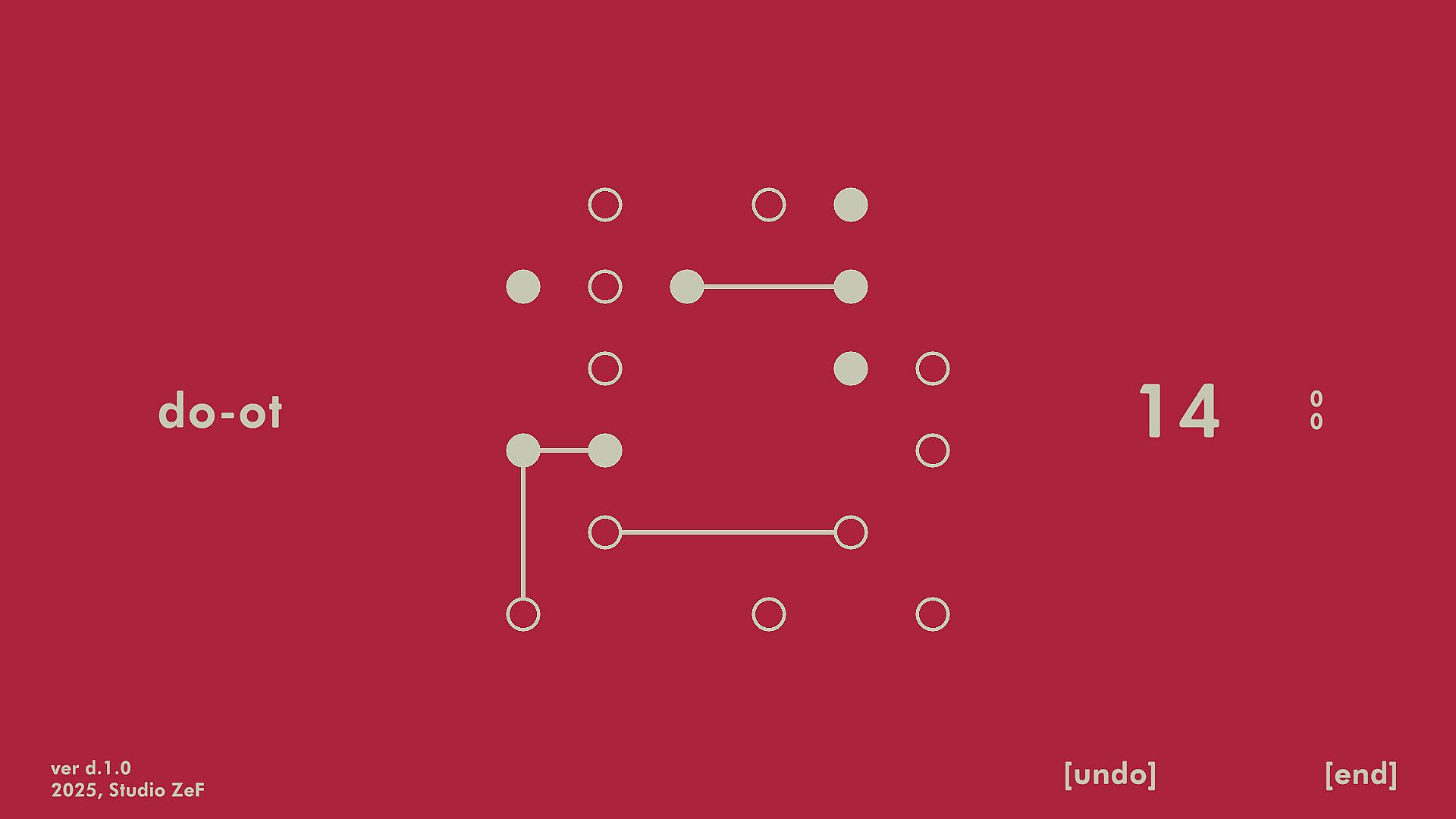
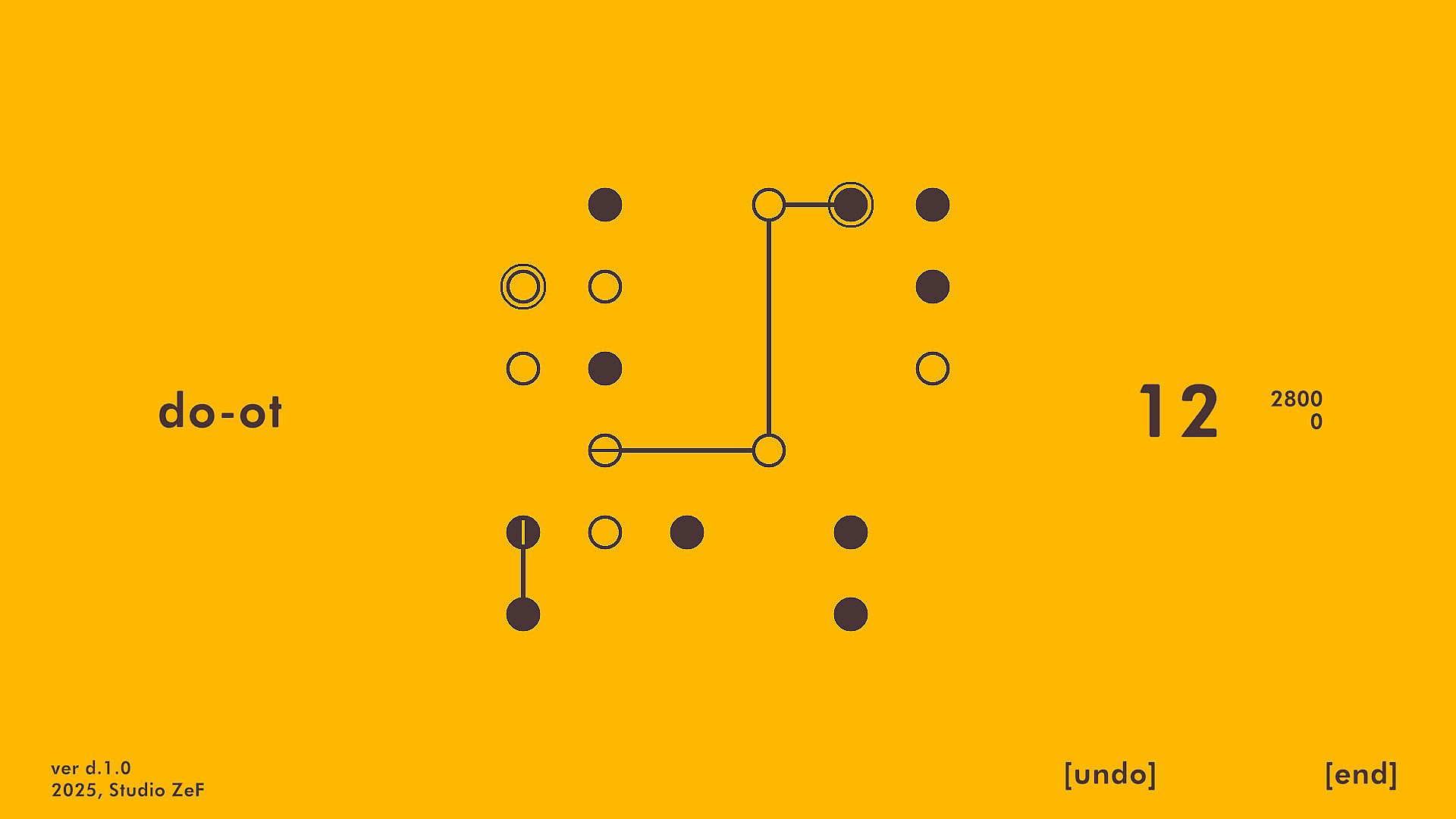
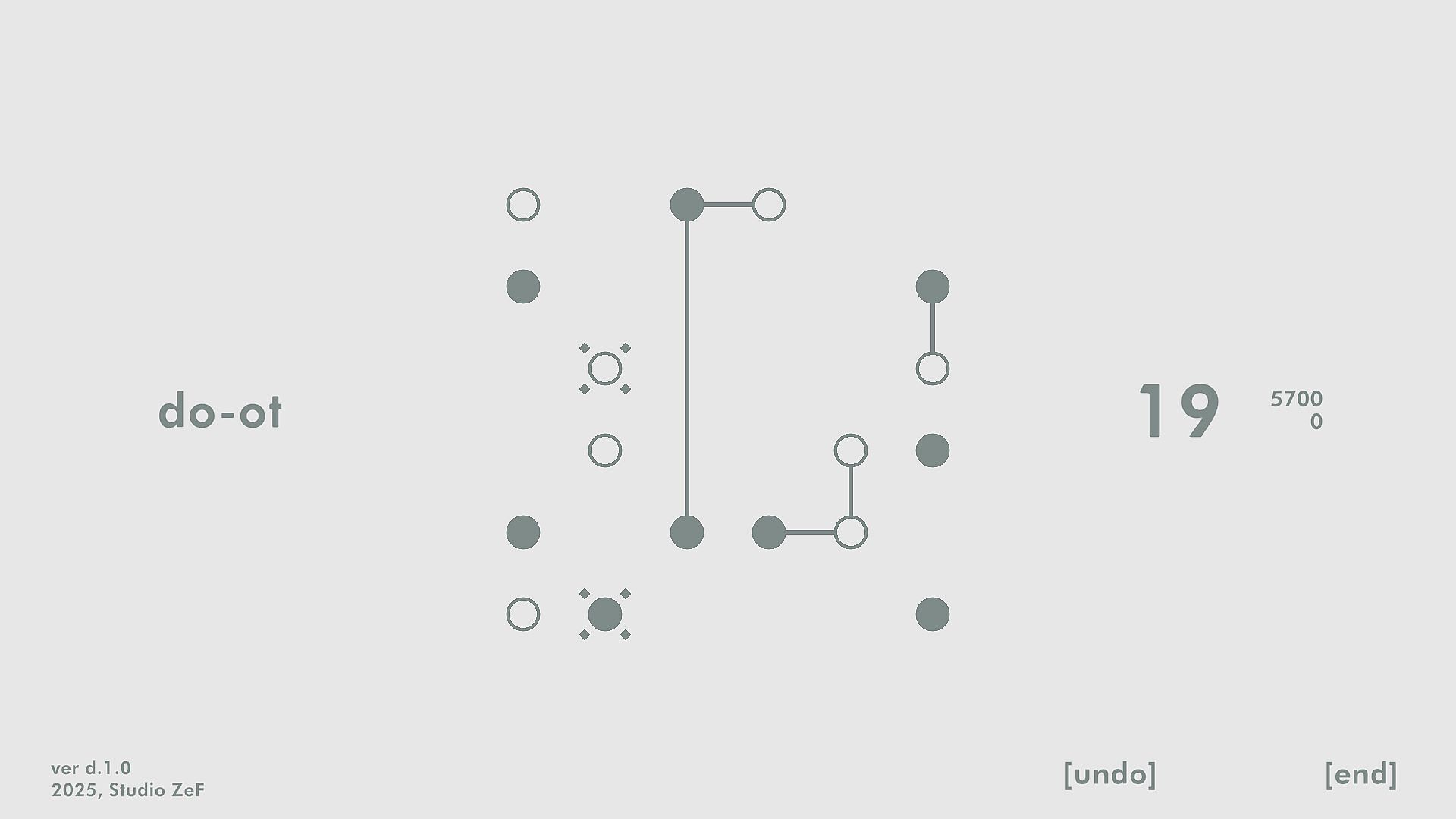
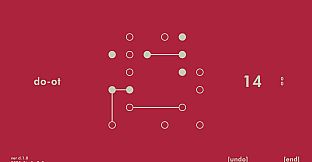
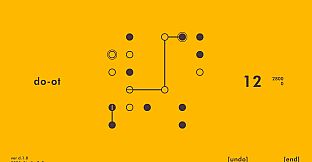
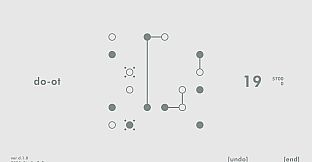
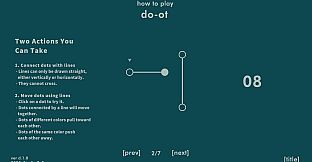
do-ot is a casual puzzle game for PC that challenges players with a minimalist board filled only with colored dots and the lines drawn between them. The objective centers on connecting emerging dots, shifting them strategically across the grid, and clearing groups to keep the board manageable. Simple rules create layered decision making as dots appear continuously and resources limit actions over time.
Gameplay
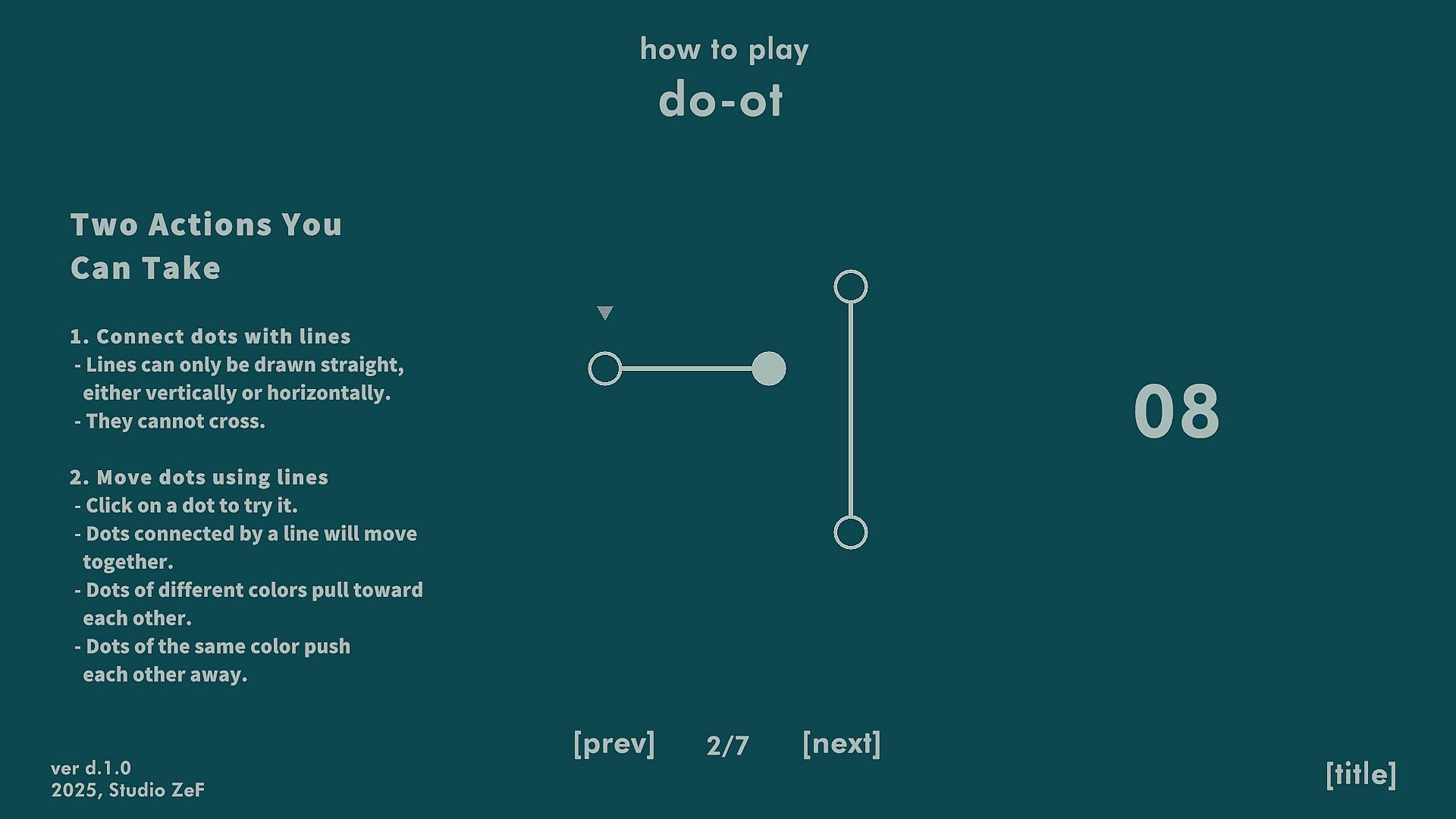
The core loop revolves around drawing straight vertical or horizontal lines to link dots without allowing crossings. Once connected, clicking one dot moves its partner one space along the line. Matching colors cause repulsion, pushing the target dot away, while differing colors produce attraction that pulls it closer. This mechanic lets players reposition dots precisely to set up matches.
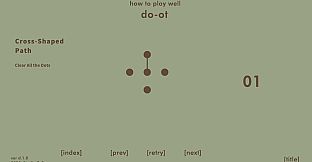
Clearing requires lining up three or more dots of the same color in a straight row or column with no gaps, then connecting them via a drawn line. Multiple such groups can be cleared in one action when conditions align. Empty columns automatically refill with new dots, maintaining pressure on the board. A resource counter tracks actions: each line drawn reduces the number by one, while each cleared dot increases it by one. The session ends when the counter hits zero or the player chooses to stop.
Scoring rewards cleared dots at a base rate, with multipliers applied for chain reactions triggered by new dots falling into place. The minimalist presentation keeps focus on spatial planning and color interactions rather than visual distractions.
Game Modes
The current version emphasizes a single continuous play style where the goal is to clear as many dots as possible before the resource counter depletes. Players manage an ever-shifting grid by balancing line usage with efficient clearing sequences. Precision in movement and foresight in positioning become essential as the board evolves.
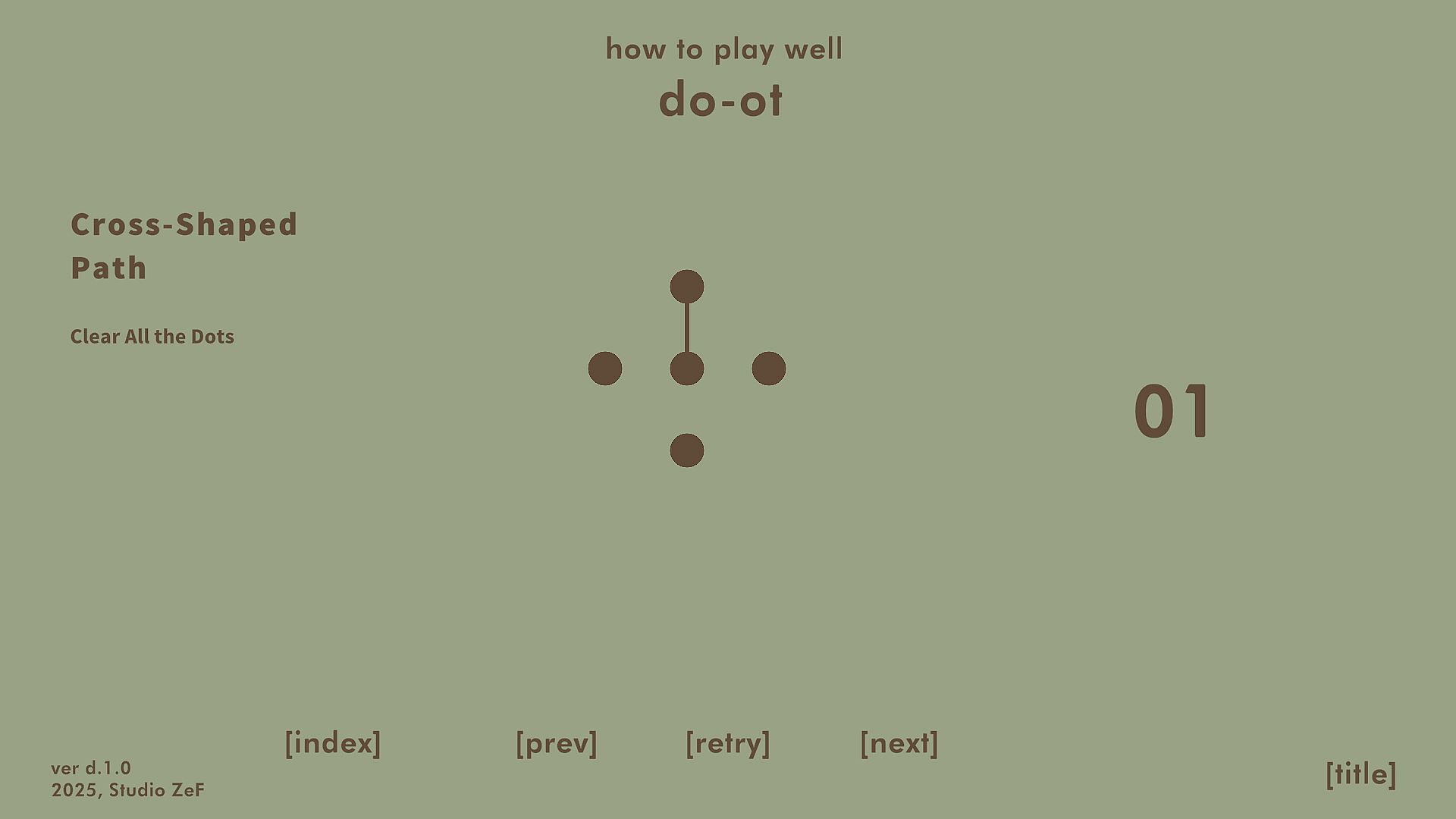
Additional modes are planned for the full release. These include a Mission Mode designed to introduce strategies and techniques gradually, new dot types that introduce special abilities, and a Challenge Mode featuring an expanding board. The additions aim to provide structured progression for newcomers while offering deeper complexity for experienced players.
Mechanics and Strategy
Success depends on understanding how color relationships influence movement. Repulsion and attraction allow fine control over dot placement, turning potential obstacles into opportunities for larger clears. Resource management adds tension, forcing choices between aggressive repositioning and conservative clearing.
Chain reactions from falling dots can multiply scores significantly, rewarding setups that trigger cascades. The absence of time limits encourages deliberate planning, yet the constant influx of new dots prevents stagnation. As skills improve, the same small grid reveals increasingly intricate possibilities through repeated play.
Is It Worth Playing?
do-ot suits players who enjoy thoughtful minimalist puzzles with clear rules that reward experimentation and improvement. Its simple elements generate surprising depth, making sessions engaging without requiring complex tutorials or lengthy explanations. Those seeking short, repeatable sessions or a relaxing yet mentally stimulating experience will find the mechanics addictive over time.
The planned expansions suggest growing content that broadens appeal for both casual and dedicated puzzle fans. Current play already demonstrates strong replay value through skill refinement and score chasing. If the described line-drawing and color-based movement align with your preferences for abstract strategy games, the title offers a focused, original take on the genre worth trying.