




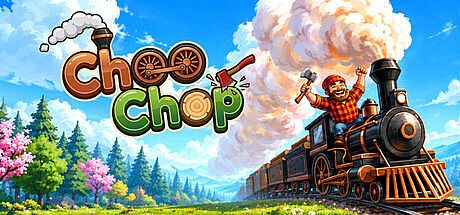


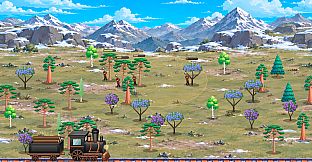
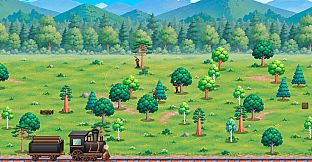
Choo Chop is an indie casual simulation game built around incremental progression and relaxed forest management. Players guide a train through wooded areas while directing lumberjacks to harvest trees, turning the resulting wood into currency that fuels further upgrades and longer sessions.
Gameplay
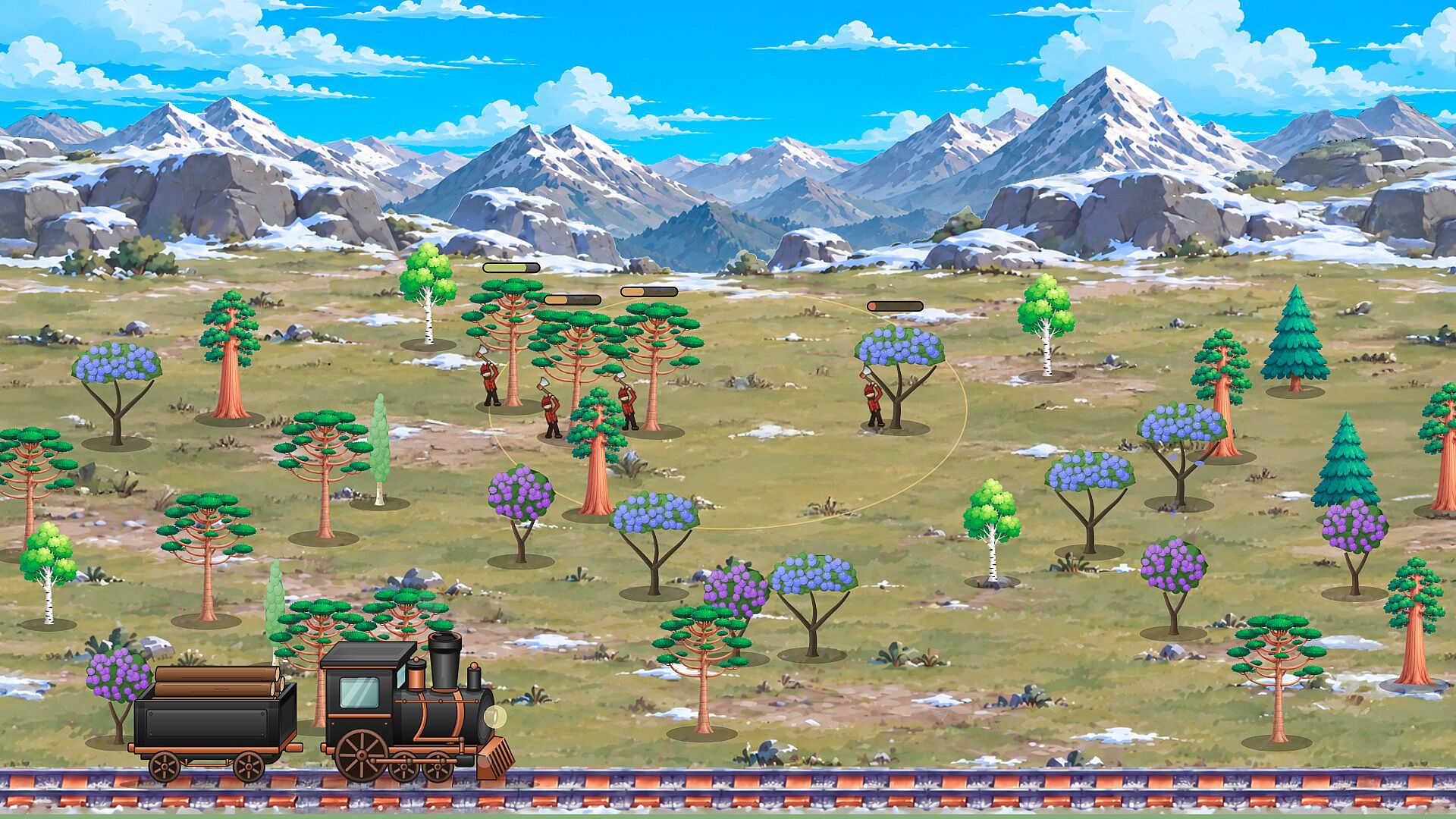
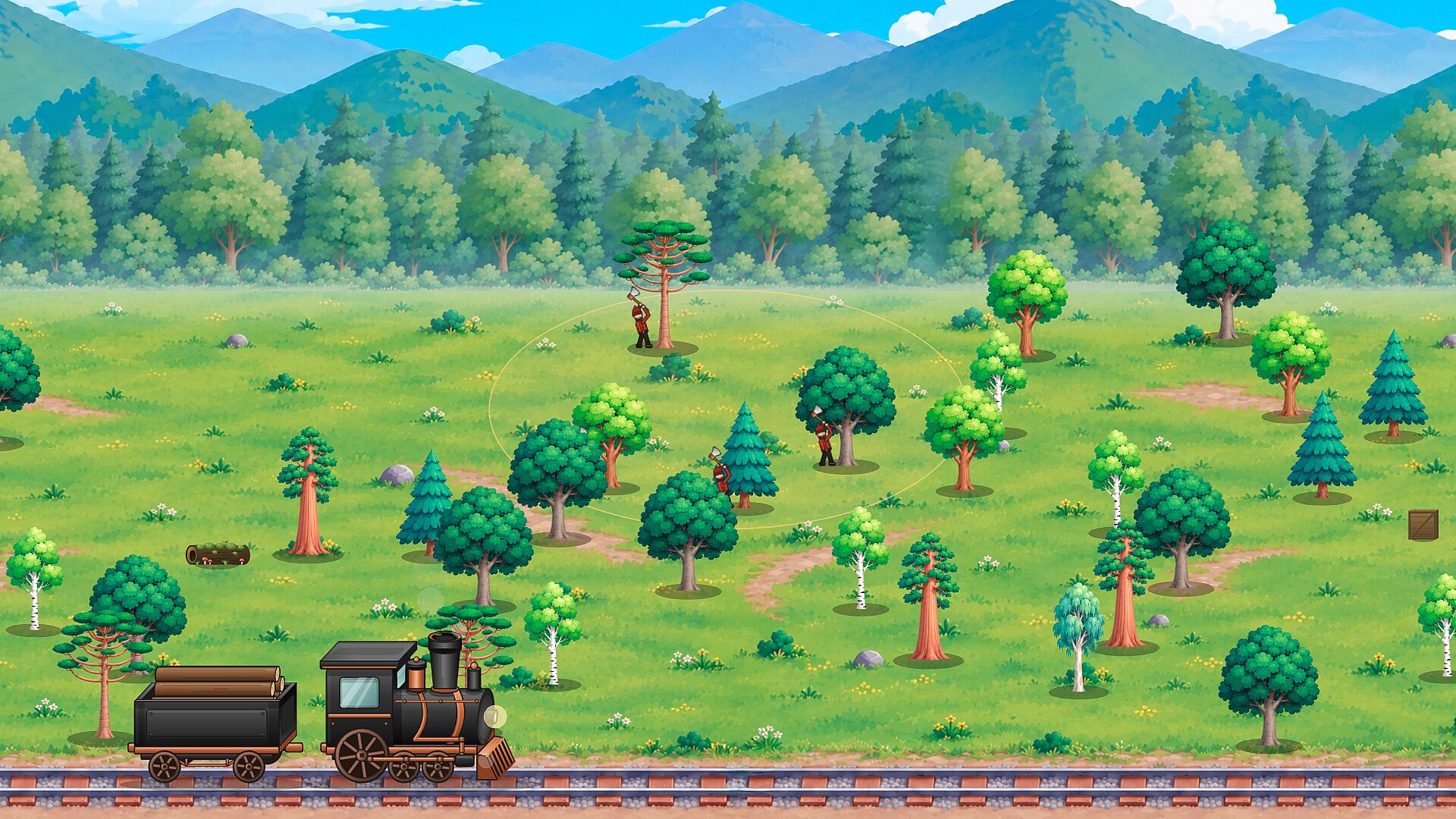
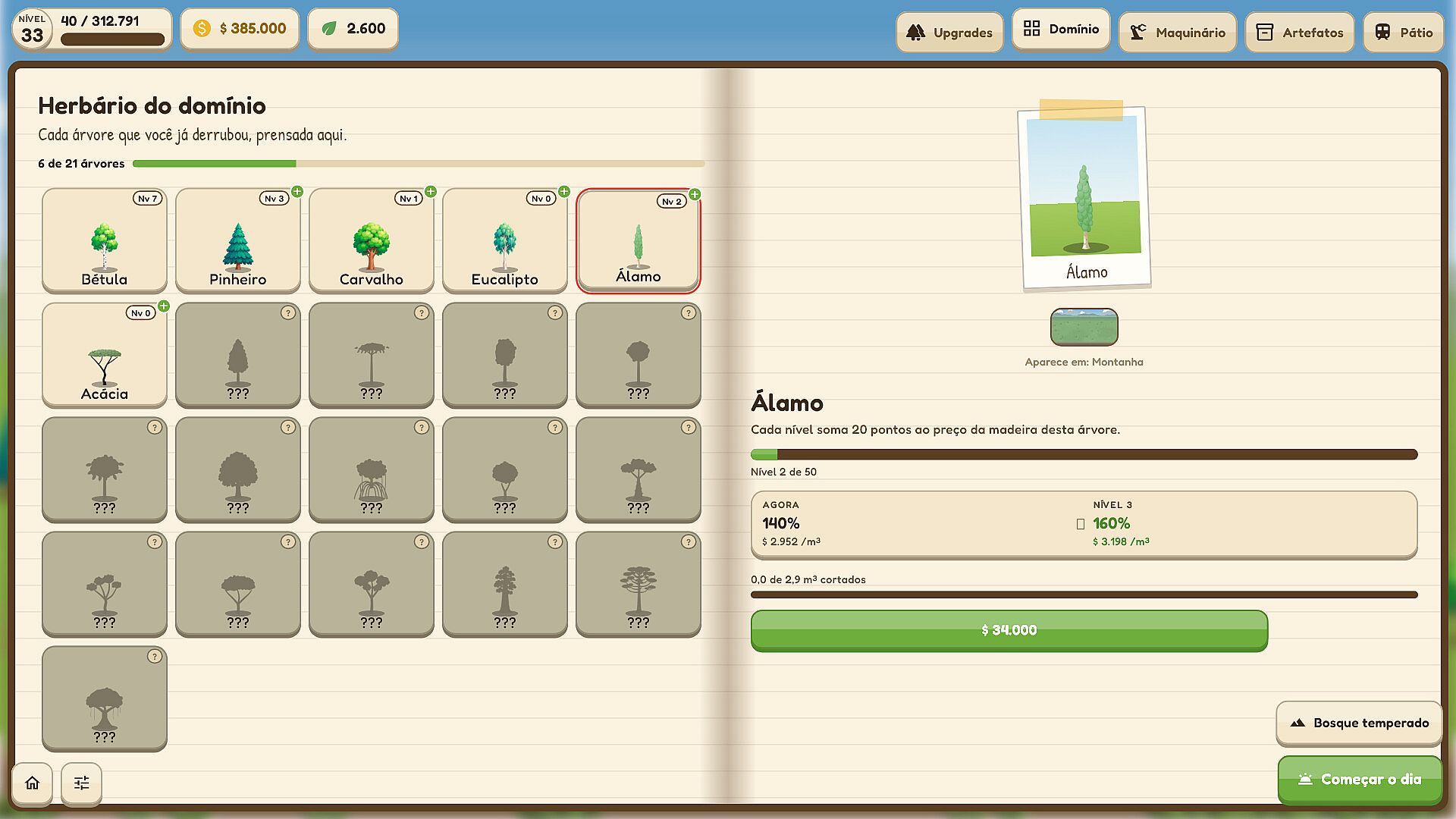
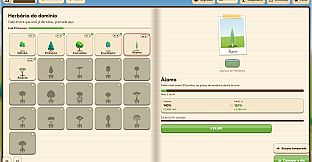
The core loop centers on short, repeatable play sessions called bite-sized days. A train travels through the forest as the player positions a work area for lumberjacks. Trees within that area are felled automatically, and at the sound of the whistle the logs convert into money. The forest contains 21 distinct tree species distributed across five regions that include temperate woods, mountains, savanna, rainforest, and flooded wetlands. New species provide higher value, and upgrades allow the forest to regrow as the train passes through again.
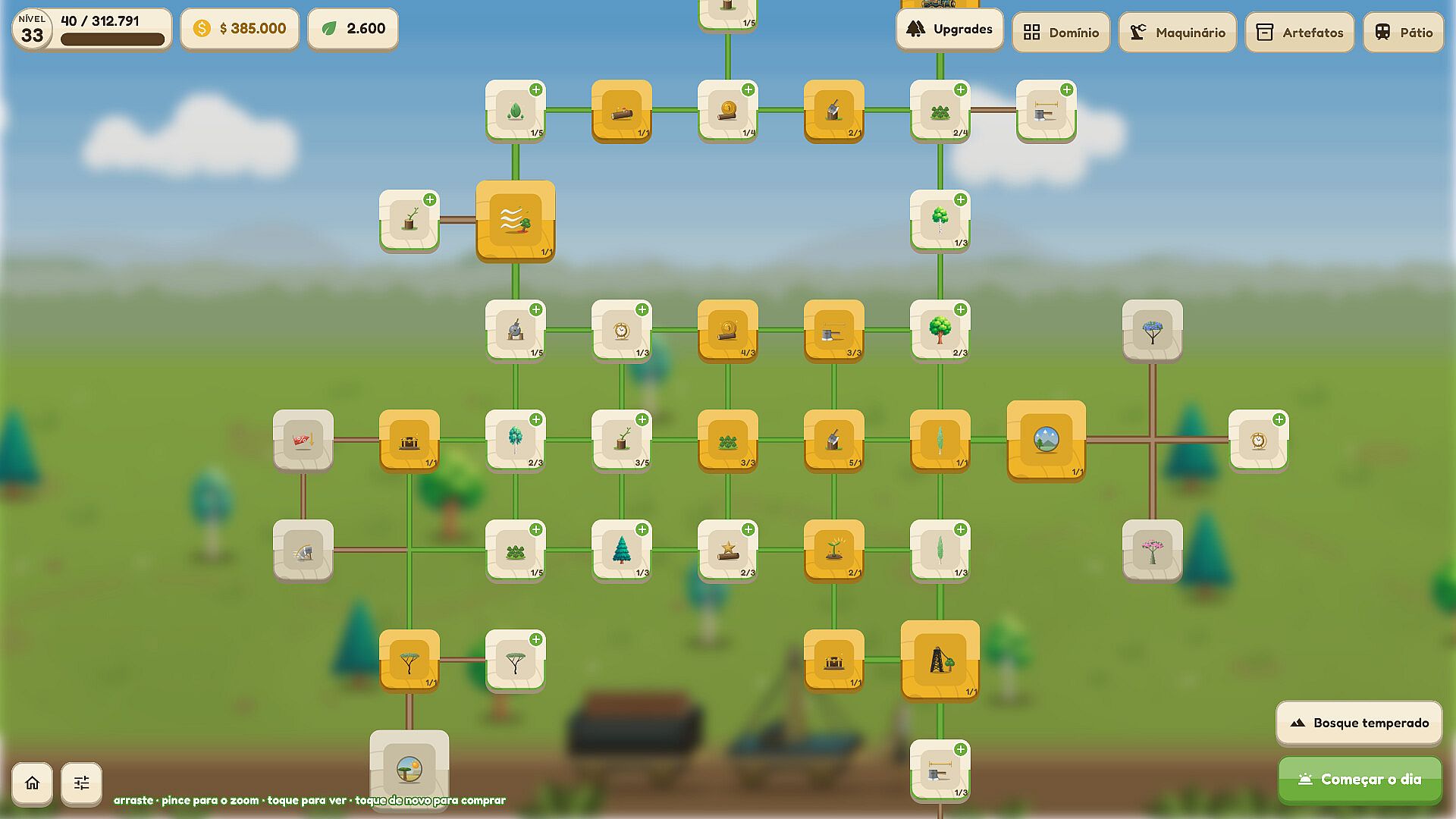
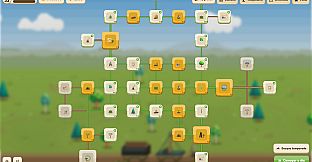
Progression relies on an upgrade tree with more than 170 options. Purchases extend day length, increase forest density, raise wood value, or improve locomotive performance. Each upgrade unlocks additional choices, creating a steady chain of decisions that reward consistent play without requiring long uninterrupted sessions.
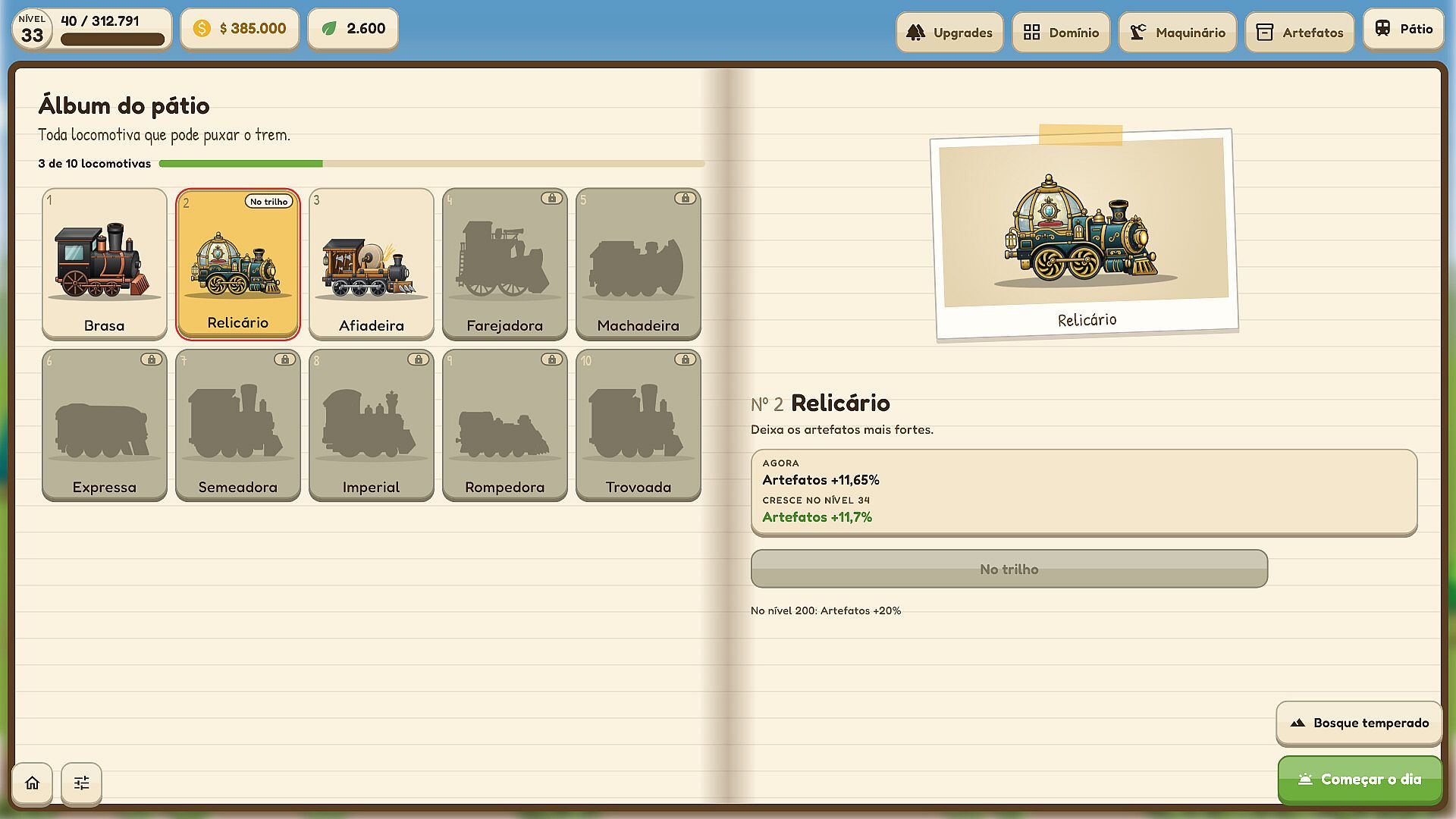
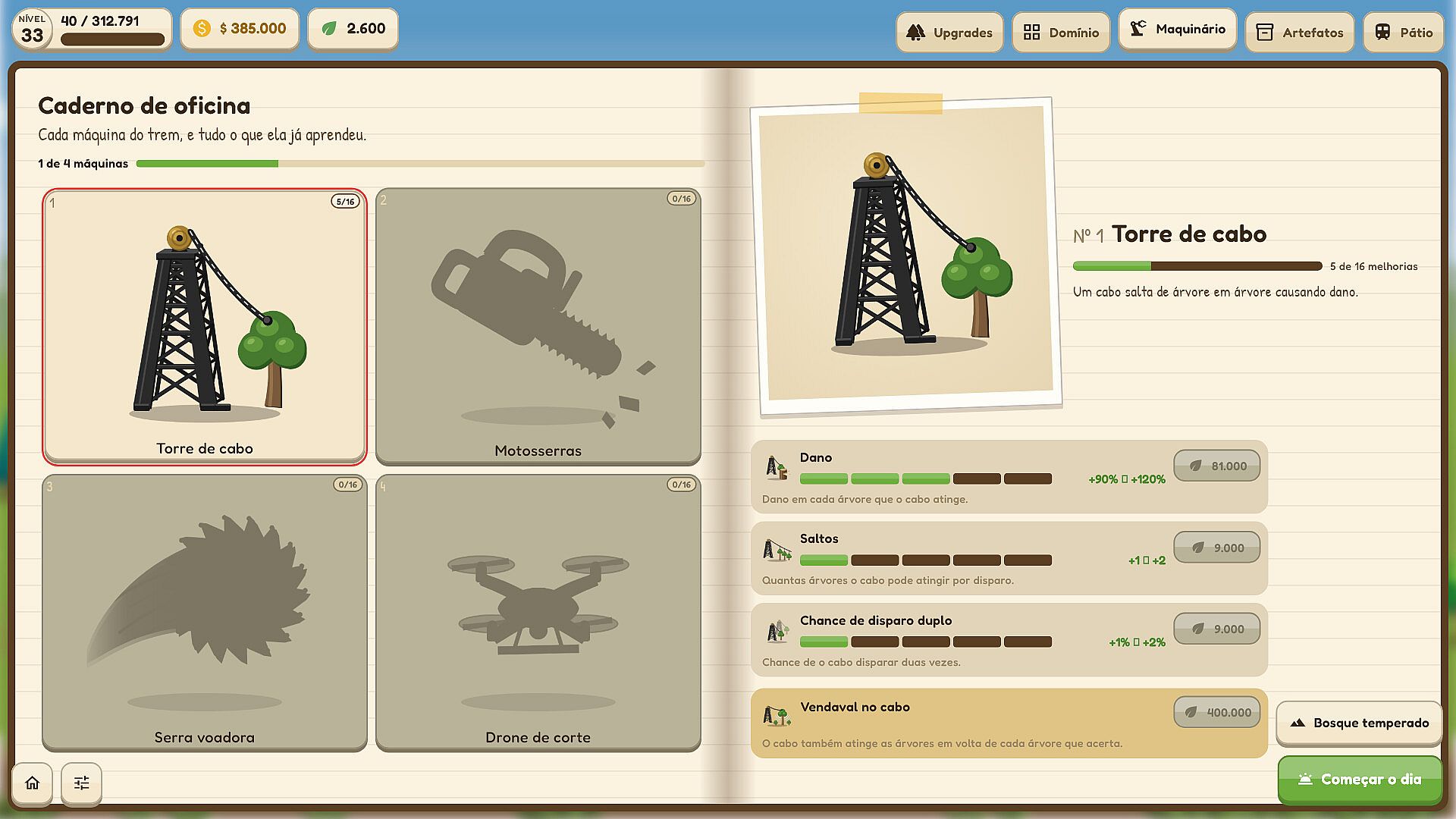
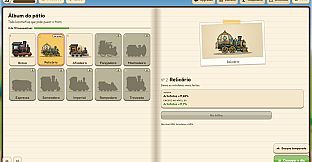
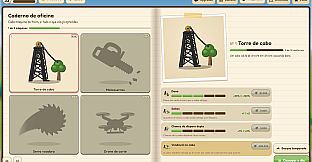
Locomotives number ten in total, each offering a distinct mechanical benefit. One model pays more per tree, another trades currency for seeds, a third fells trees on the first strike, and a fourth recharges every wagon simultaneously. Four power wagons supplement the train: the Cable Tower, Chainsaws, Flying Saw, and Cutting Drone. These units operate independently, recharging and activating across the forest. Seeds collected during runs strengthen the wagons over time.
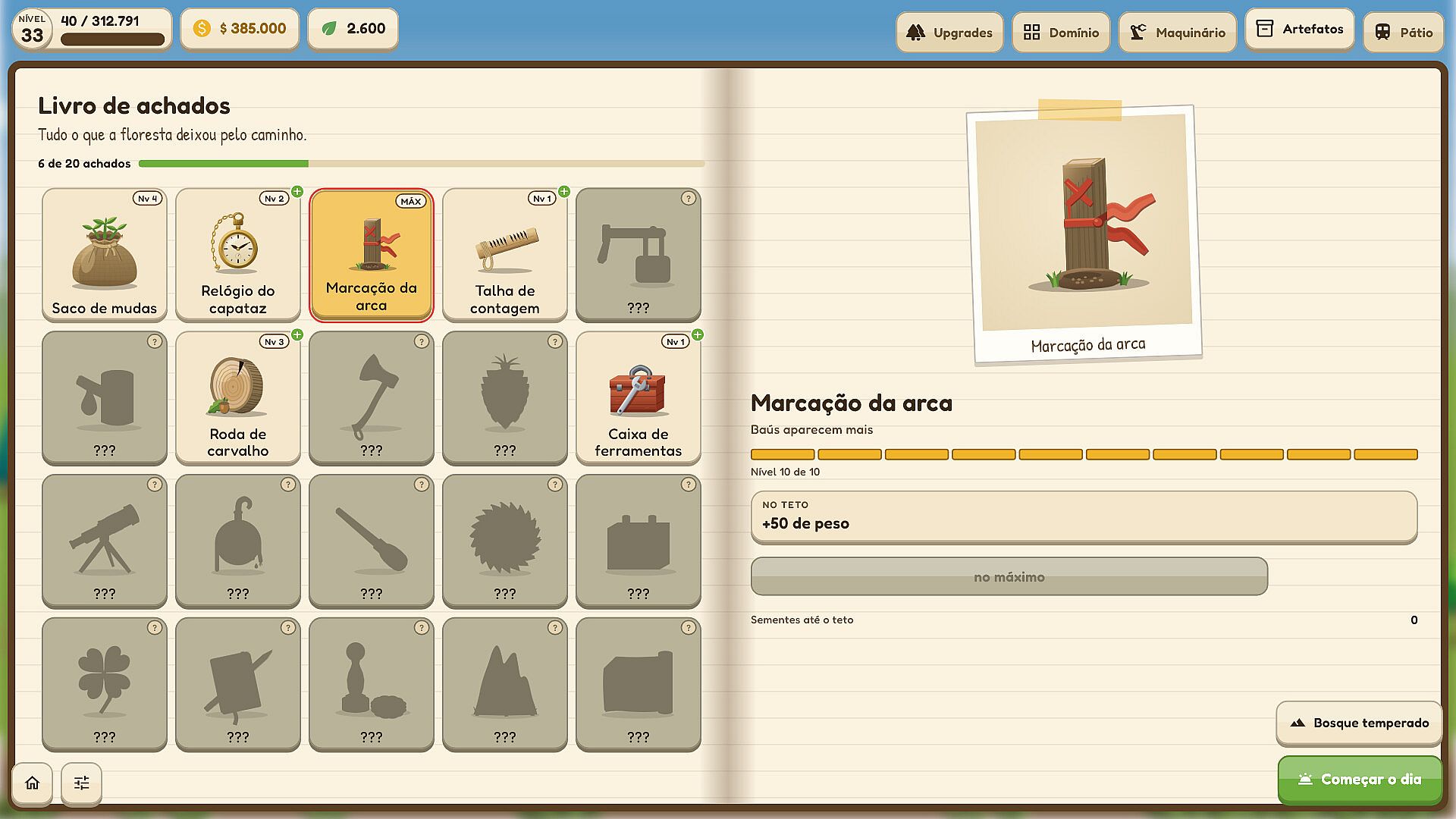
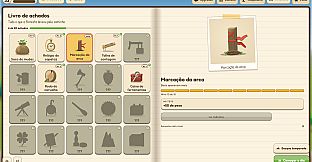
Twenty artifacts provide further customization. Examples include the Foreman's Watch, which lengthens each day, and the Buyer's Seal, which increases the value of all wood. Artifacts can be leveled up to ten times. Random chests and lost logs appear along the tracks and contain seeds that support ongoing growth.
Game Modes
Choo Chop operates as a single continuous experience centered on incremental runs through the forest. Each session follows the same structure of guiding the train, harvesting trees, and spending earnings on upgrades, but the expanding upgrade tree and artifact collection create meaningful variety between runs. The game supports both mouse and controller input, allowing players to adjust the work area and manage the train at their preferred pace.
No separate competitive or cooperative modes exist. The design emphasizes relaxed, repeatable play that fits short time windows while still offering long-term depth through the upgrade and artifact systems.
Progression and Customization
Advancement comes from balancing immediate earnings with investments that improve future runs. Longer days, denser forests, and stronger equipment compound over time, while the ten locomotives and four power wagons introduce different strategic paths. Artifact leveling adds another layer, as each of the twenty items scales in power and alters how resources flow through a session.
The five regions and twenty-one tree species encourage exploration of the upgrade tree, since higher-value wood becomes accessible only after certain milestones. Seeds gathered from chests and logs feed directly into wagon improvements, creating a secondary economy that rewards attention to the environment during each pass.
Is It Worth Playing?
Choo Chop suits players who enjoy incremental and idle-style simulation games with clear progression and low-pressure decision making. The bite-sized day structure makes it easy to pick up for a few minutes or settle into longer sessions as upgrades accumulate. Controls work equally well with mouse or controller, and the visual feedback of logs flying into wagons and forests regrowing provides steady satisfaction.
Those seeking fast action or multiplayer competition will find little here, but anyone interested in methodical resource management and steady unlocks should find the systems engaging. The combination of locomotive variety, power wagons, and leveled artifacts gives enough depth to support repeated play without overwhelming complexity.











