


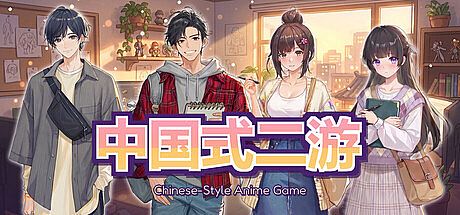


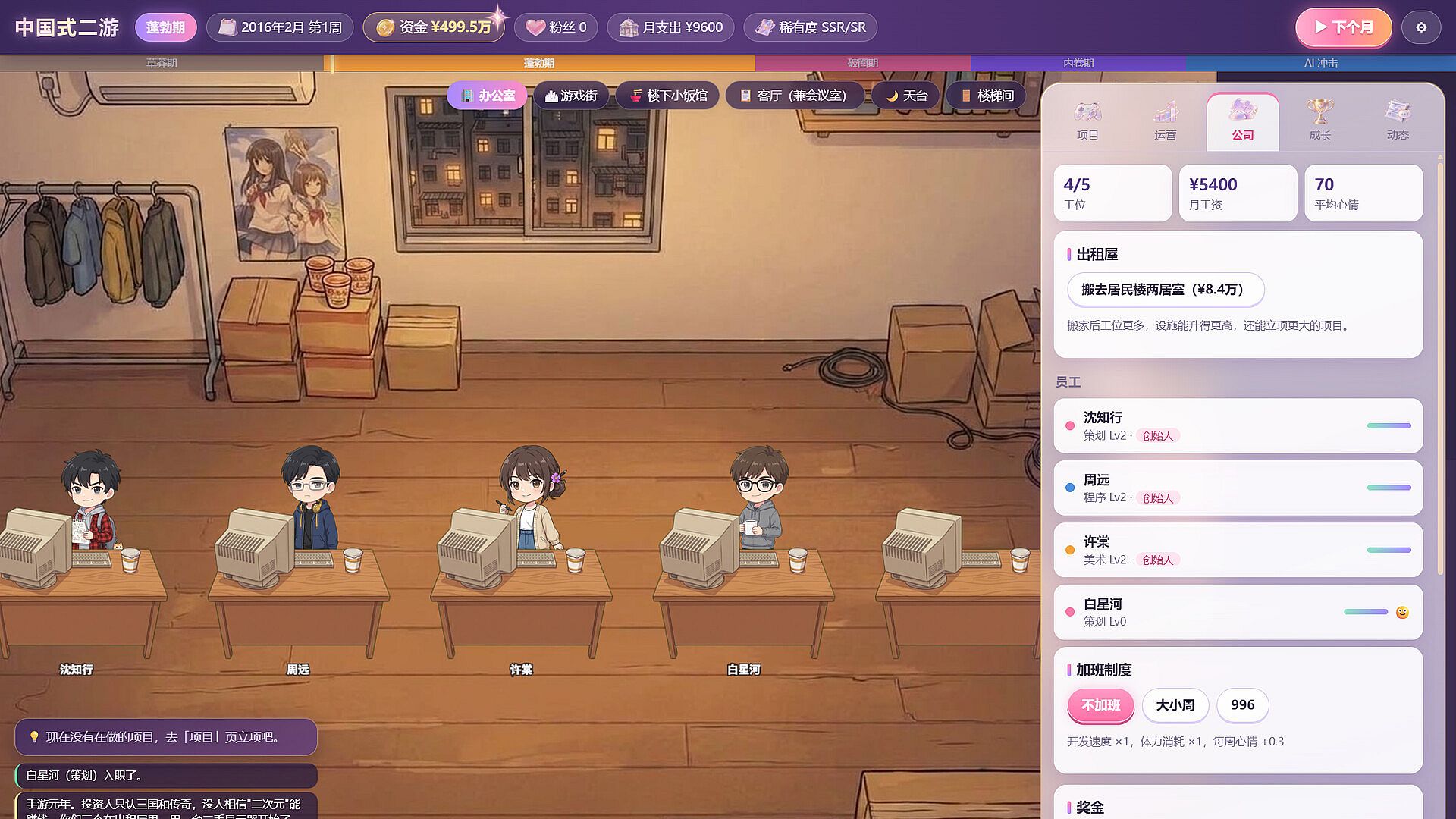
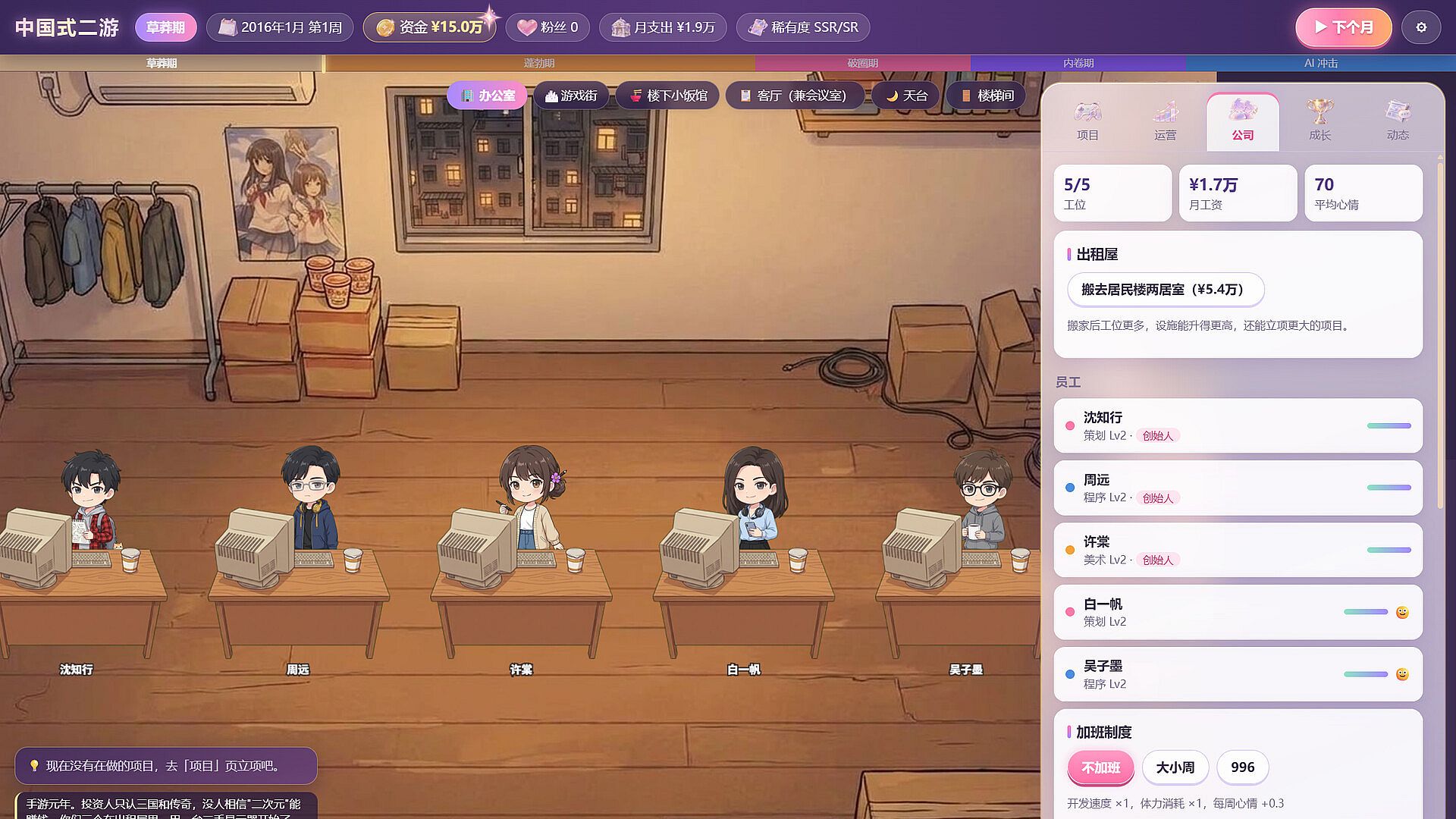
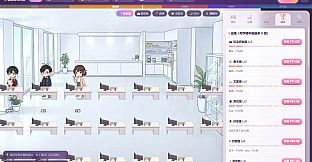
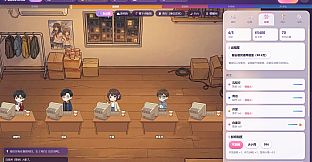
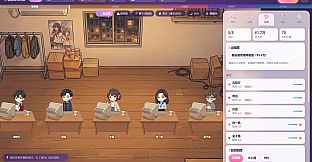
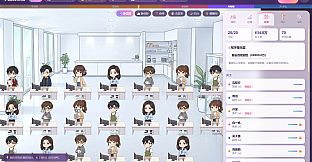

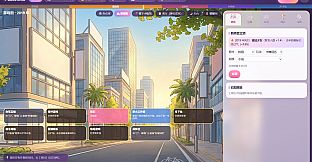
Chinese-Style Anime Game is a strategy and simulation title that places players in charge of a small Chinese studio developing anime-style games. The experience unfolds across a decade of industry shifts, beginning in 2013 when a recent graduate rejects a corporate job to pursue game development with friends in a modest rented space.
Gameplay
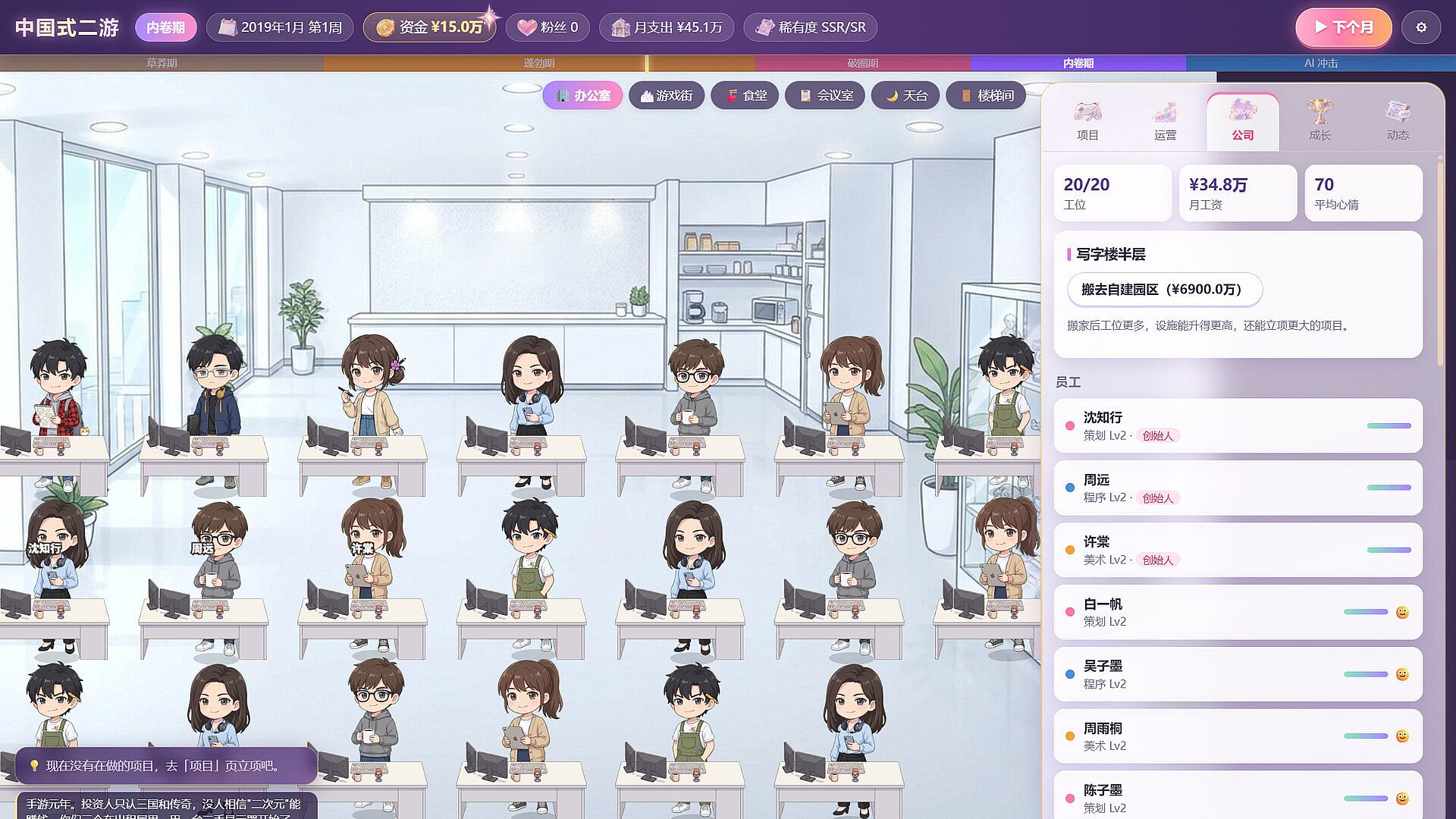
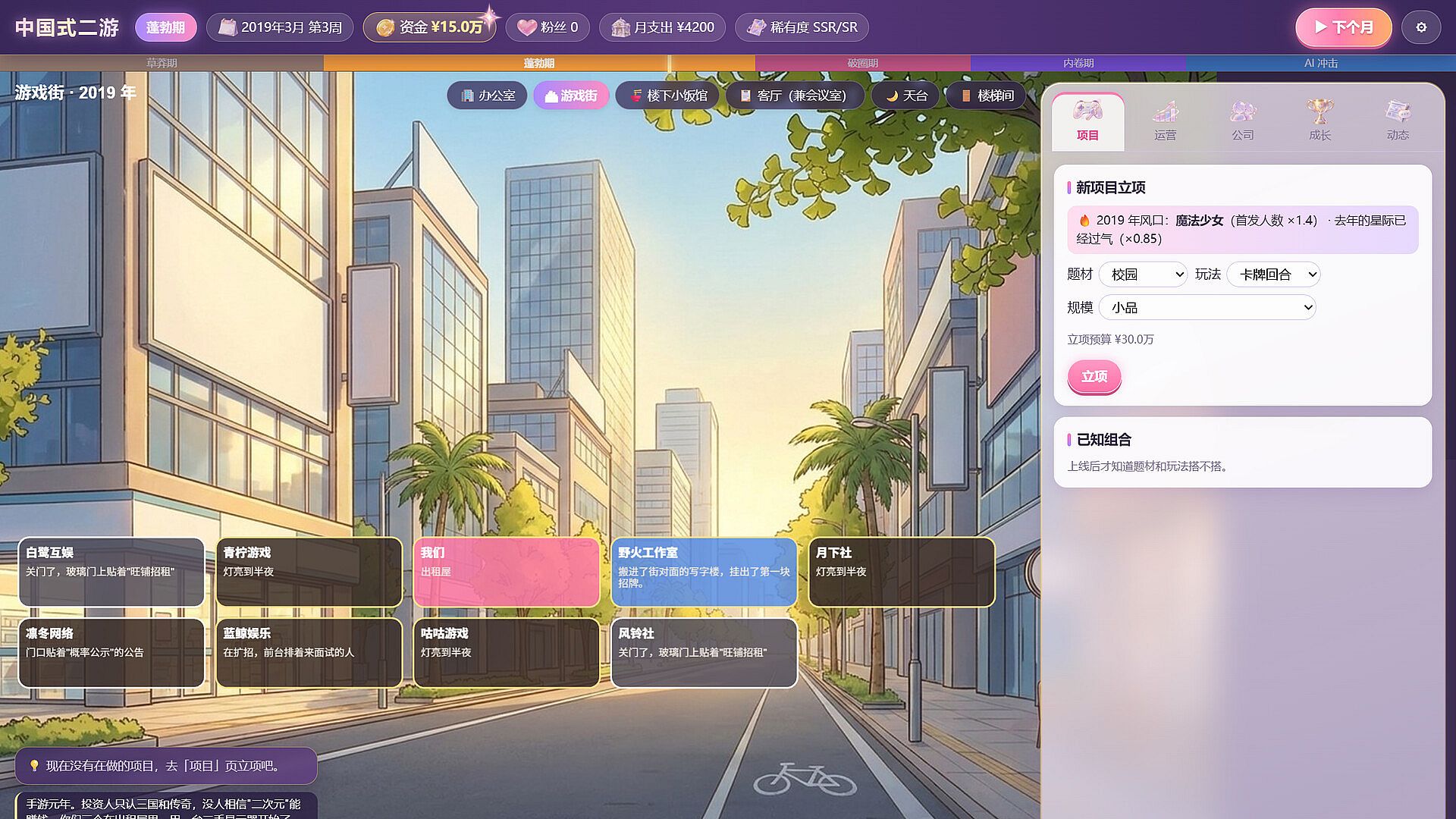
Players handle every aspect of studio operations, from initial concept work on a second-hand monitor to scaling into larger facilities. Core loops center on project development where themes such as school life, xianxia fantasy, warships, or cyberpunk combine with gameplay styles including card battlers, rhythm games, action RPGs, and open worlds. Three project tiers exist: small efforts, mid-size productions, and blockbusters that require an upgraded office before approval.
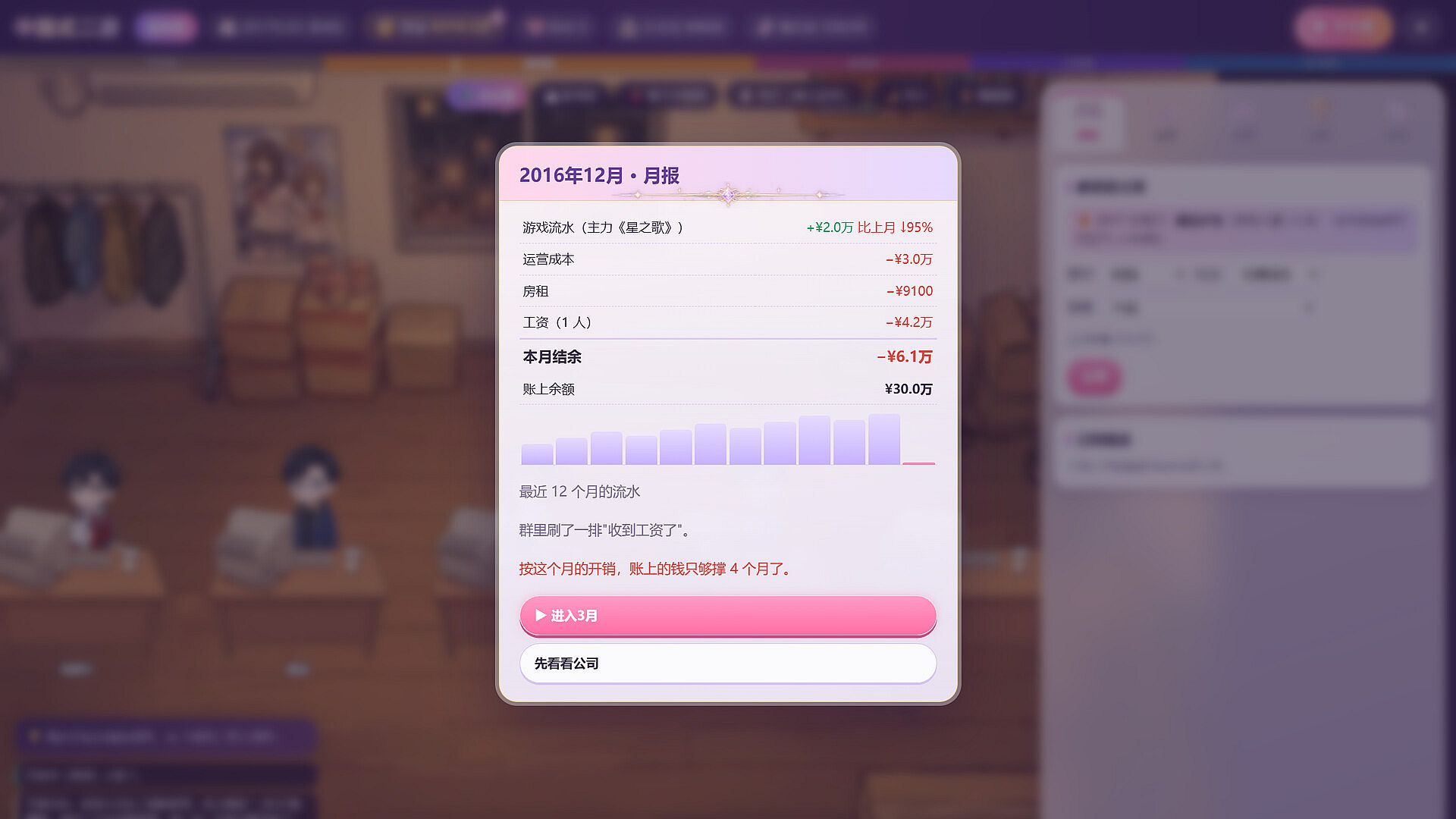
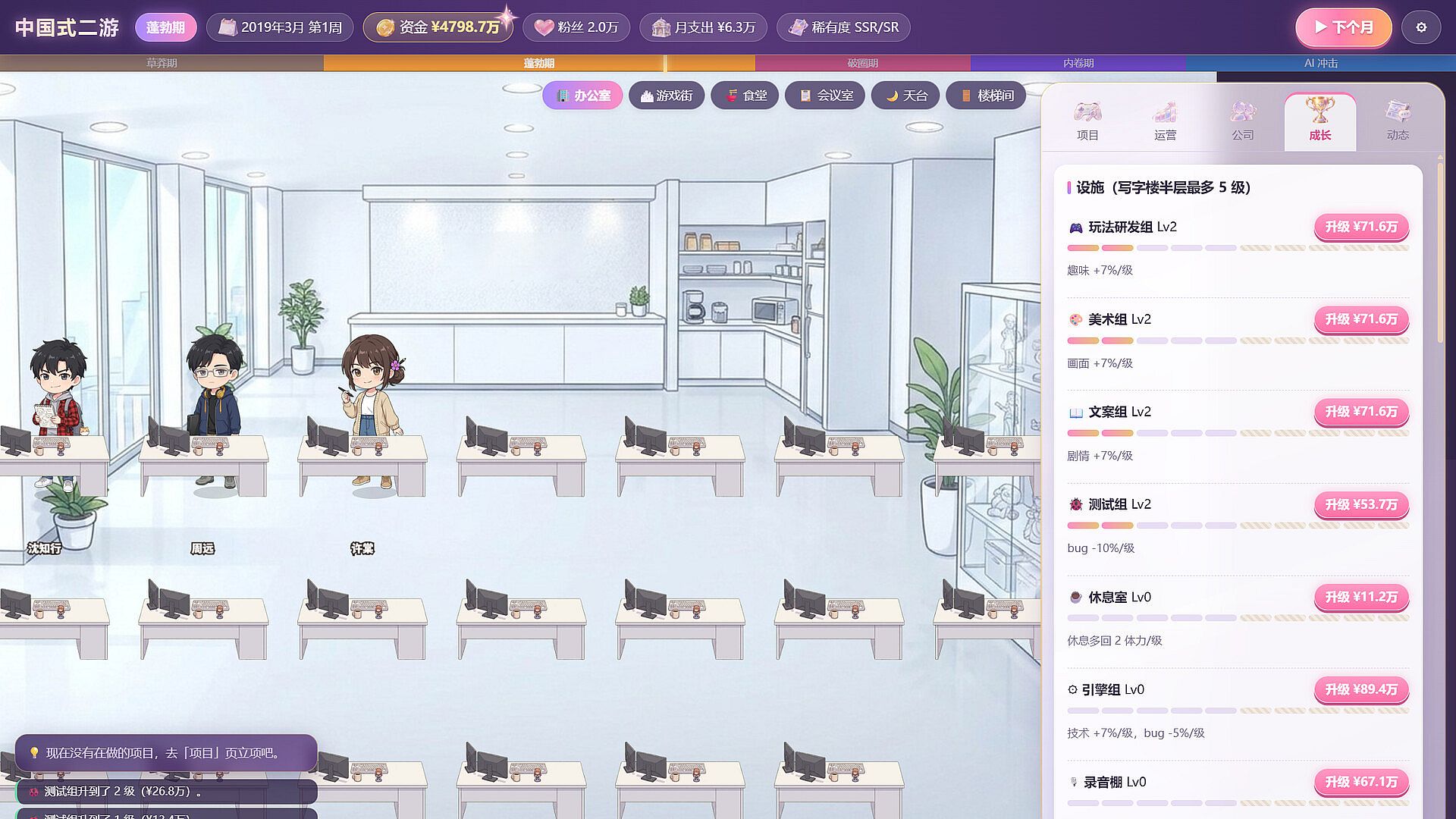
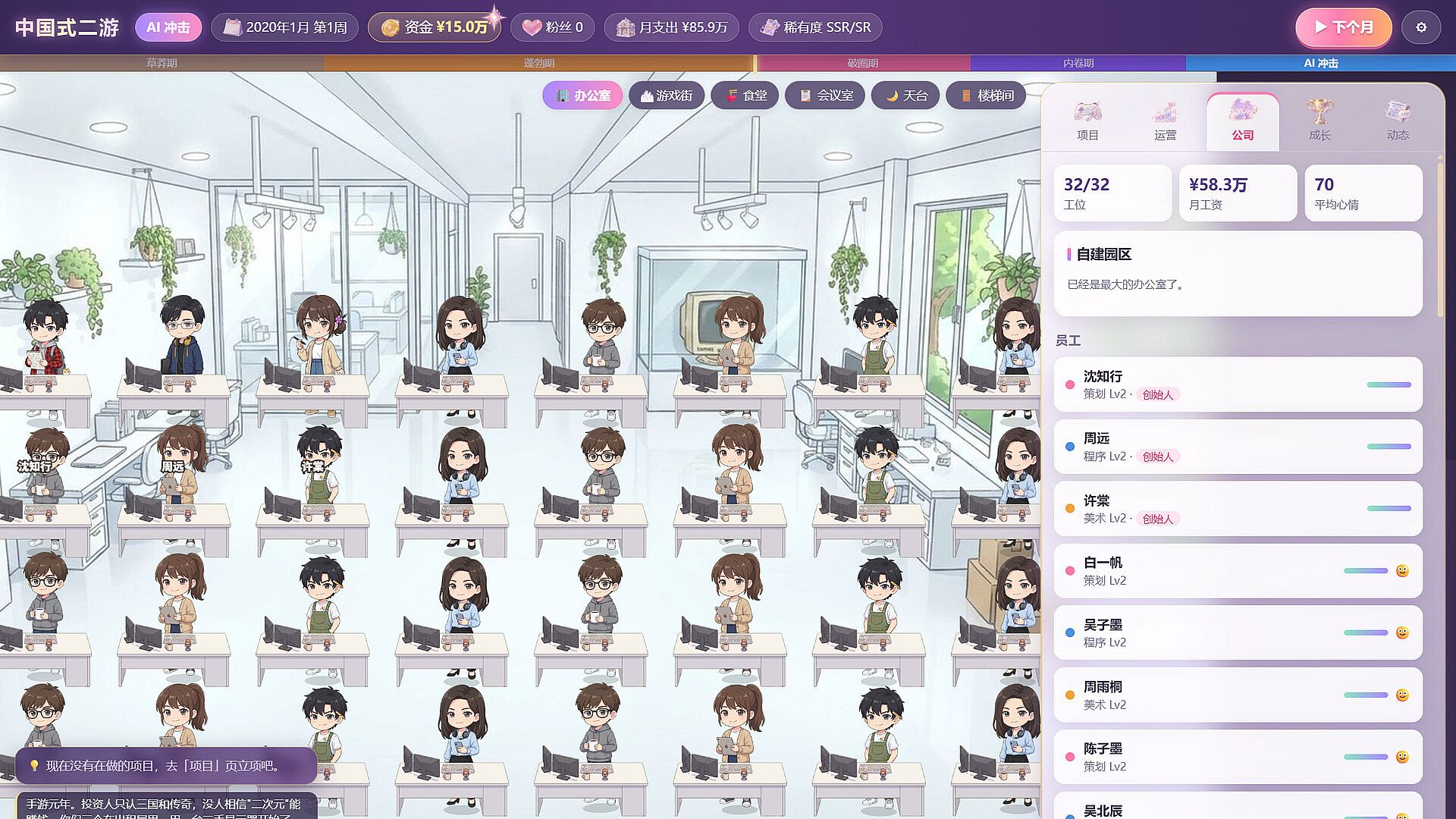
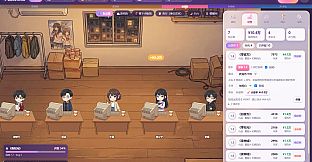
Progression tracks team skills in gameplay, art, writing, and engine work, with options to expand facilities like a motion capture studio. Monthly financial reports guide salary decisions, raises, bonuses, and overtime policies while monitoring runway before funding runs out. Staff members bring individual strengths, and relationships evolve as some remain long-term while others depart for rivals or independent paths.
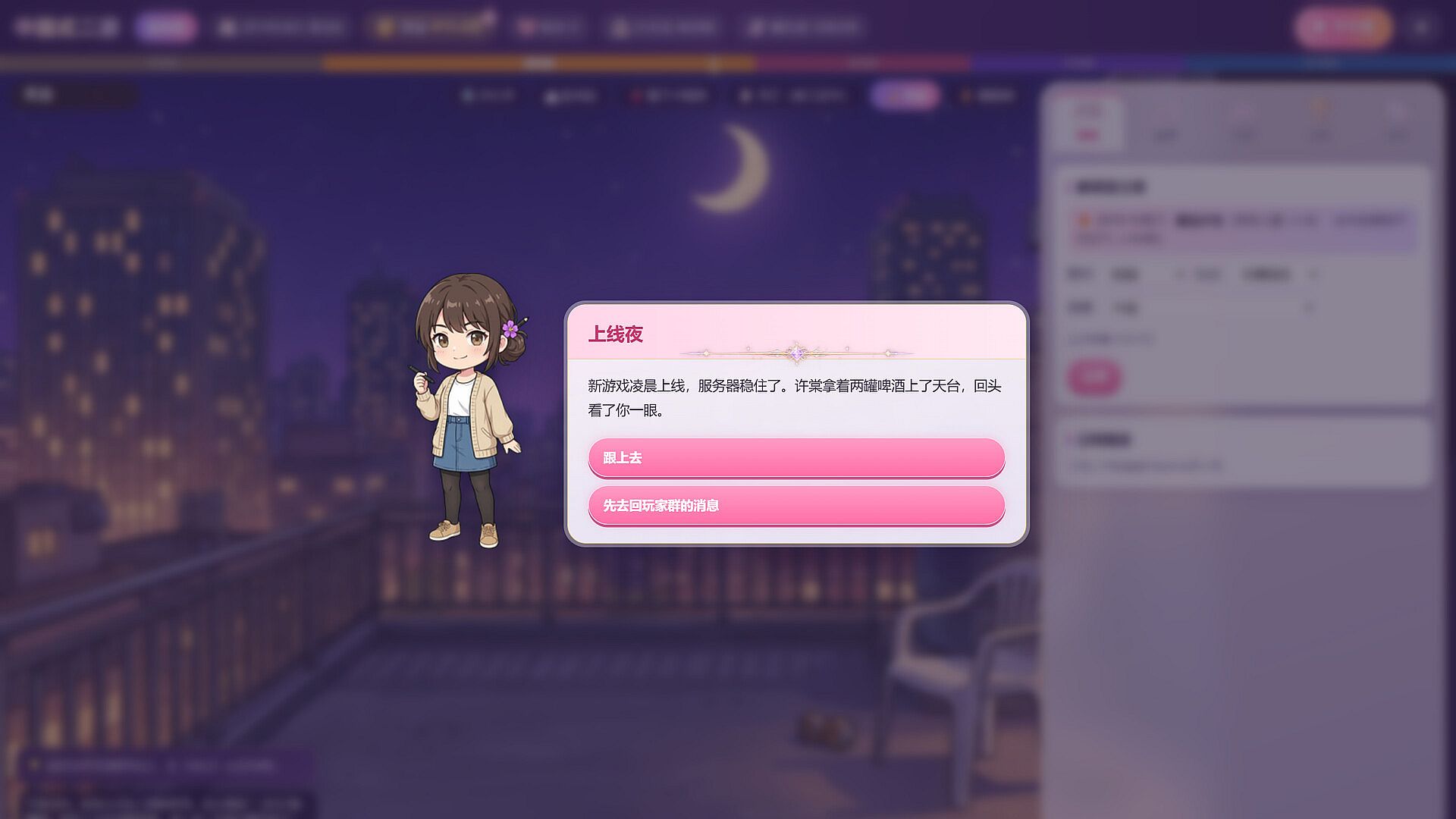
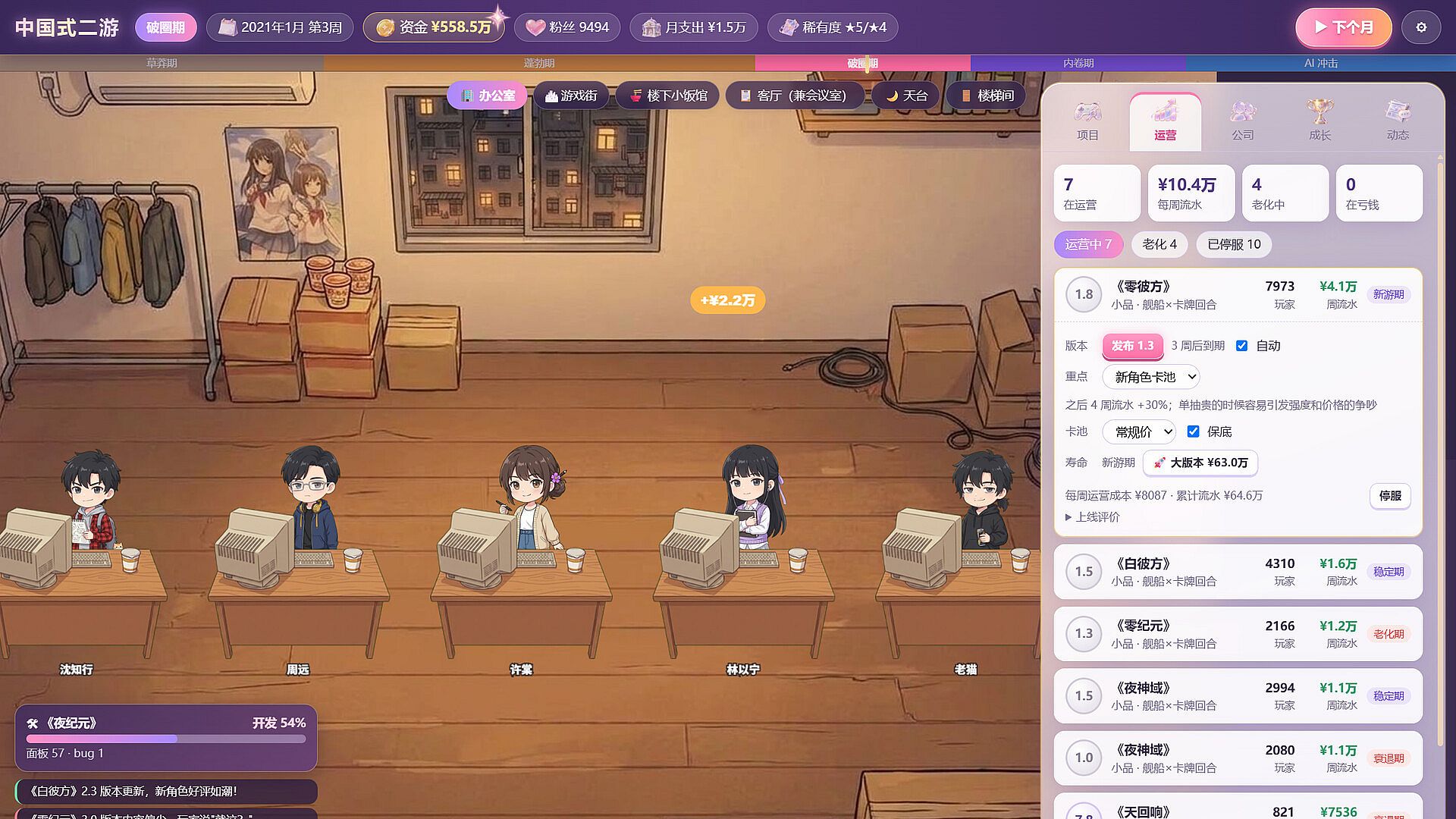
Live service elements require ongoing choices about update priorities, character banners, story chapters, and event collabs. Pricing for pulls and pity systems directly influence player reactions, with risks of backlash from perceived imbalances or high costs. Industry regulations appear over time, including drop-rate disclosures and anti-addiction measures that shape long-term strategy.
Game Modes
The simulation divides into distinct operational phases that players navigate sequentially and repeatedly. The development phase focuses on mixing themes and genres, selecting project scale, and navigating closed beta decisions such as delaying for polish, meeting deadlines, or pushing through extended hours to align with release windows.
Live service management forms another phase, where updates emphasize new content or collaborations while monitoring community sentiment and streamer involvement. Annual cycles include watching competitor releases, securing promotional support, and adapting to shifting popular themes that quickly become outdated.
Personnel and financial oversight runs parallel throughout, covering recruitment, retention, poaching risks, and year-end evaluations. A gentle personal storyline integrates family expectations and a central relationship that reflects the protagonist's circumstances.
Industry Context and Progression
Ten years of simulated time capture evolving market conditions, from early skepticism toward anime games to crowded release schedules and heated discussions around monetization. Rival studios emerge from former connections, creating competition that occasionally gives way to cooperation during lean periods. Achievements mark milestones in team growth, financial stability, and critical recognition, including the possibility of claiming Game of the Year honors.
Every decision carries consequences for company longevity. After roughly two years of operation, newer titles pressure older projects, prompting choices between major updates, sequels, or closure. The narrative avoids clear antagonists, instead framing conflicts as products of broader industry trends and cultural attitudes.
Is It Worth Playing?
This management sim suits players interested in the business side of game creation rather than direct control of characters or combat. Its strength lies in the detailed recreation of studio life, including the tension between creative goals and commercial realities. The fictional cast and events allow focus on universal questions about motivation in game development without tying to specific real-world cases.
Those who enjoy balancing budgets, staff dynamics, and release strategies will find depth in the systems for project sizing, update planning, and long-term survival. The single-player structure emphasizes thoughtful pacing over fast action, rewarding careful observation of market trends and team morale. Availability on PC makes it accessible for extended sessions where players can experiment with different studio paths and endings.












