


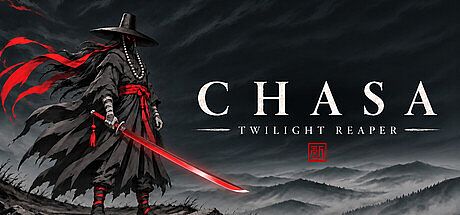


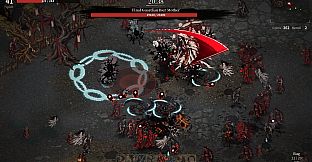
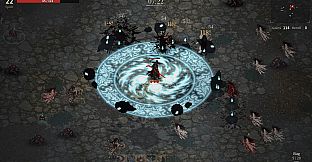
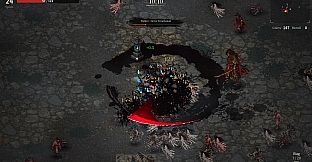
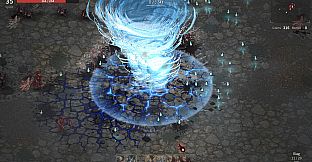
CHASA : Twilight Reaper is an isometric horde-survival action RPG set in a world where the boundaries between the living and the dead have collapsed. Players take on the role of a Chasa, a Grim Reaper tasked with guiding intertwined spirits and monsters back to the afterlife through intense combat across ink-wash styled landscapes.
Gameplay
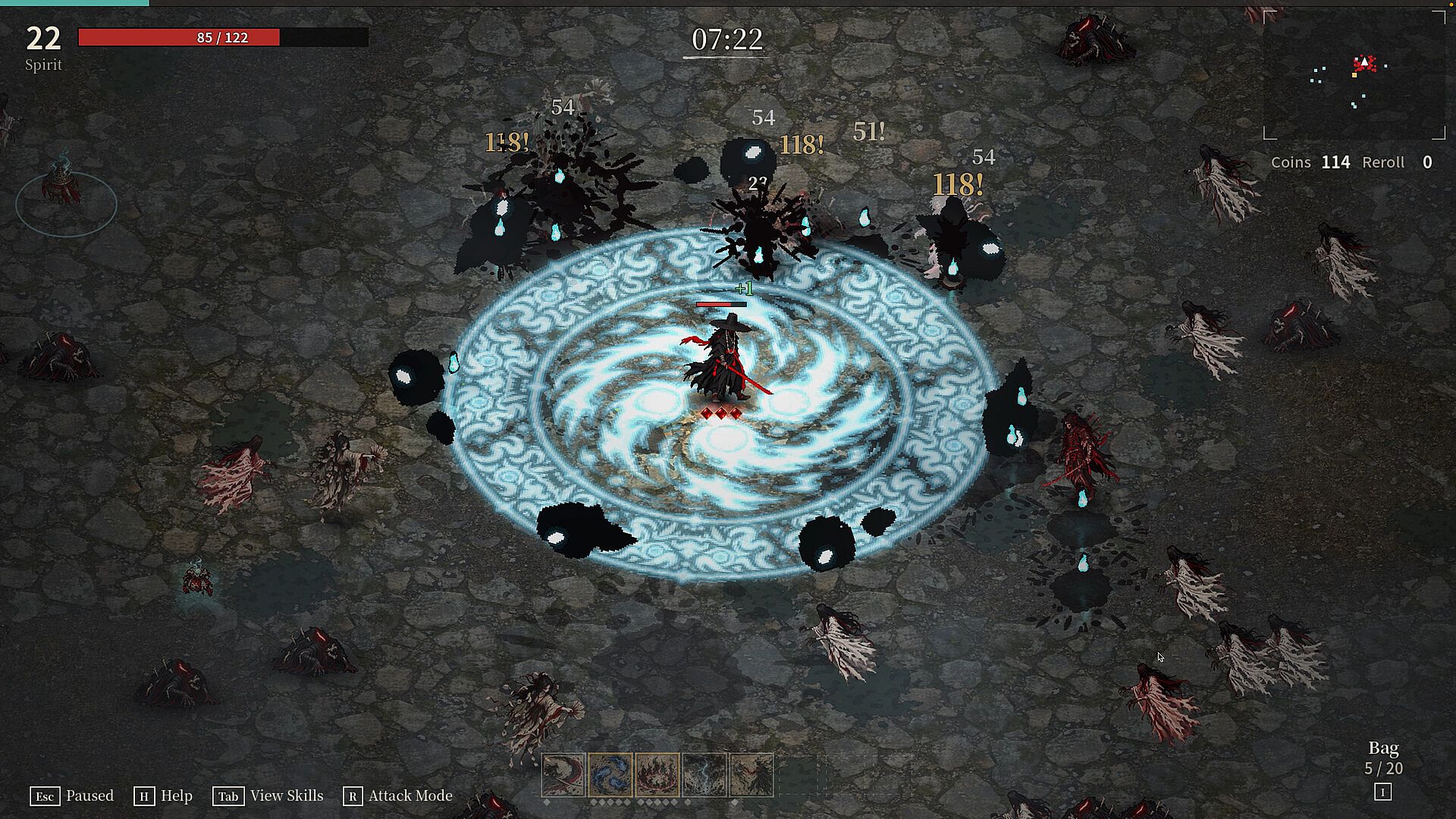
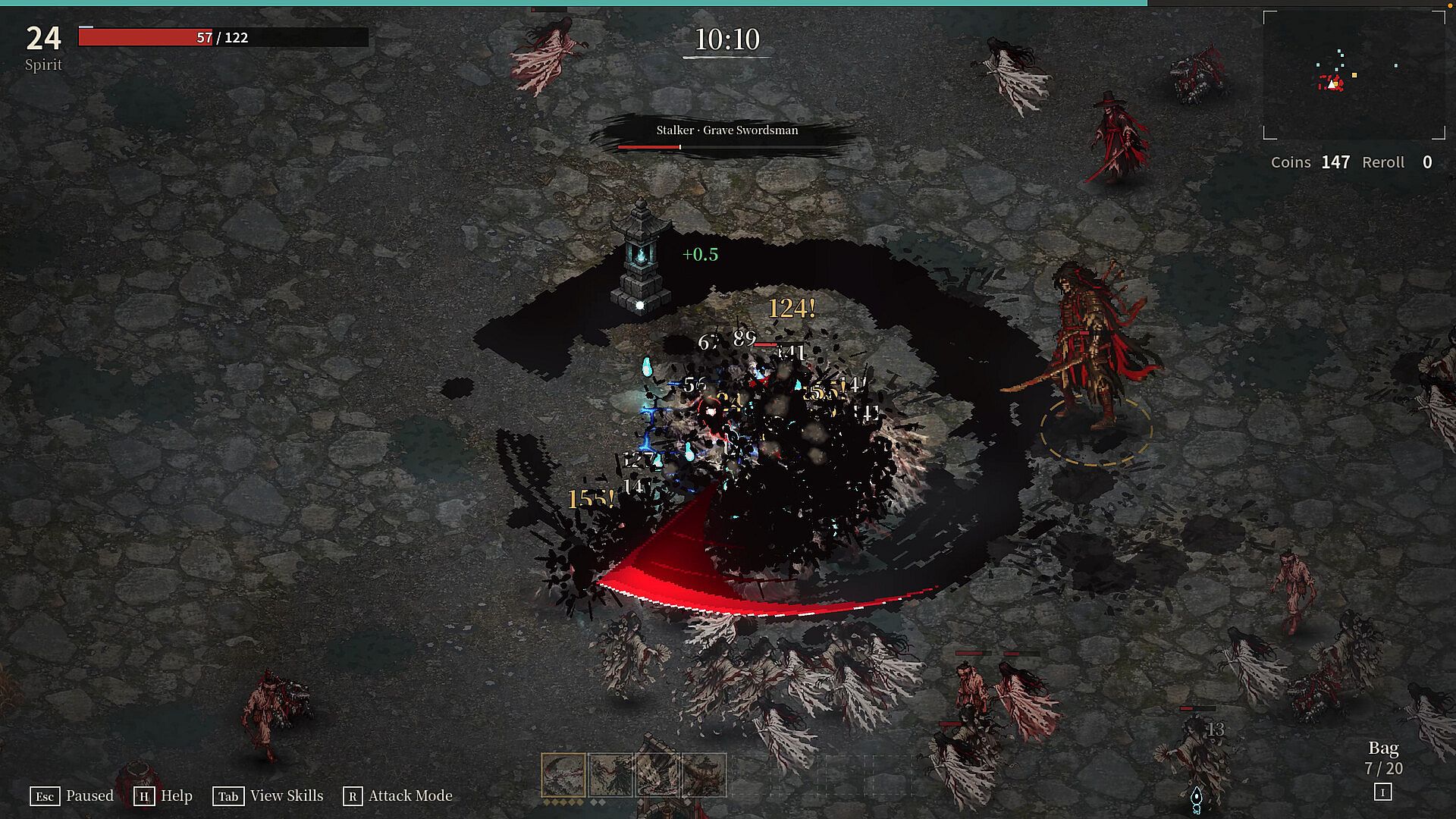
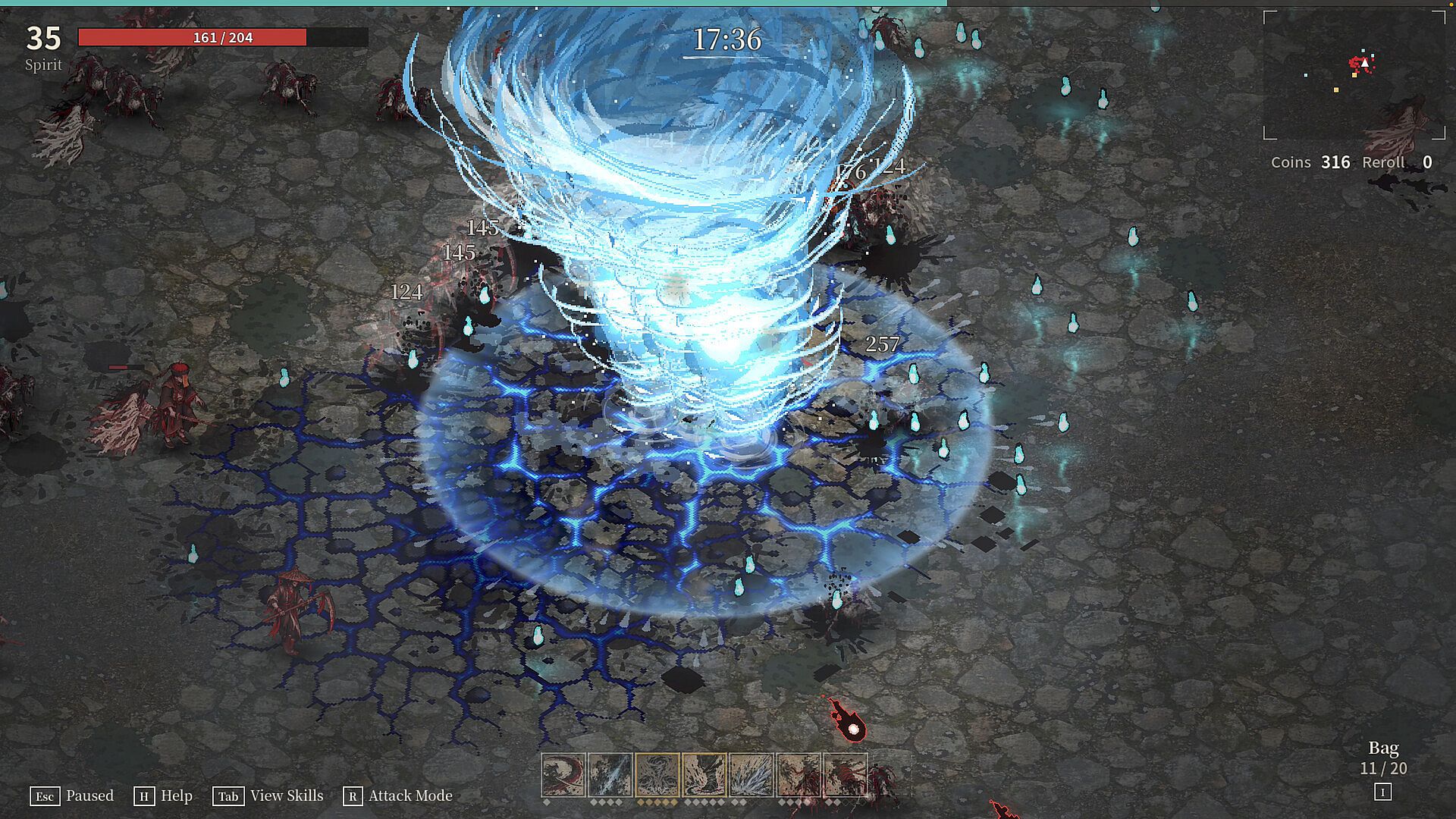
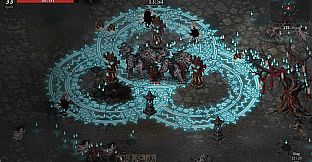
The core loop centers on fast-paced combat against waves of the dead and grotesque monsters. Combat takes place from an isometric perspective, emphasizing positioning, timing, and skill execution to clear dense groups efficiently. Three distinct weapon types define the approach: a blade for direct melee strikes, a talisman for binding and controlling enemies, and a lantern for projecting searing beams of light. Each weapon unlocks a unique set of skills that players activate during runs.
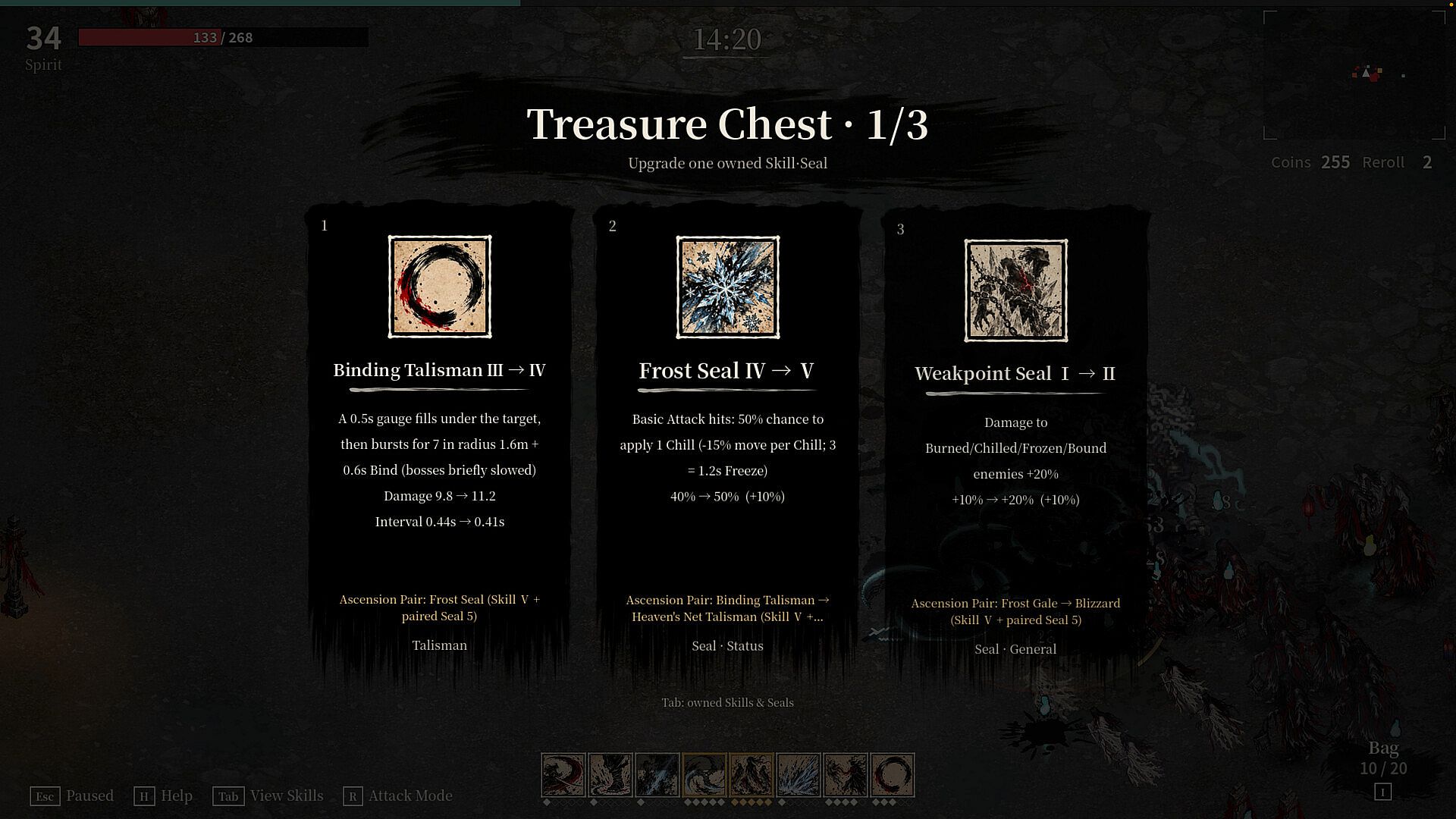
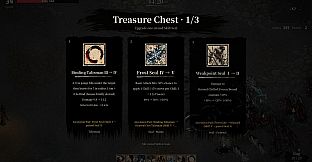
Skill progression forms the heart of each session. Levels grant opportunities to combine new abilities with existing ones, allowing players to craft specialized builds on the fly. When a skill reaches full development alongside its supporting ability, its effects expand dramatically, turning targeted attacks into wide-area sweeps that dominate the battlefield. This system rewards experimentation while encouraging focused investment in synergistic choices.
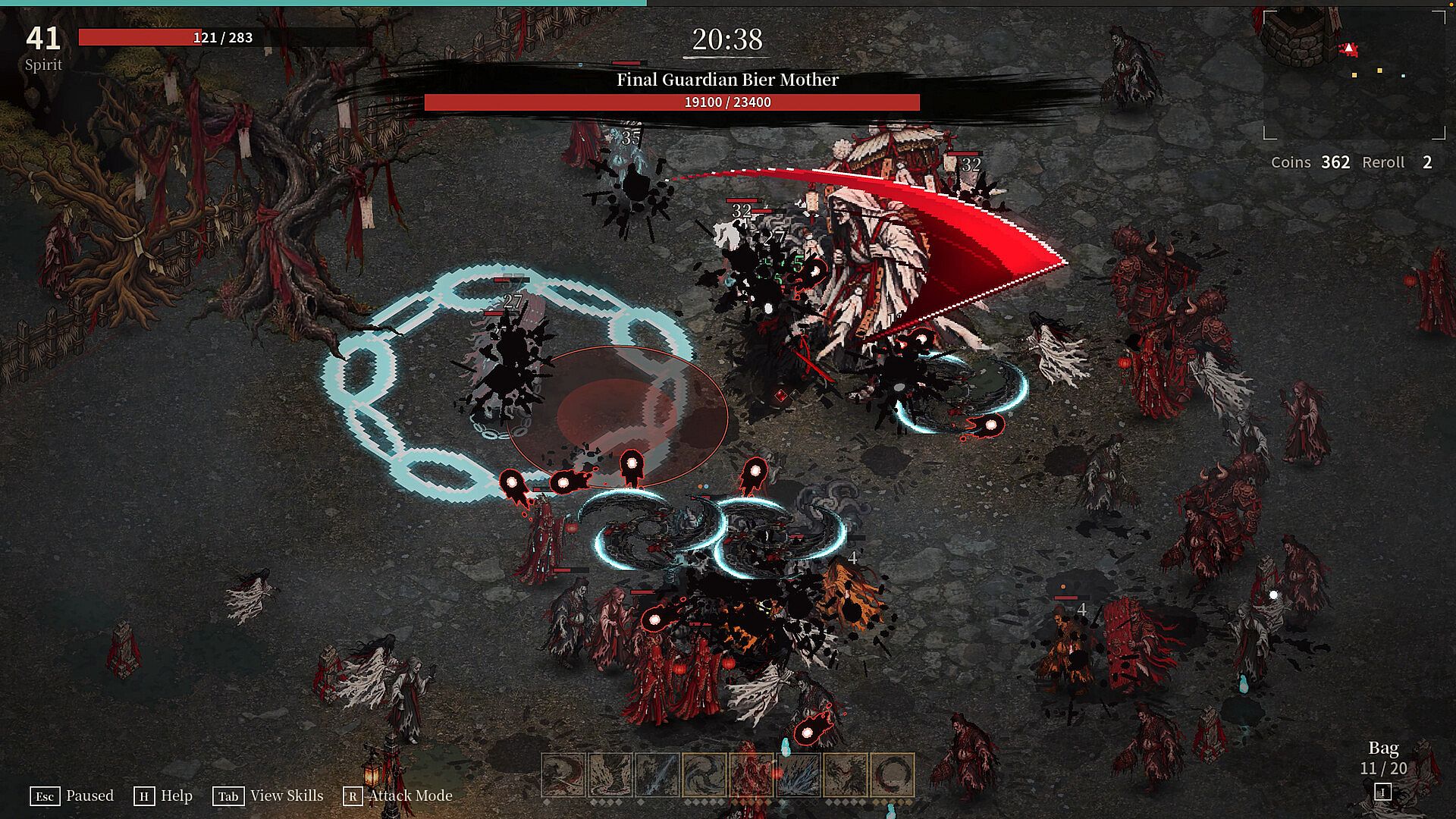
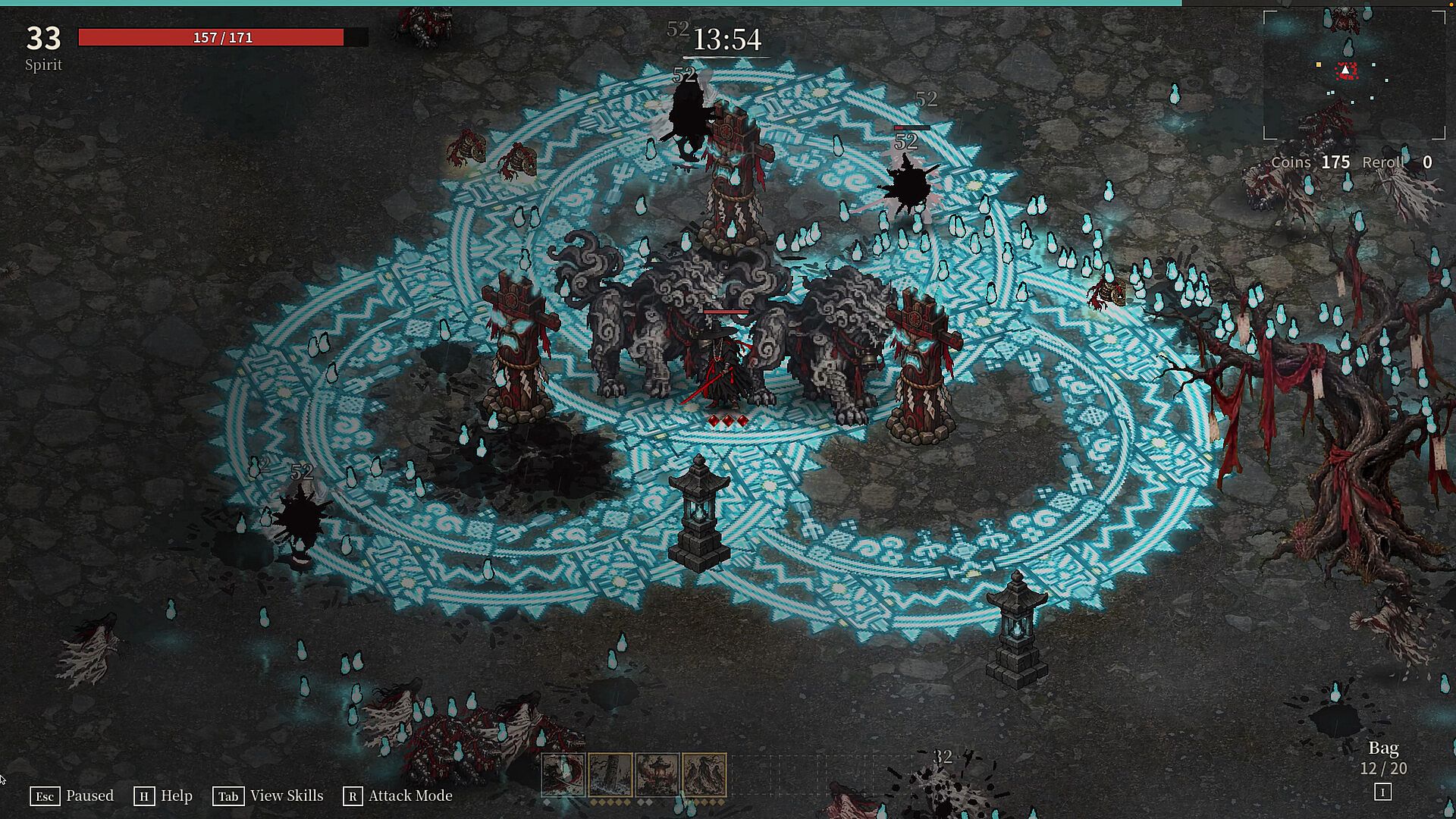
Boss encounters add layers of strategy. Powerful enemies appear among the hordes, and each run concludes with a Guardian that demands careful observation of attack patterns and exploitation of openings. Success hinges on reading telegraphs and deploying fully powered skills at the right moments rather than relying on raw aggression.
Game Modes
The game operates as a single-player experience built around structured runs. Players progress through ten chapters, each ending in a confrontation with a unique Guardian. A typical run lasts around twenty-five minutes, while completing the full sequence of chapters requires more than twenty hours of play.
Runs emphasize roguelike elements through skill combinations and temporary power spikes, yet permanent progression carries forward between attempts. This structure supports repeated visits to earlier battlefields with enhanced capabilities, creating a cycle of refinement without altering the fundamental single-player focus.
Progression and Builds
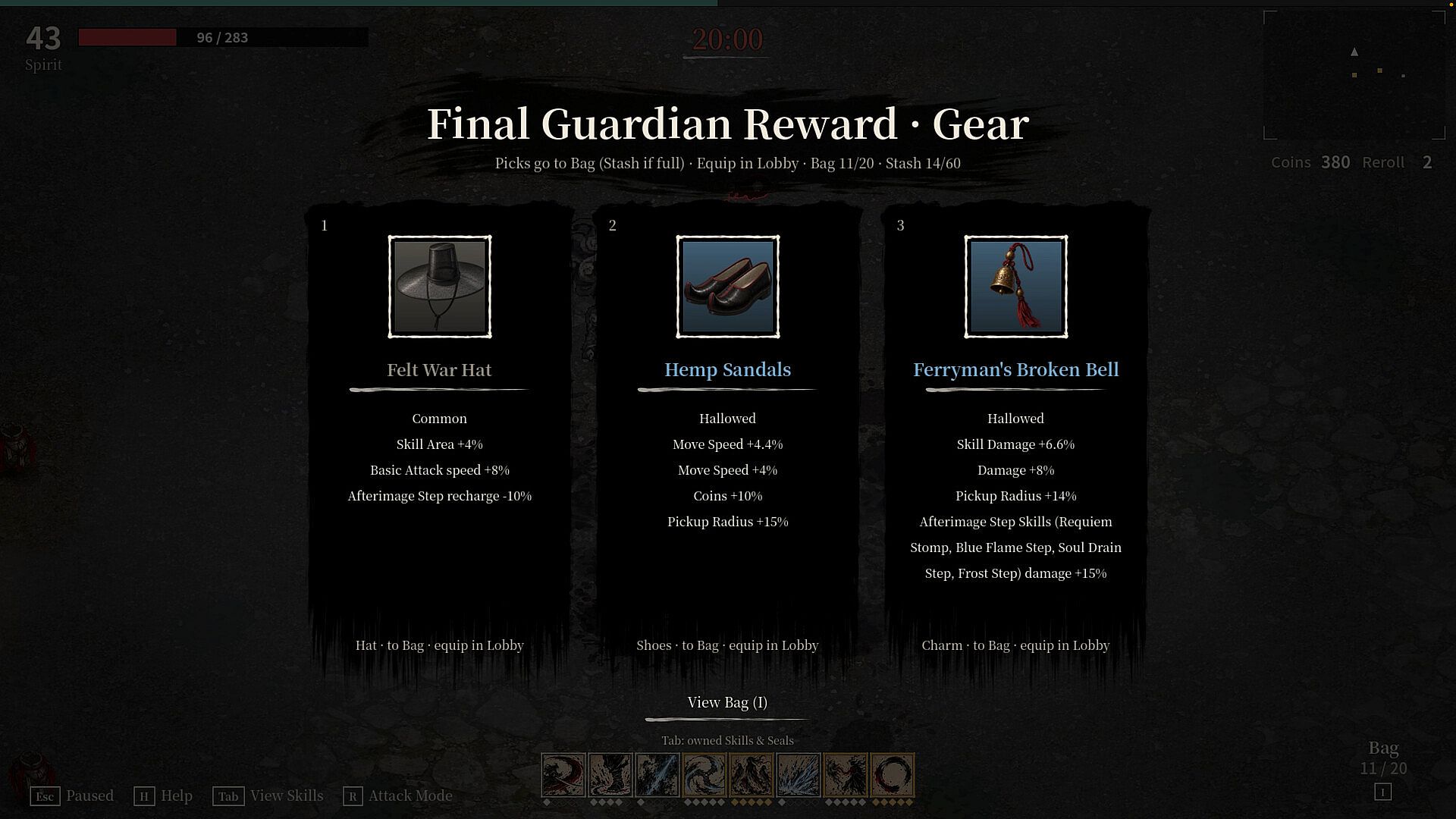
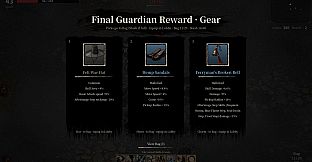
Battle rewards fund long-term growth through the Spirit Vein, a passive skill tree containing roughly four hundred nodes. Unlocking traits here provides lasting bonuses that persist across runs, allowing players to tackle previously challenging areas with greater strength. Equipment drops add another dimension, featuring randomly generated bonuses that players equip to further customize their Grim Reaper.
Seals and Ascensions expand customization options, with nineteen of each available to modify skill behavior and overall power. These systems integrate with the core combat loop, turning each run into an opportunity to test new combinations while building toward more ambitious clears.
World and Art
Environments draw from a distinctive ink-wash painting aesthetic rendered in pixel art. Key locations include the Broken Bridge, Hollow Alleys, Sleeping Temple, and the depths of the Netherworld. These settings frame encounters with wandering dead and monstrous foes, creating a cohesive visual identity that blends traditional artistic textures with the game's action focus.
Is It Worth Playing?
CHASA : Twilight Reaper targets players who enjoy isometric horde-survival games with deep build-crafting and roguelike run structures. The Early Access version already includes a complete core loop featuring ten chapters, nineteen skills, nineteen seals, nineteen Ascensions, randomly generated gear, and an extensive Spirit Vein tree. Developers plan to expand regions, bosses, skills, and equipment based on community feedback over an expected six to twelve months.
Those drawn to deliberate combat, skill synergy, and permanent progression across short-to-medium length runs will find a solid foundation here. The single-player focus and emphasis on learning enemy patterns suit solo players seeking repeatable challenges without multiplayer elements. As development continues with player input, the experience has clear potential to grow into a refined title for fans of the genre.











