


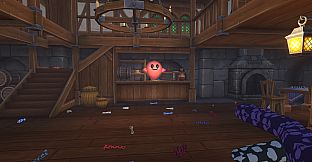

BOO & BONES: Bring the Village Back to Life is an indie casual simulation game for PC that places players in a quiet first-person perspective focused on methodical bone sorting and village restoration. A sorcerer has scattered the bones of the villagers, and the task is to answer a ghost's request by matching and reassembling skeletons so the residents can return home.
Gameplay
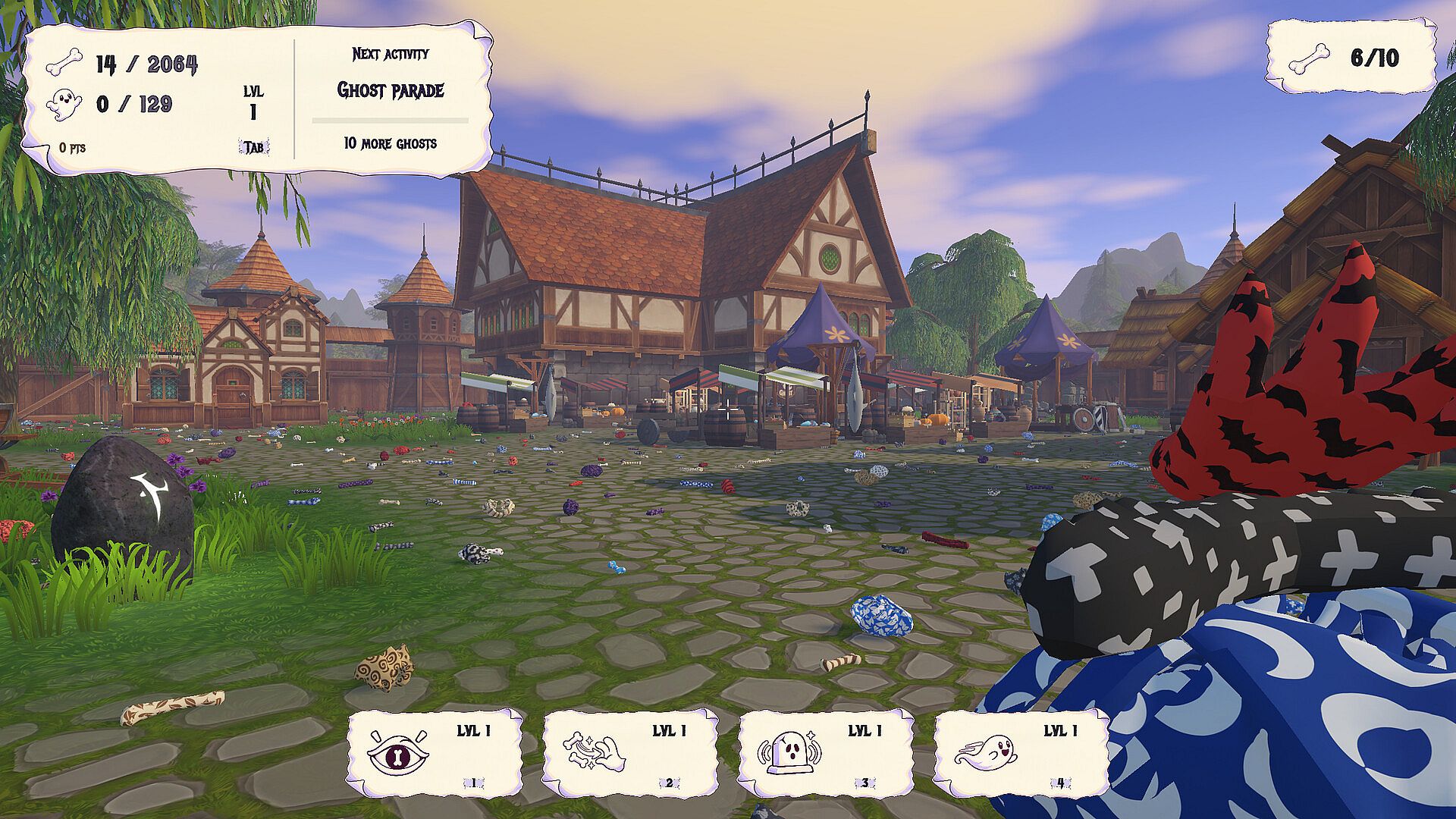
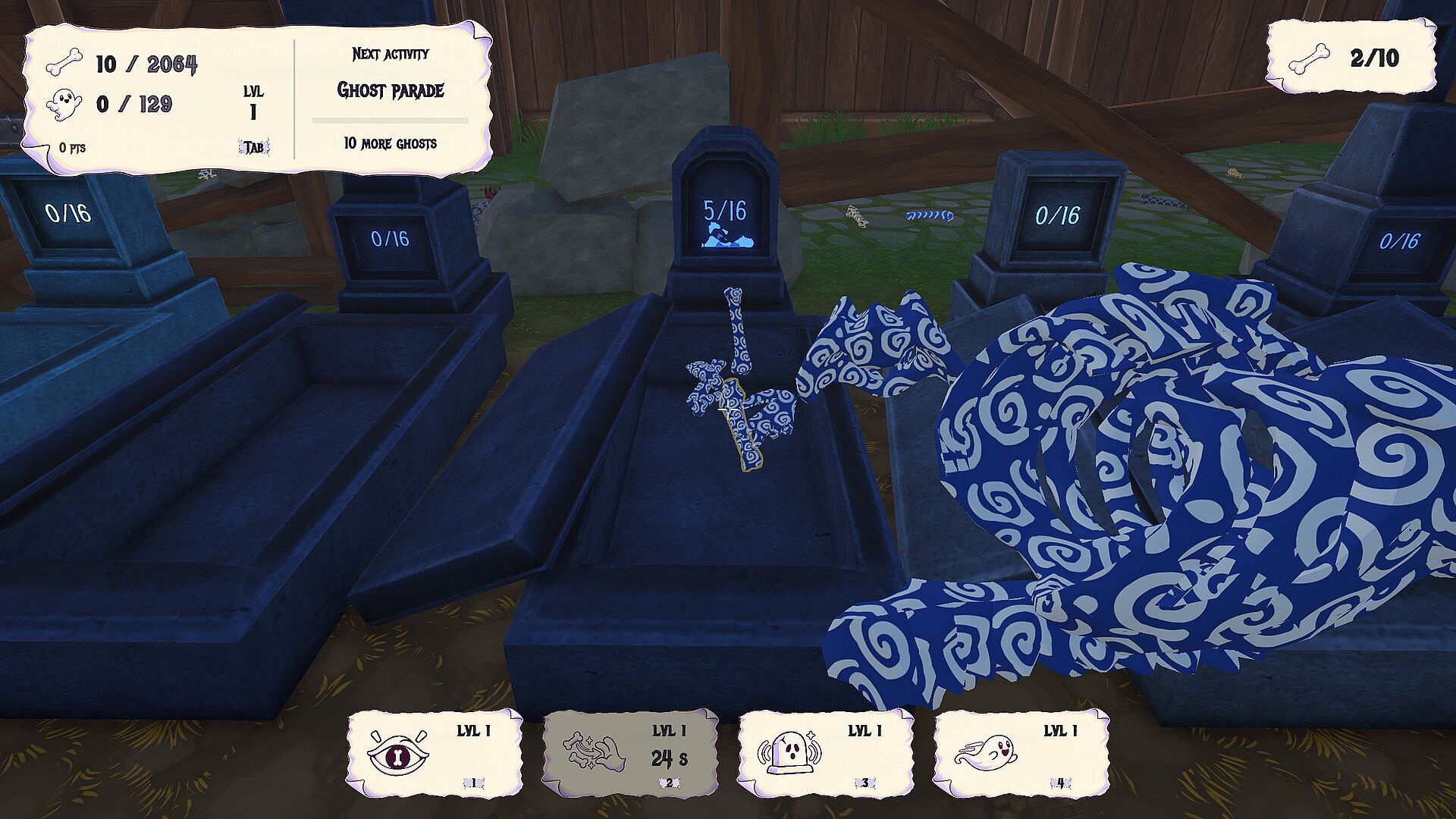
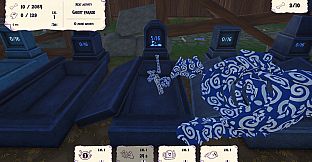
The core loop centers on exploration and precise identification of bones scattered across the environment. Players examine colors and patterns on each piece to determine which skeleton it belongs to, then collect finds into an organized stack before depositing the correct bones into color-coded graves. As progress continues, patterns become more familiar and the scattered remains gradually clear, leading directly to the next neighbor waiting to be completed.
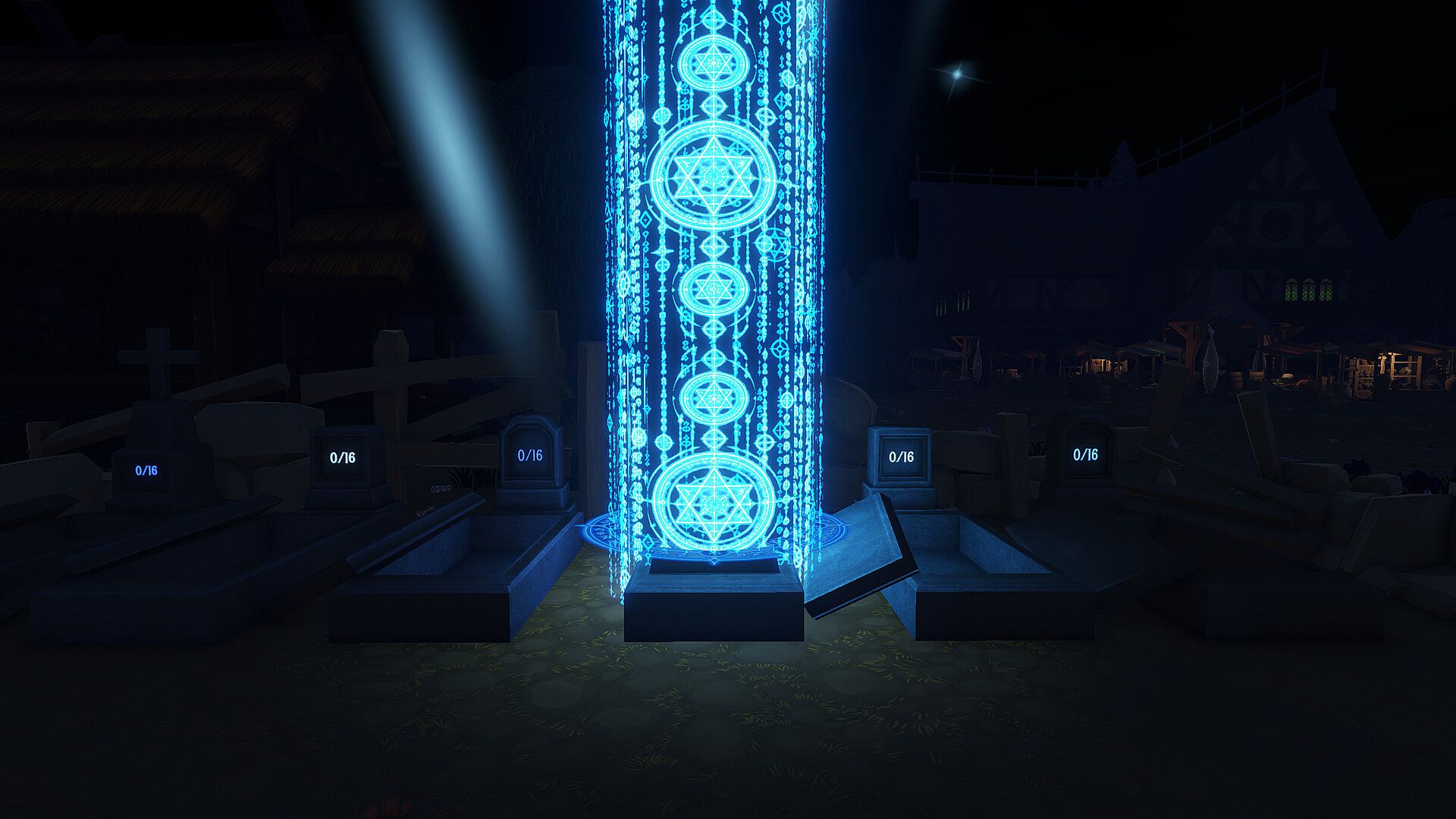
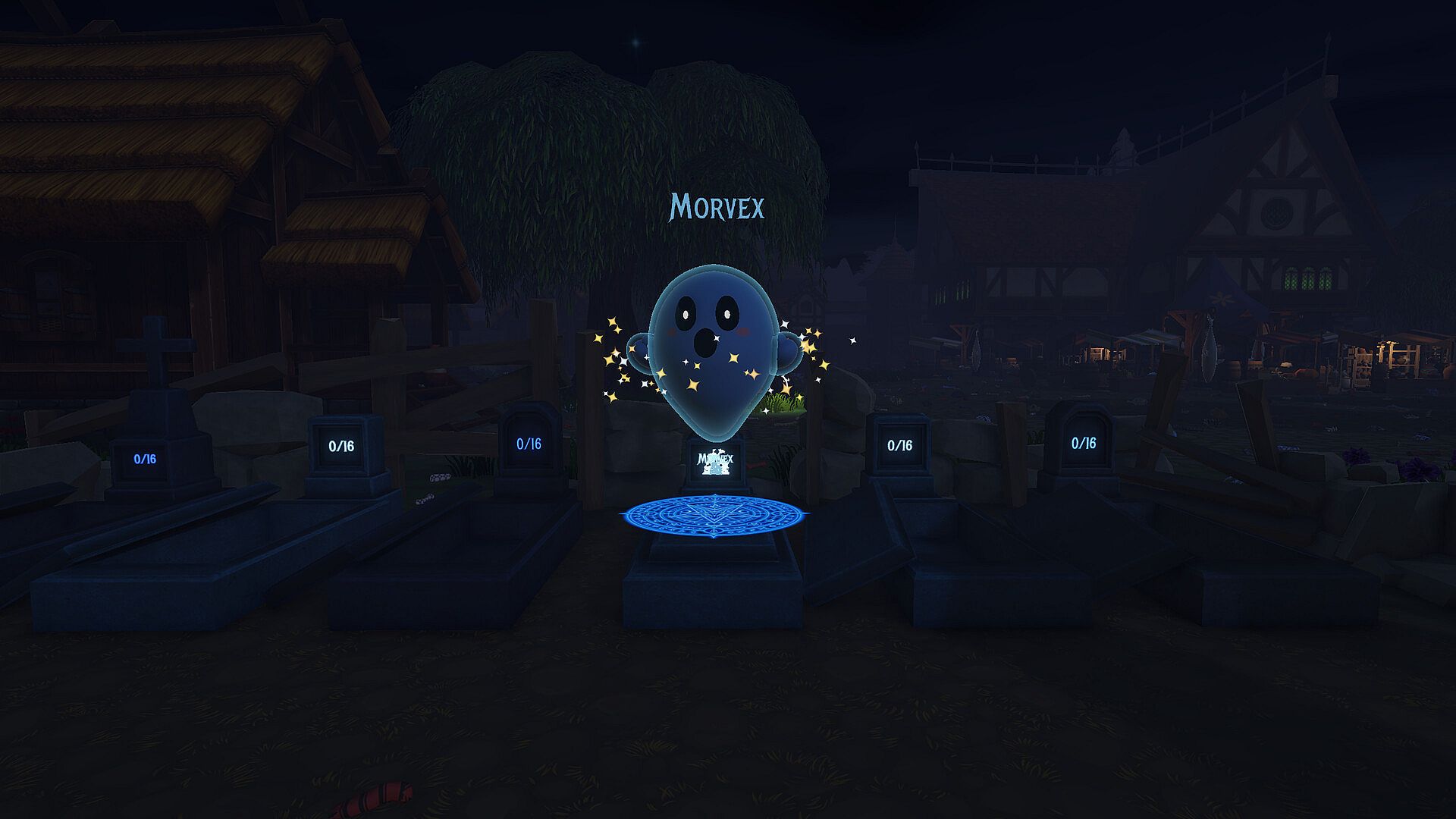
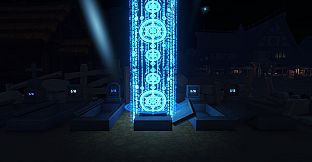
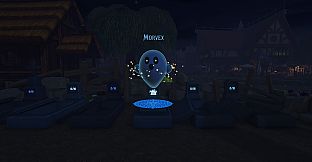
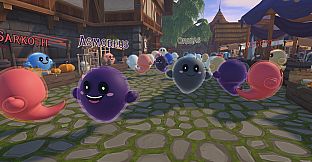
Once a full skeleton is assembled, a ritual sequence activates. The grave lid closes, the sky darkens, and a glowing ceremony summons a small ghost known as a BOO. These ghosts each carry their own name and display lively bounces before settling into village life. The process repeats as more bones are located and matched.
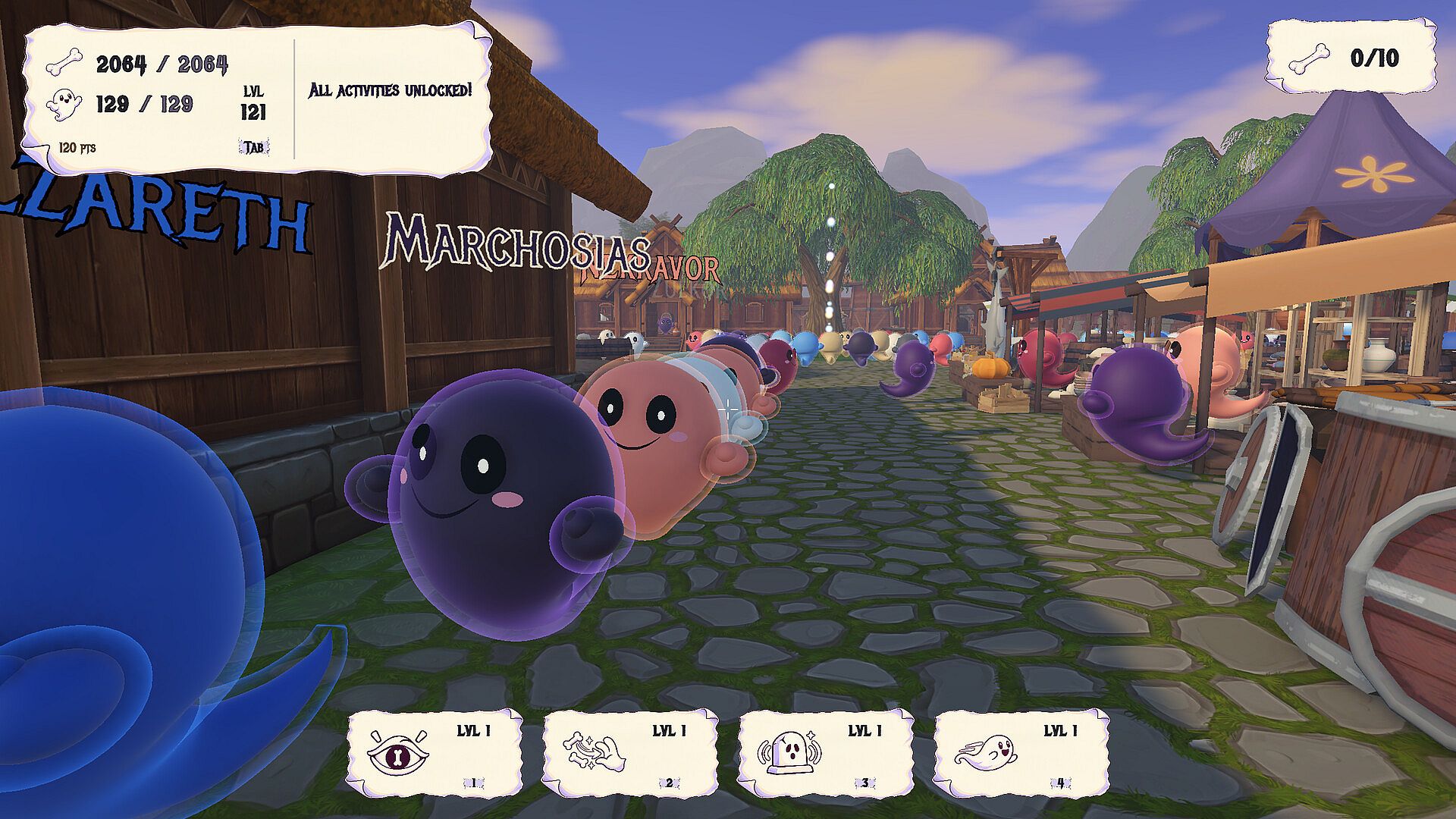
Four spectral stones can be awakened to grant additional abilities. These powers allow players to reveal matching bones from a distance, pull them toward the character, locate graves that already contain pieces of the same skeleton, or perform a spectral dash to cross the village quickly. Points earned from completed summonings can be spent to upgrade the chosen powers, tailoring the experience to individual preferences for collection speed or exploration range.
Game Modes
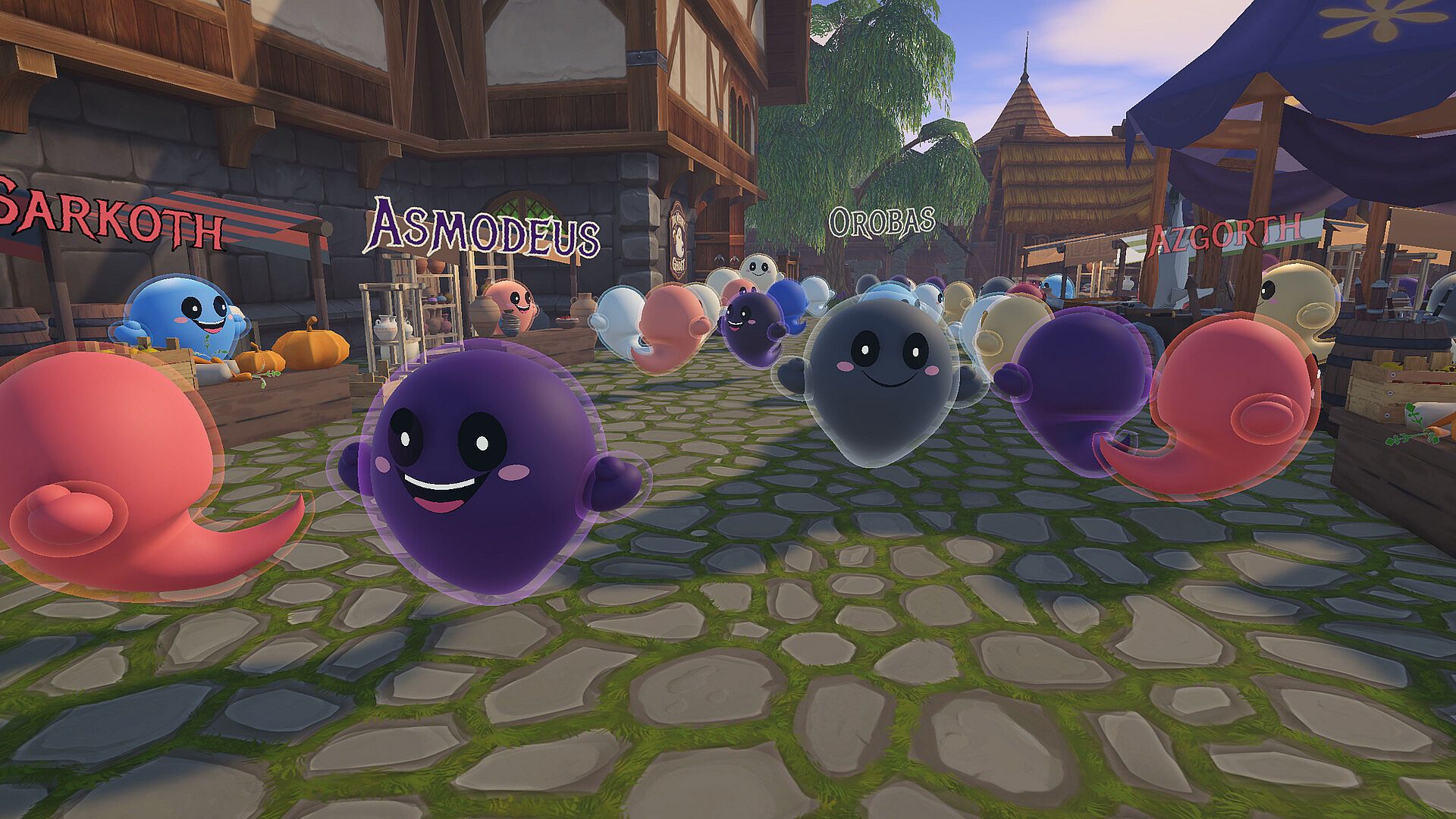
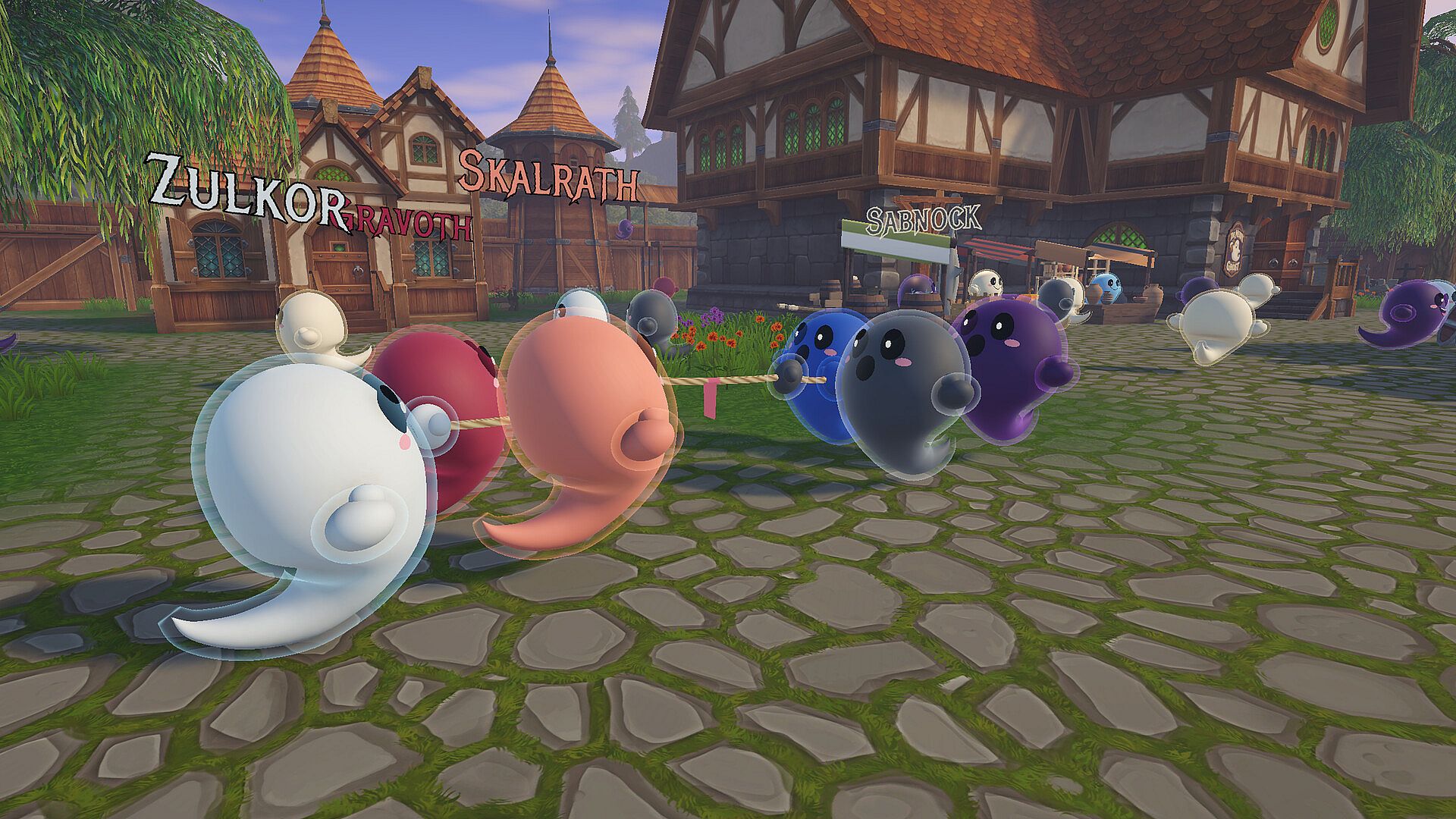
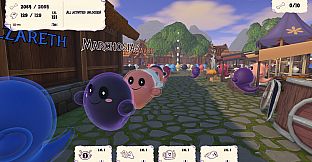
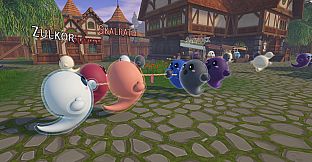
The game operates as a continuous single-player experience without separate named modes. The primary activity remains bone collection and skeleton reconstruction, which directly feeds into village growth. Every ten ghosts restored unlocks one of twelve group activities that the neighbors perform on their own, including conga lines, hide-and-seek sessions, choir performances, magic shows, and floating lantern gatherings. These events appear naturally in the village streets and provide opportunities to pause between sorting sessions.
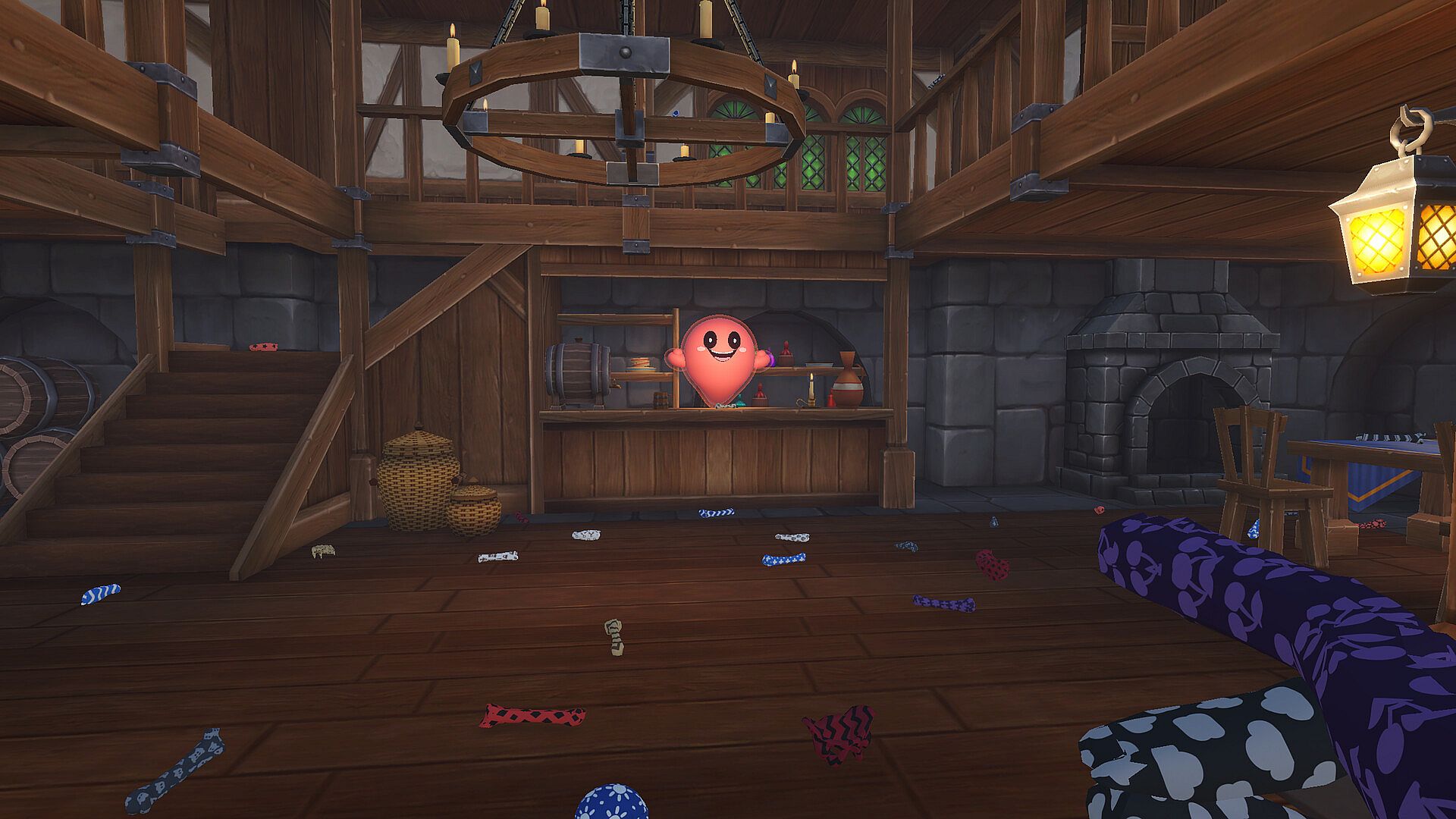
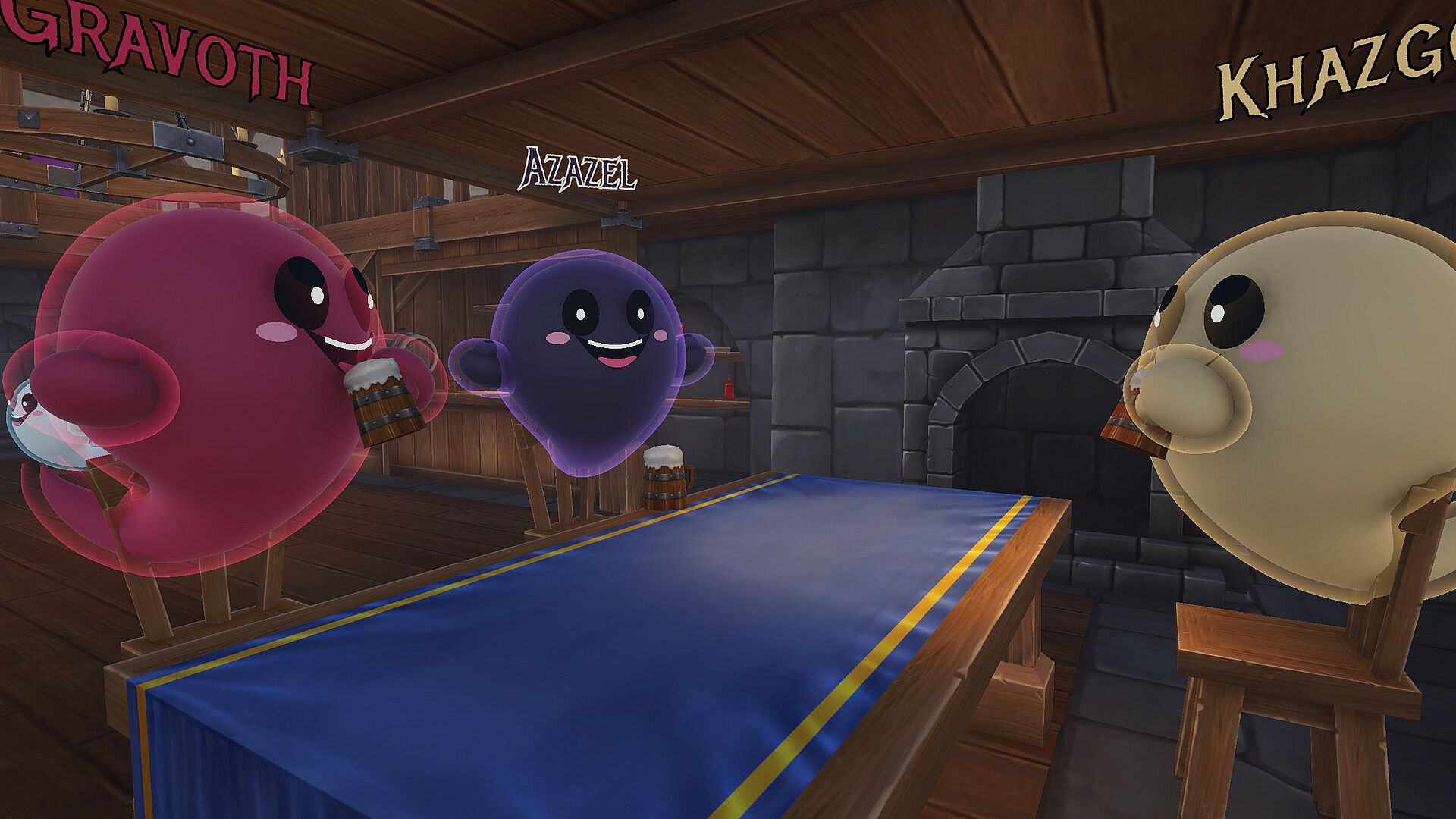
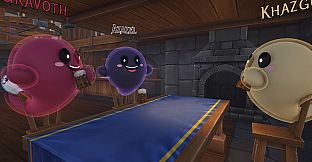
Players can also spend time wandering the developing village to observe interactions. Ghosts settle into locations such as the market, the tavern, or along walking paths, where they converse, enjoy drinks, stroll, or rest. Greeting neighbors reveals small reactions that reflect the growing community.
Village Life and Progression
Restoring residents gradually transforms the empty streets into a living space. Conversations start among the ghosts, the tavern gains regulars, and market stalls see activity. The environment rewards a slower pace, encouraging players to move between skeleton projects and simply watch the daily rhythms of the awakened neighbors. Completing every resident's return leads to the conclusion of the story.
Progression ties directly to the number of ghosts restored. Each milestone of ten unlocks a new group activity, expanding the range of scenes visible in the village. The spectral powers gained from the stones further support efficient exploration and collection as the area fills with more bones and residents.
Is It Worth Playing?
This title suits players who enjoy relaxed first-person simulation experiences centered on matching and organization mechanics rather than combat or time pressure. The steady loop of locating bones, recognizing patterns, and completing summonings builds a calm sense of accomplishment, while the unlocked village activities offer visual variety without requiring active participation. Those who appreciate casual indie games that emphasize exploration and gentle progression will find the pace and focus align well with that preference. The game remains available on PC with its core systems intact as described.