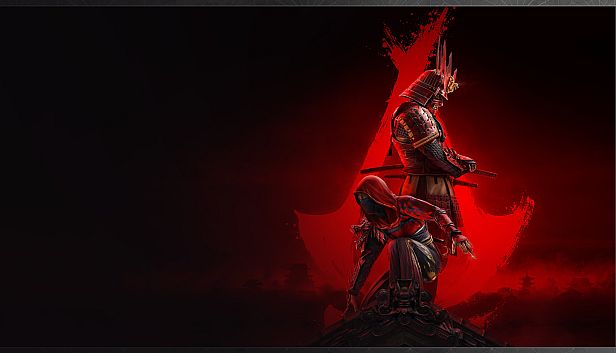


Assassin's Creed Shadows is an action game set in feudal Japan that blends stealth infiltration with direct combat across a large open world. Players take control of two distinct protagonists, switching between them to handle different situations in a single-player campaign focused on exploration, assassination, and progression through skills and gear.
Gameplay
The core loop centers on using Naoe for stealth approaches and Yasuke for confrontational fights. As the shinobi Naoe, movement relies on parkour traversal, a grappling hook for vertical navigation, and environmental awareness of light, sound, and shadows to stay hidden. Distractions come from tools like shuriken and smoke bombs, leading into silent takedowns with the Hidden Blade. Yasuke operates as the samurai counterpart, favoring ranged options such as bow attacks or close-quarters weapon sets including the katana and naginata for combo strings and area control.
Combat incorporates timing-based defense with visual cues: white flashes signal parry opportunities that stagger foes, red flashes require dodging unblockable strikes, and blue flashes indicate multi-hit combos needing successive parries. Additional layers include posture attacks that charge for extra damage, flurry strikes for rapid output, heavy attacks to break guards, and windows where enemies enter a vulnerable state after perfect dodges. A prone crawl mechanic allows low-profile movement through grass or tight spaces. The open world features dynamic seasons and weather that influence visibility, sound propagation, and tactical choices during missions.
Progression involves separate skill trees and equipment for each character, with mastery points unlocking abilities. Environmental destruction and particle effects add to the physicality of encounters, while the Anvil engine supports detailed lighting and reflections that enhance navigation and combat readability.
Game Modes
At the start of a new game, players select Canon Mode, which removes dialogue choices in cutscenes to follow a fixed narrative path, or the default option that allows some branching. This setting cannot be changed later. Immersive Mode toggles Japanese voice acting for all characters and can be adjusted anytime through the audio options menu.
Difficulty options range from standard settings up to Expert and the later-added Nightmare level, which increases enemy aggression and resource management demands. Exploration can follow guided paths or rely on player discovery without markers. The endgame introduces Domains, a replayable Animus simulation featuring five challenge maps with rotating modifiers and rewards that encourage repeated runs with different character builds.
Open World and Progression
The setting spans castle towns, shrines, and countryside areas where players gather information through an Observe mode available to both protagonists. This tool highlights targets and points of interest from vantage points or while crouched. Seasonal changes alter the landscape and enemy patrols, requiring adaptation in route planning and engagement timing. Hideout customization appears as a late-game system for personalizing a base of operations tied to the shinobi league concept.
Quests and activities scale with character level and gear, rewarding strategic switches between Naoe and Yasuke to match mission requirements. The world supports free roaming with emphasis on verticality and hidden paths rather than linear corridors.
Is It Worth Playing?
Assassin's Creed Shadows suits players who enjoy methodical stealth combined with weighty melee combat in a visually detailed historical setting. The dual-protagonist system provides variety without forcing constant switching, and the technical presentation holds up for extended sessions. Reception has been generally favorable among critics for its world design and mechanical depth, though some note repetition in side activities over long playthroughs.
Support continues with post-launch updates that added difficulty tiers and endgame content like Domains. The game runs on PC with options for performance and visual fidelity. Those seeking a focused single-player experience with strong emphasis on Japanese history and tactical decision-making will find consistent engagement, while those preferring heavy multiplayer elements or lighter action may want to evaluate through available trials or demos first.