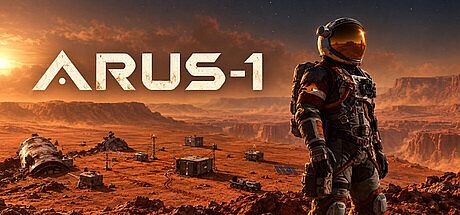


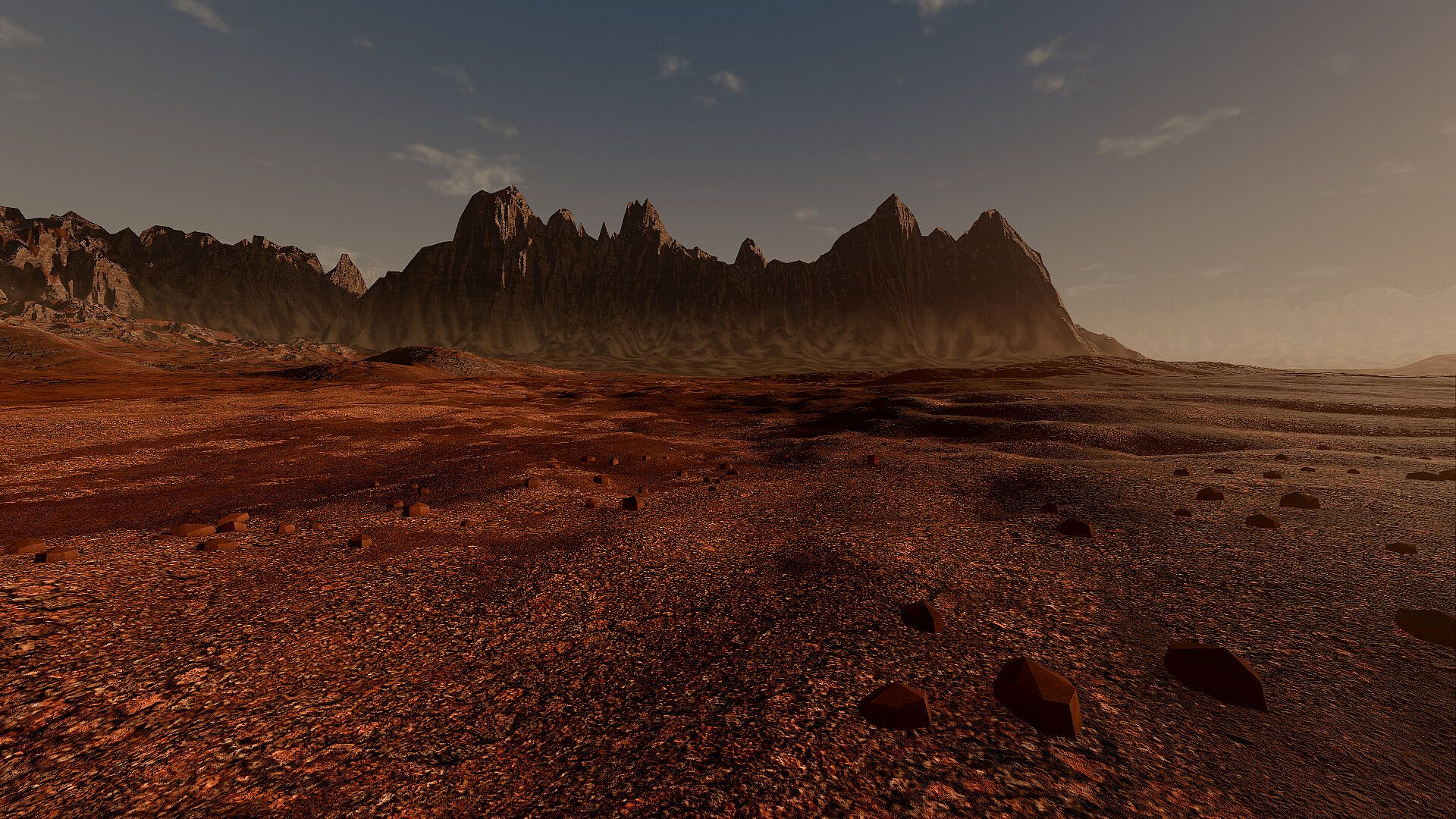
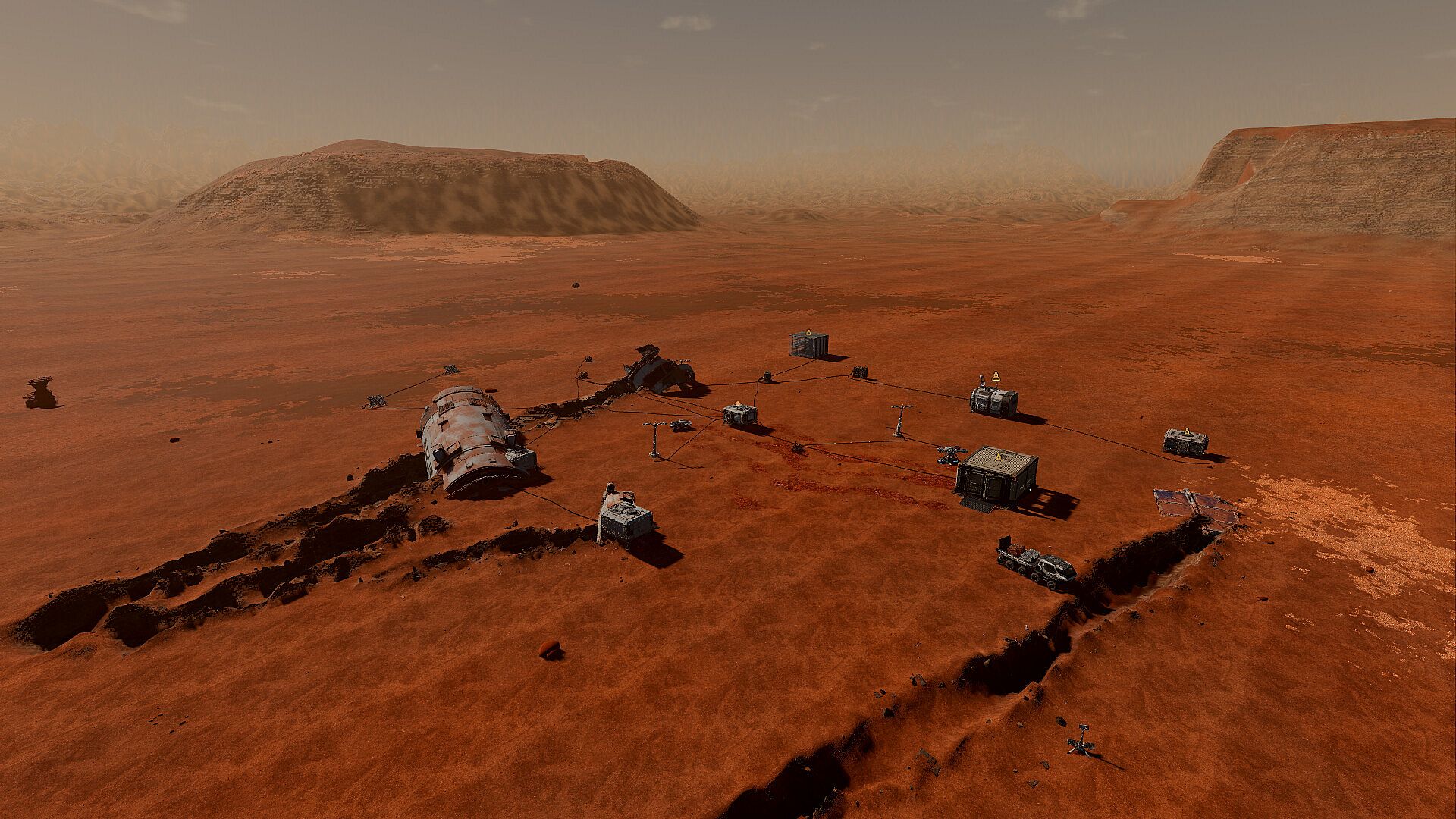
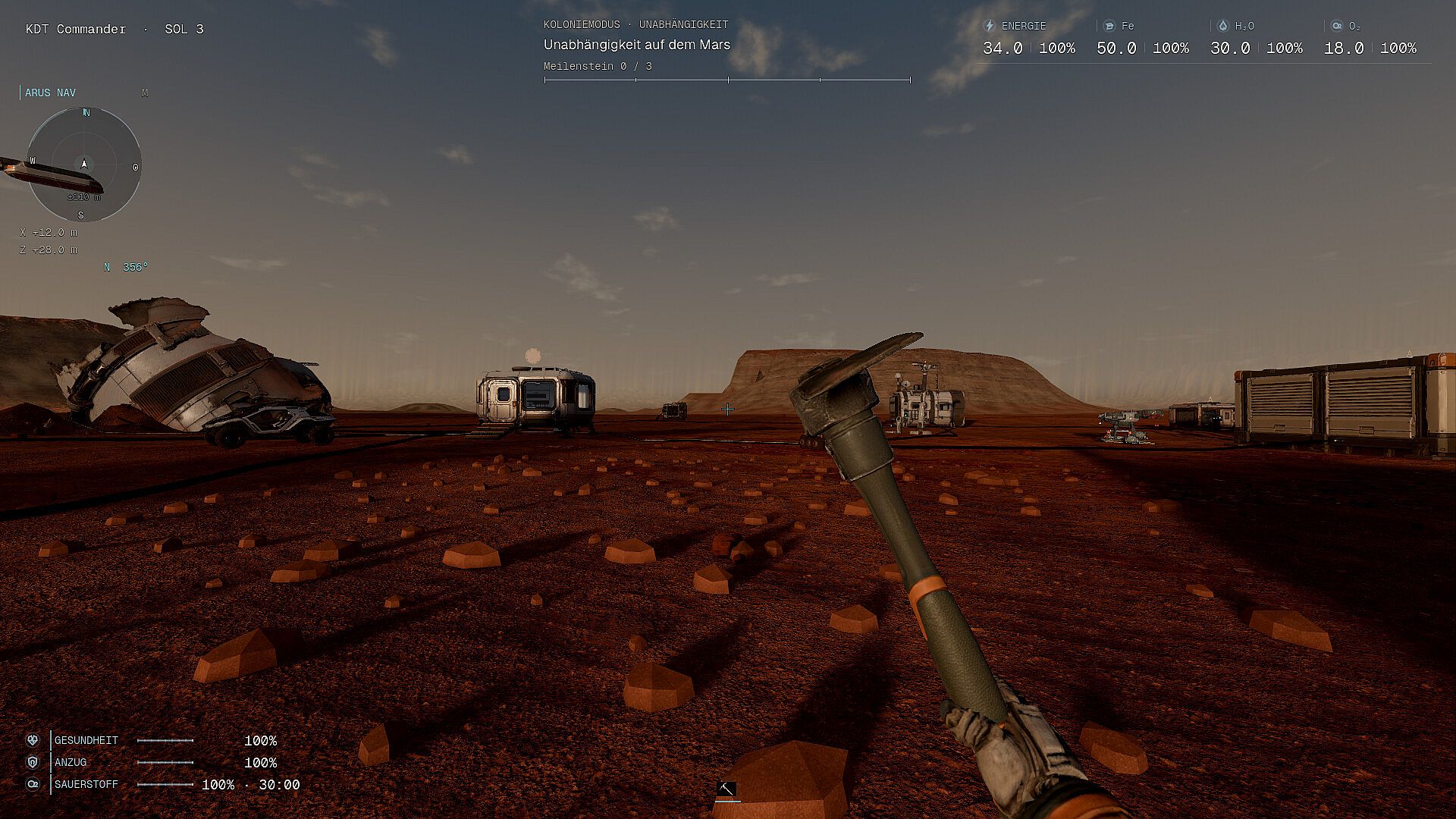
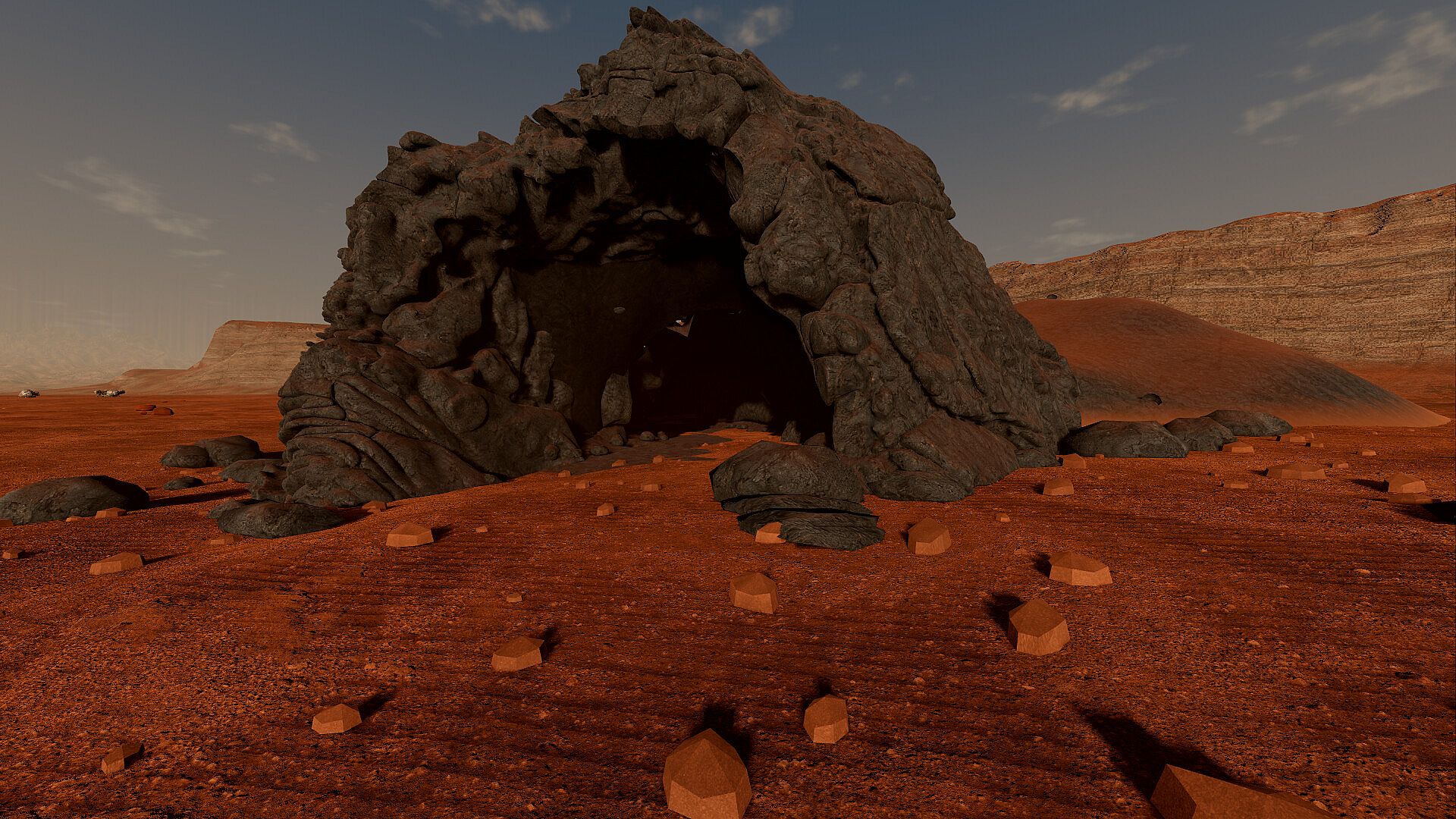
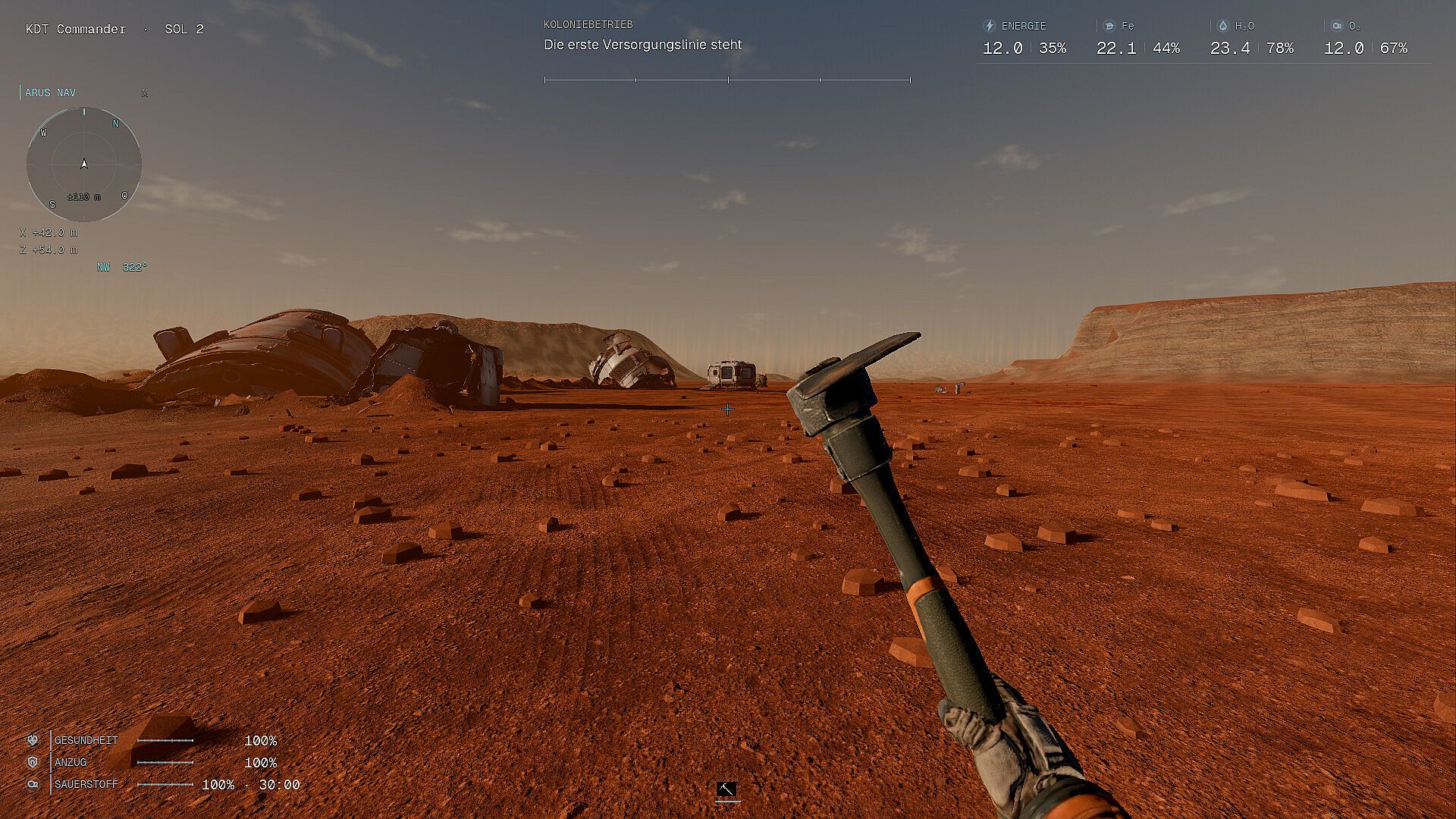
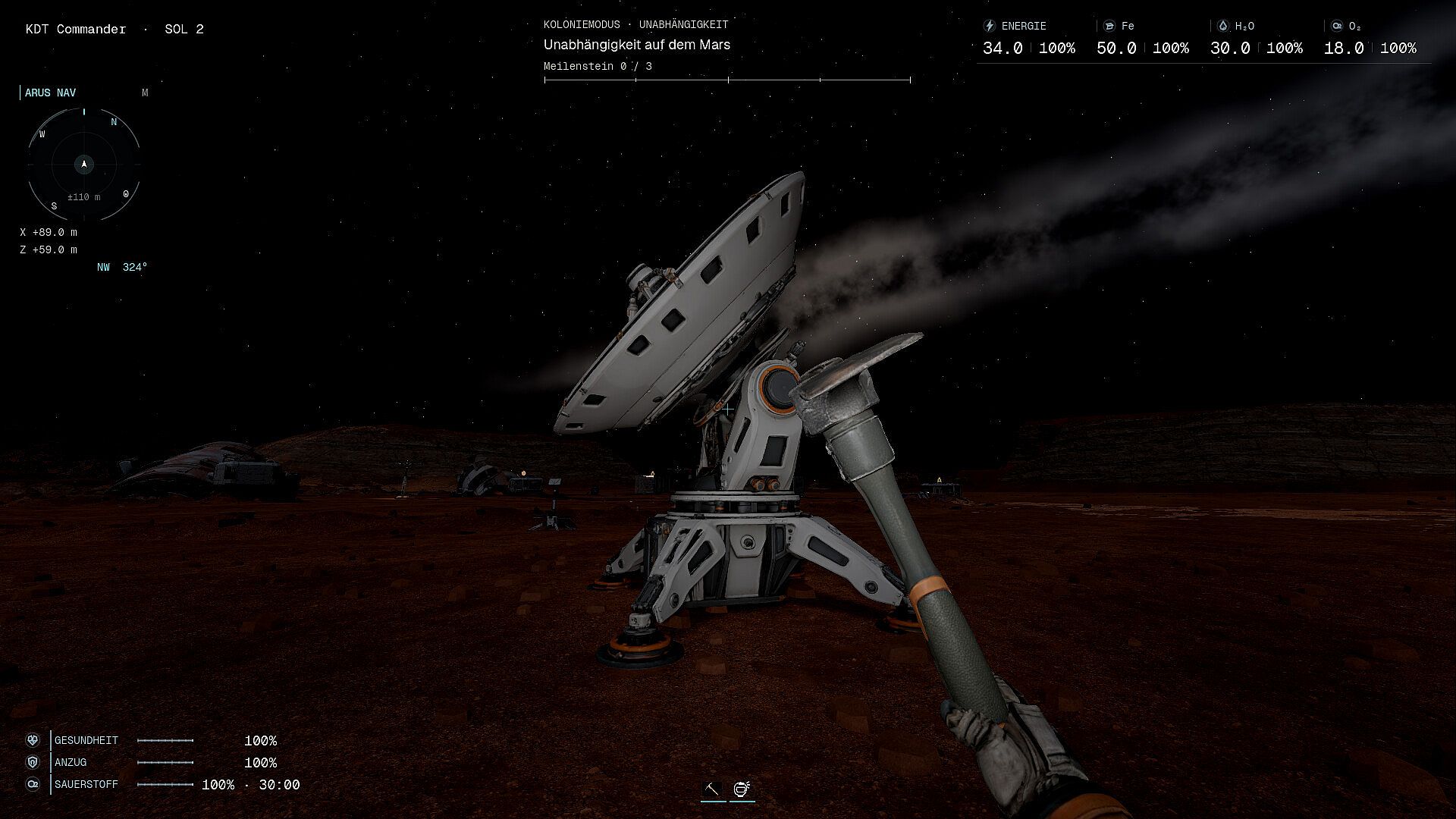
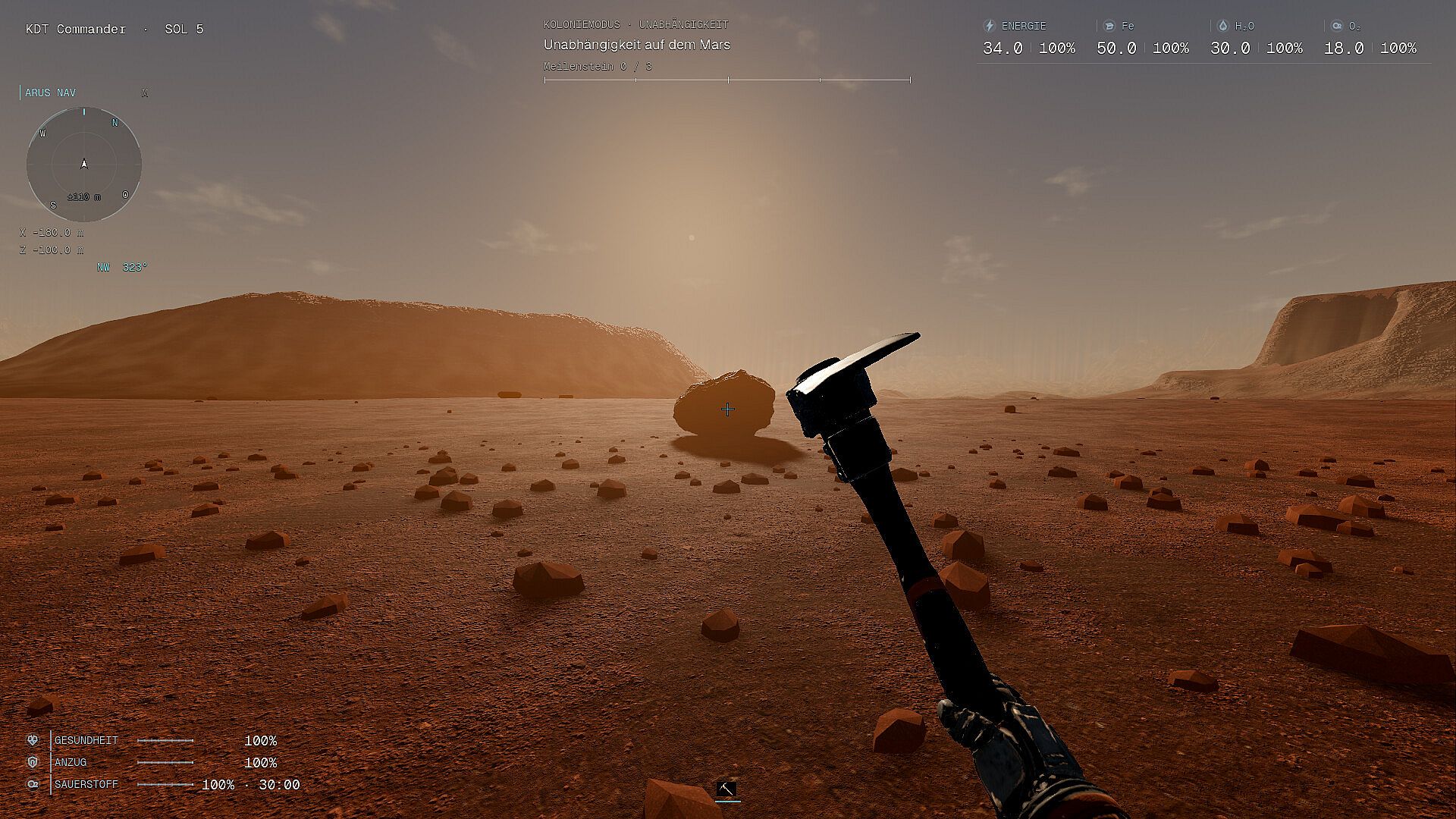

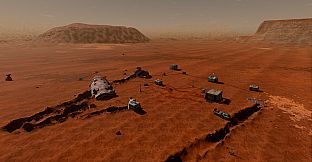
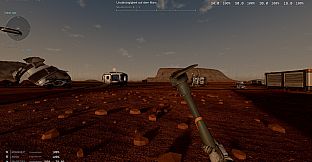
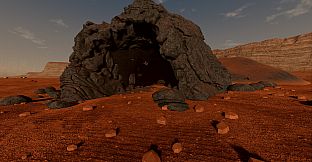
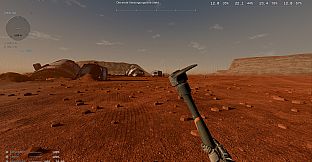
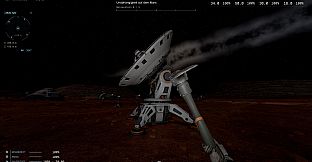
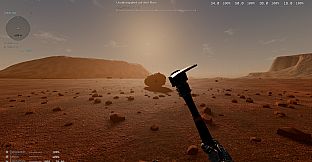
ARUS-1 is a first-person survival game blended with colony-building elements that places players on the surface of Mars. Developed as an indie title in the strategy, simulation, and adventure genres, it emphasizes resource management and outpost construction in a hostile environment. Players establish a foothold in ARUS Valley by securing essential supplies and expanding a landing site into a functional settlement. The game supports both solo play and online co-op, allowing up to four participants to collaborate on exploration and infrastructure projects.
Gameplay
The core loop revolves around exploration, construction, and maintenance of supply chains on the Martian terrain. Players navigate the surface either on foot or using a rover to scout locations and gather necessary materials. Habitats and production facilities must be erected and then linked together to form operational networks that deliver power, water, and oxygen to sustain the colony.
Resource security forms a constant priority, as shortages in any of these areas can halt progress and threaten survival. Building efforts focus on creating connected systems rather than isolated structures, encouraging careful planning of layouts and pathways. Research activities unlock new technologies that support further expansion, including preparations for satellite missions that extend capabilities beyond the immediate valley.
These systems combine survival pressures with simulation-style management, where decisions about placement and connections directly affect long-term viability. The first-person perspective keeps players engaged with the environment while handling construction and maintenance tasks.
Game Modes
ARUS-1 offers single-player mode for independent colony development and online co-op that accommodates up to four players. In co-op sessions, participants share exploration duties, coordinate building projects, and maintain the colony's supply networks together. Both modes operate within the same core systems, allowing seamless shifts between solo efforts and group play depending on preference.
Co-op emphasizes teamwork in keeping infrastructure running smoothly across larger or more complex setups. The design supports collaborative problem-solving around resource distribution and facility integration without introducing separate competitive or versus formats.
Exploration and Colony Expansion
Exploration covers the Martian surface through direct traversal and vehicle use, revealing opportunities for new construction sites and resource nodes. Players identify suitable areas for habitats and production buildings before integrating them into the broader network. This process builds outward from the initial landing point, gradually transforming a basic outpost into a more resilient settlement.
Expansion ties directly to technological research, which opens options for advanced facilities and mission preparations. Satellite-related projects represent one avenue for extending influence and gathering additional data or resources from orbit. The emphasis remains on creating sustainable connections rather than rapid unchecked growth.
Current Development Status
ARUS-1 remains in active development as a solo project, with Early Access planned for January 2027 and a target full release around June 2027. The current build includes the foundational elements of surface exploration, building mechanics, resource management, and both single-player and co-op functionality. Refinements to balancing, performance, and usability continue ahead of launch, with plans to incorporate player input on colony scale and multiplayer stability.
Additional content for exploration depth, progression systems, and narrative elements is slated for the full version. The developer intends to use Early Access feedback to prioritize updates across gameplay loops and technical aspects.
Is It Worth Playing?
ARUS-1 targets players interested in first-person survival combined with deliberate colony construction and resource networking on Mars. Those who enjoy methodical building, supply chain management, and cooperative or solo exploration in simulation-heavy environments will find alignment with its described systems. The co-op option adds a layer for groups seeking shared outpost development without requiring large teams.
Since the game has not yet launched, reception details remain unavailable. Its appeal rests on the verified focus on connected infrastructure and Martian survival challenges rather than fast-paced action or expansive storylines. Players drawn to indie strategy and simulation titles with adventure elements may appreciate the planned scope once Early Access begins, particularly if they value iterative feedback-driven development in colony builders.