






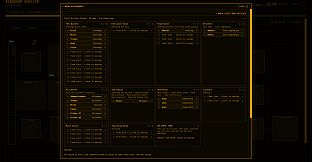
Apocalipsis Ltd is a strategy, indie, and simulation game set on PC where players oversee the management of a post-apocalyptic bunker and its surviving inhabitants. The core premise places you in charge of operations after one of several world-ending events, balancing resource allocation, personnel needs, and long-term survival through a series of interconnected systems that emphasize individual colonist behaviors over abstract statistics.
Gameplay
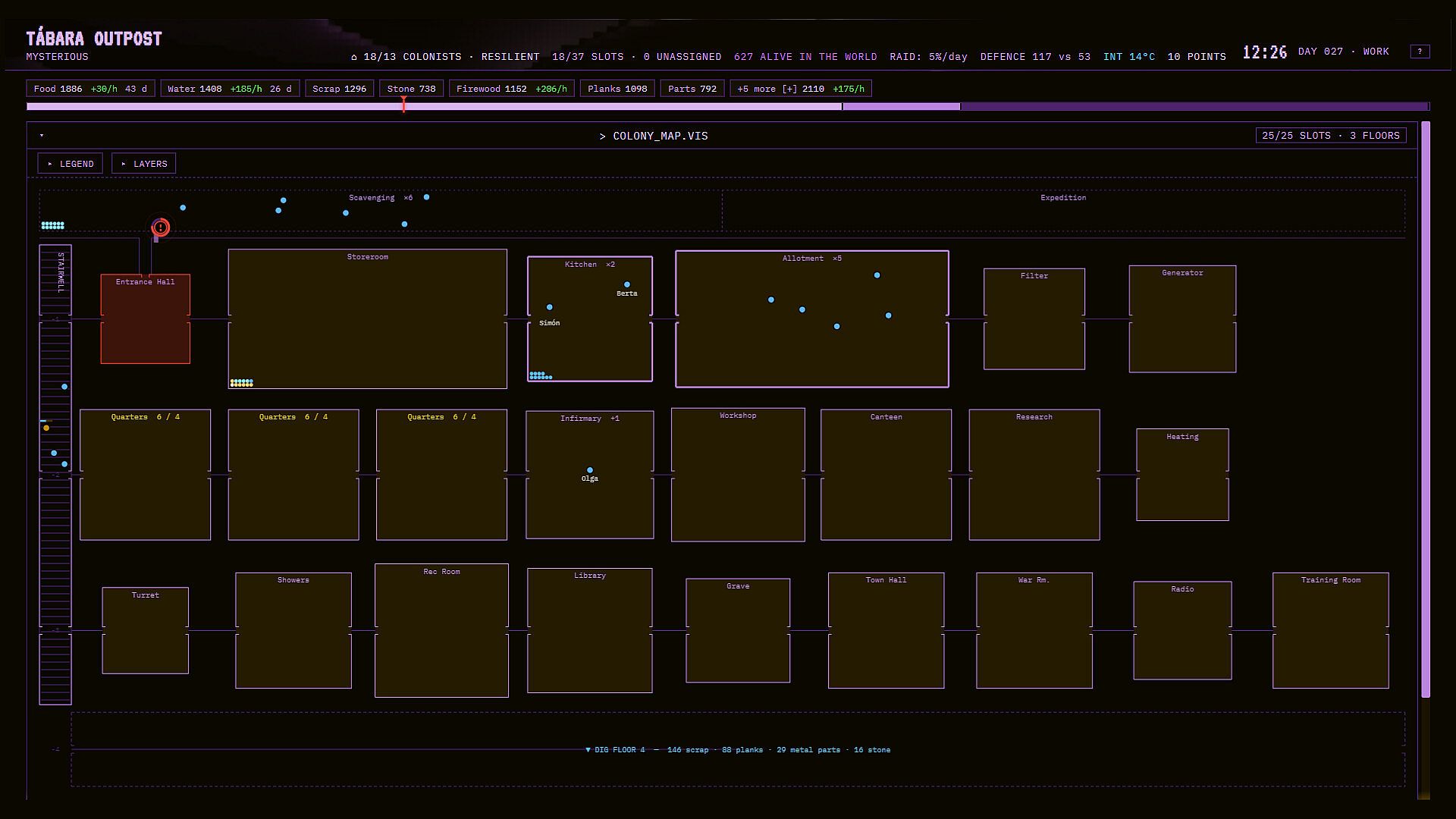
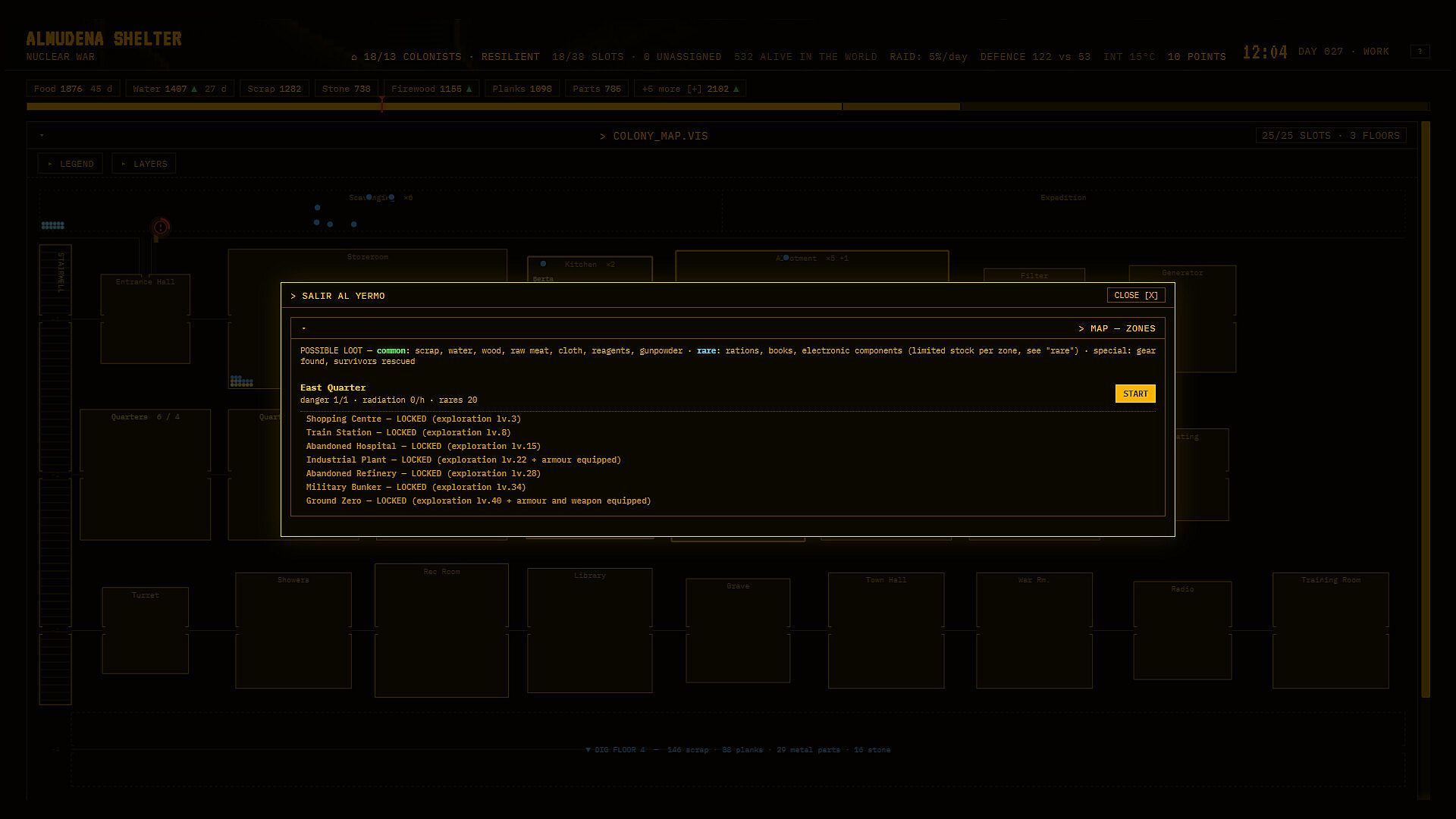
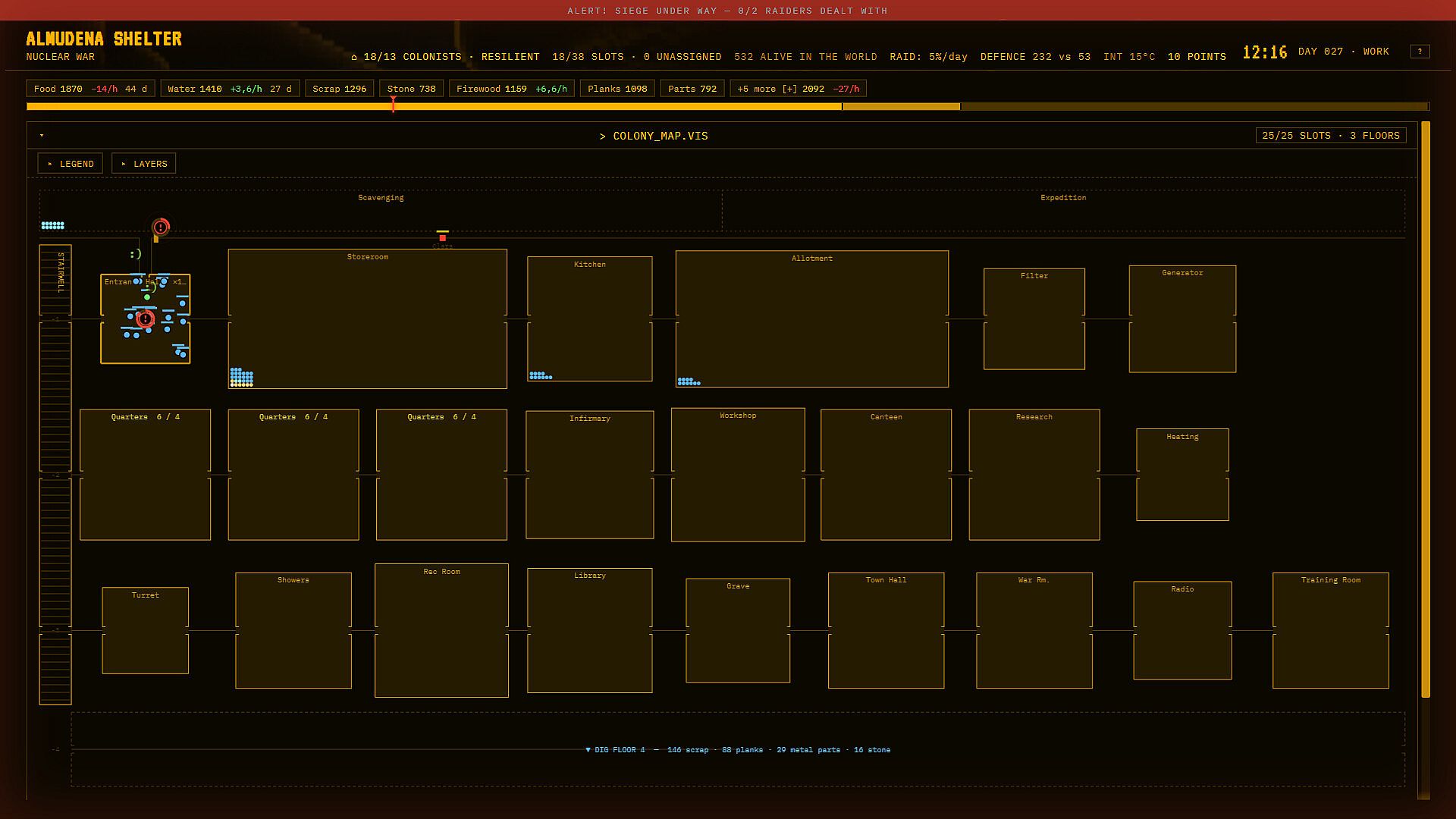
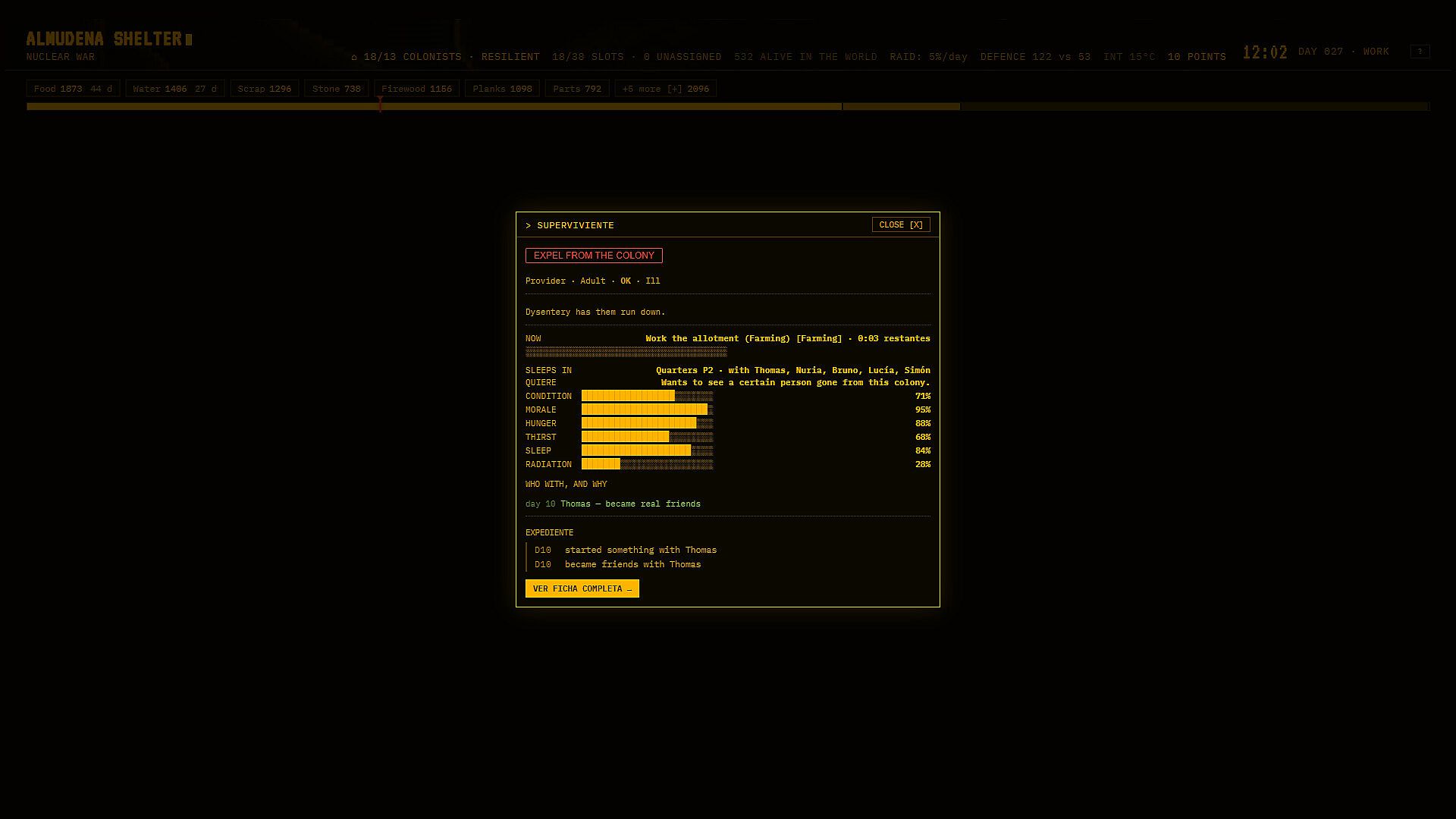
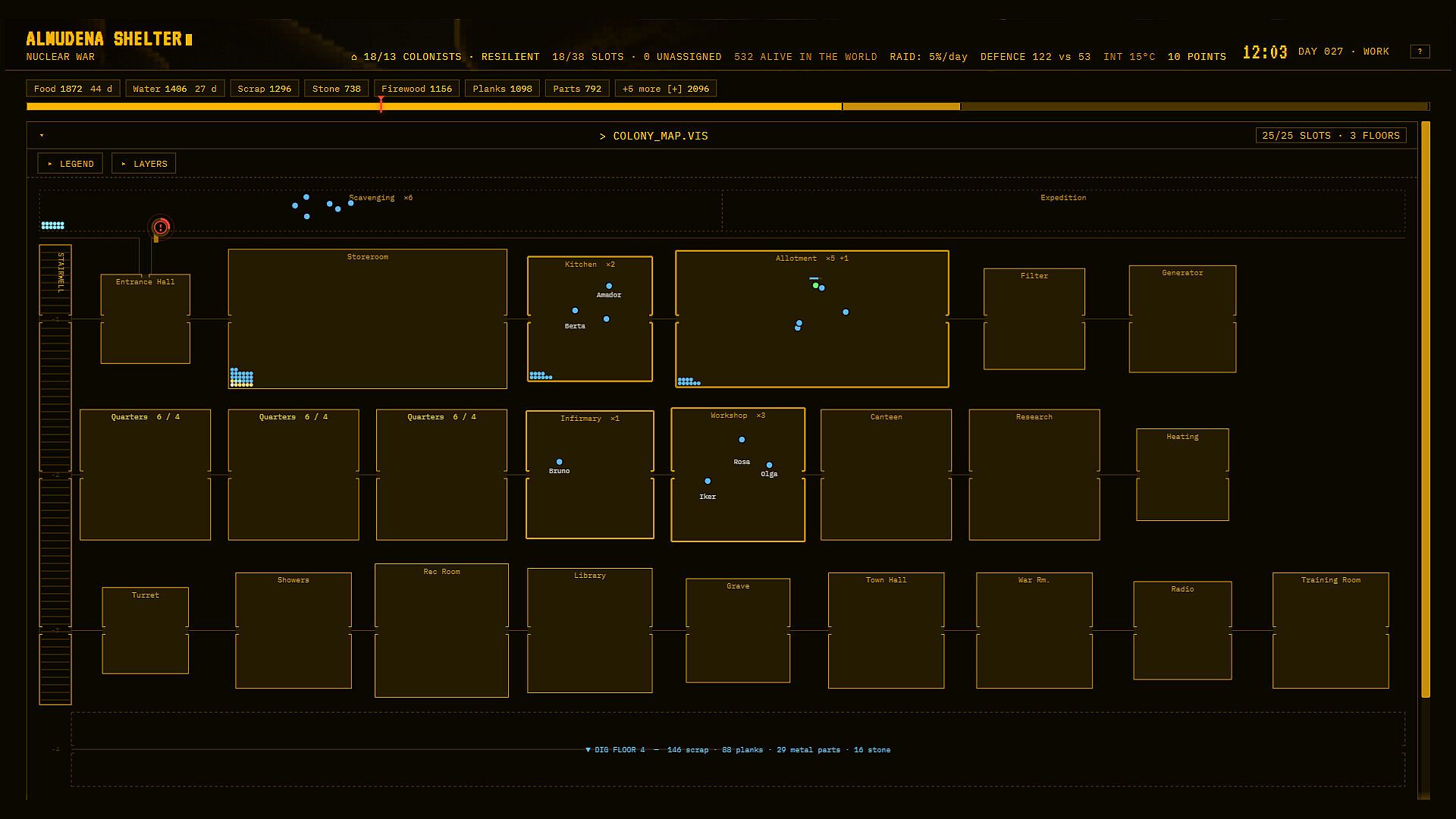
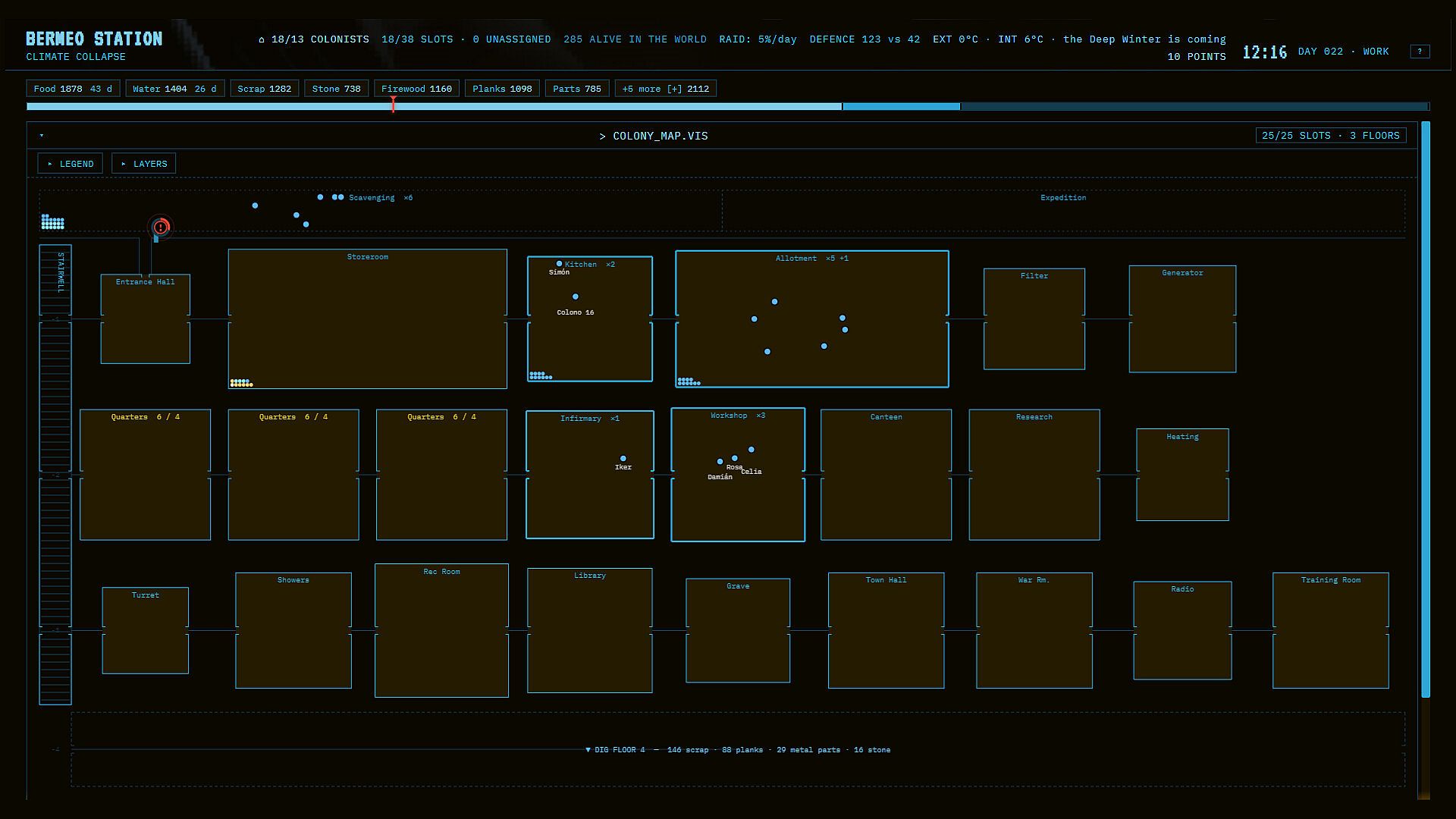
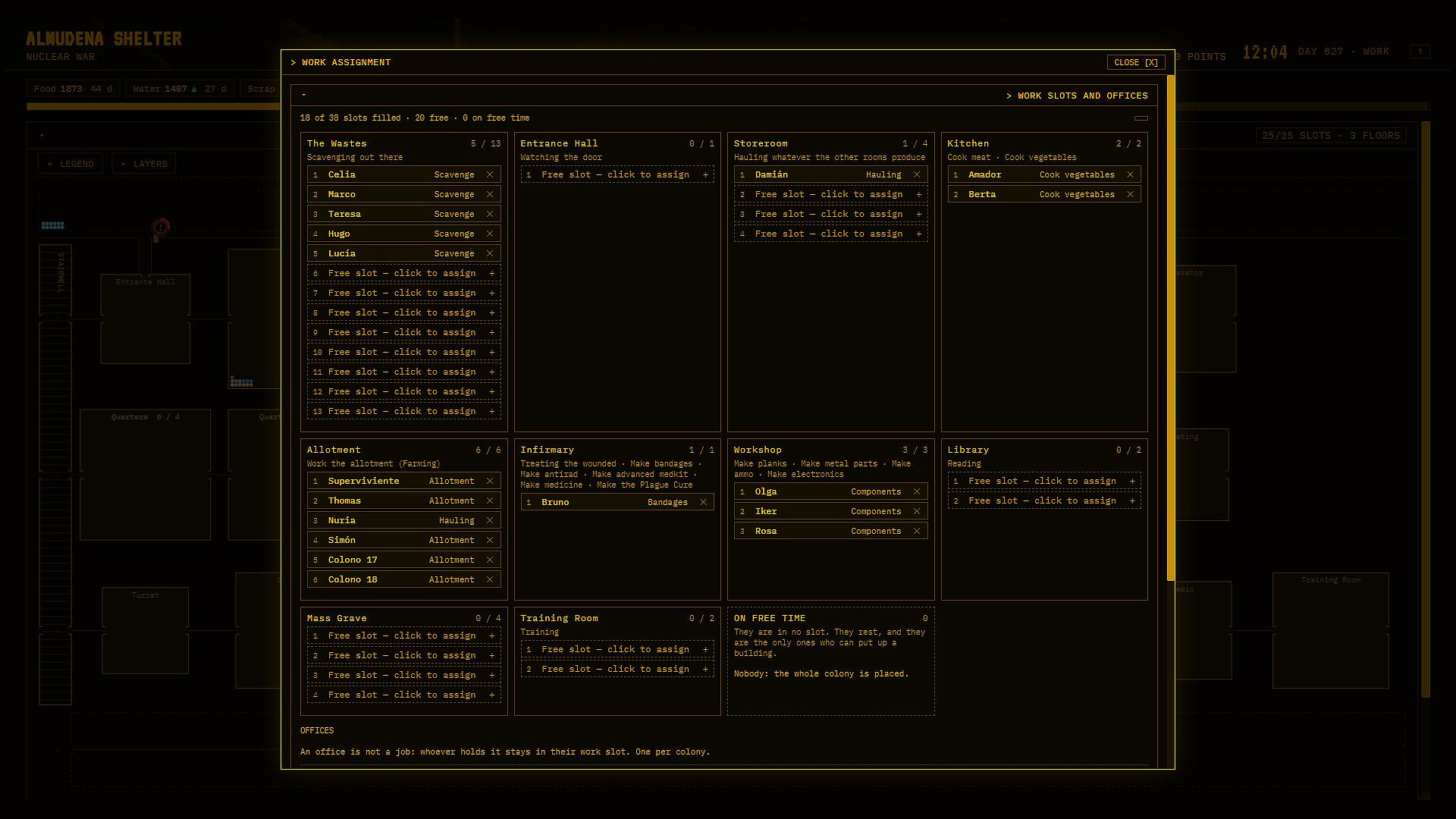
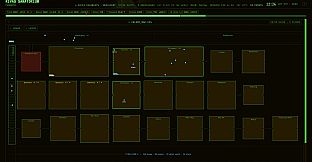
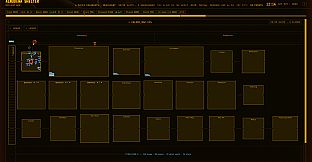
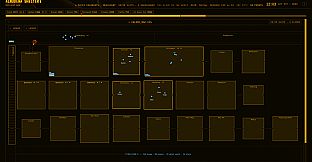
The gameplay centers on excavating and expanding a bunker floor by floor, with each deeper level requiring greater resources than the last. Players assign colonists to specific work slots within rooms rather than issuing direct orders, allowing the simulation to handle task execution while highlighting efficiency through visual indicators of occupied seats, idle workers, and potential conflicts. Colonists carry distinct names, trades, and temperaments that influence their performance, as they experience hunger, fatigue, illness, and isolation while forming relationships or holding grudges that affect shift compatibility.
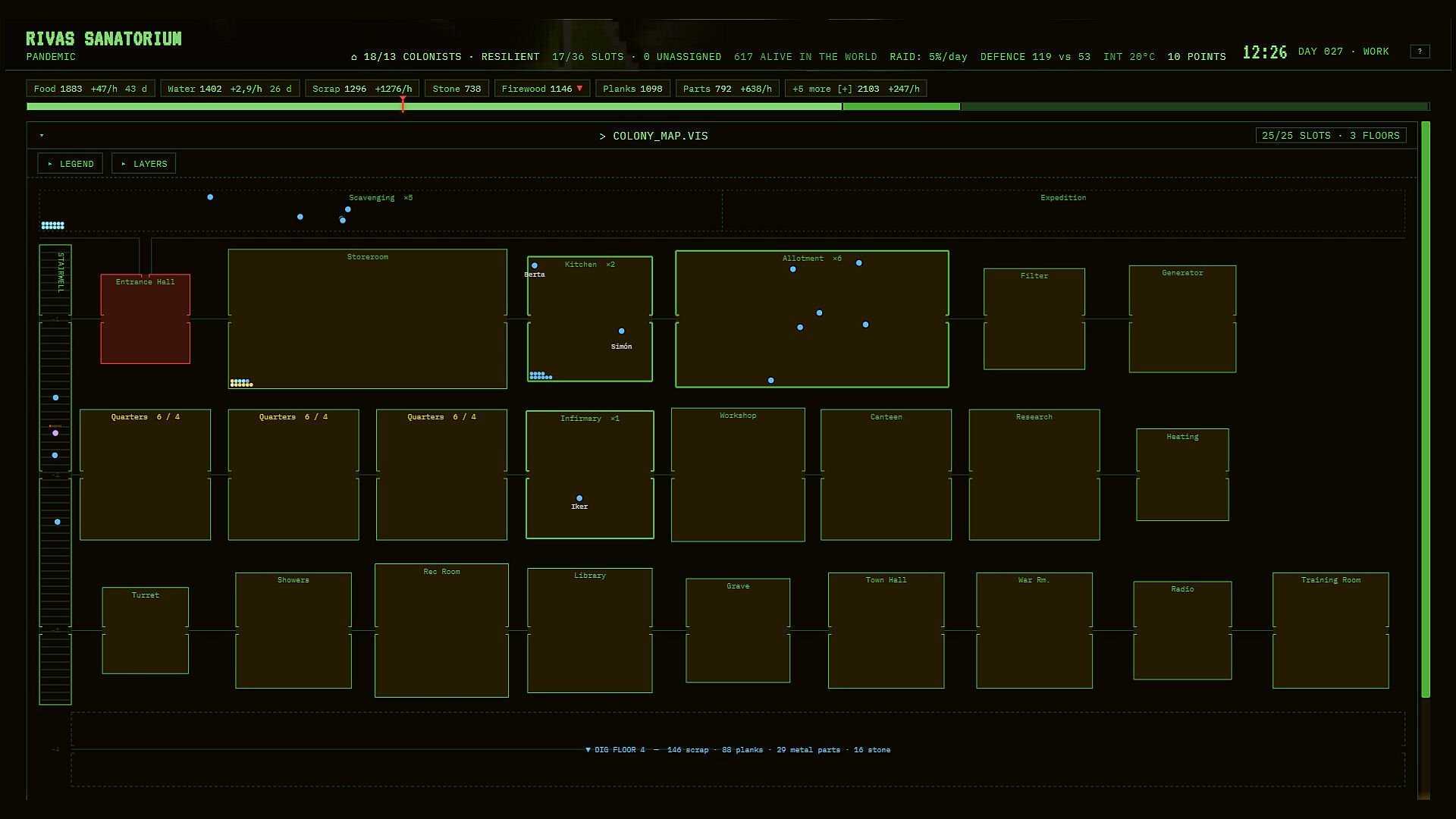
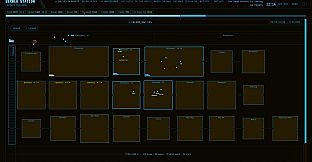
Free hands among the population contribute to construction of new facilities, and room management includes options to merge identical spaces into larger versions or apply upgrades. Research and crafting expand capabilities through nodes and gear, while events introduce variables that can alter colony dynamics. The interface adapts based on the chosen catastrophe, shifting hazards and environmental pressures accordingly.
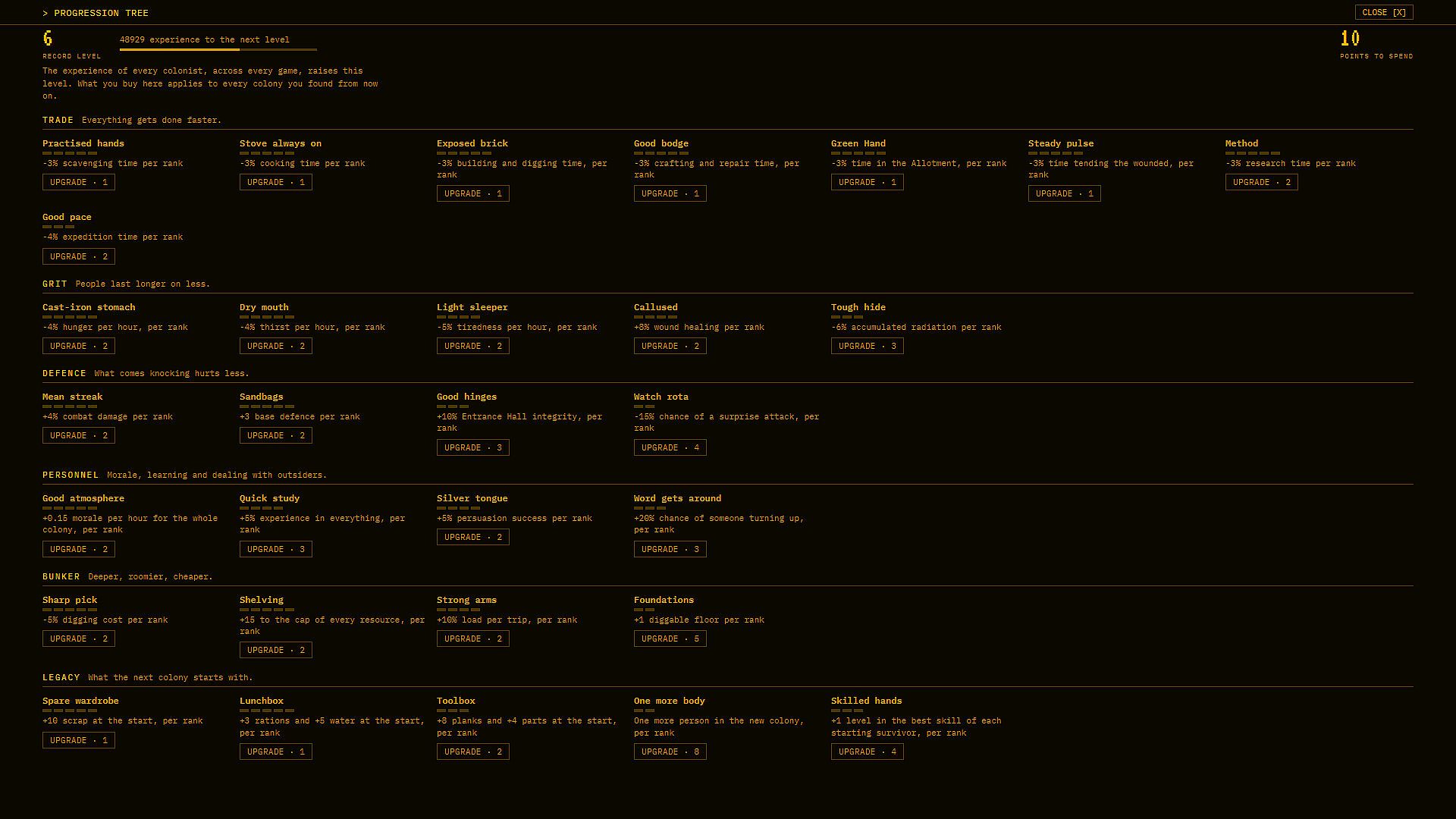
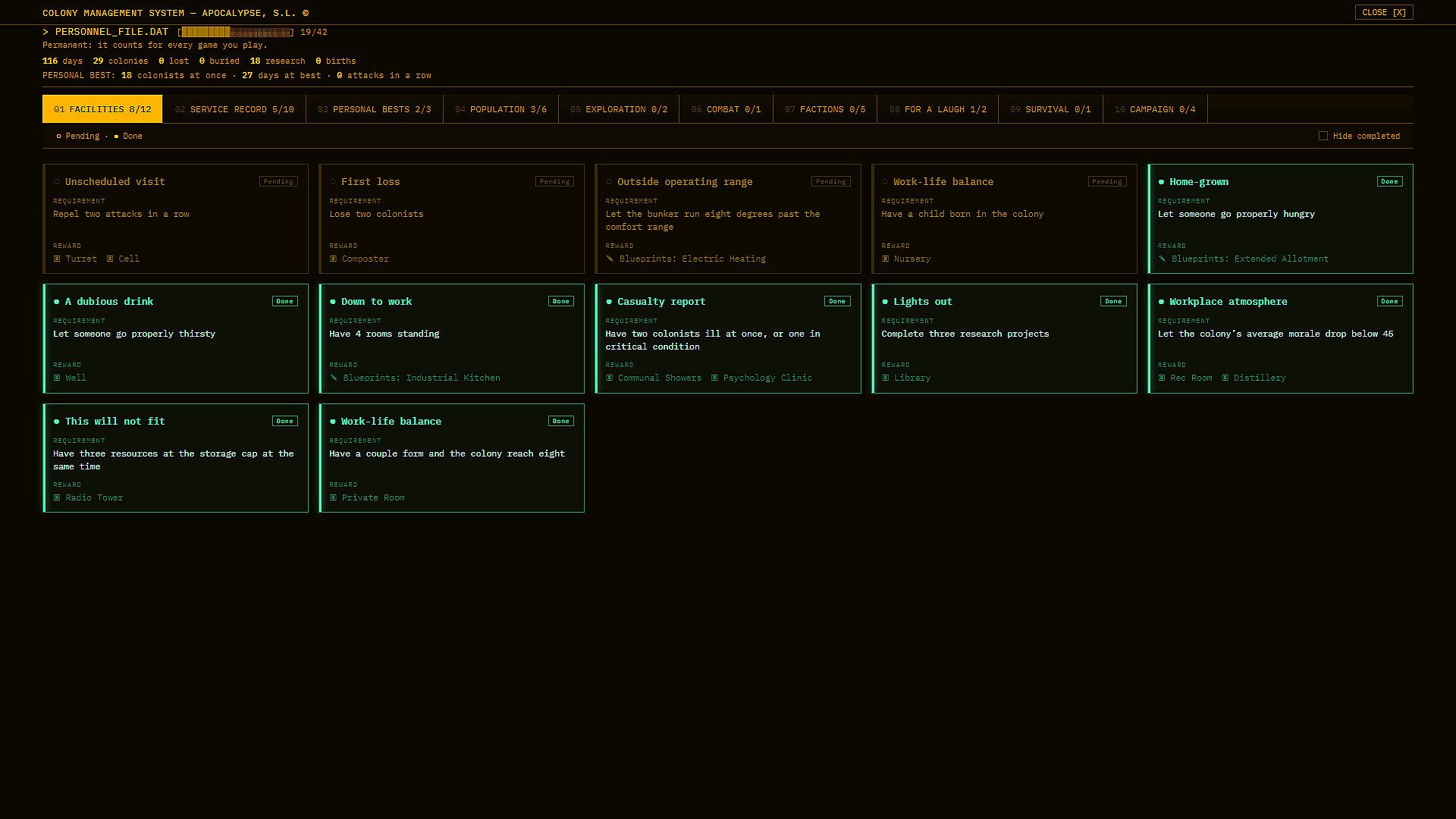
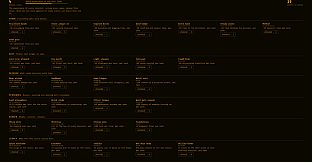
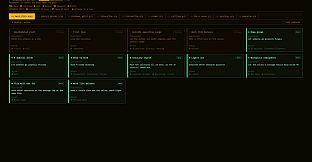
Personnel files track permanent progression across attempts, unlocking new options and improvements that make subsequent colonies more viable even after a total collapse. This creates a loop focused on iterative refinement rather than repeated restarts from scratch.
Game Modes
Four distinct catastrophe scenarios define the primary variations in play. Nuclear war introduces radiation as a persistent threat that reshapes bunker priorities and interface elements. Climate collapse emphasizes exposure risks and resource scarcity tied to environmental extremes. A plague scenario alters mortality rules, where lost colonists may not remain down, requiring adjustments to containment and recovery protocols. The fourth, unnamed end brings interference that modifies operational hazards in unique ways.
Each scenario demands tailored bunker layouts and staffing strategies while sharing the underlying systems of room assignment, colonist morale tracking, and downward expansion. Wasteland zones and factions provide external interaction points for trade, acquisition, or conflict that integrate into the core management loop across all variations.
Core Systems and Progression
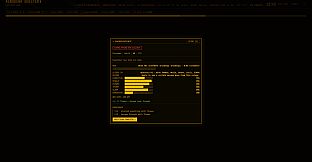
Colonist management stands out through detailed individual tracking, where traits, skill perks, and ranks contribute to a layered progression system. Events often present lasting decisions that carry forward in the personnel record, adding weight to choices about resource distribution and interpersonal dynamics. The 35 rooms support 78 upgrade tiers, while 76 research nodes and 22 pieces of craftable gear offer avenues for specialization.
Five factions and eight wasteland zones expand opportunities beyond the bunker walls, allowing players to engage through looting, trading, or other means that feed back into colony sustainability. Milestones and origins further customize starting conditions and long-term goals within the 124 ranks of permanent advancement.
Is It Worth Playing?
Apocalipsis Ltd suits players who enjoy simulation and strategy titles that prioritize colonist personalities and procedural challenges over direct control. The permadeath structure combined with persistent personnel files rewards careful observation of morale, relationships, and efficiency, creating meaningful progression even after colony failures. Those drawn to management games with roguelike elements and scenario-specific adaptations will find depth in the room-slot assignment, downward excavation, and adaptive catastrophe mechanics. The game delivers a focused experience centered on sustaining a fragile community through layered systems rather than broad exploration or combat.











