

AOC Tutela Cordis is a strategy simulation game set during the Battle of Britain in 1940. Players take on the role of the Air Officer Commanding for 11 Group, RAF, and manage air defence operations from the Uxbridge Bunker using tools that mirror the historical Dowding System.
Gameplay
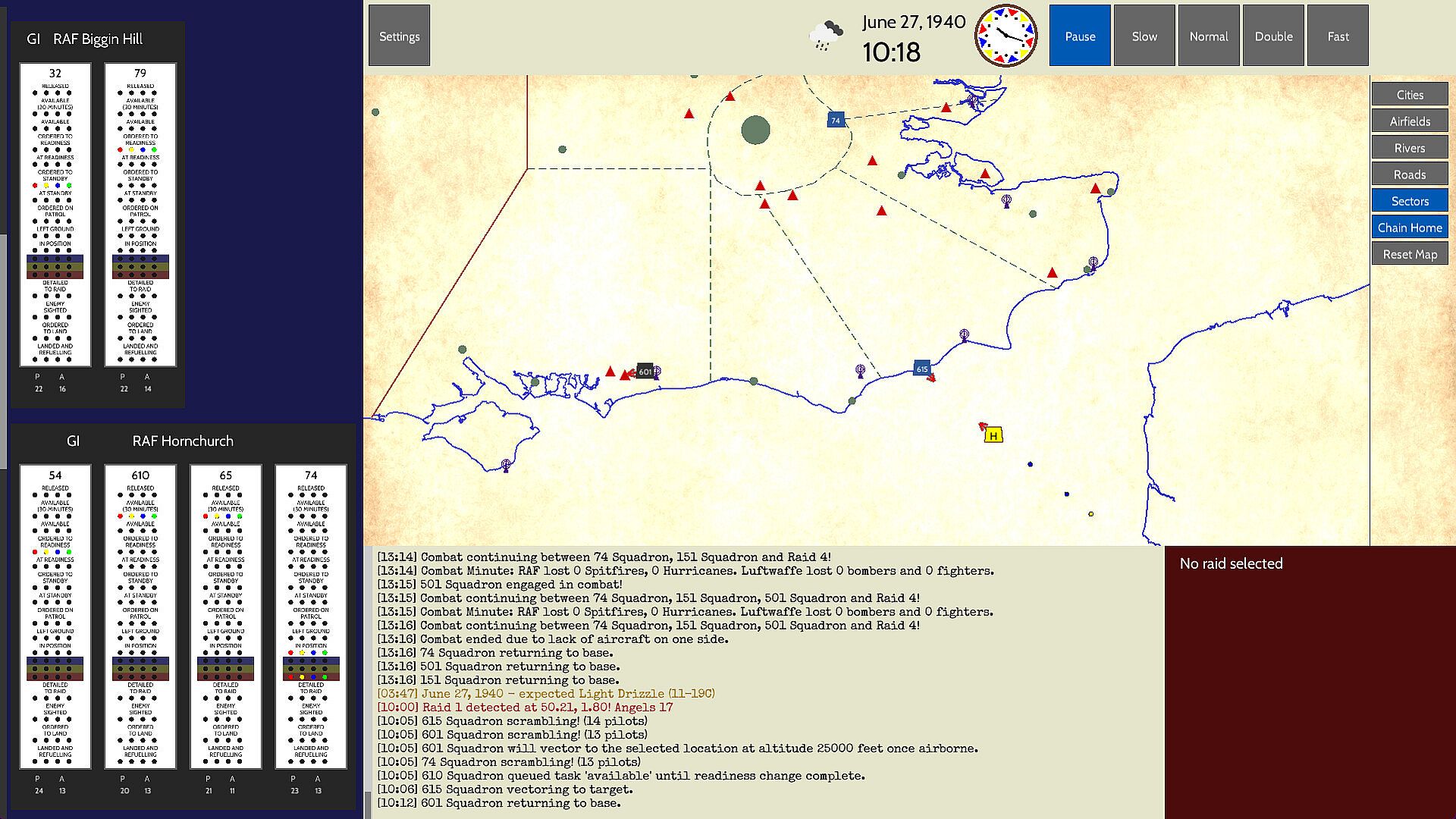
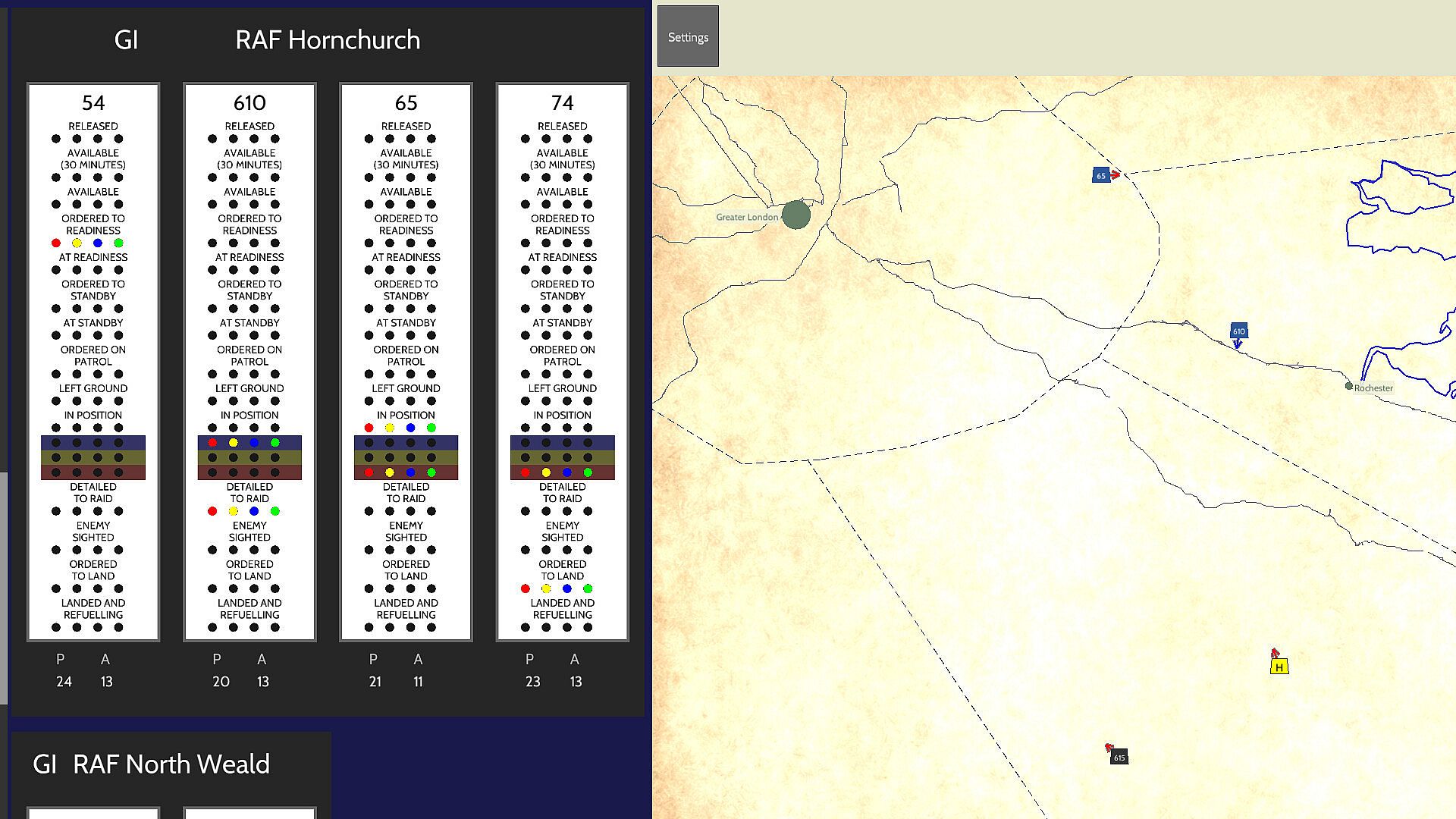
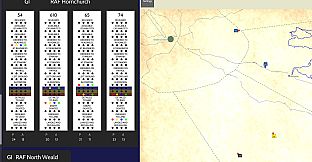
The core loop revolves around processing uncertain intelligence from RDF stations and the Observer Corps. Reports arrive with delays and ambiguities, requiring constant evaluation of raid sizes, intentions, and timings on the plotting table and tote boards. Decisions about when to scramble squadrons hinge on fuel states, pilot fatigue, and the age of information displayed on the sector clock. Aircraft types carry distinct performance characteristics including fuel consumption, ammunition loads, and climb rates, while combat outcomes and mechanical failures align with historical patterns. Resupply depends on training pipelines and factory output, with damage to facilities creating shortages that affect availability over time.
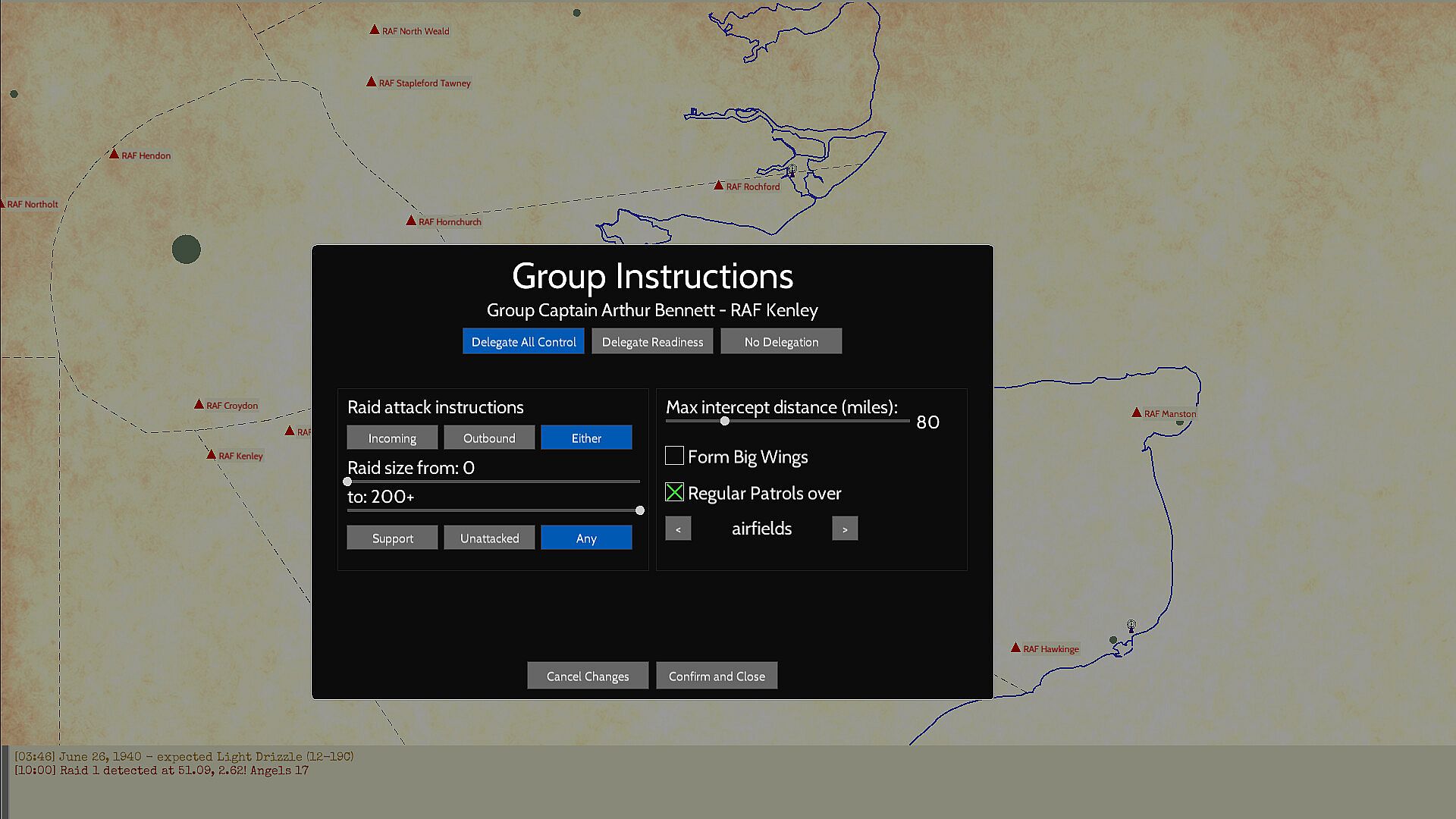
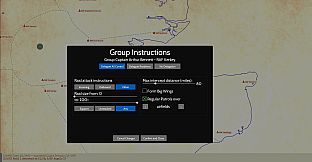
Command pressures extend beyond the immediate battle. Squadron readiness must be balanced against the cumulative effects of multiple daily sorties on both pilots and machines. Delegation to sector commanders allows focus on wider coordination, including relations with adjacent groups under AI control and oversight from higher command. Daily summaries track progress against the historical record, highlighting attrition in pilots, aircraft, and airfields while the simulation maintains realistic repair timelines both on station and through the dispersed factory network.
Game Modes
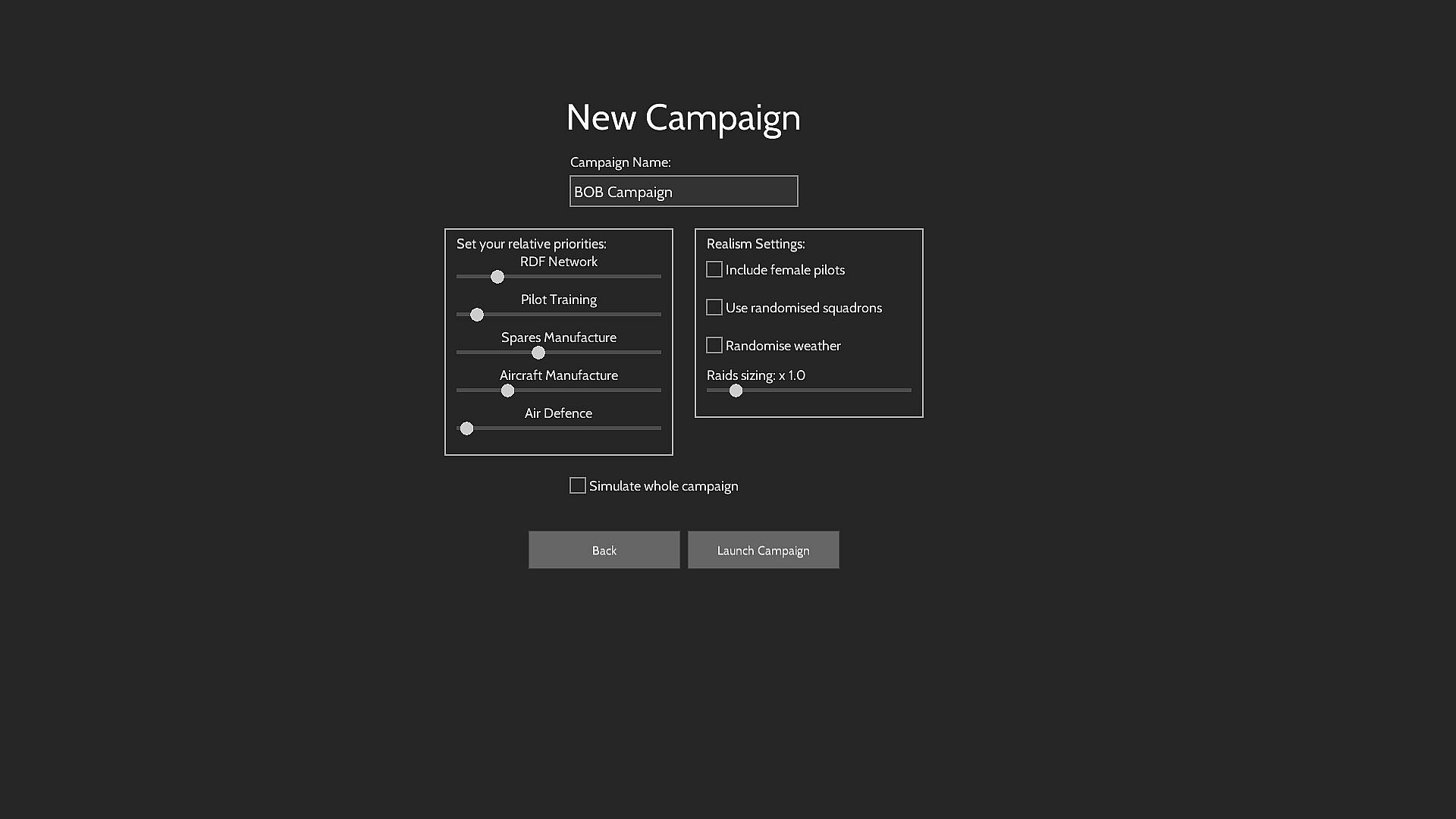
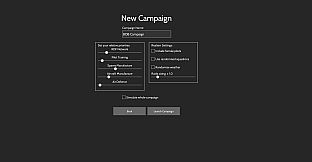
The primary experience recreates the full Battle of Britain campaign with accurate RAF stations, squadrons, weather conditions, and phased Luftwaffe raid patterns that shift emphasis and scale as the summer advances. A separate simulation option runs entire campaigns without direct player intervention for testing scenarios or observing outcomes. The system supports extensive modification of raid schedules, aircraft availability, targets, and even the underlying map, enabling custom campaigns that explore alternative historical paths such as sustained airfield attacks or introduction of different aircraft types.
Historical Authenticity and Command Challenges
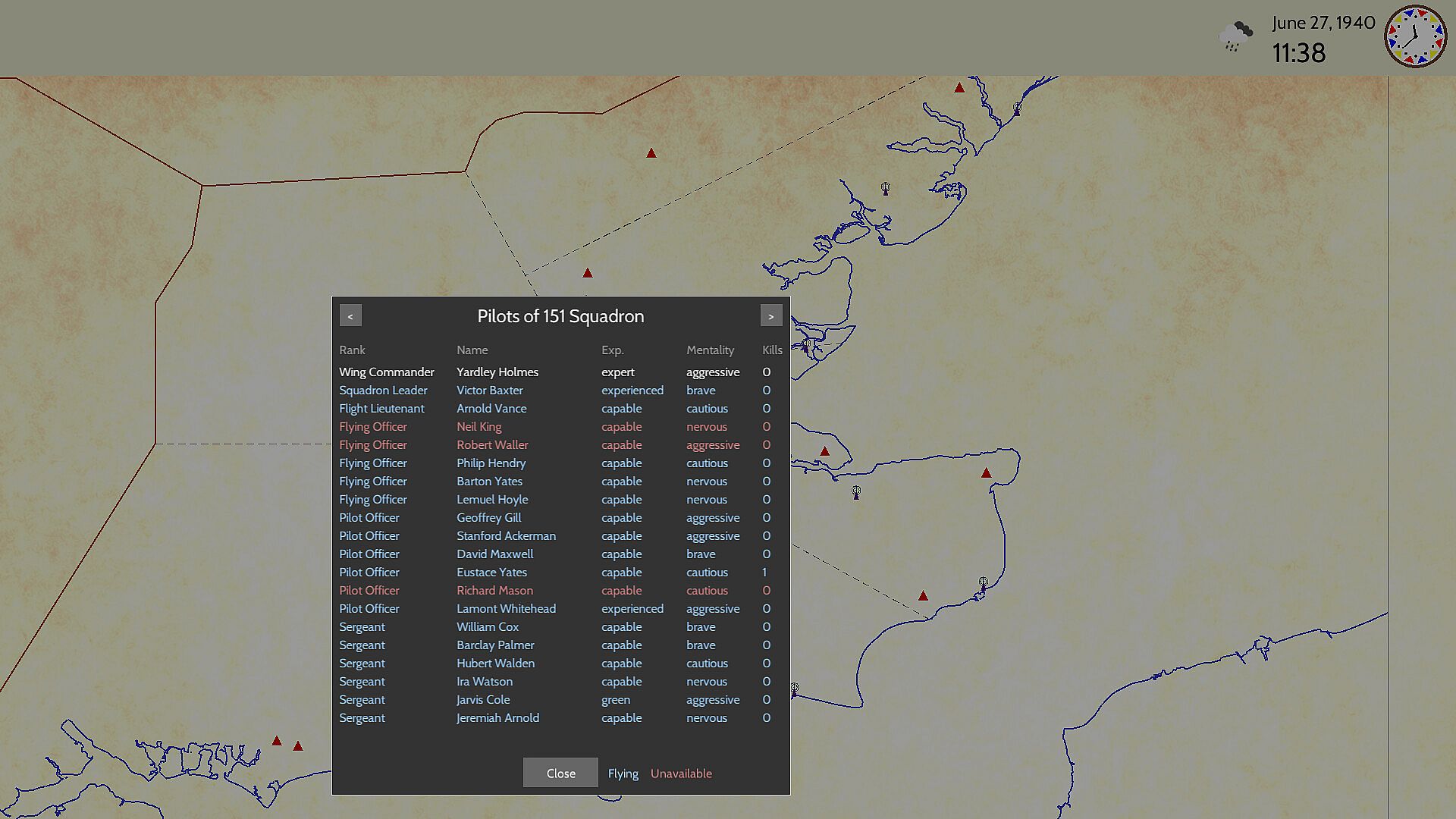
Every element draws from documented records of the period. Real station locations, squadron identities, and weather data feed into the model, while pilot tracking treats each individual separately with experience influencing squadron effectiveness. The game avoids assigning specific historical pilots to prevent rewriting personal stories. Inter-group dynamics introduce political and operational friction, where choices about tactics or resource allocation can affect cooperation from 10 Group and 12 Group. Success requires sustaining 11 Group as a functional force rather than simply achieving a high score of destroyed bombers.
Is It Worth Playing?
This title suits players who enjoy deep command simulations and historical strategy without direct combat control. The emphasis on information management, resource balancing, and long-term force preservation creates a tense, decision-heavy experience centered on the realities of integrated air defence. Those drawn to detailed recreations of the Dowding System and the ability to test what-if variations through modding will find substantial depth. The single-player focus and lack of flying or shooting mechanics narrow its appeal to enthusiasts of operational-level wargaming and period-specific simulations. Availability on PC makes it accessible for that audience seeking an authentic, bunker-based perspective on the Battle of Britain.