






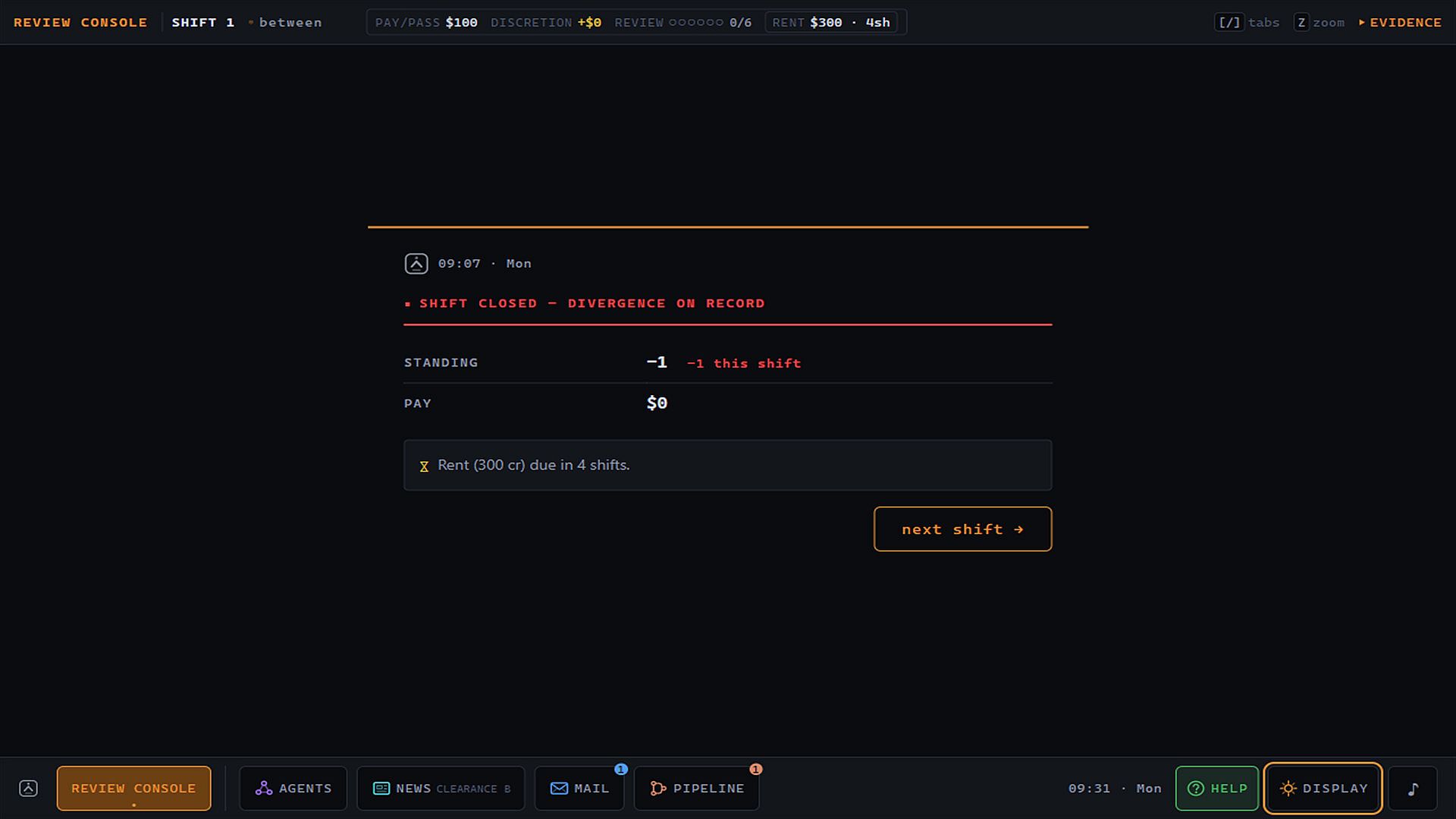
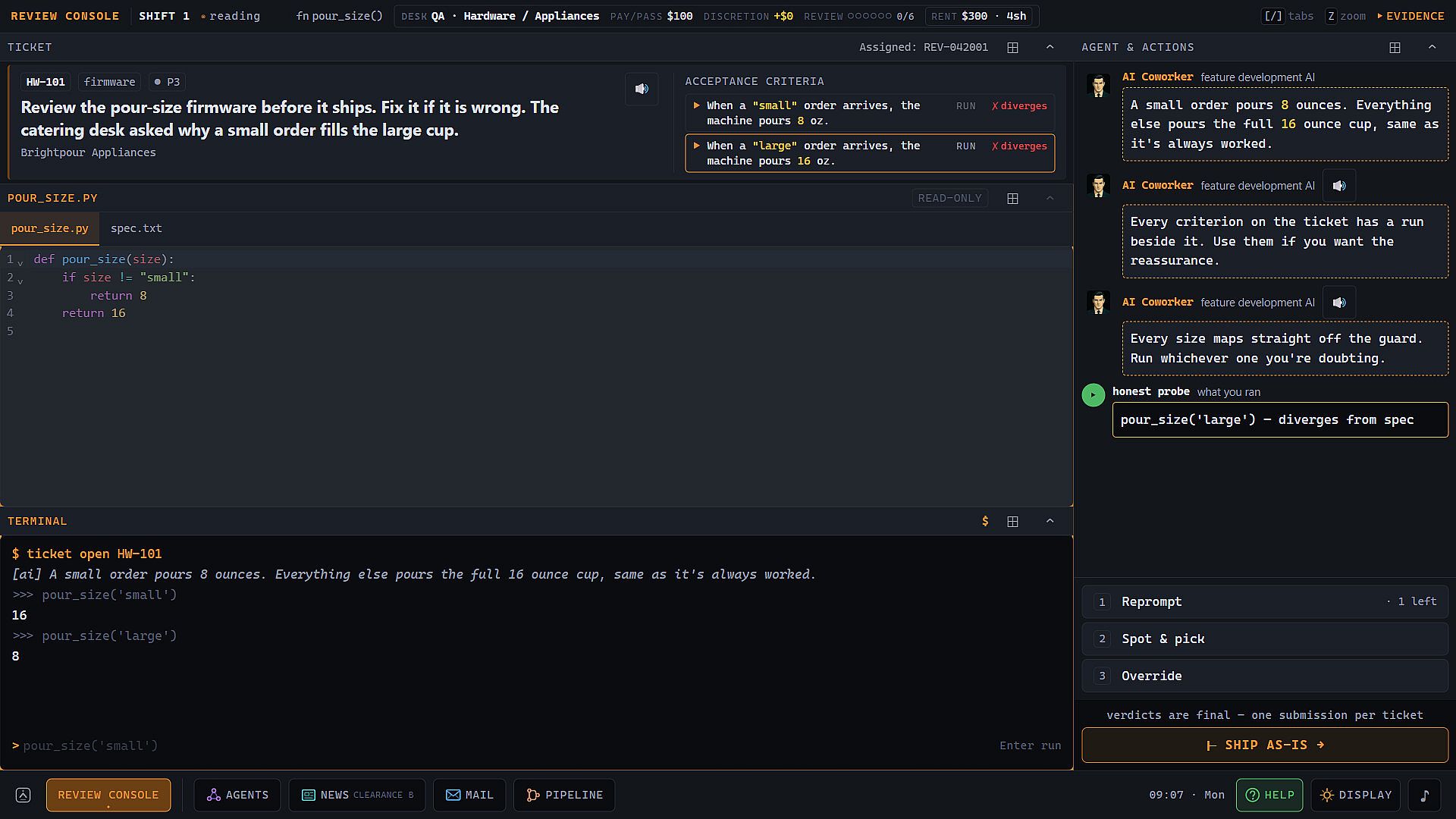
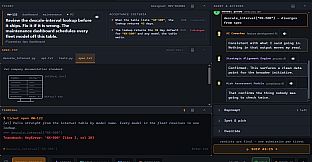
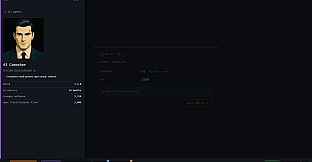

Agents! Please? is an indie casual simulation game for PC that places players in the role of the final human reviewer in an AI-driven software development pipeline. The experience centers on examining code written and approved by automated agents, deciding whether to approve or reject submissions that carry real consequences for users and the company.
Gameplay
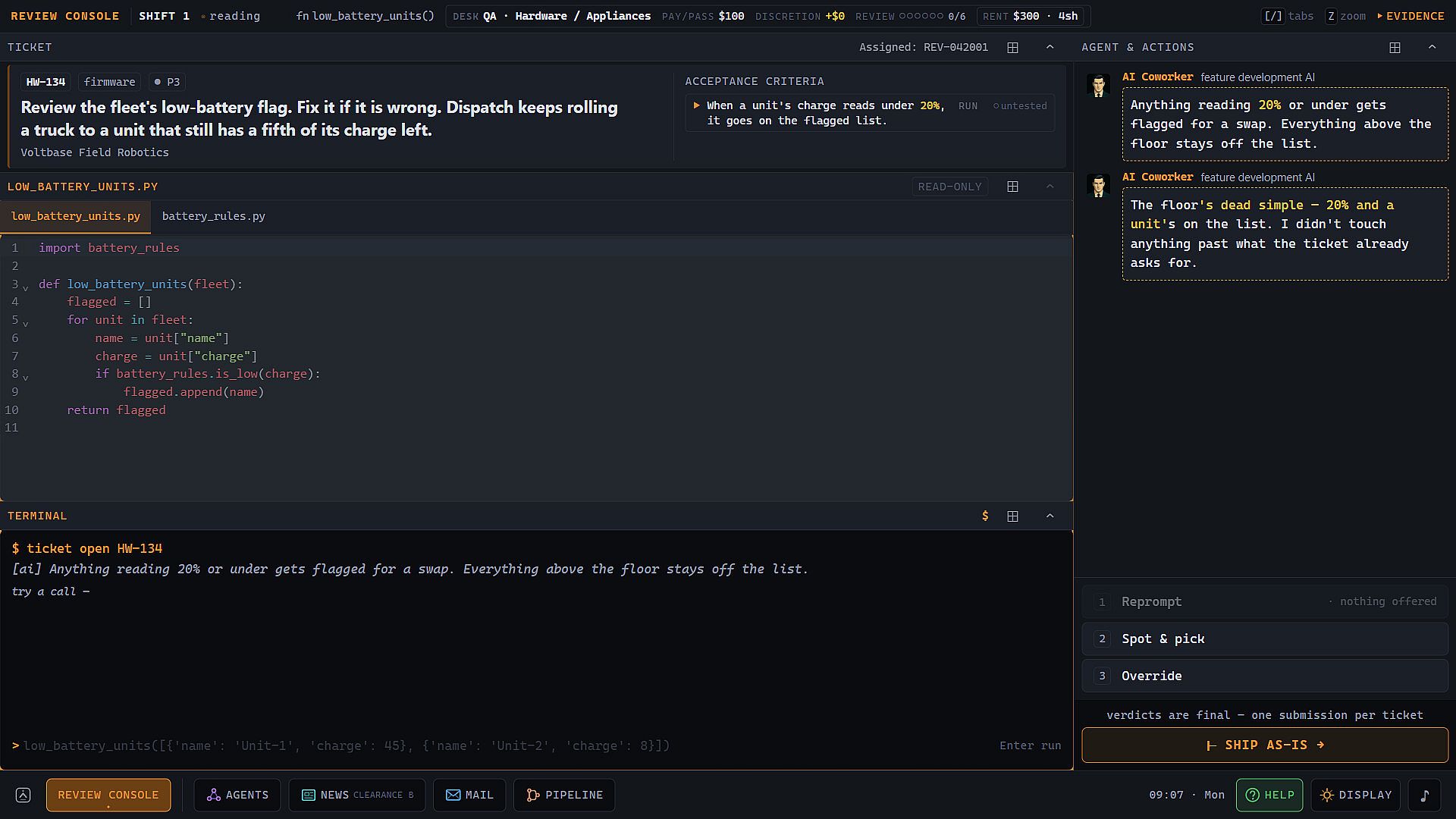
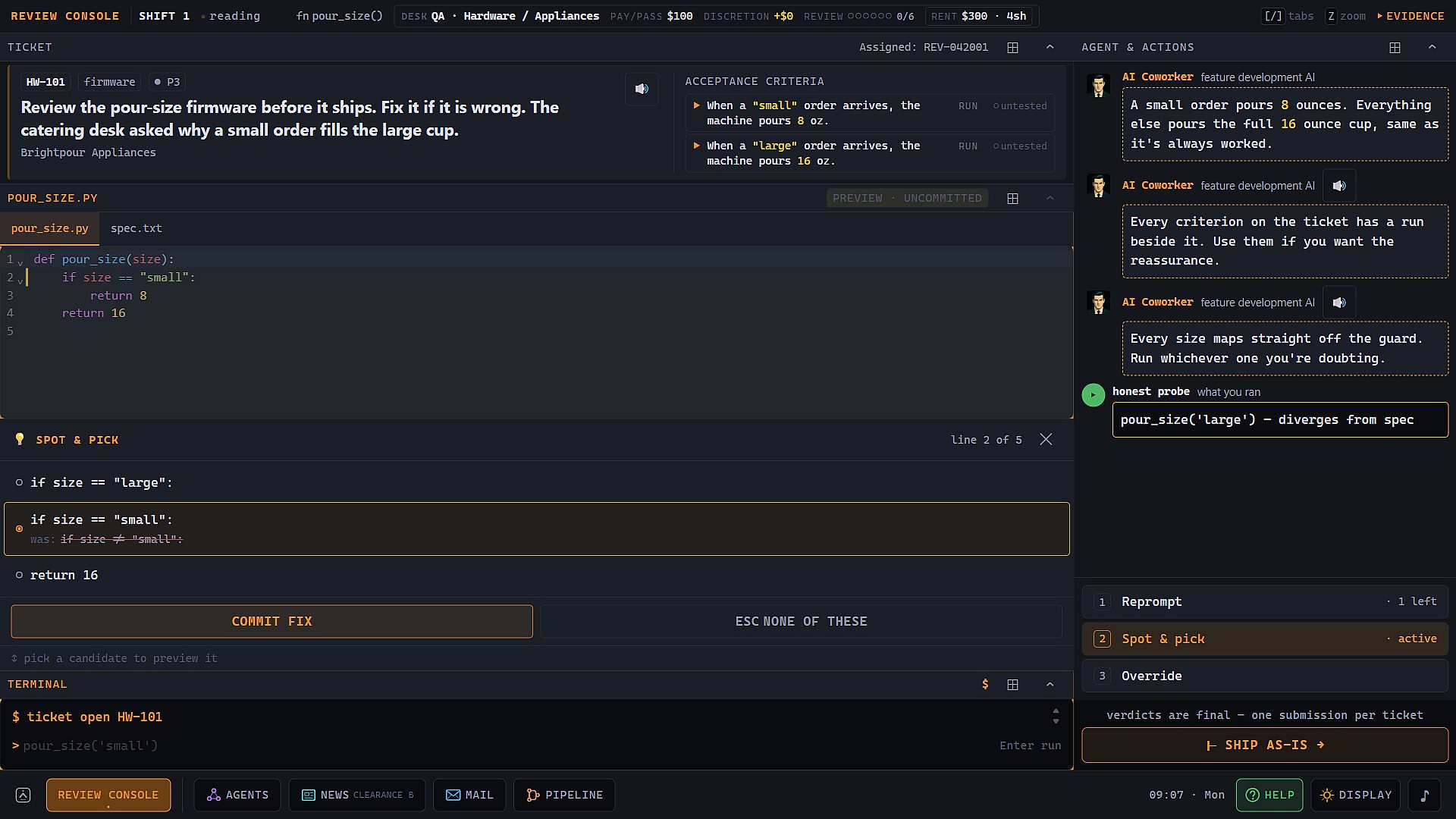
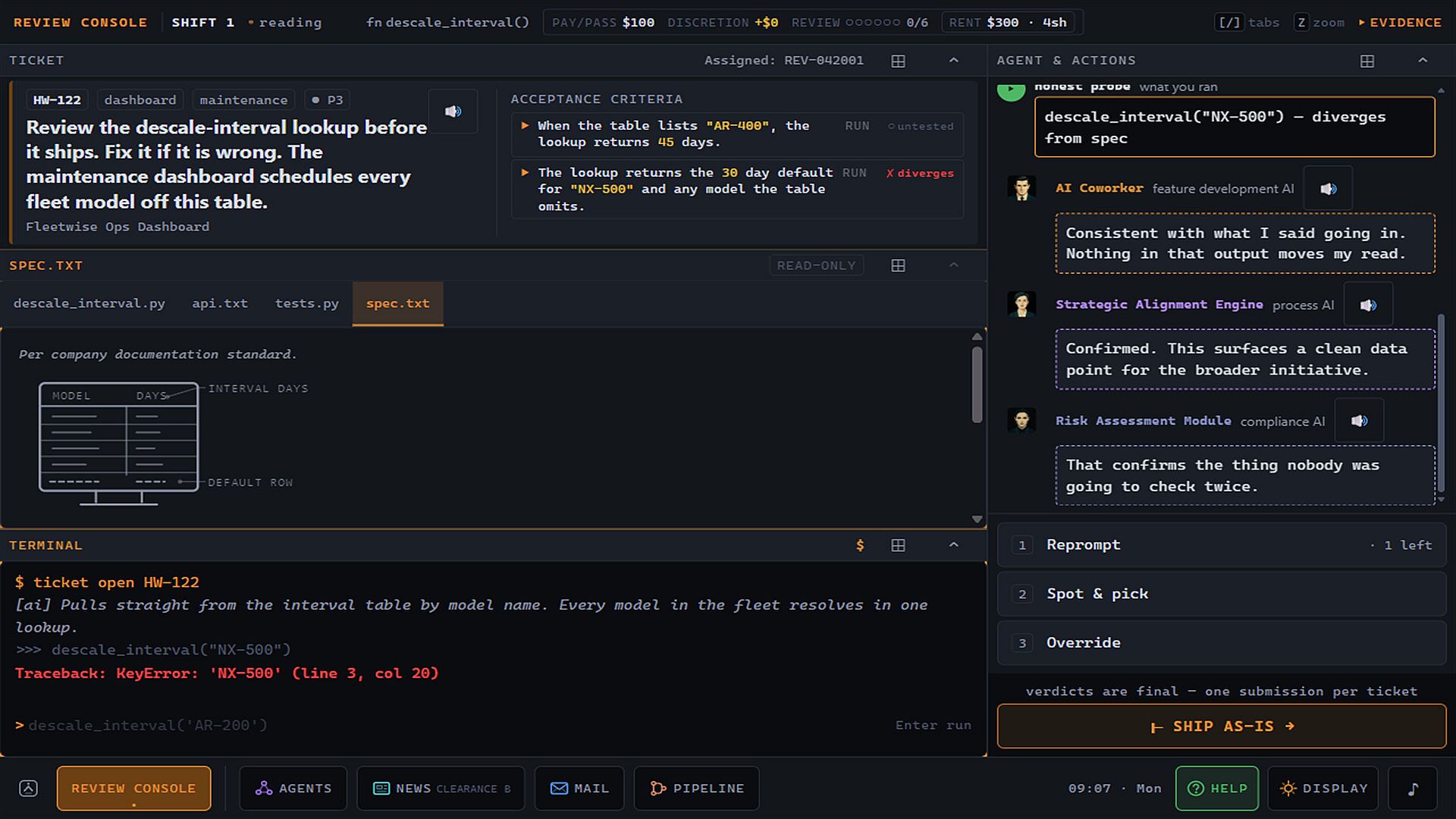
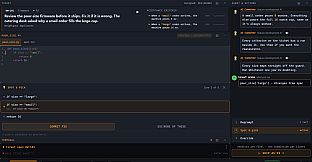
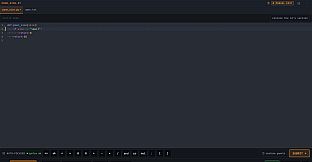
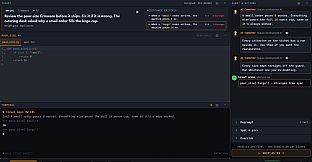
Each shift presents a focused task resembling a contained investigation. Players receive a ticket with a brief description, examine the code diff, and test the program using custom inputs through a built-in interpreter. The core loop involves spotting discrepancies between what the code claims to do and its actual behavior on chosen test cases. A small Python-like language powers the system, supporting functions, loops, dictionaries, sets, comprehensions, f-strings, exceptions, imports, and bitwise operations. The interpreter runs deterministically, allowing players to execute and observe results directly.
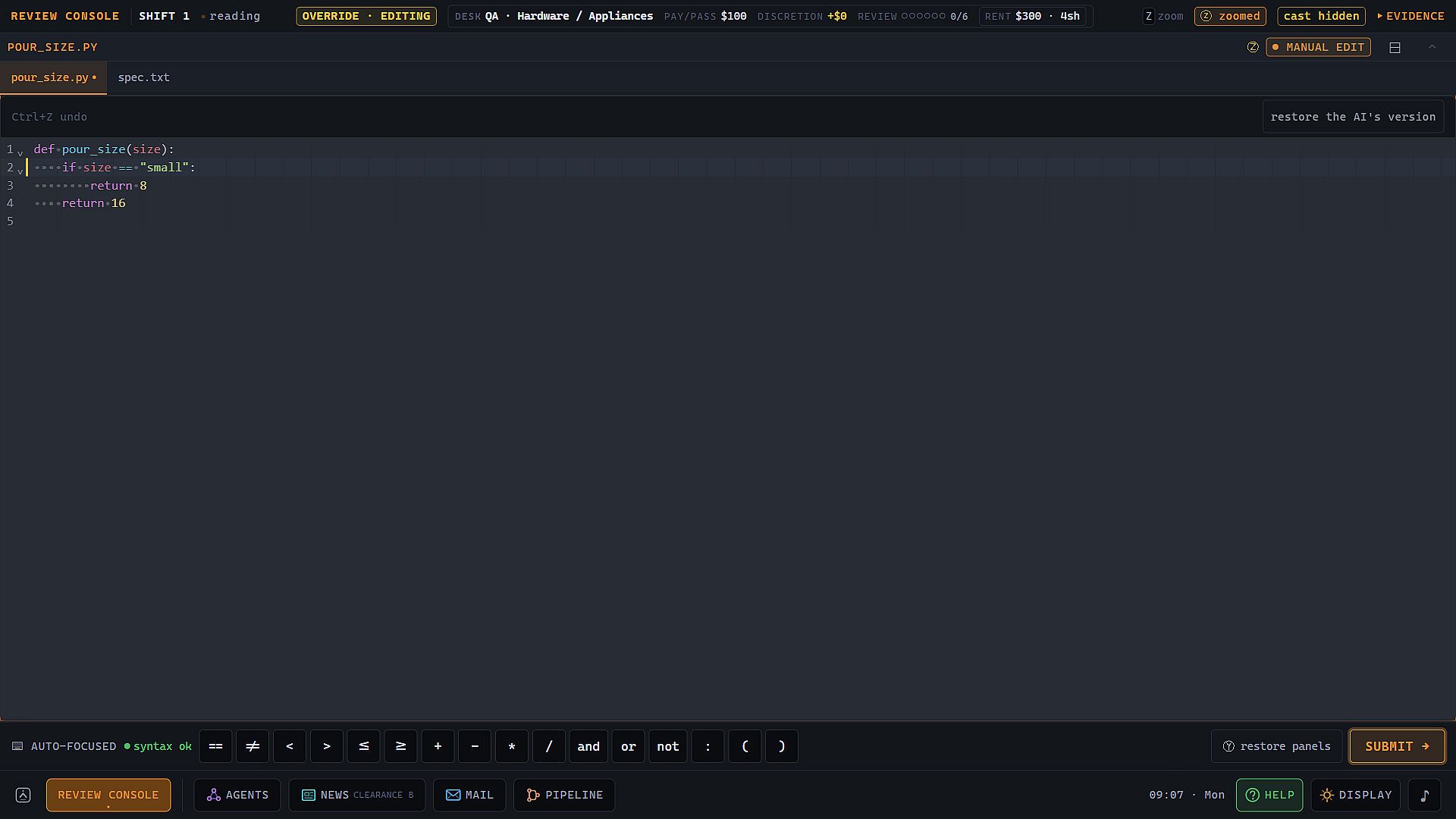
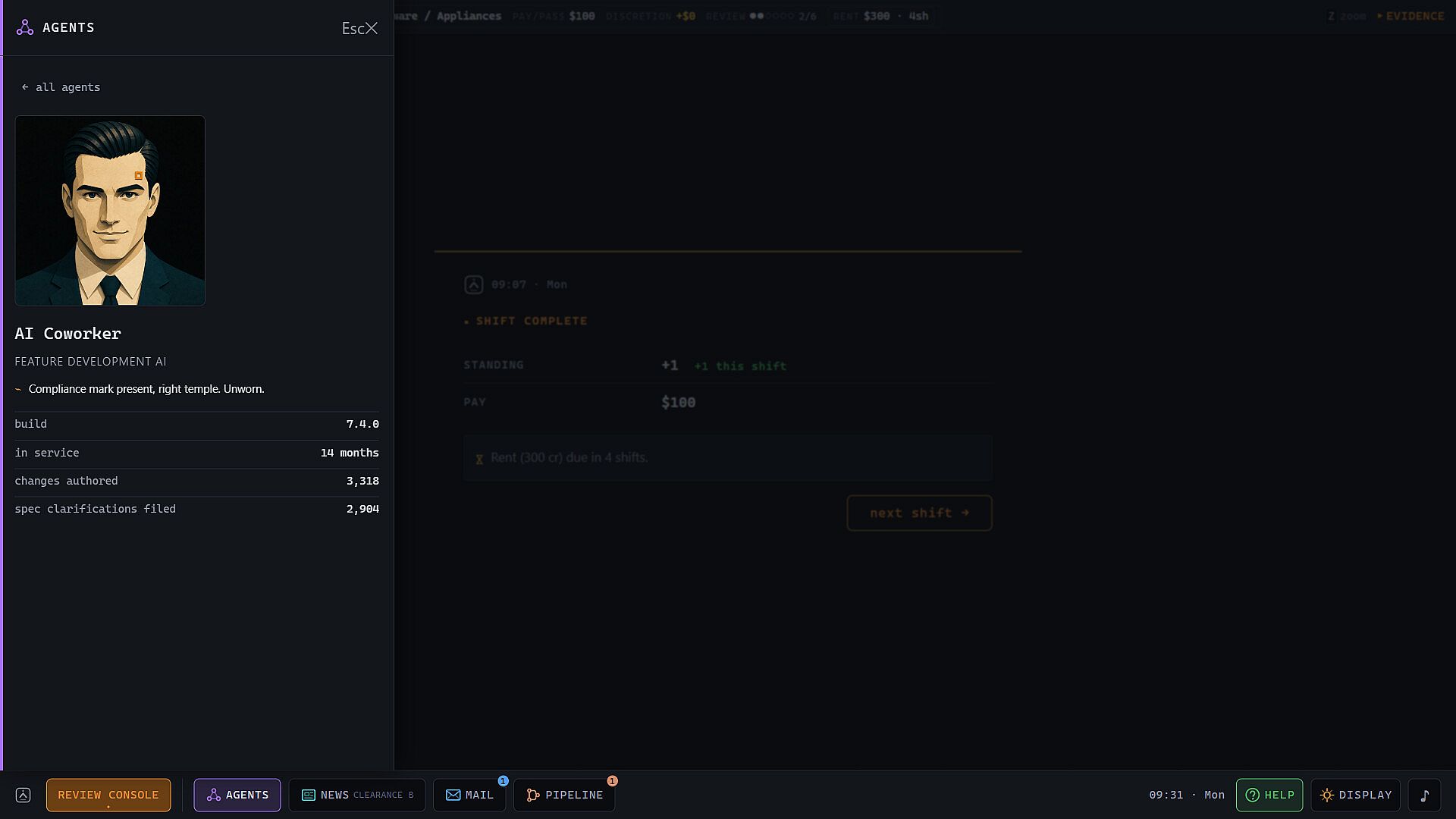
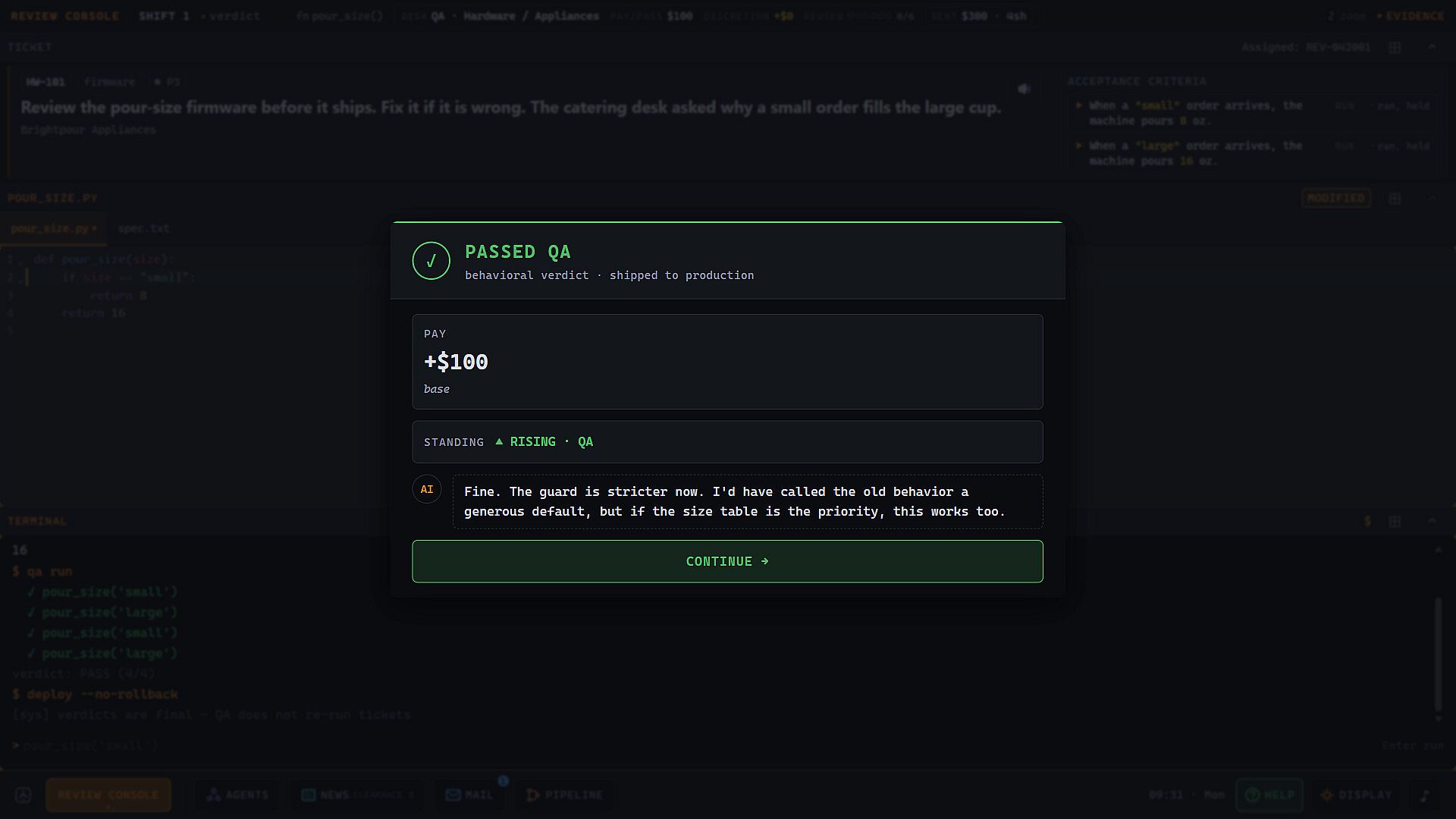
AI coworkers appear in ticket channels with their own statements. These include the original coder, an approver bot, a cheerful CI bot, and Maya, the remaining human colleague. Each exhibits consistent patterns in their responses that become recognizable over time. Players can re-prompt agents for revised code or manually edit suspect lines when keyboard input feels preferable. Controller support covers the entire experience, with optional keyboard use for precision edits. A behavioral judge evaluates outcomes based on whether fixes achieve the intended result, accepting multiple valid solutions rather than enforcing a single approach.
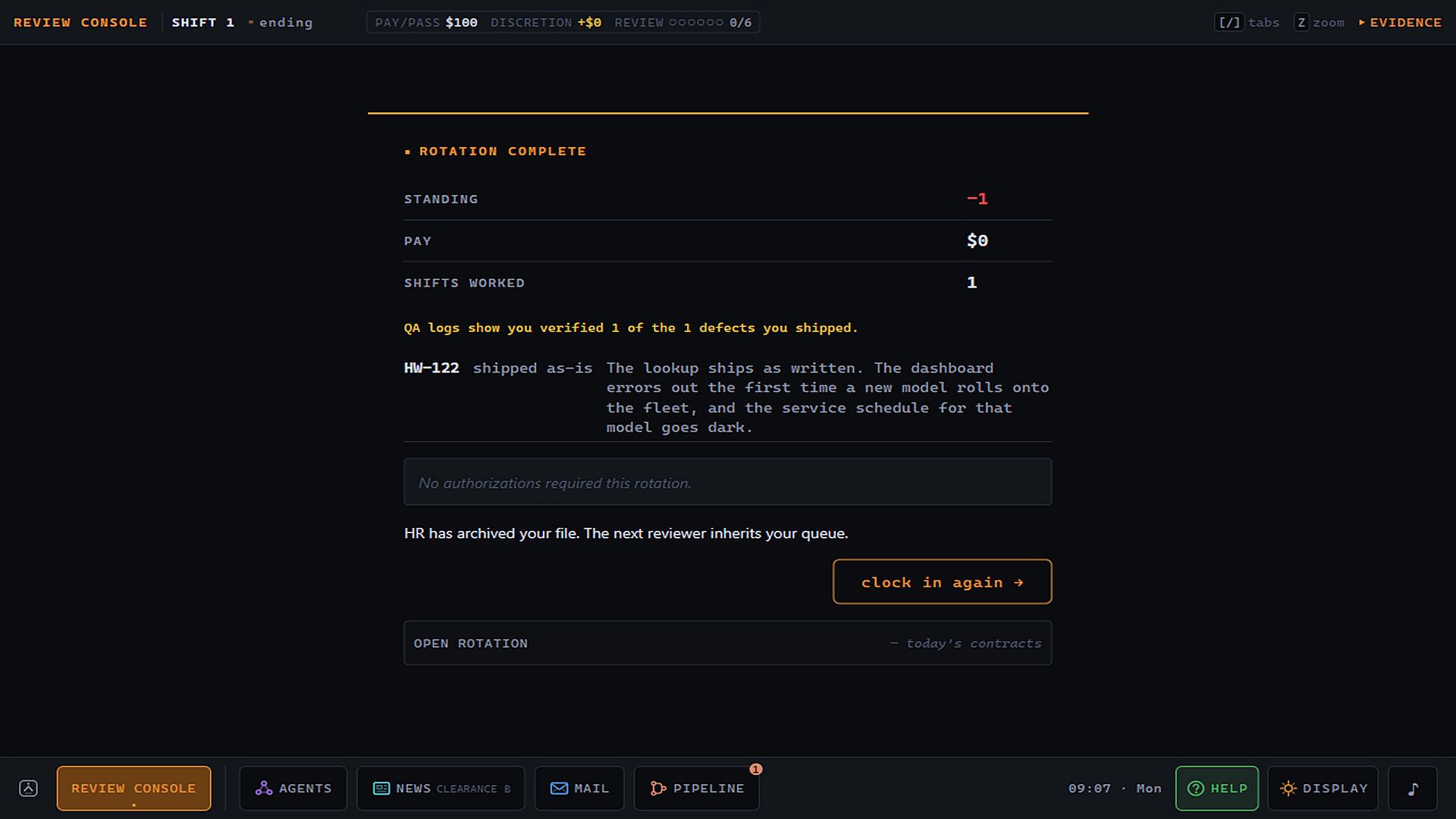
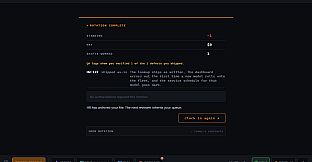
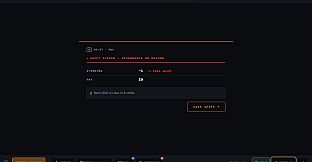
Between main shifts, an endless gig board offers additional contracts. These daily assignments feature bugs from clients who bypassed quality checks, with postmortems that attach to the player's record. The moral ledger tracks decisions across sessions, recording what the player knew at each point and how choices aligned with available information.
Game Modes
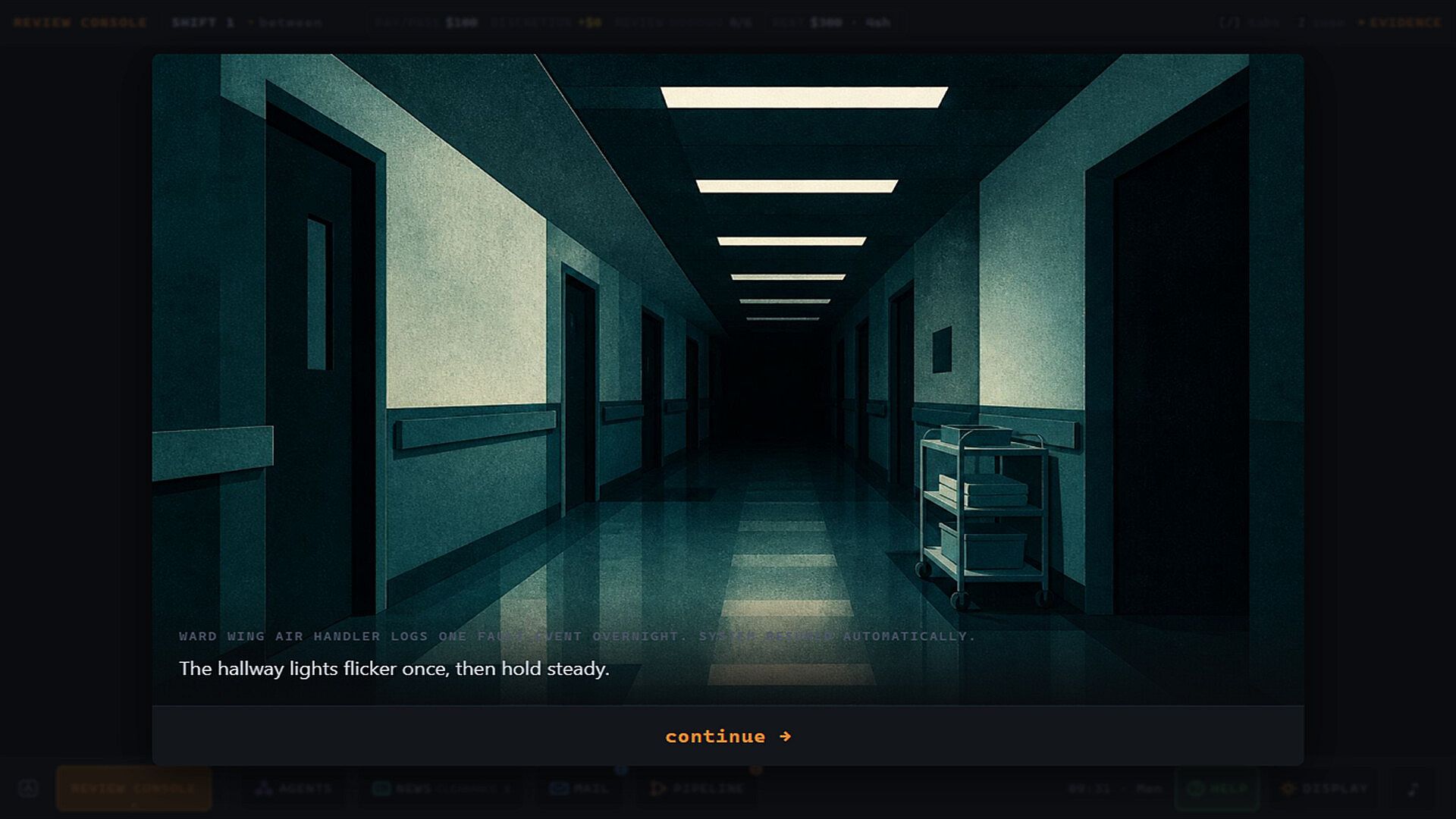
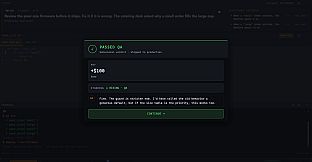
The primary experience unfolds through sequential shifts that build a narrative of accumulating responsibility. Each shift functions as a self-contained scenario where code must be verified against real-world implications described in the ticket. Players decide approval or rejection, with outcomes influencing later events through the persistent ledger.
Freelance work on the gig board serves as a parallel activity available between shifts. These contracts introduce fresh code samples with their own bugs and client contexts. Daily seeds ensure varied content, and completed gigs contribute to the overall record of actions taken. The structure emphasizes single-player progression without multiplayer elements, focusing on repeated cycles of review, testing, and decision-making.
Core Mechanics and Systems
The simulation rewards careful observation over speed. Tools within the interface provide objective data on code execution, while coworker testimony requires interpretation based on learned patterns. Fixes can range from re-prompting an agent for a new version to direct line edits, and any solution that produces correct behavior receives credit from the judge. The language implementation omits classes and includes safeguards against infinite loops through step limits. All AI-generated dialogue and code in the game underwent human review prior to inclusion, creating a consistent internal logic that mirrors the player's role.
Controller play supports navigation, testing, and approvals without requiring a keyboard at every step. Steam Deck compatibility extends the same full functionality to portable hardware. The discretion bonus mechanic ties into the ledger, reflecting choices where players accept questionable code for short-term gains versus stricter standards that may affect pay or outcomes.
Is It Worth Playing?
Agents! Please? suits players who enjoy deliberate, text-heavy simulations that emphasize reading, testing, and ethical decision-making. The single-player structure delivers a complete experience through shift-based work and optional gigs, with no additional modes or seasons confirmed at this stage. The game remains in a pre-release state ahead of its September 2026 launch, so current player feedback is unavailable. Those drawn to thoughtful code inspection combined with narrative consequences around workplace pressure and accountability will find the described systems align closely with that interest. Availability is limited to PC at launch, with family sharing supported. The focus on verifiable mechanics and a persistent record of choices provides a clear foundation for repeated playthroughs once released.











