




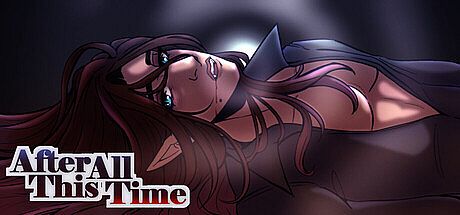


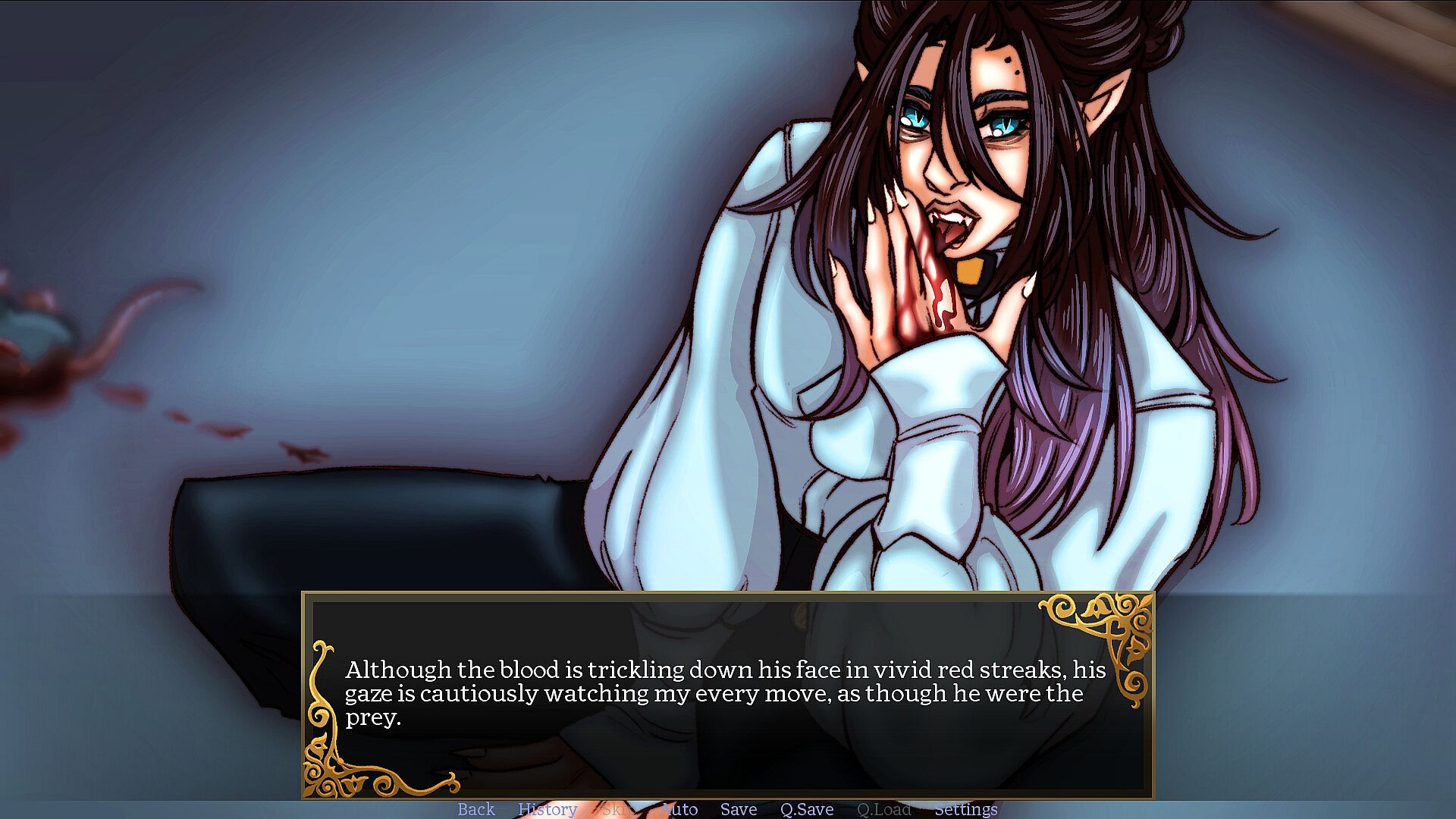
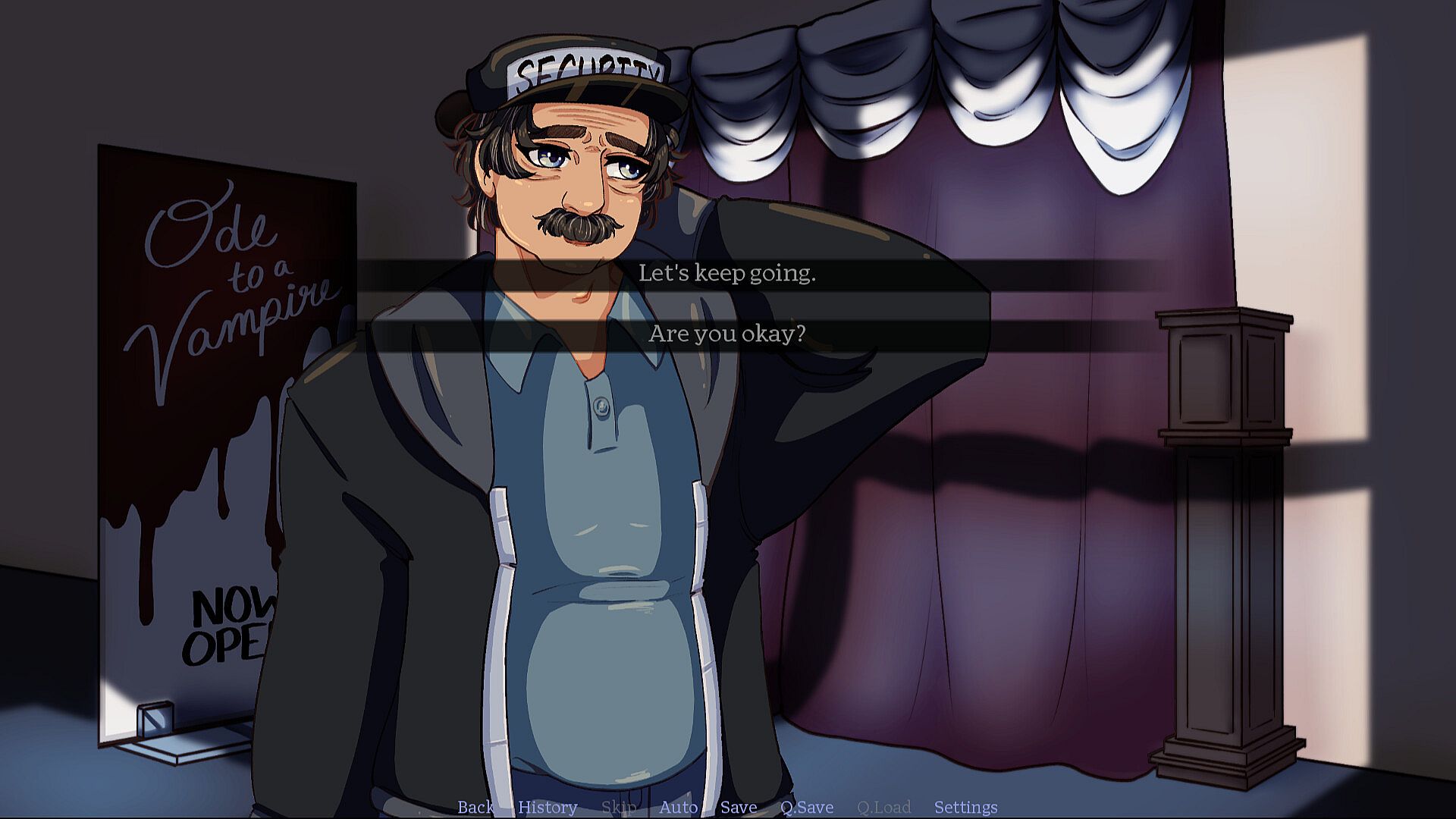
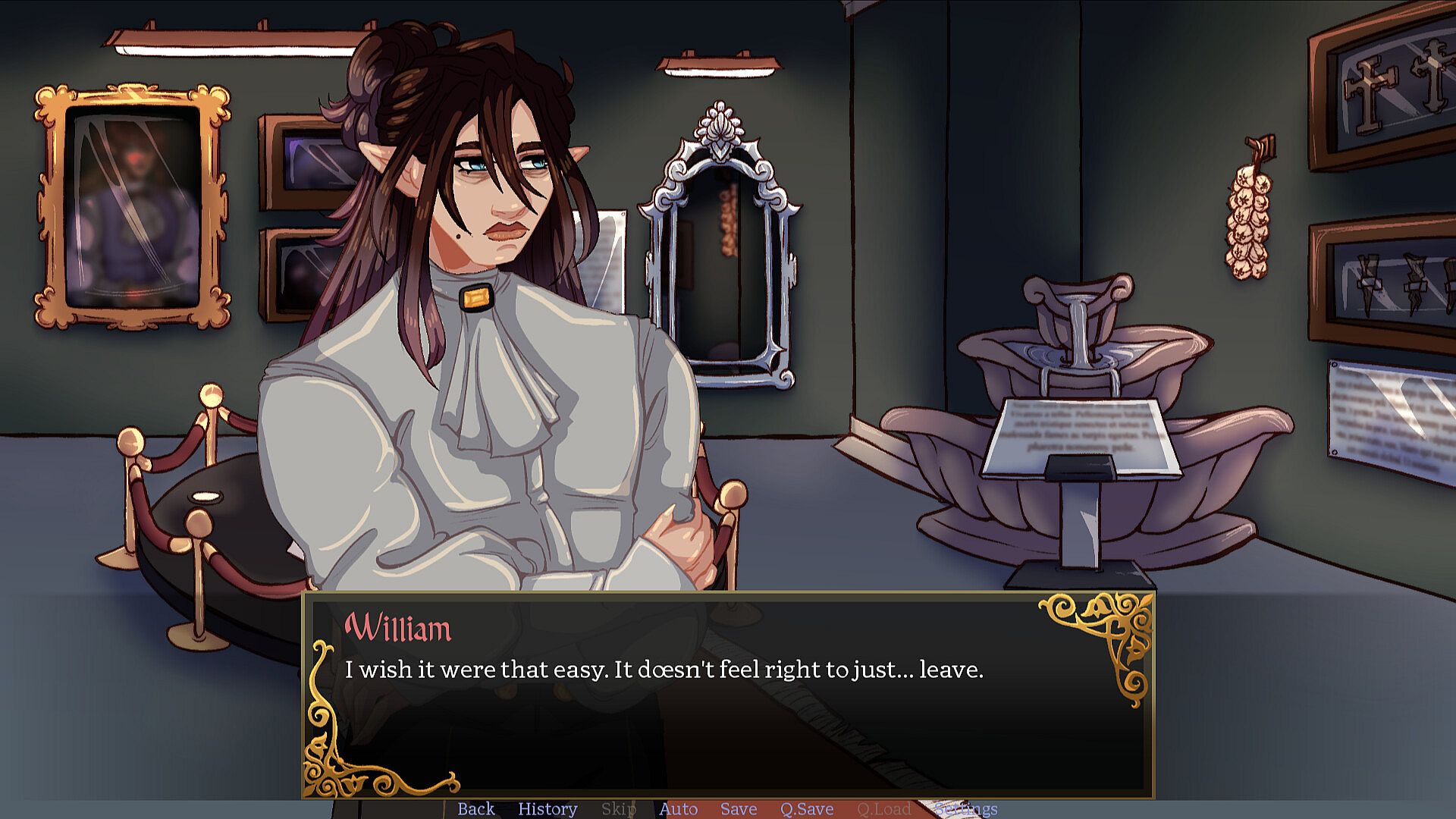
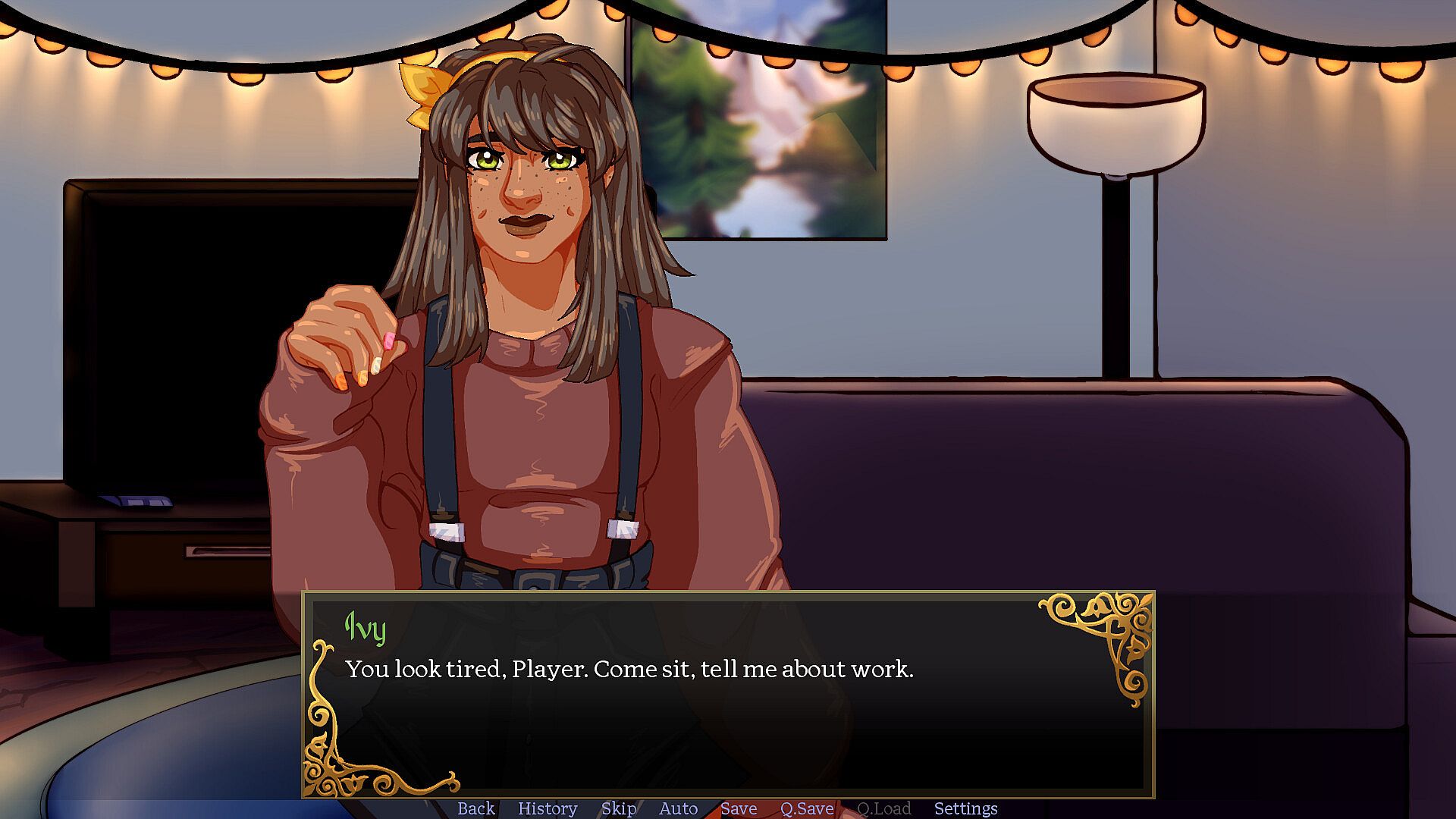
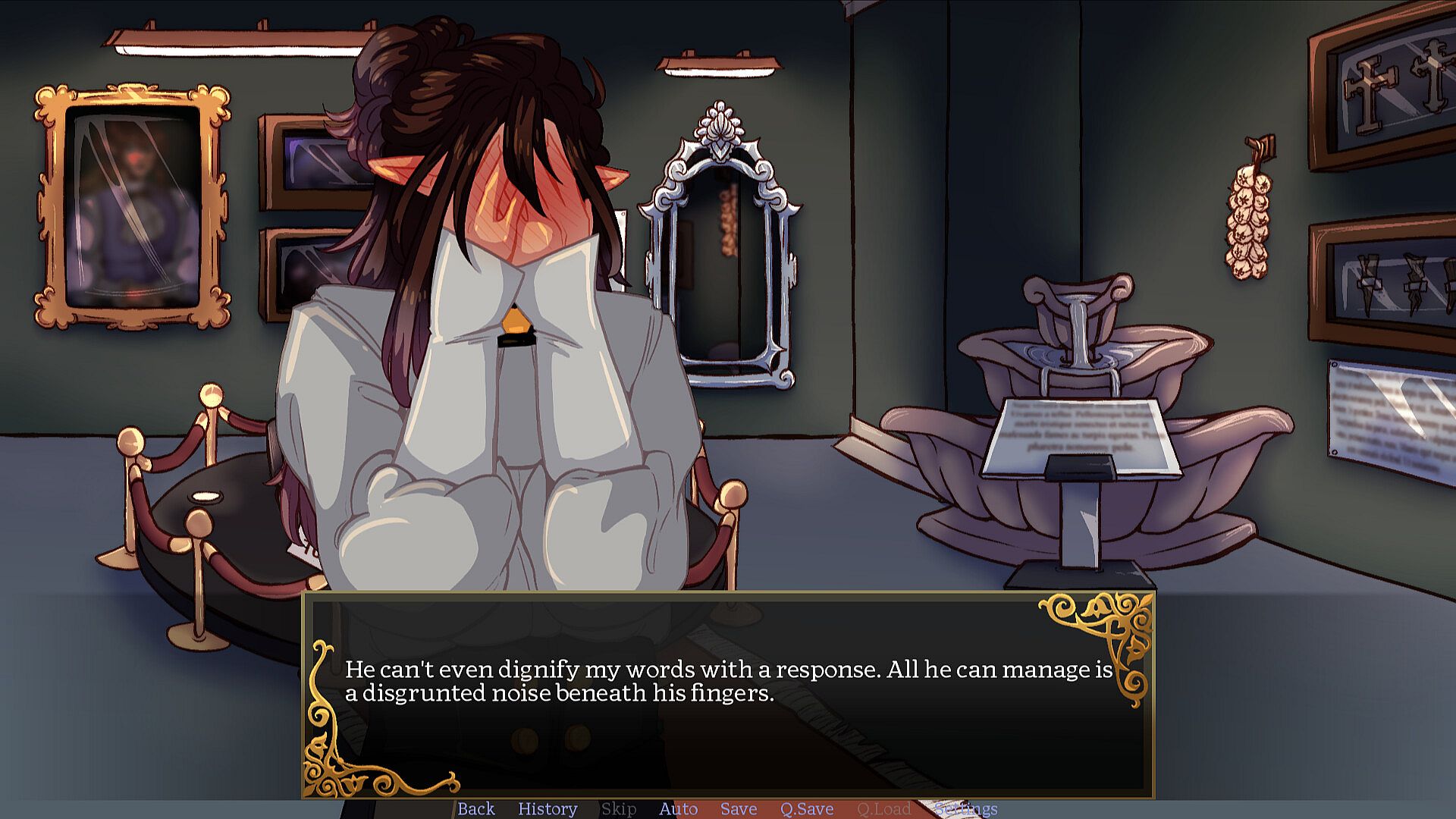
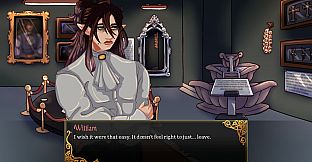
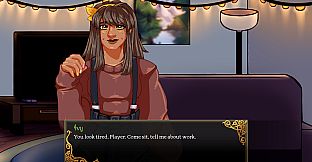
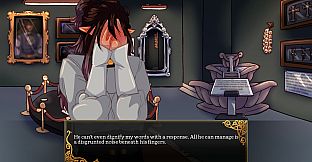
After All This Time is a romance visual novel set on PC where players take the role of a newly hired night security guard at The Reliquary, Museum of Magical and Natural. The game centers on daily shifts spent with an unexpected resident from a newly opened vampire exhibit, blending museum exploration with personal discovery and relationship building.
Gameplay
The core loop involves progressing through a sequence of night shifts at the museum. Players move through exhibits focused on space, geology, and mythical creatures while interacting with the vampire who has become part of the displays. Each shift advances the story day by day, presenting opportunities to learn about the vampire's forgotten past and the reasons his history remains hidden. Dialogue choices shape conversations and influence how events unfold, sometimes opening paths that diverge from the main thread. The player character receives no physical description, allowing full freedom in imagining appearance and background after selecting a name and pronouns at the start.
Game Modes
The experience runs entirely in single-player mode. There are no separate multiplayer options or competitive elements. Progression follows the linear day-by-day structure of the first few shifts, with branching outcomes determined by decisions made during interactions. The focus stays on narrative advancement rather than separate modes or repeatable challenges.
Customization and Artwork
Identity selection forms the starting point, with pronoun options and a name entry that carries through the entire story. As shifts continue and key moments occur with the vampire love interest, players unlock special illustrations. These images capture private exchanges and confessions, filling slots in an in-game gallery once obtained. The system rewards steady progress through the narrative without requiring separate collection mechanics.
Is It Worth Playing?
After All This Time suits players who enjoy choice-driven romance visual novels with a focus on character backstory and quiet museum settings. The single-player structure delivers a contained story centered on identity, mystery, and connection, supported by the ability to shape outcomes through decisions. Content includes references to swearing, violence, death, and suggestive themes, so it appeals most to audiences comfortable with those elements. Because the title remains in development with no released reviews or player counts available, interest depends on preference for short, intimate narrative experiences rather than action-heavy or multiplayer formats. Those drawn to customizable protagonists and unlockable visual rewards will find the described systems align directly with that style.











