


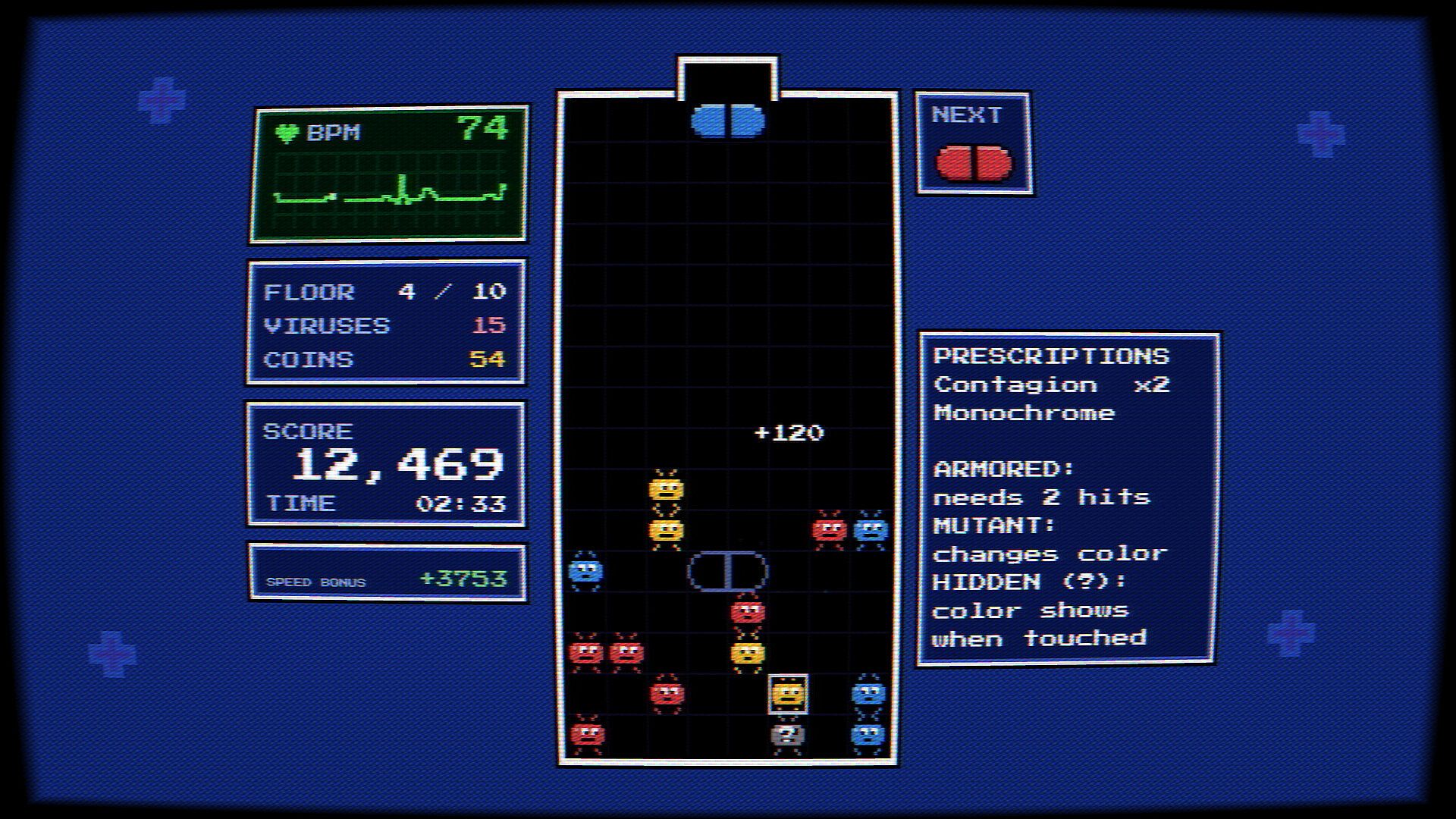
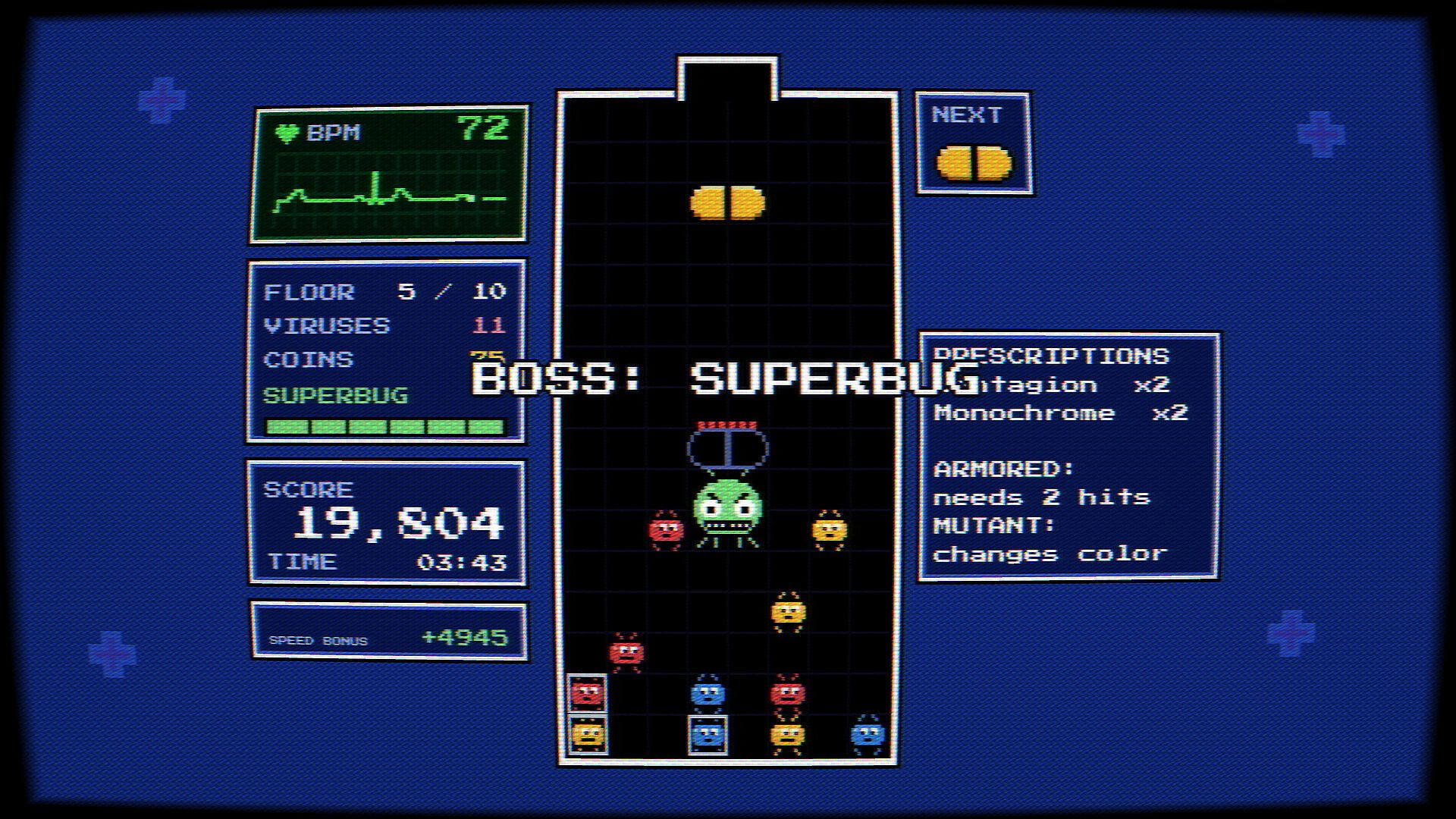
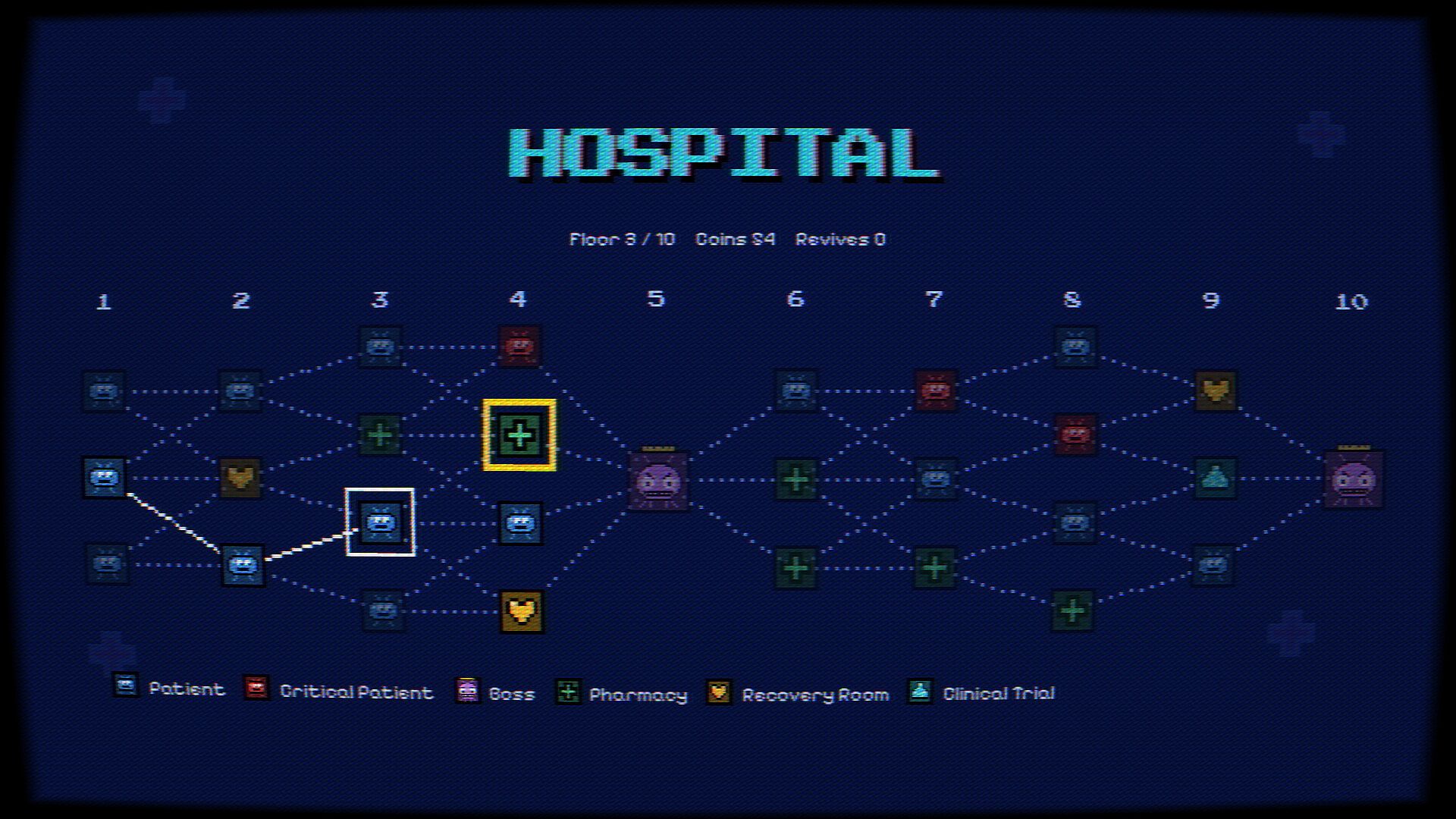
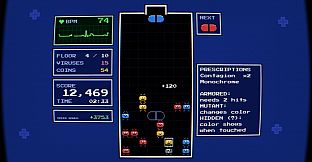
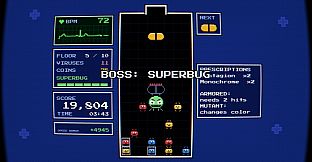
Adverse Reaction is a strategy indie game for PC that blends real-time puzzle mechanics with roguelike progression in a hospital setting. Players match falling pills by color to clear rows of viruses while ascending through ten floors, one patient at a time. The core loop demands precise timing and spatial awareness as pills descend, with chain reactions creating cascading clears that boost scores and manage the ever-present danger meter displayed on the patient-monitor HUD.
Gameplay
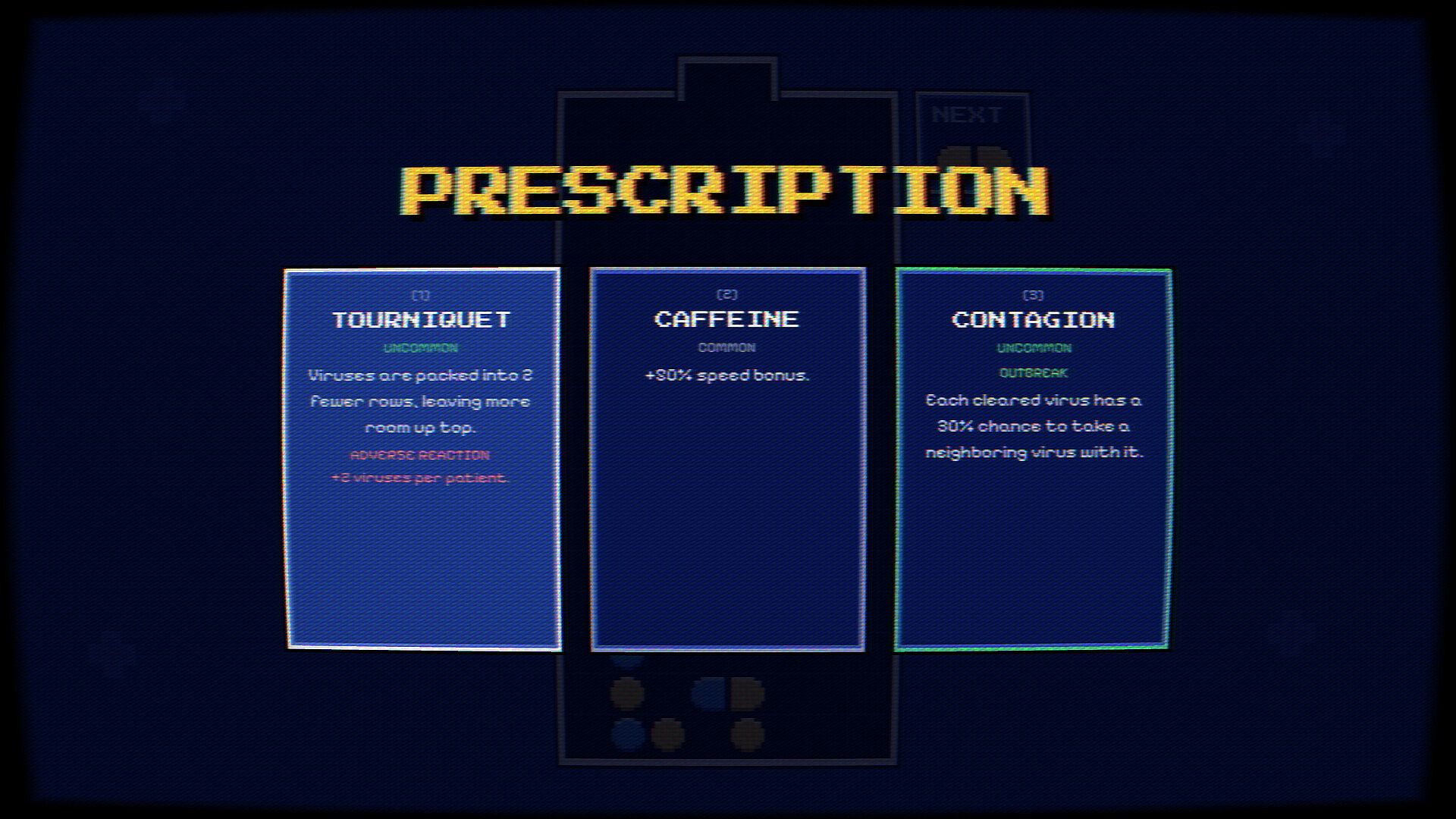
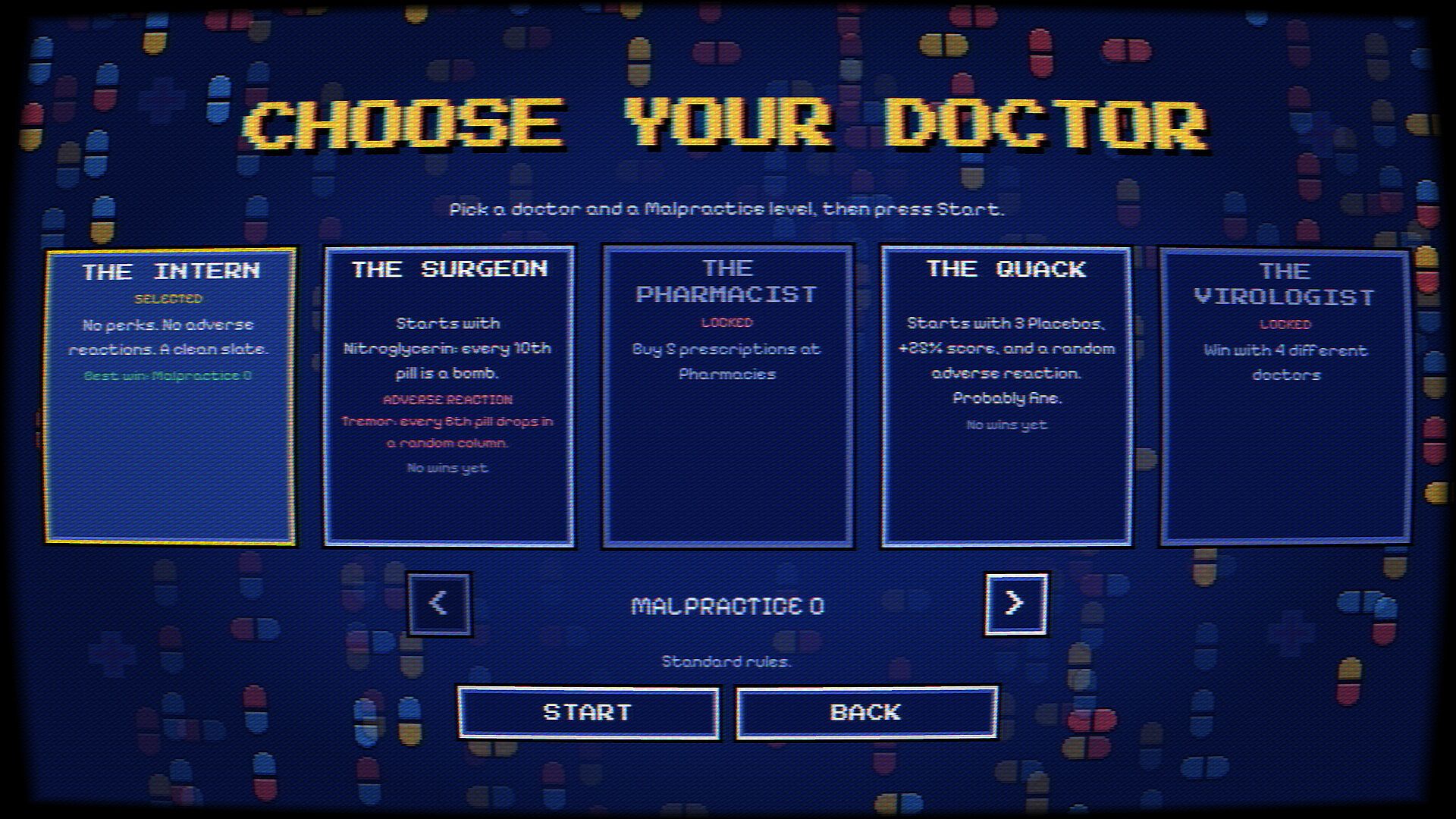
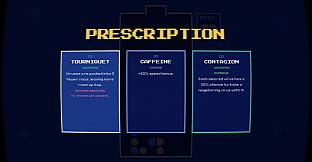
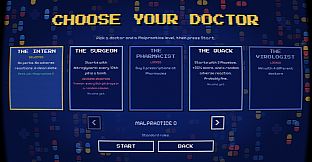
The real-time falling-pill system forms the foundation of every run. Players align matching colors to eliminate viruses, and successful clears can trigger combos that multiply effects across the grid. A danger meter tracks proximity to failure, providing constant visual feedback on how close the next error sits to a flatline. Between patient encounters, prescriptions alter the bottle contents on the fly. These items enable chain reactions, convert entire rows to a single color, or spread damage from one virus to others. Each of the five playable doctors brings a unique perk paired with a built-in adverse reaction that imposes a drawback, forcing constant evaluation of benefits against costs during build decisions.
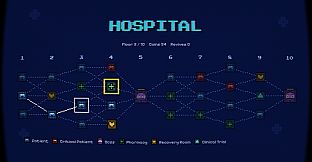
Rooms between fights offer risk-reward opportunities through the Pharmacy, Recovery, and Clinical Trial areas. These spaces let players reshape their available tools while navigating the ten-floor ascent. The system rewards careful observation of color patterns and quick adaptation to shifting virus placements, all while the HUD keeps the pressure visible at every moment.
Game Modes
Standard runs follow the roguelike structure of climbing the hospital floor by floor with randomized elements shaped by prescriptions and doctor choices. Malpractice difficulty layers on top of this foundation, with eight escalating levels that increase pill speed, introduce tougher bosses, heighten virus aggression, and assign an unchosen reaction at the start of each attempt. This mode supports repeatable challenge runs that build on the same ten-floor layout while raising the stakes.
Daily Run provides a separate experience on a shared seeded map available to all players that day. Participants compete on a single leaderboard to compare performance without altering the underlying puzzle rules. Both modes maintain the real-time matching and prescription mechanics while offering distinct paths for skill refinement and competition.
Prescriptions and Doctor Builds
Thirty-two prescriptions fall into four archetypes that support varied strategies. Chain-reaction options amplify combo potential across multiple clears. Color-matching tools improve alignment efficiency on crowded grids. Demolition prescriptions focus on direct removal of threats. Outbreak-spread items propagate effects virus to virus for area control. Players combine these with one of five doctors, each carrying an adverse reaction that trades a powerful perk for a persistent limitation. This pairing encourages experimentation across runs as different combinations interact with the ten-floor structure and rising difficulty in Malpractice mode.
Is It Worth Playing?
Adverse Reaction suits players who enjoy real-time puzzle challenges mixed with roguelike decision-making and escalating difficulty. The ten-floor hospital climb, prescription variety, and doctor trade-offs create a focused loop centered on color matching, combo chaining, and risk assessment. Malpractice levels and the Daily Run add structured replay paths that reward practice without requiring external progression systems. Those drawn to precise timing puzzles and build experimentation will find consistent depth in the core mechanics and the way adverse reactions shape every attempt. The game delivers its experience through the provided systems alone, making it a direct choice for fans of indie strategy titles that emphasize skill over lengthy campaigns.