

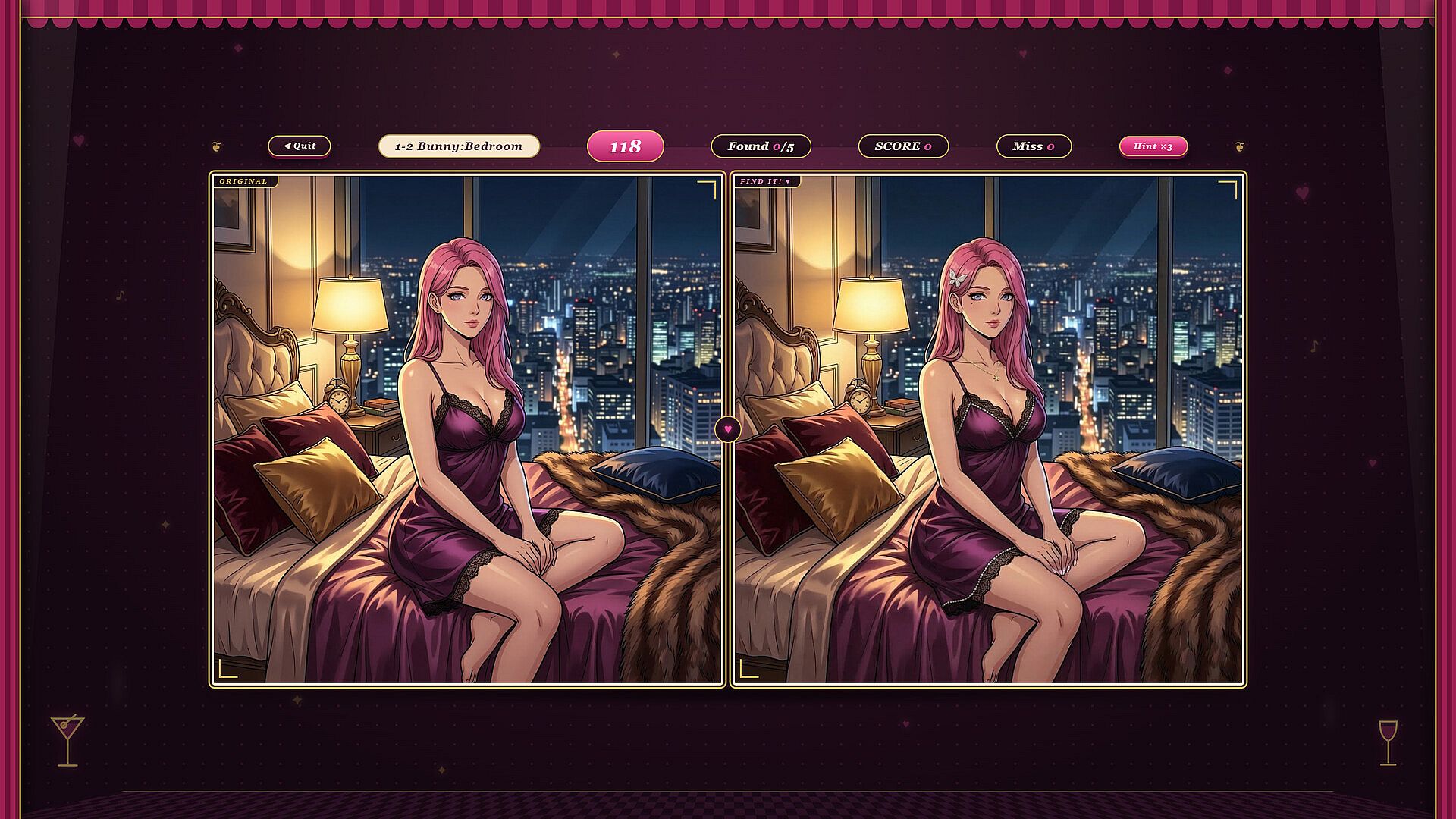
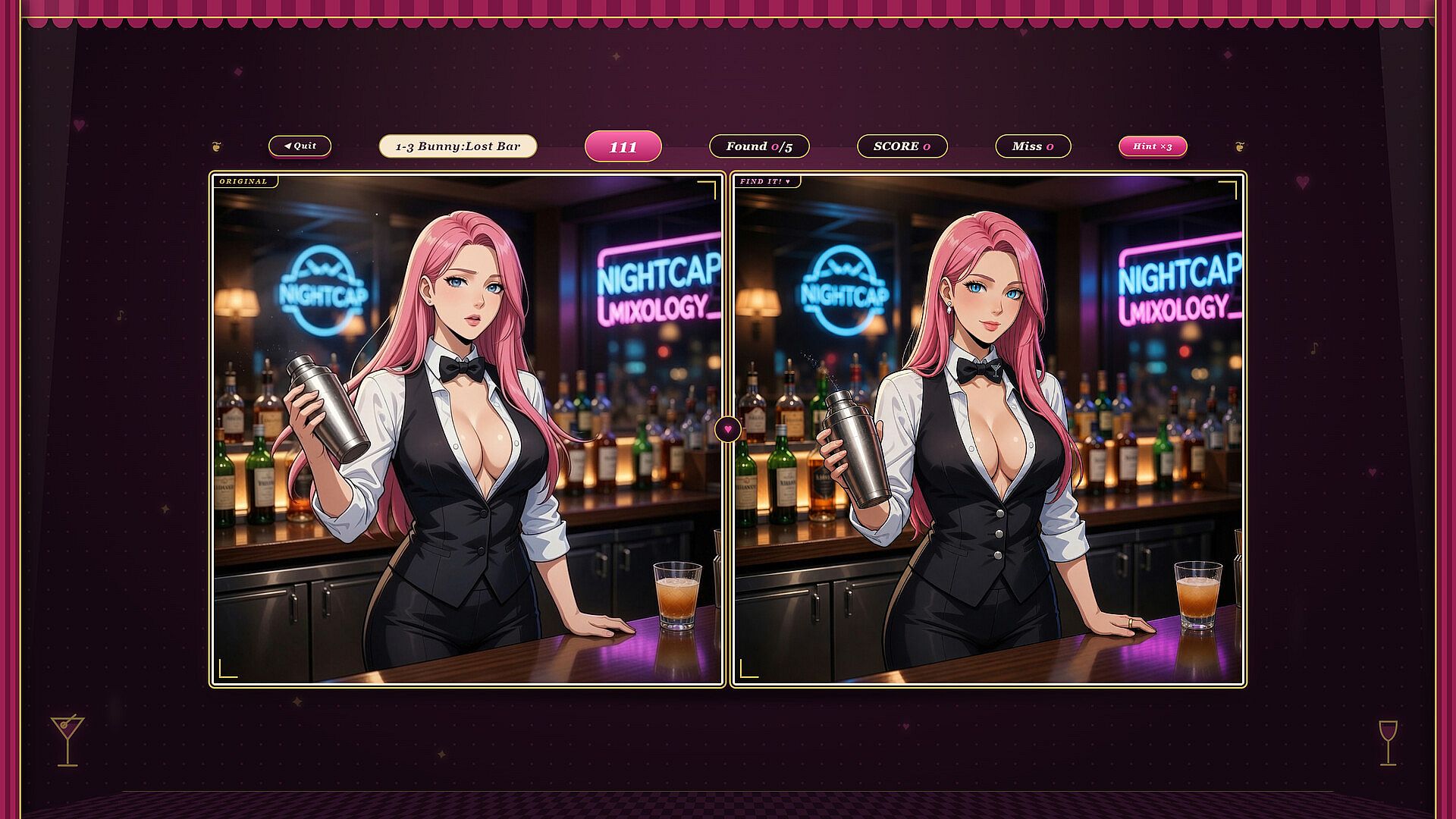
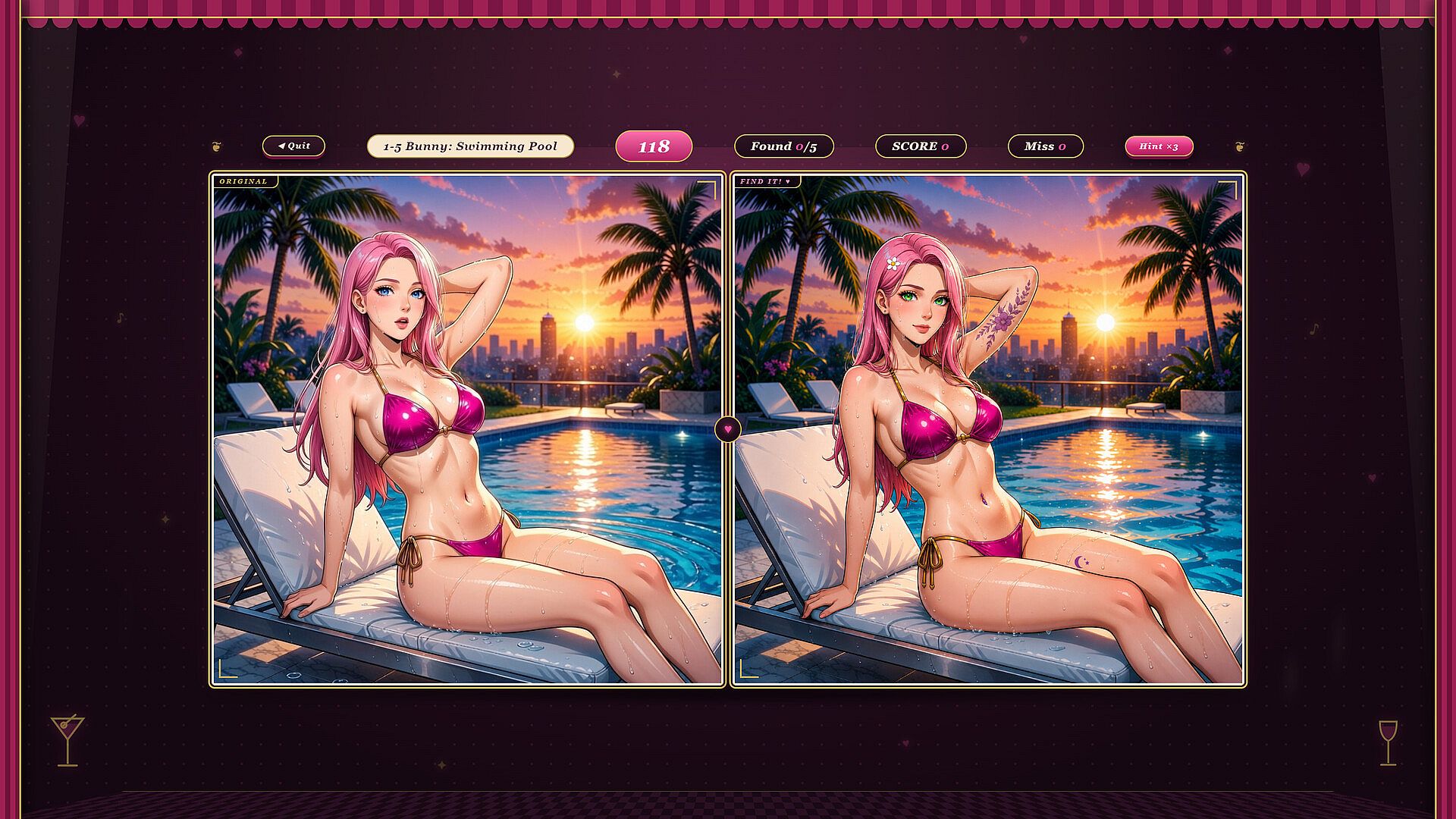
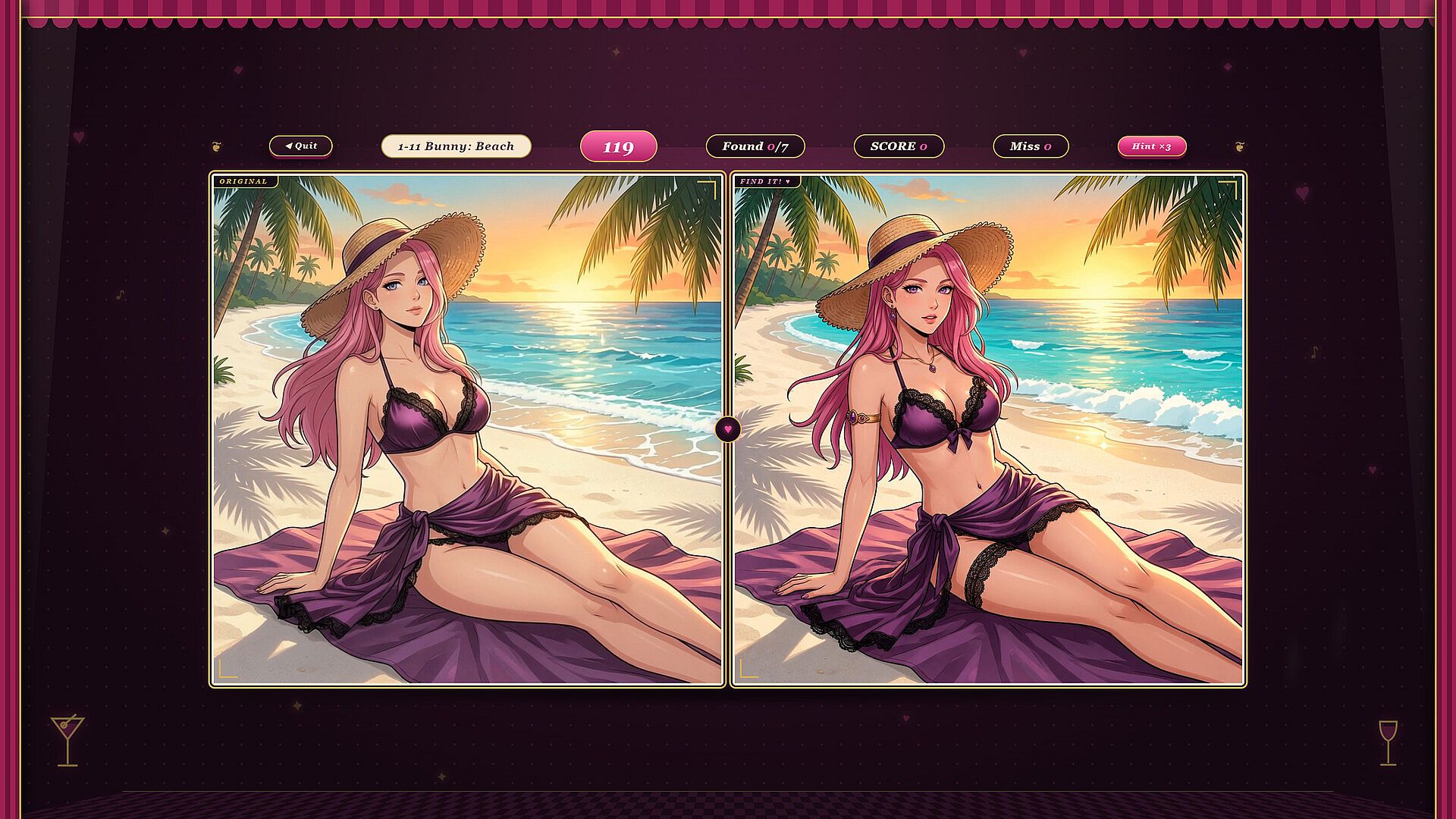









A Kiss Apart is a casual spot-the-difference puzzle game for PC that blends visual observation challenges with a light romantic theme. Players examine paired images of seven women in various settings and identify subtle changes that represent kisses left behind. The experience unfolds across multiple locations under neon lights, with each correct find advancing the interaction and unlocking further content.
Gameplay
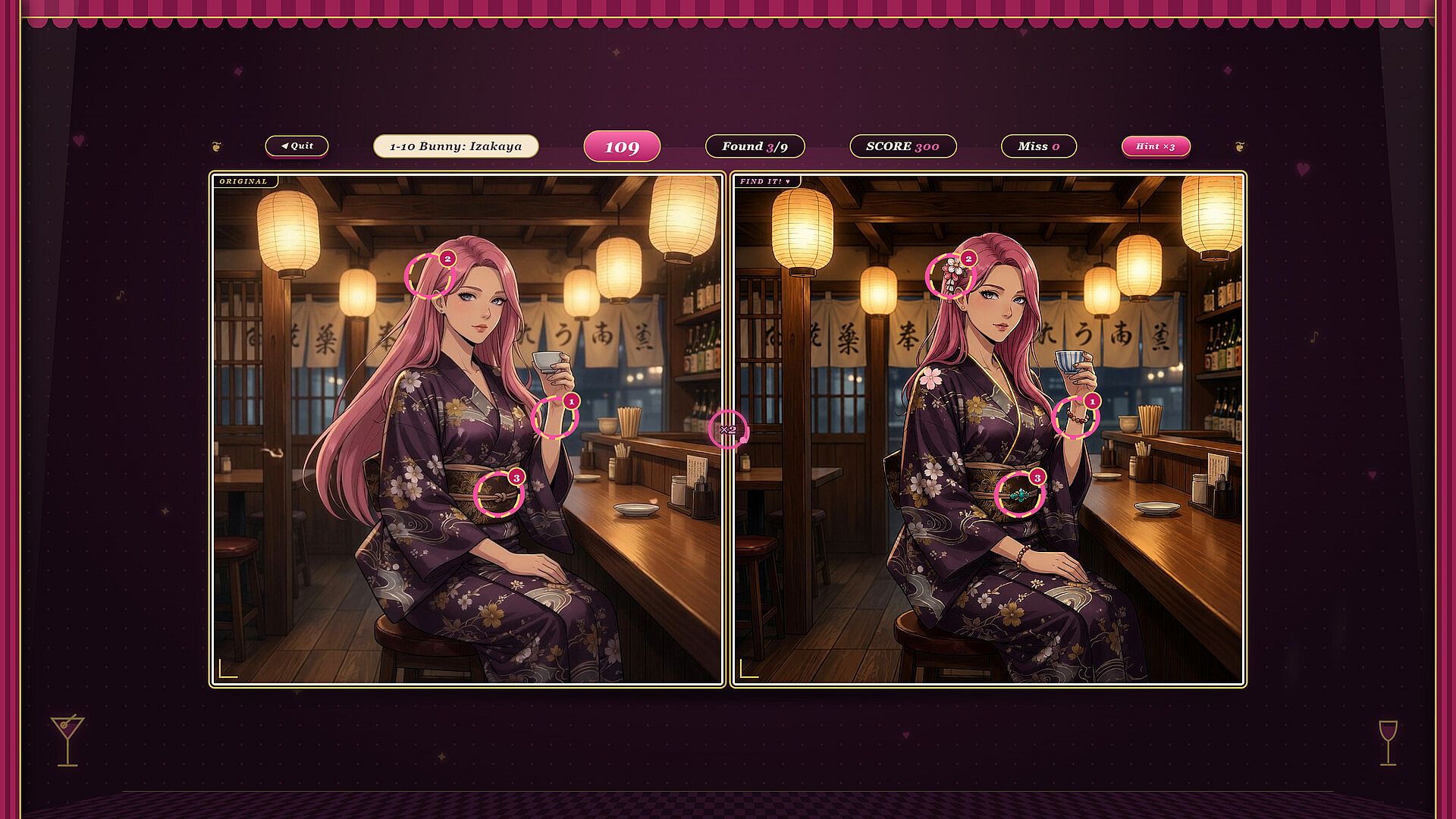
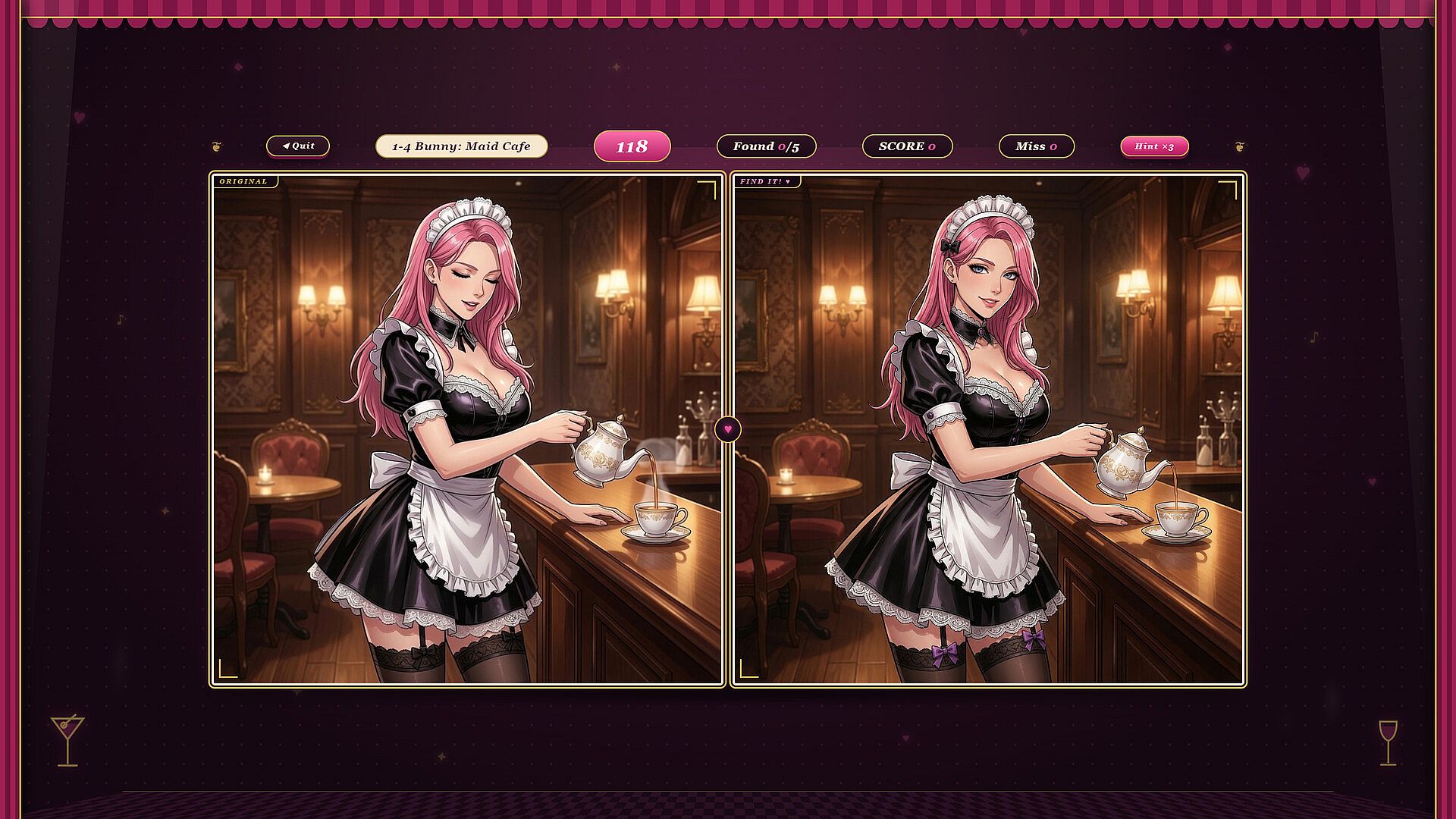
The core loop centers on comparing two versions of a scene side by side. One side shows the woman as she truly appears, while the other contains a set number of alterations. Locating every difference seals it with a kiss mark and progresses the stage. Stages build in complexity, moving from straightforward static images to video sequences where motion adds another layer of attention required. Players must stay focused as elements shift in real time without pausing.
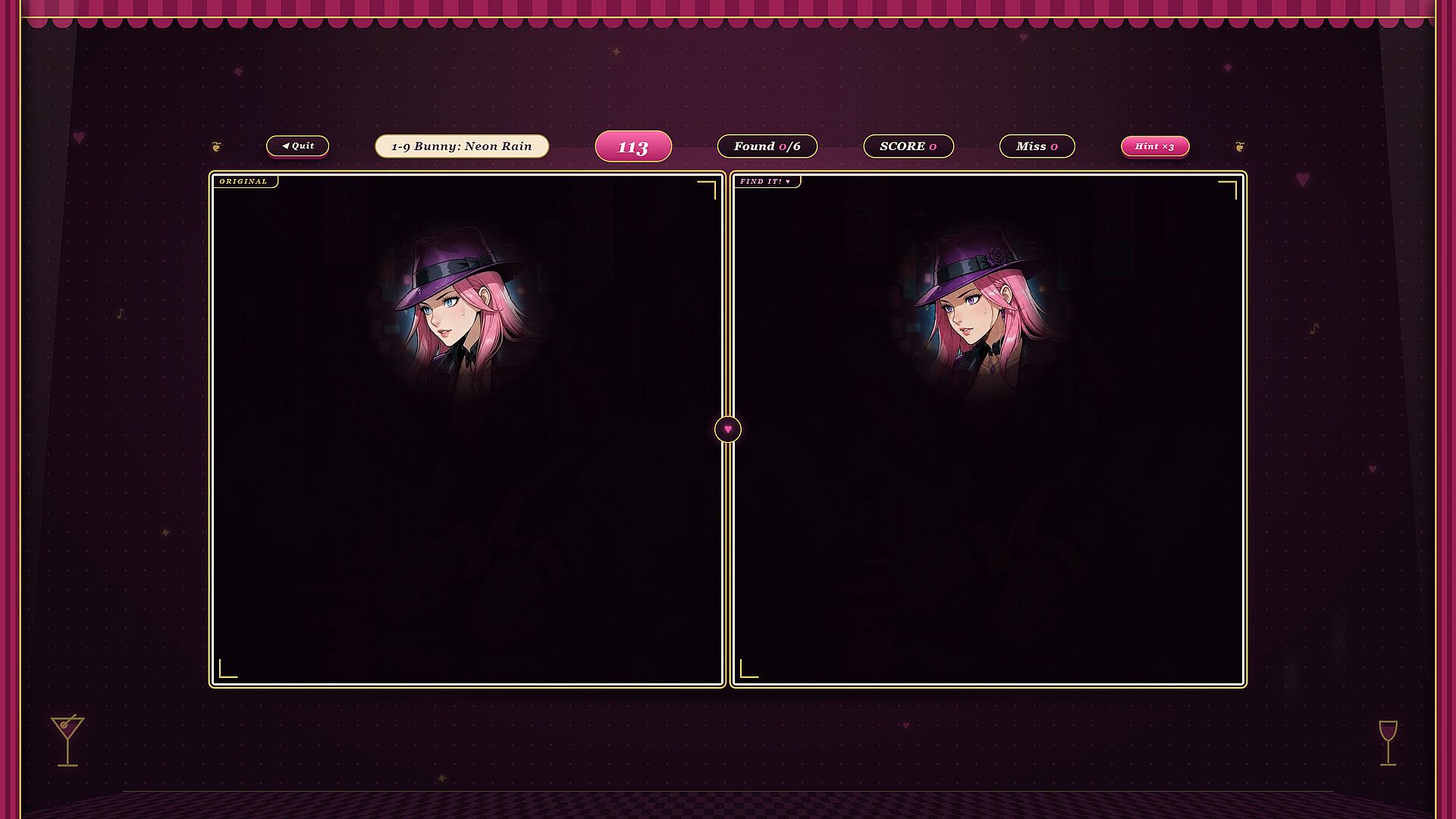
Combo chains reward quick successive finds. A glowing pink ring appears around the next target, and chaining discoveries multiplies the score while triggering pleased vocal responses from the character. Missing a difference prompts a soft pout sound, keeping the feedback immediate and personal. Candlelight mode limits visibility to a single flame that follows the cursor, forcing careful scanning in low-light conditions where details remain hidden until illuminated.
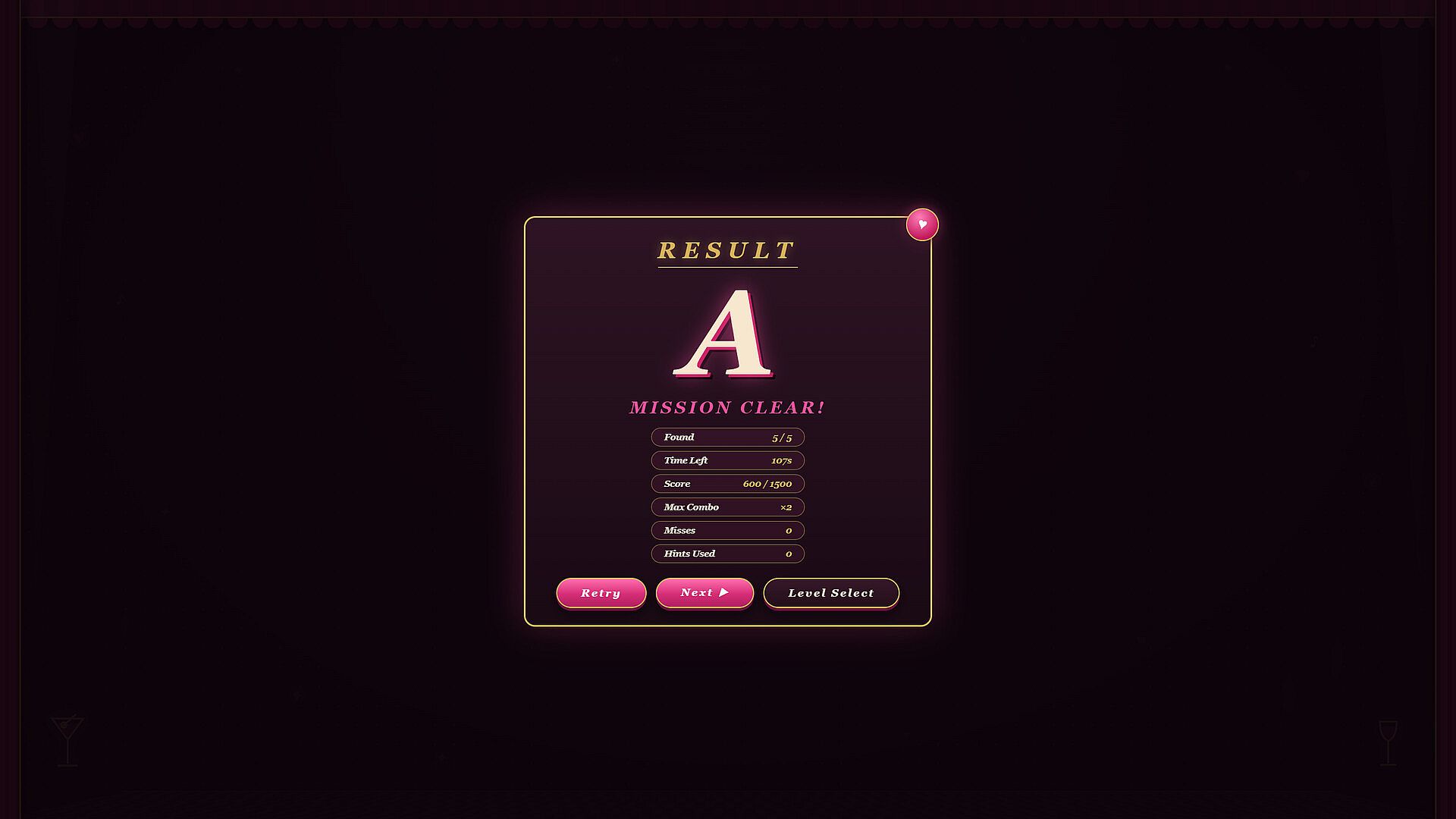
Each session encourages repeated playthroughs because best ranks per stage are recorded permanently. Higher performance opens additional layers of the same scene, and the gallery allows revisiting completed artwork with options to toggle between original, modified, and marked difference views.
Game Modes
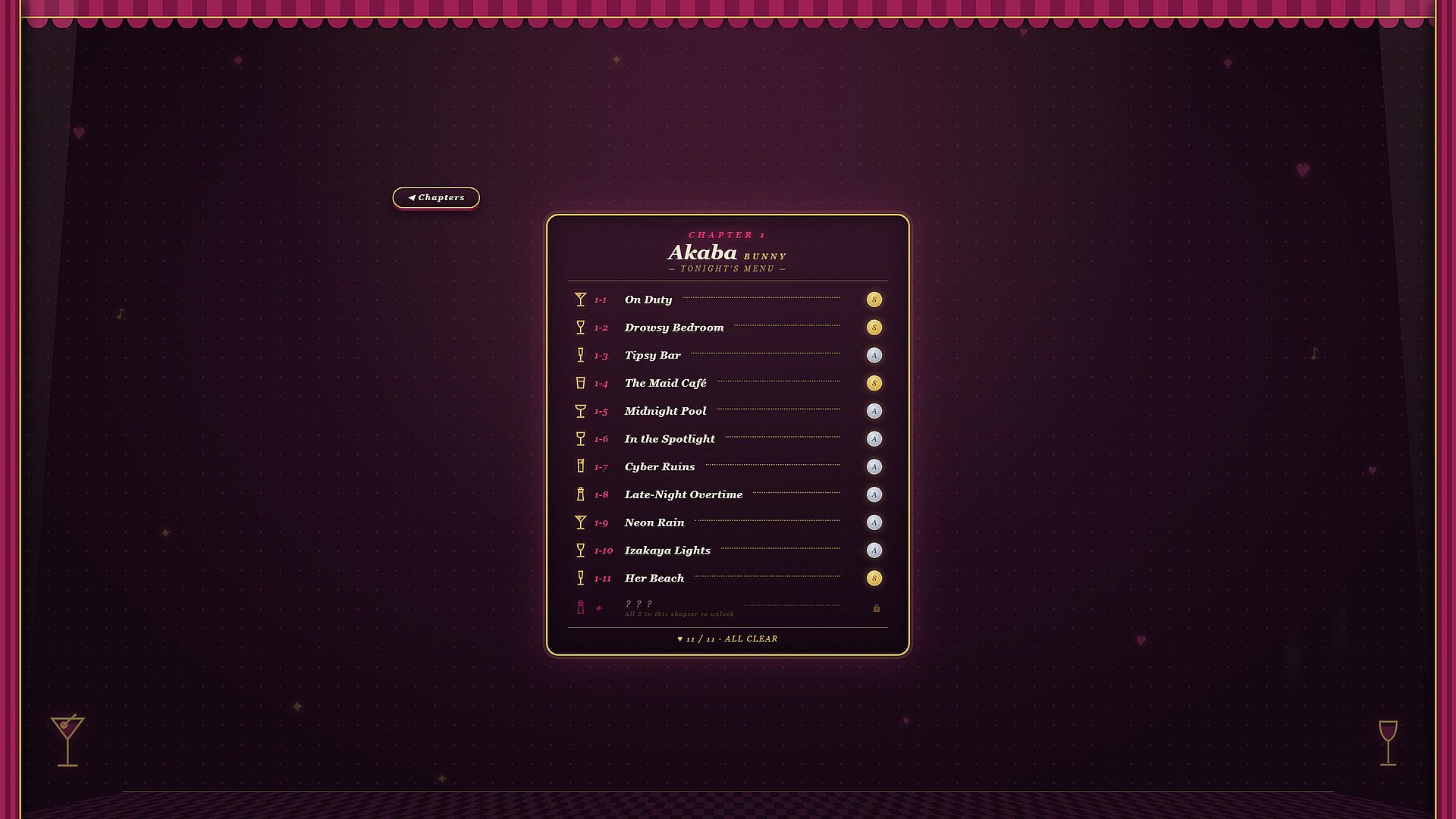
The game structures its content around 84 stages divided among seven ladies, with twelve stages each. These progress from early shifts labeled On Duty through to the final After Hours set, which becomes available only after achieving S ranks across all prior stages for that character. Eleven distinct scenes provide variety, including a bedroom, bar counter, midnight pool, izakaya, and neon rain environments, each rendered in seven stylistic variations tied to the individual women.
Video stages introduce movement into the puzzle format, requiring players to track changes across animated frames. Standard stages remain static but increase in the number and subtlety of differences. The ranking system tracks performance across all attempts, with S ranks serving as the gateway to private After Hours content that reveals a more personal side of each lady.
Characters and Progression
Seven distinct ladies populate the bar setting, each defined by her profession and associated environment. Initial encounters occur in their work contexts, and clearing their full stage sets at the highest rank grants access to exclusive After Hours sequences. Character voices accompany every interaction, delivering short audio cues that reflect success or minor setbacks without interrupting the visual focus.
Progression ties directly to rank achievements. Permanent save data for best performances encourages players to refine their approach on each stage. Once unlocked, the gallery functions as a dedicated viewer for all cleared artwork, supporting toggles that highlight differences or restore the unmodified images for comparison.
Is It Worth Playing?
This title suits players who enjoy deliberate observation puzzles and appreciate a calm, intimate atmosphere built around visual detail. The combination of static comparison, moving video stages, and scoring mechanics through combos creates a focused loop that rewards patience and precision. Audio feedback from the characters adds a layer of personality that reinforces the theme without requiring complex controls or narrative branches.
Availability on PC makes it accessible for short or extended sessions, with the gallery and permanent rank tracking providing reasons to return after initial completion. Those drawn to casual puzzle experiences that incorporate light character interaction will find the structure consistent and self-contained. The game delivers its content through clear mechanical progression rather than expansive systems, making it a straightforward choice for the genre.