




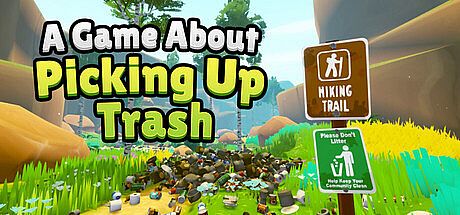


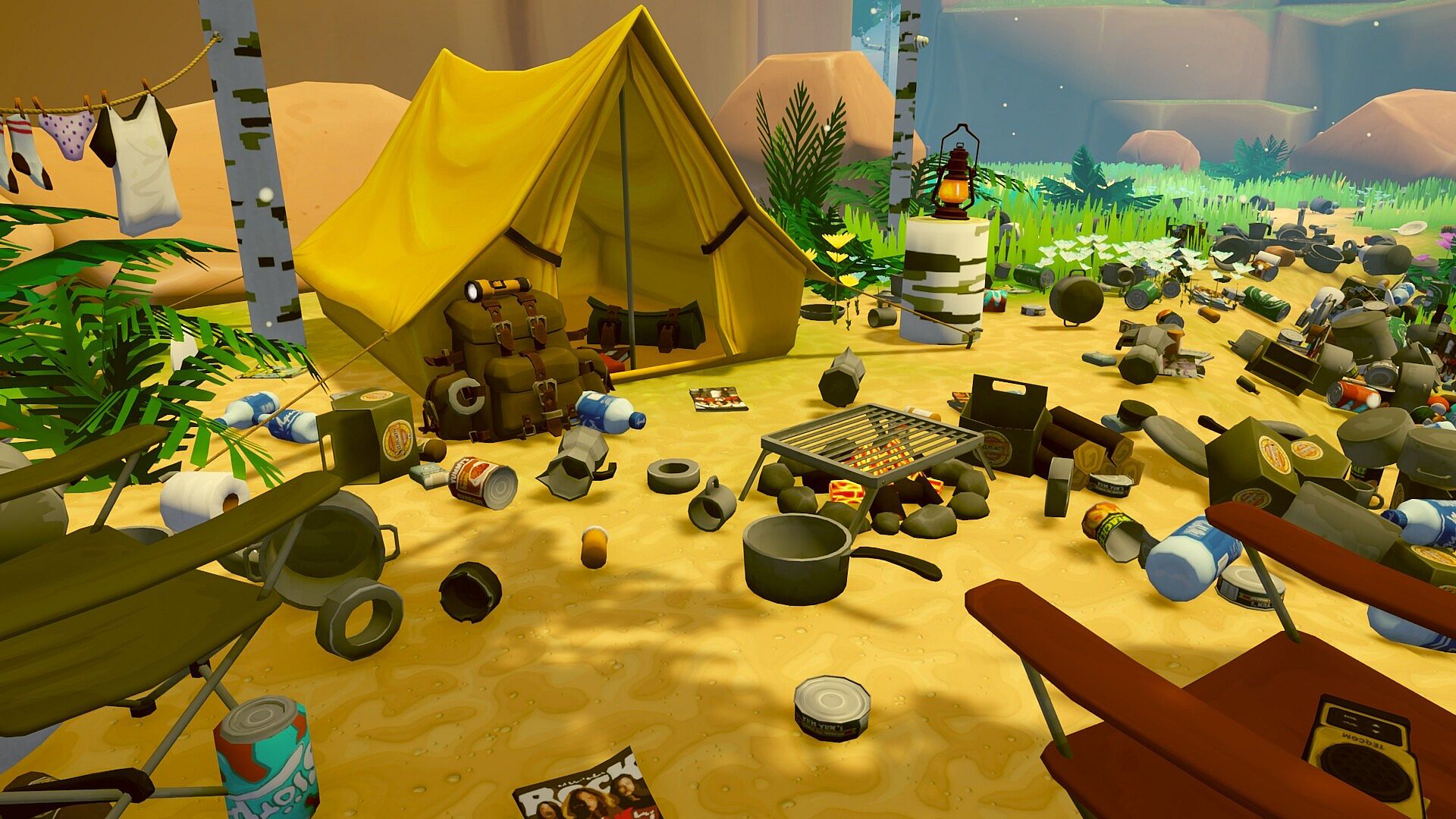
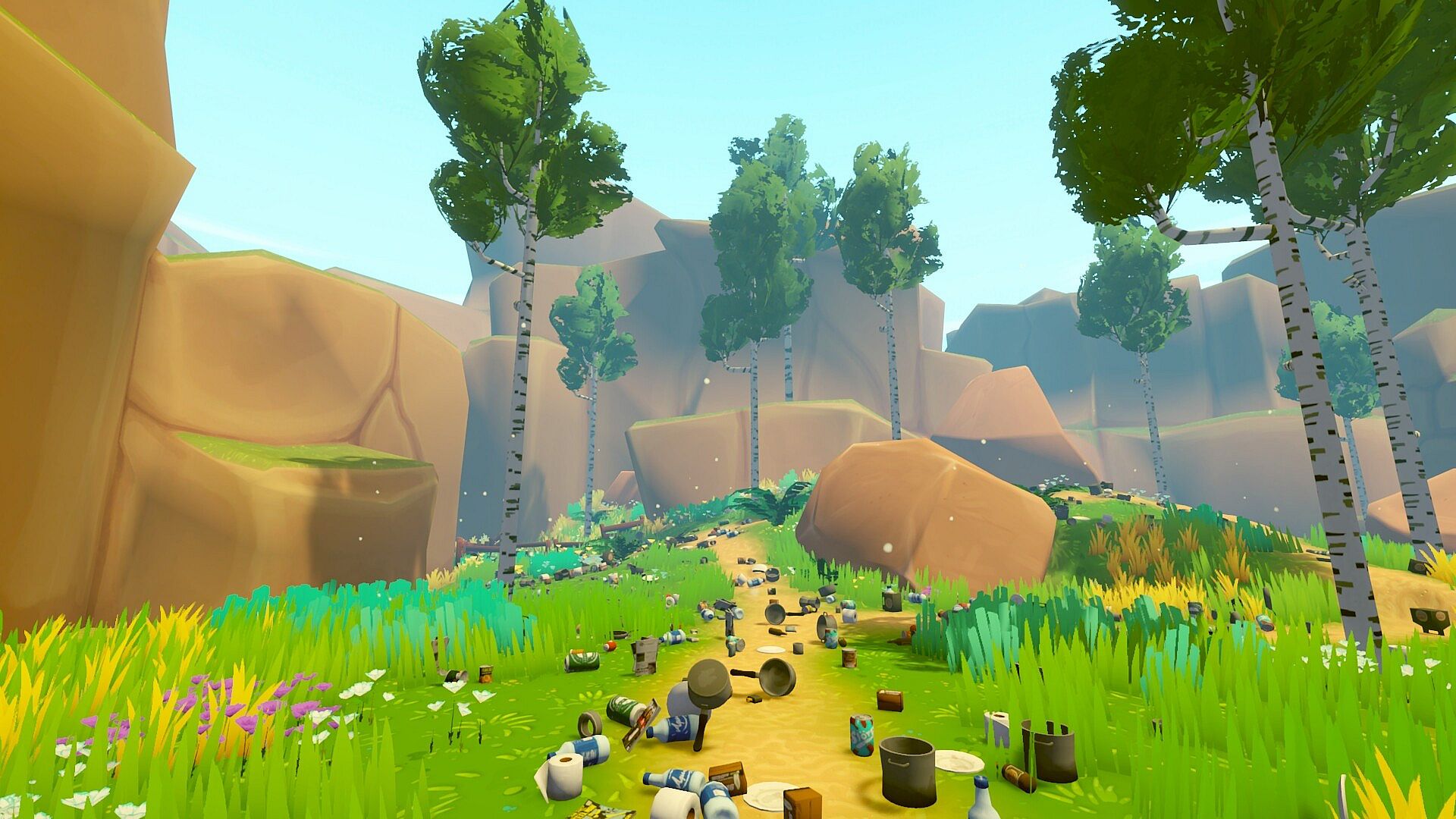
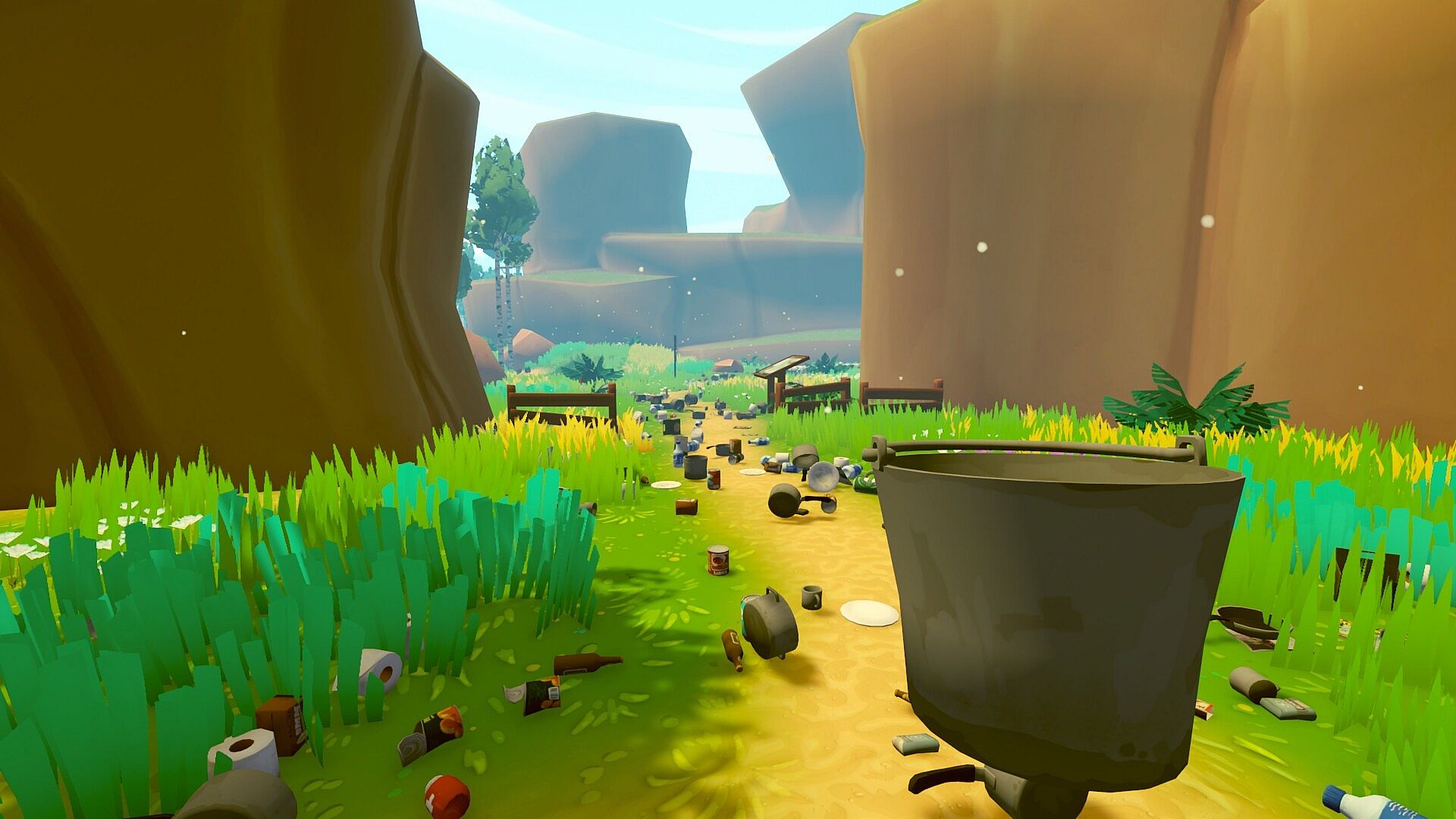
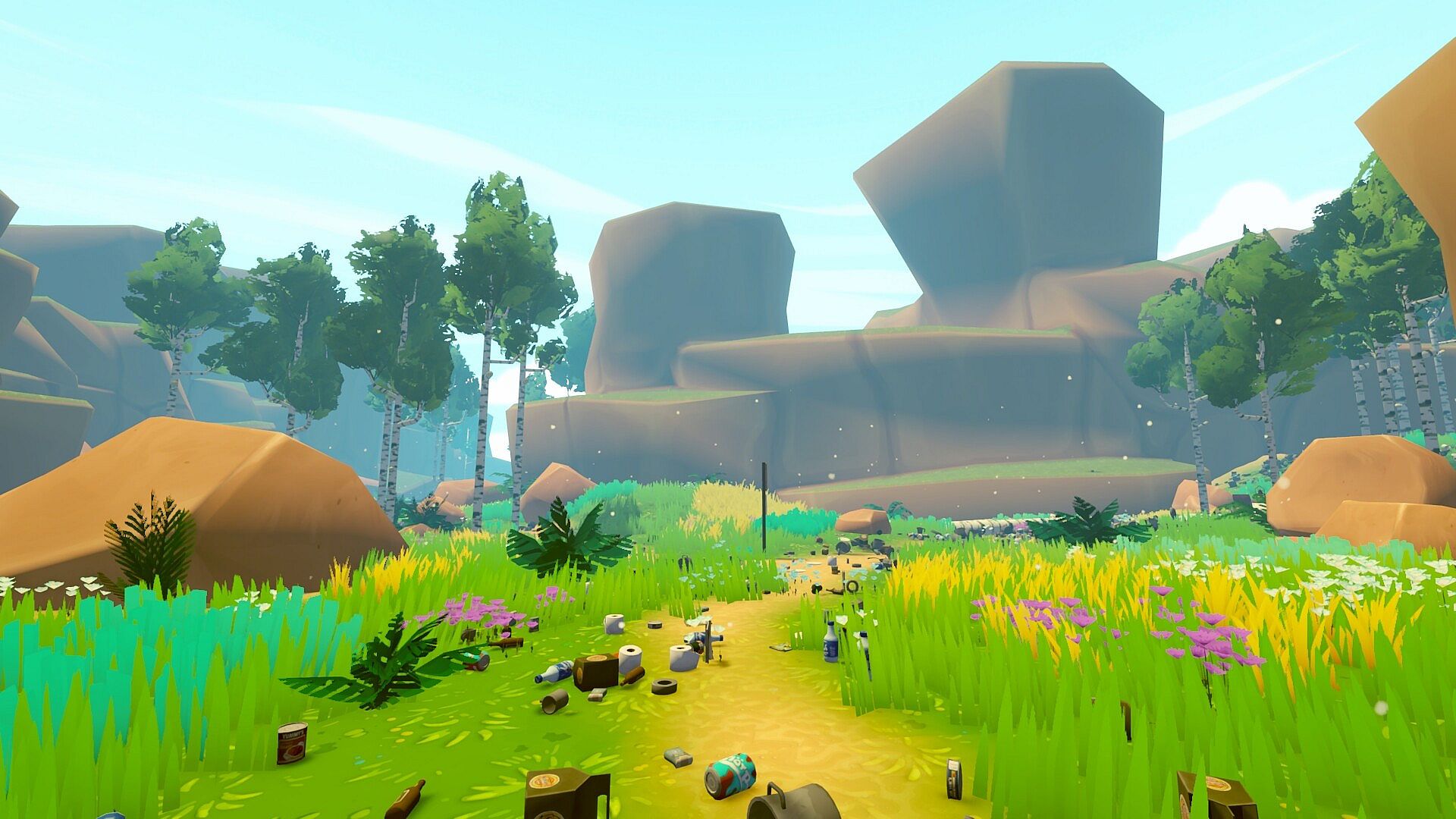
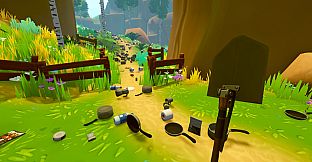
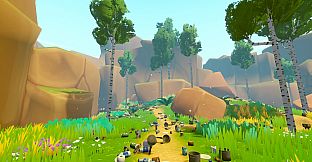
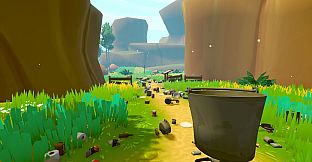
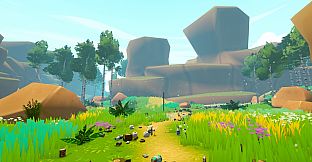
A Game About Picking Up Trash is an indie simulation game centered on restoring a polluted forest through steady trash collection and incremental improvements. Players take on the role of a lone cleaner who begins in limited sections of woodland and gradually expands their reach by gathering litter, refining abilities, and enhancing equipment. The experience emphasizes a calm, self-paced approach where the satisfaction comes from watching the environment recover over time.
Gameplay
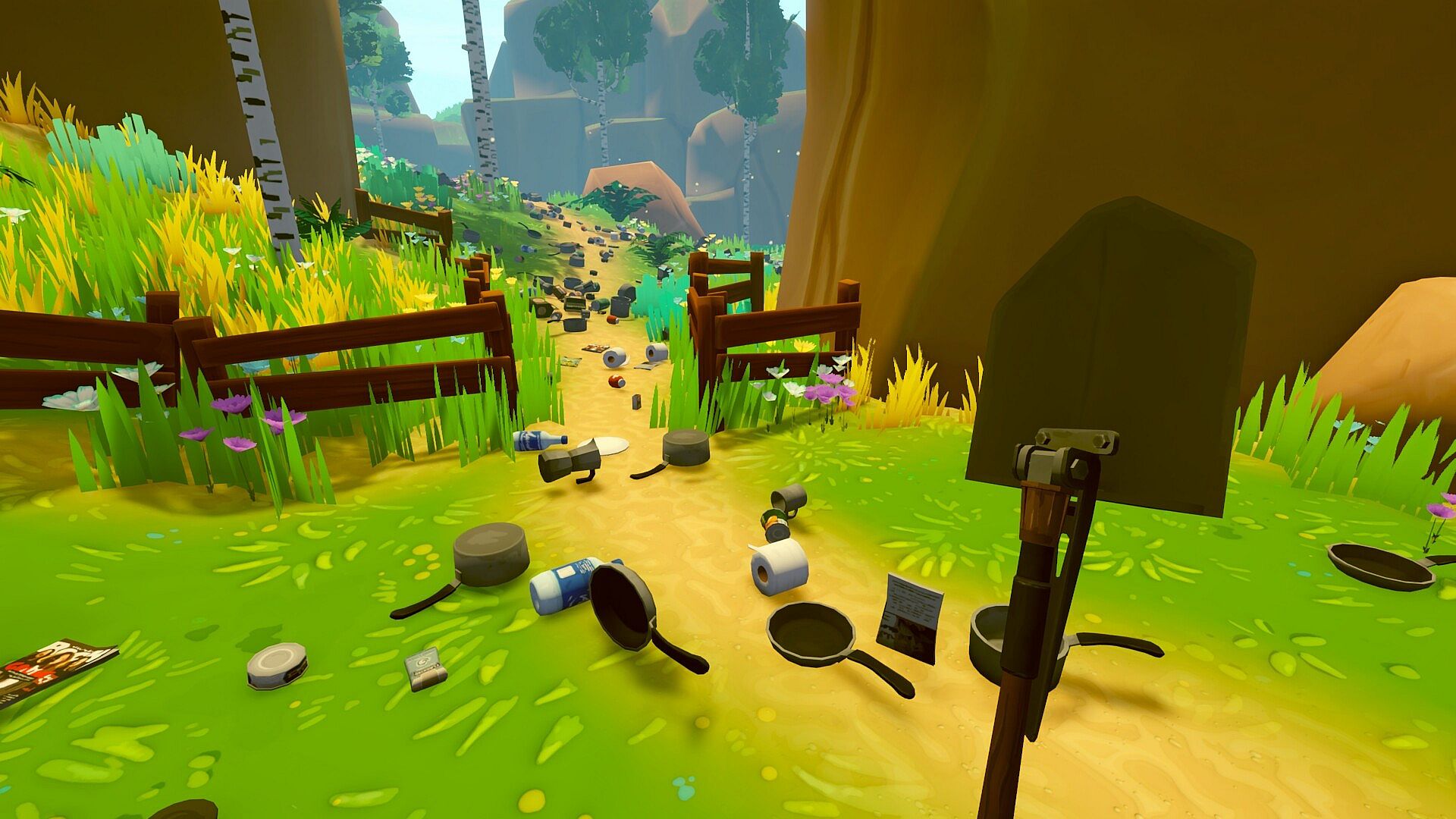
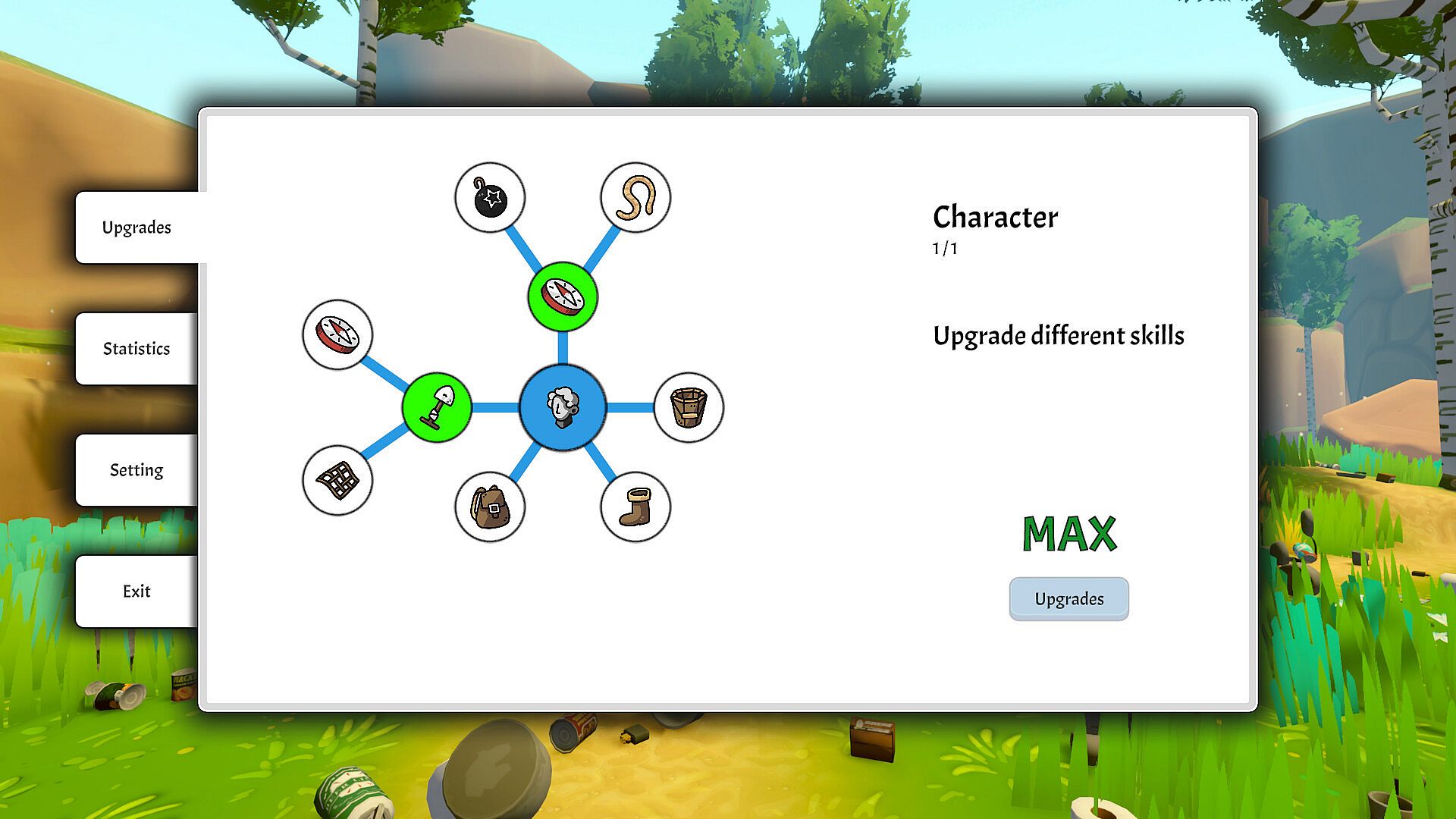
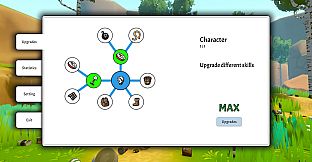
The core loop revolves around exploring forested areas to locate and remove scattered trash items. Early sessions focus on small patches of ground, where manual collection builds familiarity with the terrain and the types of debris present. As progress continues, players allocate effort toward skill upgrades that increase efficiency, such as better carrying capacity or faster movement, alongside tool enhancements that allow quicker or more thorough cleanup in tougher spots. The process encourages deliberate pacing, with no timers or pressure, so attention stays on the gradual transformation of each cleared zone into a cleaner natural space.
Mechanics center on repeated collection cycles that feed into upgrades, creating a steady rhythm of work and reward. Larger areas open up only after sufficient cleanup in prior sections, which ties advancement directly to the results of prior efforts. This structure keeps the focus on observable changes in the forest rather than complex systems or external objectives.
Game Modes
The game operates entirely in a single-player format with no separate modes or variations listed. All activity takes place within the same forest restoration framework, where players control the order and speed of their work. There are no competitive, cooperative, or alternate scenario options confirmed at this stage, leaving the experience centered on solitary, uninterrupted sessions of collection and improvement.
Progression and Tools
Advancement comes through a combination of skill development and tool refinement that directly impacts how much ground can be covered. Initial limitations give way to more capable setups as players invest in upgrades, allowing access to previously out-of-reach sections. The emphasis remains on efficiency gains that make larger-scale cleanup feel achievable without altering the fundamental relaxing nature of the task. Visual feedback from cleared areas reinforces the sense of steady accomplishment built over multiple sessions.
Is It Worth Playing?
This title suits players who enjoy low-pressure simulation experiences focused on incremental environmental restoration. The single-player structure and emphasis on personal pacing make it a fit for those seeking a meditative activity rather than high-stakes challenges or social elements. With a planned 2026 release and no reviews available yet, interest depends on appreciation for the described loop of collection, upgrades, and visible forest recovery. Those drawn to similar relaxing indie simulations may find the straightforward mechanics and calm atmosphere appealing once it launches.











