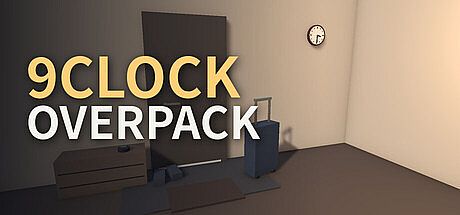


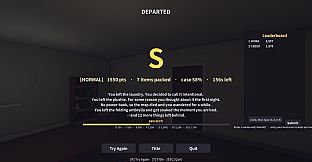
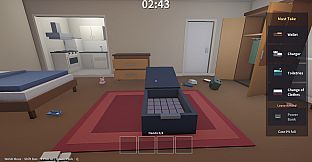
9Clock OverPack is a casual indie packing puzzle game for PC that challenges players to fit belongings into a suitcase before time runs out. The core experience revolves around quick decisions under pressure, where every item has a specific shape and the available space never quite matches what needs to go inside. Runs last three minutes each, after which a results screen reveals how the choices played out in a story of what got left behind.
Gameplay
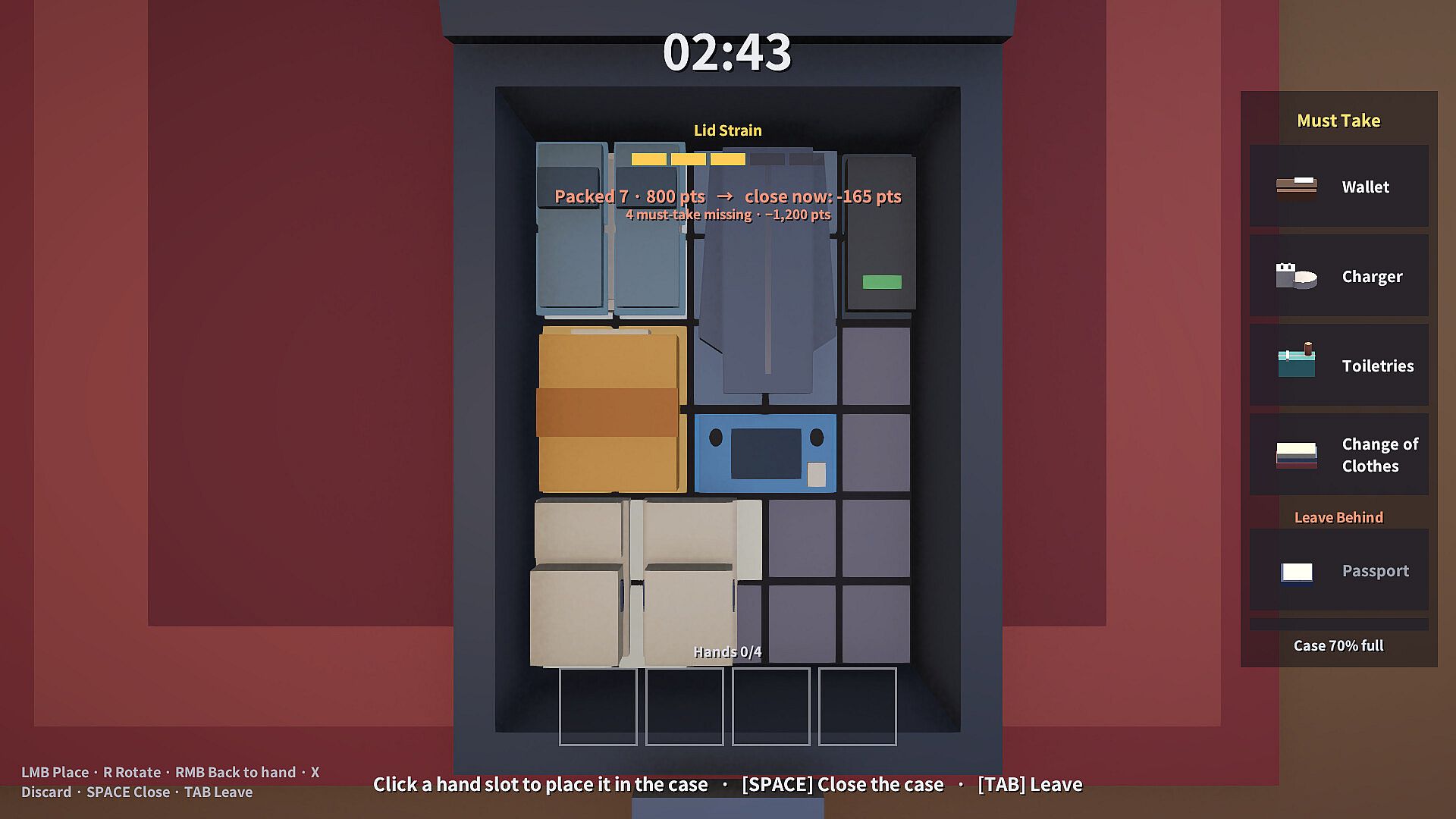
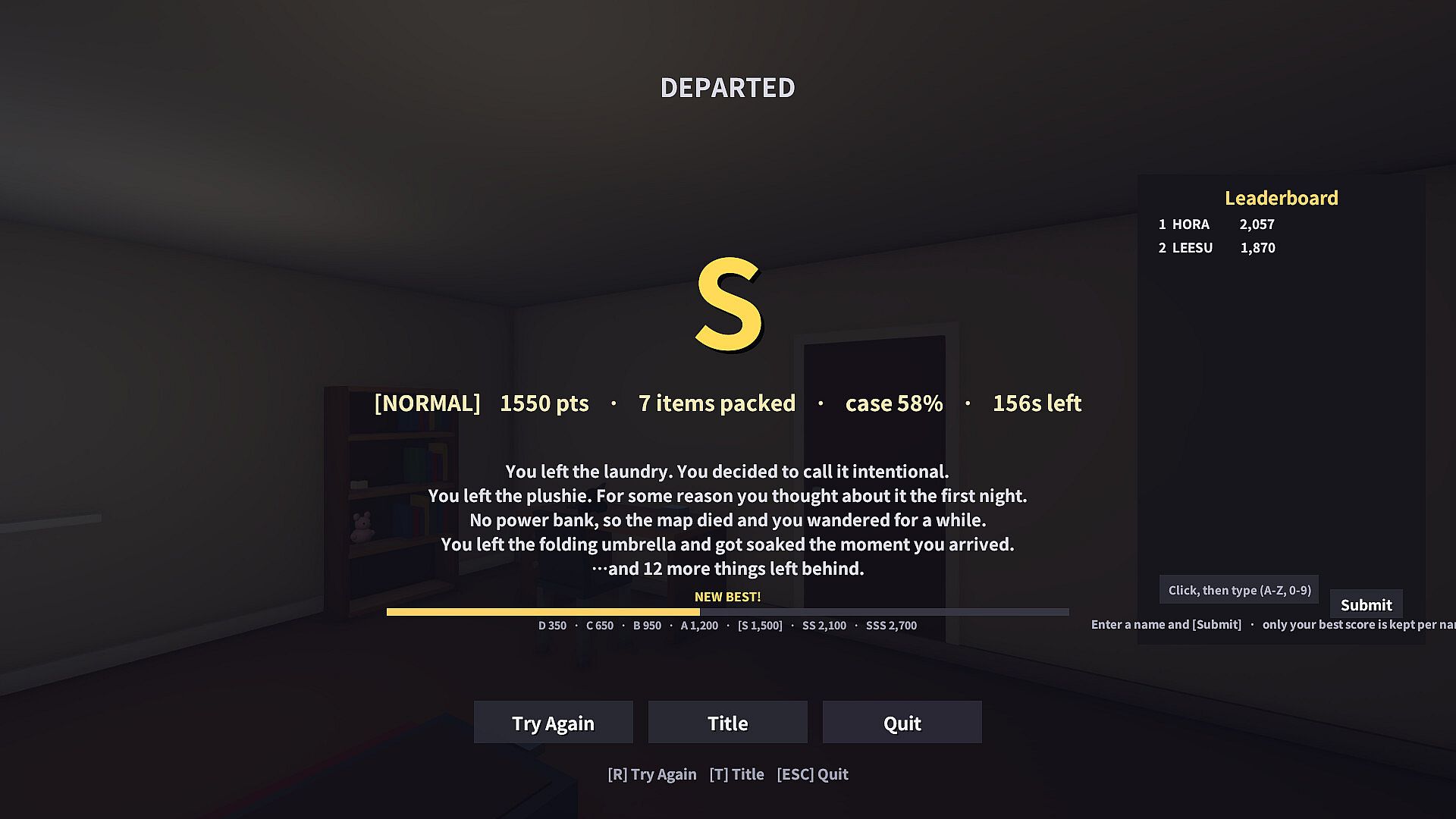
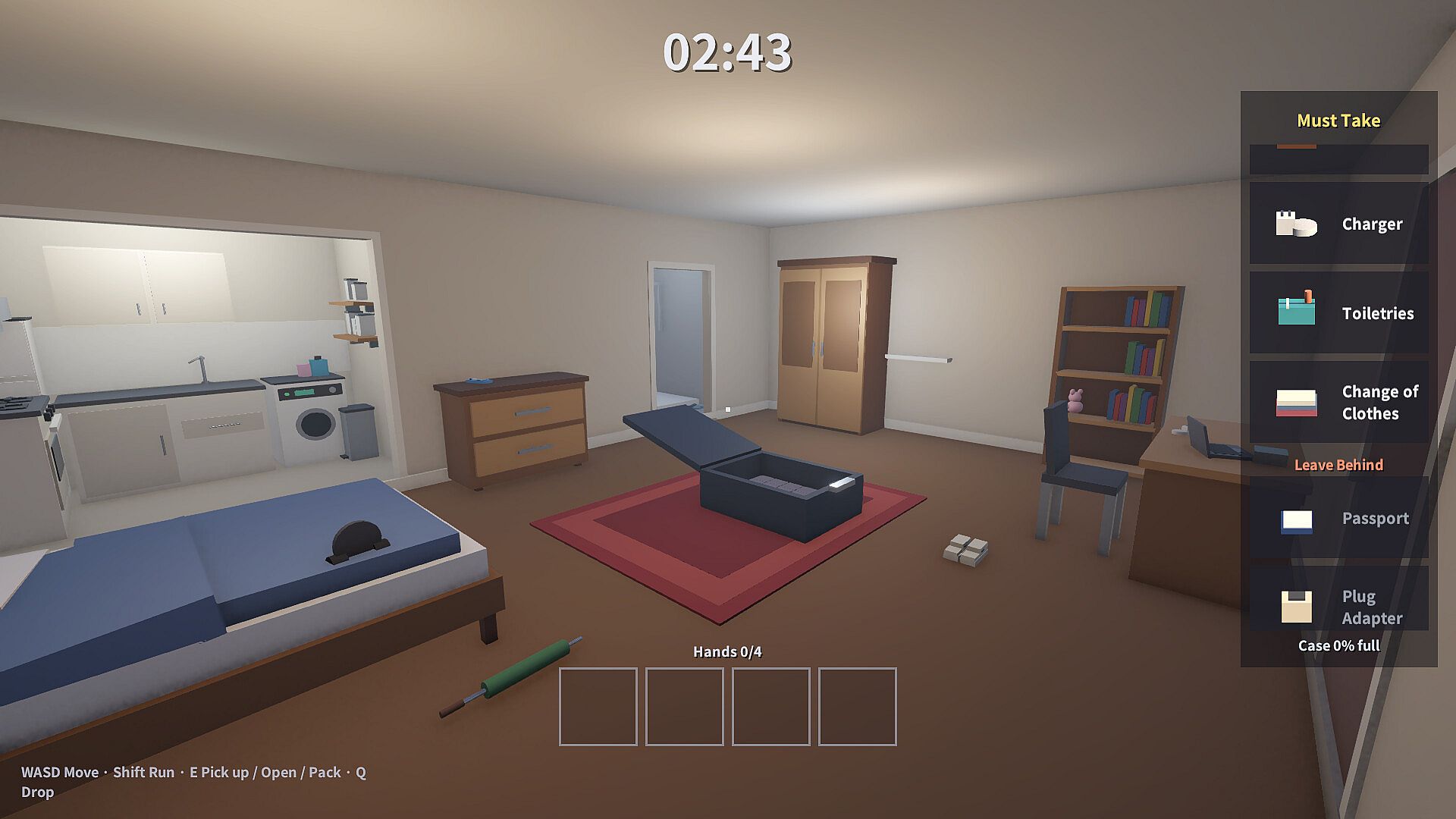
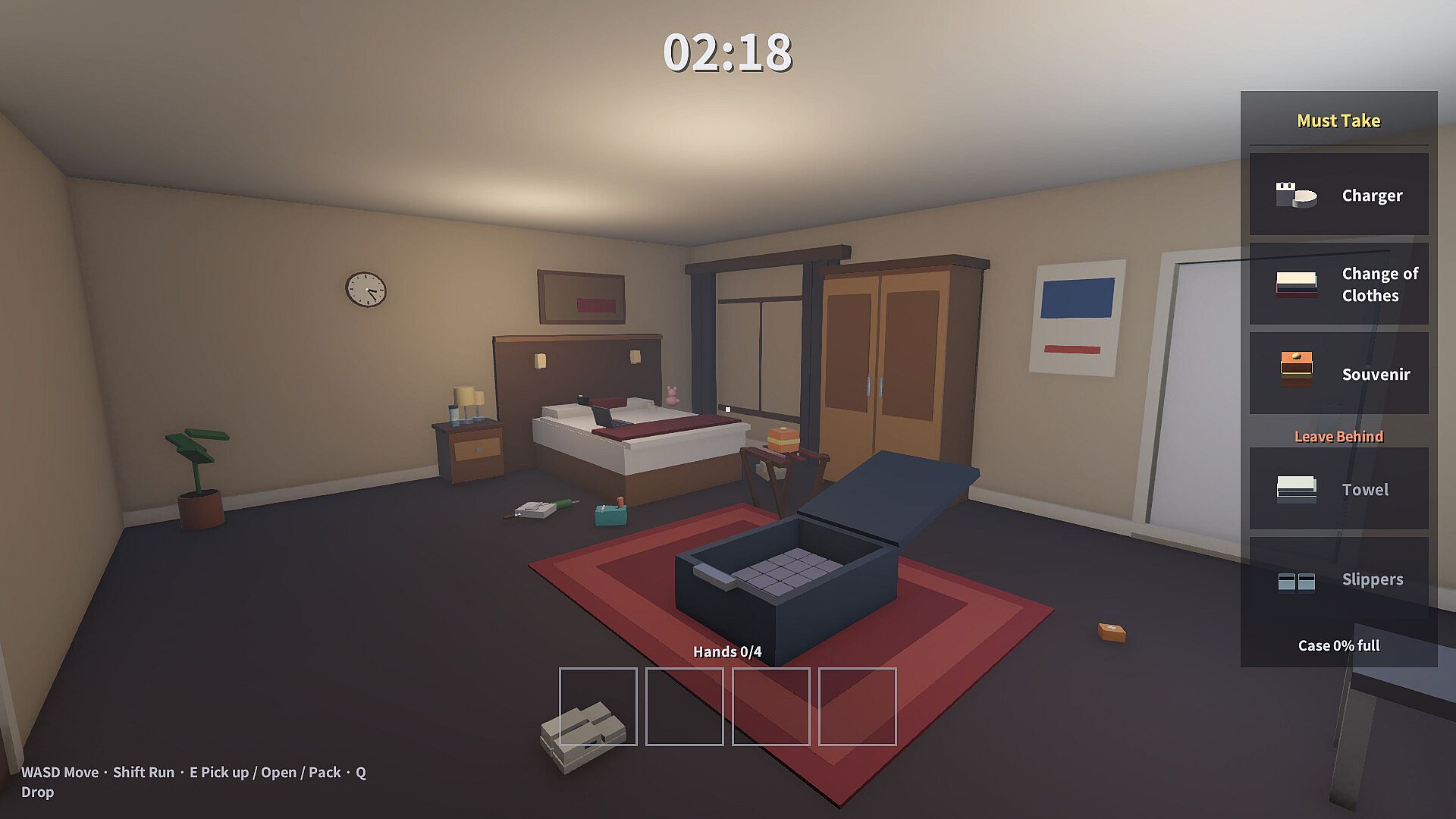
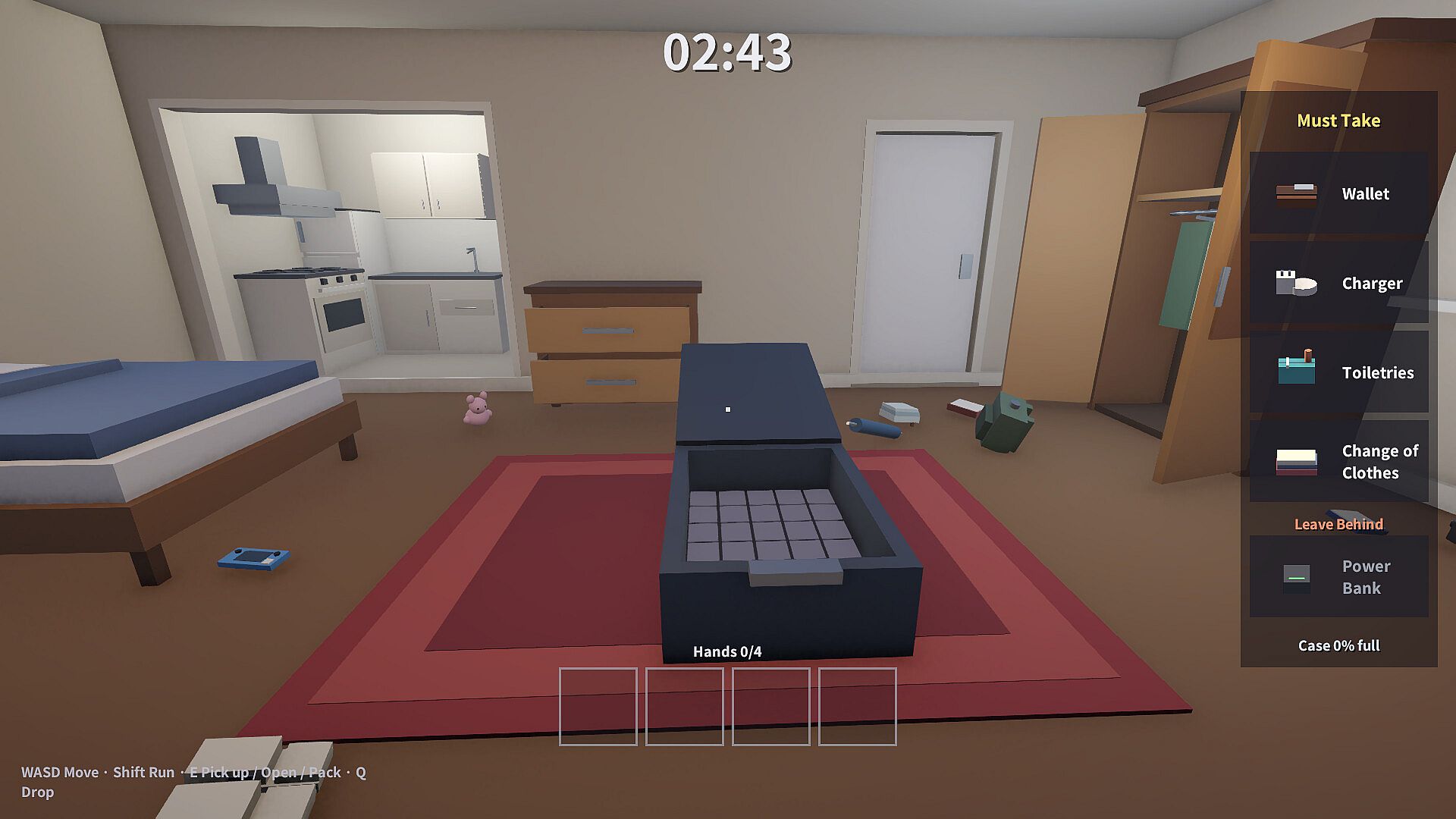
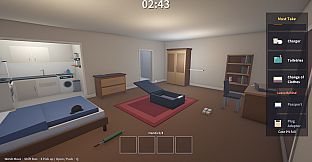
The central loop puts players in a room that starts in disarray. Objects shift positions when touched, drawers sit open, and the environment itself shakes without warning. This built-in chaos turns each attempt into a fresh puzzle even when the time limit stays the same. Items must be rotated, stood upright, or laid flat to find any workable arrangement, yet one slot always seems to remain short. The player decides which belongings to abandon, and those omissions directly shape the outcome shown on the results screen. A charger left behind might leave a phone at three percent battery, while a map and ticket forgotten together could strand the traveler entirely. Points accumulate based on successful packing, but the narrative feedback emphasizes the practical consequences of every rushed choice.
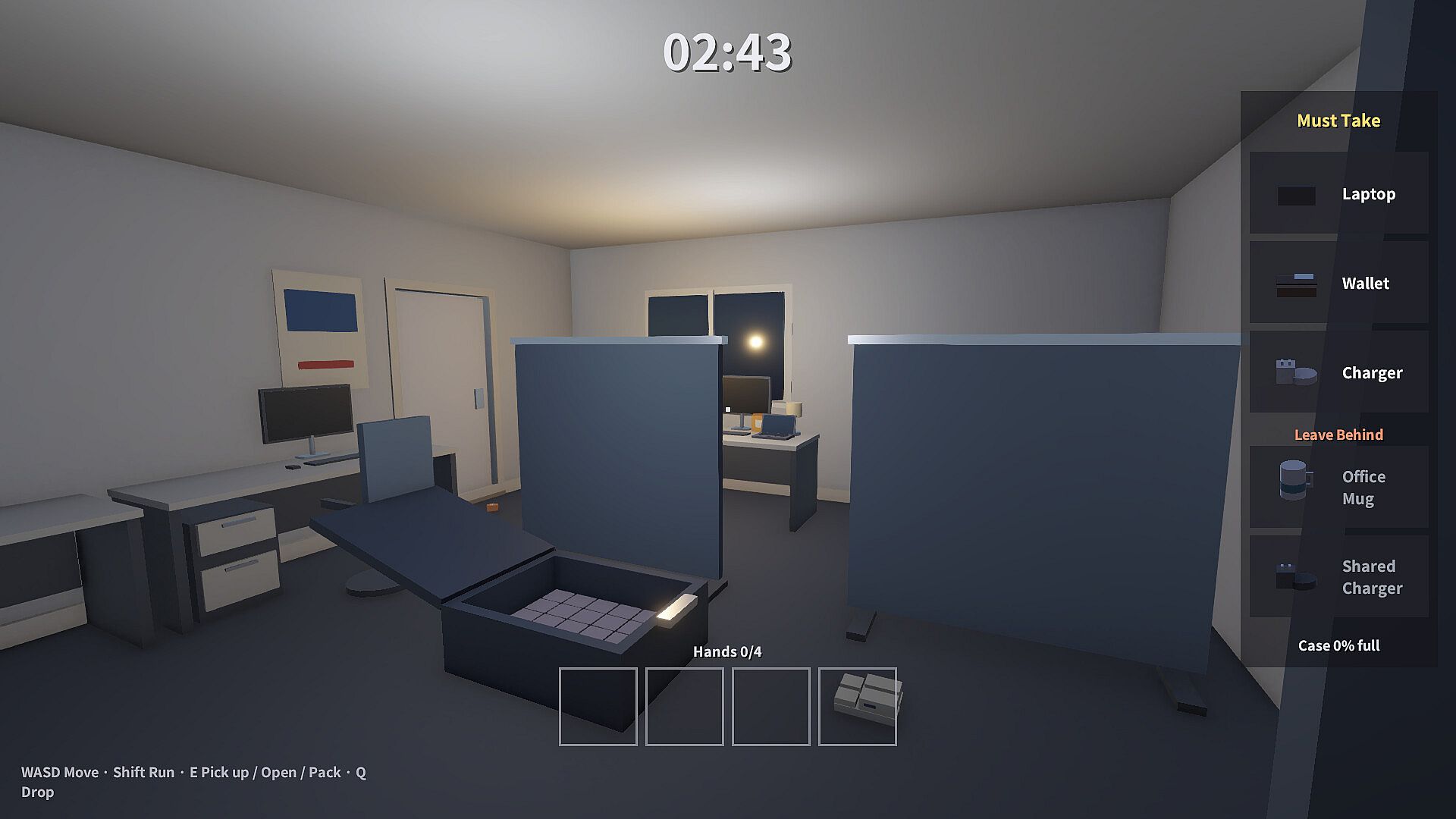
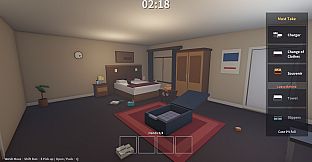
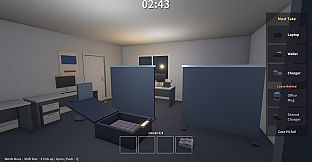
Visual similarity between needed items and penalty items adds another layer. A hotel towel or borrowed office charger looks ordinary yet deducts points when taken. In the hurry of the moment, instinctive grabs can cost the run. The same three-minute window plays out differently each time because furniture rearranges and objects behave unpredictably. Scores range from D to SSS, with an online leaderboard tracking top performances across repeated attempts.
Game Modes
The game presents three distinct time-of-day scenarios that alter the stakes without changing the fundamental three-minute structure. At 9 AM the focus is catching a train from home, where missing departure carries clear travel consequences. Checkout at 9 requires clearing a hotel room before the front desk follows up, introducing pressure from external timing. The 9 PM office scenario demands departure before lights shut off, shifting emphasis toward avoiding being locked in after hours. Each setting keeps the core packing challenge intact while the surrounding context changes what feels most urgent. Procedural layout shifts ensure that no two runs in the same scenario feel identical, as objects and furniture move to new positions between attempts.
Core Mechanics and Scoring
Every item carries both a physical shape constraint and a point value tied to whether it belongs in the suitcase. Players rotate and reposition objects repeatedly, testing combinations until the three minutes expire. The results screen then translates raw numbers into a short account of how the trip unraveled, turning abstract scores into concrete stories of forgotten essentials. Leaderboard competition encourages repeated runs, with the SSS grade representing the highest level of efficient packing under the chaotic conditions. The system rewards both spatial problem-solving and quick recognition of which items can safely stay behind.
Is It Worth Playing?
Players who enjoy short, repeatable puzzle sessions with a strong emphasis on spatial reasoning and consequence-driven feedback will find the experience engaging. The consistent three-minute runs support quick sessions while the procedural changes and multiple time-of-day contexts provide variety without requiring long commitments. The grading system and online leaderboard add a competitive element suited to casual play. Those seeking deeper narrative or complex progression systems may find the focus narrower, yet the direct link between packing choices and story outcomes gives each attempt meaningful weight. The game suits anyone comfortable with indie casual titles that prioritize tight mechanical loops over expansive content.