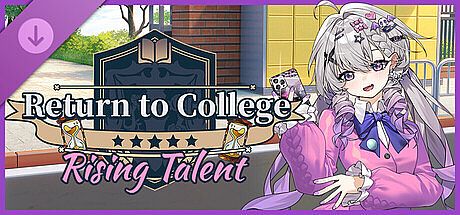



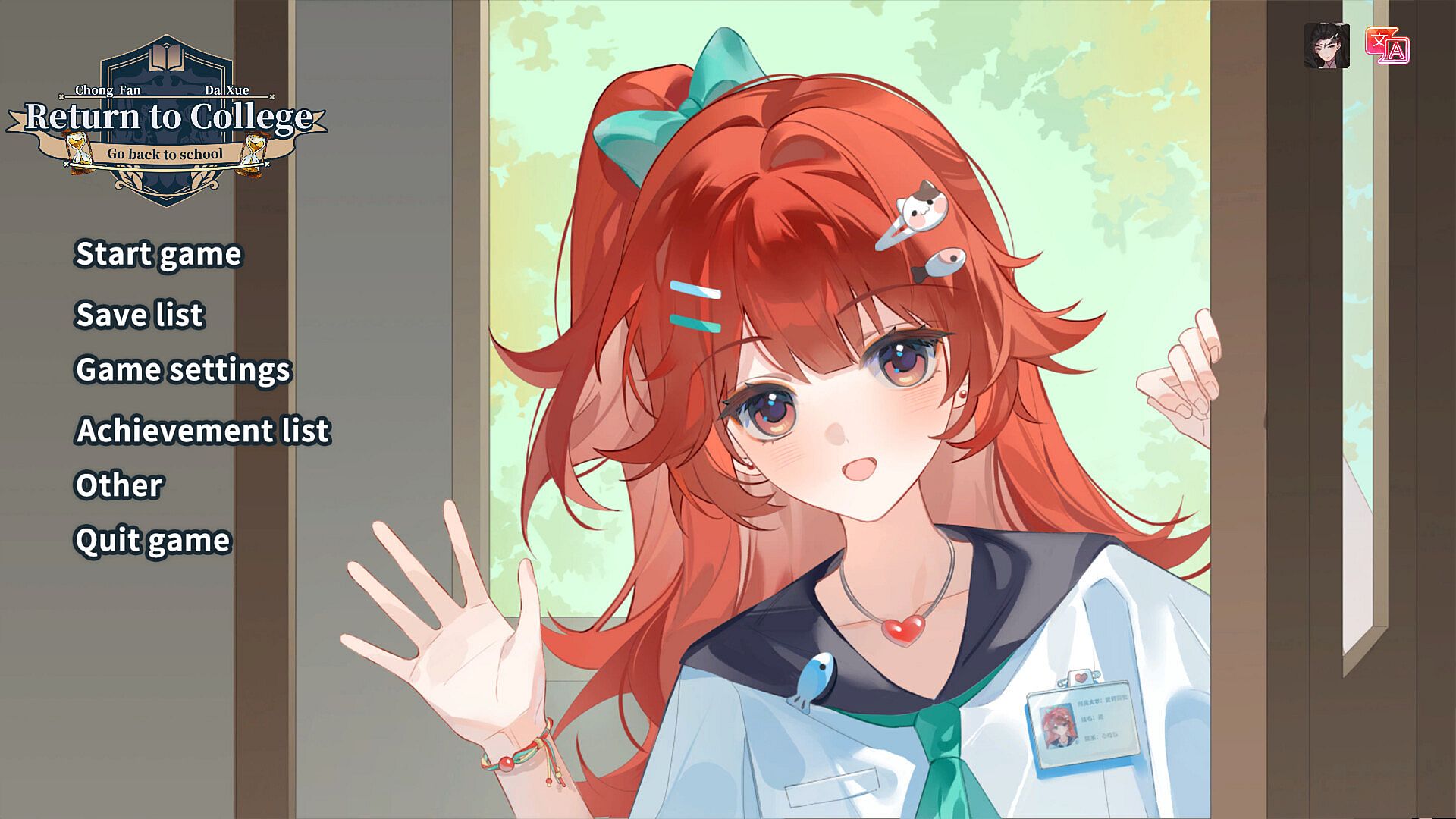
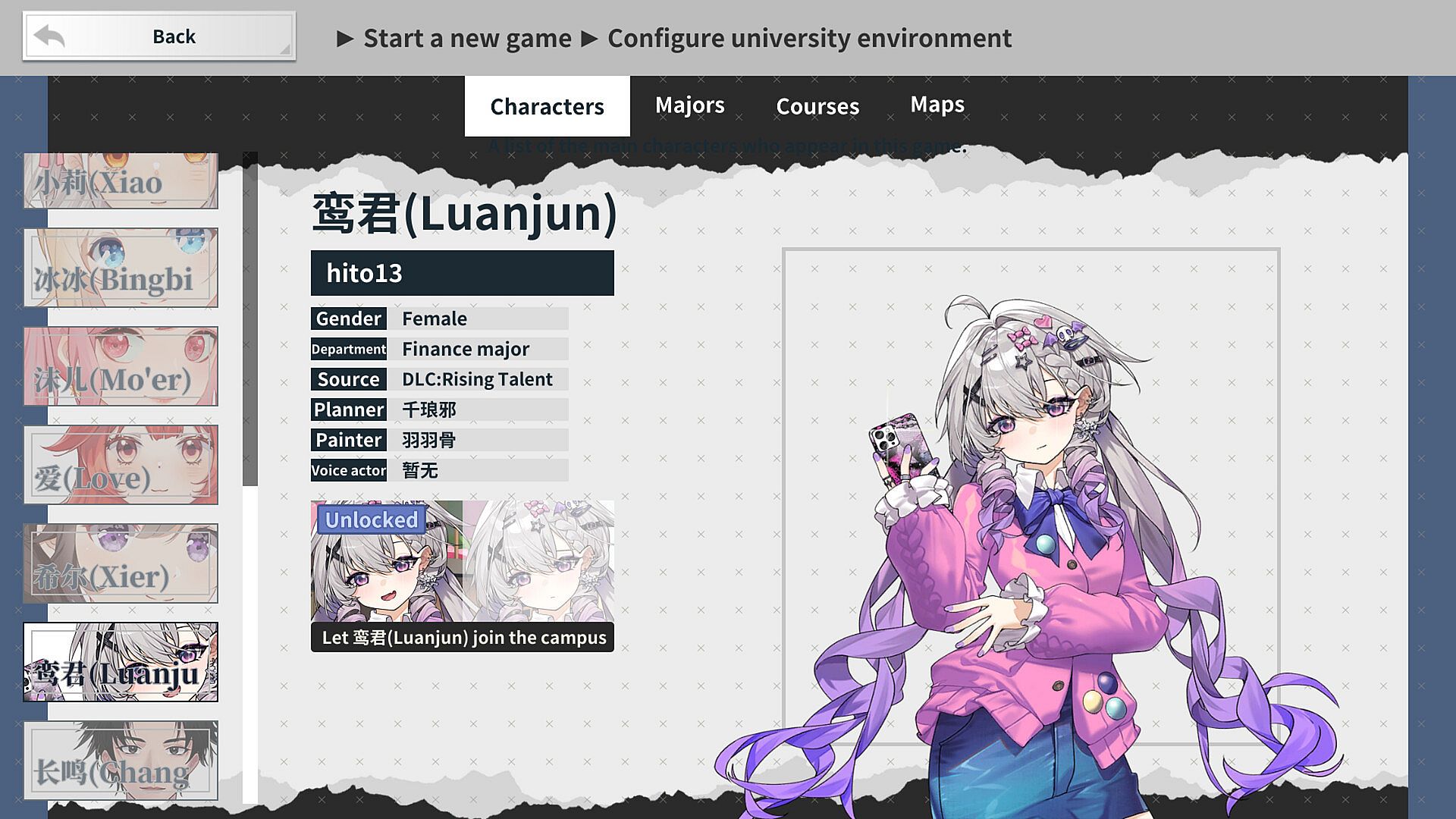
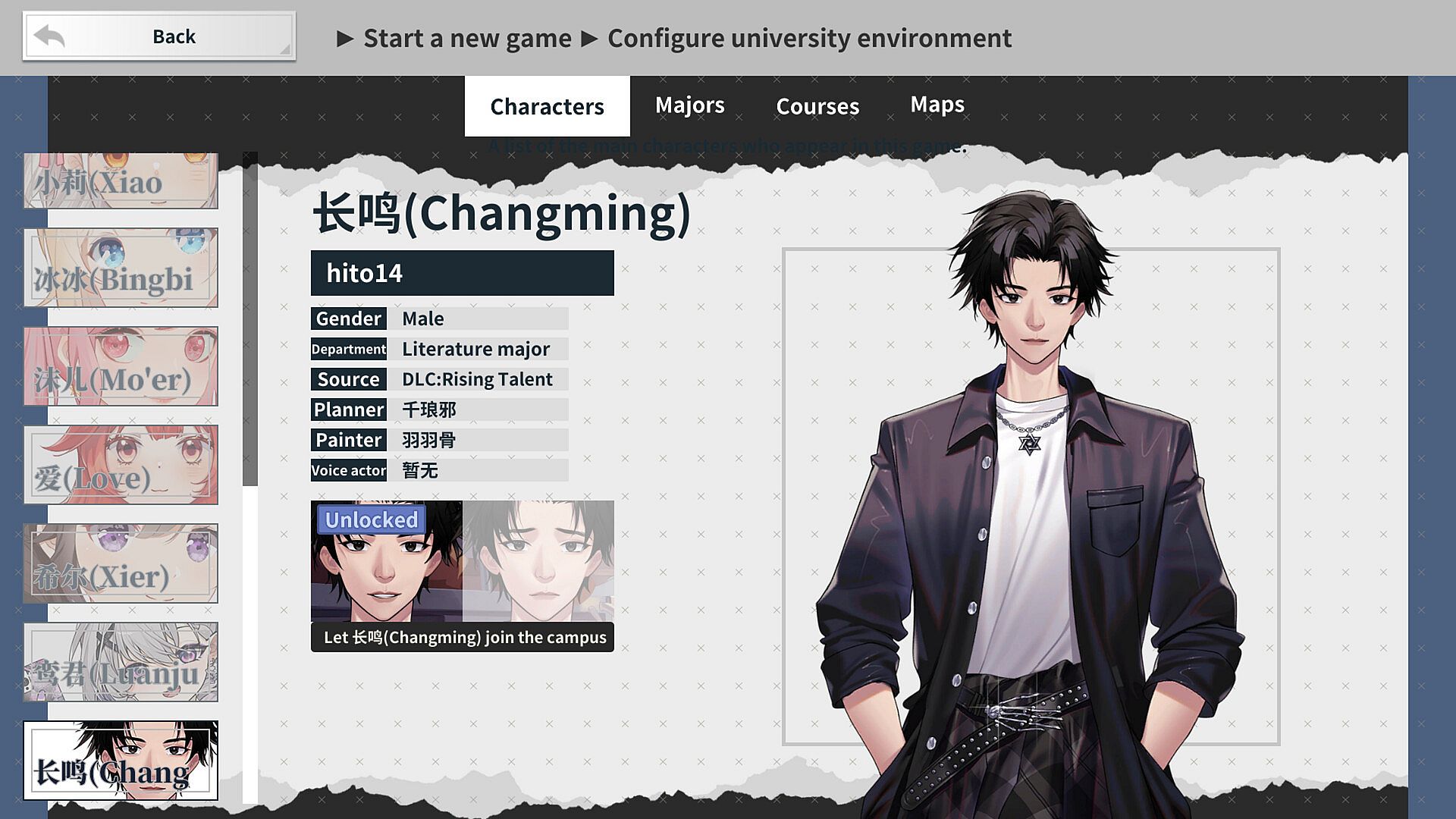


Return to College: Rising Talent is a single-player RPG, casual, and simulation title set on PC. Players take control of a protagonist caught in a university time loop, navigating semesters filled with classes, exams, social interactions, and personal choices that shape multiple story outcomes.
Gameplay
The core loop centers on managing time across four semesters, each offering eight weeks of free periods alongside required classes and examinations. Players select either a male or female lead at the start and engage with twelve primary characters plus thousands of supporting ones through conversations, activities, and relationship building. Daily routines include attending lectures from a pool of 485 courses, completing part-time job mini-games, and participating in over twenty interaction options such as reading, exercising, shopping, or joining clubs.
Progression involves balancing academic performance with social dynamics. Relationships develop across more than twenty states, from acquaintance to rival or secret crush, influenced by six possible attitudes. Choices during interactions and exams lead to varied endings for each main character, which in turn affect a final graduation score and unlock different post-loop scenarios like pursuing further studies or entering specific careers.
The Rising Talent update expands this foundation with two additional main characters, a new Club system for organized group activities, fourteen story expansions, five new dishes, and four new crafts. Players earn Academy Coins through regular play to access card packs that introduce rare surnames, increased weekly living expenses, and further narrative branches. A dynamic main menu background with effects activates on launch, providing visual variety each session.
Game Modes
The experience remains focused on a single-player narrative simulation without separate competitive or multiplayer modes. Instead, variety arises from player-driven approaches to the time loop: emphasizing academics through course selection and exam preparation, prioritizing social connections via repeated interactions and confessions, or exploring part-time work and mini-games for resources and variety. The Club system introduced in the update adds structured group elements that integrate into the existing semester structure.
Story outcomes branch based on accumulated choices, relationships, and performance metrics rather than predefined difficulty settings. All content unfolds within the looped university environment, where day-night cycles and scene variations across twenty-four locations support repeated playthroughs aimed at different endings and graduation results.
Key Systems and Features
Core mechanics revolve around time management and decision-making within the loop. Players handle midterm and final exams while maintaining part-time jobs and leisure activities that influence character affinities. The card pack system tied to Academy Coins rewards consistent play by unlocking cosmetic and mechanical additions, including the Club system for new interaction layers and expansions that deepen individual character arcs.
Five languages support the interface and text, with options for Simplified Chinese, Traditional Chinese, Japanese, English, and Korean. The simulation emphasizes freedom in daily scheduling, allowing shifts between studious routines, social exploration, or resource-gathering tasks without external pressure beyond the semester deadlines.
Is It Worth Playing?
Return to College: Rising Talent suits players interested in detailed university life simulations combined with RPG-style choice and consequence systems. The time loop structure encourages multiple runs to uncover all endings and character developments, while the Rising Talent additions provide fresh content through new characters, the Club system, and expanded stories. Those who enjoy managing schedules, building relationships, and experimenting with different life paths in a contained setting will find the mechanics engaging. The game remains available as a single-player experience on PC, with ongoing updates that continue to layer new elements onto the base simulation loop.