




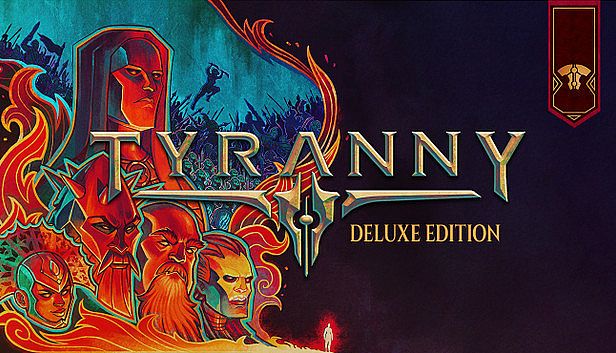











Tyranny is a single-player role-playing game developed by Obsidian Entertainment. Players take on the role of a Fatebinder, an enforcer serving the conquering overlord Kyros in a fantasy world where the war has already ended in victory for the tyrant. The story unfolds in the region known as the Tiers, where the player resolves conflicts between rival armies and shapes the aftermath of conquest through a series of decisions that alter alliances, environments, and available paths forward.
Gameplay
The core loop centers on exploration, conversation, and tactical combat in an isometric view. Character progression relies on a skill system rather than traditional classes, with abilities improving based on repeated use during play. Combat occurs in real time with pause, allowing players to issue orders to the party and coordinate attacks. Spell creation forms a key mechanic, where core elements like elemental effects combine with accents to customize range, power, and delivery methods, limited by lore points earned in the game.
Player choices extend beyond dialogue trees. Decisions made during an initial Conquest phase determine the starting state of the world, including faction standings and NPC reactions. Later actions can physically reshape locations, such as causing magical fissures that force settlements to relocate or change quest availability. Companions join the party over time, each with distinct personalities and abilities that influence both story branches and combat options through combined maneuvers.
Game Modes
Tyranny operates entirely as a single-player experience with no multiplayer components. The game begins in a Conquest phase that functions as an interactive prologue, where choices during character creation establish the history of Kyros's campaign and the Fatebinder's involvement. This phase directly impacts the main campaign by setting initial relationships with major factions and altering environmental details in the Tiers.
The primary campaign follows a linear structure with extensive branching based on allegiance. Players navigate conflicts between groups such as the disciplined Disfavored and the chaotic Scarlet Chorus, while managing edicts imposed by Kyros that impose magical constraints on regions. No separate modes like endless survival or competitive arenas exist; all content integrates into the narrative-driven single-player campaign.
Factions and Key Mechanics
Several factions drive the central conflicts. The Disfavored represent elite military forces under Graven Ashe, emphasizing order and discipline. The Scarlet Chorus operates as a more disorganized horde led by the Voices of Nerat, relying on numbers and intimidation. Rebel groups in areas like Vendrien's Well oppose the occupation, offering alternative paths for those who seek to undermine the regime from within.
Mechanics emphasize reactivity. Aligning with one faction grants unique abilities and restricts others, while actions can trigger permanent world changes that affect future encounters. Edicts serve as powerful narrative tools that impose area-wide effects, and resolving or absorbing their power contributes to the player's growing influence. Difficulty options allow adjustments to combat and exploration challenges without altering core systems.
Is It Worth Playing?
Tyranny received very positive feedback from players, with an 85 percent approval rating from thousands of reviews on its primary distribution platform. Critics highlighted the strength of its choice systems and the fresh perspective on morality in a setting where evil has already triumphed. The game suits players who value narrative depth and consequence over action-focused gameplay or ongoing multiplayer features.
Support for the title ended after its initial release and two story expansions, leaving it as a complete, self-contained experience. Those interested in classic isometric RPGs with strong writing and reactive worlds will find substantial replay value through different faction alignments and decision paths. Newcomers to the genre may appreciate the accessible skill progression and adjustable difficulty, though the older presentation and lack of modern quality-of-life features could require some adjustment.


