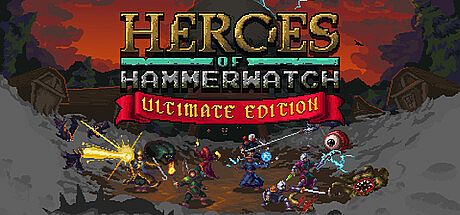




Heroes of Hammerwatch Ultimate Edition is an action indie RPG roguelite for PC that blends top-down dungeon crawling with persistent progression systems. Players explore procedurally generated floors filled with enemies, traps, and loot while working to strengthen a central town hub between runs.
Gameplay
The core loop centers on repeated expeditions into dangerous underground areas. Each run begins in the town of Outlook, where resources gathered previously fund upgrades to buildings that provide lasting benefits such as improved equipment options or stronger consumables. During a run, players control one of several hero classes, each with distinct abilities and playstyles ranging from tanky melee fighters to magic-focused casters.
Combat involves twin-stick style movement and attacks against waves of monsters, including bosses at key points. Loot includes gold for purchases, ore for town development, and experience points that carry over after death. Players can send collected resources back to the surface via an elevator cart, though this comes with a tax that reduces the haul. Death ends the current expedition, but town improvements and character levels remain, creating steady advancement across attempts.
Over 100 unique items appear during runs, offering varied effects that encourage experimentation with builds. Classes unlock additional skills through leveling, and permanent upgrades from the town further customize how each hero performs in subsequent outings.
Game Modes
Standard play supports both solo runs and online co-op with up to three other players. Shared resources and coordinated attacks make group sessions faster paced, while solo play emphasizes careful positioning and individual class strengths.
New Game+ increases overall difficulty after completing the main tower, allowing continued progression with tougher enemies and better rewards. Mercenary Mode, unlocked after reaching level 20 with a class, introduces perma-death rules where a single failure ends the attempt entirely, shifting focus toward skill and preparation over repeated grinding.
An arena-style mode pits players against endless enemy waves in exchange for crowd-granted boons and loot opportunities. Additional campaigns from included expansions expand the available areas and challenges beyond the primary Forsaken Spire structure.
Classes and Customization
Nine classes become available through base content and expansions, each featuring unique stats, active abilities, and passive traits. Early options include the durable Paladin with healing support, the ranged-focused Ranger, and magic users like the Sorcerer or Warlock. Later additions such as the Witch Hunter bring specialized tools for crowd control or utility.
Item rarities and combinations allow for diverse loadouts, while town buildings like the blacksmith or apothecary expand available gear and potion options over time. Experience gained across runs feeds into skill trees that further differentiate how each class handles threats.
Is It Worth Playing?
Player feedback highlights strong replayability through layered progression and the satisfaction of incremental town and character improvements. The game suits those who enjoy roguelite loops with co-op elements and does not require constant online play, though groups amplify the pace and enjoyment. Reception describes it as addictive for fans of dungeon crawlers, with the Ultimate Edition bundling substantial extra content at launch.
Those seeking quick sessions or deep theorycrafting around builds will find consistent value, while the grind-heavy nature may appeal less to players preferring faster resolution or narrative focus. Current availability on PC keeps the experience accessible for new players interested in this style of action RPG.