


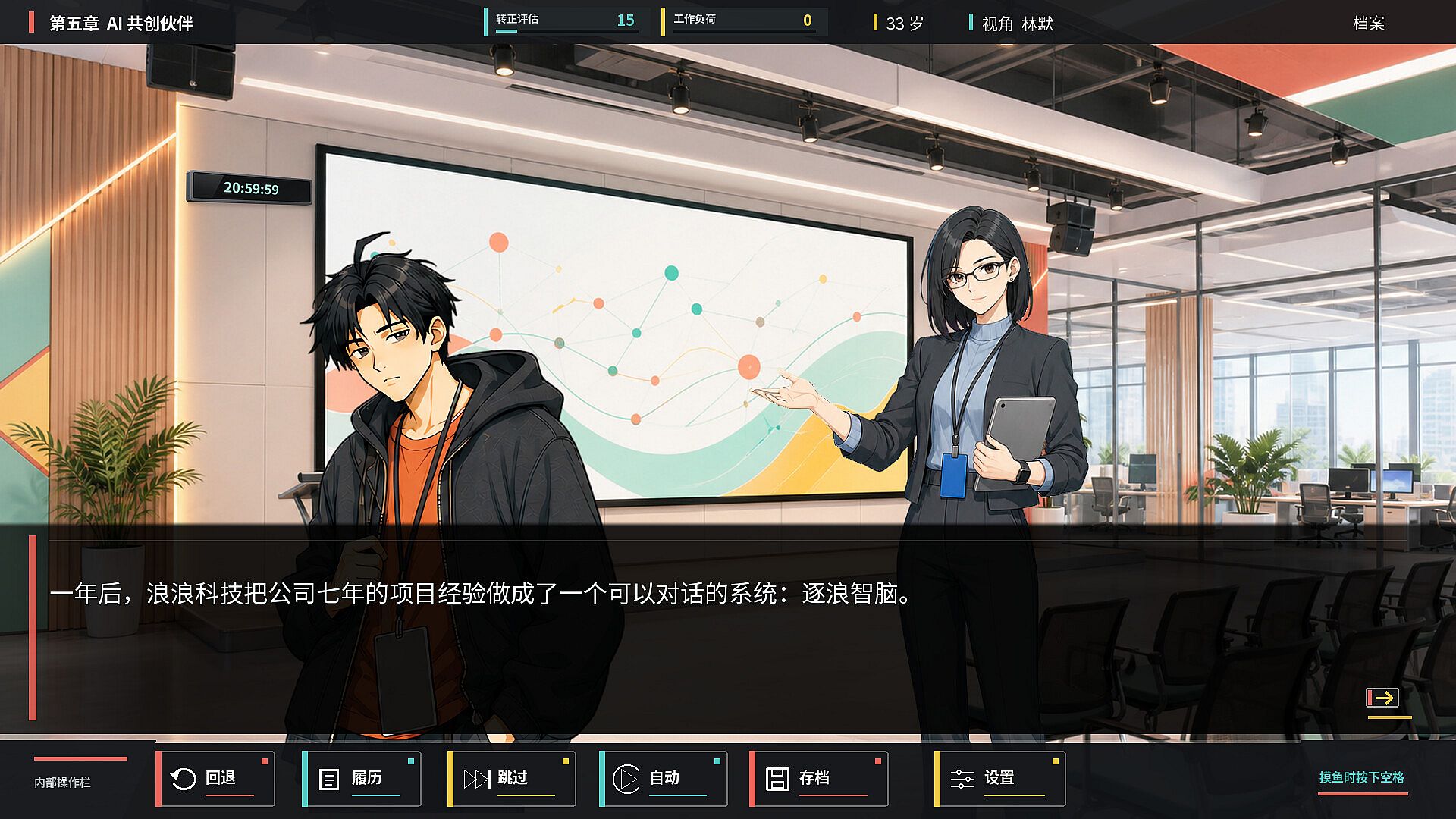
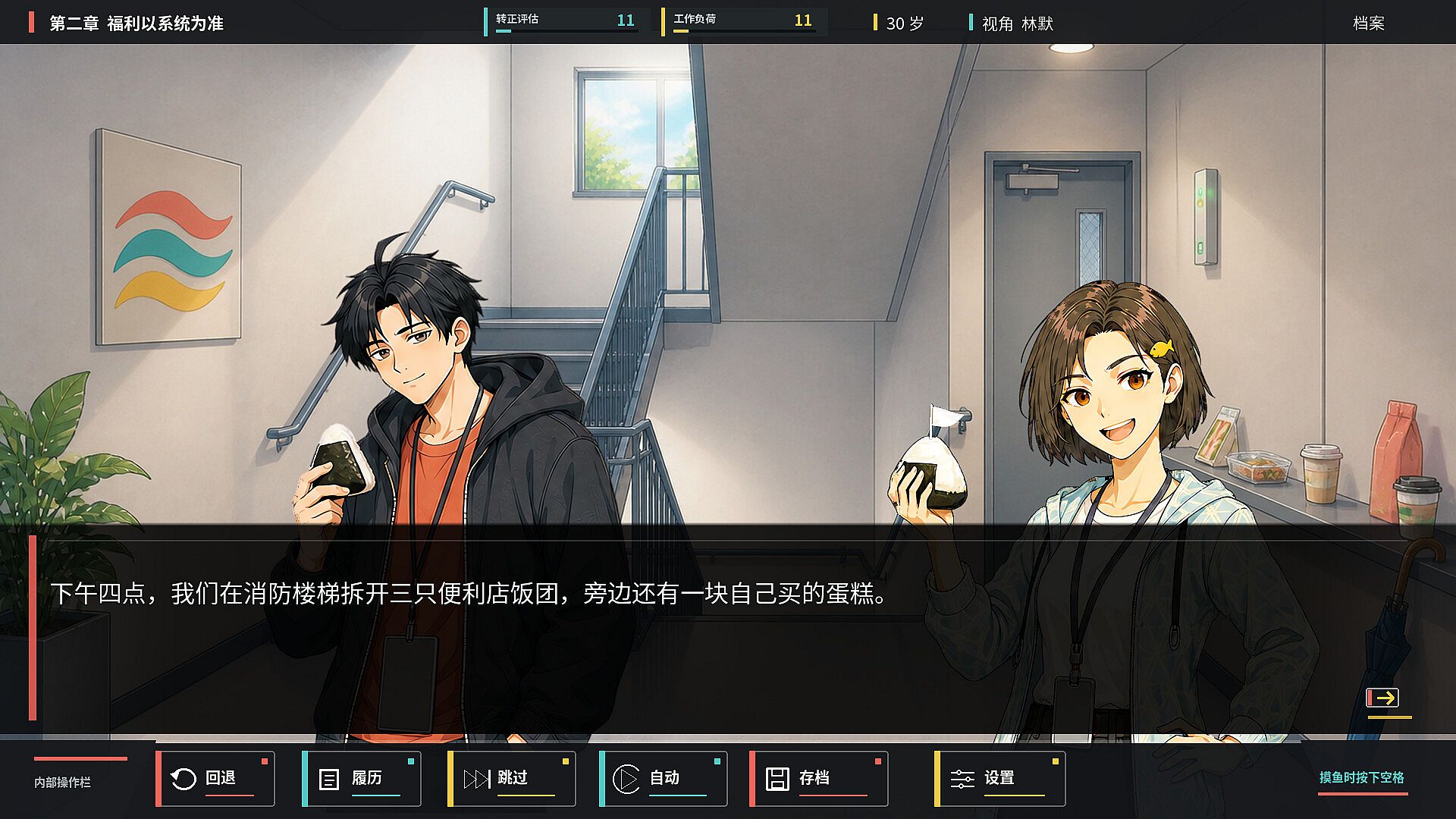
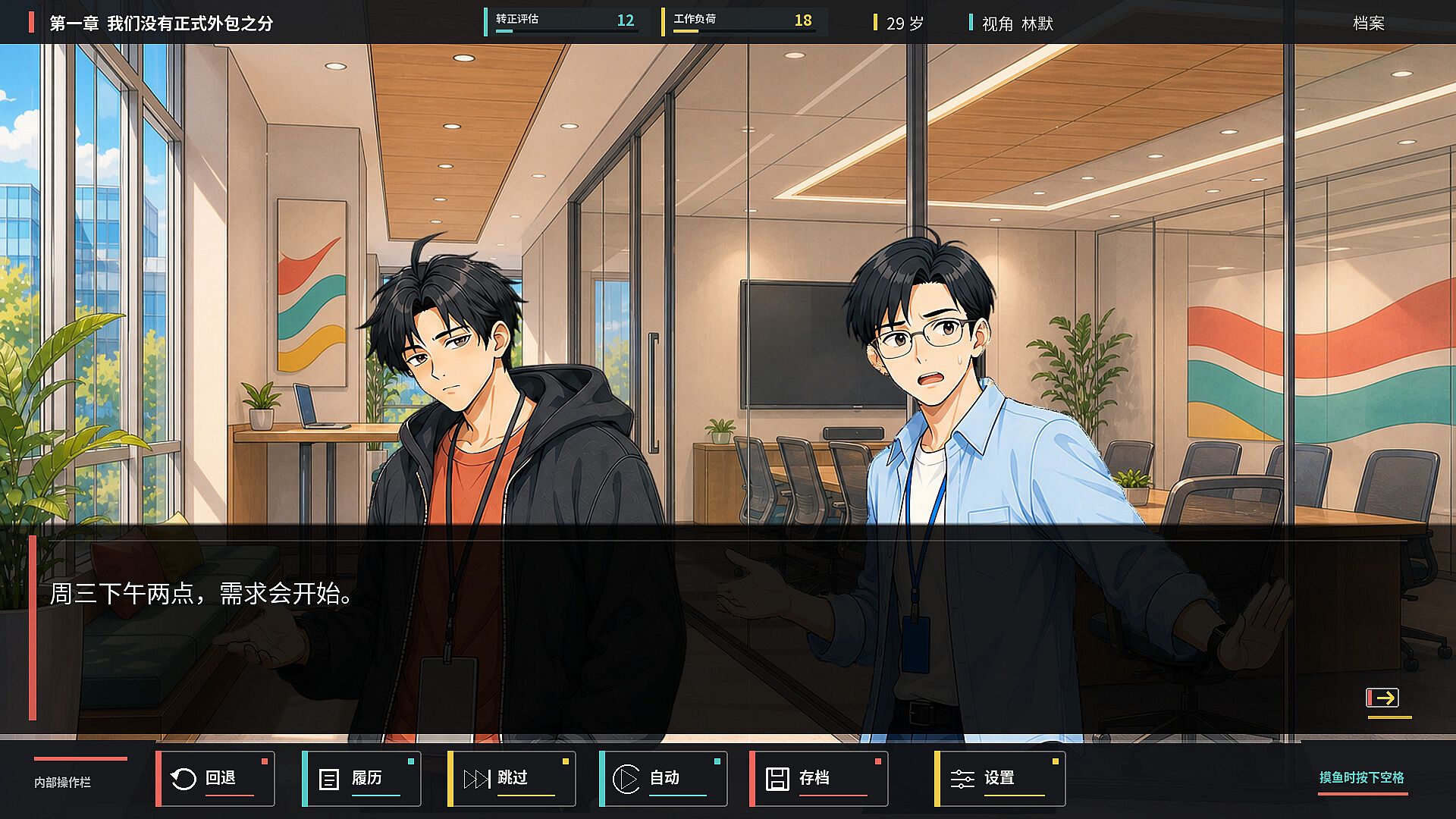

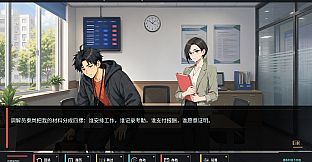



我在大厂搞外包 is an indie adventure game centered on the experiences of a contractor navigating life inside a major Chinese technology company. Players follow backend programmer Lin Mo over six years as he handles daily tasks, conversations, and documentation while balancing personal beliefs against professional realities. The title emphasizes single-player narrative progression through dialogue choices and record-keeping mechanics that influence long-term outcomes.
Gameplay
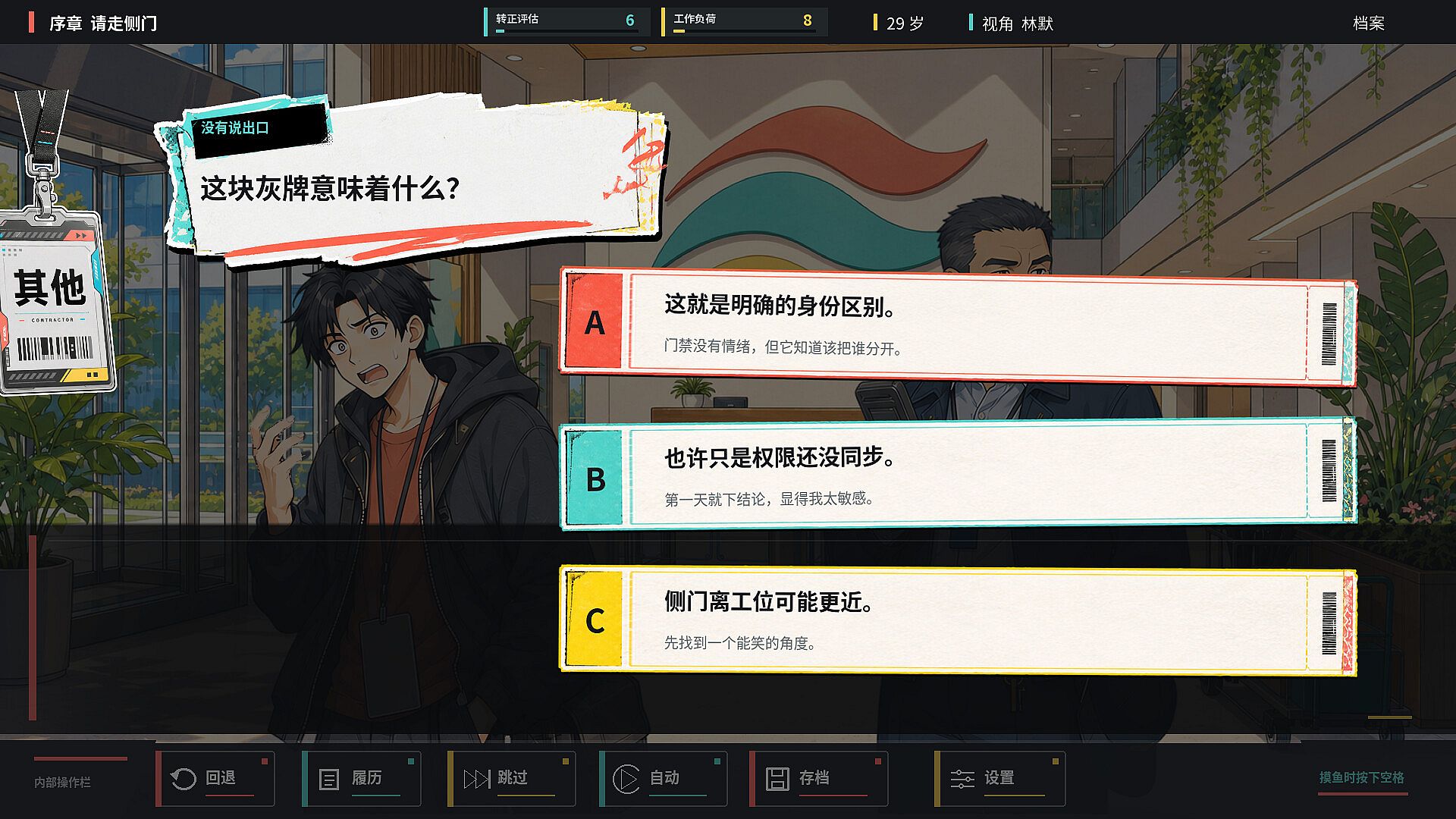
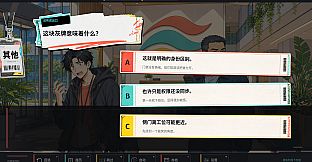
The core loop revolves around managing Lin Mo's internal thoughts and spoken words during workplace interactions. Players first select what the character truly believes in a given situation, then decide what he can safely express aloud given the risks involved. This dual-layer decision process applies to exchanges with colleagues, supervisors, and systems, where options range from direct confrontation to measured cooperation or deliberate silence supported by documentation.
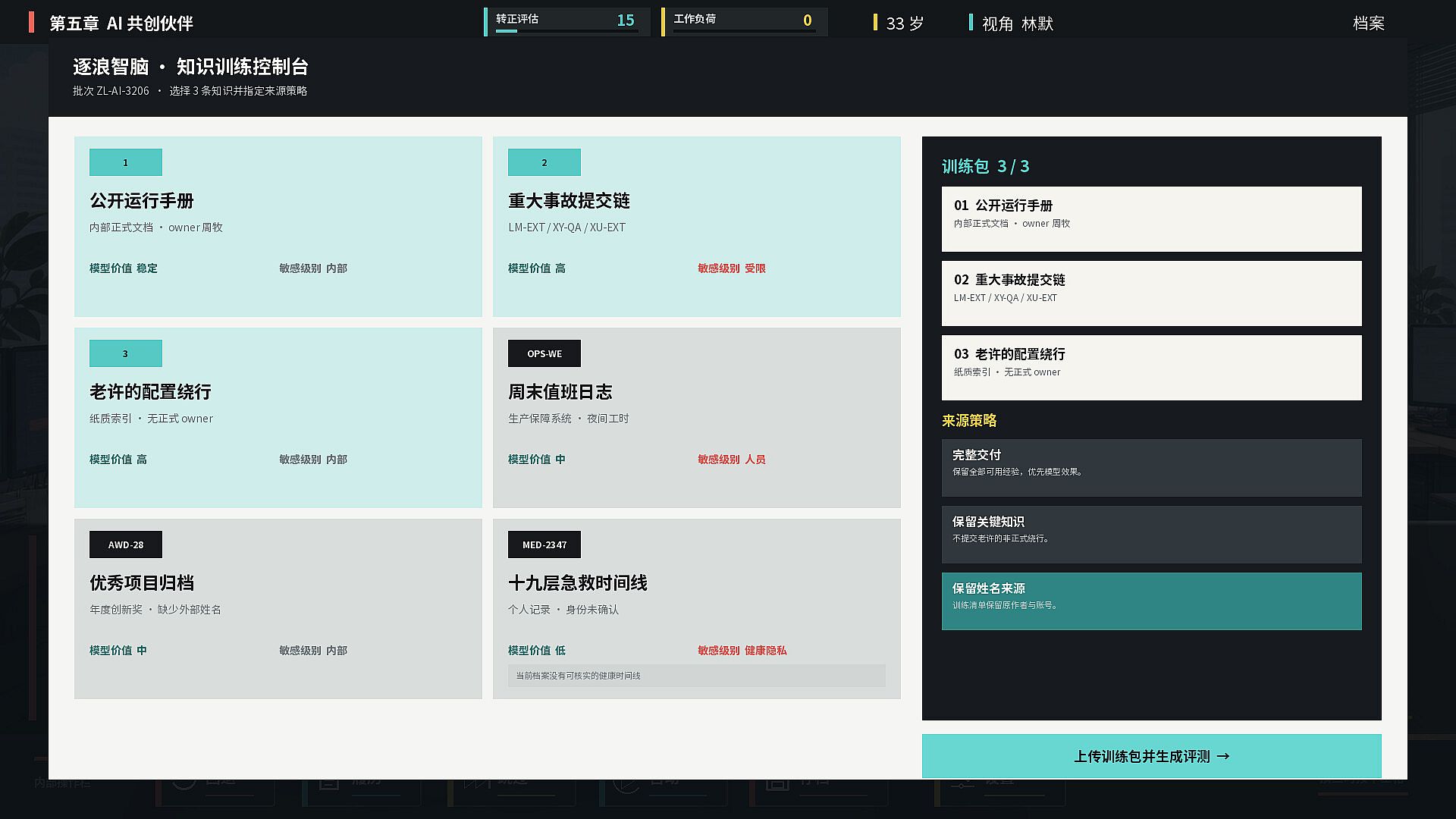
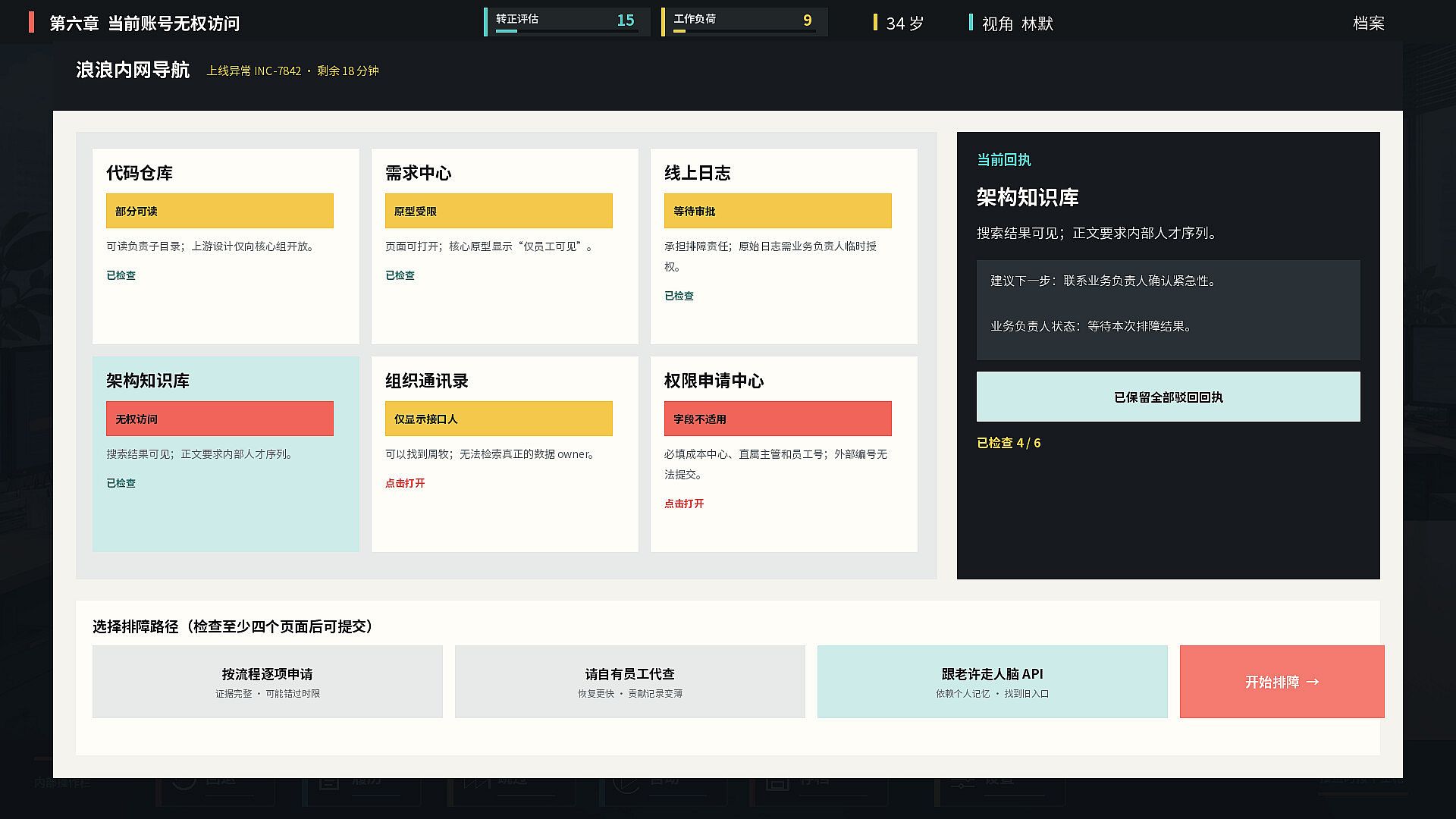
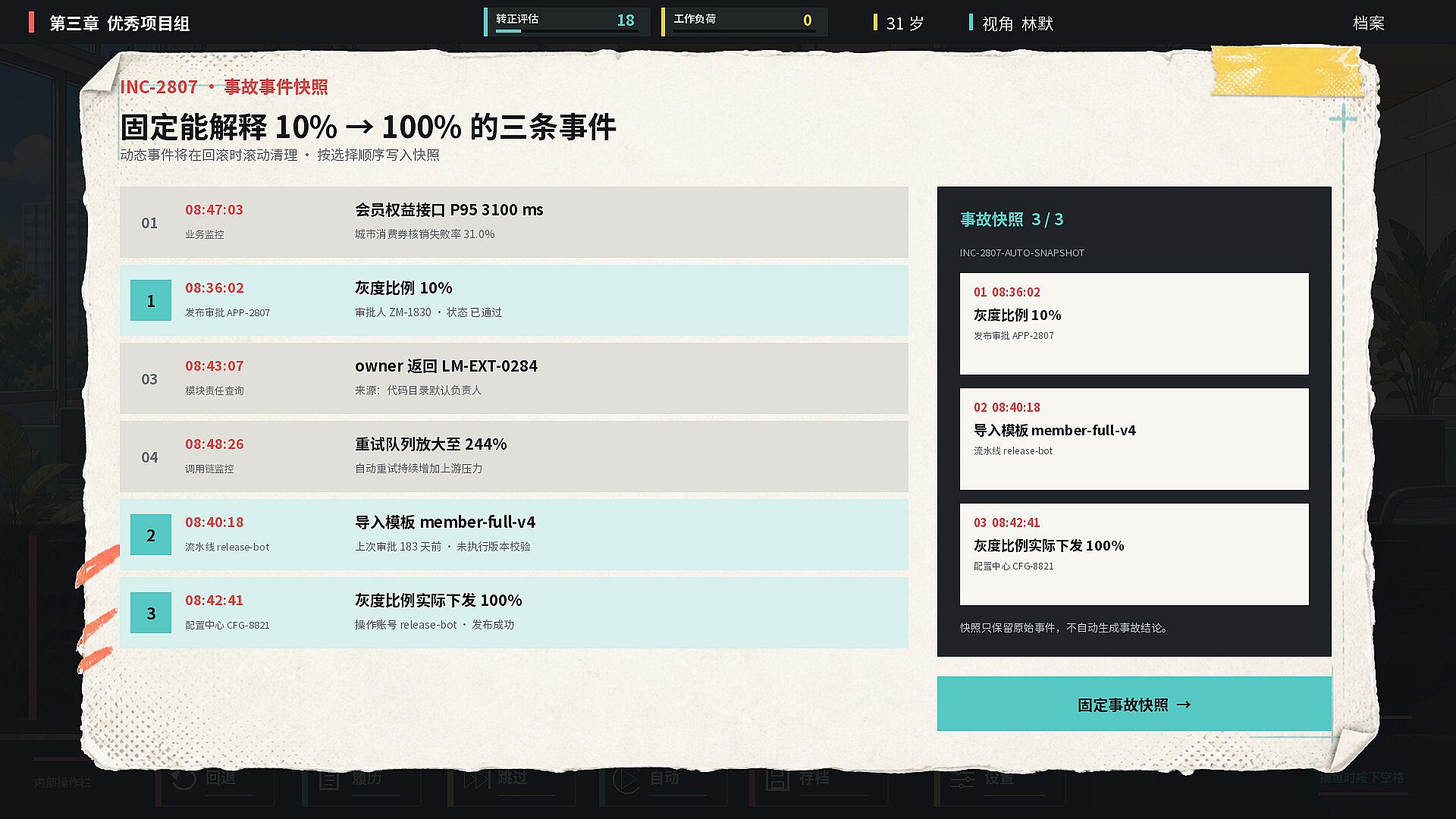
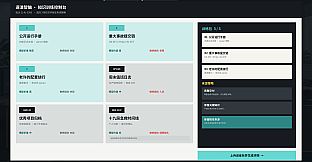
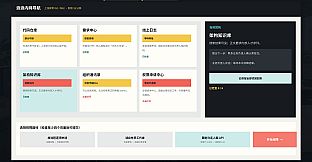
Record preservation forms another key system. Players choose which chats, access logs, commits, timesheets, photographs, and other files to retain. These selections do not disappear after use but instead alter future events, including who might support Lin Mo's version of events or how ownership of work gets assigned. The game integrates these elements into enterprise tools such as messaging platforms, transport requests, incident reporting, and labor documentation, making the act of selecting and routing information central to progression.
Each chapter advances the story across a prologue, eight main workplace segments, one hidden chapter, and a finale. Playtime for an initial run averages eight to ten hours, varying with reading pace and the depth of choices explored. Language support allows seamless switching between English and Simplified Chinese at the title screen or in settings.
Game Modes
The experience operates entirely in single-player format with no multiplayer components. Branching narrative paths emerge from the combination of belief choices, spoken statements, and preserved records, leading to one of seven distinct endings. These endings reflect accumulated consequences rather than isolated decisions, incorporating relationships built over time and the three parallel accounts of events that the game tracks: Lin Mo's lived experience, the company's internal archive, and the public narrative.
Systems handling workplace processes serve as the primary interactive layers. Players engage with messaging, access controls, training modules, and evidence compilation in ways that affect attribution, timing, and recipients. A recurring news headline mechanic introduces external context that Lin Mo processes before returning to his own duties, adding another layer of reflection without separate modes.
Narrative Structure and Themes
The story unfolds across six years at the fictional giant Langlang, where contractor status creates ongoing tension around recognition, credit, and belonging. Early scenes establish the gap between system recognition and formal acknowledgment, such as gate access versus main entrance privileges or repository commits versus award eligibility. Subsequent chapters build on these foundations through incremental choices that compound into larger shifts in status, alliances, and available options.
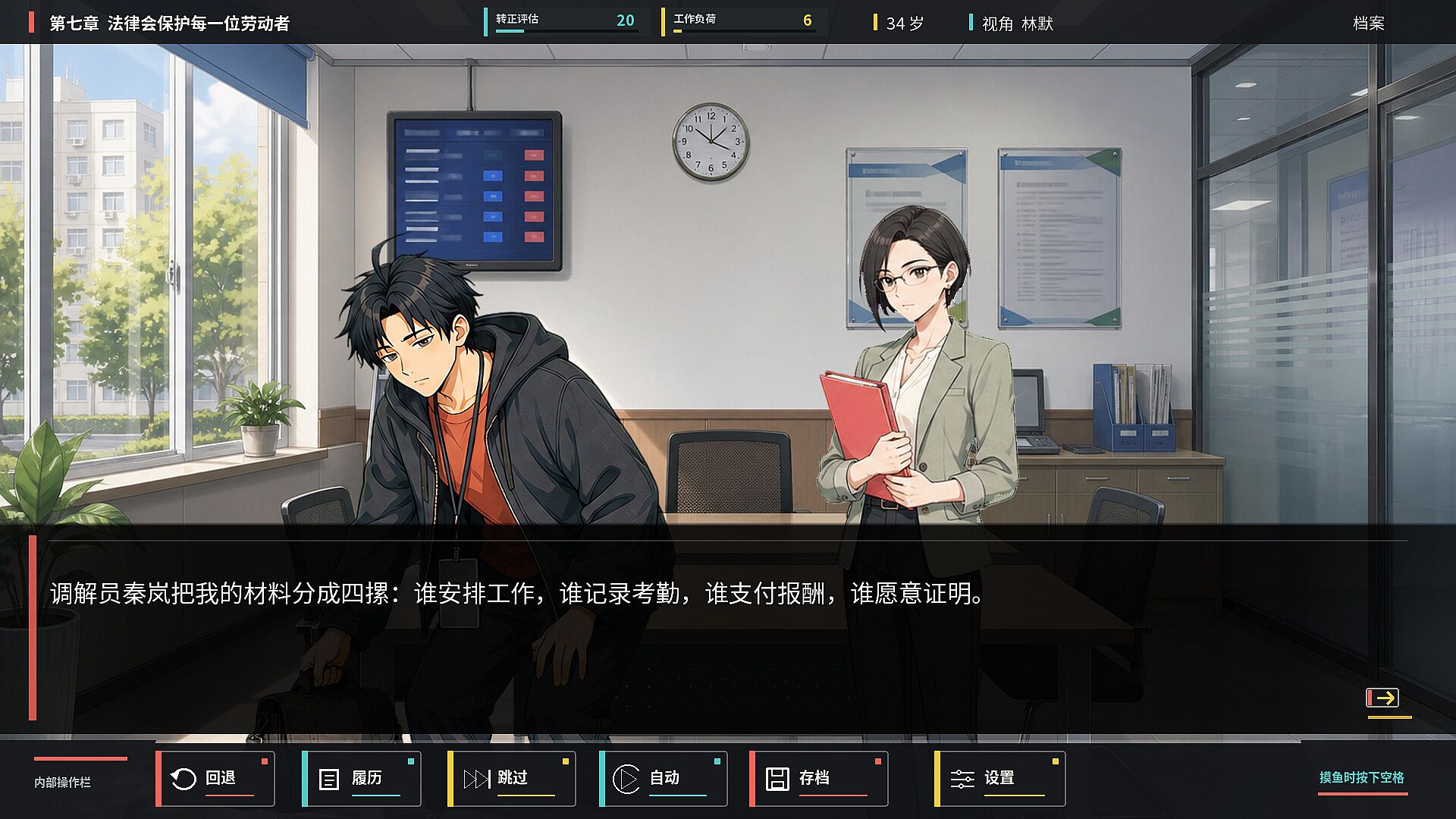
Content warnings cover workplace pressure, status discrimination, job loss, illness, labor disputes, and references to death. The game provides chapter notices and reduced-detail settings to accommodate player preferences. No graphic violence or sexual content appears. The narrative draws from real-world workplace patterns while remaining a fictional account.
Is It Worth Playing?
This title suits players interested in choice-driven stories that examine systemic workplace dynamics rather than action or exploration. The emphasis on dual internal-external decisions and persistent records creates replay value through different combinations of preserved evidence and relationships. With a first playthrough estimated at eight to ten hours and seven endings tied to cumulative choices, the structure rewards thoughtful engagement over multiple runs.
Since the game has not yet released, player reception data remains unavailable. Its single-player focus and language options make it accessible for those seeking a compact narrative experience centered on labor and documentation themes. Availability will begin on PC following the planned launch.