




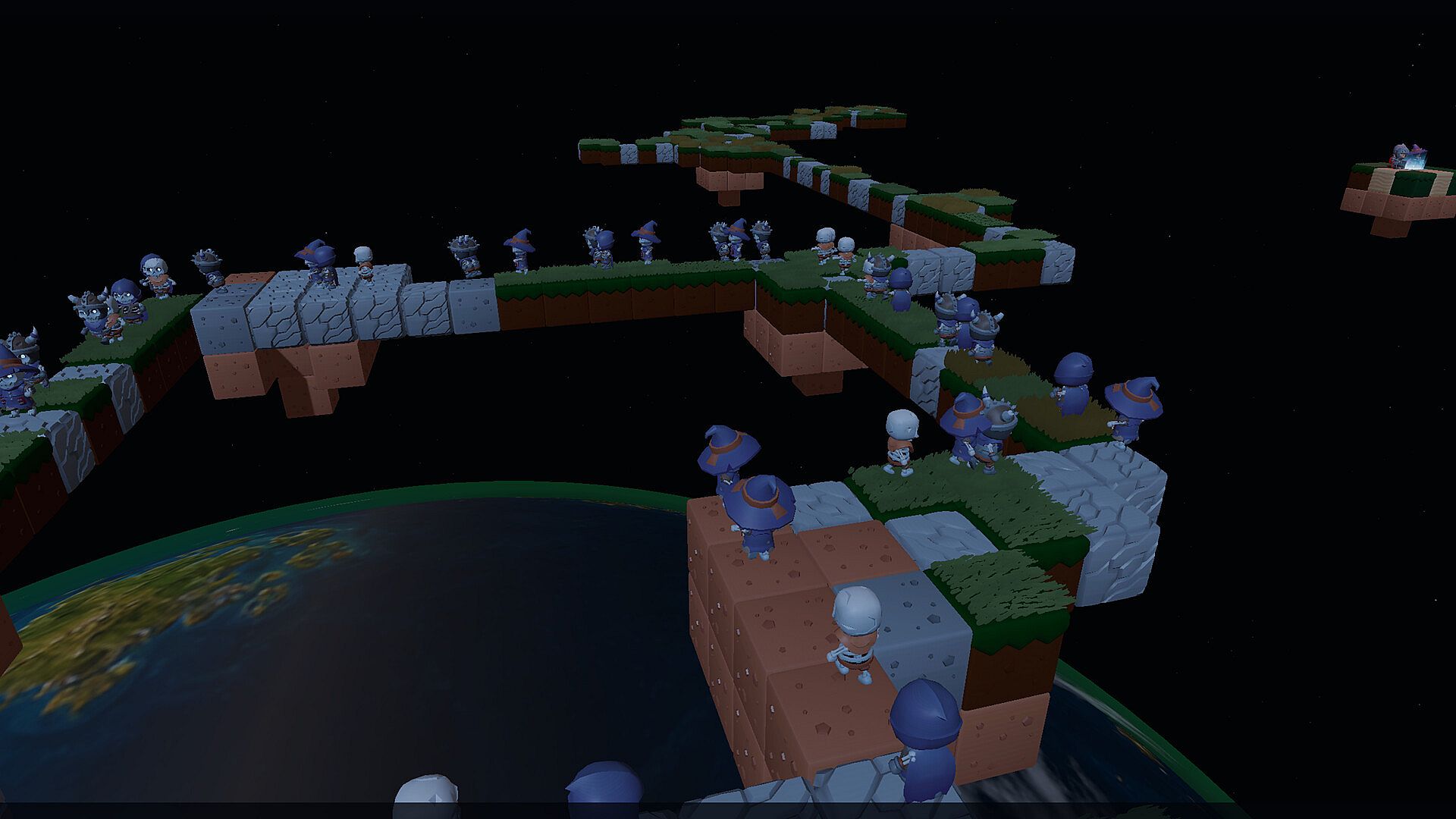
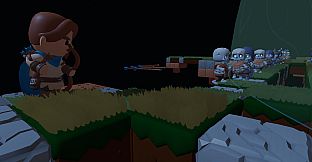
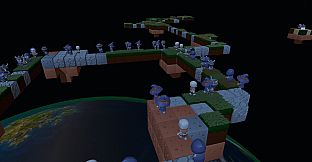
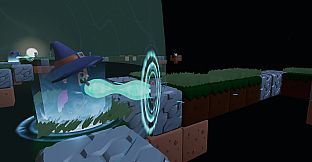
We Roll at Dawn is an action roguelite tower-defense game developed for PC that blends island construction with direct hero combat. Players build and defend a floating island centered on a Sacred Tree across repeated runs, using a dice roll each day to determine expansion while managing terrain placement to influence enemy paths and tower performance at night.
Gameplay
The core loop divides each run into day and night phases. A roll of the Dawn Die sets the number of tiles available for placement during daylight hours. Different terrain types such as grass, stone, gravel, sand, jungle, water, snow, lava, dark, and crystal produce towers with varied effects including rapid fire, area damage, slowing, freezing, poisoning, rooting, chaining, or cursing enemies. Placement decisions shape defensive routes and determine how effectively towers can respond once combat begins.
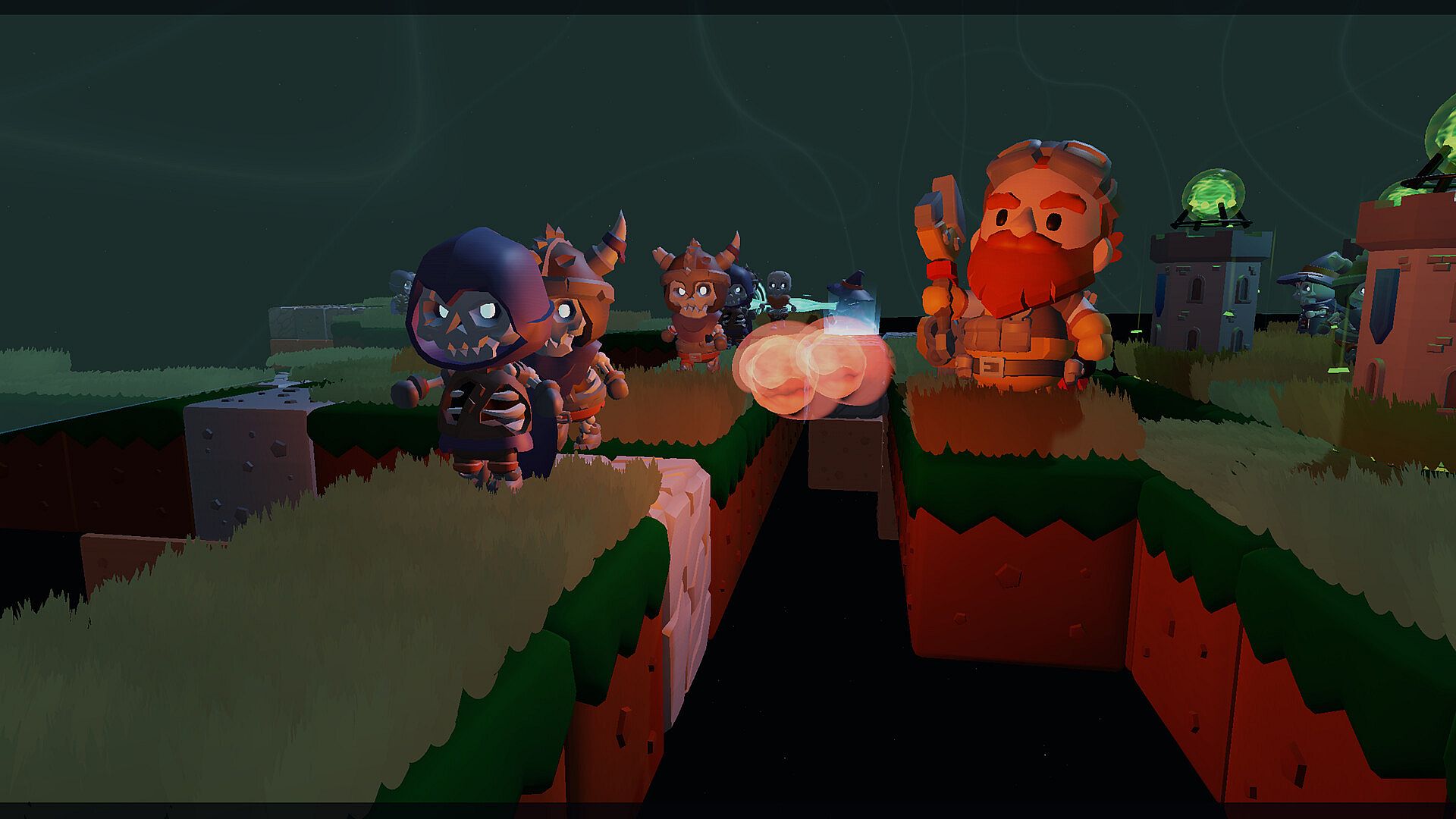
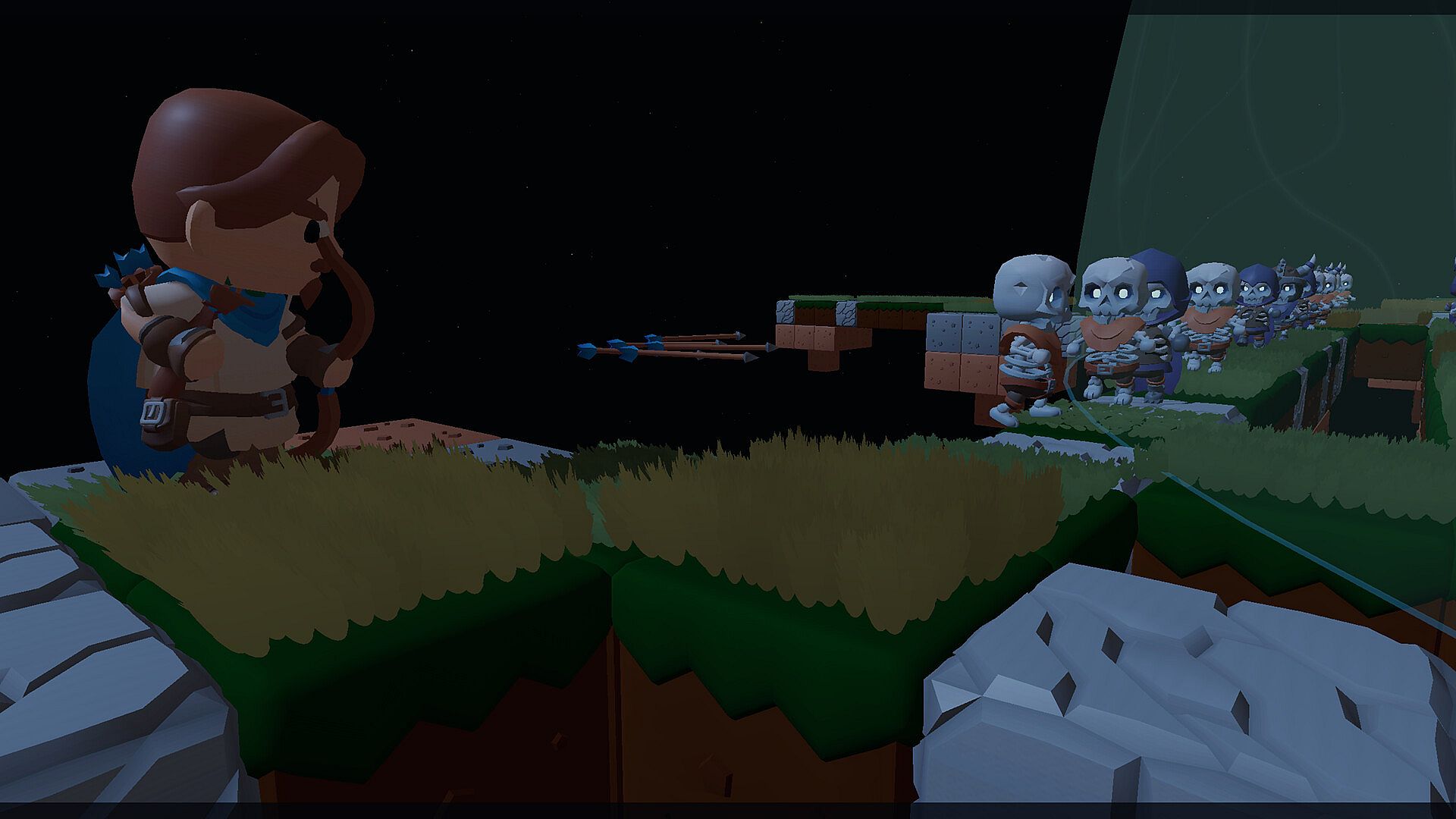
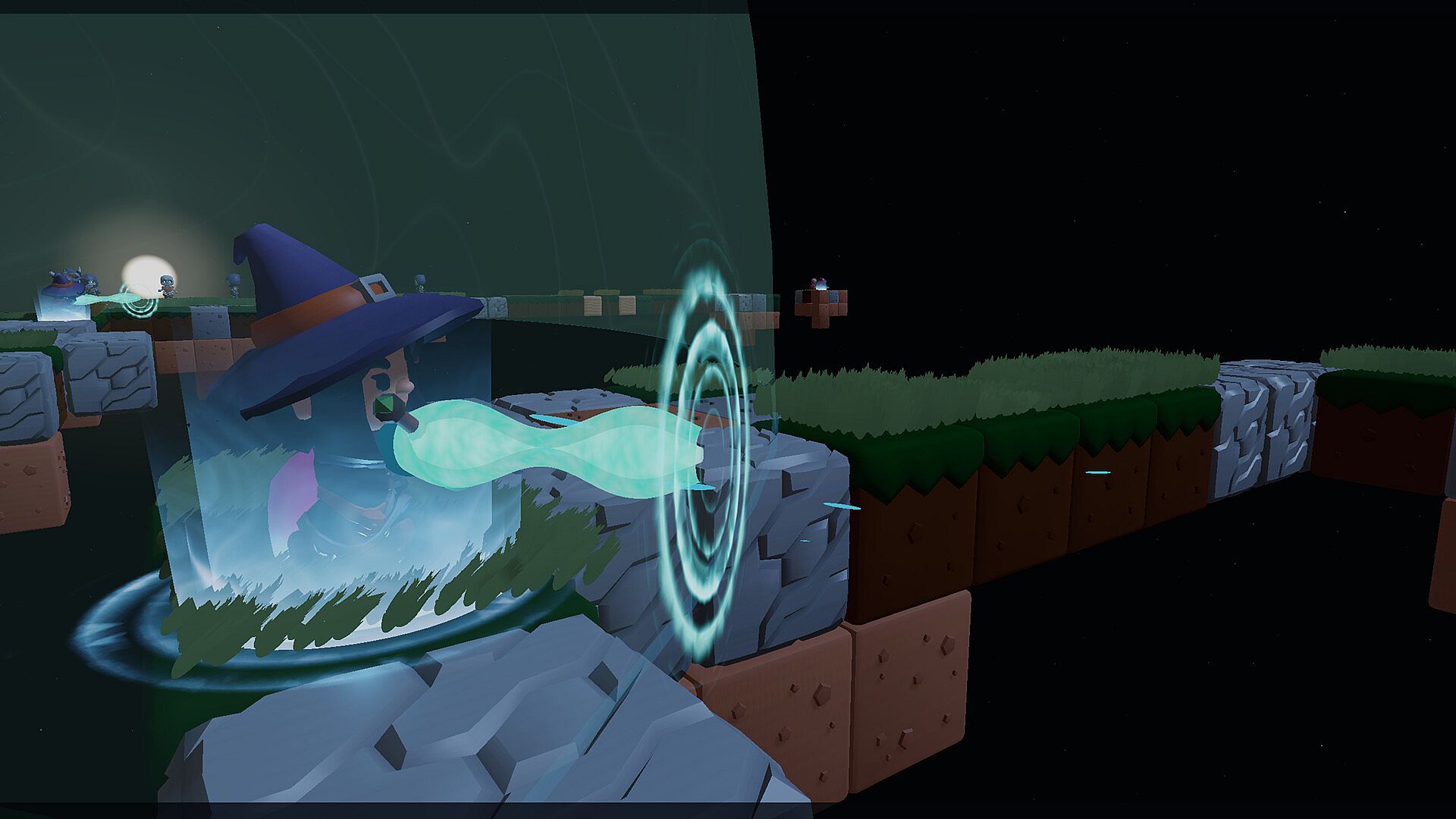
At night construction ends and portals release waves of enemies that advance toward the Sacred Tree. Players switch to direct control of one hero equipped with basic attacks and four unique abilities. The hero works alongside the towers by holding chokepoints, shielding key structures, or intercepting threats before they reach the center. Island layout directly affects available fighting space and the time defenses have to act.
The island itself changes over time. New sections may appear while disconnected land can detach and fall away, taking any built towers with it. Remote refuges can be rescued and developed yet require protection from raids. Corruption introduces additional pressure that forces choices about which areas to maintain and which to abandon as waves grow stronger and introduce new threats along with boss encounters.
Game Modes
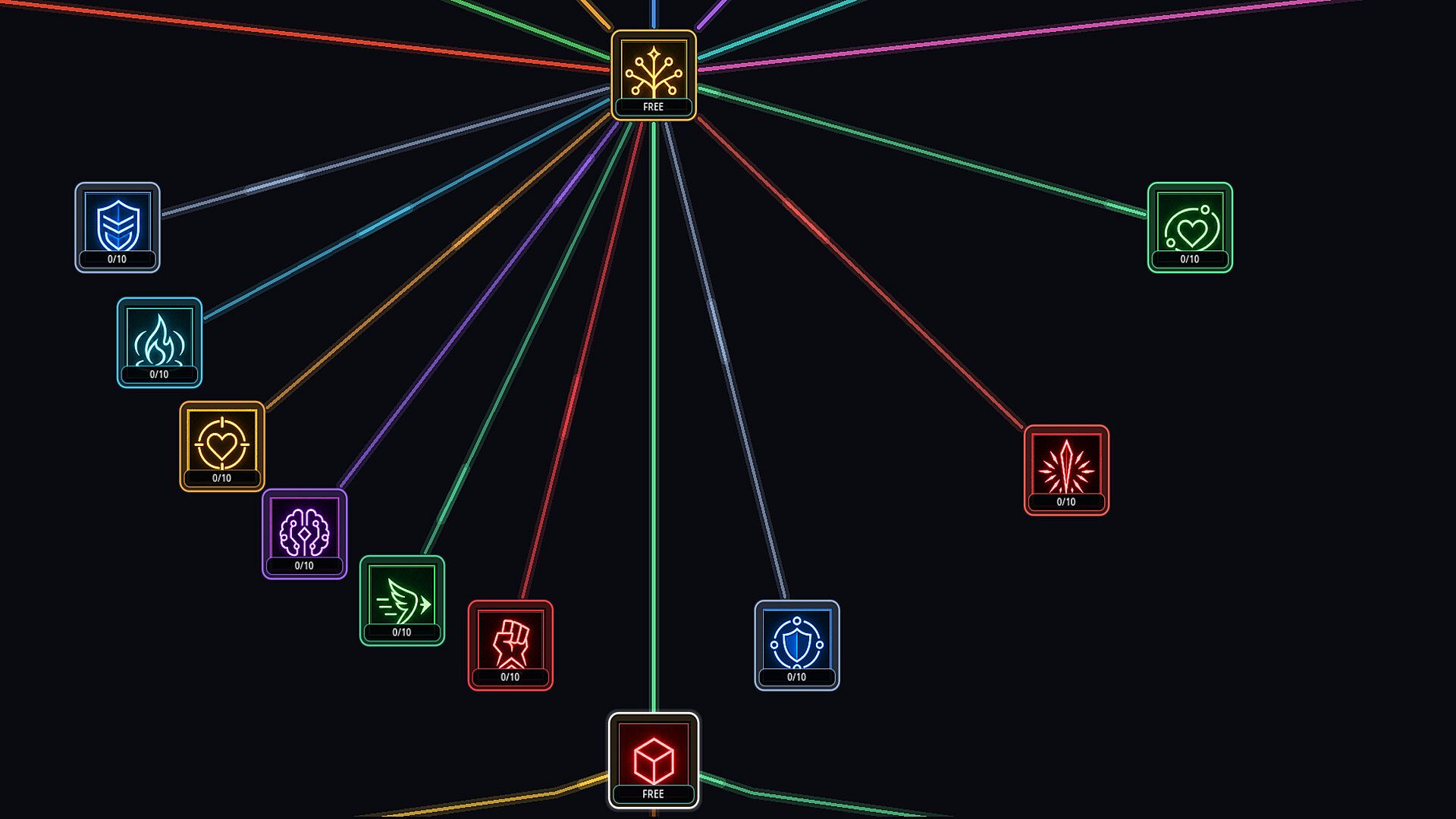
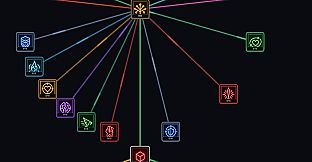
Progression occurs through successive roguelite runs that increase in difficulty. Each attempt starts from a small island and builds outward, with permanent upgrades carried forward via an Upgrade Tree. This system allows improvements to hero attributes, new abilities, stronger tower and terrain options, and modifications to future Dawn Die rolls. Players continue deeper into later days where enemy pressure intensifies and the island faces greater risks from raids and corruption.
Hero selection adds variety across runs. Seven distinct heroes are available, each with unique strengths, attributes, abilities, and upgrade paths. Choices influence how players approach both construction and combat phases, encouraging different strategies for island layout and wave defense on subsequent attempts.
Heroes and Progression
The seven heroes include the Paladin, Barbarian, Druid, Engineer, Mage, Ranger, and Rogue. Each brings tailored combat options that complement the tower defenses built during the day. Permanent upgrades unlocked through the Upgrade Tree enhance heroes, towers, terrain effects, economy systems, and dice mechanics, allowing runs to scale in power and complexity over time.
Longer runs introduce escalating challenges such as special enemy abilities and boss fights that test the combined strength of the island layout and hero capabilities. Refuges add optional layers of management and defense that can yield further benefits if successfully protected.
Is It Worth Playing?
We Roll at Dawn targets players who enjoy roguelite structure combined with tower-defense planning and active combat control. The day-night cycle creates a clear rhythm of preparation and execution, while terrain variety and hero differences support repeated attempts without feeling repetitive. The single-player focus on PC emphasizes strategic depth in island building alongside moment-to-moment hero action.
Because the game remains in development with a planned release in Q4 2026 and a free demo available, interested players can test the core systems directly. The Upgrade Tree and expanding run length provide clear long-term goals centered on surviving deeper nights and gathering power for the Sacred Tree. Those drawn to indie action-strategy titles that reward careful layout decisions and hero management will find the mechanics align closely with that preference.












