





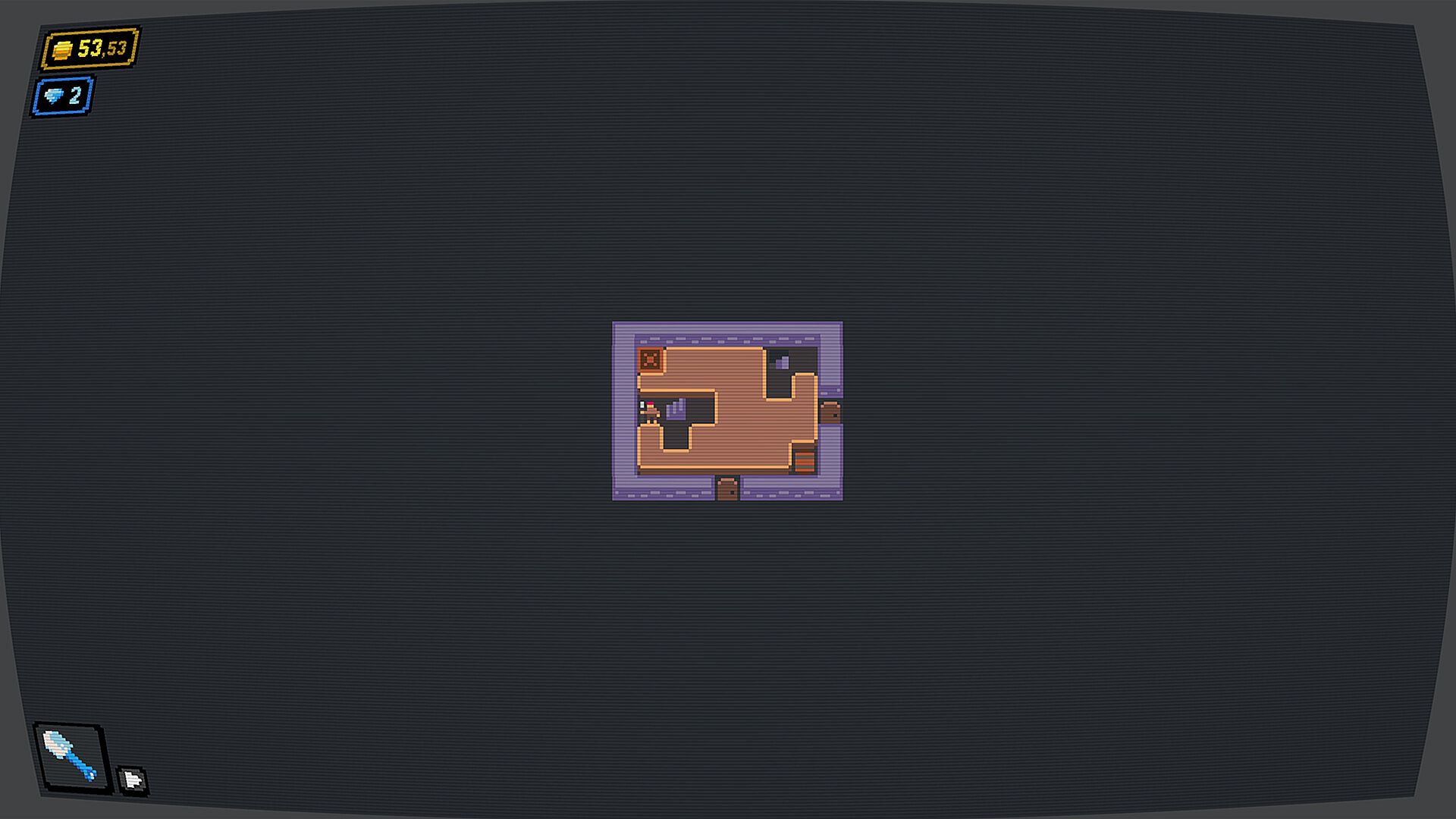
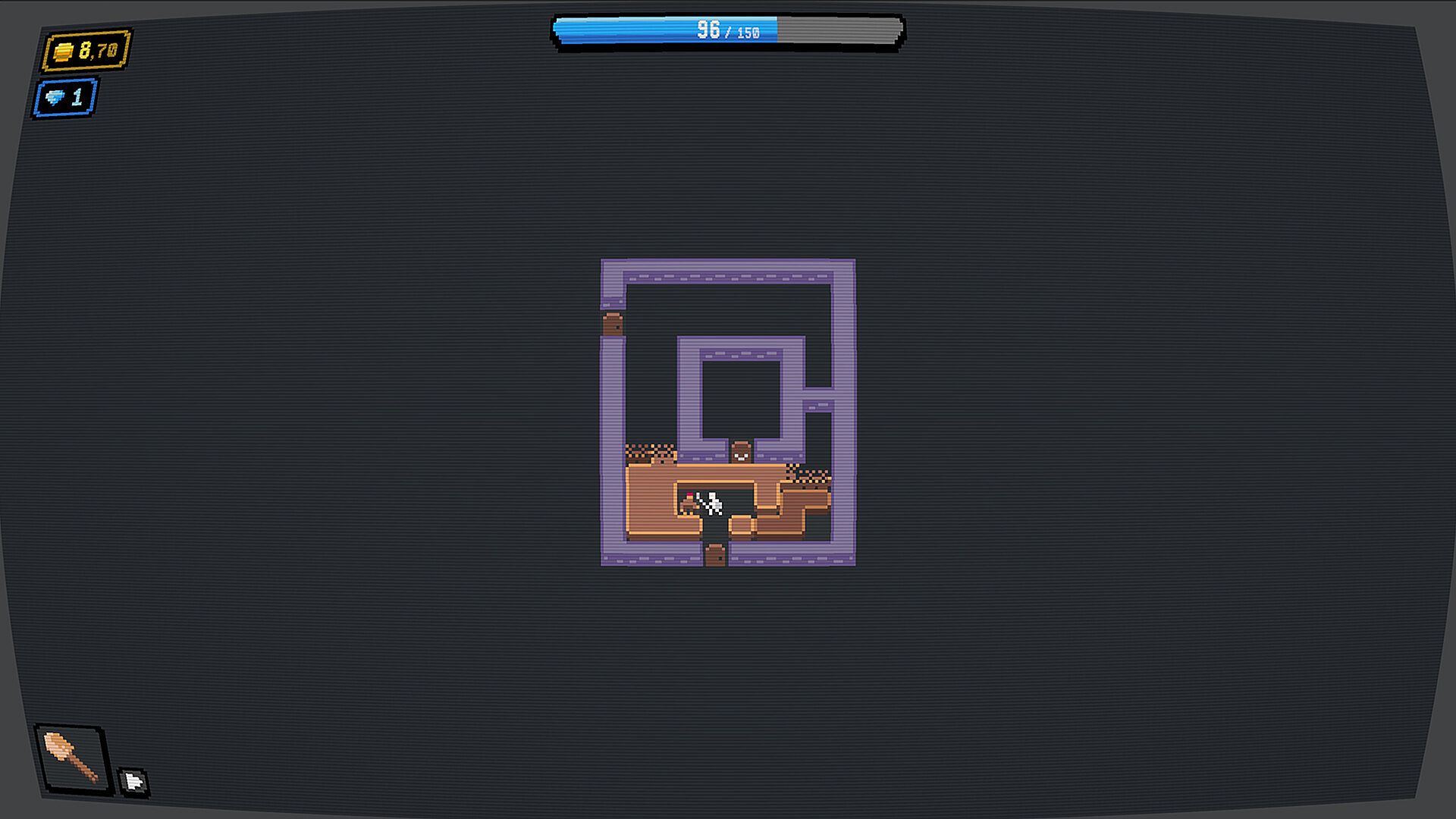
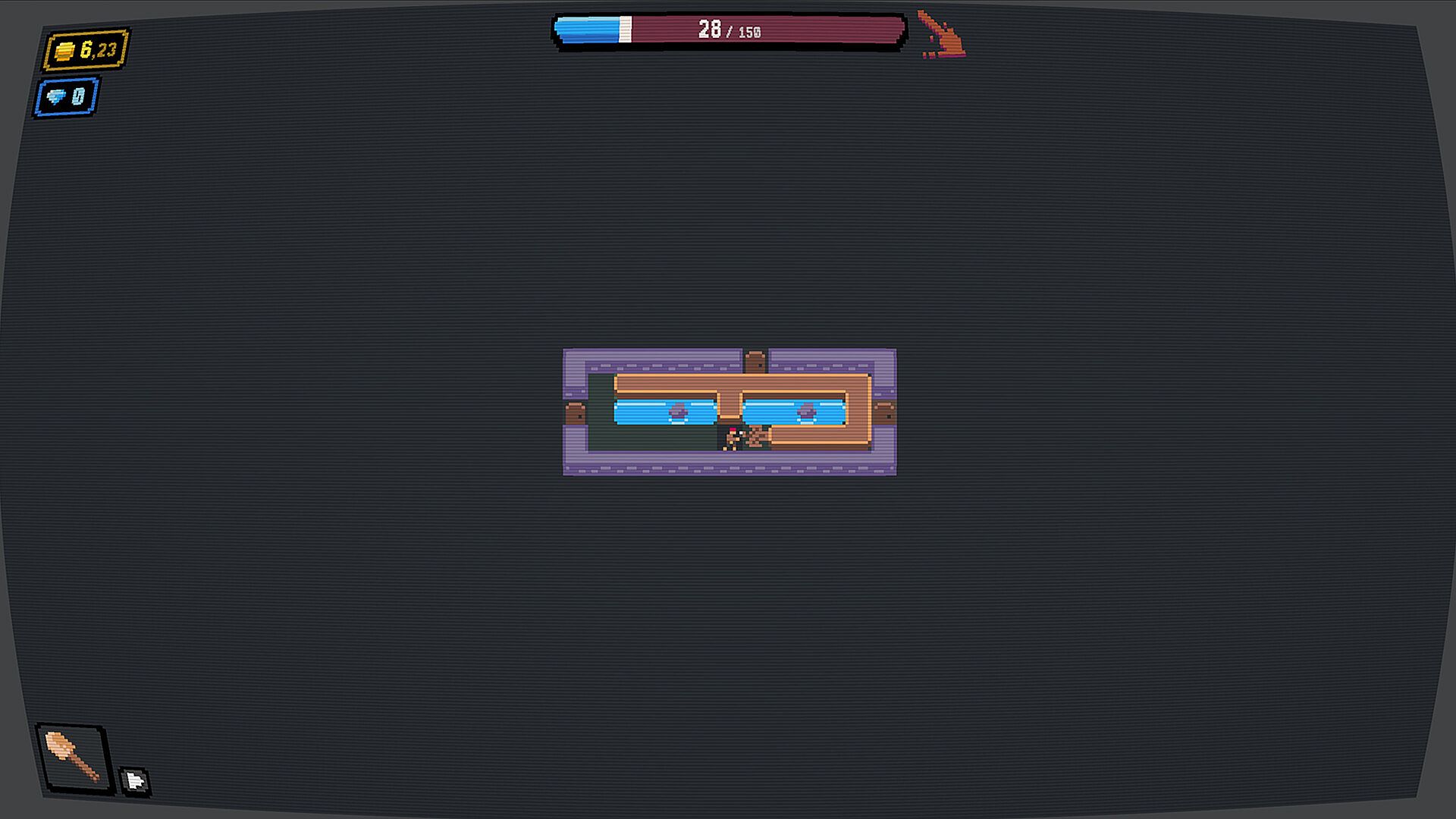
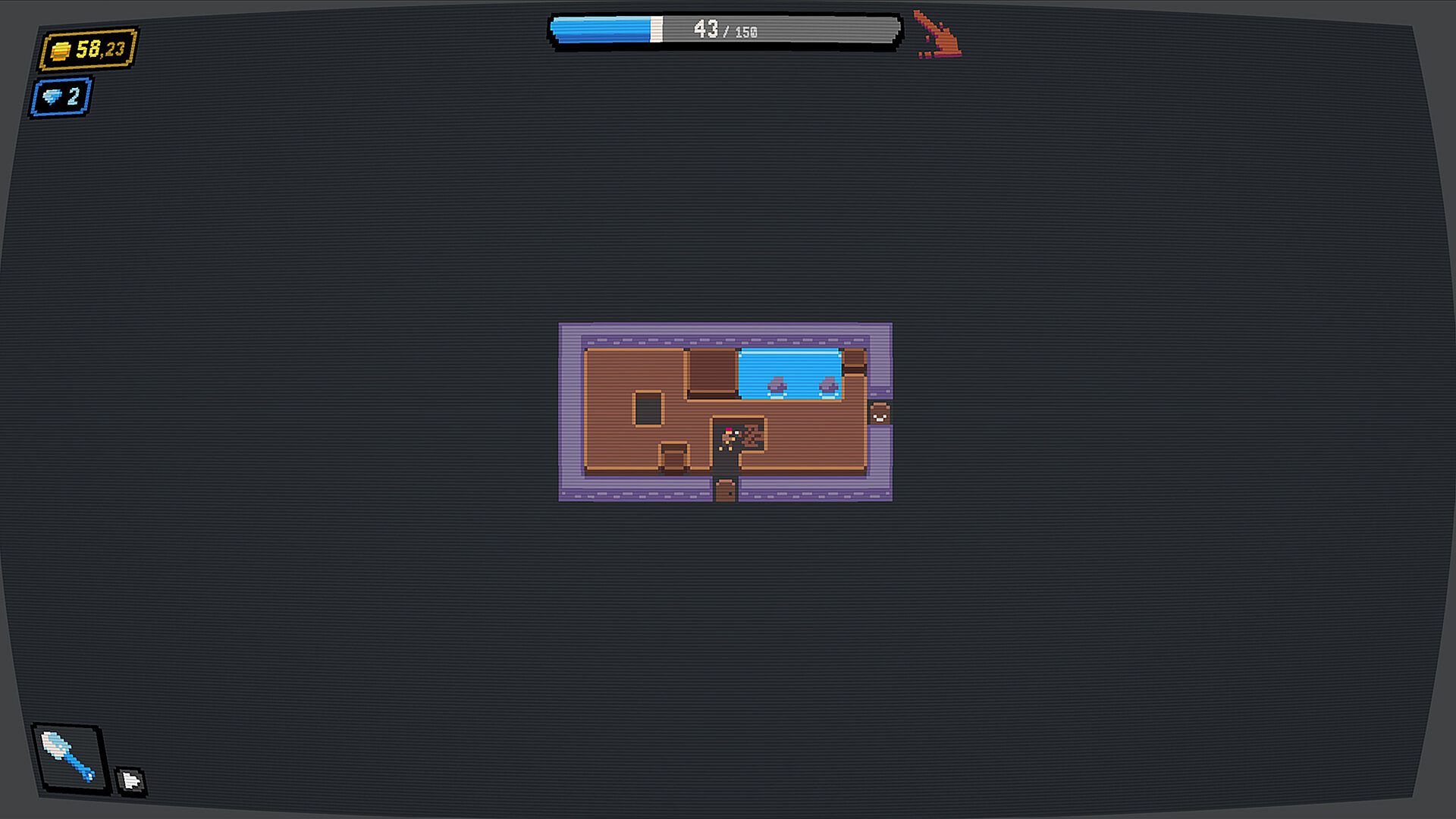
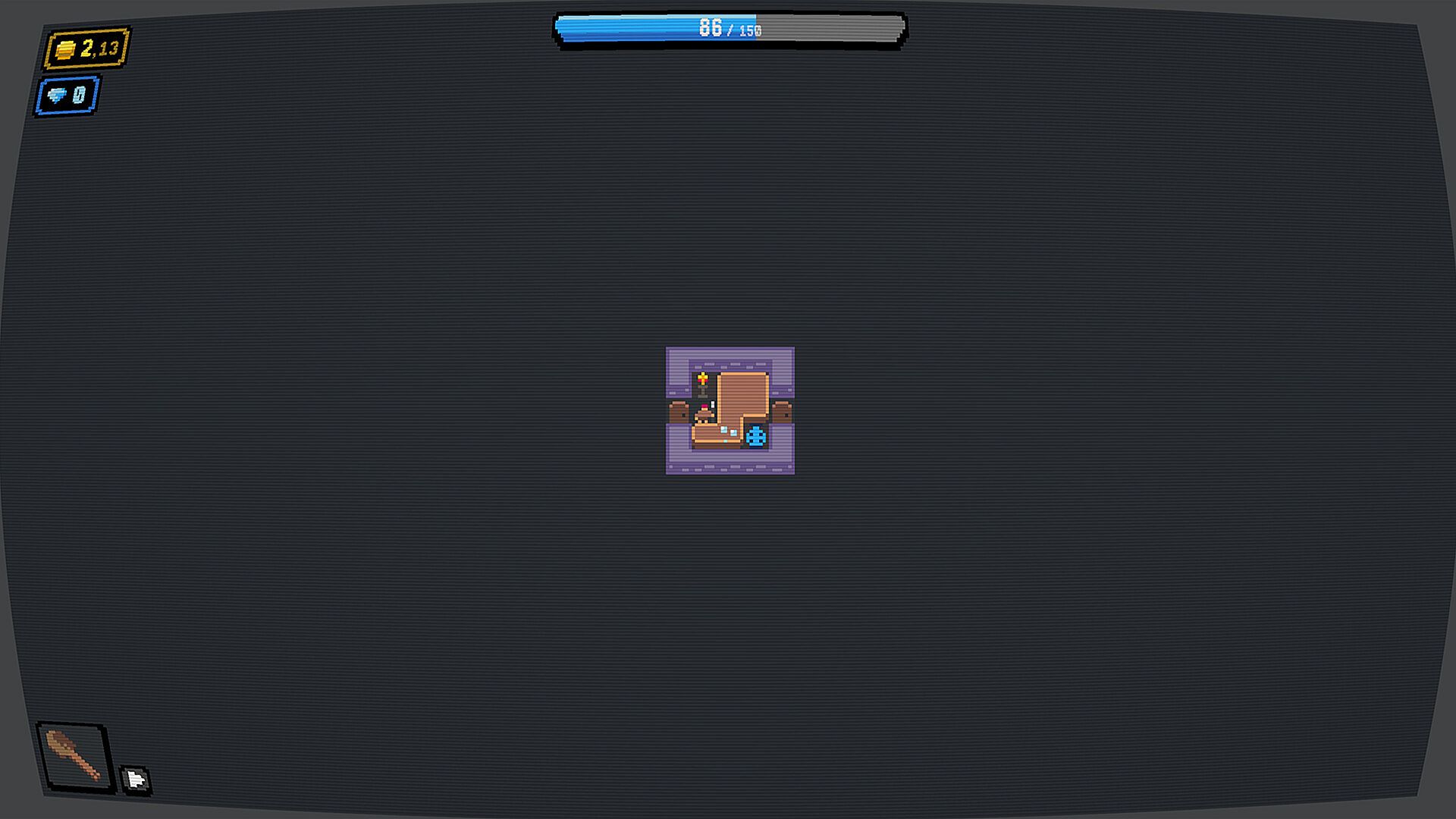





Throne Digger is a turn-based roguelite adventure game set on PC. Players take on the role of a hired digger tasked with excavating a castle buried underground by a fallen kingdom's curse. The core loop centers on clearing rooms one by one while managing limited energy, collecting payment in the form of pennies per block of dirt removed, and returning the king's crown to a waiting employer.
Gameplay
Movement occurs on a grid where every action counts as a single turn. Digging dirt, swinging a weapon, or using an item happens instantly, followed by enemy responses. Energy serves as the primary resource for all activities. Depleting it sends the character back to camp, though cleared areas, defeated foes, and collected items remain permanently altered for future attempts. This creates steady forward progress across expeditions without resetting the environment.
Combat integrates directly into exploration. Enemy strikes reduce energy just like physical exertion, forcing careful positioning and tool selection. A range of implements addresses different obstacles, from basic shovels for dirt to specialized options like drills for tougher barriers or bombs for clustered threats. Traps scattered throughout add further layers, including spikes, moving belts, and pressure plates that demand observation and planning rather than speed.
The castle itself spans seven floors containing over sixty distinct rooms. These include open courtyards, underground cellars, crypts, elevated towers, and an abyss, connected through keys, levers, gates, holes, and hidden passages. Forty or more monster types populate these spaces, each operating under unique behaviors such as self-repairing skeletons, stationary mimics, ghosts that advance only when unobserved, tongue-grabbing toads, and regenerating trolls.
Game Modes
The game centers on repeated expeditions into the buried structure. Each run begins at camp and pushes deeper as prior clearances persist across attempts. No separate named modes exist beyond this persistent roguelite structure, where success builds through incremental gains rather than isolated sessions.
Progression ties directly to these runs. Diamonds gathered during digs fund a permanent upgrade tree featuring more than forty nodes. Options include improved resting efficiency, sprint capabilities, critical strike chances, richer gold deposits, and enhanced bomb effects. A merchant and upgrade specialist can establish themselves at camp once sufficient reasons are provided through exploration and performance.
Exploration and Challenges
Navigation requires solving environmental puzzles alongside combat. Levers and keys open routes, while secret walls and crumbling floors create both opportunities and risks. Boss encounters follow custom rulesets, such as a caged dragon, a chessboard ruler, a competing digger, or a subterranean mole-like figure. These fights emphasize pattern recognition and tool adaptation over raw power.
Pixel art presentation supports the deliberate pace. The grid layout encourages methodical thinking about each step and its consequences, suiting players who prefer strategy over reflexes.
Is It Worth Playing?
Throne Digger remains in development with a release date listed as coming soon and no user reviews available yet. Its systems reward patience and repeated visits, appealing to those who enjoy turn-based roguelites focused on resource management, grid tactics, and persistent world changes. The energy economy and permanent alterations create a clear sense of advancement without traditional leveling pressure. Players interested in methodical dungeon crawling with varied enemy behaviors and tool-based problem solving may find the structure engaging once it launches. Those seeking fast action or multiplayer elements should look elsewhere, as the design stays strictly single-player and deliberate.












