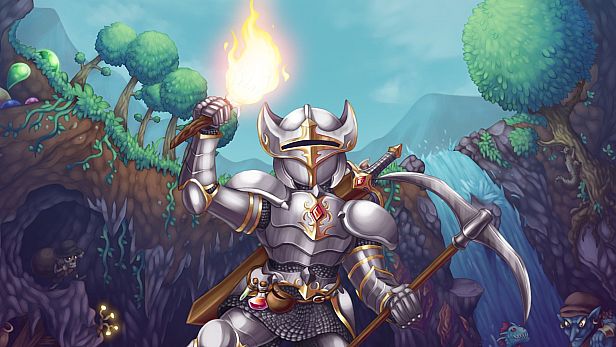








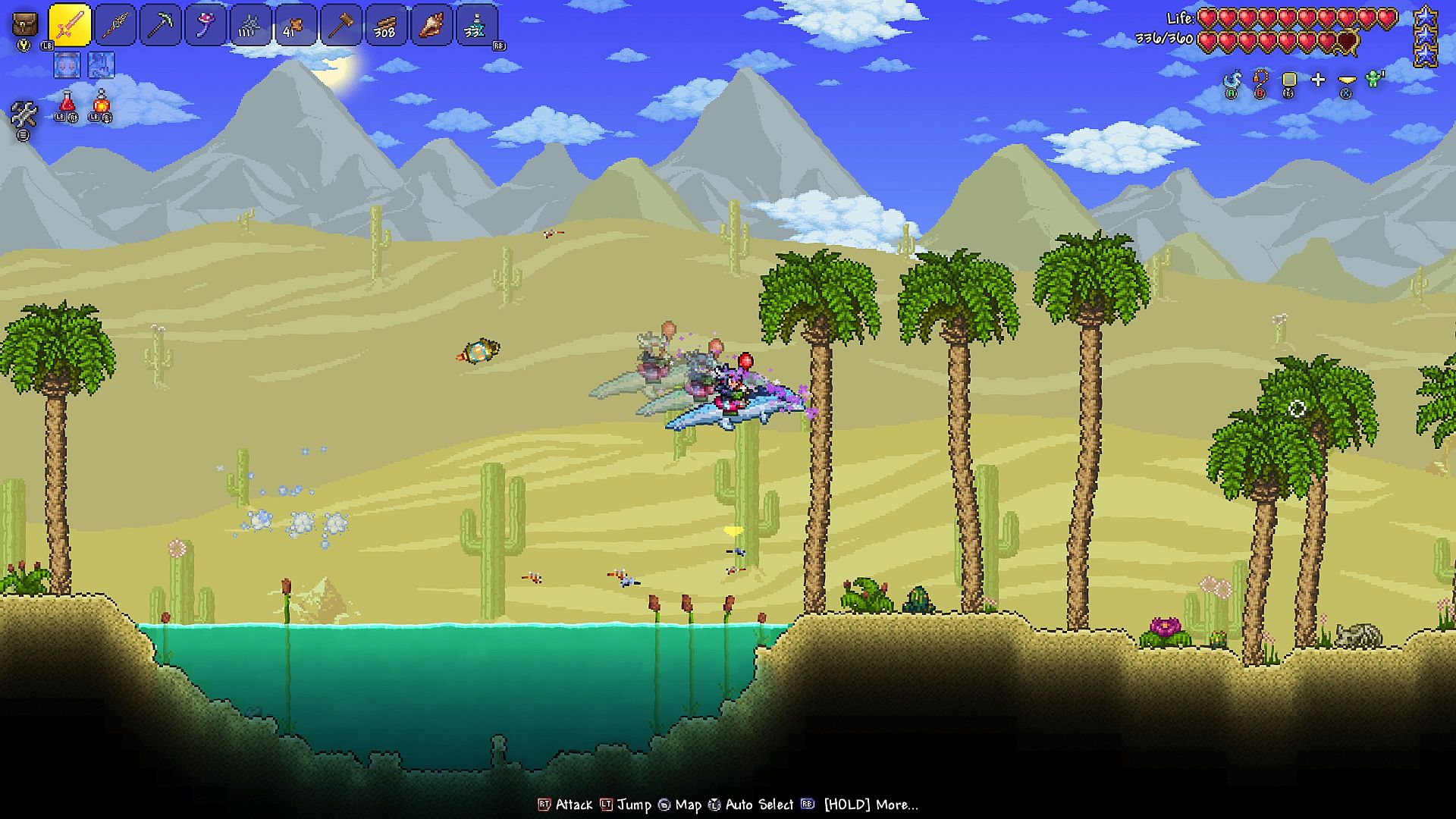
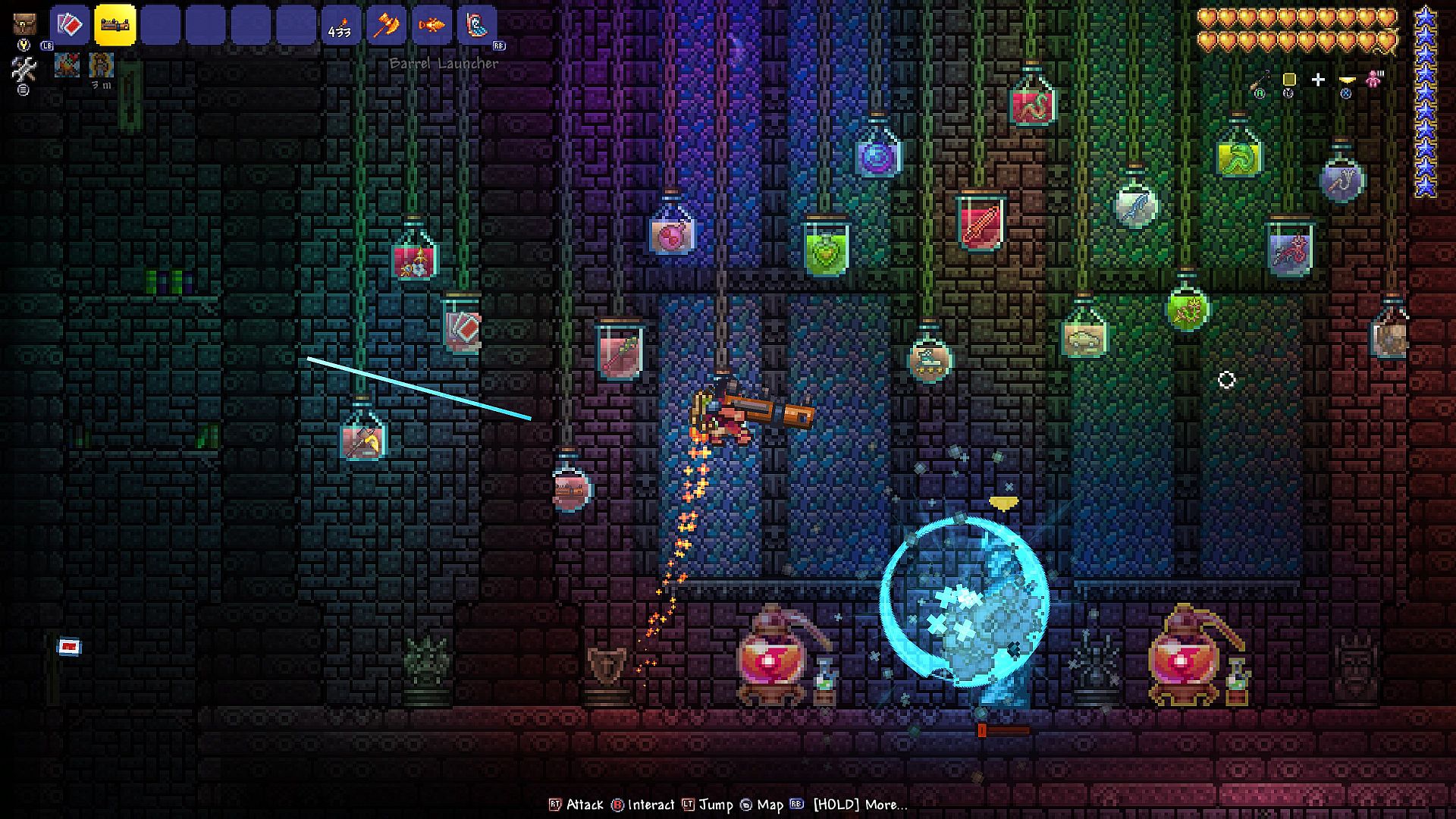
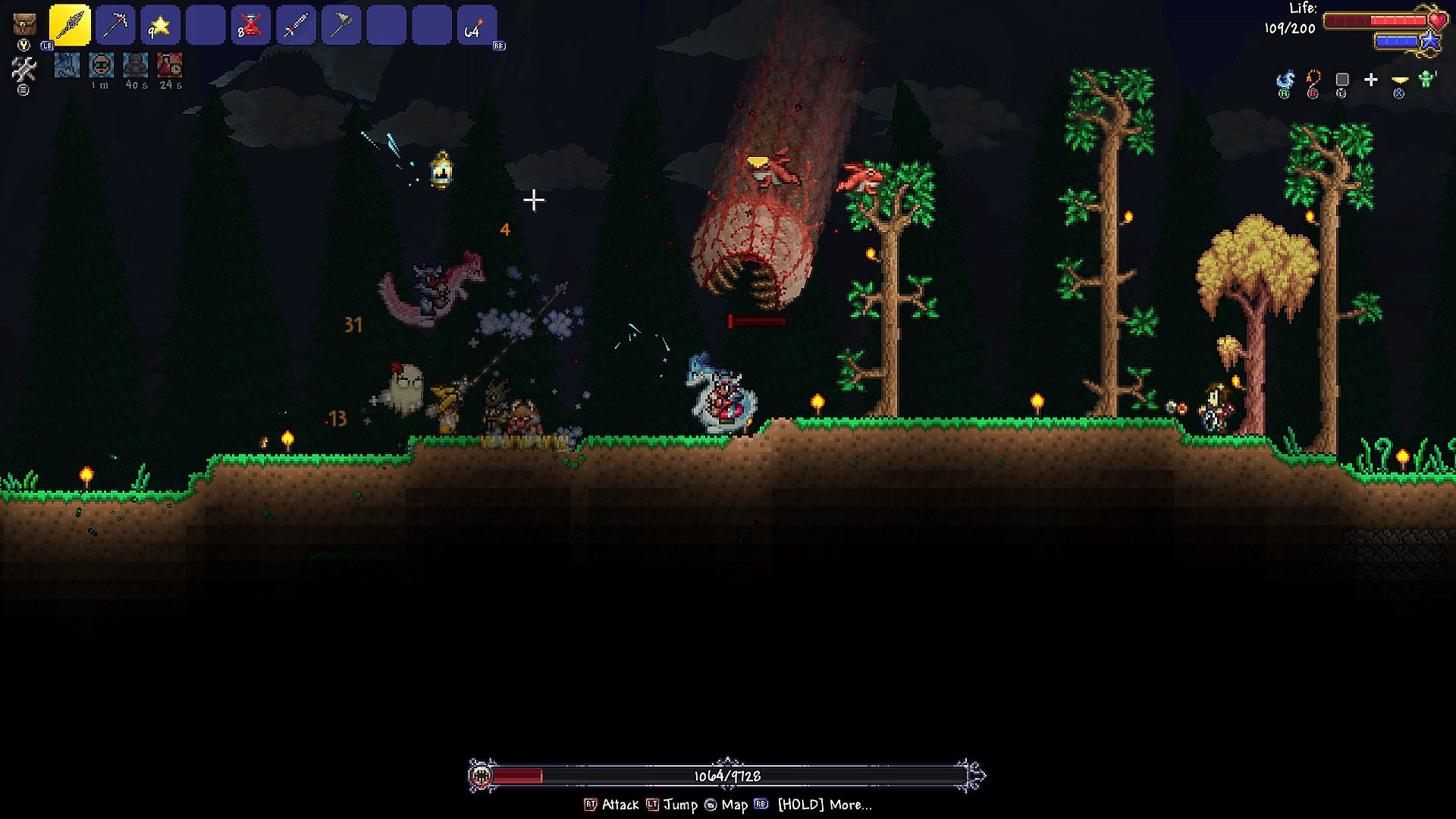
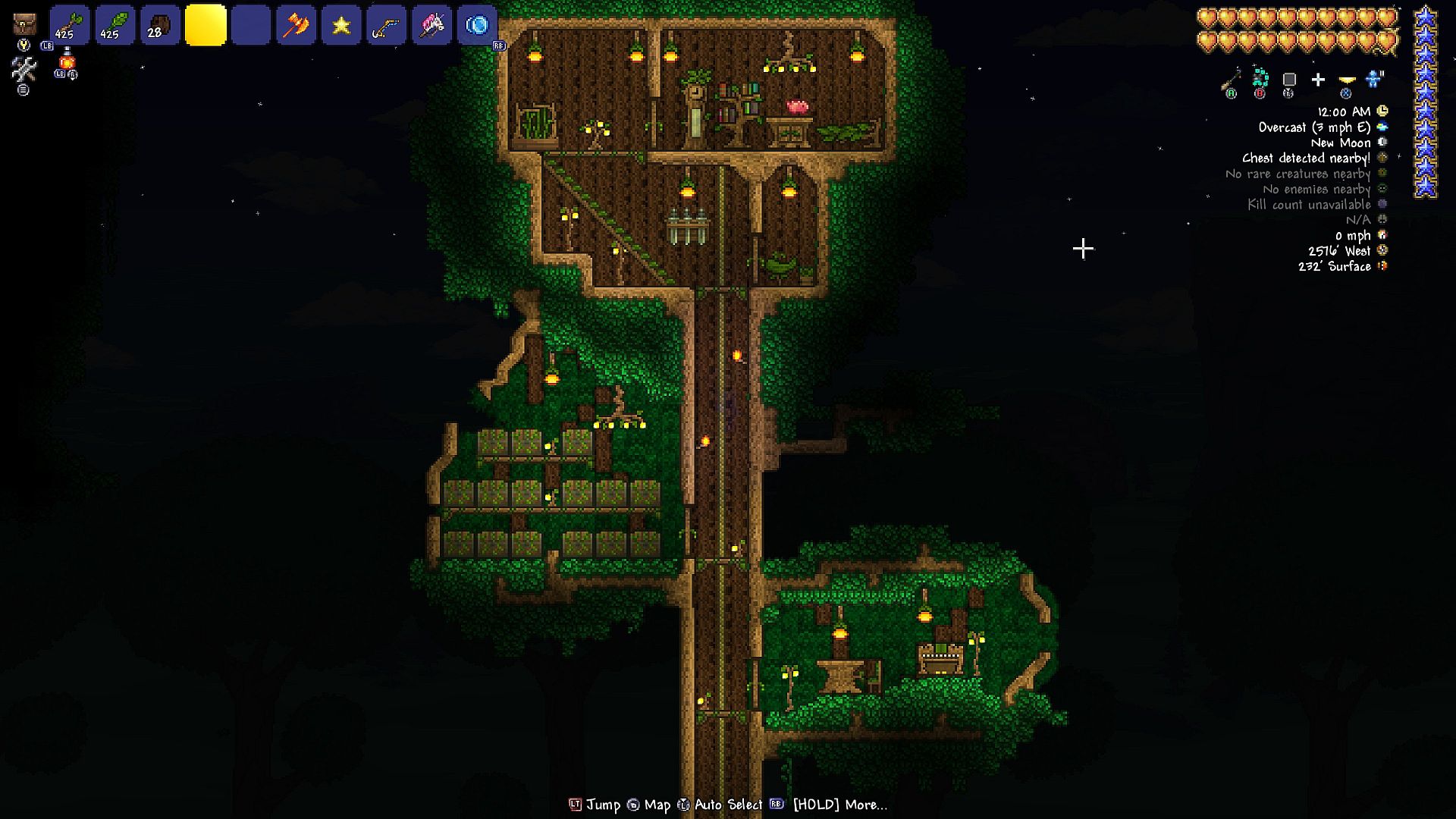
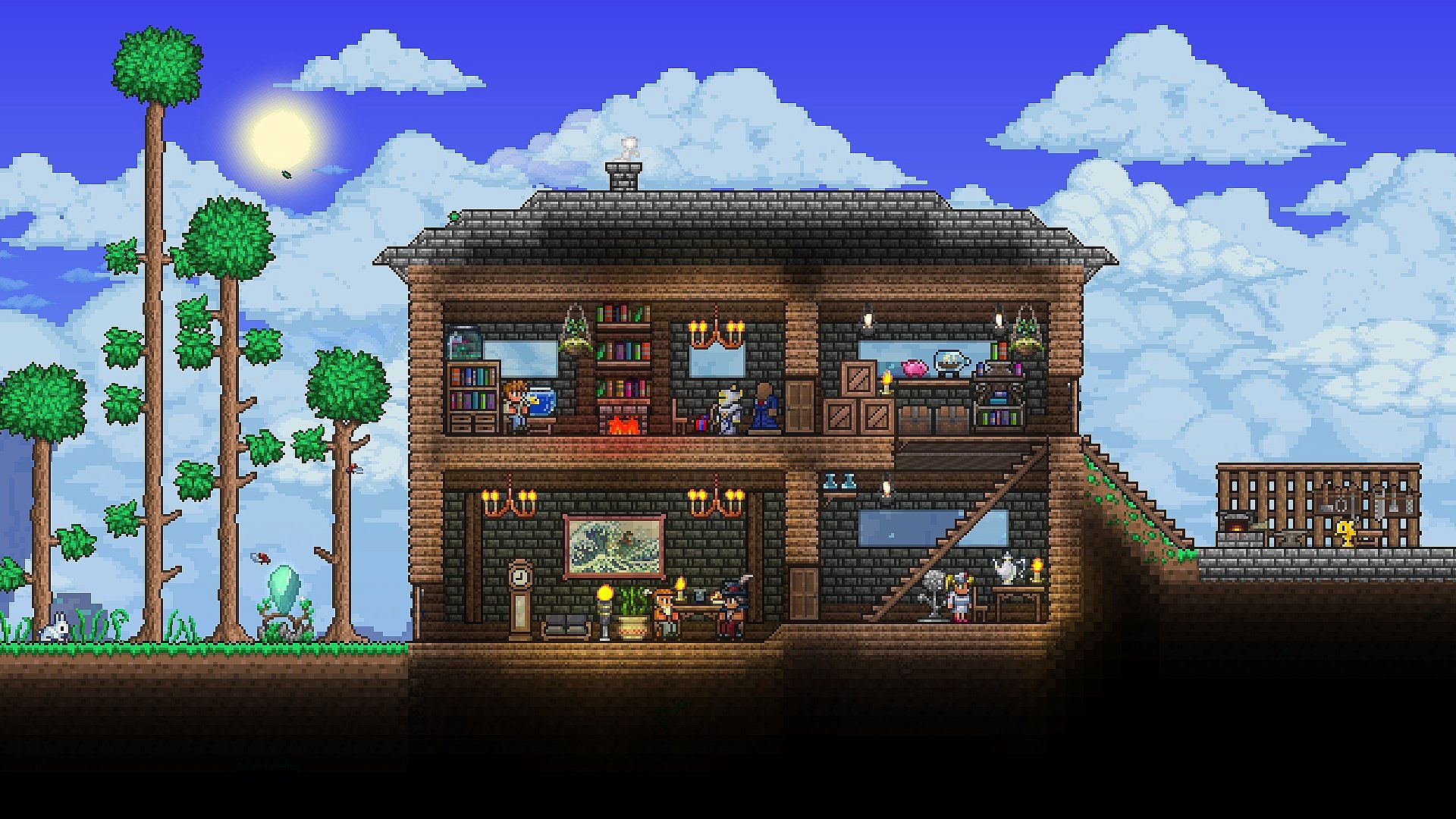
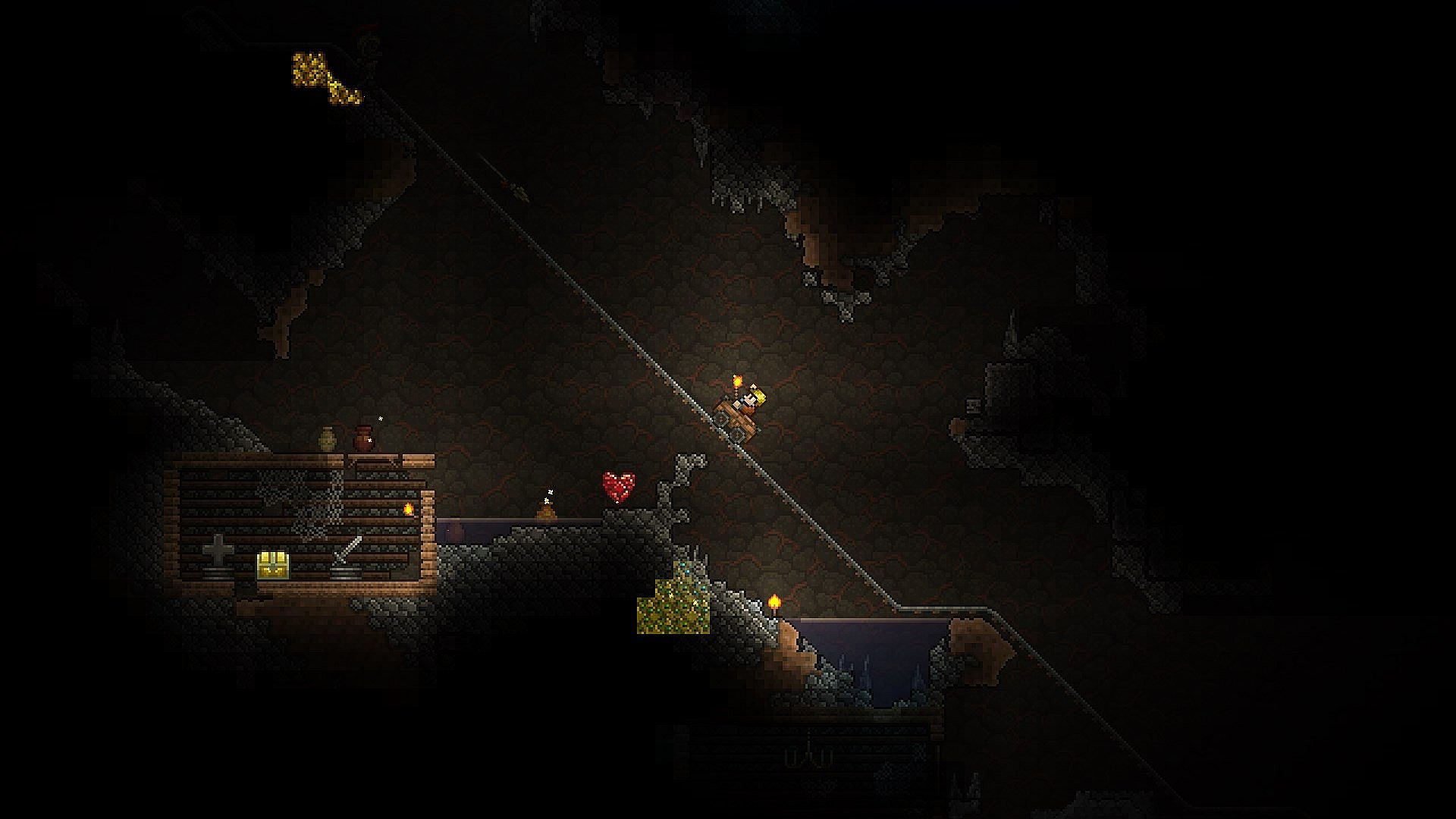
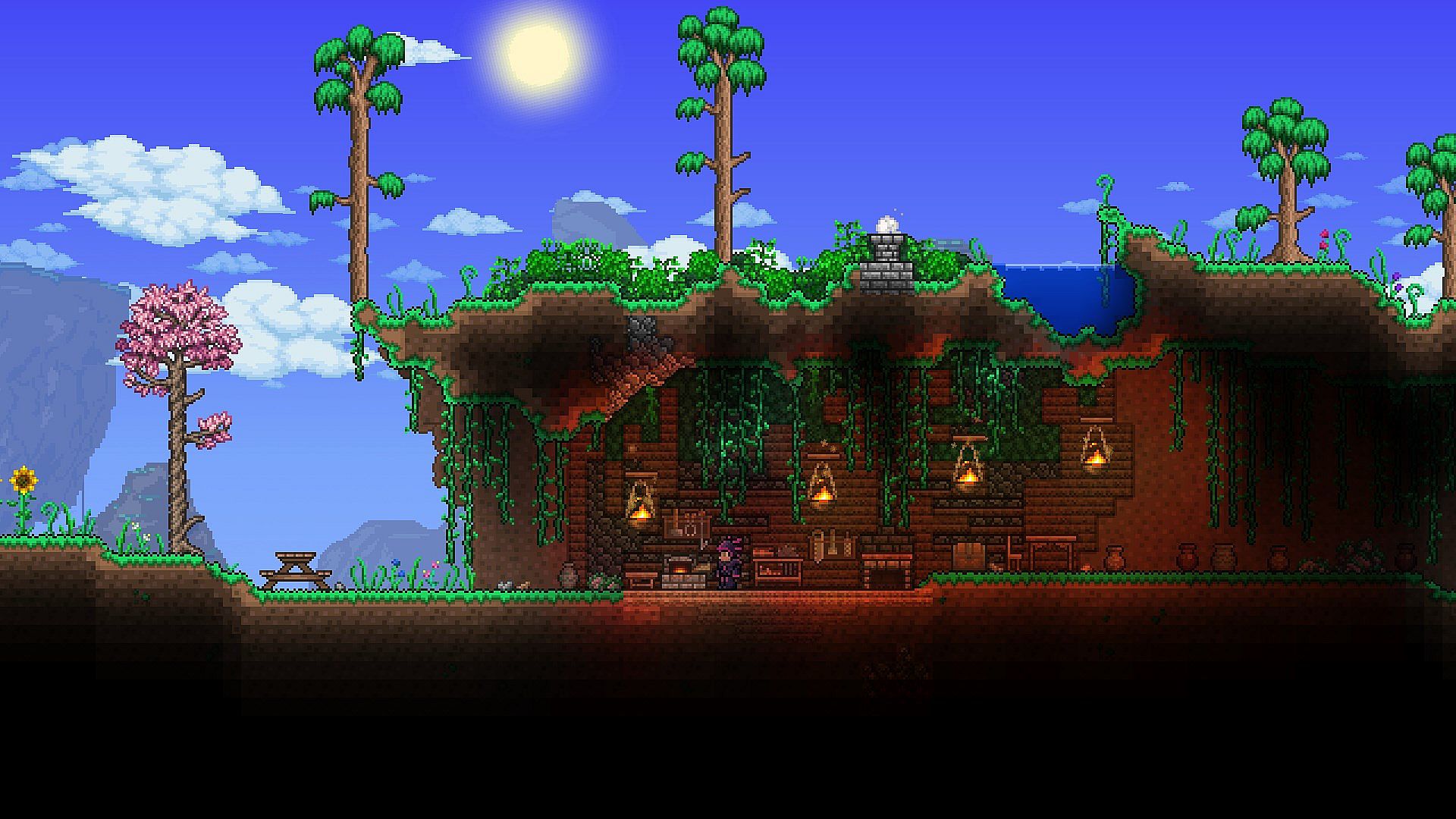
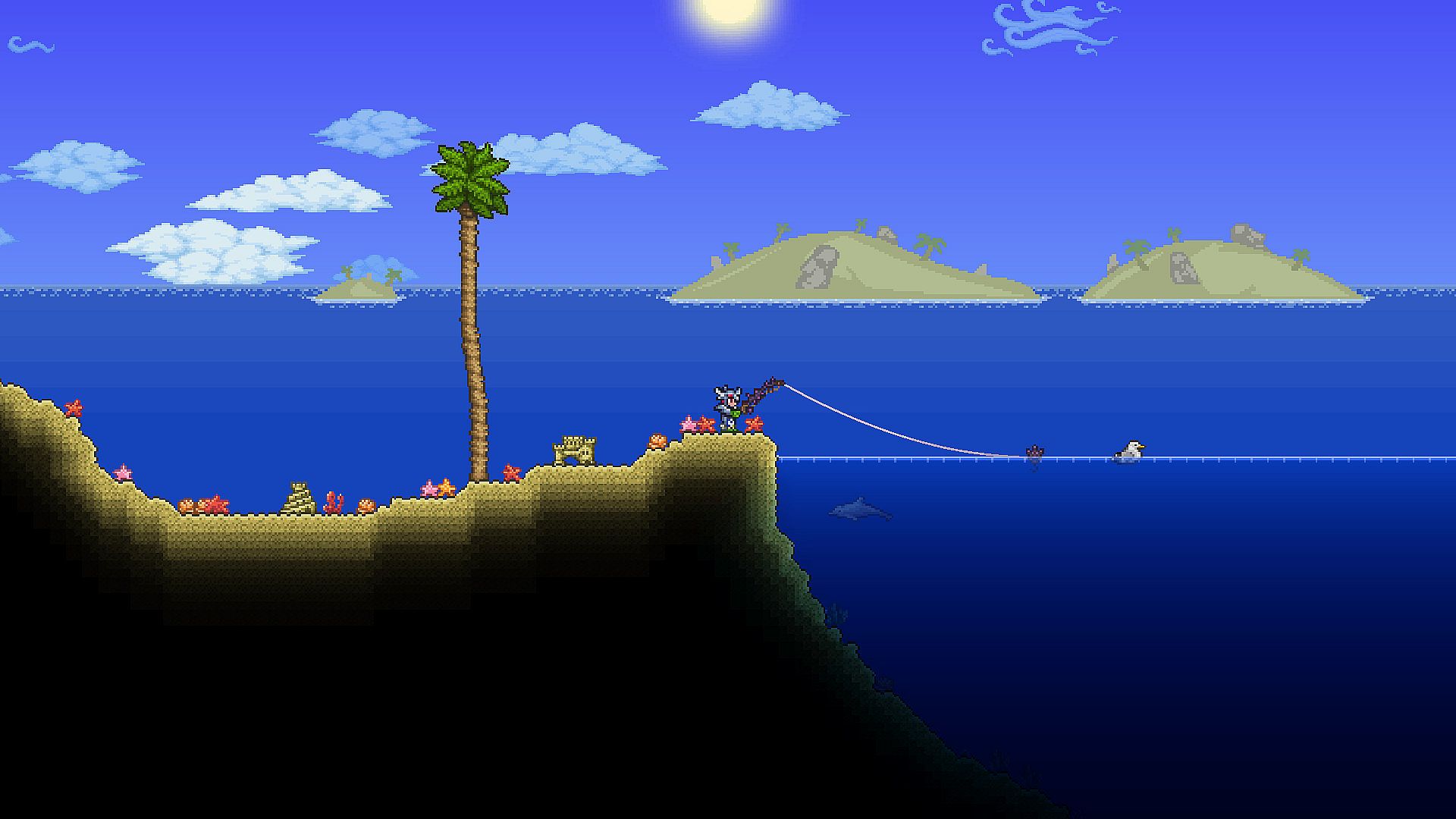
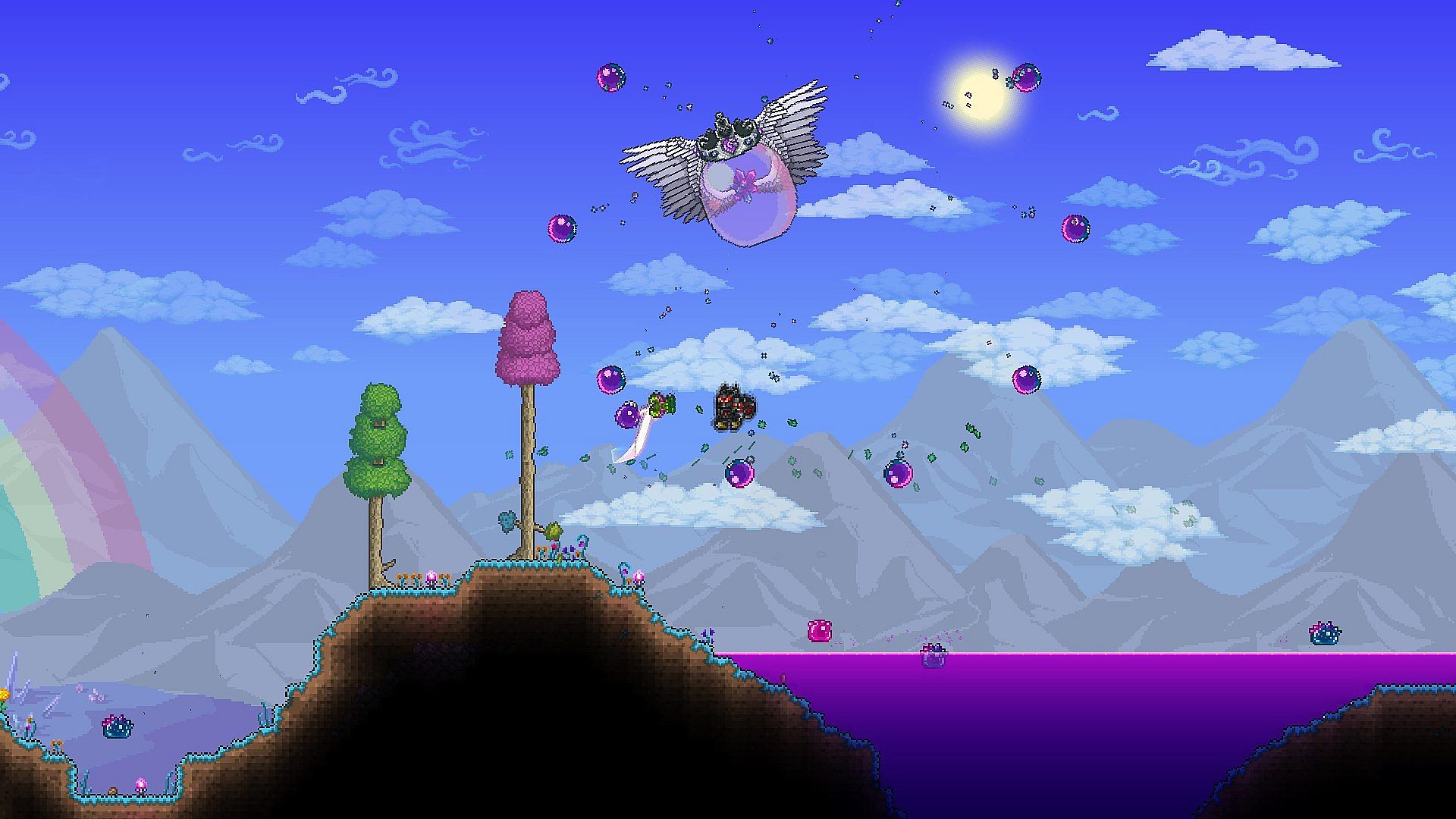
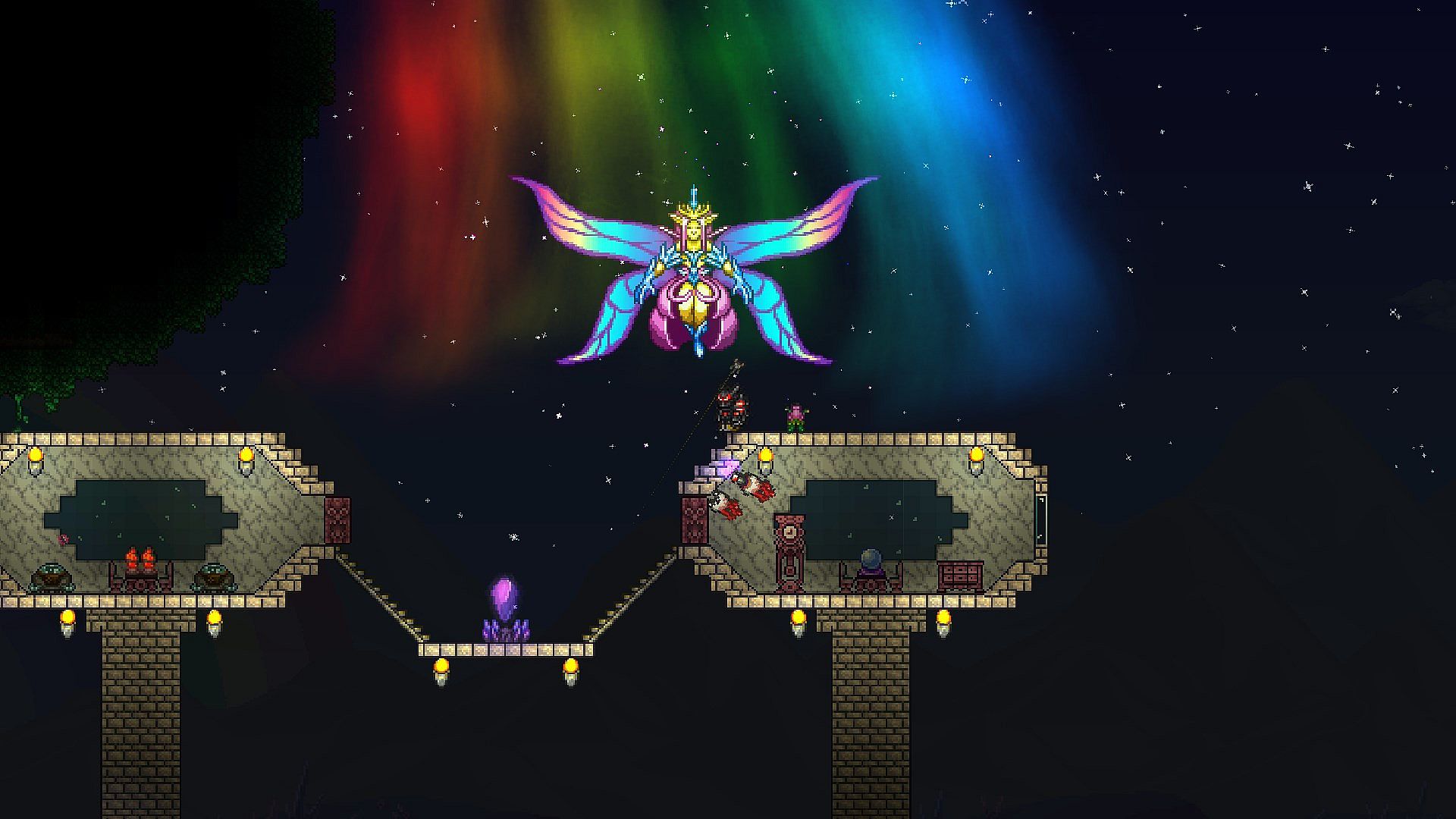
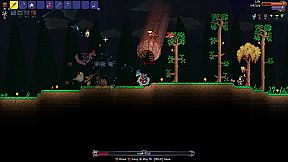
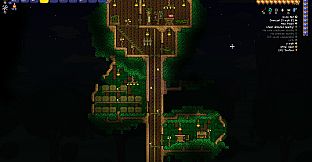
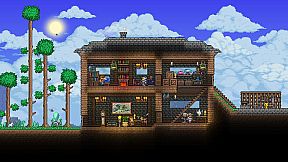
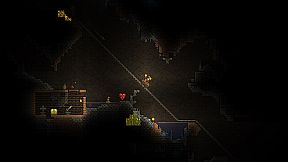
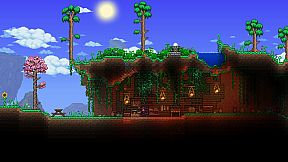
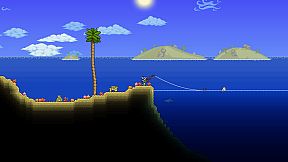
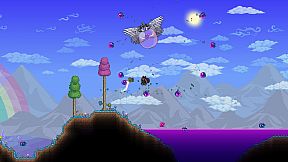
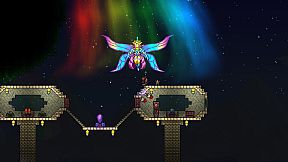
Terraria is a 2D action-adventure sandbox game that mixes exploration, combat, crafting, and building in a procedurally generated world. Players control a character who digs through terrain, battles enemies and bosses, gathers resources, and constructs bases or entire settlements. The experience blends classic platformer action with RPG-style progression and creative freedom, supported by a catalog of more than 5,000 items, over 25 NPCs, and hundreds of enemies and bosses.
Gameplay
The core loop revolves around gathering materials through mining and exploration, using them to craft weapons, armor, tools, and structures, then venturing deeper into dangerous biomes and caverns. Combat features a wide range of options including melee weapons, ranged firearms and bows, magic spells, and summoner minions with whips. Players progress by defeating bosses that unlock new areas and harder challenges, while events introduce waves of enemies or special encounters. Building goes beyond simple shelters to include functional housing for NPCs, traps, wiring systems for mechanisms, and decorative elements that expand over time. The world features day-night cycles, weather effects, and multiple layers from surface forests to underground depths and hellish lower regions, each with distinct enemies, resources, and hazards.
Quality-of-life systems support long sessions. A revamped crafting interface allows searching and organizing recipes while pulling materials automatically from nearby storage. Visual updates refresh many classic sprites, and balance changes refine weapon performance across classes. Mounts, pets, and transformation options add mobility and variety during travel and combat.
Game Modes
Terraria supports both single-player and multiplayer sessions. Multiplayer allows cooperative play with friends, including a spectator mode that lets waiting players view teammates' perspectives after death. PvP can be enabled for competitive matches within the same world. World creation offers several difficulty settings that affect enemy strength, loot, and mechanics. Classic provides the standard experience, while Expert and Master increase challenge with stronger foes and additional rewards like special treasure bags. Journey mode functions as a creative option with adjustable difficulty, item research for duplication, and tools to control time, weather, and spawns.
Special world seeds introduce unique rules and starting conditions. The Skyblock seed places players on a small floating island with limited resources, emphasizing careful planning and vertical building. A dedicated menu lets players combine multiple special seeds for customized runs, and existing seeds received refinements in recent updates.
Recent Content and Improvements
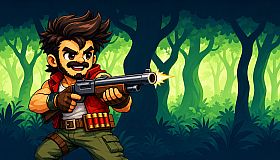
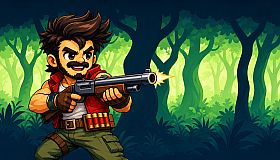
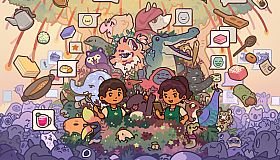
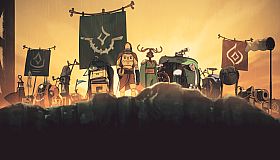
The 1.4.5 update, titled Bigger and Boulder, arrived in January 2026 and brought substantial additions across platforms including Xbox One and Xbox Series. It introduced Dead Cells crossover content with new weapons and combat accessories, along with iconic creatures from Palworld integrated into the world. Fifteen new furniture sets expand building options, while five new boulder types create fresh environmental hazards, including variants that fall upward or trigger during storms. Four new transformation mounts, additional whips, summoner prefixes, kites, critters, and decorative items further diversify gameplay.
Beyond new content, the update focused on systems. The crafting overhaul streamlines production, world seed selection gained flexibility, and numerous balance adjustments improved weapons and progression. Subsequent hotfixes through version 1.4.5.8.1 addressed stability and refined mechanics on console versions.
Is It Worth Playing?
Terraria delivers extensive replayability through its combination of survival crafting, boss progression, and open building. The large item and enemy variety supports many playstyles, from aggressive combat builds to elaborate construction projects. Ongoing support with major updates like 1.4.5 keeps the experience current, adding crossovers and refinements that appeal to both new and returning players. Multiplayer expands the scope for group exploration and shared bases, while single-player offers a complete solo campaign.
The game suits those who enjoy deep systems in a 2D sandbox format, where experimentation with classes, seeds, and building leads to unique sessions. Positive community feedback highlights the satisfying progression and creative freedom, making it a strong choice for extended play on Xbox consoles.