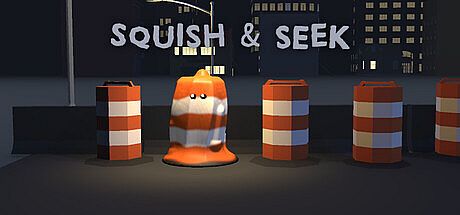


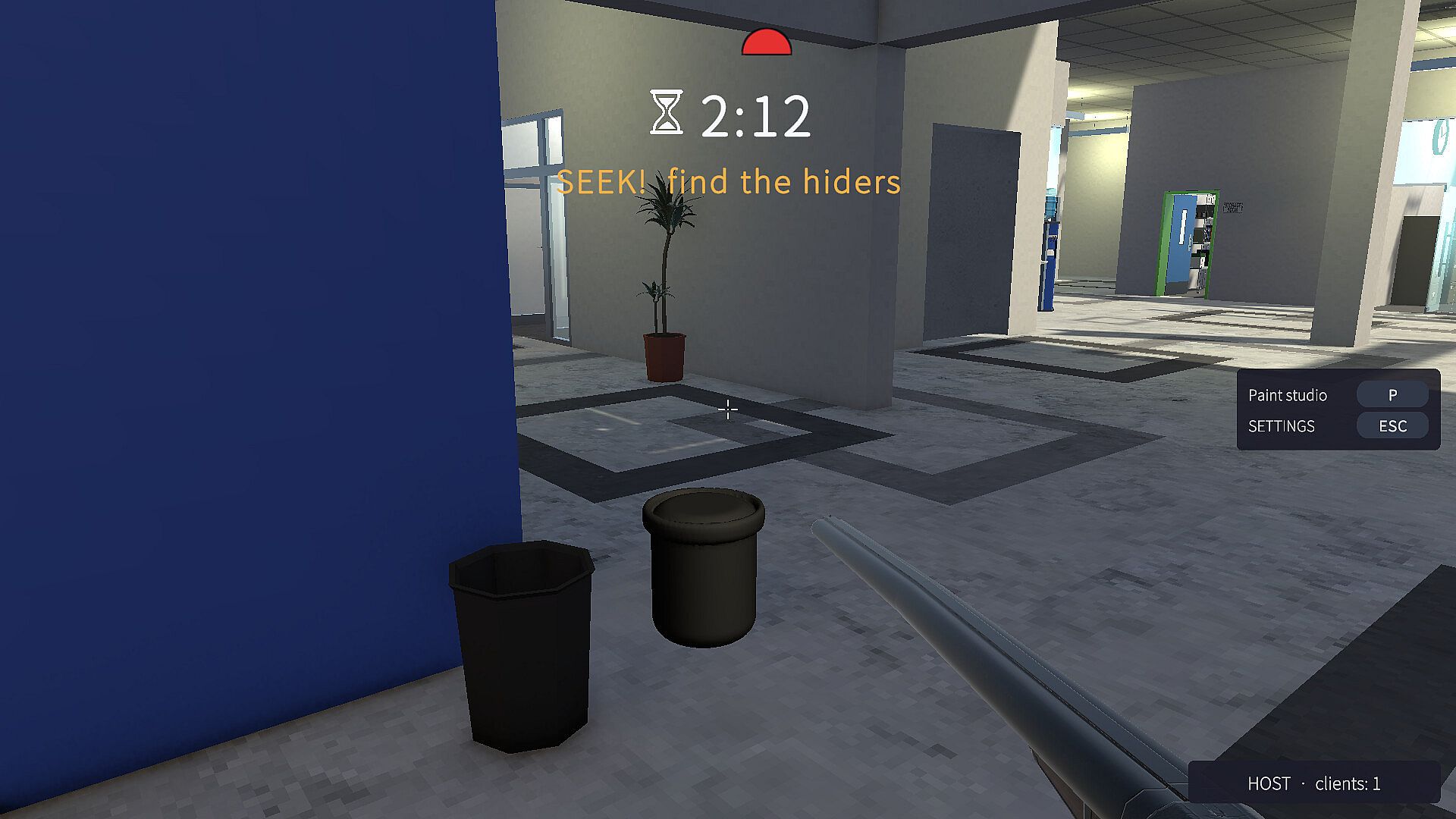
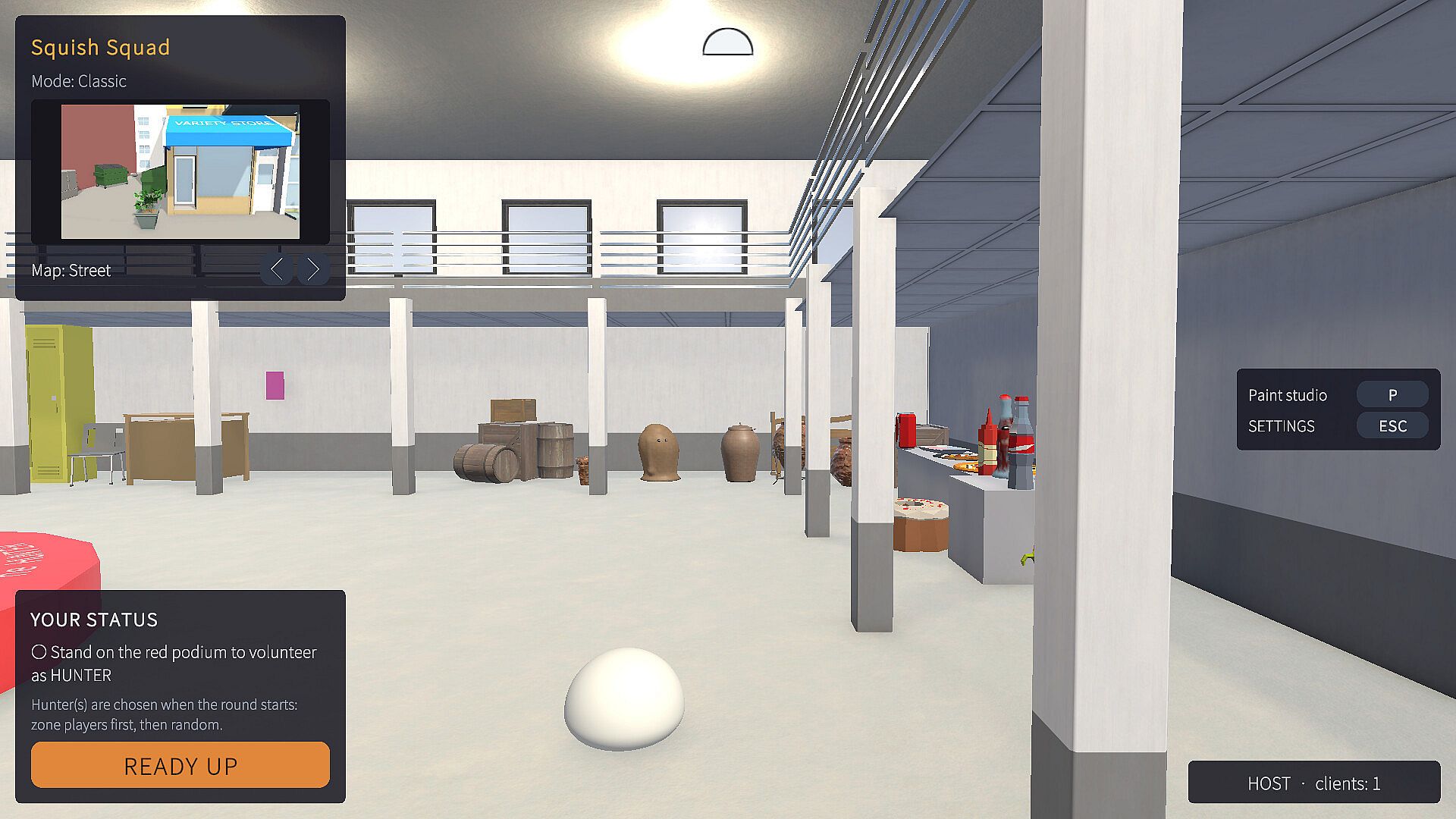
SQUISH & SEEK is a multiplayer hide-and-seek game built around clay sculpting and disguise on PC. Players shape a lump of clay into objects that blend with the environment, then attempt to remain undetected while hunters search the maps. The core loop revolves around creative modeling, color matching, and precise timing with the freeze mechanic to sell the illusion.
Gameplay
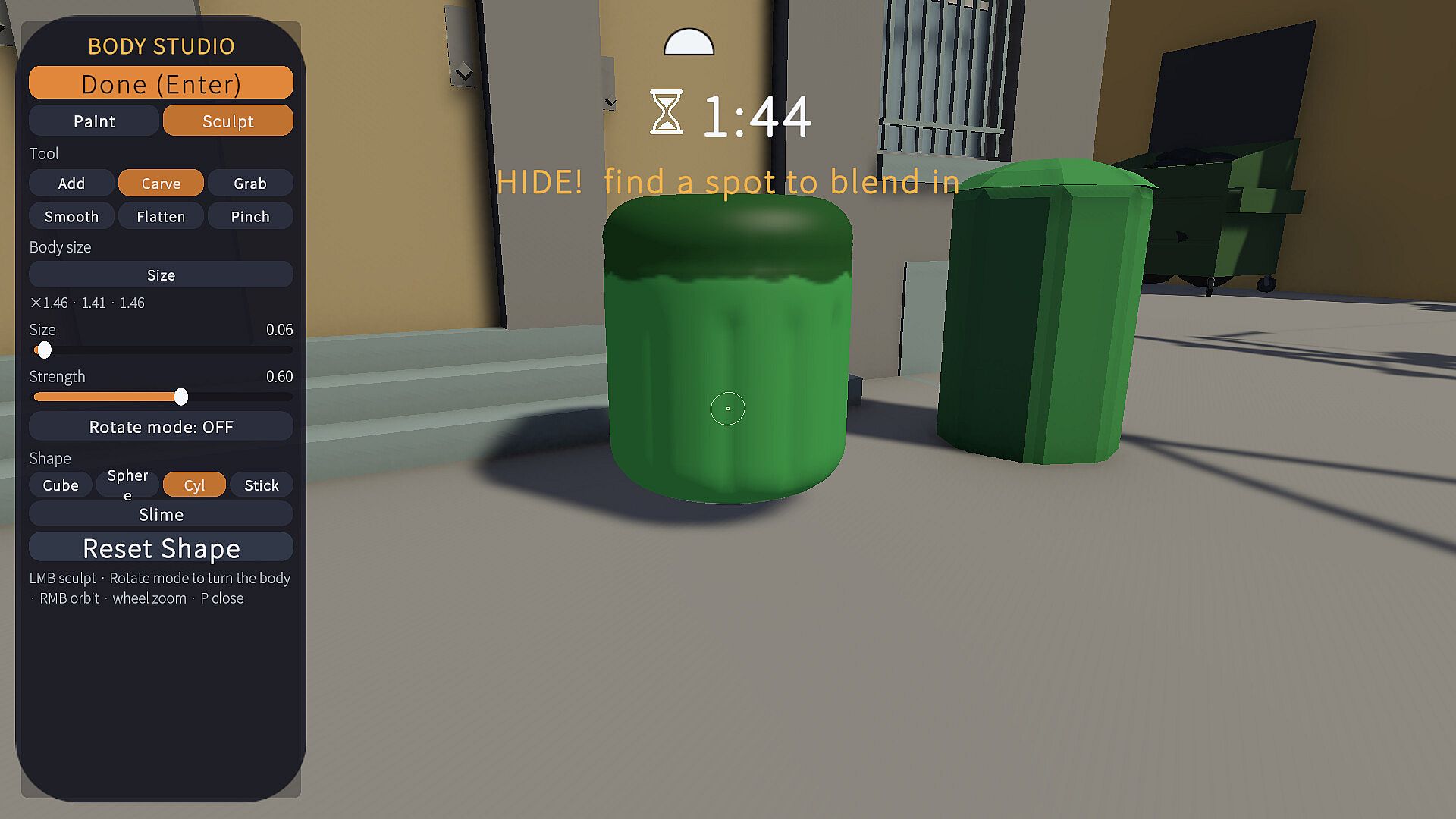
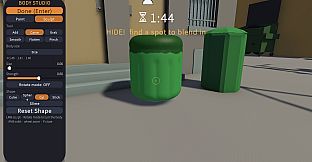
Each round begins with a hiding phase where participants manipulate clay using tools to add volume, carve details, smooth surfaces, flatten edges, grab and stretch sections, pinch forms, or inflate shapes. A face can be pulled like taffy, or an entire body resized to match nearby props such as barrels or soda cans. Eight brushes handle painting, supported by metalness and gloss sliders for surface properties. The color picker lets players sample any object in the world directly, copying tones from walls or furniture to improve blending. Starting shapes include a cube, sphere, cylinder, slime, or a rigid stick figure for those who prefer minimal effort.
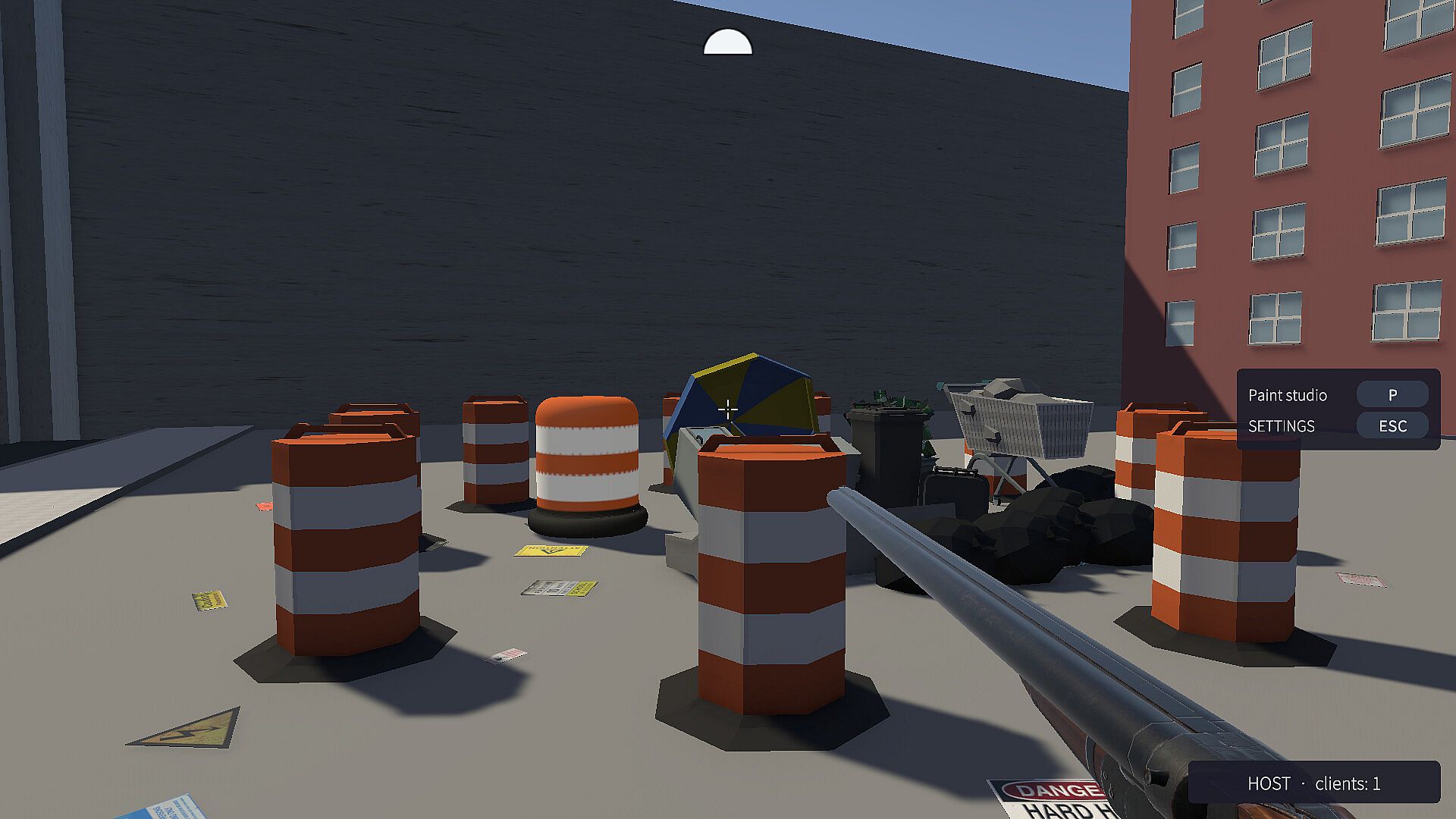
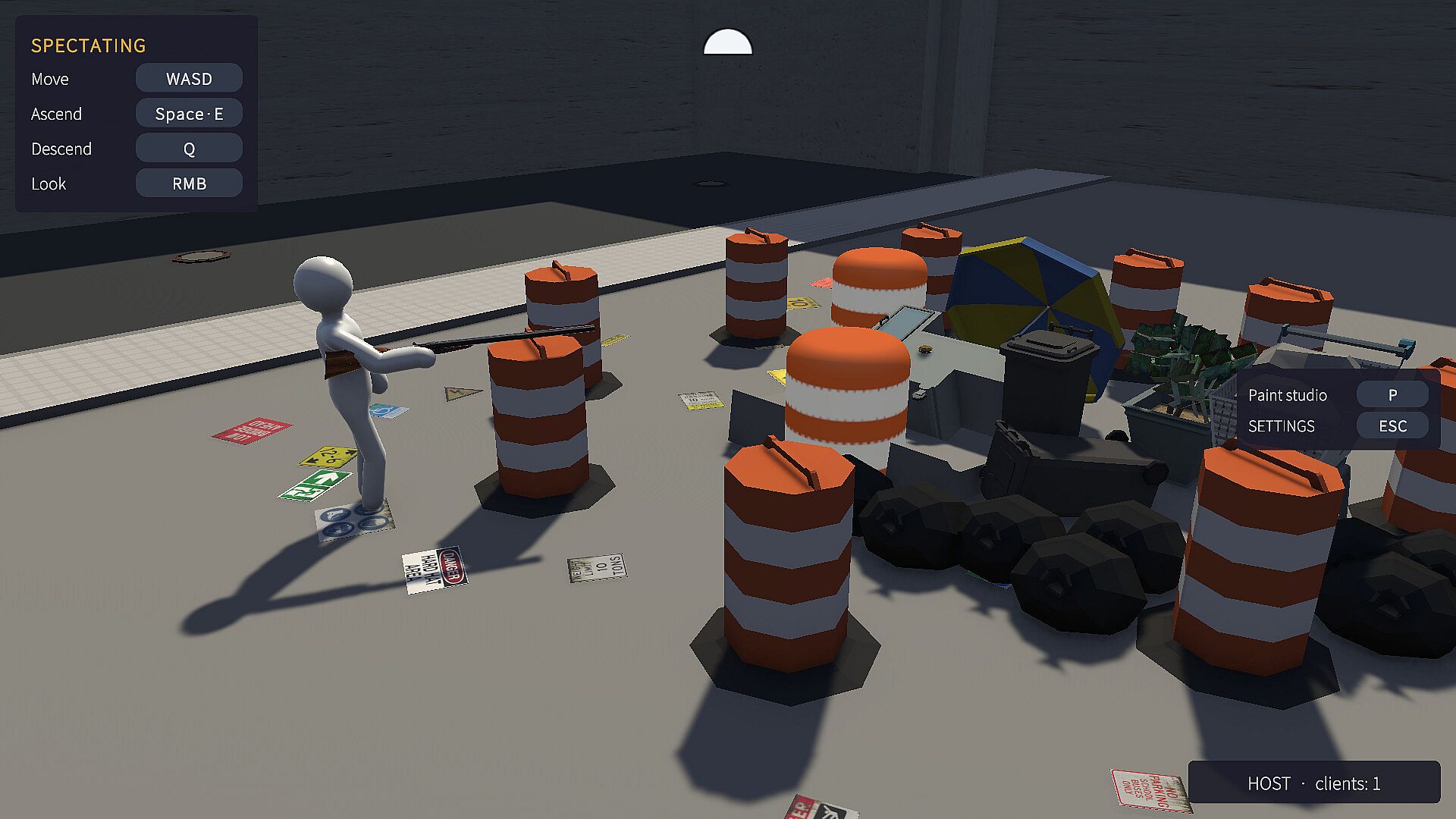
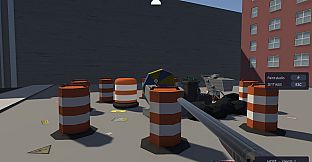
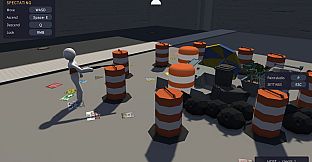
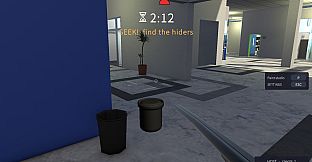
Once sculpted, the freeze command locks the model in place and turns it into static furniture. The camera detaches during this state, allowing free flight to observe the hunter's path and reactions. A walking blob immediately stands out, but a well-frozen sculpture can fool multiple passes. Hunters carry a gun and must decide which suspicious lumps to shoot, with misses simply wasting time on a shared clock. Hosts can activate a taunt option that forces every hider to emit a sound at intervals, revealing positions without direct line of sight.
Game Modes
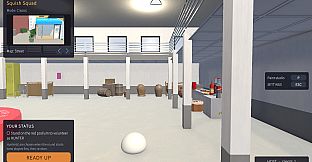
Two distinct modes alter the flow of each session. In Classic mode, detection removes a player from the round, and the last remaining hider claims victory. Infection mode converts caught players into additional hunters, shifting the balance as the seeker team grows and the remaining hiders face increasing pressure. Both modes support adjustable timers for hiding and seeking phases, plus options for reveal mechanics and taunt frequency.
Room setup accommodates 2 to 16 participants, with separate allocation of hunter and hider slots up to eight each. Four maps provide varied backdrops: a subway station, a school, a street, and a temple. Rooms can be public or password-protected, and Steam invites allow direct joining. Hosts control hiding duration, seeking duration, reveal settings, taunt intervals, and a global pause that halts the timer for the entire group. Reconnection restores a player's sculpted model if they drop out briefly.
Maps and Customization
Each map encourages different sculpting strategies based on available props and lighting. The subway station offers metallic surfaces and linear corridors, while the school features desks, lockers, and classroom clutter. Streets provide urban fixtures such as fire hydrants and vehicles, and the temple supplies ornate architectural details. Players experiment with scale and texture to match these elements, often refining a single model over multiple rounds.
Basic starting forms reduce setup time for quick matches, yet the full sculpting toolkit rewards investment. Color theft and material sliders add layers of detail that only become apparent under close hunter inspection. The system supports both rapid, functional disguises and elaborate replicas that players refine across sessions.
Is It Worth Playing?
SQUISH & SEEK suits groups that enjoy creative problem-solving and light-hearted deception in short rounds. The sculpting tools and freeze camera create memorable moments when a disguise holds under direct scrutiny or when a hunter passes inches away. Sessions scale from small private groups to larger lobbies, and the two modes provide variety without overwhelming complexity. Players who appreciate precise timing, visual creativity, and social deduction will find consistent engagement across the available maps and player counts. Those seeking solo experiences or deep progression systems may find the focus on multiplayer rounds limiting. The game runs fully in English, Korean, Japanese, and Simplified Chinese, broadening accessibility for international groups.