


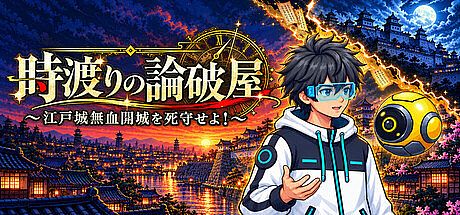


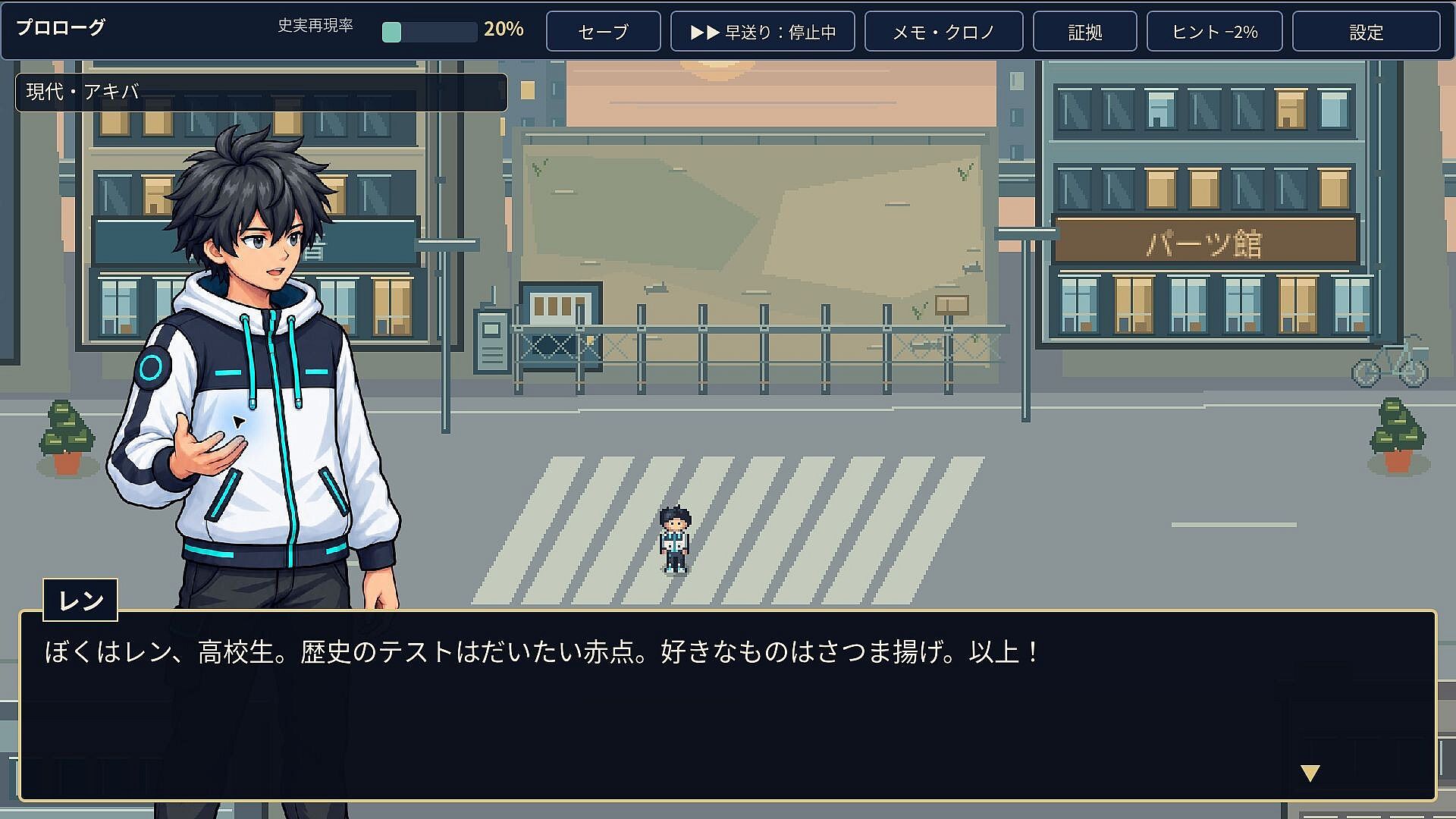

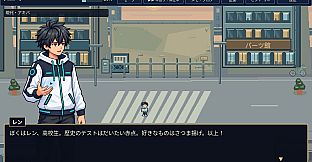
時渡りの論破屋 ~江戸城無血開城を死守せよ!~ is an adventure game for PC that blends time travel, historical investigation, and evidence-based deduction. High school student Ren teams with his AI companion Chrono to travel to the final days of the shogunate in Edo. Their mission centers on safeguarding the bloodless surrender of Edo Castle by ensuring the pivotal meeting between Katsu Kaishu and Saigo Takamori proceeds without interference from history-altering forces.
Gameplay
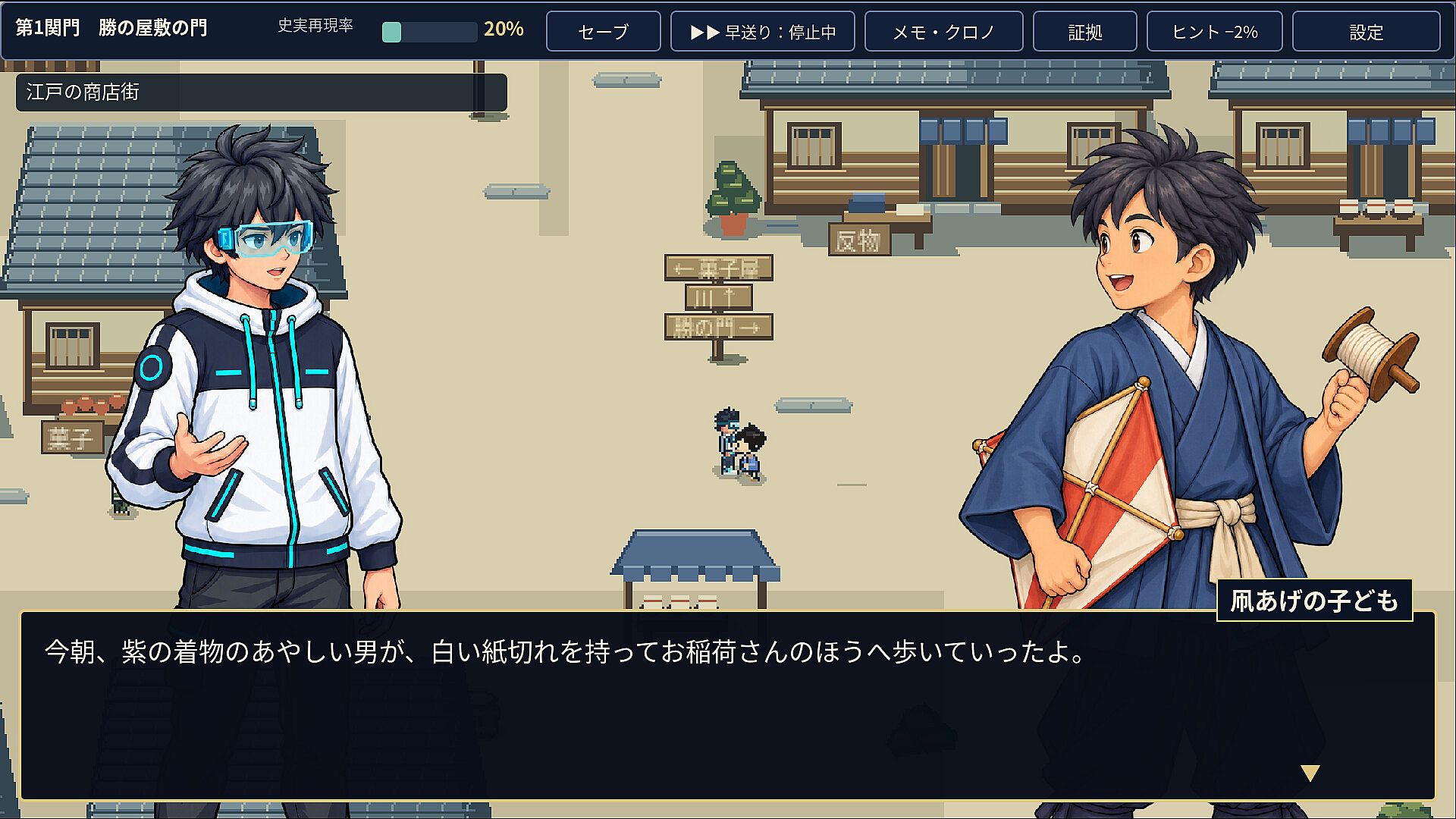
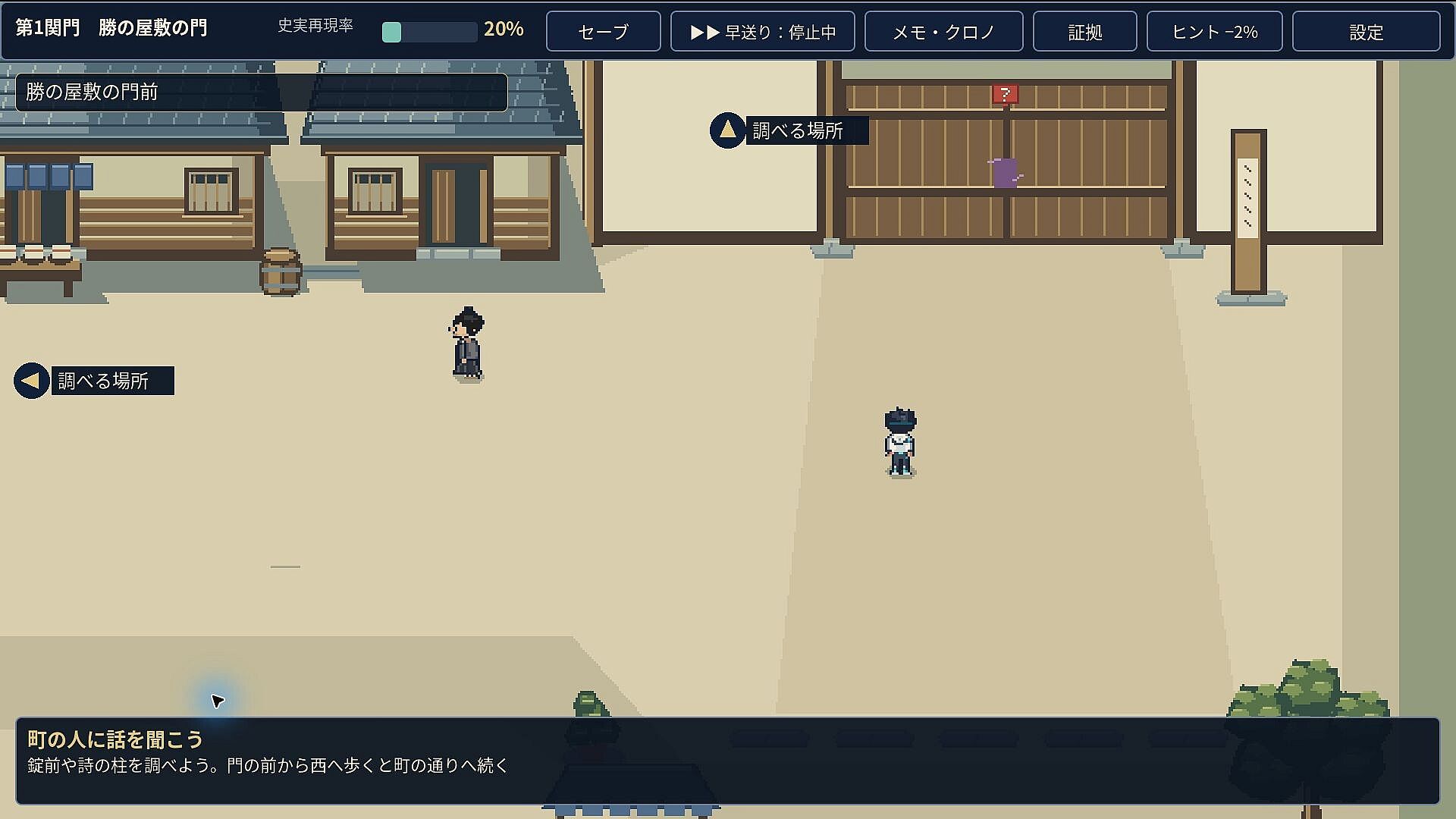
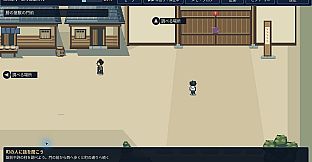
Players control Ren as he walks through Edo streets and residences. Everyday objects and conversations become sources of information. The Insight system lets players gather notes that combine into new clues, gradually opening paths to deeper mysteries. Exploration feels deliberate, with attention paid to details that might otherwise go unnoticed in the period setting.
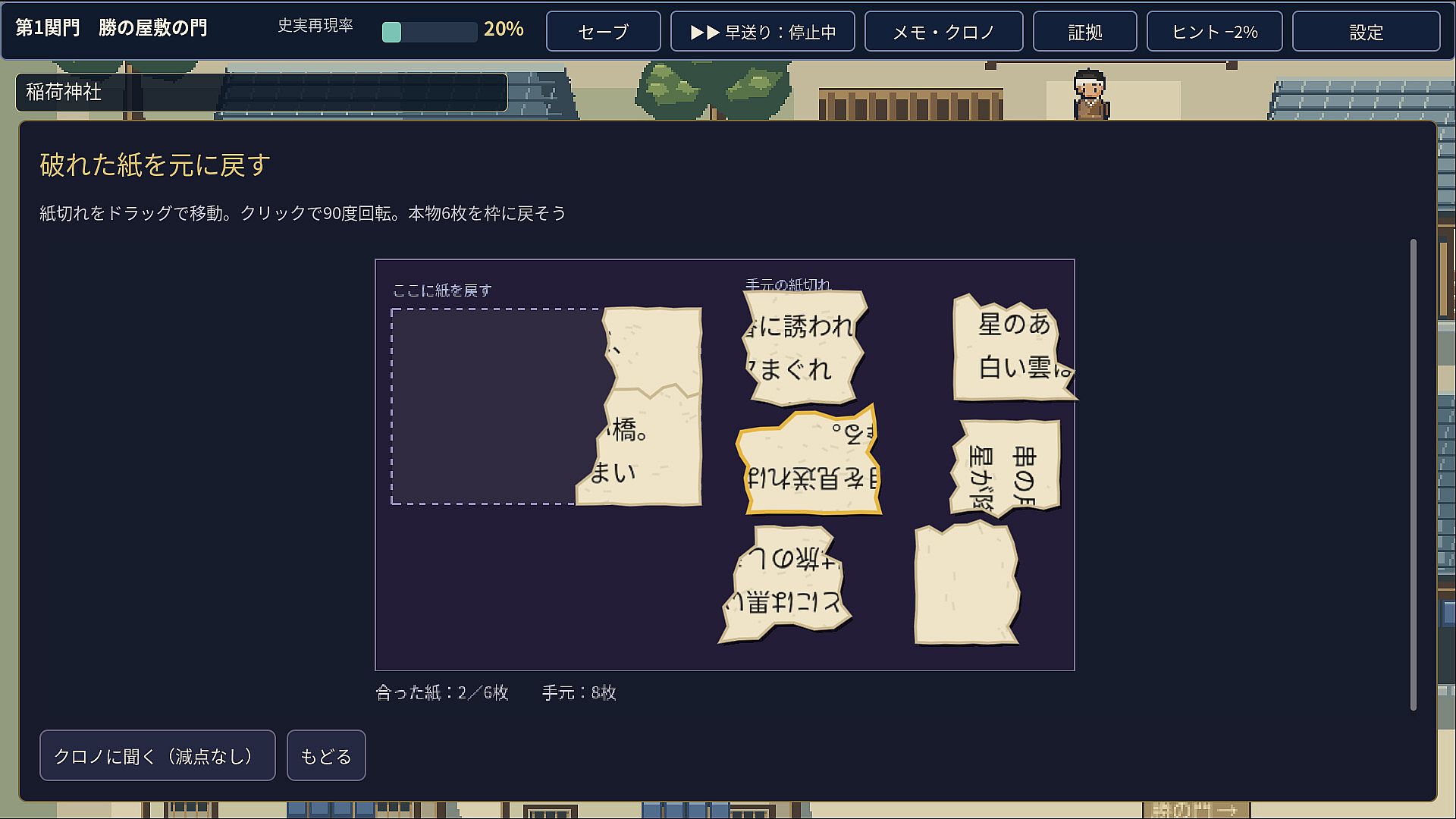
Puzzle solving forms a core loop. Torn documents, mechanical locks, and suspicious letters require players to match physical evidence against details collected during investigation. Progress hinges on recognizing when scattered pieces connect, turning isolated finds into actionable breakthroughs without relying on external hints beyond Chrono's guidance.
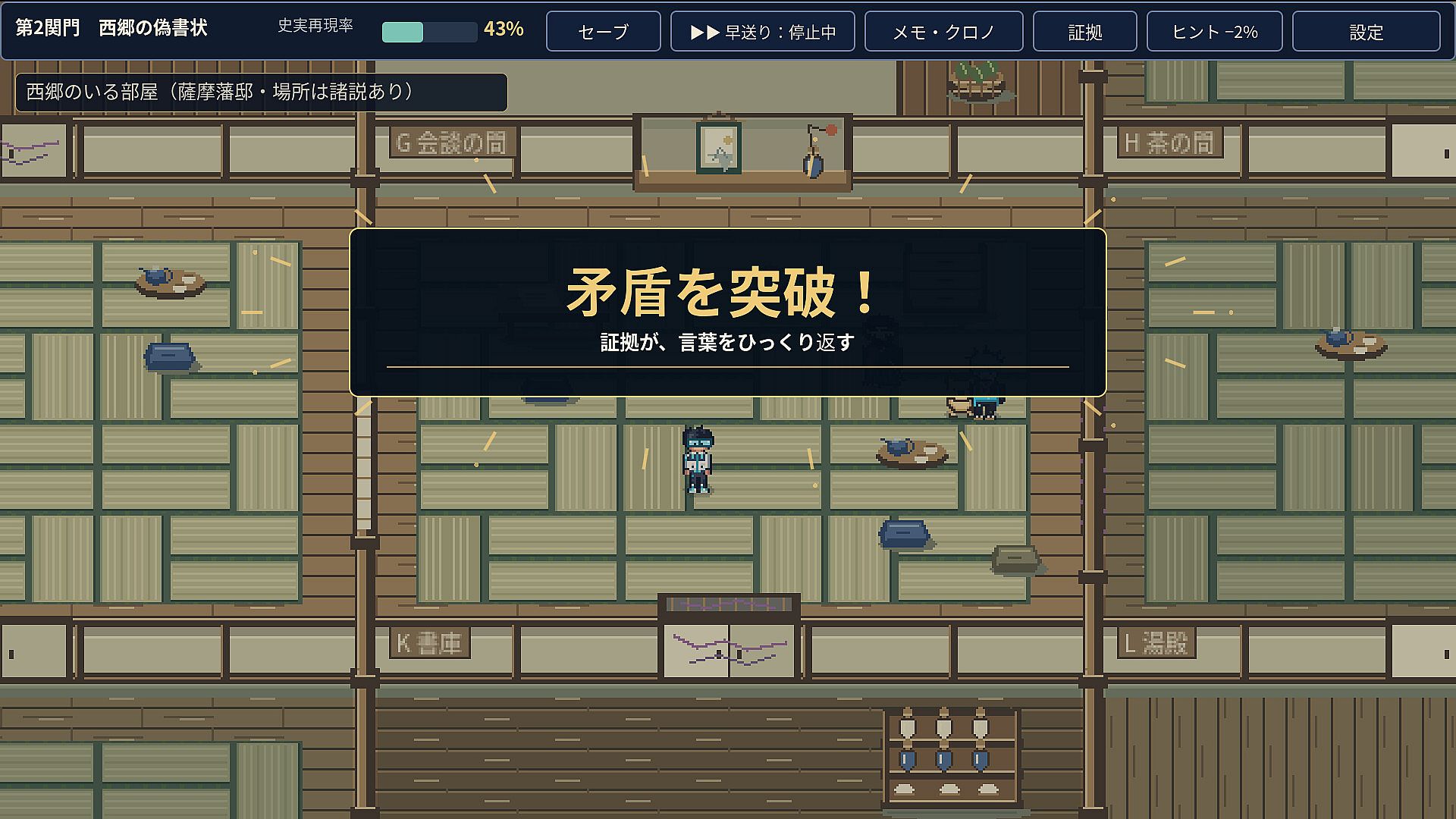
The deduction phase demands careful selection of evidence. Opponents present claims drawn from testimony, objects, and historical records stored by Chrono. Players must choose supporting proof while avoiding any reference to future events that would break immersion for characters living in the era. Successful refutations expose attempts to rewrite history through arguments that remain convincing to people of the time.
Game Modes
The experience unfolds as a single-player narrative adventure. Three distinct challenges structure the main progression: securing the gate to Katsu's residence, addressing the letter that enraged Saigo, and resolving a new incident that threatens the critical meeting. Each challenge integrates exploration, puzzle resolution, and evidence presentation in sequence.
Chrono provides ongoing hints and directional support throughout these scenarios. Deductions receive evaluation via a Historical Accuracy score that tracks how well evidence choices align with the period. This score influences the path toward different endings, encouraging players to refine their investigative approach across repeated playthroughs of the challenges.
Story and Historical Context
The narrative draws inspiration from real figures and events of the Bakumatsu period while incorporating fictional elements in dialogue, incidents, and puzzle design. Ren's time-travel journey positions him as an outsider who must operate within the constraints of 19th-century knowledge and beliefs. Chrono supplies factual historical data, yet the AI companion also serves as a bridge that prevents modern information from leaking into conversations.
Players must balance investigative freedom with strict rules about temporal consistency. Every piece of evidence presented must stand on its own merits for characters who lack knowledge of later history. This constraint shapes both puzzle solutions and debate outcomes, creating tension between what the player knows and what can be safely revealed.
Is It Worth Playing?
The game suits players who enjoy methodical exploration paired with logical deduction and evidence-driven confrontations. Its structure rewards careful observation and precise selection of supporting details over rapid action or combat. The Historical Accuracy evaluation adds replay value by tying performance directly to narrative branches and conclusions.
Those drawn to historical fiction with puzzle and debate mechanics will find the core loop consistent and focused. The single-player format emphasizes personal investigation without multiplayer elements or additional modes. Availability remains limited to the PC platform described in the title information.











