

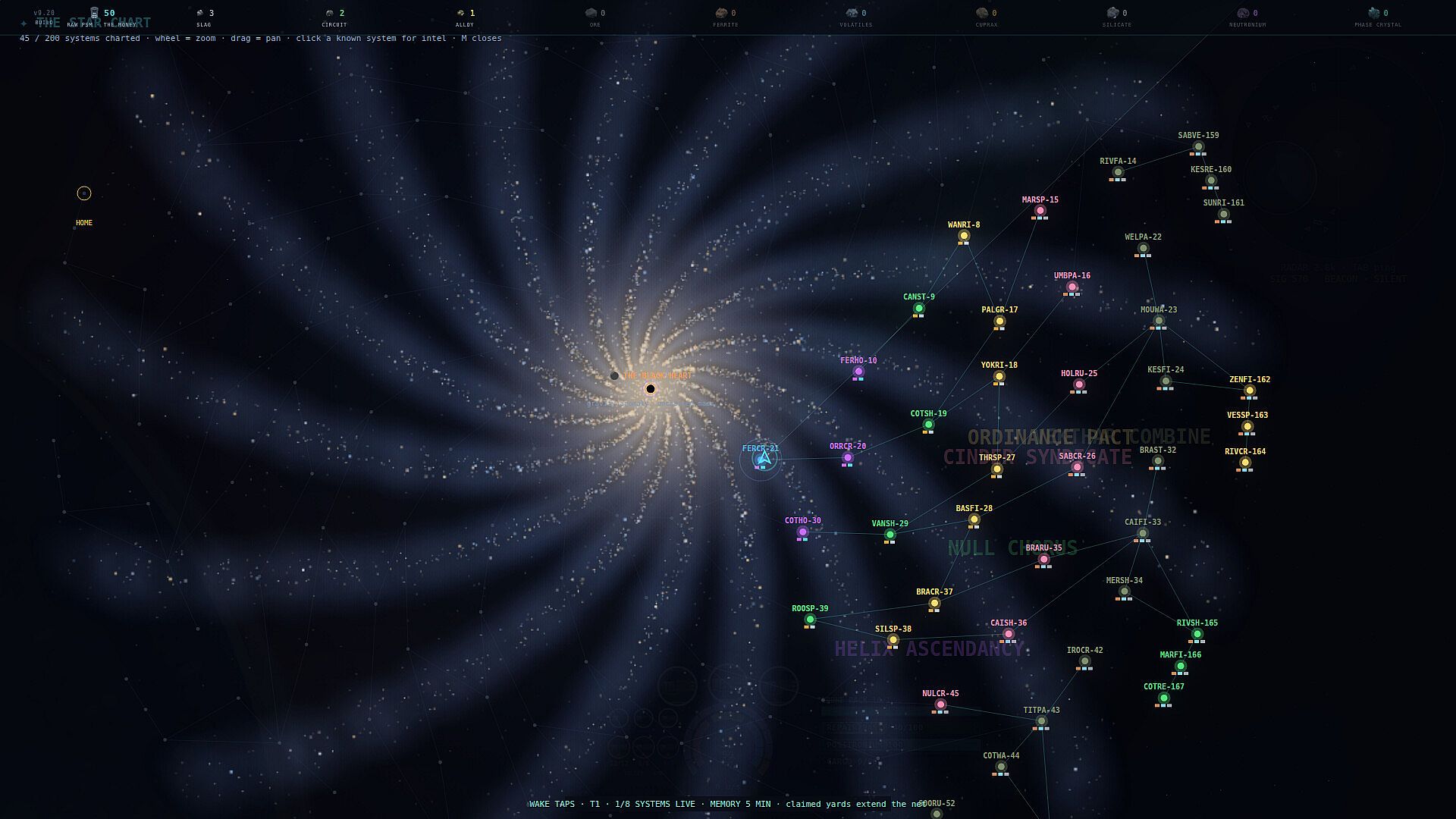
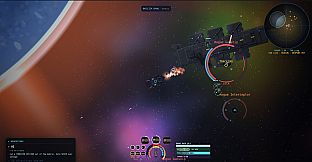
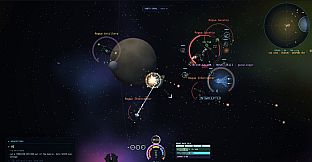
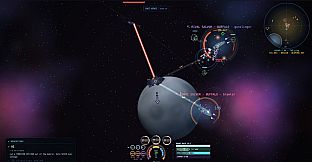
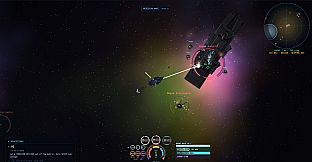

SALVOR ADRIFT is a singleplayer action strategy RPG simulation adventure set across two hundred star systems on PC. Players wake inside a salvage frame with every route between systems sealed by machines that control the remaining infrastructure. The core loop centers on stripping wrecks for parts, fuel, and gear while managing heat buildup during combat and exploration.
Gameplay
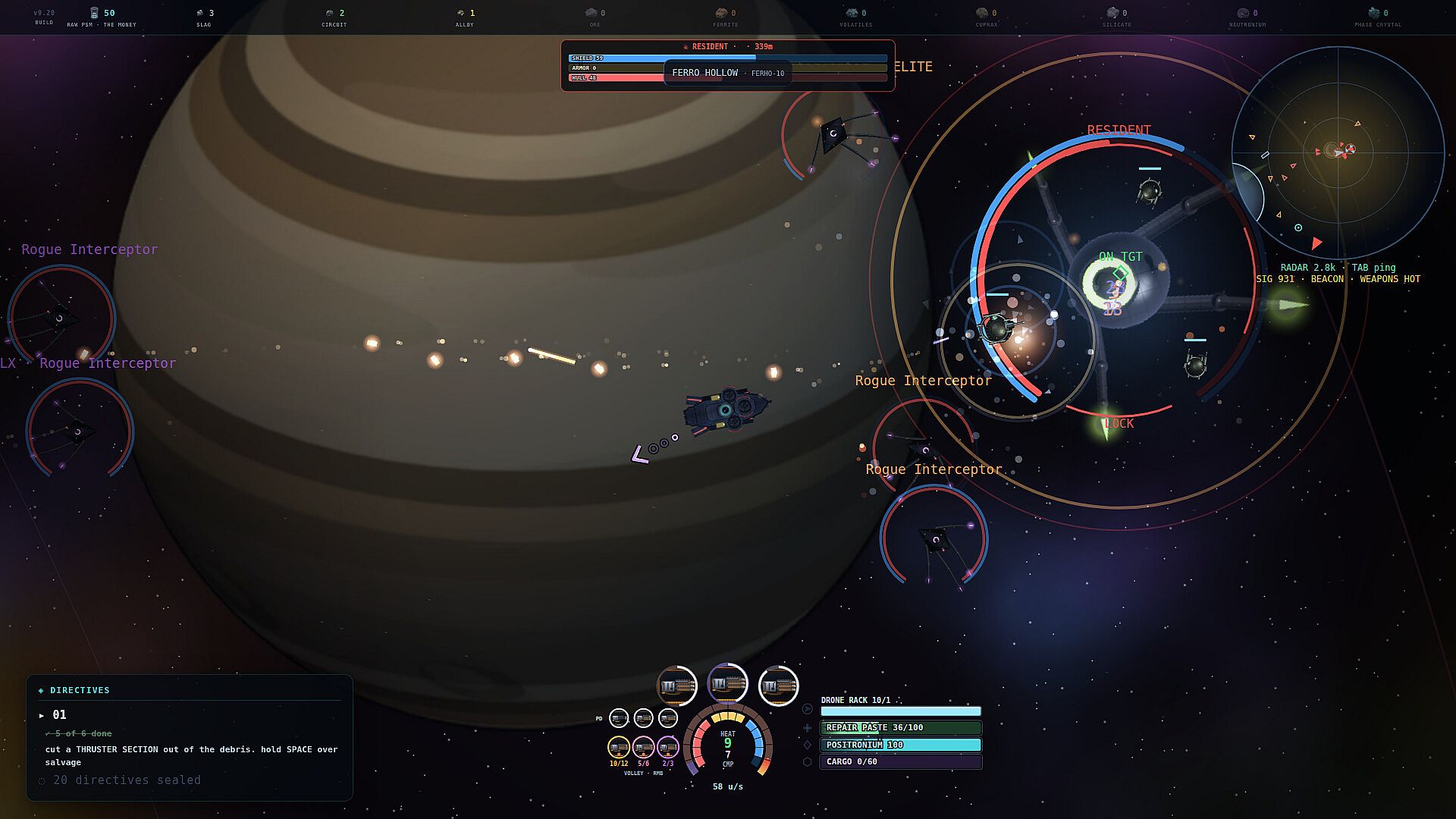
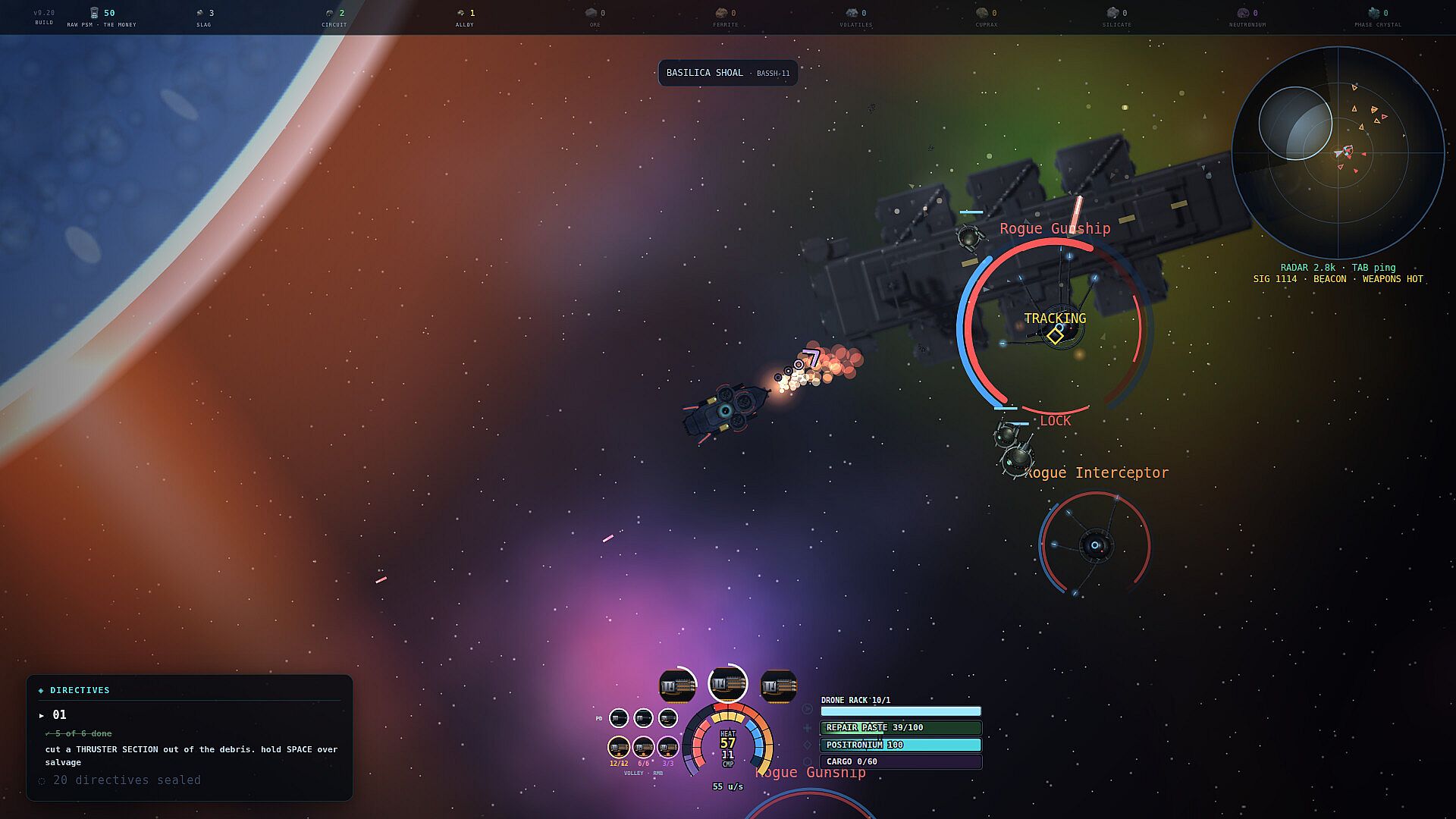
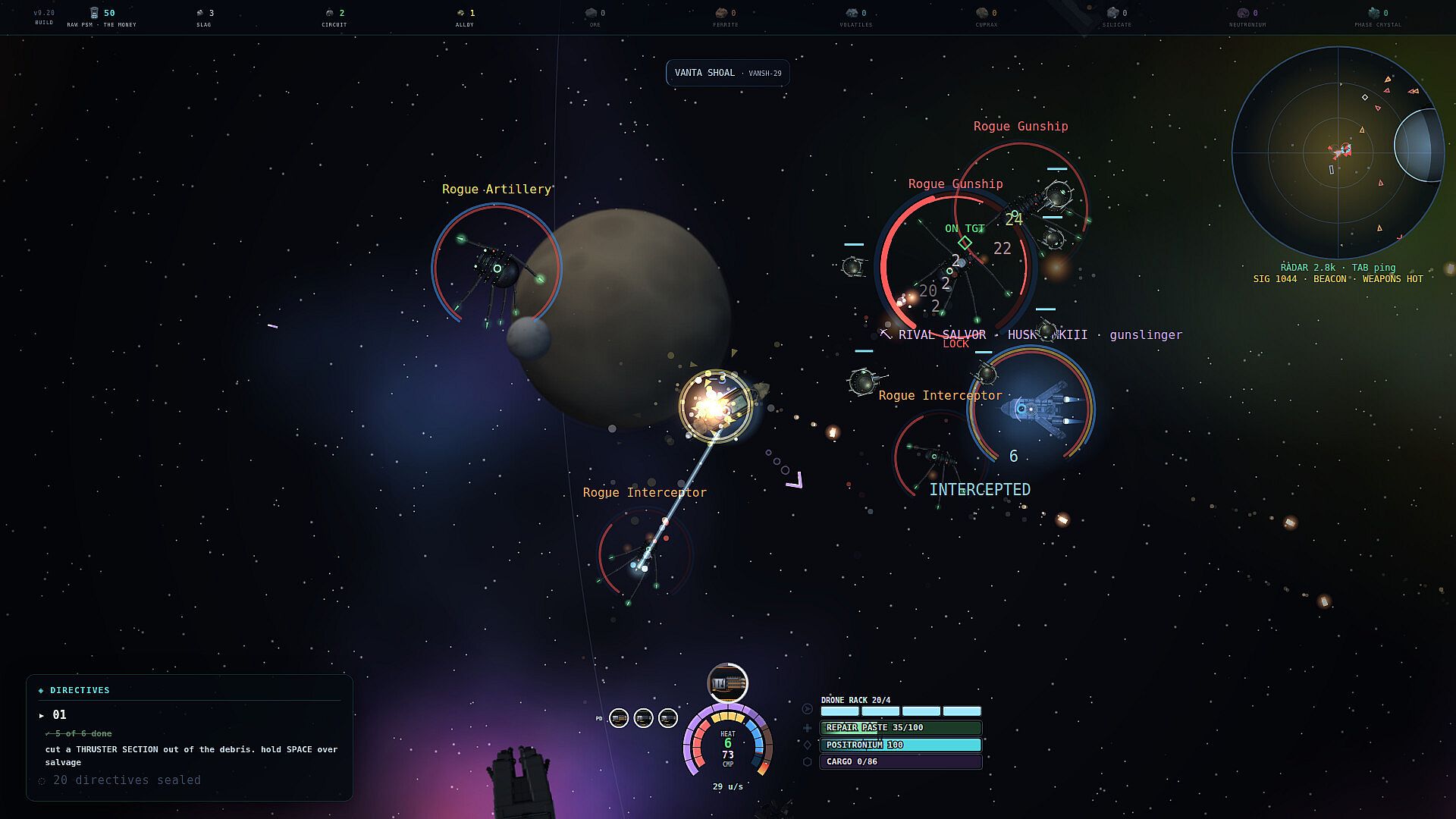
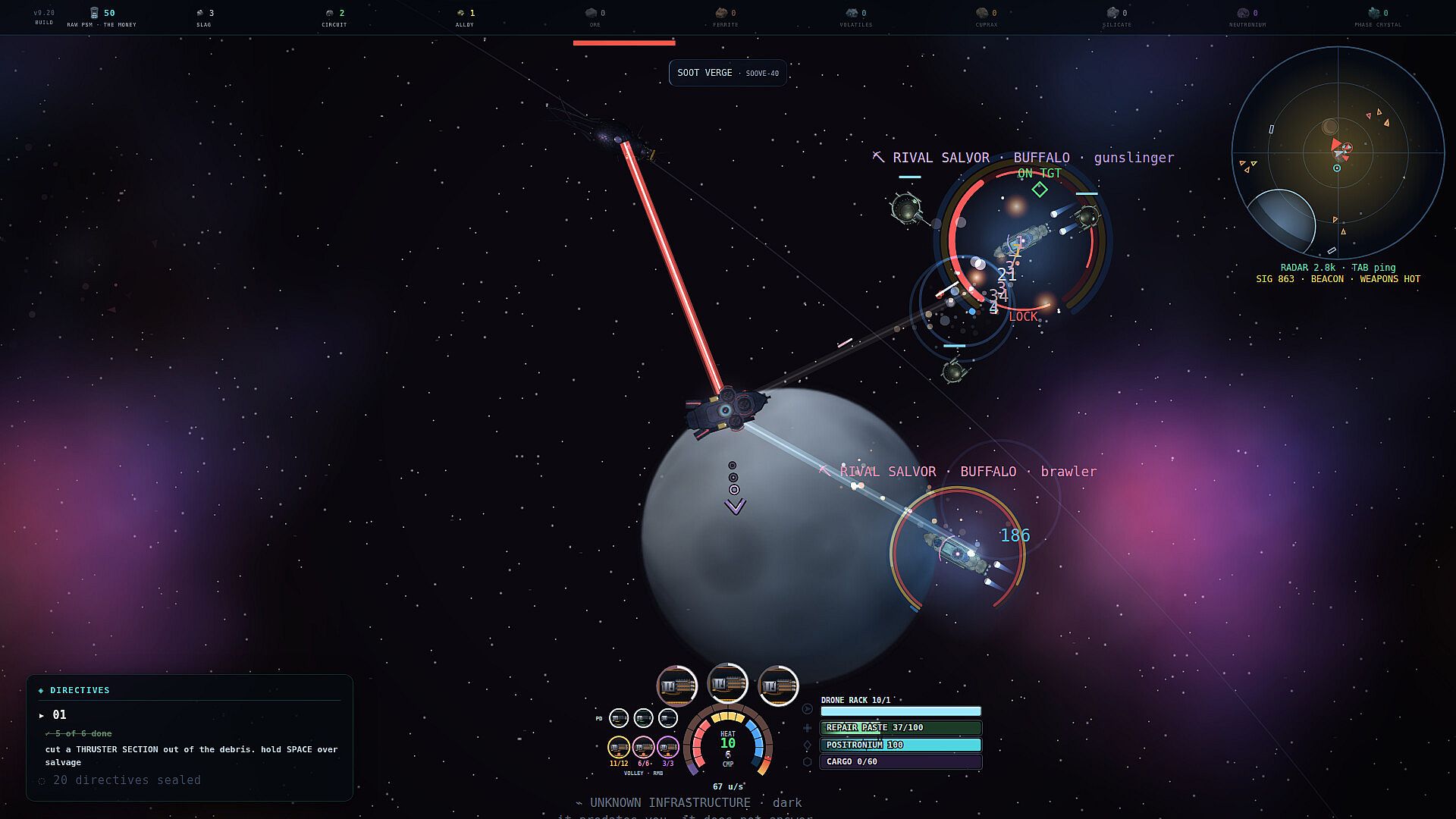
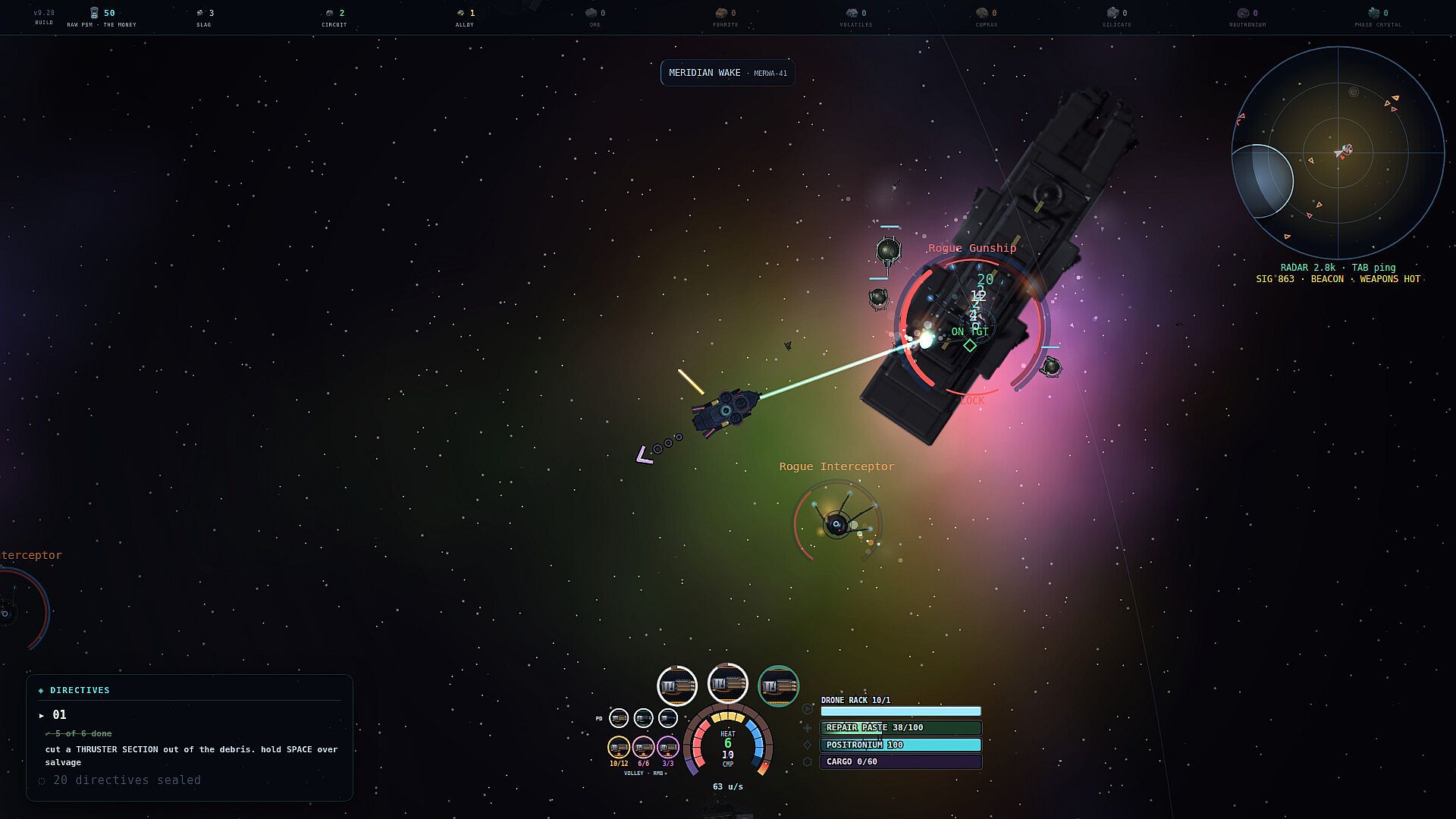
Salvage forms the foundation of progress. Players strip wrecks and dead capital hulls for resources, with deeper systems yielding stronger rolled drops. Excess items go to a reclaimer. The salvage frame supports customization with guns, beams, missile launchers, point defense, and a drone wing. Every shot generates heat, and exceeding the limit forces the weapons offline until venting occurs. A frame at high heat cannot dock, cruise, or jump until cooled. Drones assist in fights but do not initiate them.
Machine presence defines each system. A resident holds the well in every system, and defeating it grants control of the station. Players can build yards, hubs, and citadels across the map. Fifty eldest posts continue operating on final orders, offering options to ally, bid fuel for their guns, or face their challenge. Six machine dynasties each left one part, with a post holding the seventh. Collecting all seven allows welding them into a single weapon.
Fourteen rival salvors occupy the same chart. They build, hold territory, and track player actions. Interactions range from putting a rival adrift to finishing the encounter or seeking peace. Capturing their stations generates payments, and outbidding them for a post shifts its guns to the player's side. The campaign unfolds in five acts, each naming a location and required action. Lore remains optional, allowing completion without reading any of it while full engagement reveals deeper context. No time limit restricts the campaign, and saves permit leaving at any point.
Game Modes
The experience centers on a singleplayer campaign structured around five acts. Progression occurs through salvage runs, station control, and interactions with machine posts and rival salvors. No separate named modes appear beyond this core structure, which blends open exploration across the sealed systems with directed objectives in each act. Updates continue to refine mechanics such as heat management, drone behavior, station ownership, and enemy healing based on player reports.
Development and Updates
One developer built the game with input from a small playtest crew. Their feedback directly shapes patches, which have introduced changes like variable starting weapons, improved station capture, asteroid belt fixes, and adjustments to heat sinks, enemy repairs, and frame handling. Recent builds added features such as scaled HUD support, better lock-on systems, and expanded station interiors including an assembly works deck for crafting and relic progress.
Is It Worth Playing?
Players who enjoy methodical salvage loops combined with tactical frame customization and strategic control of systems will find a focused experience here. The singleplayer campaign offers flexible pacing without timers, and ongoing updates from the solo developer address community input on core systems like heat, drones, and rival interactions. Those seeking a blend of action, resource management, and optional narrative depth in an indie package may appreciate the current state of development. The game remains available on PC with continued patches refining existing mechanics.