


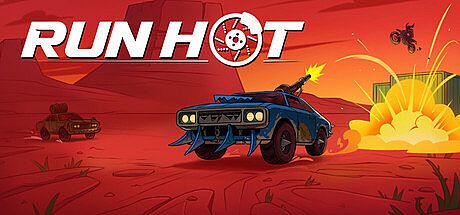


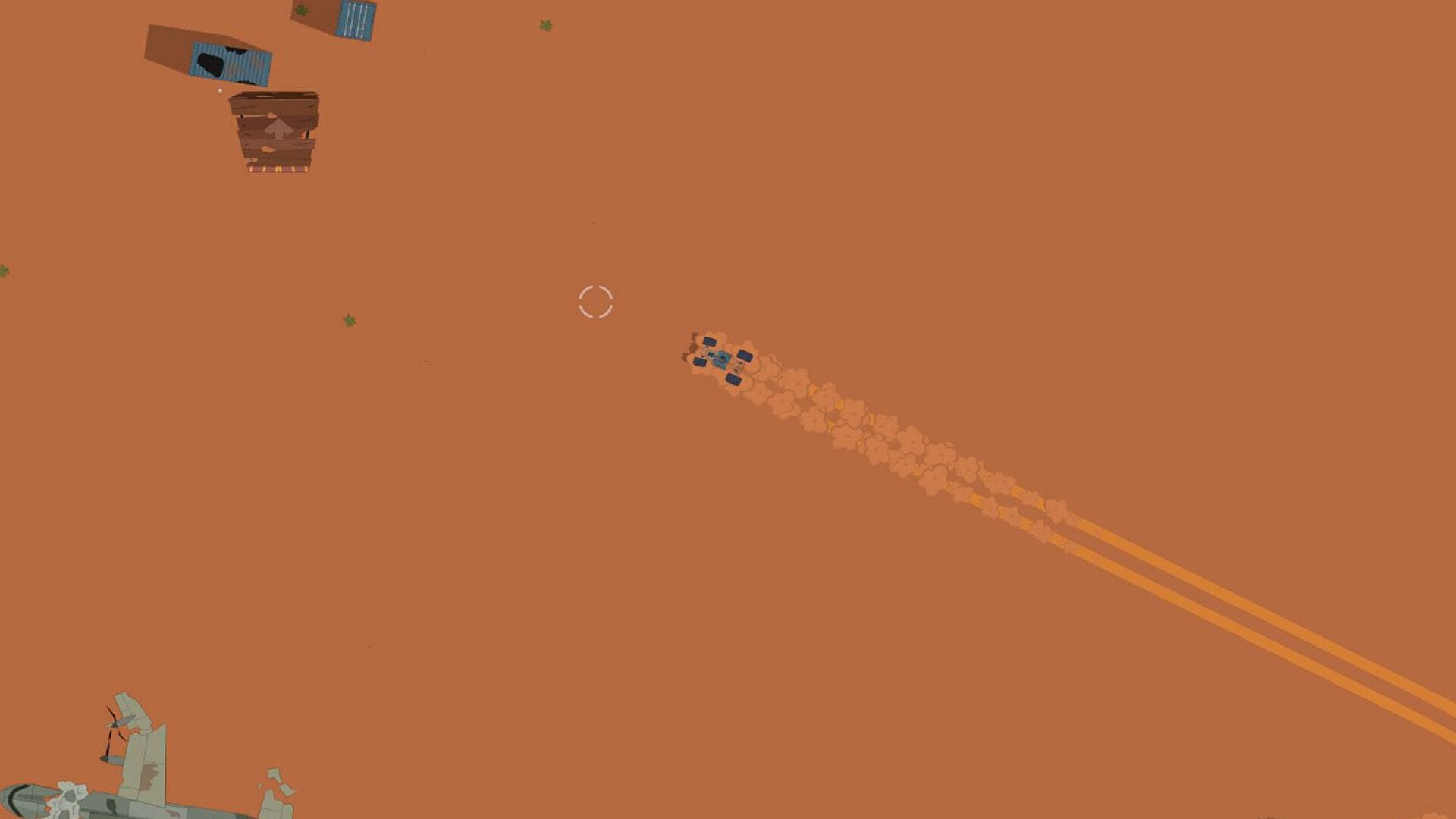
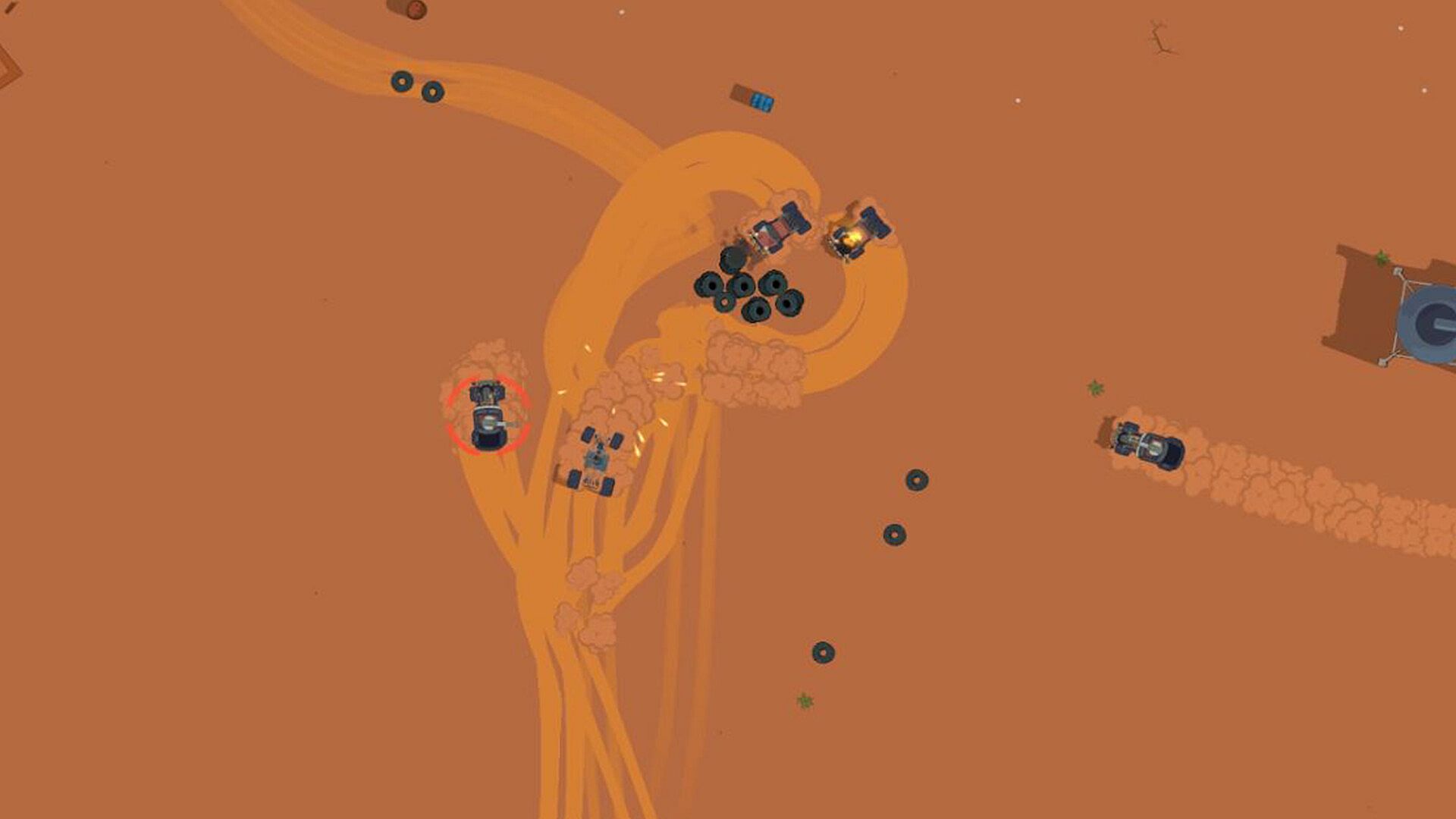
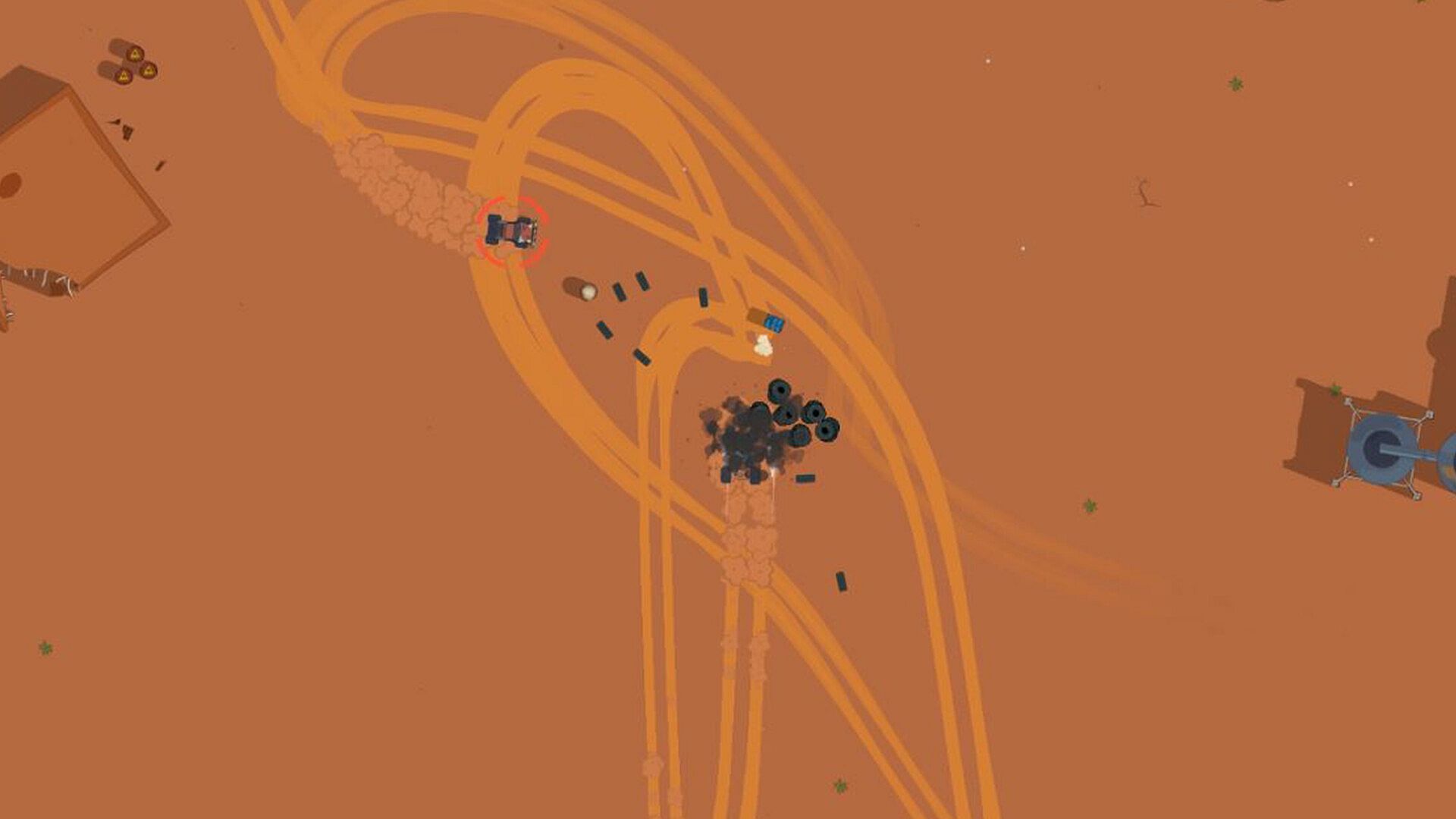
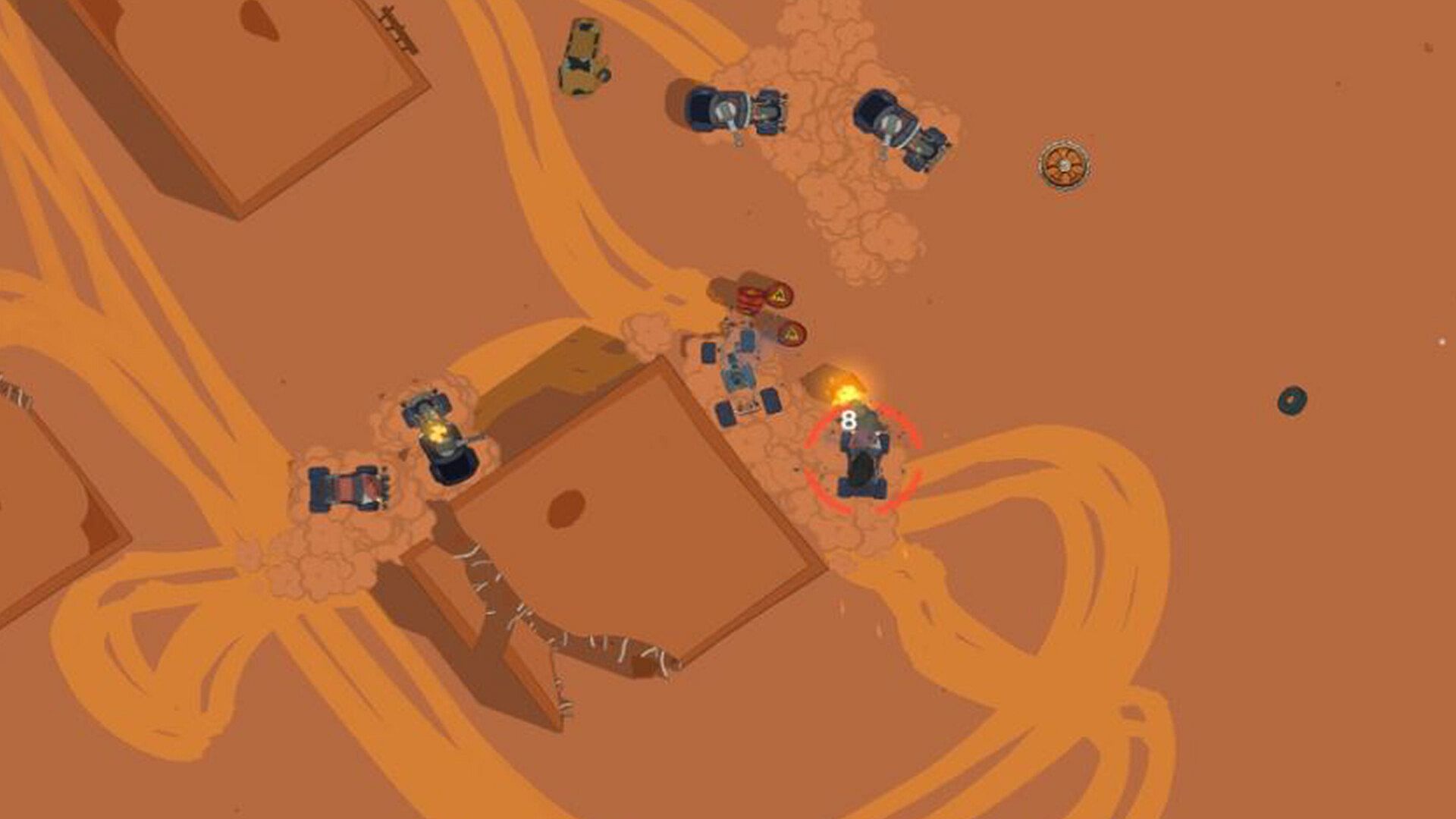
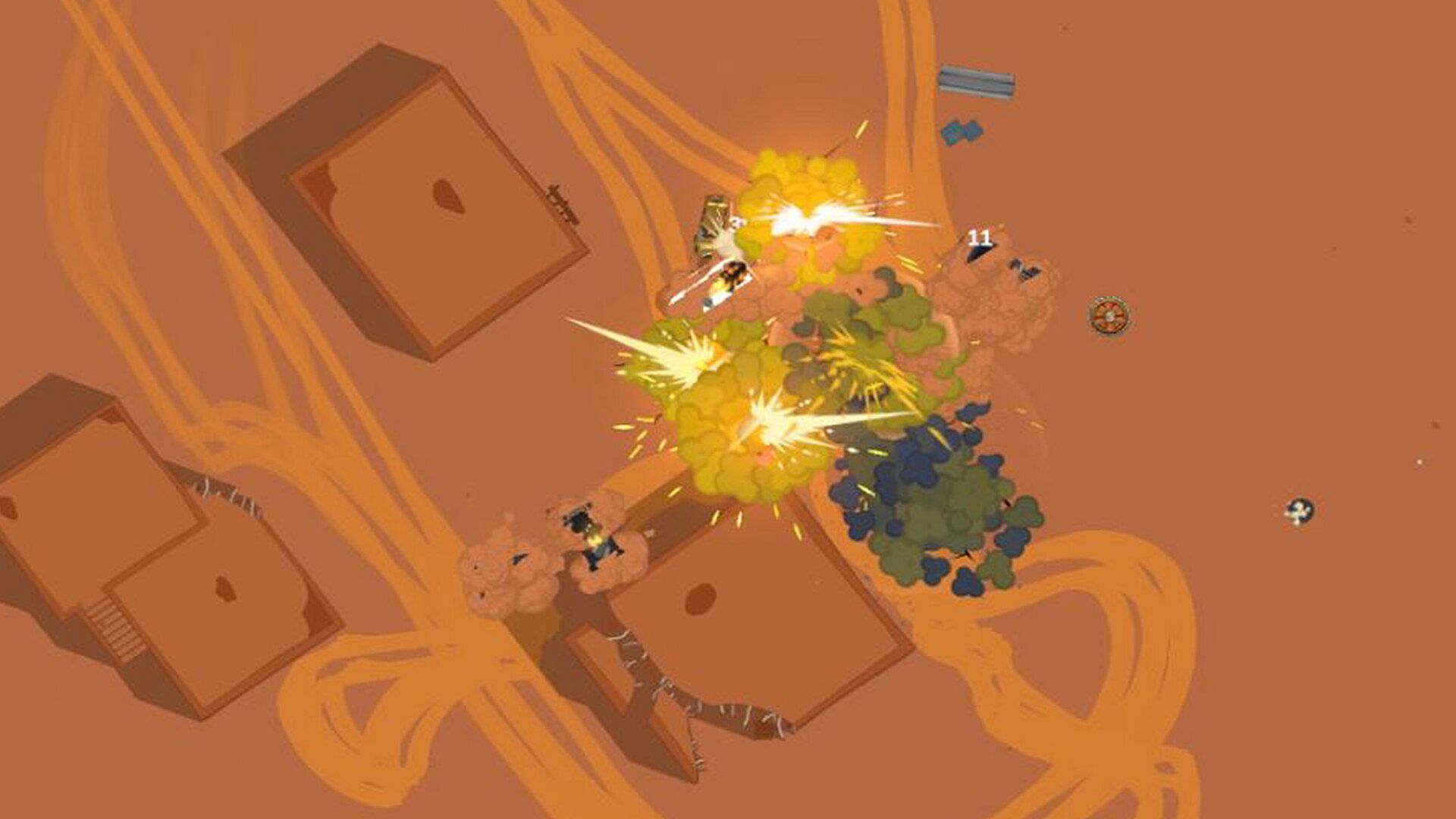
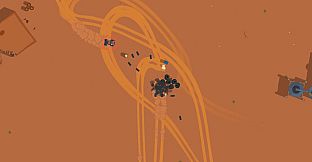
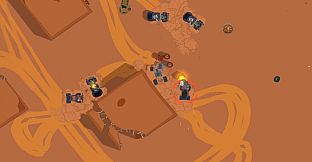
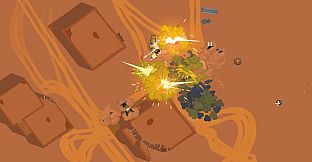
Run Hot places players behind the wheel in a sun-baked desert where a bounty has turned every road into a chase. As an action indie title built for PC, the experience revolves around nonstop vehicular survival against packs of hostile drivers who want the reward on your head. The core loop keeps the vehicle moving at all times while using drifts, ramps, and narrow gaps to stay ahead of rammers, gunners, bikers, and scouts who lay mines.
Gameplay
The rules emphasize constant forward momentum. Enemies close in quickly, so stopping is not an option. A well-timed drift slips past a rammer trying to force the vehicle sideways. Ramps launch the car over clusters of pursuers. Even a tight squeeze past a roadside post counts as survival. Gunner types hang back and chip away at armor from range, while scouts scatter mines without slowing down. Bikers weave low to the ground and aim for the tires.
Each run begins with the choice of a turret that auto-aims, after which the player experiments with positioning, timing, and risk. The desert itself adds hazards: loose sand reduces traction, quicksand patches swallow momentum, explosive barrels sit in inconvenient spots, and canyon walls offer no second chances. Credits collected from fallen enemies fund new vehicles and upgrades. One vehicle might absorb heavy hits while another relies on agility to dodge entirely. Short sessions end in quick deaths, but each attempt feeds progress toward better loadouts.
Game Modes
The game focuses on survival runs against a timer. The objective is to outlast the clock and reach the person who placed the bounty. Every attempt pits the player against escalating waves of the four main enemy archetypes while navigating the shifting desert terrain. Credits earned during these runs carry forward to unlock and customize vehicles and weapons for future attempts. The structure rewards repeated short sessions where learning enemy patterns and vehicle handling leads to longer survival times.
Vehicles and Progression
Each vehicle handles differently, forcing players to adapt their driving style. Some prioritize durability to push through collisions, while others favor speed and maneuverability to slip between threats. Upgrades purchased with credits from eliminated enemies improve weapons, handling, or durability. The progression system ties directly to performance in each run, turning failed attempts into resources for the next try. Experimentation with turret choices and vehicle selection becomes part of the decision-making before every departure.
The Desert Environment
Terrain plays an active role. Asphalt gives way to sand that drags on tires and alters drift behavior. Quicksand zones demand precise avoidance. Barrels scattered along routes can be used or avoided depending on positioning. Canyon sections limit escape routes and increase the pressure from pursuing groups. These elements combine with enemy behaviors to create runs that feel distinct even on repeated attempts.
Is It Worth Playing?
Run Hot suits players who enjoy concise, high-tension driving action with a focus on evasion and quick decision-making. The emphasis on short runs and immediate feedback from each attempt makes it accessible for sessions of any length. Vehicle variety and credit-based upgrades provide a sense of progression without requiring long commitments. Those drawn to indie action games centered on vehicular combat and survival against waves of distinct enemy types will find the core loop consistent with the described mechanics. If the idea of constant movement through a hostile desert while managing threats from multiple directions appeals, the game delivers on that premise through its rule set and enemy design.












