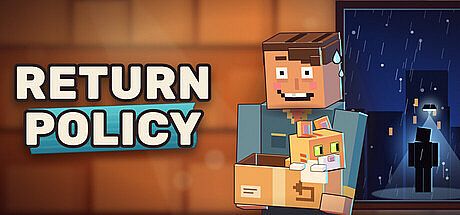


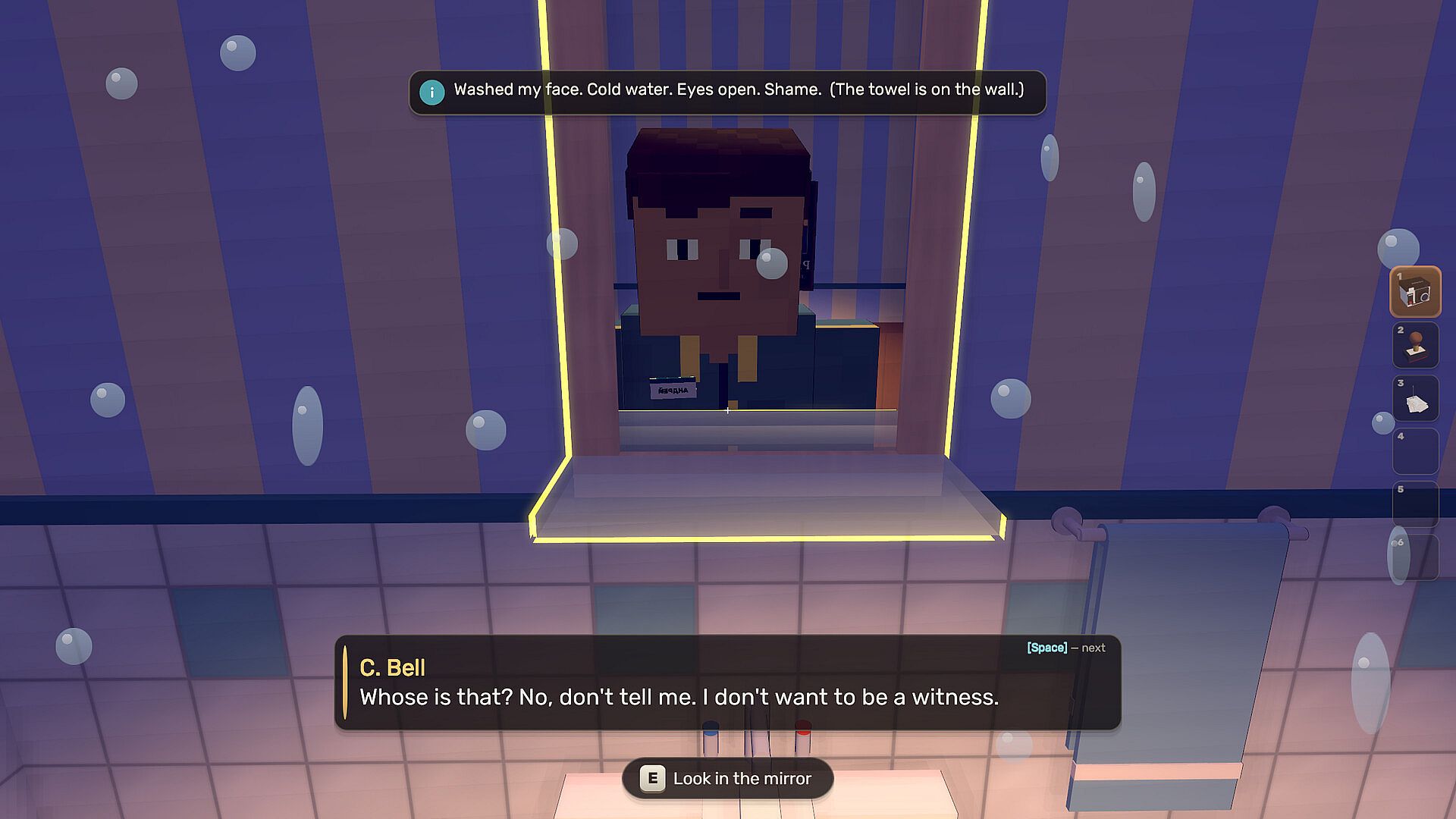
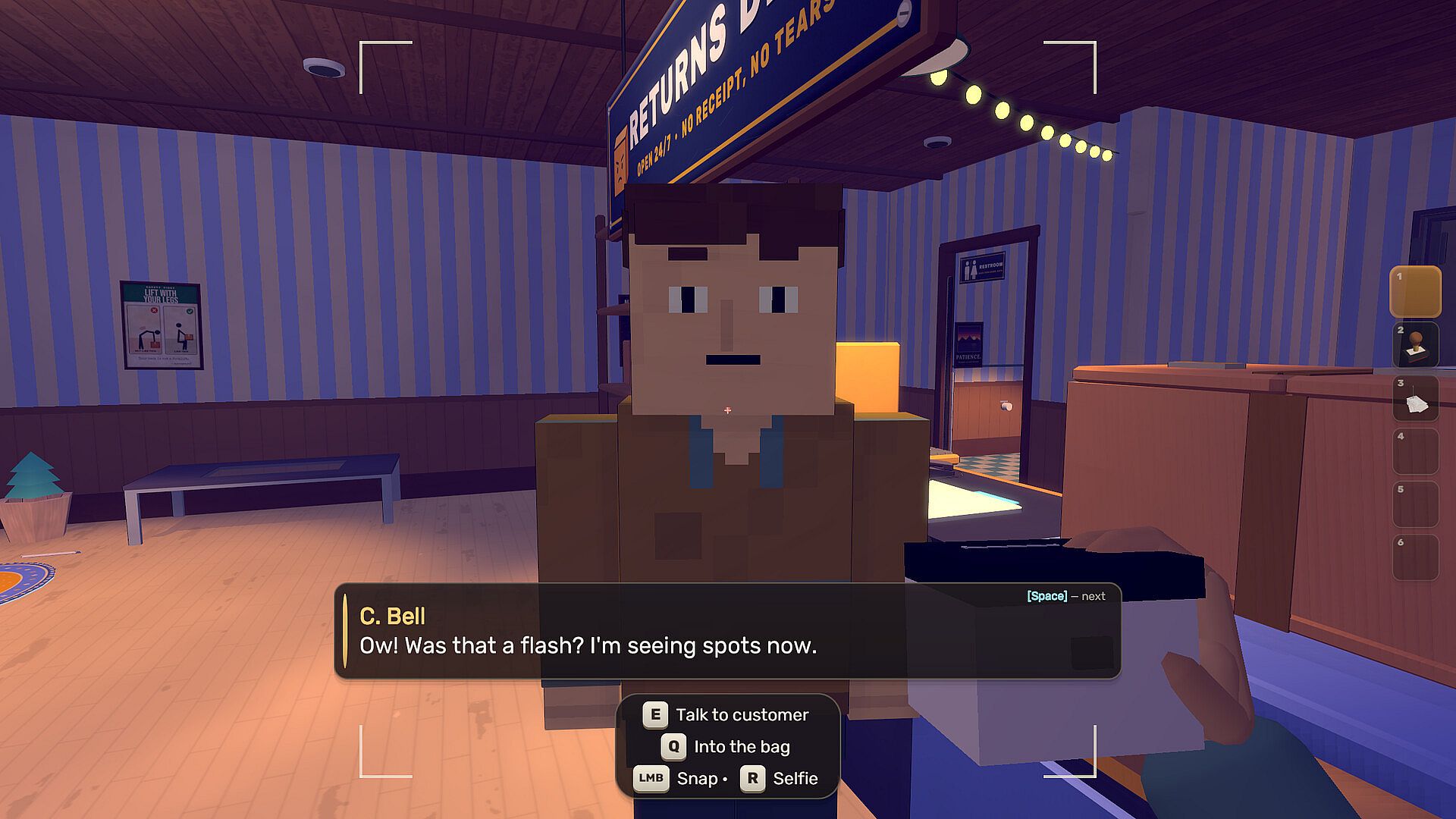
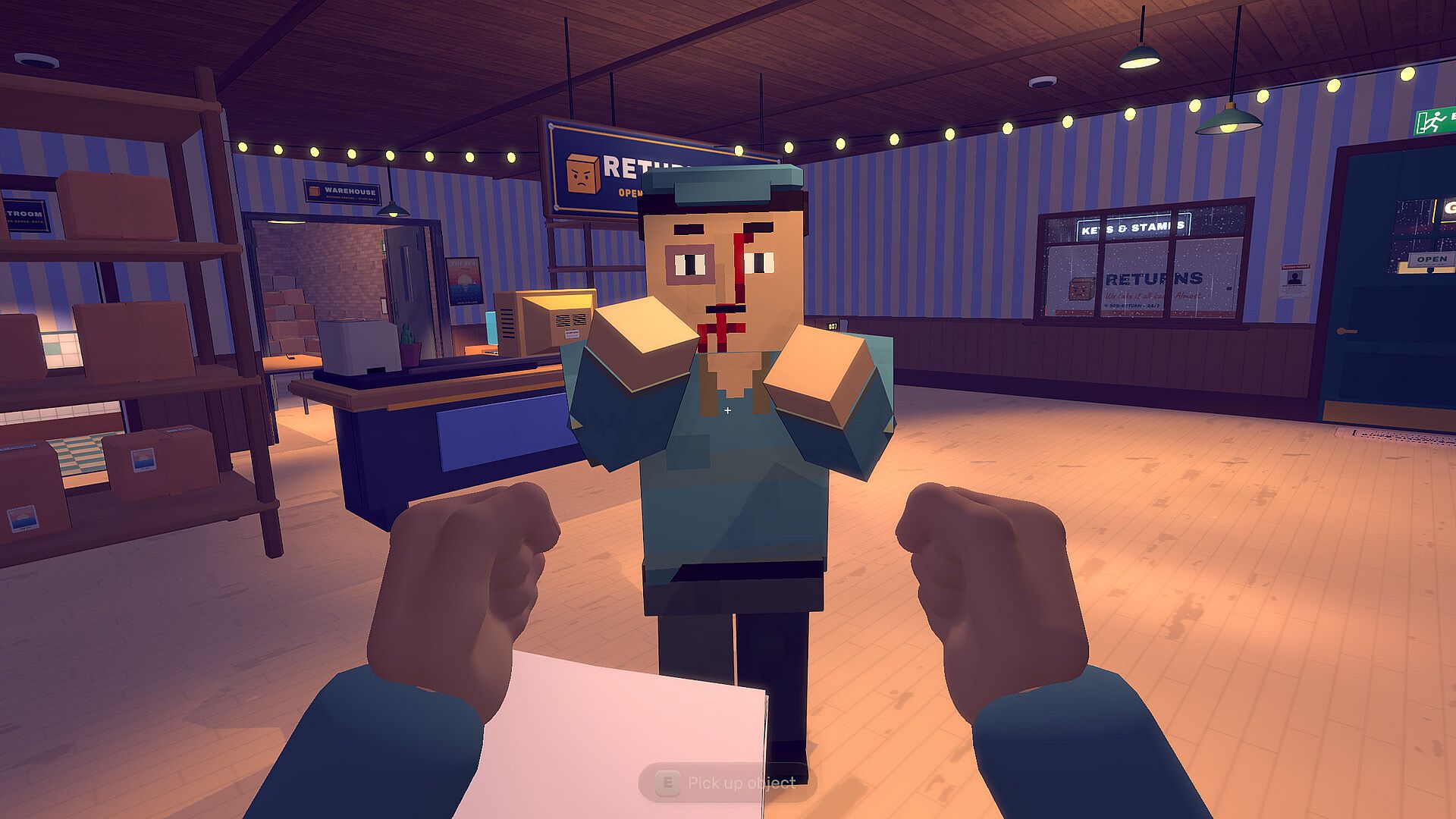
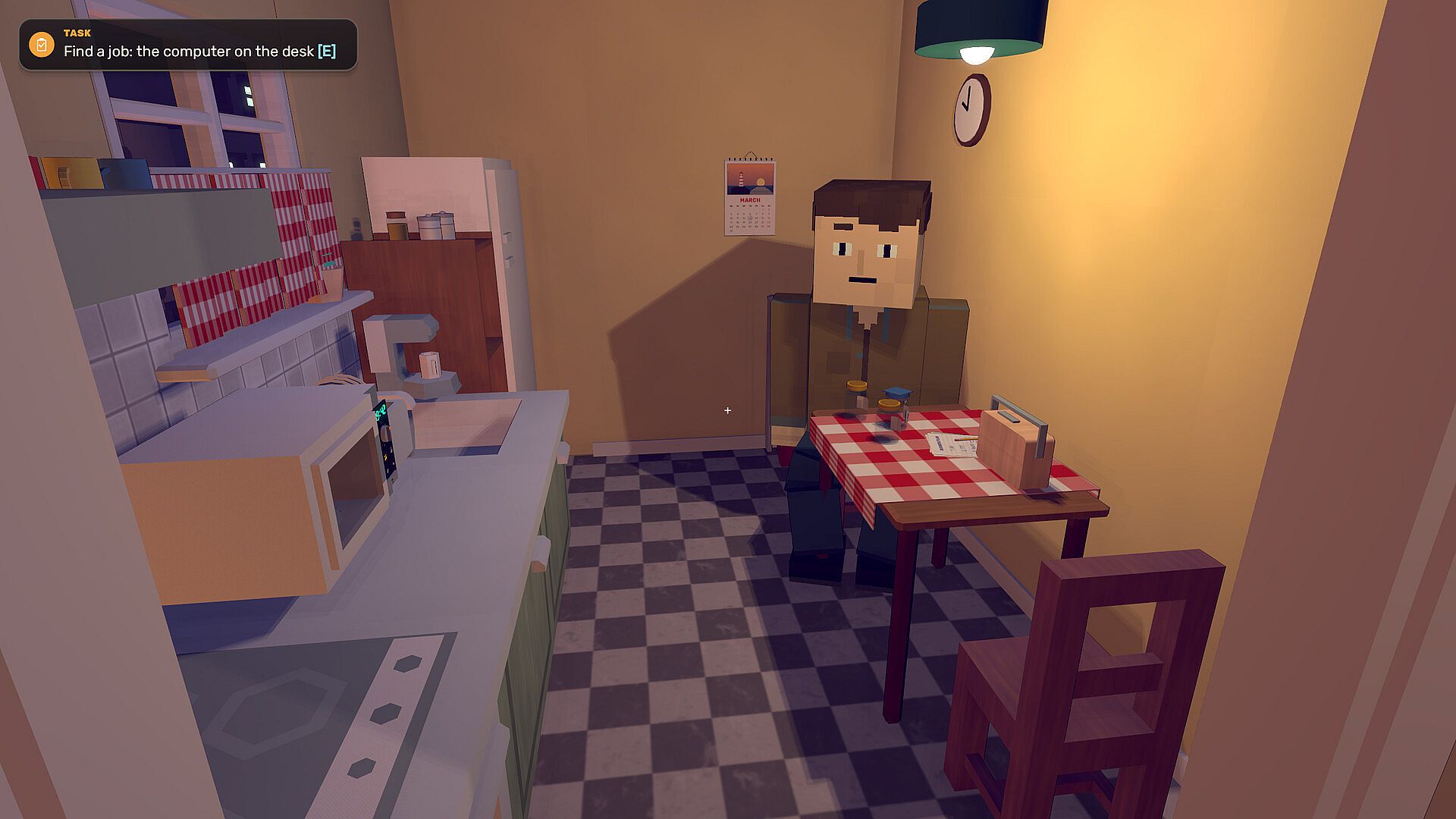
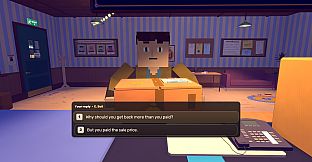
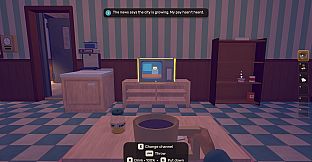
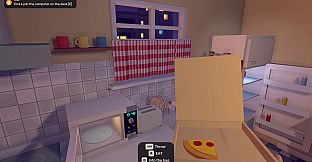
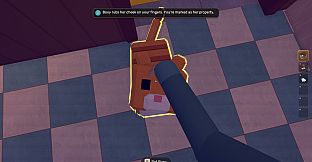

RETURN POLICY is an indie simulation adventure game set on PC where players take on the role of a night shift clerk handling returns at a 24/7 store. The experience blends routine customer service tasks with personal life management and escalating tension over five nights. Players must decide which returns to accept or reject while navigating stories, bribes, arguments, and occasional violence from those who come through the door.
Gameplay
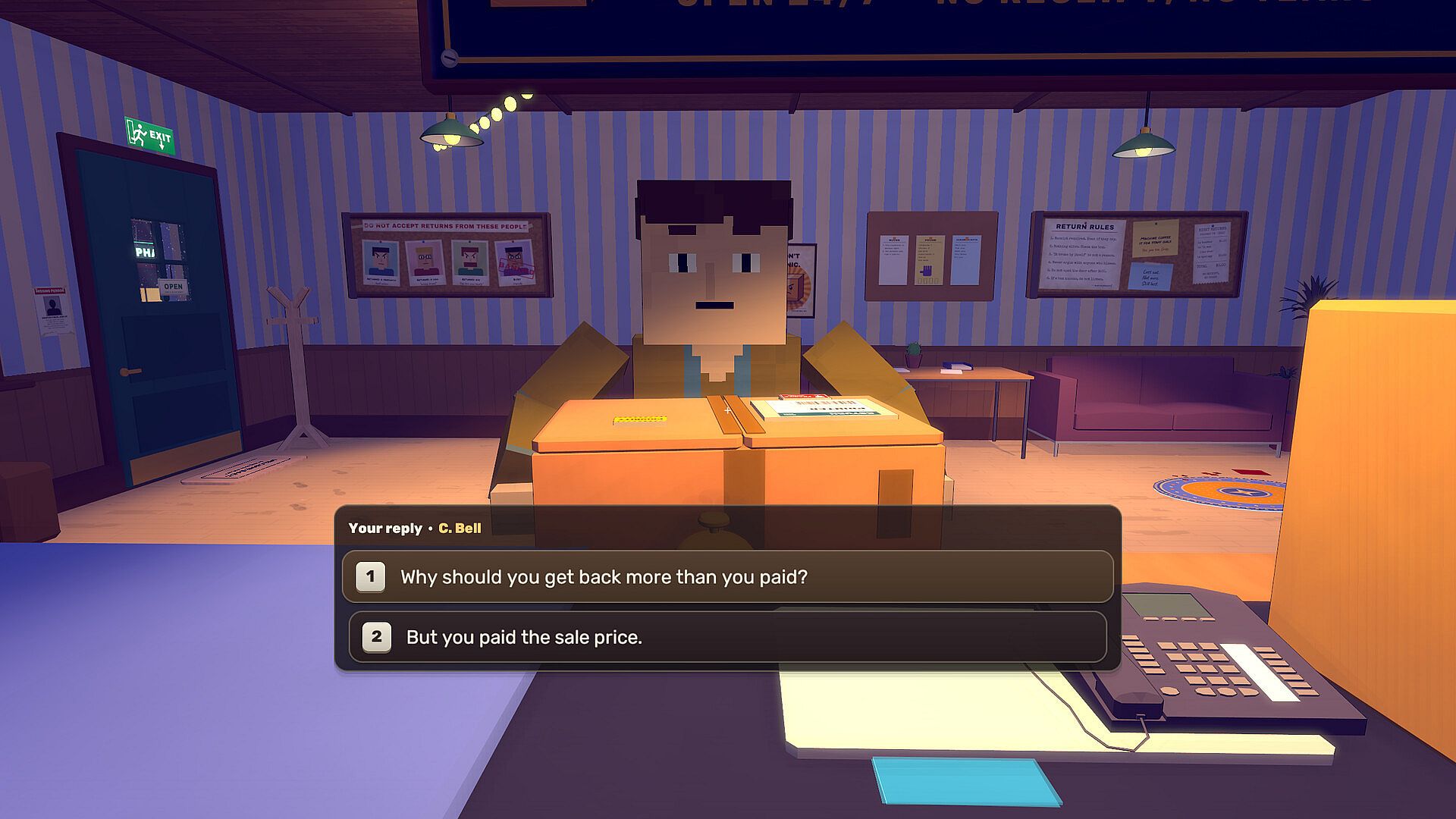
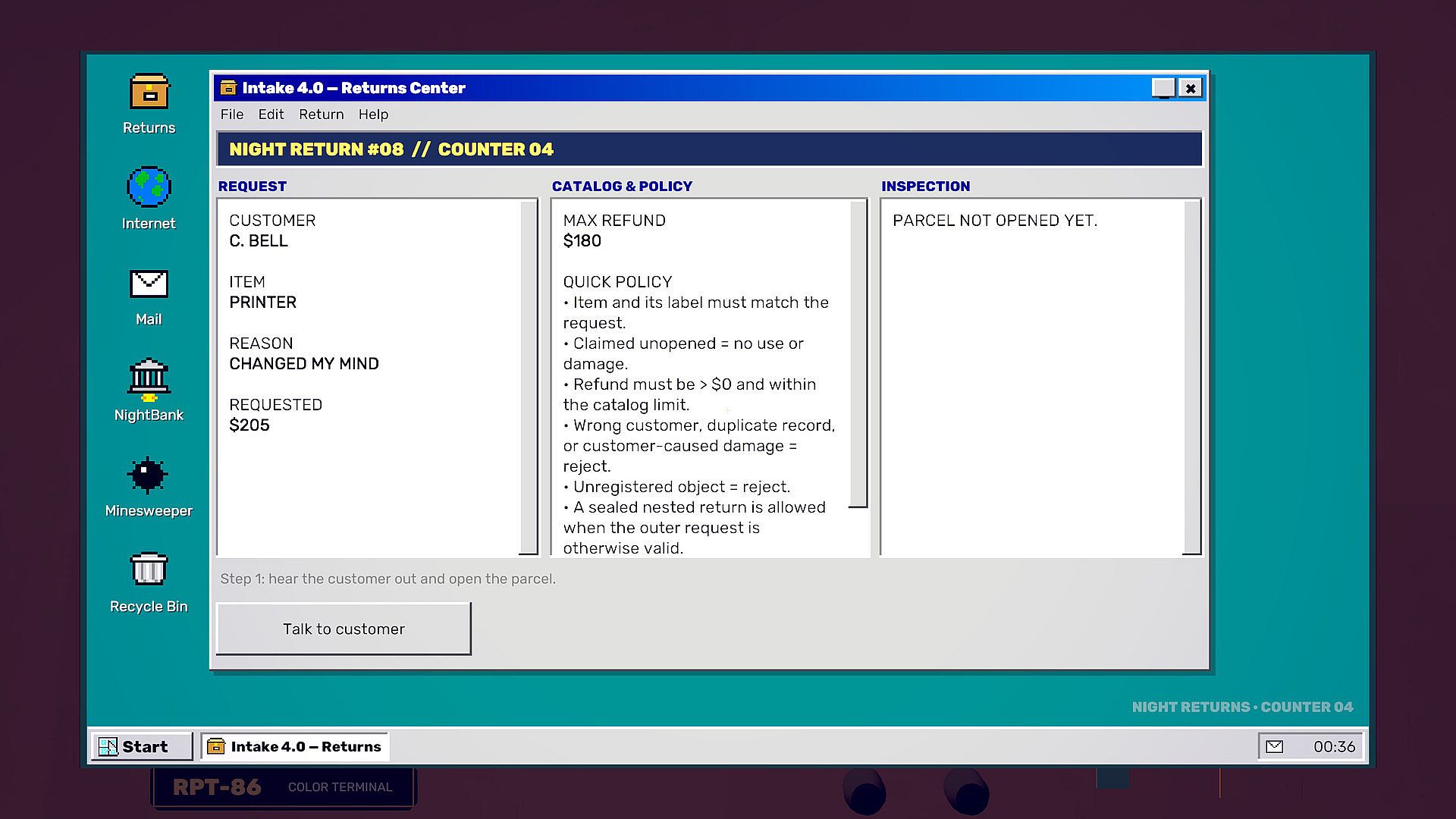
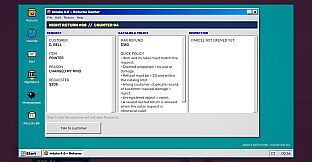
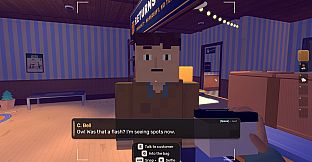
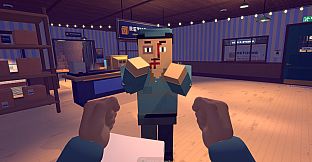
The core loop centers on processing returns during the night shift. Each customer arrives with a box and a receipt that must be checked against a catalog on the desk computer. Accepting or rejecting the item affects pay, and mistakes lead to deductions. Customers lie, haggle, offer bribes, or become aggressive, forcing decisions that carry consequences into the next night through online reviews and repeat visits. Physical interactions allow picking up and throwing objects, with a mop available to clean up afterward, though striking the boss or police is off limits.
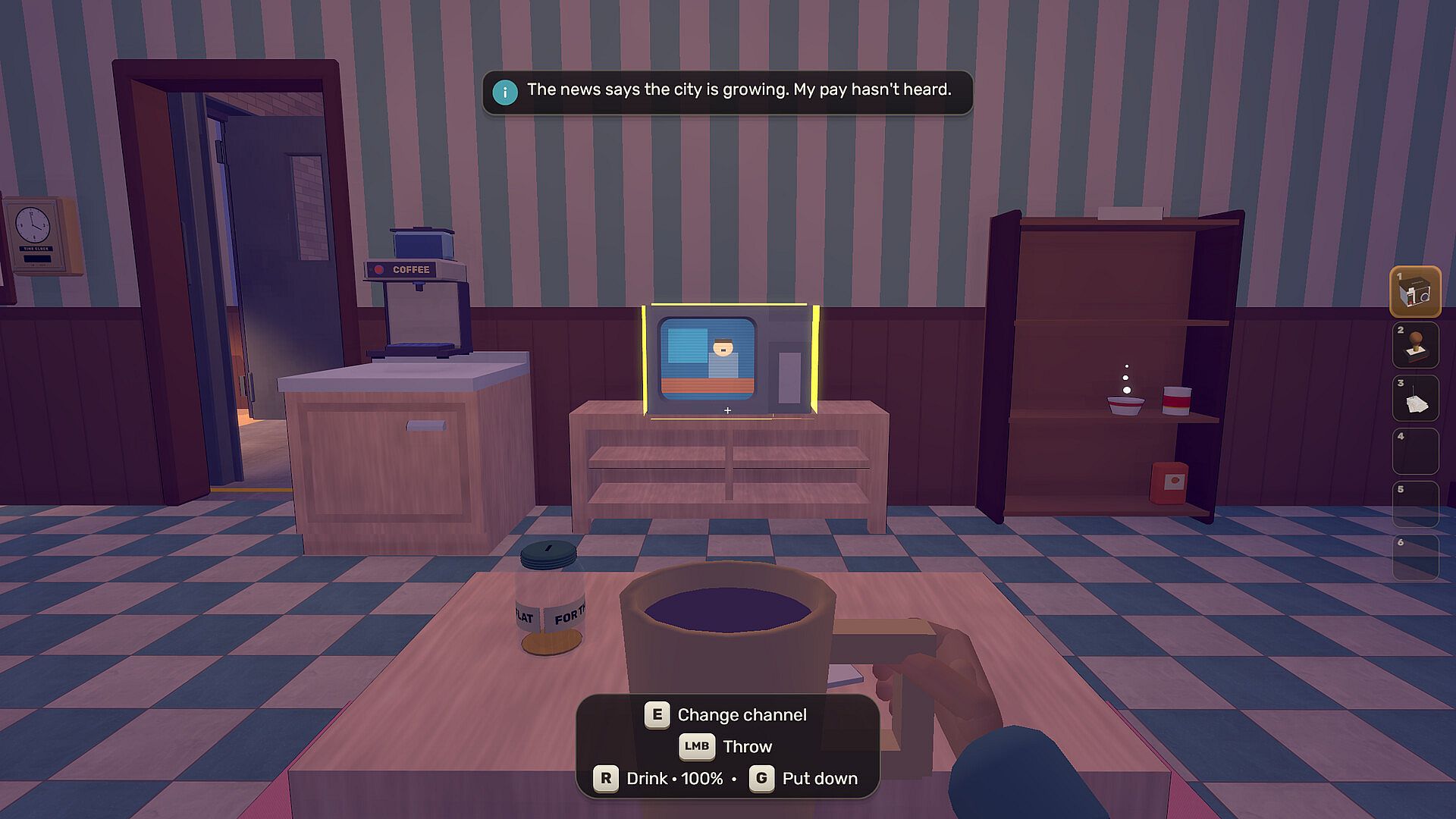
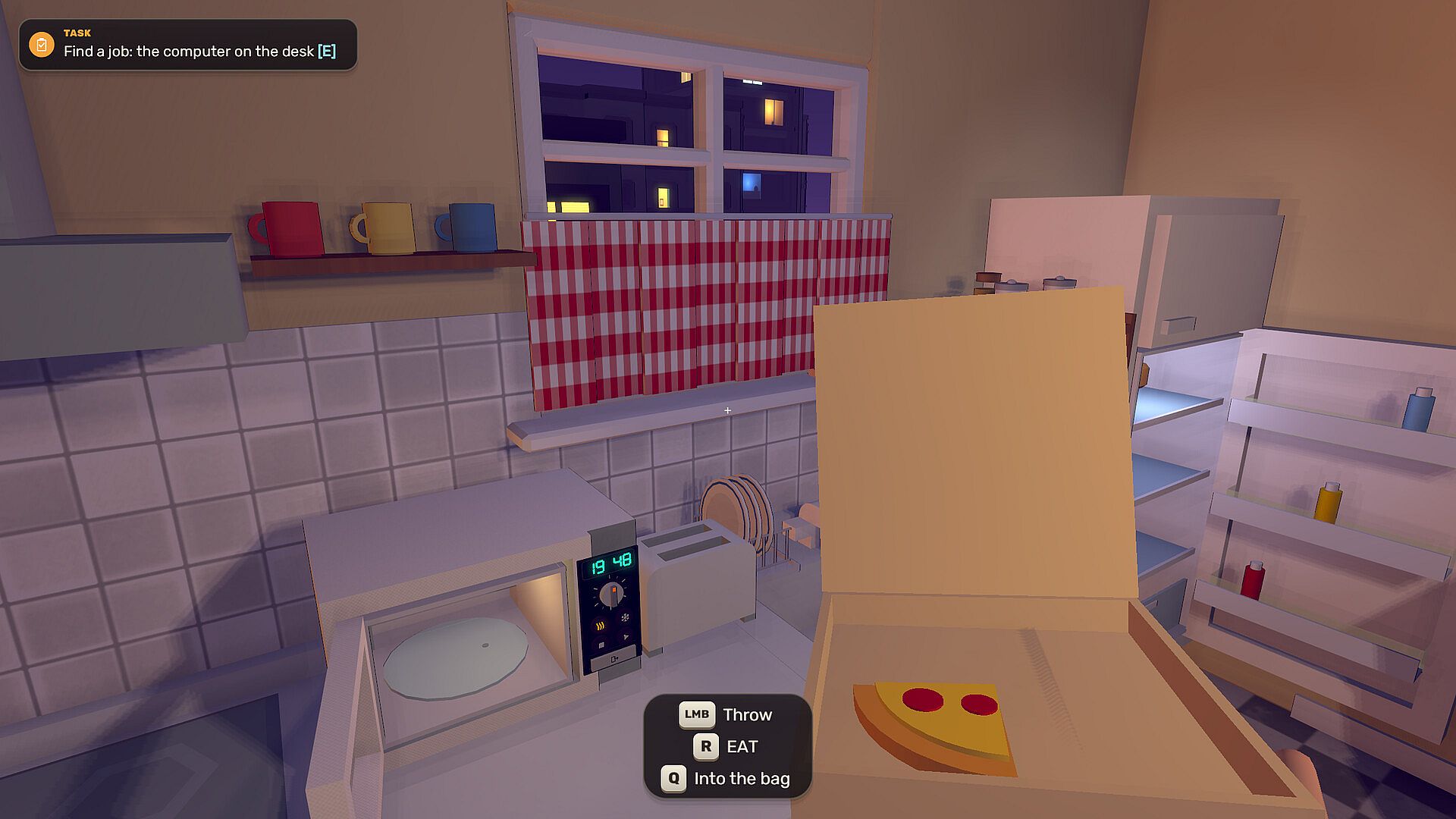
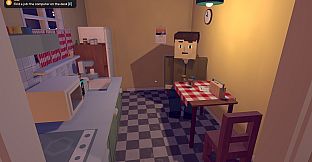
Outside the store, mornings bring a return to a shared apartment where the roommate pursues an unusual startup selling air in jars. The landlord weighs in on the viability of that business, family calls interrupt at inconvenient times, and the building group chat provides a space for typed replies that sometimes receive coherent responses. Saving money for a place of one's own forms the long-term objective, with spending choices on food, coffee, or desk items influencing the final outcome at the end of the month.
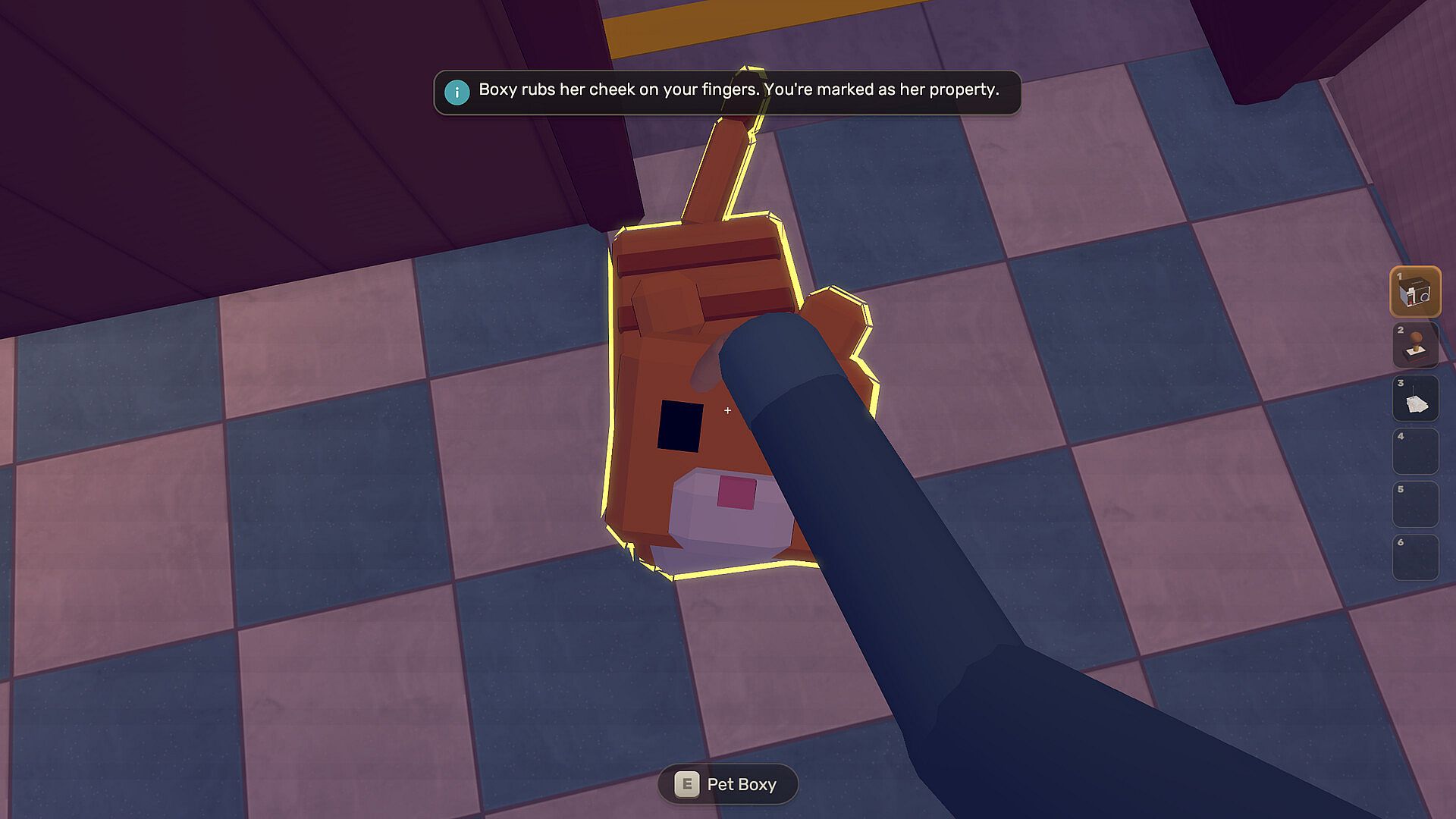
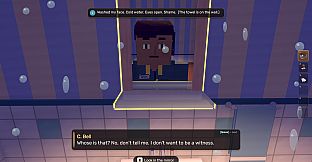
Additional systems include an older desk computer running mail, banking, an online shop, flat listings, a music player, and Minesweeper. A set of rules posted in the break room gains new lines each night, covering tasks like feeding the warehouse cat that notices unusual activity first. Certain events, such as knocking at the window, require specific responses to avoid trouble, and discrepancies in box counts carry their own risks.
Game Modes
The main experience unfolds across five nights in a story-driven sequence with multiple endings determined by choices made during shifts and at home. These endings reflect the cumulative impact of decisions on pay, relationships, and personal circumstances. After completing any ending, an Endless shift mode becomes available for continued play without the monthly deadline pressure.
Gameplay remains singleplayer throughout, focusing on individual interactions rather than competitive or cooperative elements. The structure emphasizes repetition with variation as customer behaviors and home events build across nights, leading to different narrative branches based on how returns are handled and resources are managed.
Atmosphere and Progression
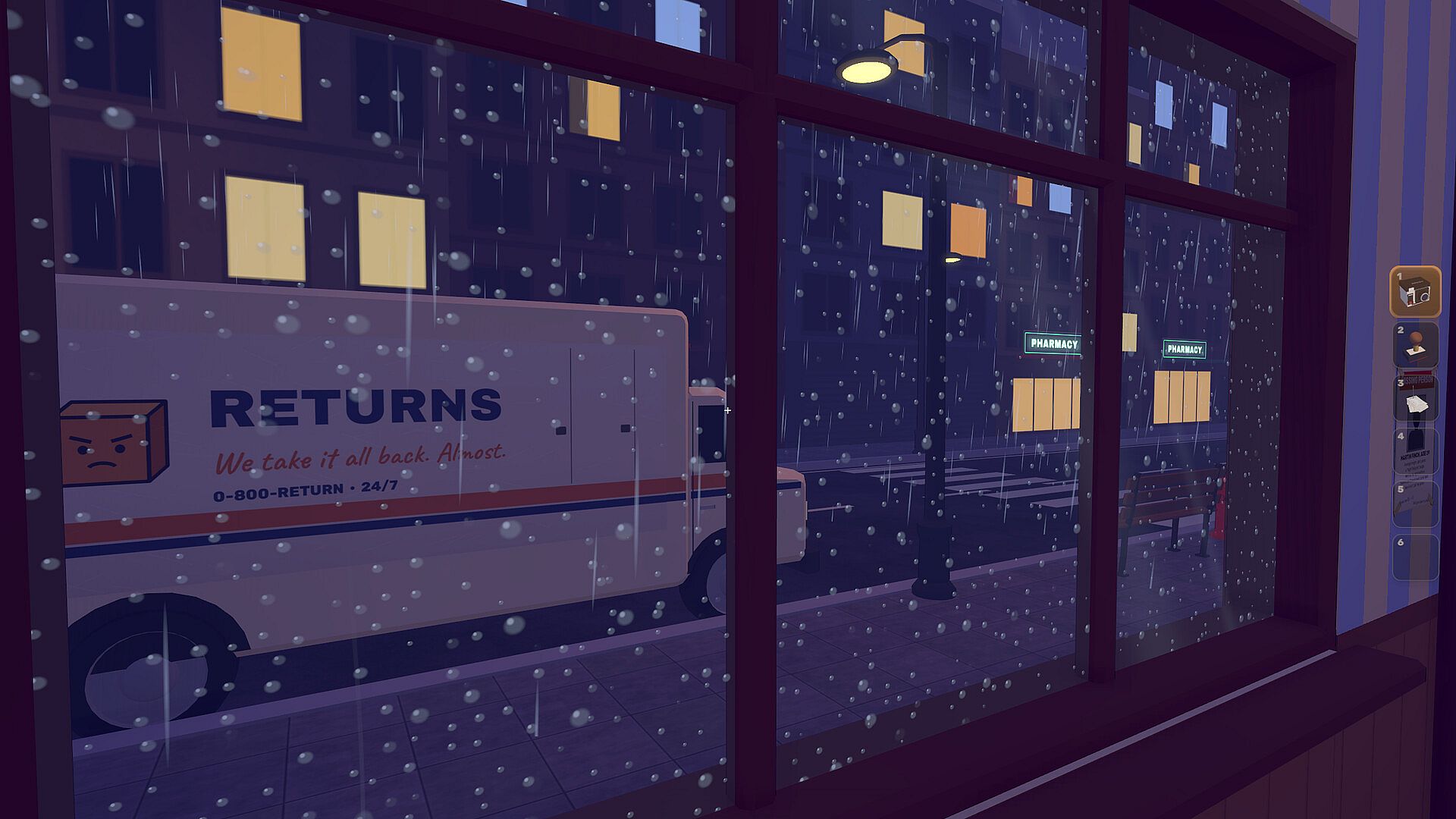
Early nights present lighter, more humorous customer encounters that gradually shift toward quieter, more unsettling developments. The absence of traditional jump scares allows tension to emerge from the growing sense that the player character is not alone in the store. Background details, such as missing person posters featuring the previous clerk and varying stories about his disappearance, add layers to the setting without direct confrontation.
Progression ties directly to financial goals and rule adherence. Shortfalls at month's end produce distinct results, while careful saving opens paths toward independence. The cat serves as a consistent presence that provides subtle cues about hidden elements in the environment.
Is It Worth Playing?
RETURN POLICY suits players who enjoy simulation games with strong narrative components and decision-making that affects both immediate pay and longer-term outcomes. The blend of customer service mechanics, light resource management, and home life simulation creates a focused singleplayer loop that rewards attention to detail and multiple playthroughs for different endings. Those interested in indie titles that mix routine tasks with building unease will find the five-night structure and unlocked Endless shift mode provide replay value without requiring external competition or frequent updates. The game stands on its own as a self-contained experience centered on choices and their consequences.