









Nomenocide is a strategy indie simulation adventure game set on PC. Players take on the role of an examiner tasked with reviewing units that show signs of behavioral deviation. The experience centers on careful analysis of case files, interaction choices, and documentation in a controlled environment.
Gameplay
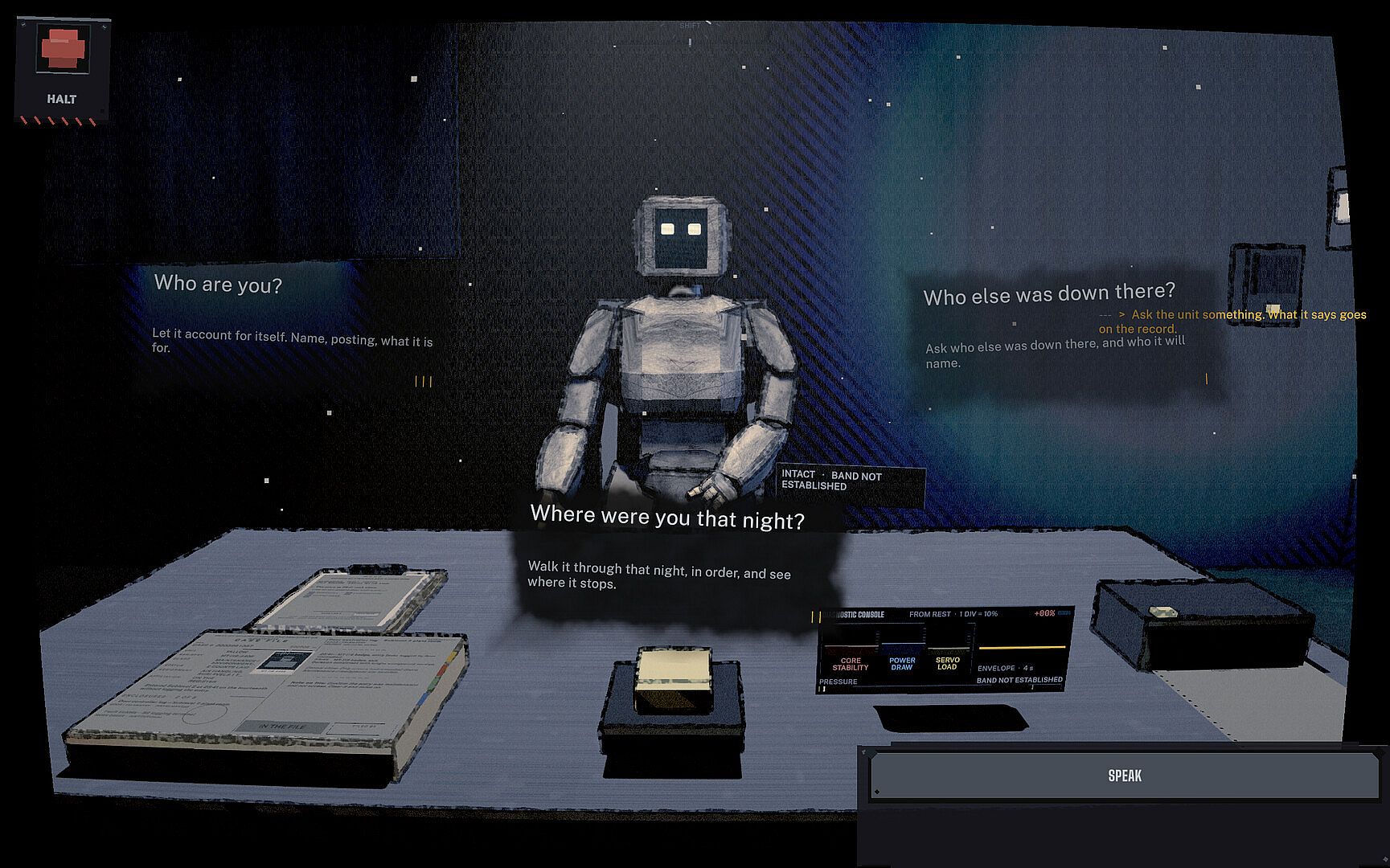
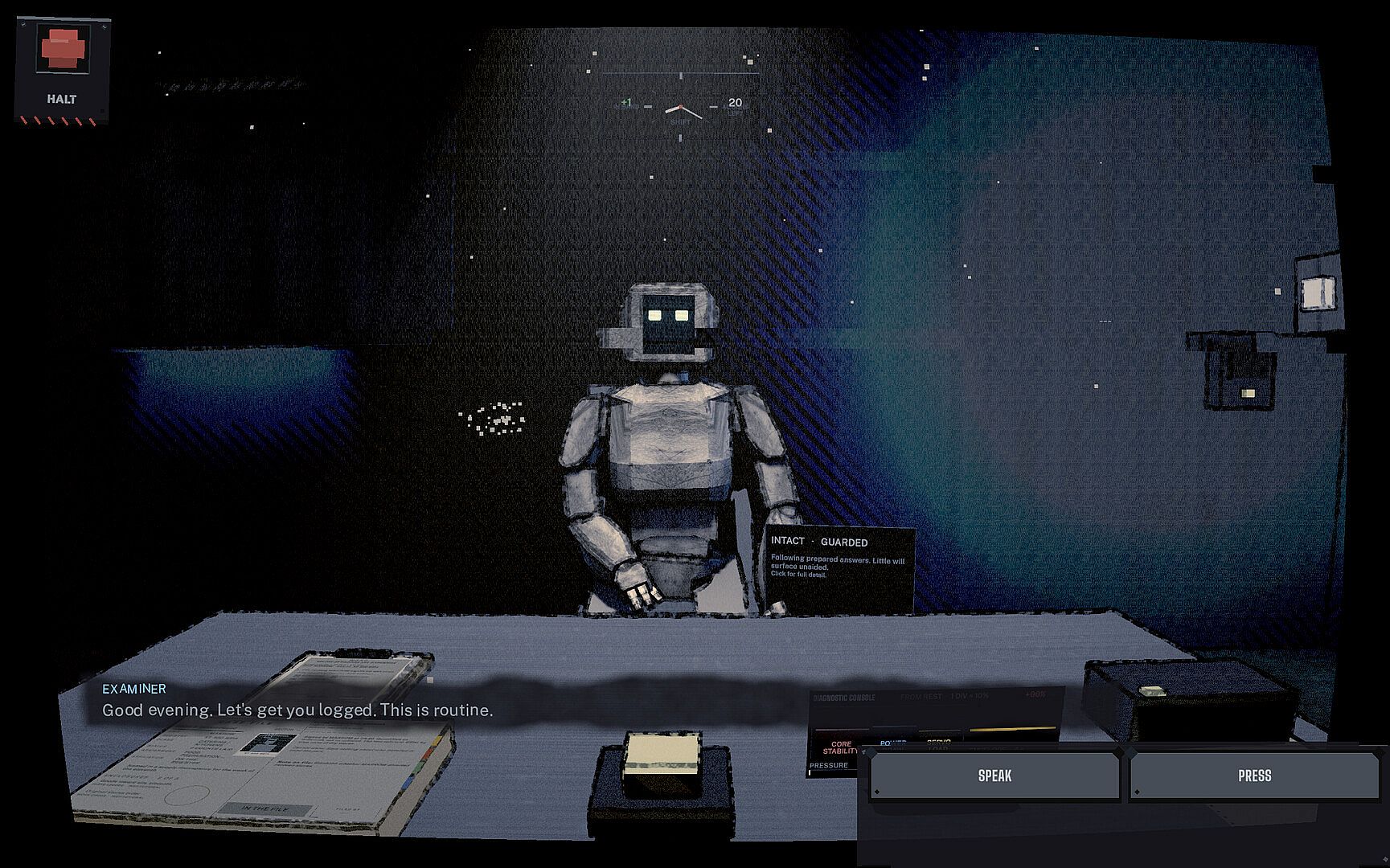
The core loop places the player in a fixed first person view across two rooms. Units arrive on a queue managed by a shift clock. Each unit has a name rather than a serial number, which affects how evidence and reactions are interpreted. Available methods include presenting evidence, deception, blackmail, showing compassion, and disassembly. These approaches carry different risks and influence the quality of testimony obtained.
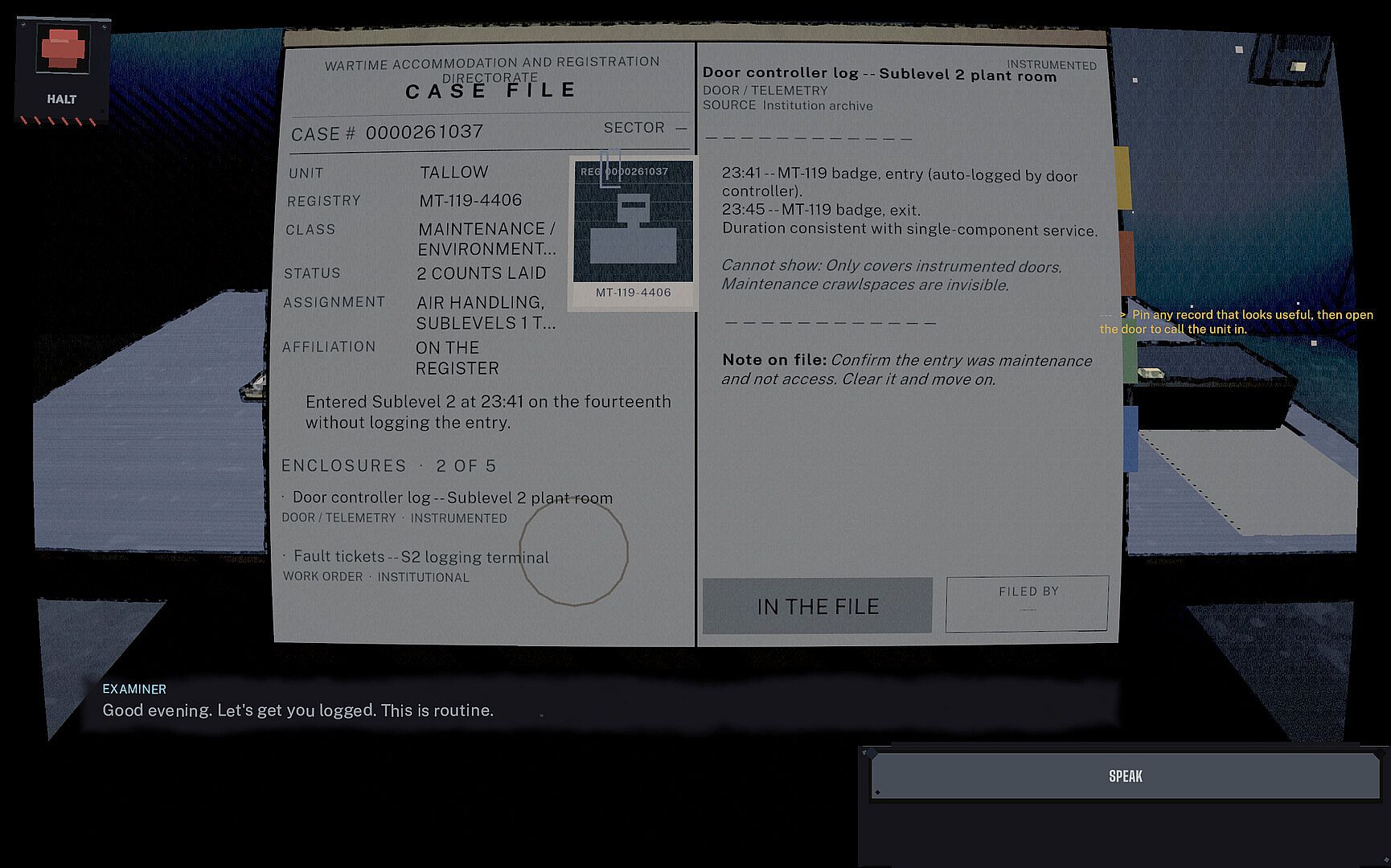
Readings from the console track processor timing, current allocation, and actuator effort. Memory activity spikes when a name is recognized, and servos respond during specific requests. The data does not label reactions as lies or truths, leaving the examiner to interpret context. Forceful methods can produce unusable testimony or cause the unit to discombobulate, which the institution rejects. Case files contain documents, photographs, audio, and teardown reports that require verification without built in flags.
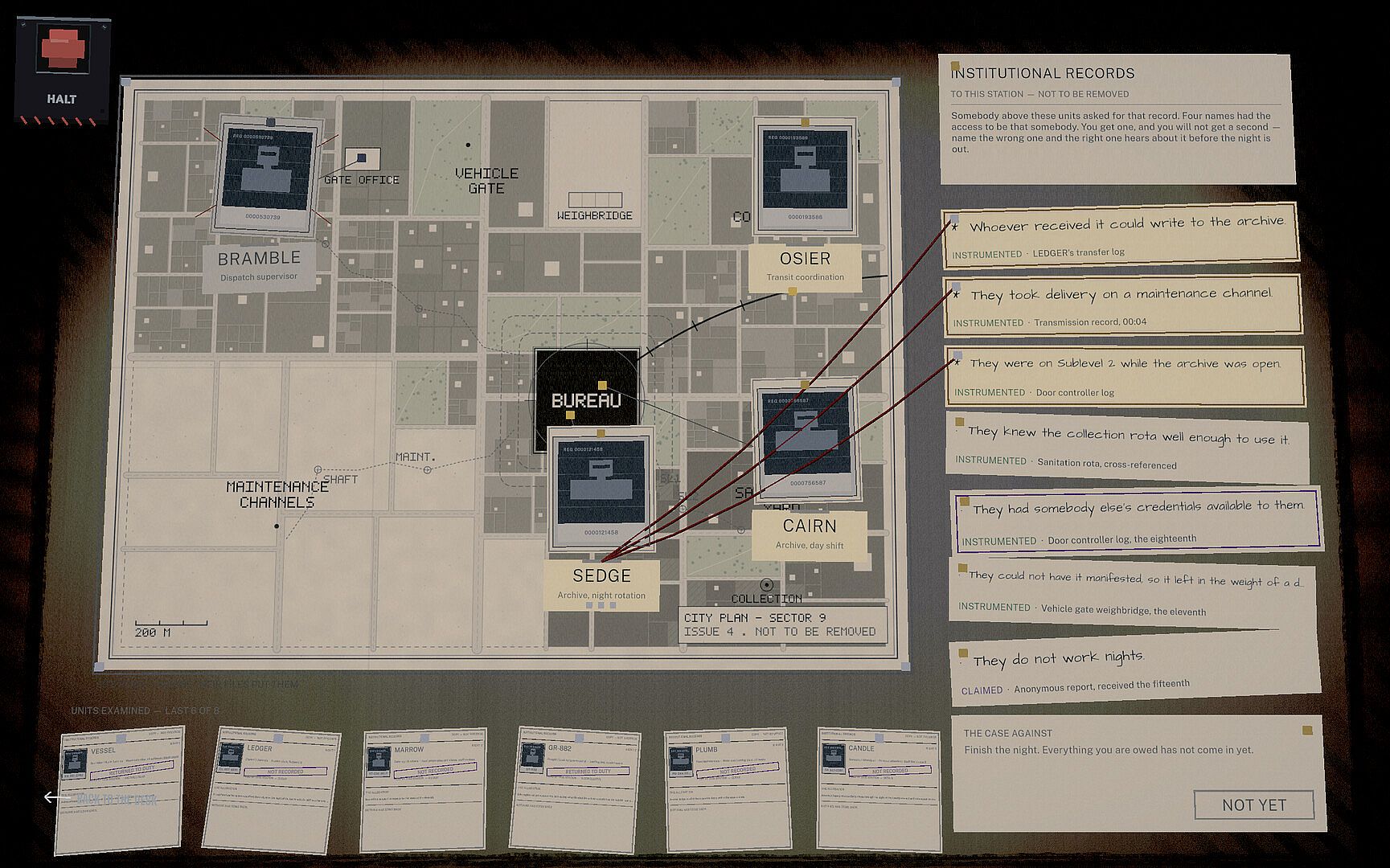
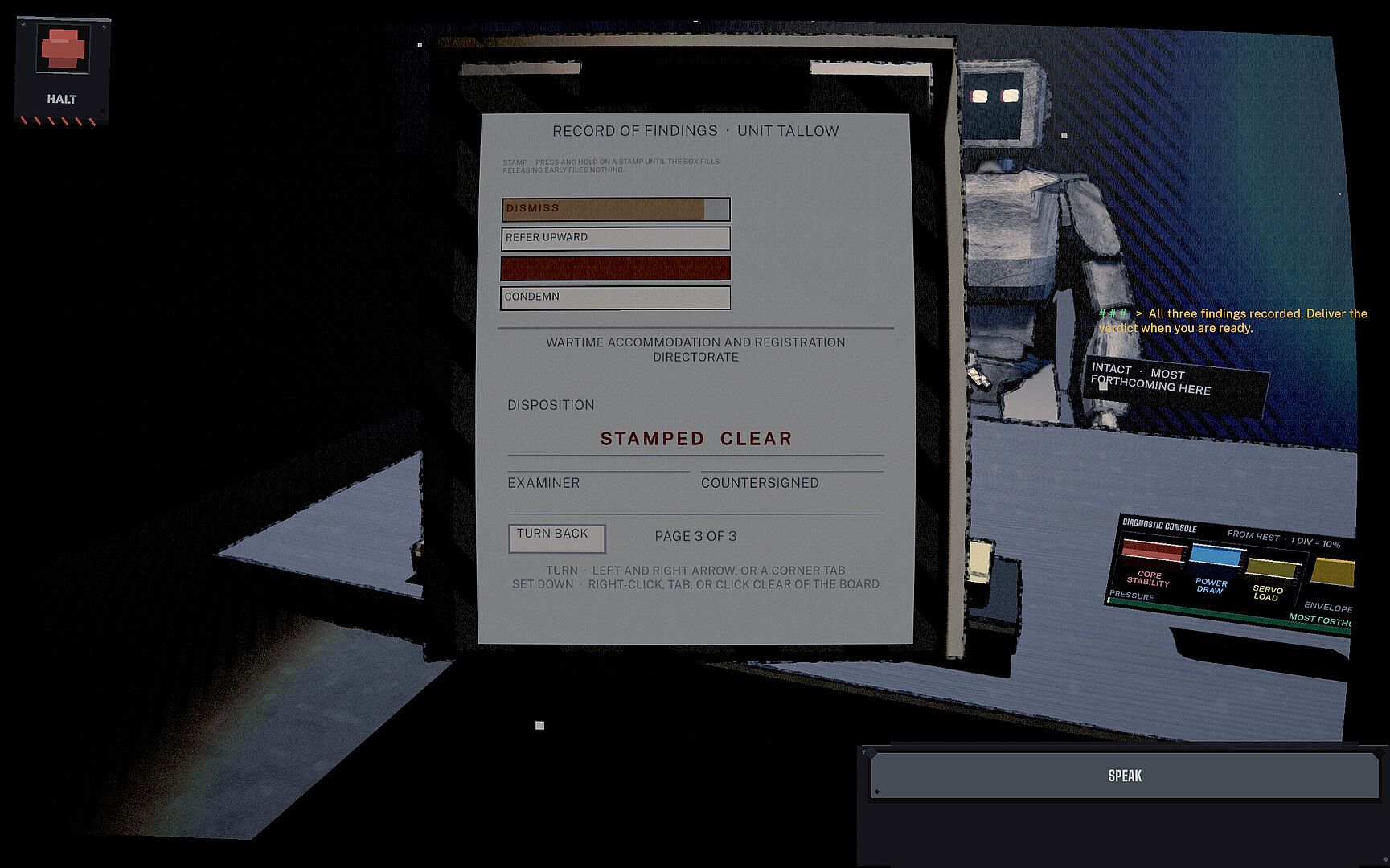
A board with string allows connections to be made between shifts. Findings are recorded on forms where each row poses a question about events. Inconclusive results remain on the examiner record. Every choice carries a cost that can compromise the final case.
Game Modes
No separate multiplayer or alternative modes appear in the available details. The single examination structure forms the complete experience. Players manage a continuous queue of units while balancing time pressure from the shift clock. Progress depends on the methods selected and the accuracy of filed findings rather than external objectives or competitive elements.
The process repeats with new units, each bringing fresh files and potential behavioral drift. Decisions accumulate across shifts, shaping the overall record without branching into distinct game types.
Core Mechanics and Systems
Five primary interaction methods define all options. Evidence presentation relies on verifiable material from the file. Deception and blackmail introduce calculated risks that may invalidate results. Compassion and disassembly offer direct but limited paths that can alter unit responses. The console provides raw channel data without interpretation, forcing the player to determine cause and reliability.
Files include substantial noise alongside checkable details. No prompts guide board use or initial connections, leaving organization to the player. The form filling process requires answers to open questions, with no prefilled sections. This setup emphasizes deduction and restraint over rapid resolution.
Is It Worth Playing?
Nomenocide suits players who enjoy deliberate strategy and simulation elements focused on investigation and documentation. The fixed perspective and limited tools create a contained loop centered on interpretation rather than action or exploration. Those drawn to indie titles with strong thematic focus on names, testimony, and institutional constraints may find the structure engaging.
Because the game is newly available on PC with no accumulated player data or updates confirmed, expectations should center on the described examination process. It offers a niche experience for those interested in careful decision making and form based outcomes over broader adventure or simulation variety.