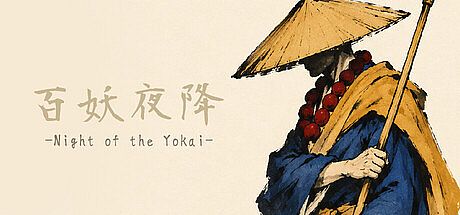


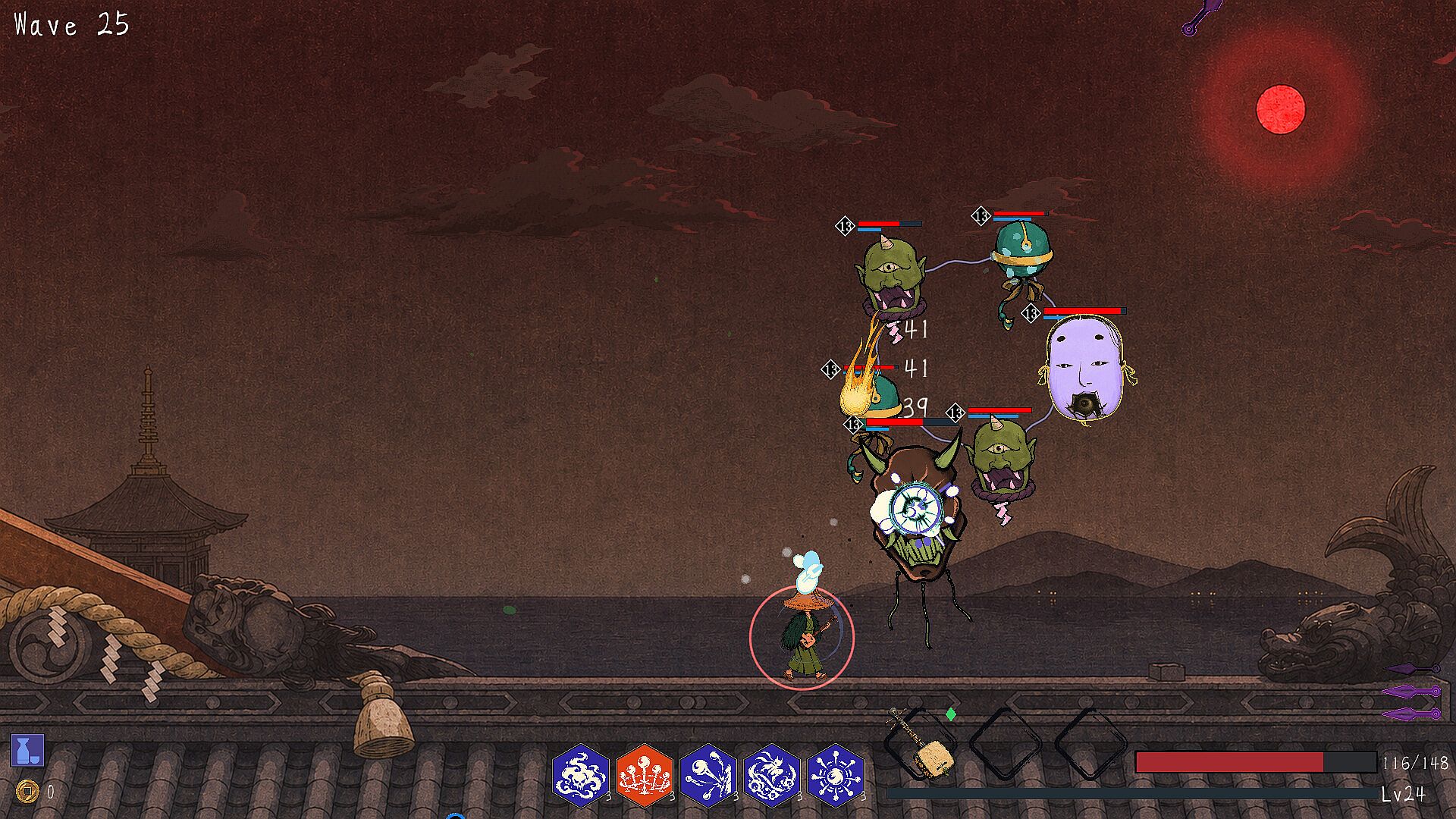
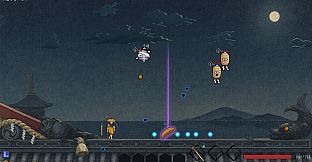
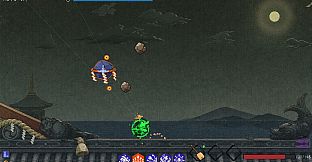
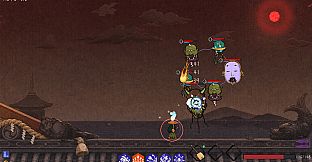
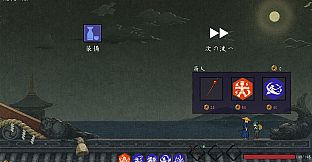
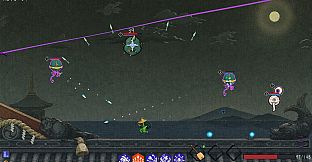
Night of the Yokai is a single-player 2D action roguelite set on PC that draws visual inspiration from traditional Japanese woodblock prints. Players select one of four distinct fighters and navigate runs filled with projectile patterns, spirit encounters, and boss confrontations while managing positioning and attack windows.
Gameplay
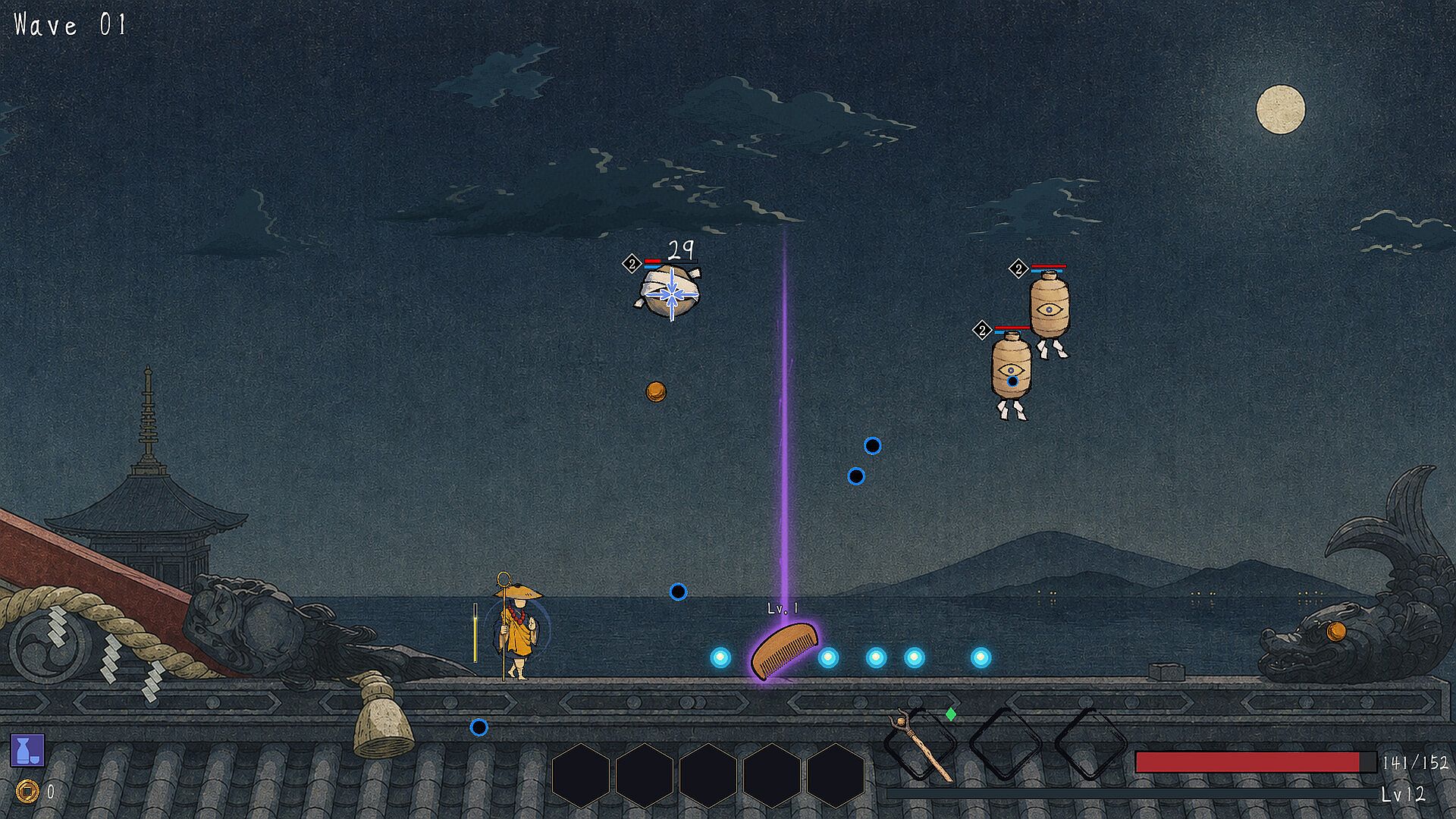
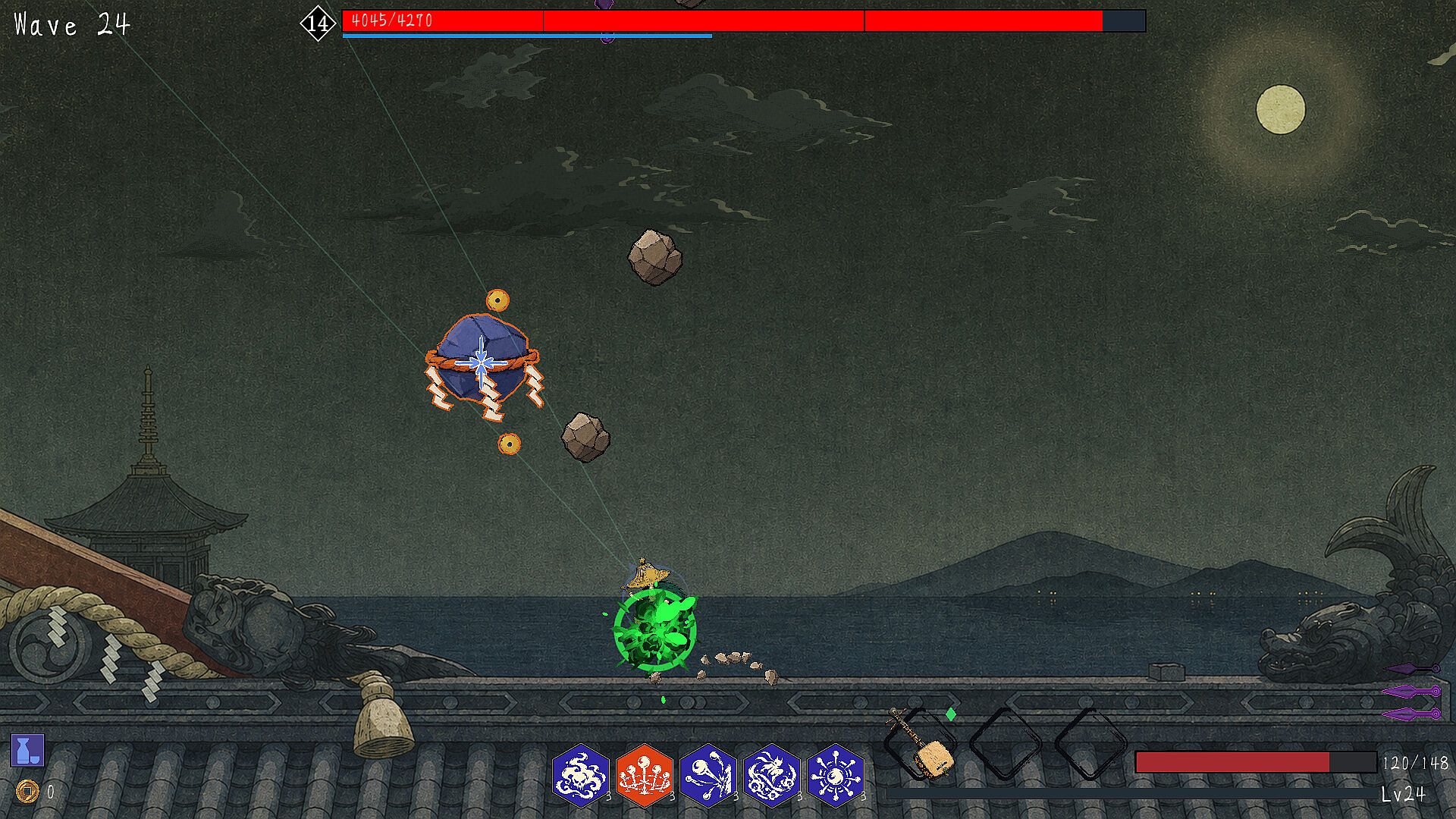
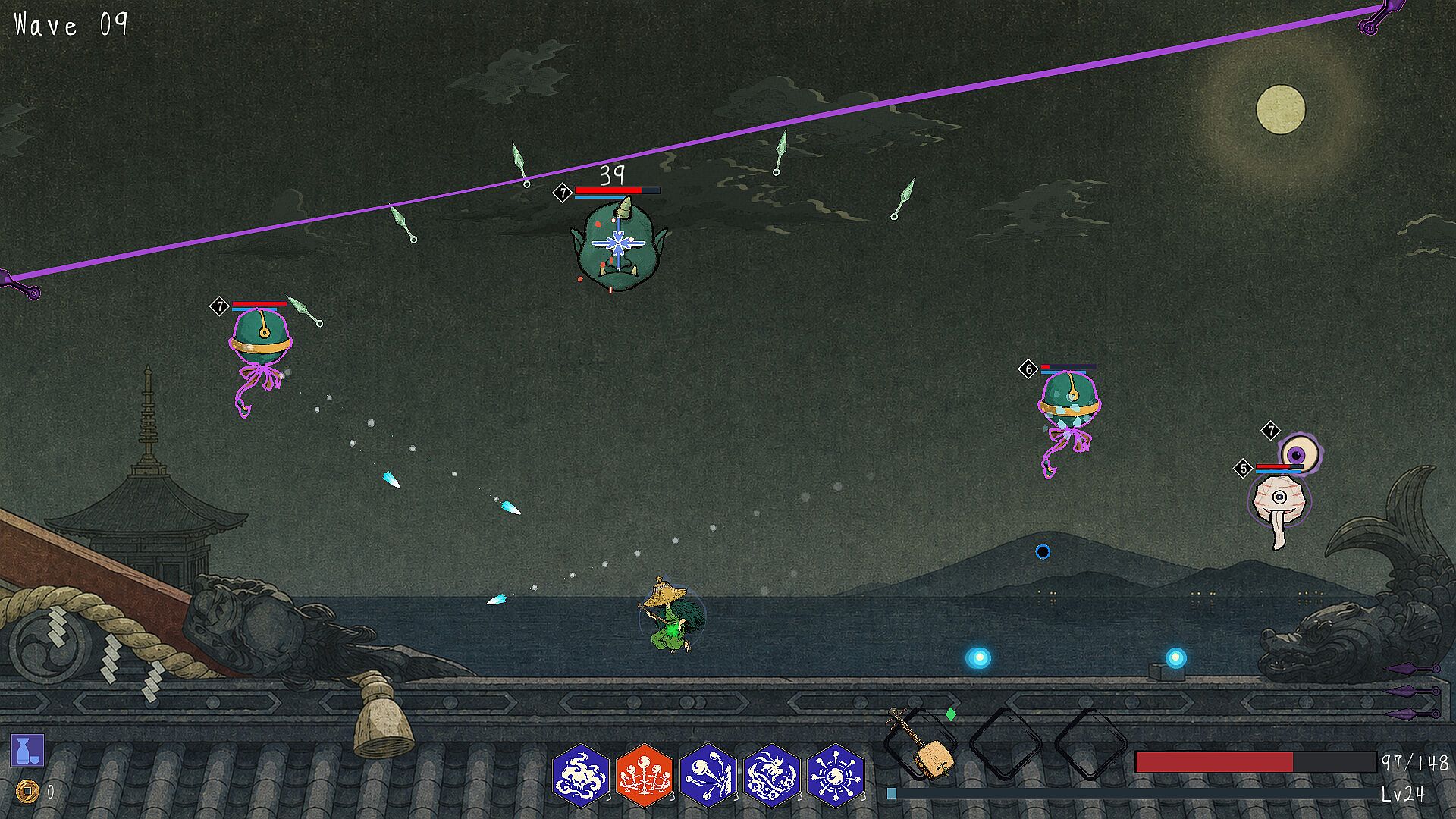
The core loop centers on precise movement and timing. Each run requires leaping over incoming volleys of projectiles while waiting for openings to strike. Waves of spirits appear in sequence, building toward larger boss fights that test the same evasion and aggression principles on a grander scale. The art direction emphasizes clean lines and flat colors reminiscent of ukiyo-e prints, giving every screen a distinct period feel without cluttering the action.
Combat revolves around the chosen fighter's unique toolkit. The Monk deploys lightning to manage groups of enemies at once. The Komuso releases fire butterflies that spread across the field and ignite multiple targets. The Biwa Priest launches sound-based projectiles that can either fan out for area coverage or tighten into a single powerful line. The Ronin executes wide, sweeping blade attacks that clear space in front of the character. These differences encourage players to adapt movement patterns and engagement distances to each fighter's strengths.
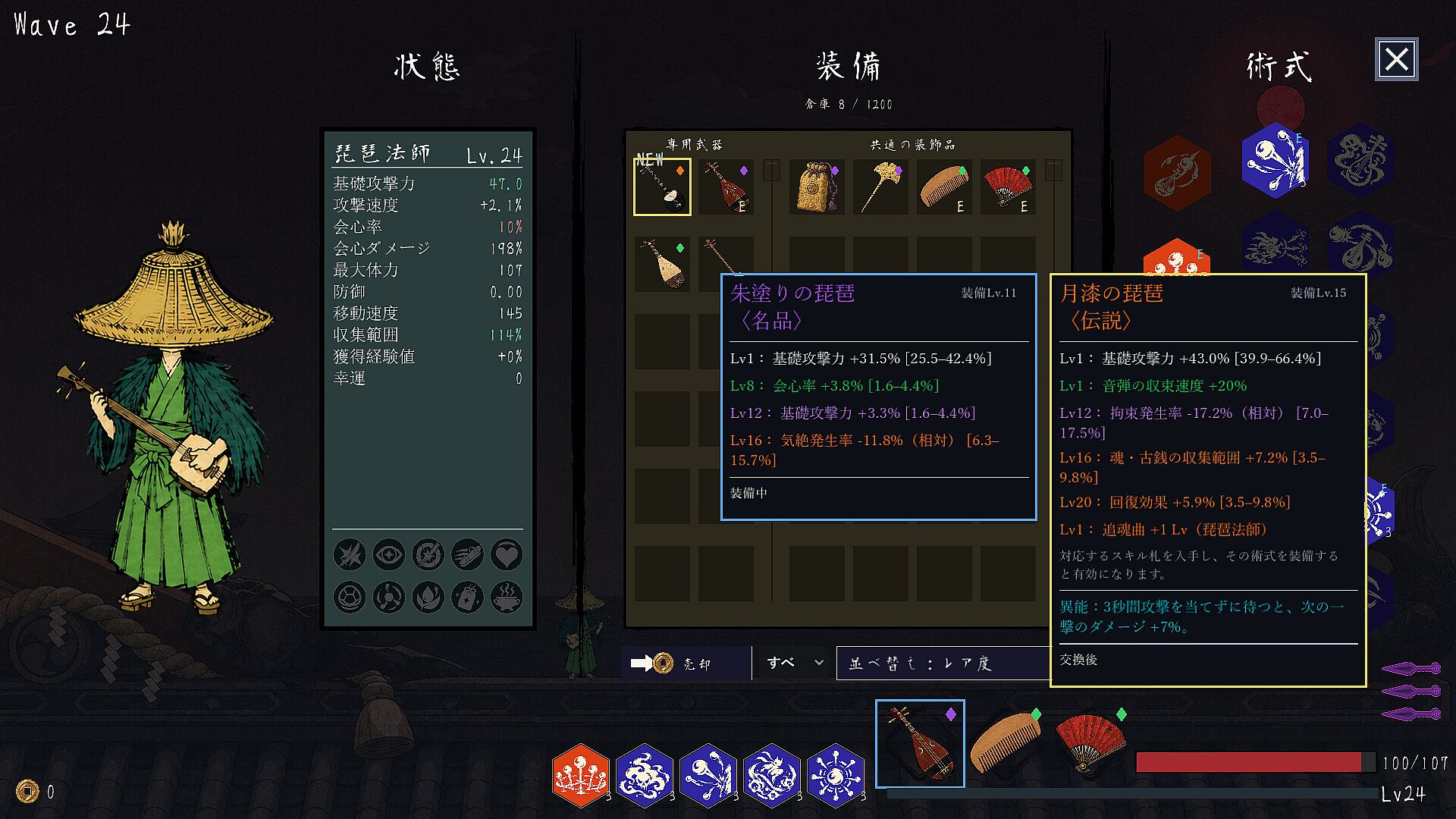
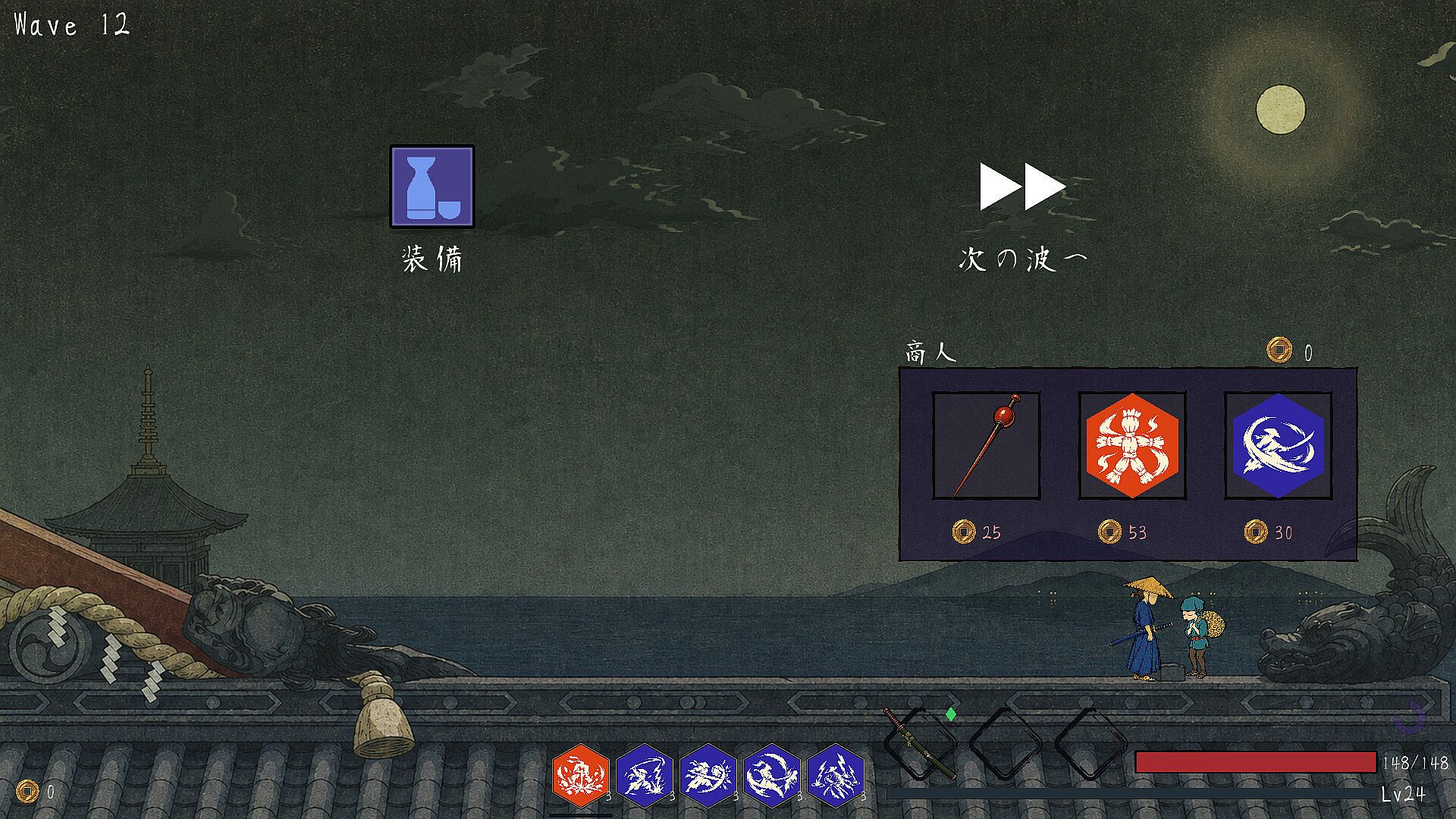
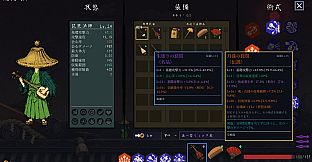
Between encounters, runs reward weapons, equipment pieces, and skills that alter how attacks function. Gear carries bonuses that stack or interact, so players compare options after each fight and assemble combinations that reinforce a chosen fighter's style. Higher difficulty settings increase projectile density and enemy aggression, forcing tighter builds and more deliberate use of collected items.
Game Modes
The game operates entirely in a single-player format with no multiplayer components. Runs follow a roguelite structure where each attempt begins from a starting point and progresses through successive waves and bosses. Progress carries forward only through permanent unlocks tied to collected gear and skills, while individual runs reset upon defeat or completion.
Difficulty scaling serves as the primary progression layer. Lower settings introduce players to projectile patterns and fighter abilities, while higher settings layer additional threats that reward refined builds and precise execution. No separate campaign or story mode exists beyond the core run experience, keeping focus on repeated attempts to master timing and gear synergy.
Character Variety and Build Crafting
Each of the four fighters brings a different rhythm to every run. The Monk rewards staying mobile while chaining crowd-control effects. The Komuso benefits from positioning that lets butterflies linger and spread. The Biwa Priest offers flexibility between wide coverage and pinpoint strikes, suiting players who like adjusting projectile behavior mid-fight. The Ronin favors aggressive forward pressure with sweeping arcs that punish clustered spirits. Switching fighters changes how players approach the same projectile patterns and enemy waves.
Build decisions happen in real time during runs. Weapons and skills drop after fights, and players must decide which bonuses complement their current fighter without knowing exactly what lies ahead. Equipment comparisons happen quickly between waves, encouraging experimentation across multiple attempts. Successful combinations often revolve around amplifying a fighter's signature attack while adding defensive or mobility options to survive denser projectile screens.
Is It Worth Playing?
Night of the Yokai suits players who enjoy short-to-medium roguelite sessions focused on pattern recognition and incremental build improvement. The four fighters provide enough mechanical variety to support repeated runs without feeling repetitive, and the gear system rewards careful selection over random chance. Those who prefer games with clear visual feedback and deliberate pacing will find the woodblock-inspired presentation and projectile-heavy combat a good match.
Because the experience stays confined to single-player runs with adjustable difficulty, it appeals most to solo players comfortable with learning enemy patterns across multiple attempts. The absence of additional modes or ongoing content updates means the value rests entirely on how engaging the core loop of evasion, striking, and gear assembly feels after several hours. Players who like experimenting with different attack styles and tightening their execution on higher difficulties will likely return for many runs.