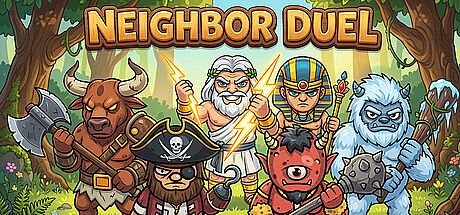


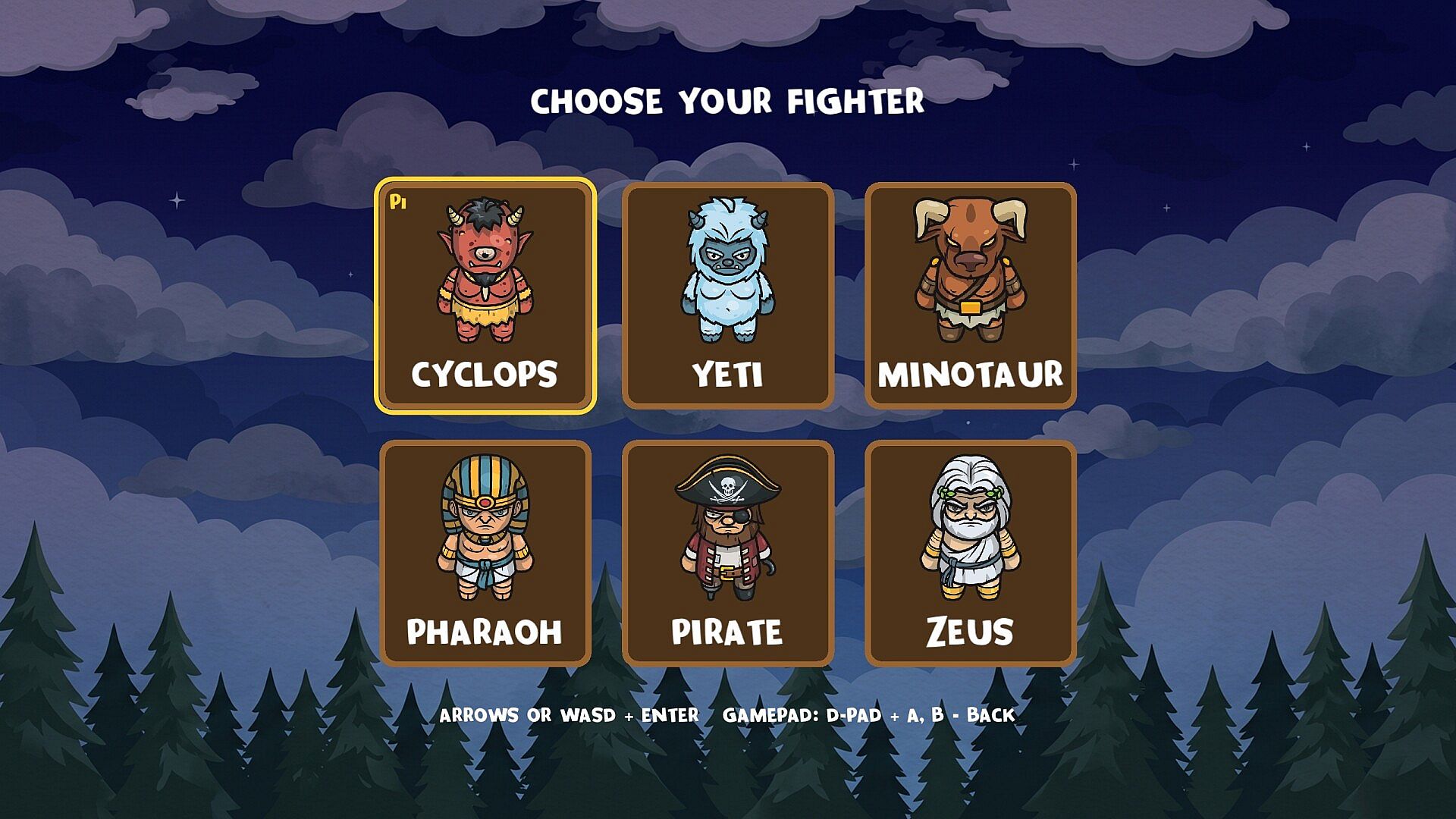
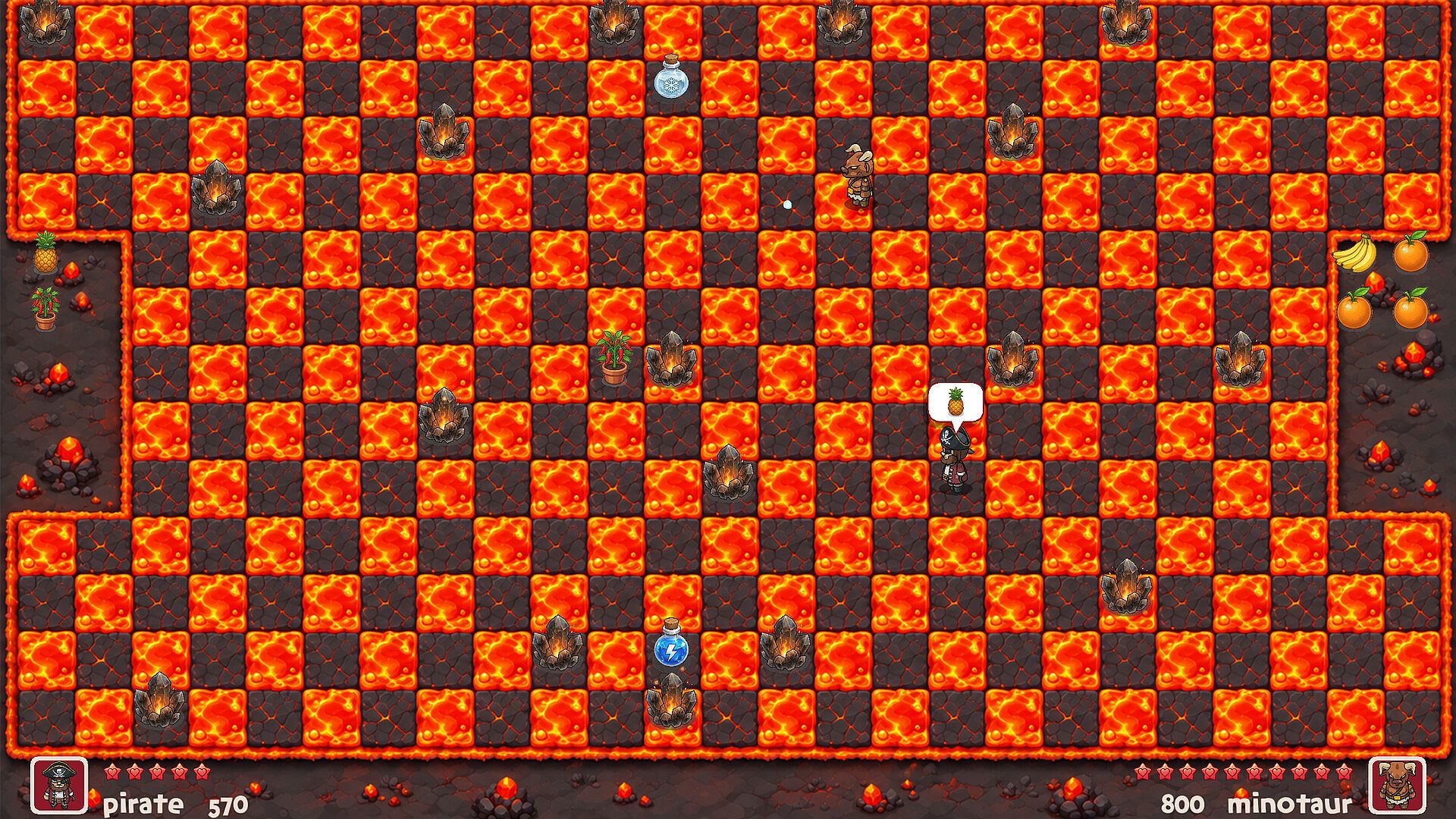
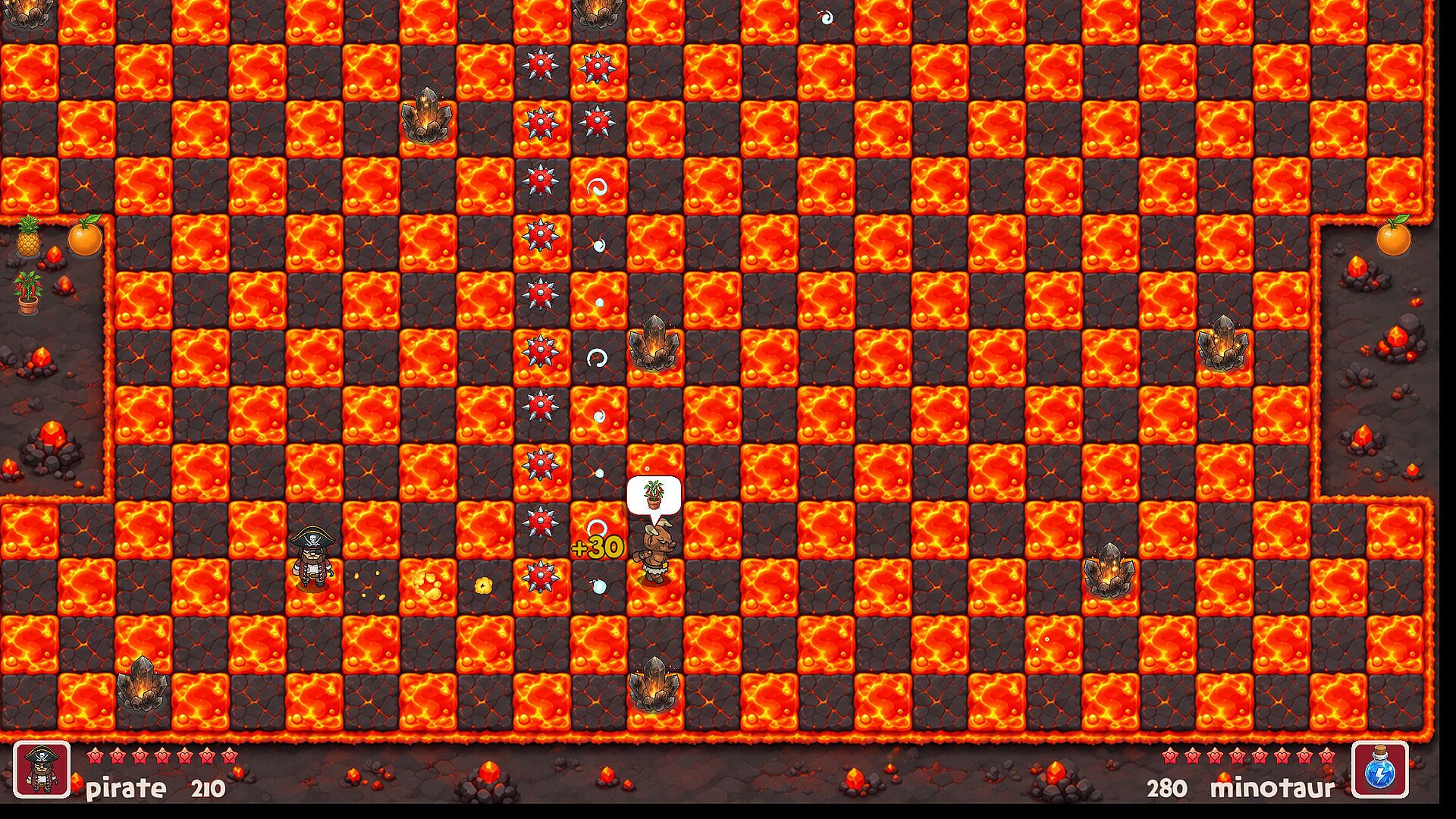
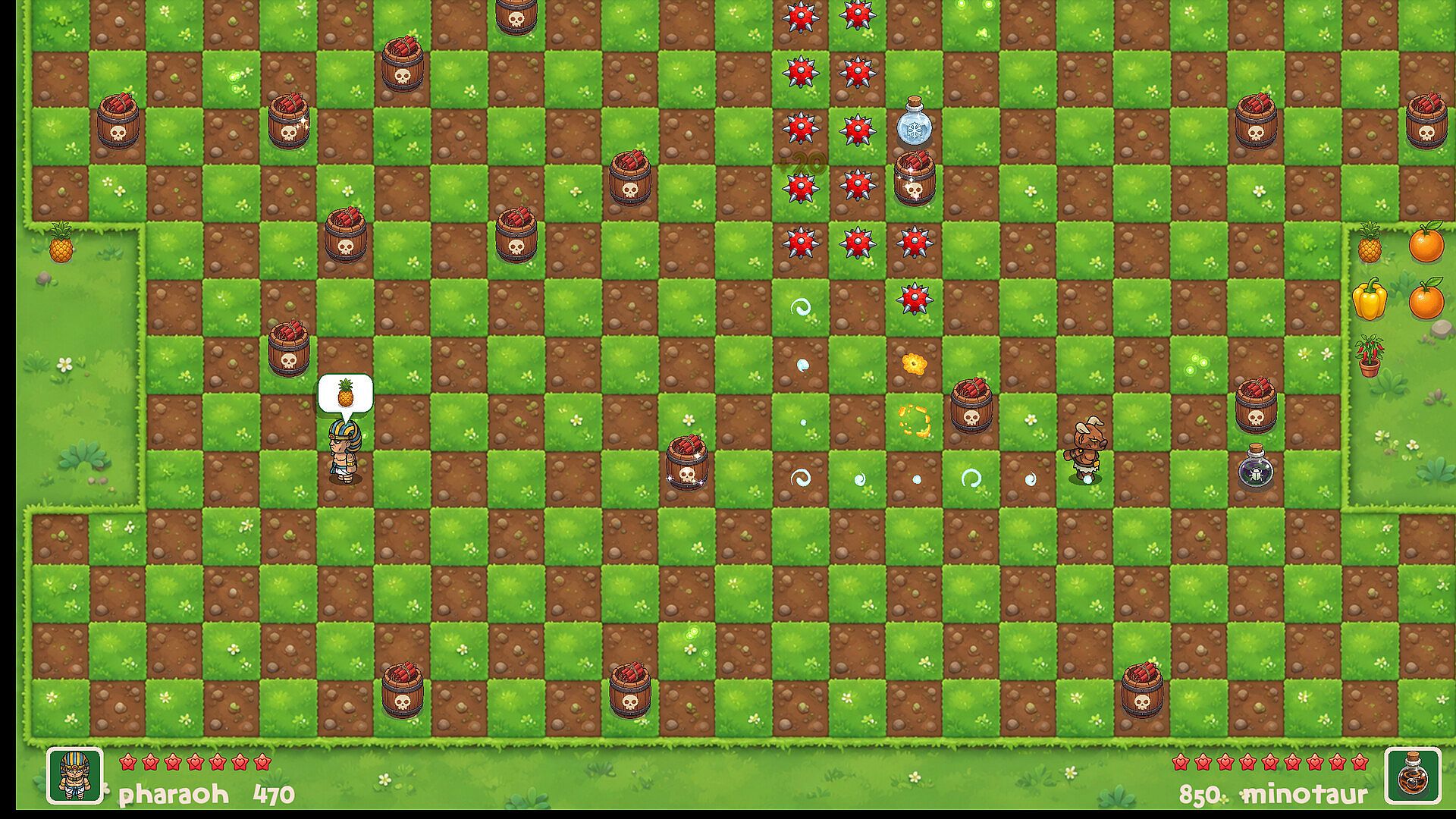
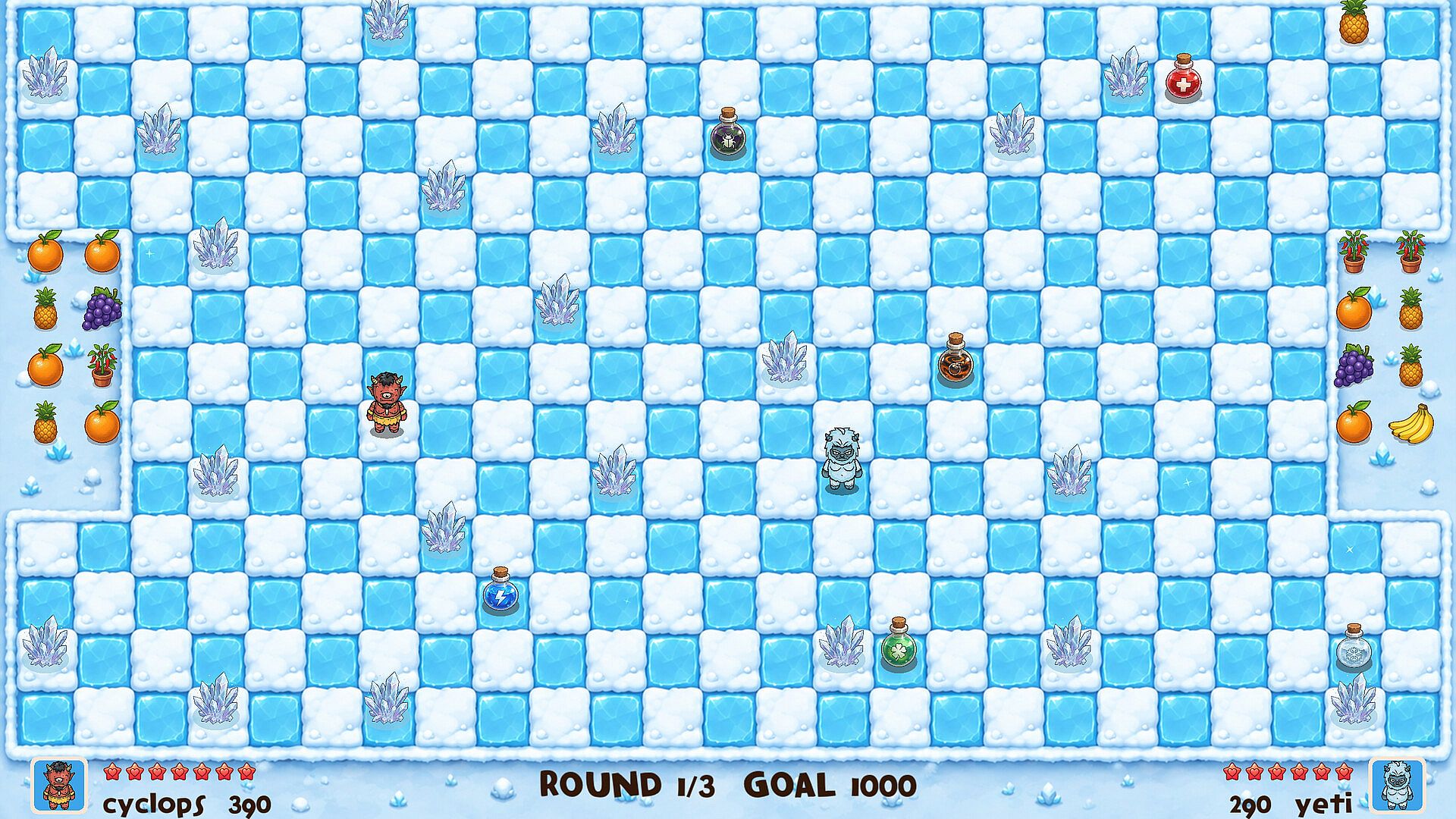
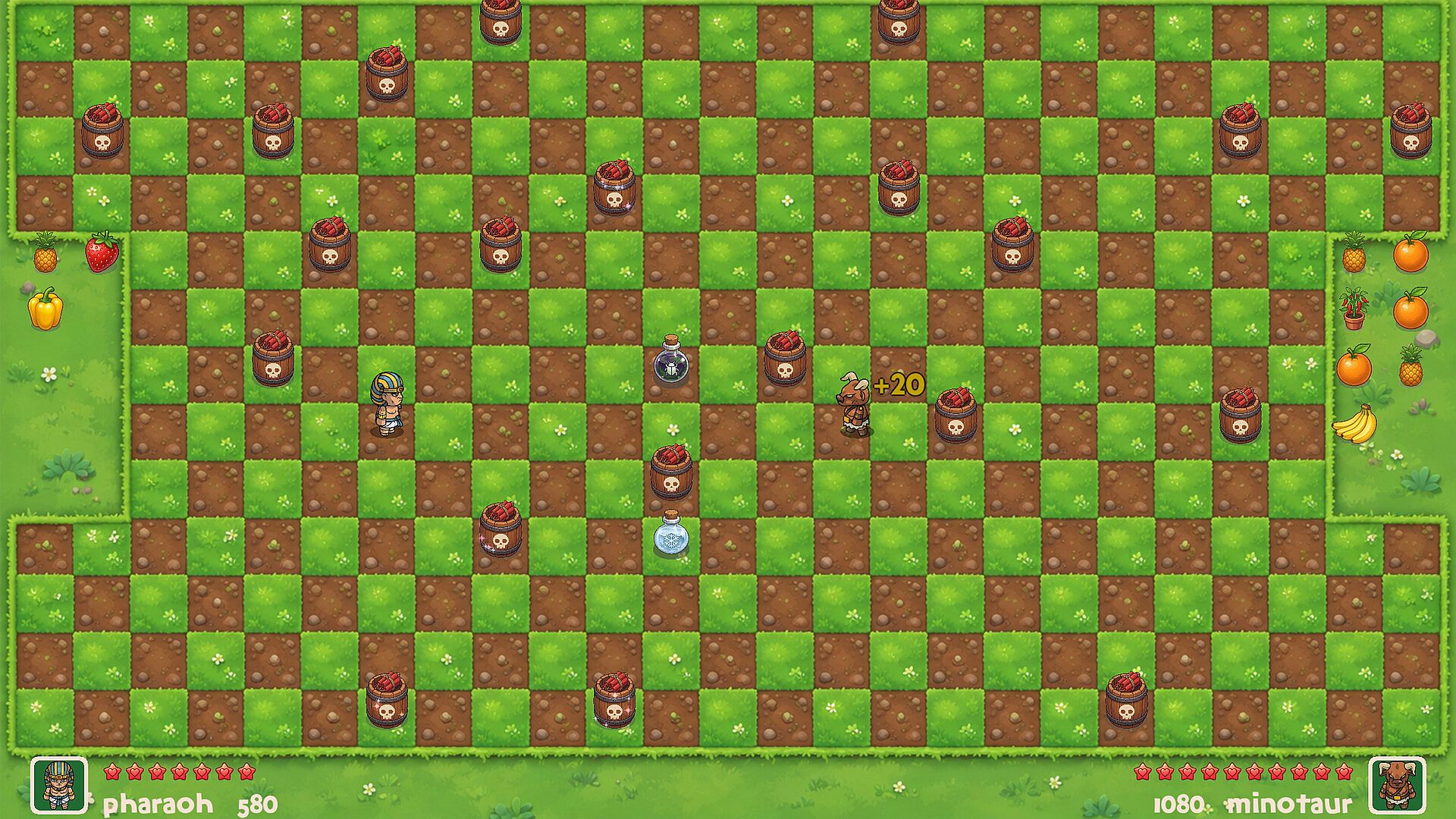
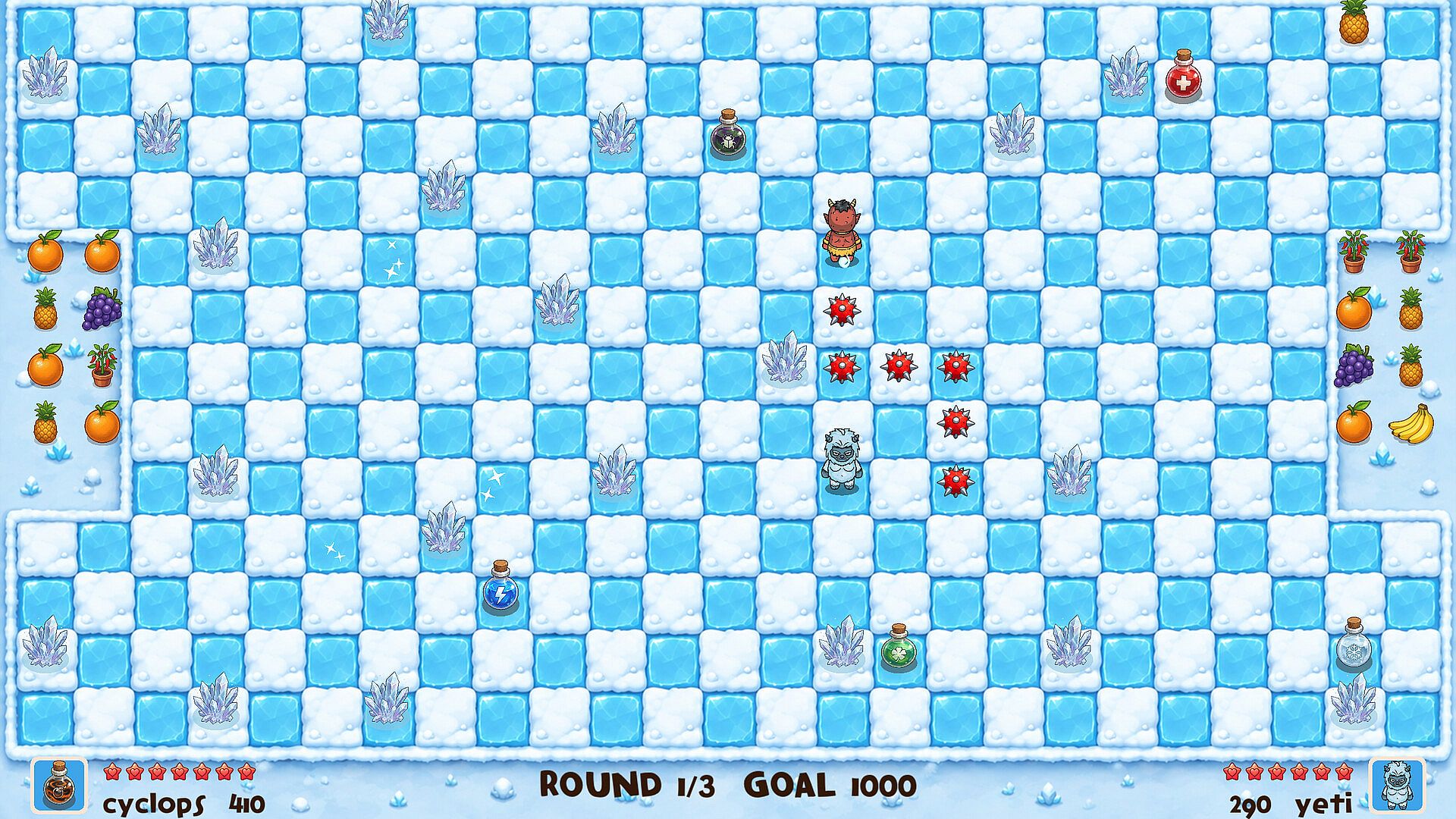
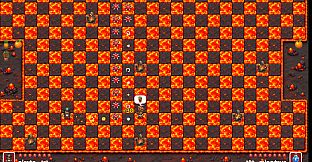
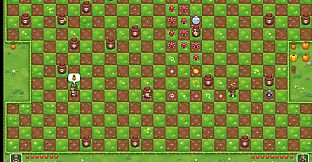
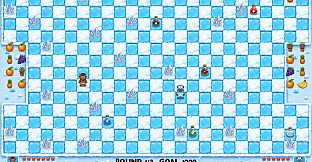
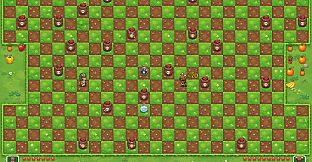
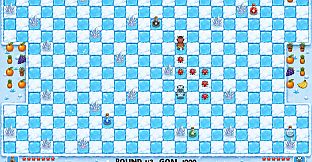
Neighbor Duel stands out as a grid-based action game that mixes competitive collection mechanics with direct combat on PC. Two fighters battle across a compact 25 by 13 playing field, each aiming to secure and deliver ten items to their own base before the opponent succeeds. The setup emphasizes quick decisions, positioning, and opportunistic strikes rather than complex character progression or open-world exploration, even though the listed genres include RPG and adventure elements alongside action, indie, and casual tags.
Gameplay
The core loop revolves around gathering items scattered across the grid while managing limited lives and disrupting the rival. Ten distinct item types appear with different point values, ranging from common low-value objects like an orange worth ten points to rare high-value ones such as grapes worth one hundred. Higher-value items spawn less frequently, forcing players to cover more ground and risk exposure during longer runs back to base.
Combat remains available at all times without cooldowns or power-up dependencies. Striking an adjacent tile removes two seconds from the opponent's remaining time and forces them to drop any carried item onto the field for potential pickup. Bases themselves serve as targets for theft, where sneaking in to grab an item grants thirty points and requires hauling it across the map to score. This back-and-forth creates constant tension as both sides mirror each other's raids.
Seven power-ups alter round dynamics when collected. These include a blue bottle granting a seven-second speed boost that doubles movement, a green clover bottle that summons an ally for thirteen seconds to collect and steal on the player's behalf, a light blue snowflake that freezes the opponent for five seconds, a dark bottle enabling bomb placement for fifteen seconds with five-second detonation delays, a beetle bottle that destroys one secured item at the enemy base, and a red medkit bottle that restores one life up to a maximum of ten. Arena hazards shift with each item pickup, spawning new obstacles that cost a life and one delivered item when stepped on. Opponent-placed bombs trigger the same penalty plus visual feedback on contact.
Each round grants seven lives per fighter. Depleting them ends the round in defeat. Three themed arenas introduce distinct visual styles and obstacle patterns: ice crystals, skull barrels, and fire crystals, each paired with matching interface colors. Controls support keyboard layouts with arrow keys or WASD for movement and dedicated attack keys, plus full gamepad compatibility for one or two players. Single-keyboard couch co-op assigns separate controls to each participant, while two gamepads handle automatic assignment.
Game Modes
Item Race focuses on a straightforward collection objective. The first player to deliver ten items wins the match. Every pickup adds a new obstacle to the grid, and successful sabotage can dislodge previously secured items, turning late-game moments into frantic scrambles.
Score Race structures matches across three rounds with escalating targets of one thousand, one thousand two hundred fifty, and two thousand points. Points accumulate through item collection and base thefts, with the tenth delivered item converting into an extra fifty-point bonus. The player who wins the majority of rounds claims overall victory. Bonuses from power-ups each contribute twenty points, reinforcing the need to fight for every advantage.
Arenas and Hazards
The three arenas differentiate play through their hazard layouts and atmospheres without altering fundamental rules. Obstacles appear dynamically after each item pickup, keeping the field in constant flux. Stepping on them or enemy bombs costs a life and removes one secured item from the player's base. Newly spawned obstacles do not immediately penalize players, but freezing or striking an opponent reliably causes them to drop carried loot for immediate grabs.
Is It Worth Playing?
Neighbor Duel suits players who enjoy focused local competition on a single screen, whether against an AI opponent that challenges positioning and timing or in direct couch co-op matches using shared keyboard or paired gamepads. The emphasis on item management, base raids, and always-available attacks rewards quick adaptation and awareness of the shifting grid. Single-player sessions provide consistent practice against bots, while two-player modes highlight the theft and sabotage interactions that define each round. Those seeking straightforward, replayable duels without online requirements or extensive progression systems will find the mechanics rewarding through repeated short matches that build tension in the final moments.