

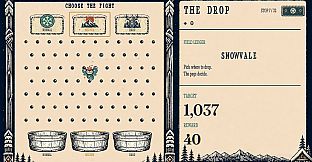


Matchinko è un'avventura action indie per giocatore singolo che fonde i puzzle match-3 con l'azione fisica del pachinko all'interno di una struttura roguelite. Il giocatore interpreta un lampionaio che viaggia tra borghi invernali, scacciando l'oscurità caricando cristalli e accendendo luci, gestendo un tabellone unico che evolve durante l'intera run.
Gameplay
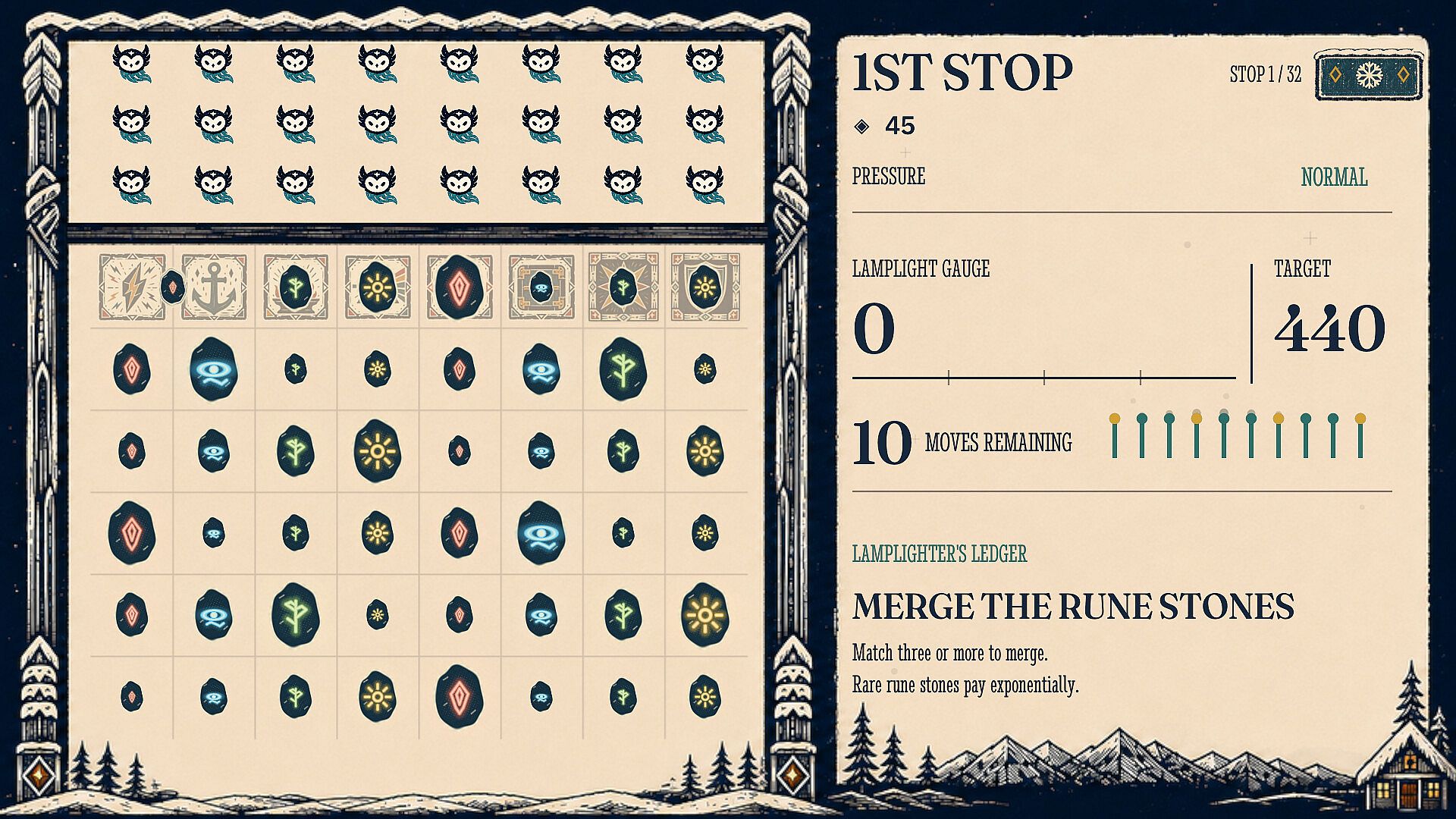
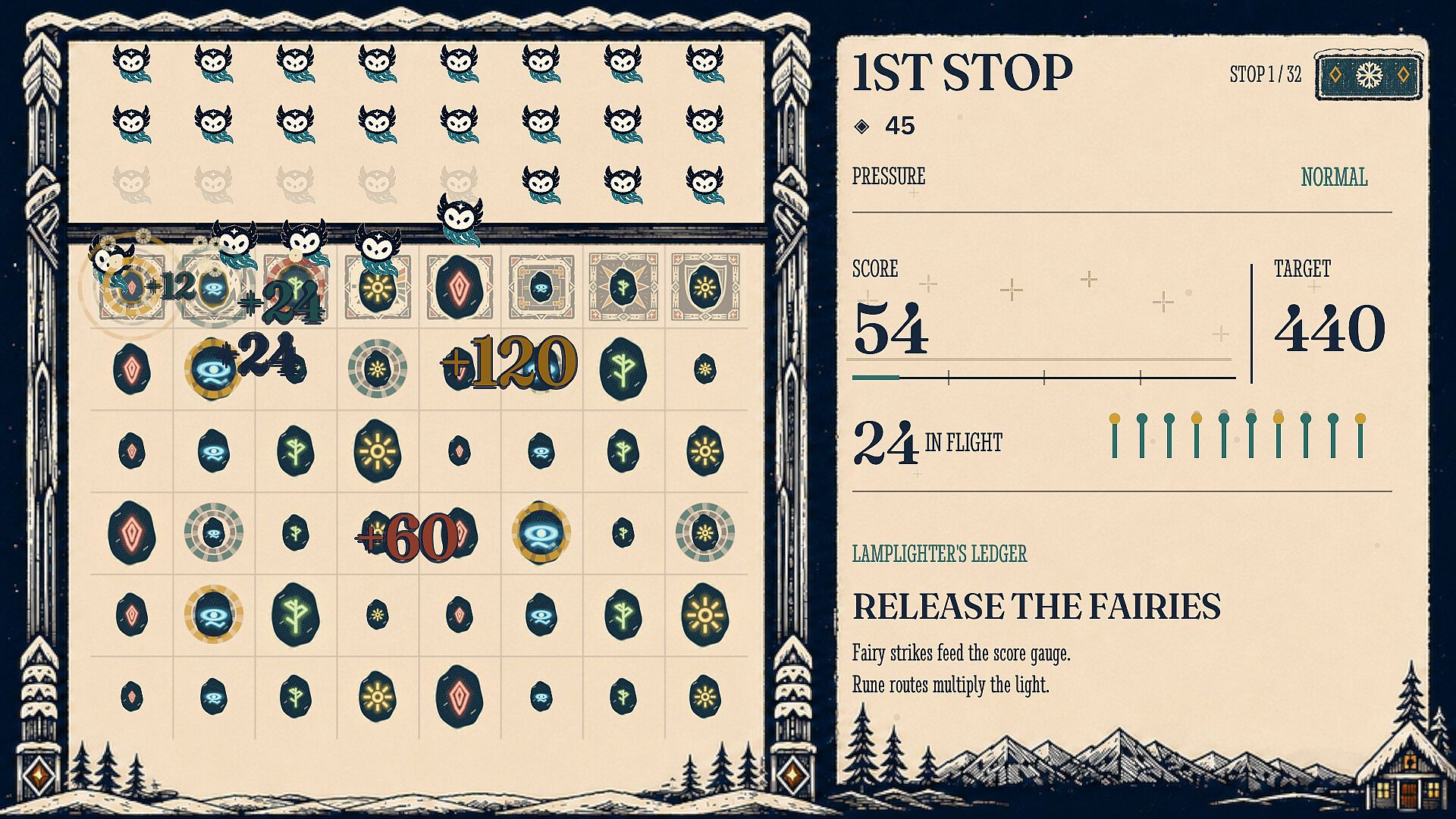
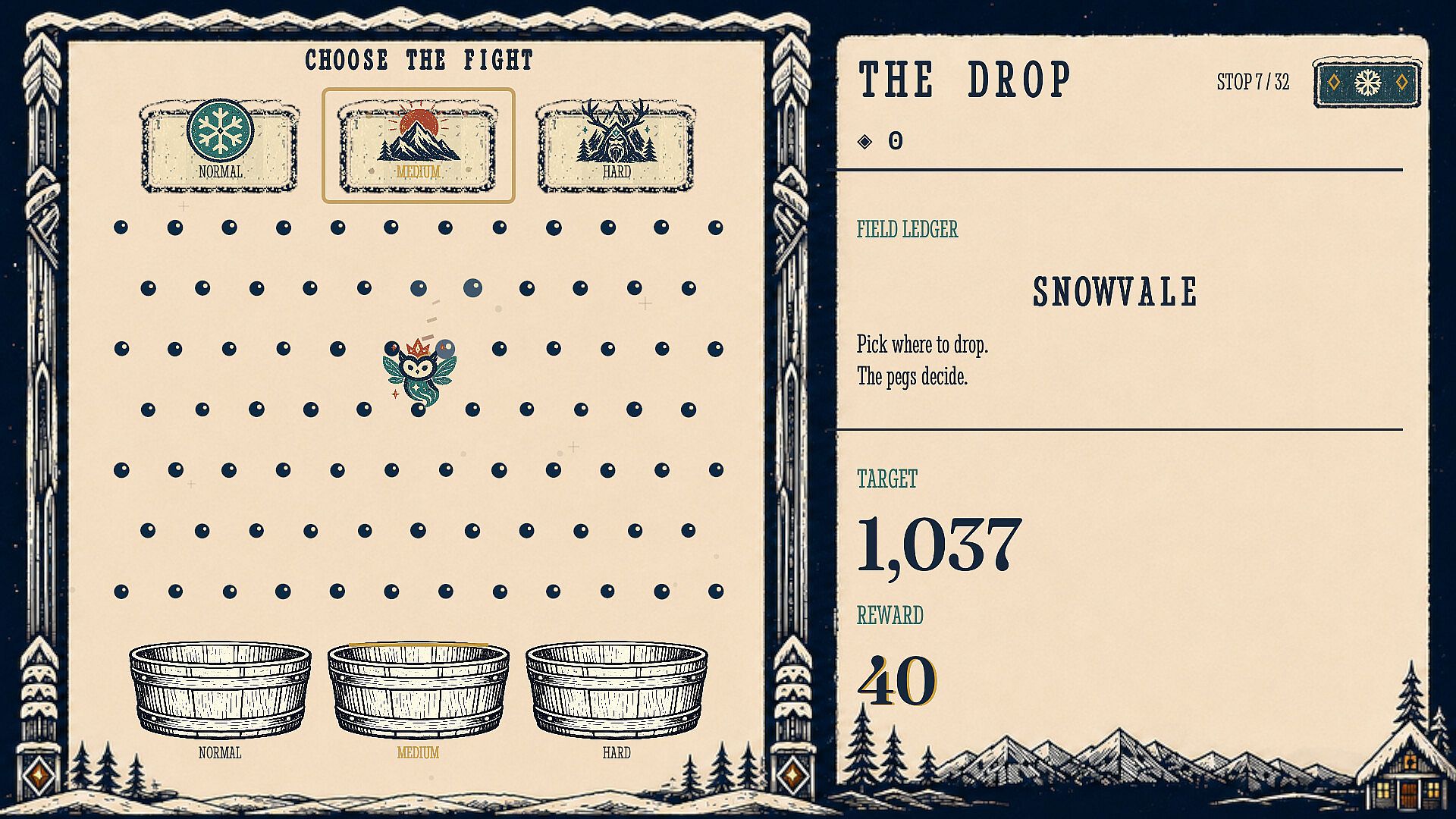
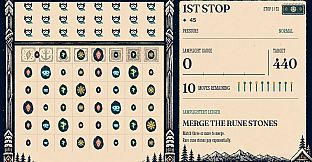
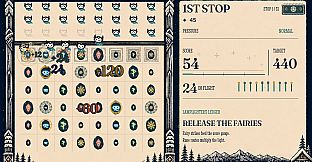
Il ciclo di gioco si divide in due fasi che si influenzano a vicenda. Nella prima si spendono mosse per formare combinazioni di tre o più cristalli; ogni fusione ne aumenta il livello e genera punteggi esponenzialmente più alti. Quando la fase di abbinamento termina, inizia la seconda fase con il lancio delle palle: ogni sfera percorre i pioli e le tessere create in precedenza, attivando ricompense che possono moltiplicarsi in base alle fusioni e alla disposizione del tabellone.
Il tabellone persiste per tutta la run e si arricchisce progressivamente, quindi le scelte iniziali condizionano i guadagni successivi. Tra un livello e l'altro, le compere con gli abitanti del villaggio offrono upgrade che variano lo stile di gioco senza dover ripartire da zero.
Trenta fate introducono effetti che alterano le regole, come magneti, monete di Mida, rinascite fenice e fulmini a catena. Trentasei tessere aggiungono comportamenti speciali ai pioli, tra cui esplosioni a raggio e motori dell'avidità, mentre cinque grow card leggendarie diventano più potenti quanto più restano sul tabellone. Trentasei palle compongono il mazzo di lancio, divise in comuni, rare e leggendarie, con tre edizioni che aggiungono varianti visive e meccaniche a ogni abilità base.
Modalità di gioco
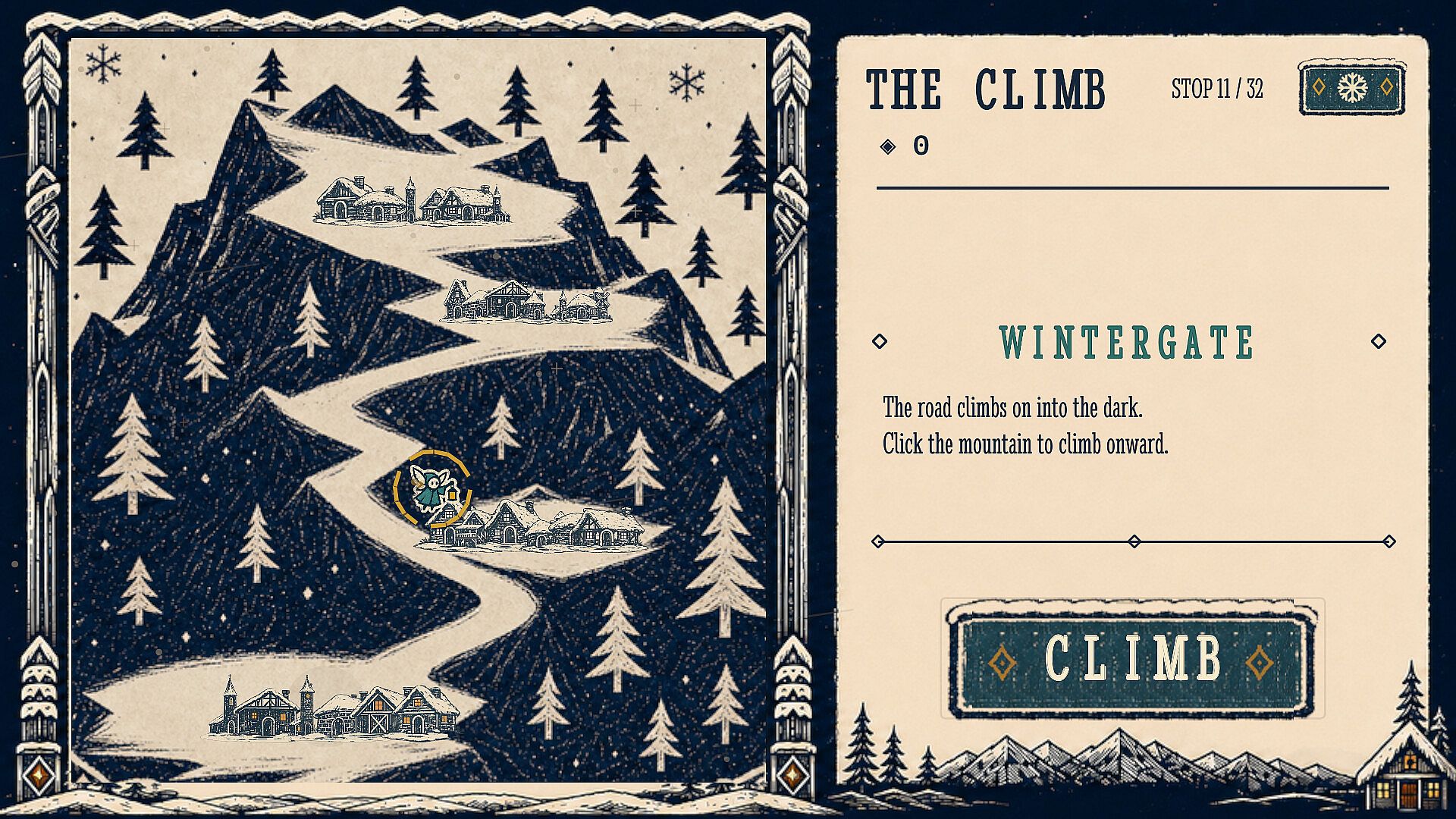
Matchinko ruota attorno a un'esperienza roguelite principale strutturata su una scalata ramificata di 12 livelli. Ogni livello presenta un borgo invernale generato proceduralmente, dove bisogna raggiungere un punteggio prestabilito; fallire il bersaglio termina subito la run e riporta il giocatore a un tabellone nuovo. Ogni tre livelli compare un boss, la cui identità è nota in anticipo per permettere acquisti mirati.
Undici eventi appaiono sulla mappa come tappe rischio-ricompensa: pozzi dei desideri, incantatori, patteggiamenti maledetti e altari di brace, che invitano a osare o a giocare in sicurezza. Completare quattro borghi e sconfiggere il boss finale conclude una run vincente. La struttura premia la pianificazione intorno alle sfide visibili piuttosto che i tentativi casuali.
Atmosfera e presentazione
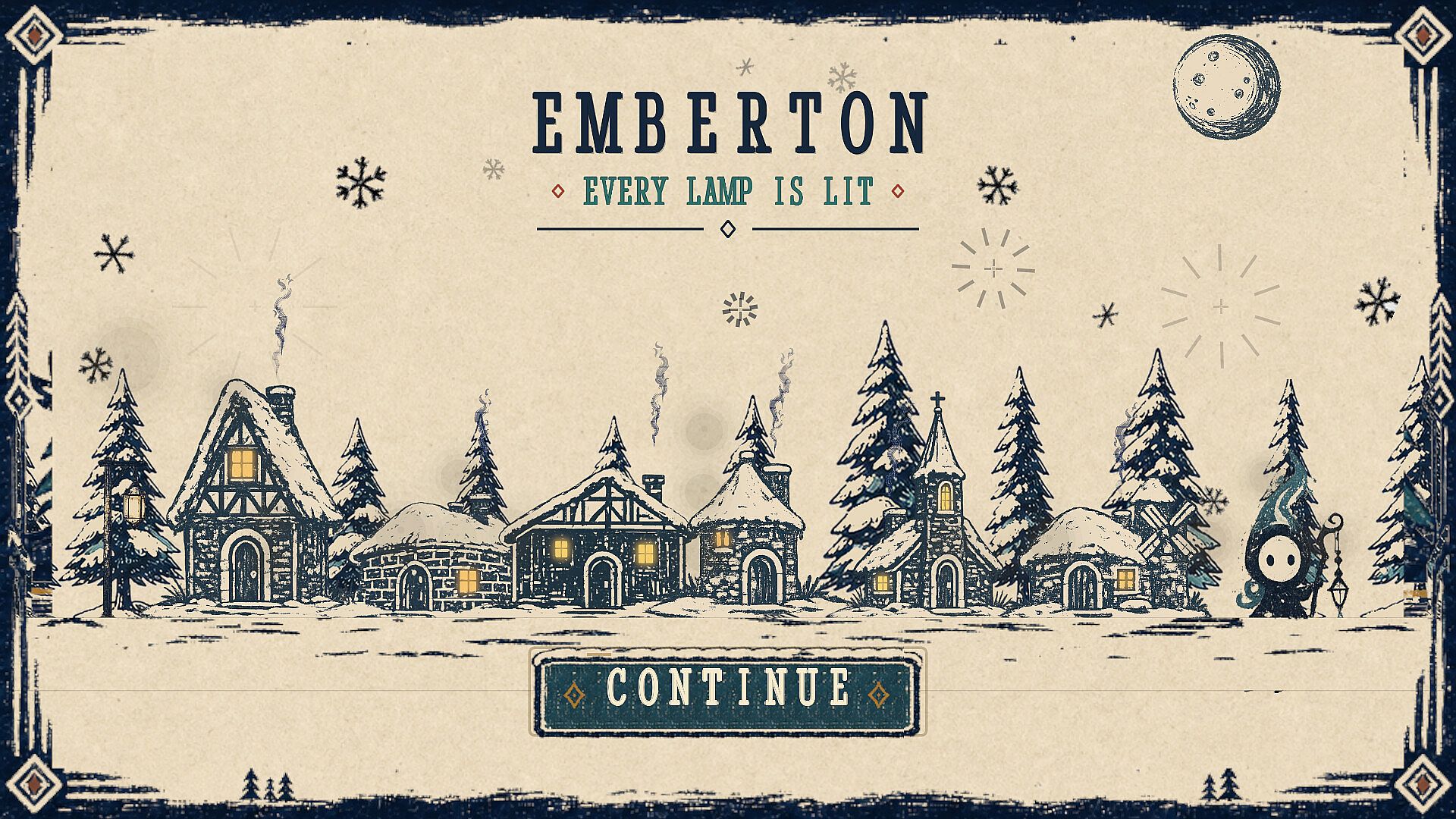
Villaggi innevati disegnati a mano, fumo dai camini, neve che cade e il personaggio del lampionaio creano un'atmosfera accogliente che contrasta con la tensione roguelite. Man mano che i borghi si illuminano, le ghirlande di luci si accendono sulle case, fornendo un feedback visivo immediato sui progressi. Il successo si misura sia nel punteggio finale sia nella vista del borgo che riprende vita.
Il supporto completo a tastiera e gamepad include indicatori dei tasti sullo schermo e feedback aptico. Il gioco è ottimizzato per Steam Deck e per configurazioni desktop, mantenendo l'attenzione sui lanci precisi e sulla gestione del tabellone senza distrazioni tecniche.
Vale la pena giocarci?
Matchinko è adatto a chi cerca run roguelite ad alto rischio, dove un bersaglio mancato interrompe il progresso e impone un nuovo inizio. Il tabellone persistente e le fusioni cumulative premiano la pianificazione a lungo termine, mentre le fate, le tessere e le palle offrono personalizzazioni significative tra un livello e l'altro. Chi apprezza i puzzle match-3 abbinati a ricompense fisiche troverà coinvolgente il ritmo "costruisci e sfrutta", soprattutto quando si preparano contromisure mirate per i boss noti.
Le ambientazioni invernali accoglienti e il progressivo accendersi delle luci aggiungono un tocco rilassante attorno a meccaniche severe. Disponibile su PC con controller e su Steam Deck, il gioco si adatta a stili di gioco diversi. Chi preferisce sessioni puzzle rilassate troverà alternative meno impegnative, mentre chi accetta i cicli di fallimento roguelite e la costruzione strategica del mazzo apprezzerà la profondità di un'esperienza unica e coerente.