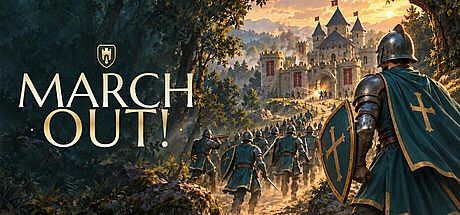


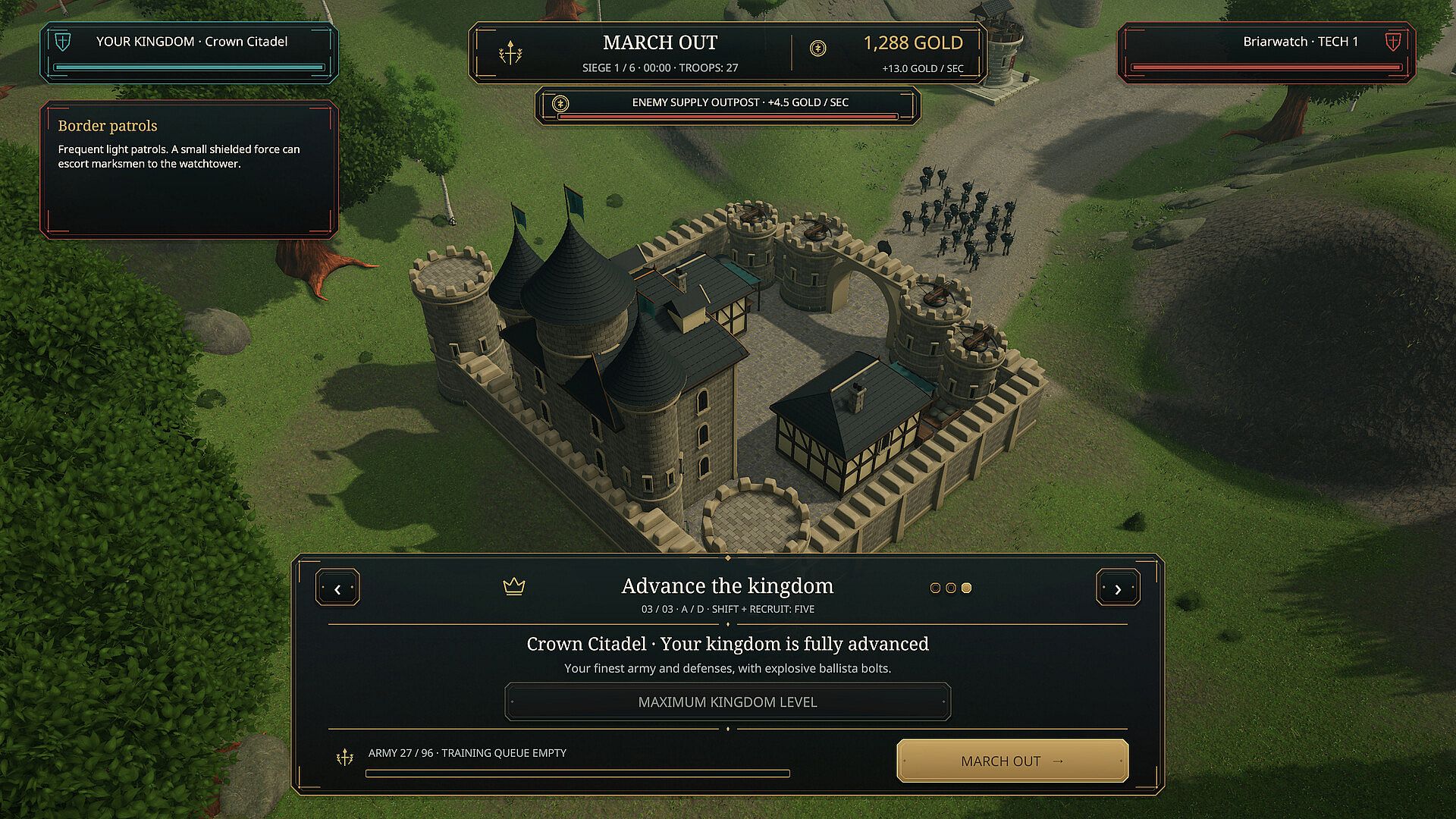
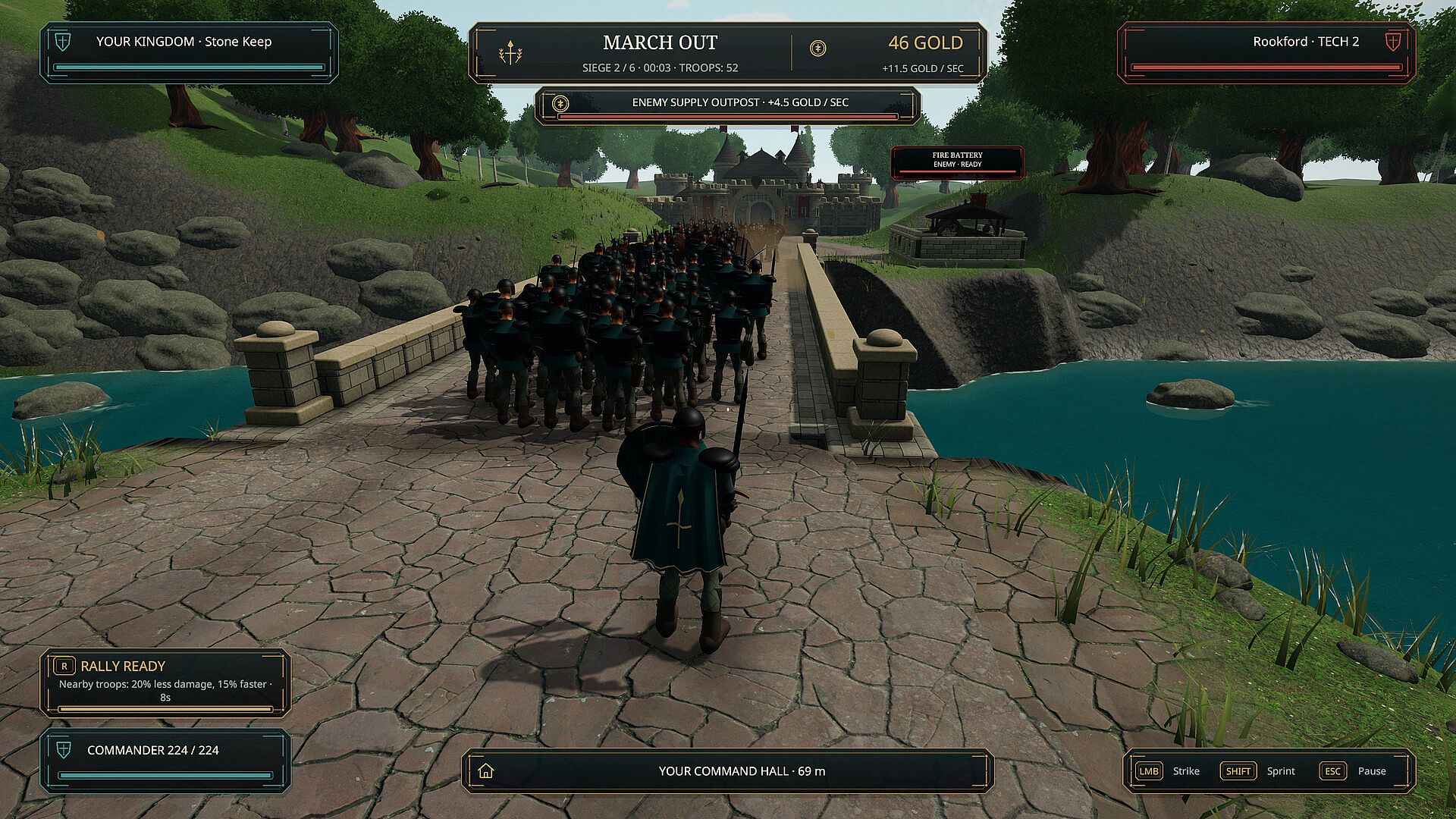
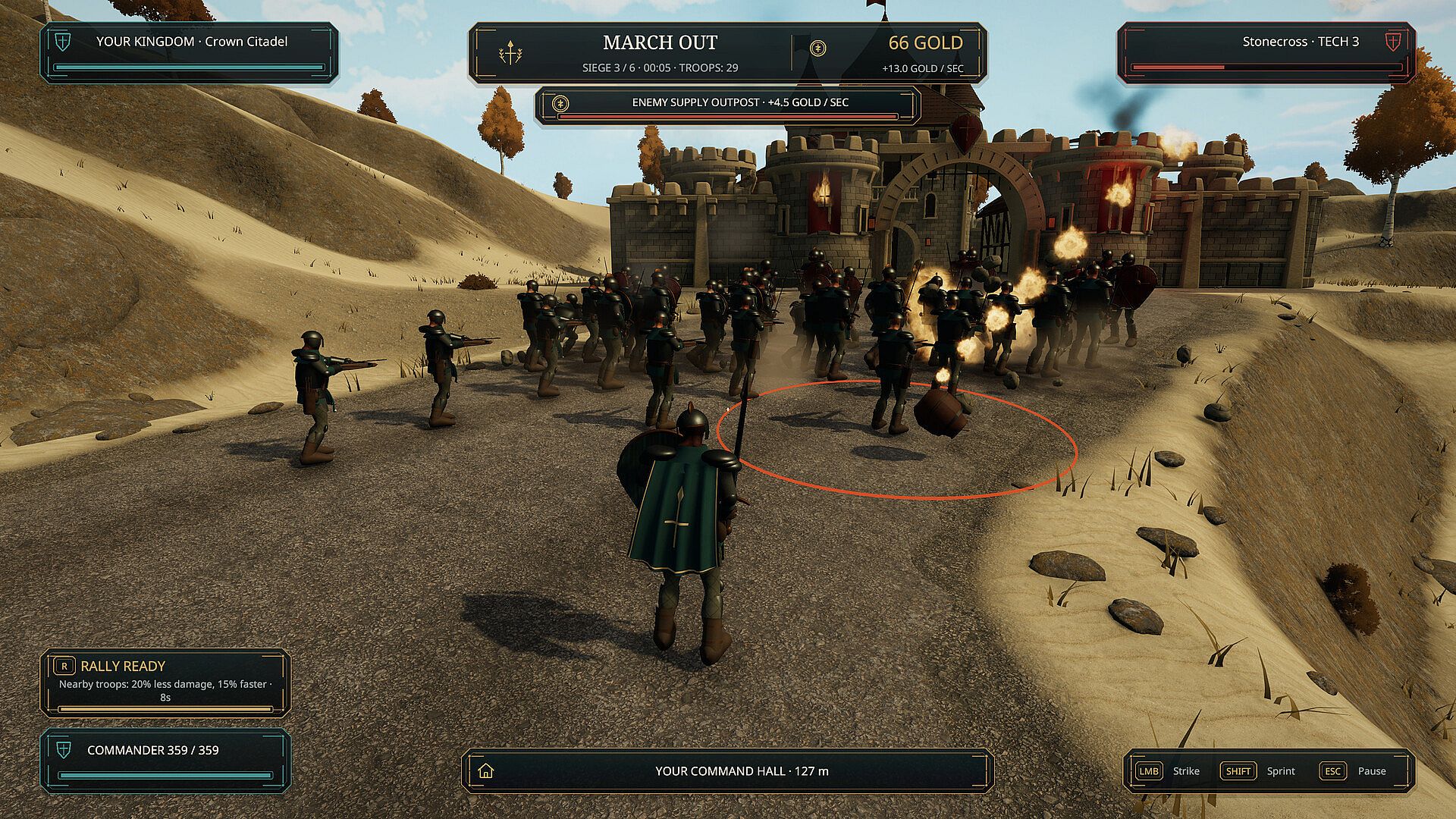
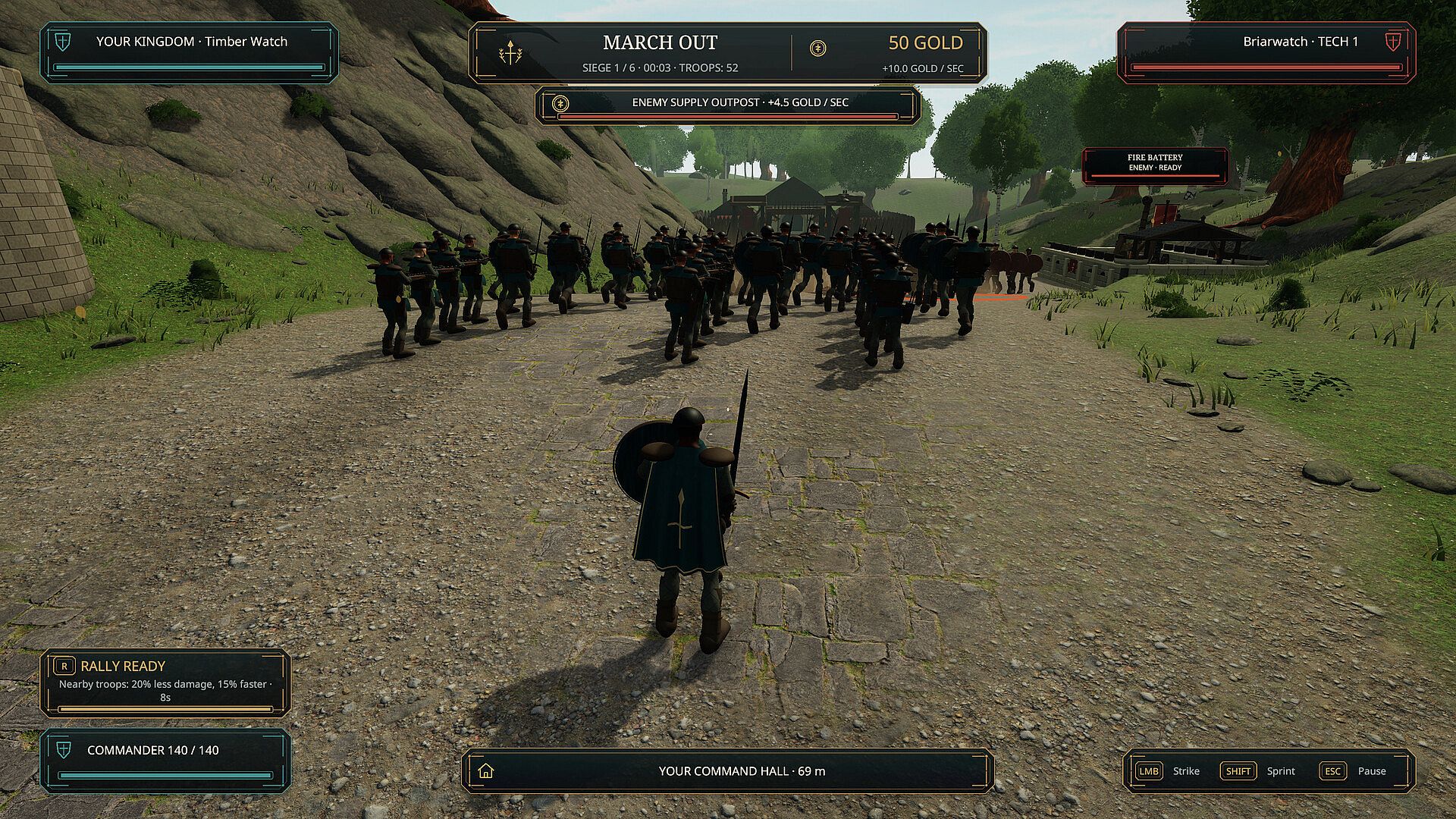
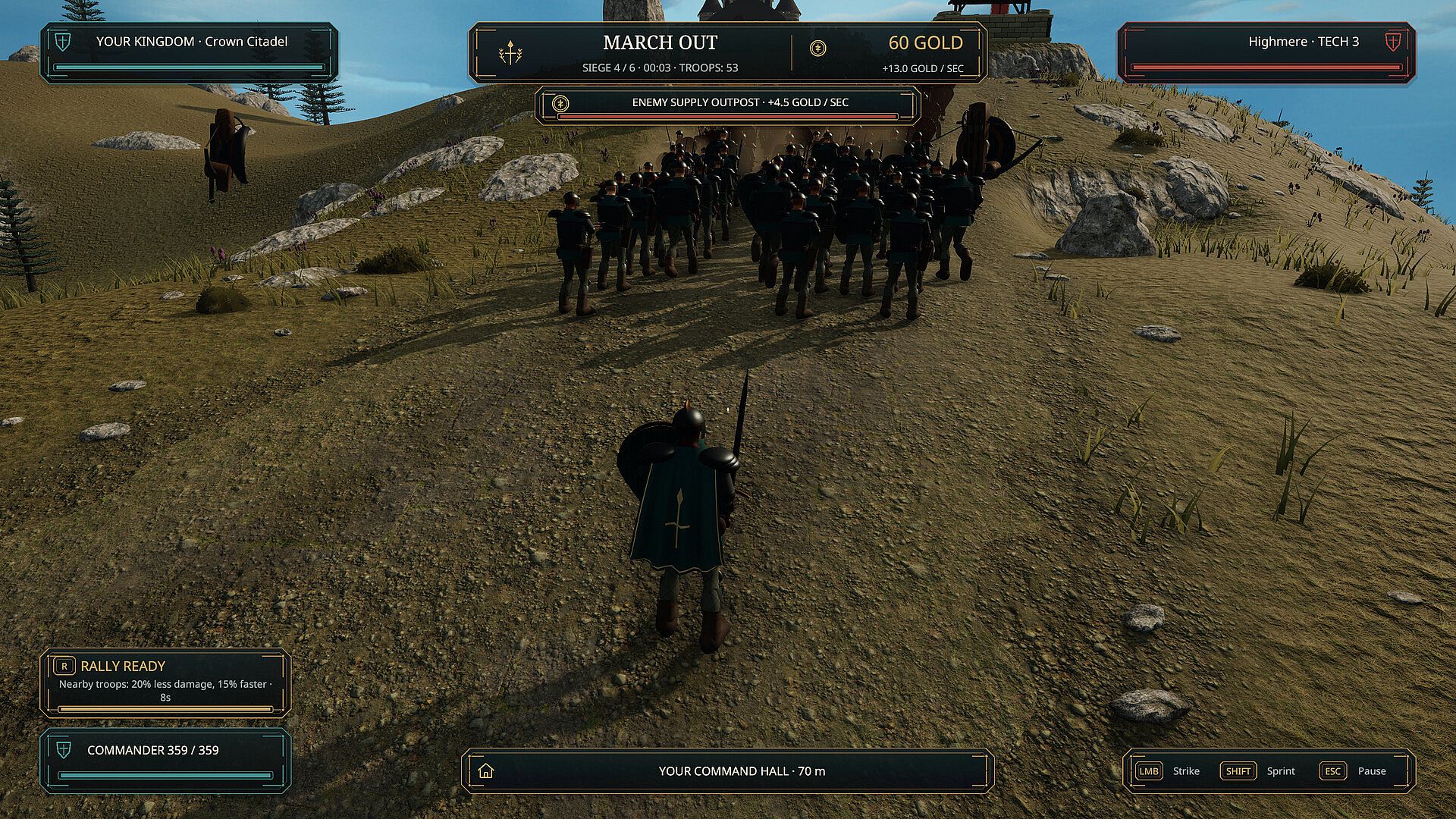
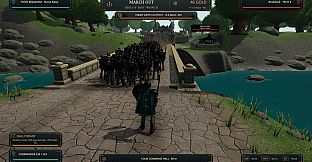
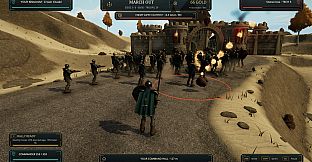
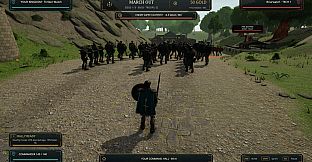
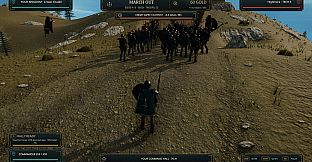
March Out! is an action and strategy indie game for PC that blends medieval real-time strategy with third-person combat. Players manage forces from a command hall before stepping onto the battlefield to lead troops directly in sieges against enemy castles.
Gameplay
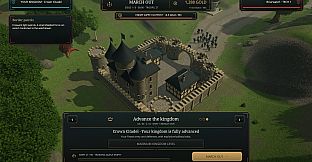
The core loop centers on preparation inside the command hall followed by active participation in battles. Three focused views handle recruitment, turret placement and kingdom advancement. Each of the three eras introduces new equipment for melee, ranged and heavy units, progressing from basic bows to crossbows and gunpowder weapons as the kingdom develops.
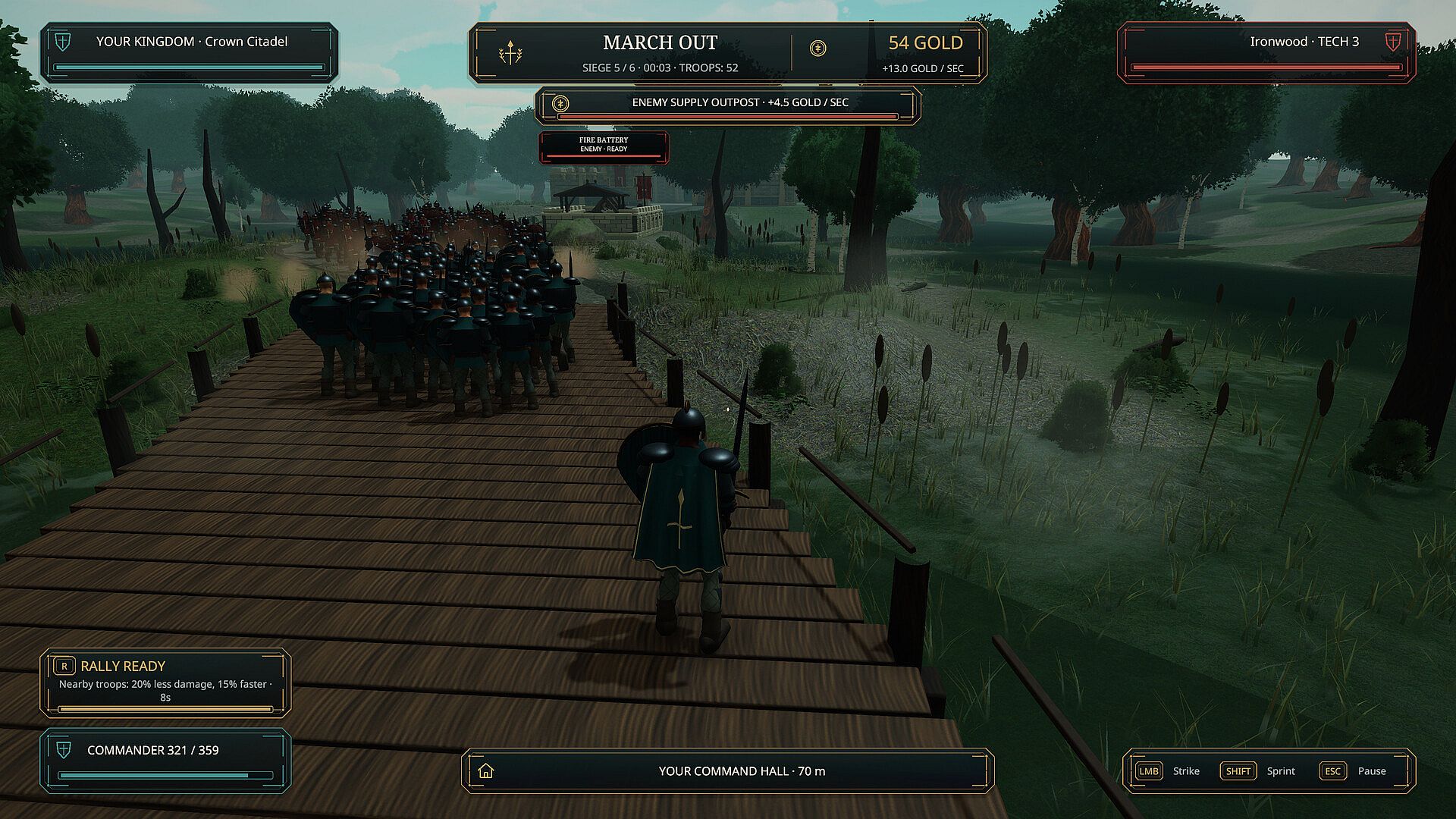
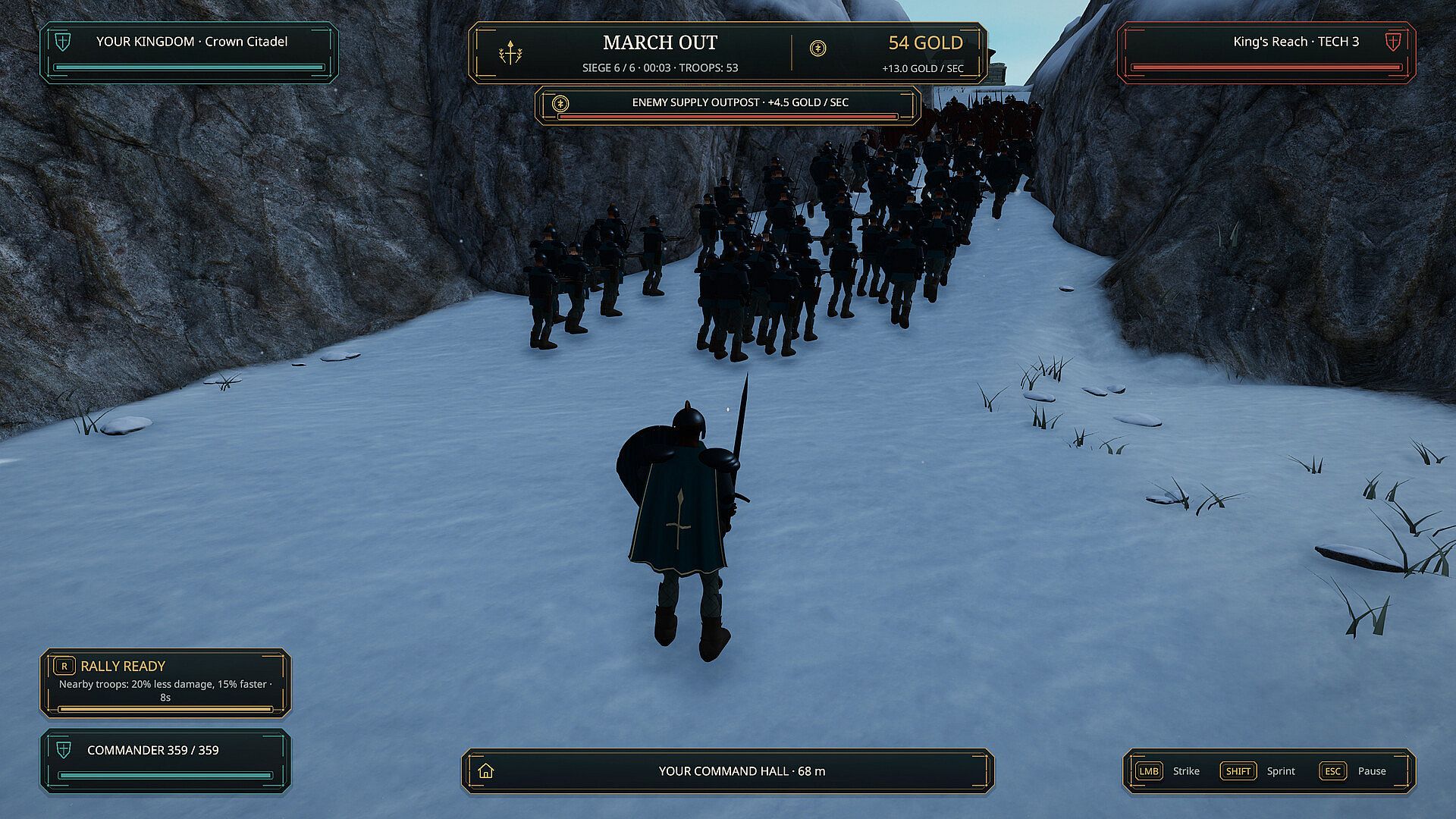
Kingdom advancement upgrades the castle, strengthens troops and unlocks stronger defenses along with extra turret positions. Gold remains a limited resource, so spending heavily on an offensive push can leave the home gate vulnerable to counterattack. On the battlefield the commander takes direct control, striking enemies, sprinting between lines and rallying allies. Direct intervention can shift the outcome of a close fight, yet it cannot replace lost soldiers.
Combat features shield clashes, crossbow fire and explosive volleys that scatter formations. Visual feedback includes damaged armor, fallen troops and burning structures. Players can return to the protected courtyard or operate a wall weapon while the castle stands. Ordering a retreat brings surviving troops back through the gates, though it provides no healing and leaves the castle open to continued siege.
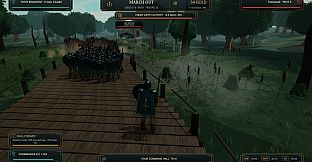
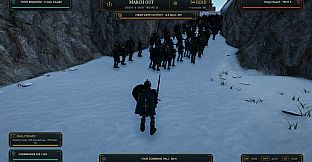
Fortified outposts along routes offer extra income and captured weapons when taken. Commanders can personally operate captured batteries, such as catapults that spread burning ground to punish dense enemy groups. Battlefields vary across forest roads, river crossings, quarry terrain, exposed ridges, marshland and a snowy mountain pass, each altering approach options and terrain advantages.
Game Modes
Single-player progress involves conquering six castles in sequence. Defeating an enemy stronghold allows occupation, restoration of its defenses and continuation with surviving troops into the next siege. Stronger opponents require careful management of veterans and fresh recruits alongside timely kingdom investment.
Online options include four distinct formats for two to four players. Castle War pits two commanders against each other in an extended conquest where captured castles carry survivors forward until one side holds no territory. A cemetery tracks fallen soldiers from both sides. King of the Keep challenges two to four players to storm and hold a central fortress courtyard to build victory time, while home castles remain safe.
Capture the Banner requires escorting a shared central banner back to the home castle as the commander, with death causing the banner to drop. The first team to complete three deliveries wins. Last Castle Standing gives each player one castle to defend while attempting to destroy rival kingdoms, continuing until only one remains.
Customization
Players select a house name, colors and crest while customizing the commander's appearance. Army units and strongholds display the chosen colors during combat. A lighthearted option allows throwing a harmless tomato at rivals, leaving only a temporary visual mark with no combat effect.
Unlockable finishes include bronze, silver and polished gold armor variants. Additional themes such as goblin, undead and candy styles apply uniformly to the commander, soldiers and castle while preserving era-specific equipment and team markings for clarity.
Is It Worth Playing?
March Out! suits players who enjoy real-time strategy games that allow direct battlefield control alongside base management. The combination of castle-building decisions and on-the-ground combat creates a distinct loop where poor resource allocation or reckless advances carry clear consequences. Keyboard and mouse controls support precise movement and targeting, with four graphics presets and individual visual options available. The interface supports fifteen languages.
Single-player offers a structured campaign of successive sieges that rewards preservation of experienced troops. Multiplayer modes provide varied objectives from prolonged territorial wars to quick objective-based matches, accommodating different group sizes and play styles. The absence of healing on retreat and the cost of turret repairs emphasize careful planning over repeated aggressive pushes.
Those seeking pure real-time strategy without direct combat or fast-paced action games without strategic layers may find the hybrid approach less appealing. The game rewards measured advancement across eras and coordinated use of outposts and terrain features. Availability on PC with the described features makes it accessible for fans of medieval strategy titles that incorporate personal command on the front lines.