

Holiver Idle is an indie idle RPG that blends simulation and adventure elements on PC. It offers a grid-based approach to progression where players manage multiple activities simultaneously rather than focusing on a single action or watching numbers increase passively.
Gameplay
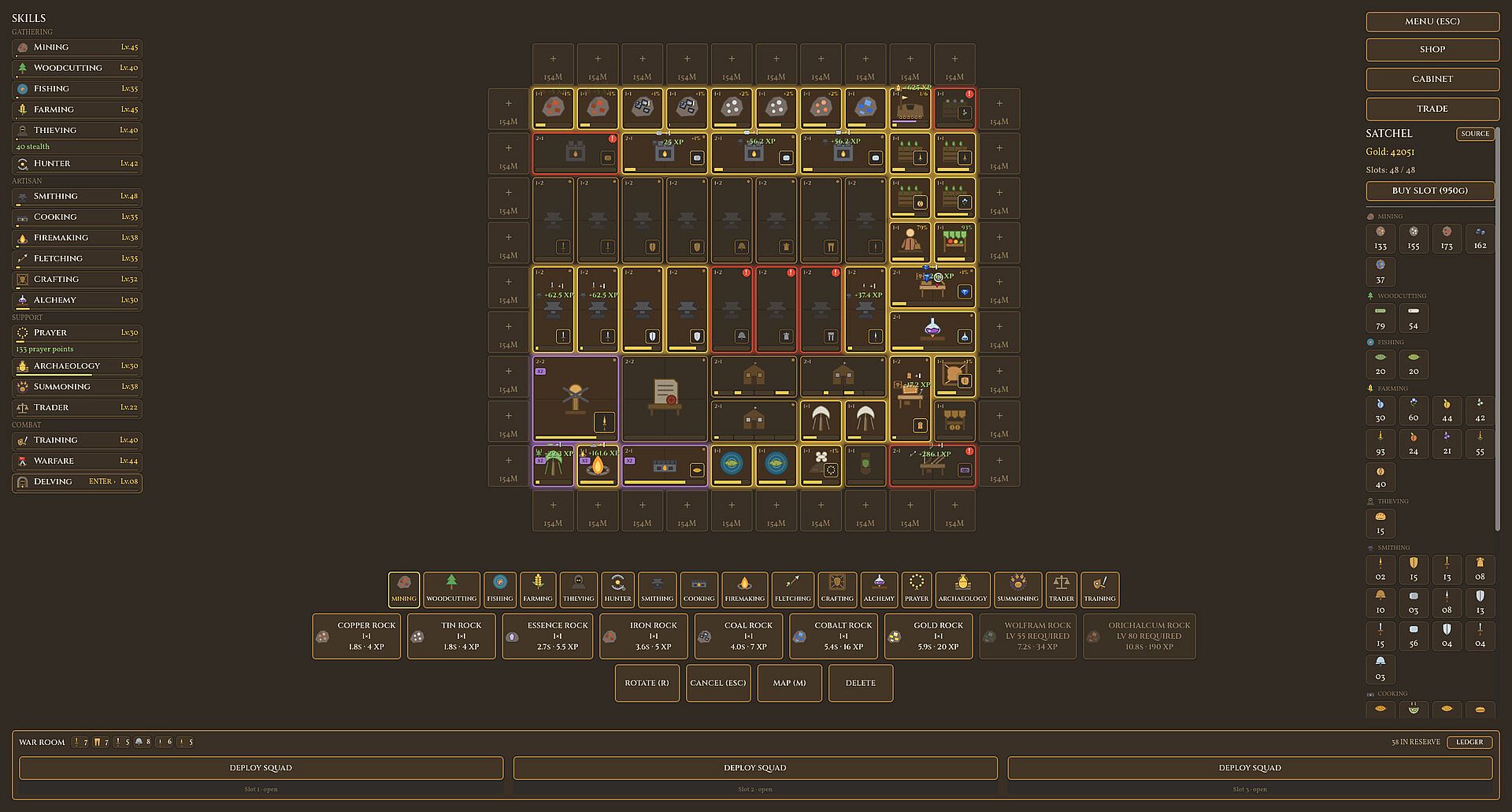
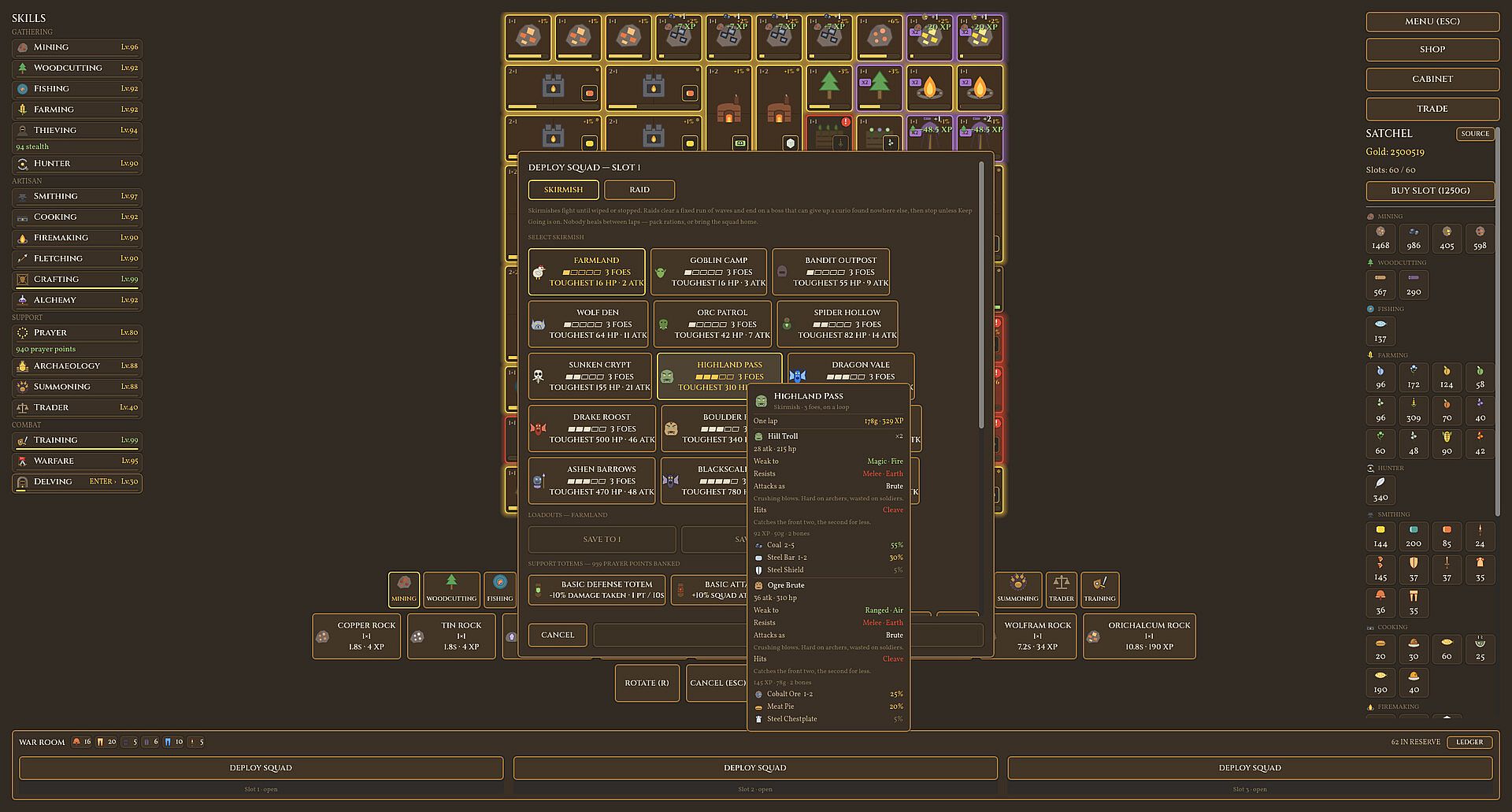
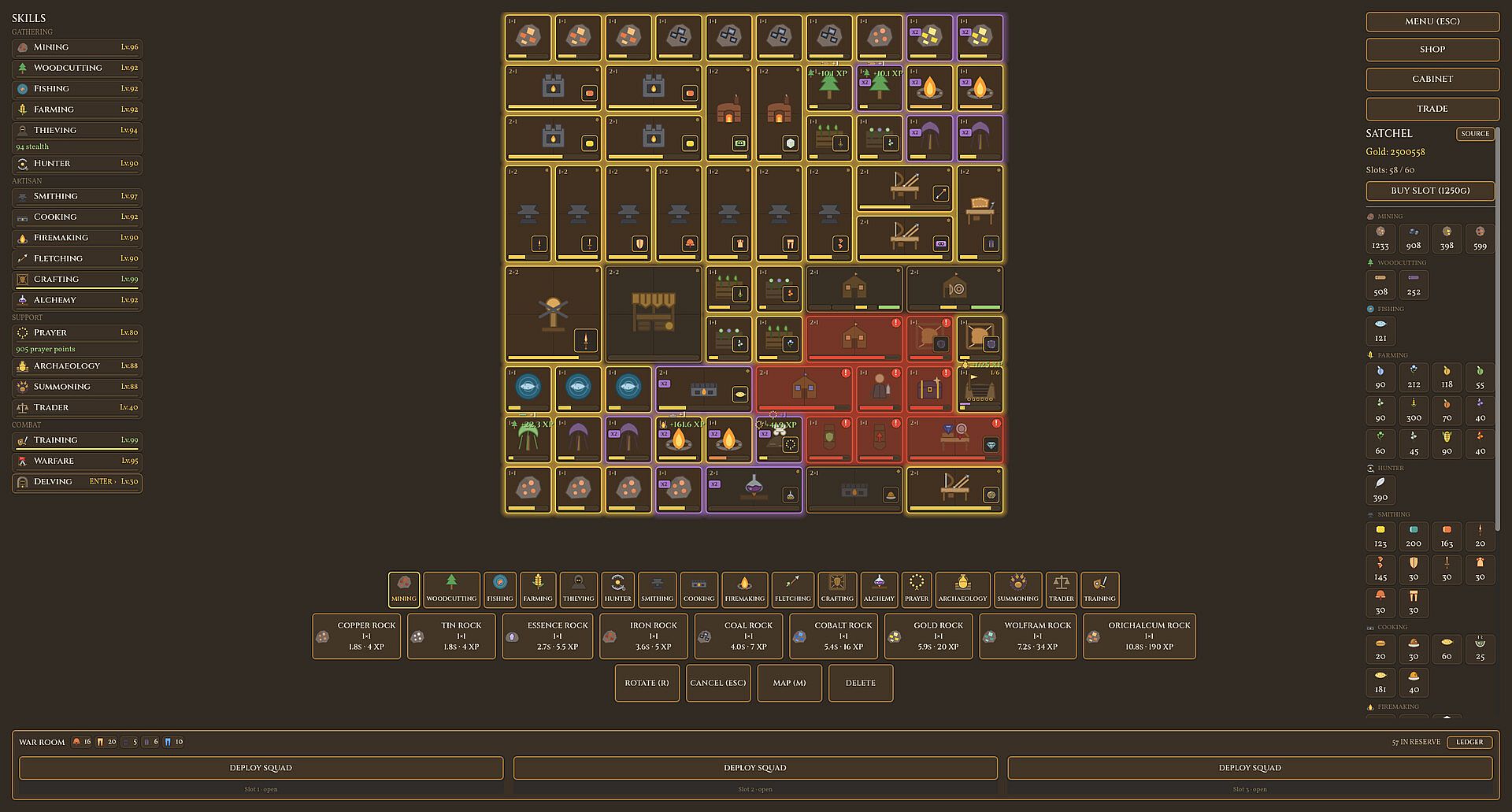
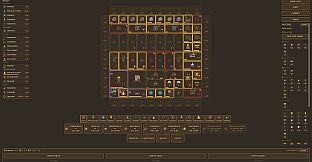
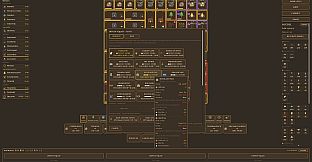
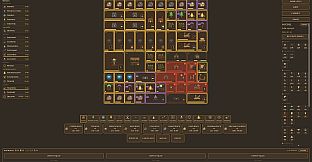
The core loop centers on a grid system where buildings represent actions drawn from MMO-style gameplay. Players place mining nodes to gather ore, furnaces to smelt materials, anvils to craft weapons, and training posts to prepare soldiers for combat. Additional activities such as chopping wood, fishing, and cooking run at the same time across the grid. Buildings can be added or removed freely without cost, allowing flexible experimentation with setups.
Seventeen skills interconnect to support broader progression. Resource gathering feeds into crafting and combat preparation, creating layers of interdependence that reward thoughtful planning. This setup moves beyond basic incremental mechanics by letting players handle diverse tasks in parallel while numbers continue to rise through ongoing production.
Game Modes
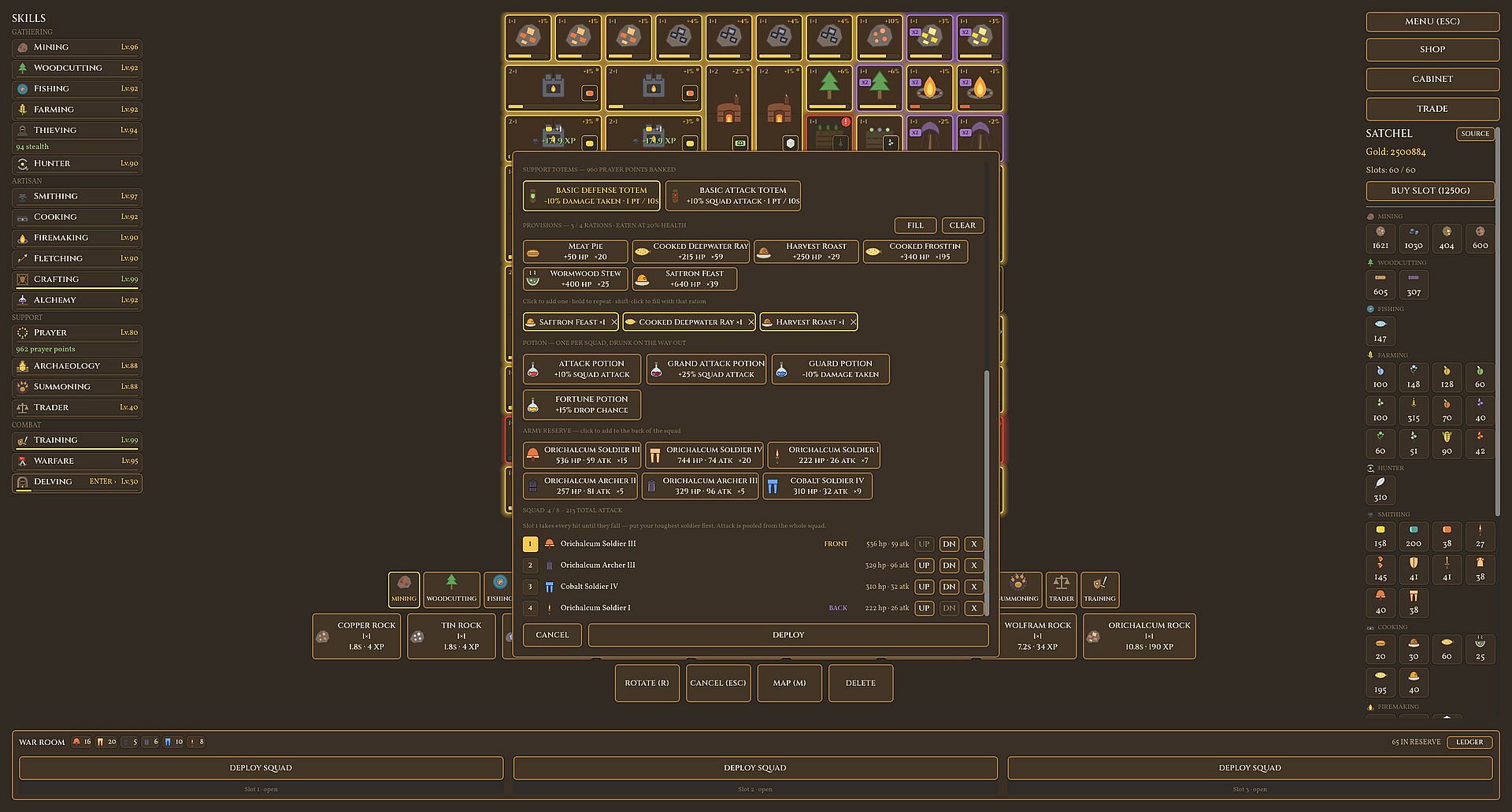
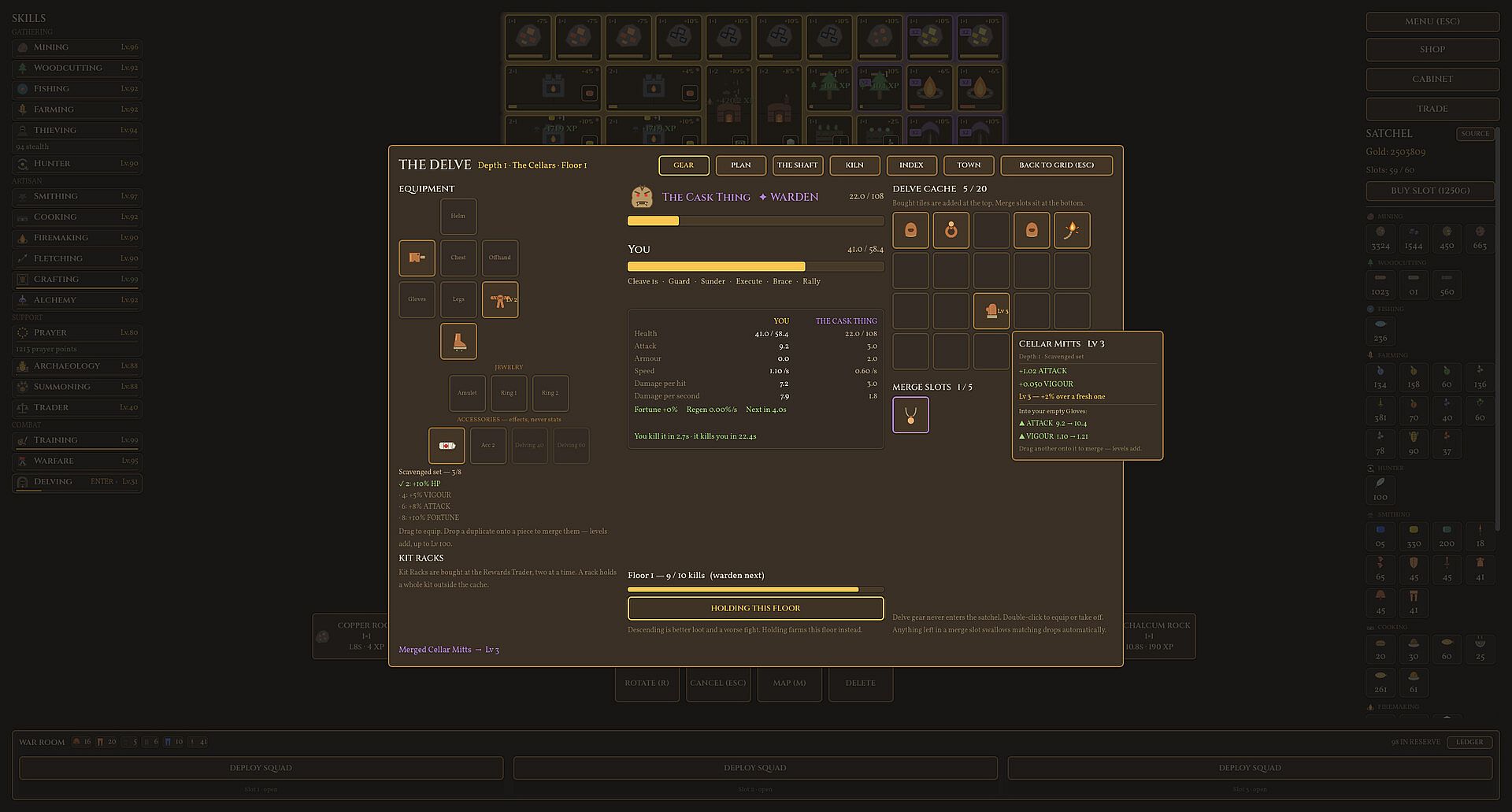
Two distinct combat systems provide variety in how conflicts resolve. Warfare focuses on larger-scale engagements using trained soldiers, while Delve emphasizes more targeted exploration or encounters. These systems integrate with the grid-based building and skill progression, giving players different ways to apply their developed resources and units.
The structure encourages shifting between production, crafting, and combat without locking into one path at a time. Skills bolster both systems, ensuring that advancements in one area enhance options across the others.
Key Features and Design
Holiver Idle draws inspiration from multiple games and MMOs to deliver depth in an idle format. The grid acts as a visual representation of simultaneous actions, removing the restriction of single-task focus common in many idle titles. Free placement and removal of buildings supports iterative refinement of strategies as skills and resources grow.
Progression ties together resource chains, item creation, unit training, and combat outcomes. Players can expand operations across gathering, processing, and application phases without artificial limits on concurrent activities. This design prioritizes meaningful choices in layout and skill investment over repetitive clicking or waiting.
Is It Worth Playing?
Holiver Idle suits players seeking more substance from idle games than simple number growth. The combination of grid management, interconnected skills, and dual combat systems provides ongoing engagement through planning and optimization. Absence of advertisements and microtransactions keeps the experience focused on core mechanics without interruptions or additional purchases.
Those who enjoy simulation elements alongside RPG progression and casual pacing will find the parallel activity system rewarding. The game emphasizes depth through simultaneous actions and skill synergies, making it a solid choice for anyone looking for an idle experience with tangible strategic layers rather than passive accumulation alone.