


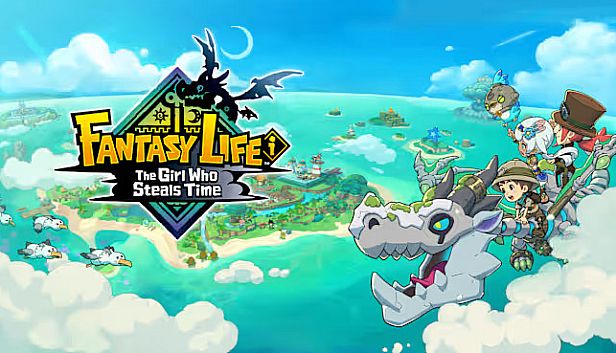



Fantasy Life i: The Girl Who Steals Time is a slow-life RPG developed by Level-5 and released for the Nintendo Switch on May 21, 2025. Players take on the role of an adventurer who joins an expedition led by the archaeologist Edward. Following the light from a dragon's fossil leads to an uncharted island shrouded in mystery. A message from a girl urges the player to save the world, prompting travel between the island's thriving state one thousand years in the past and its present-day desolation. The core appeal lies in freely switching between fourteen unique jobs known as Lives while restoring the island and uncovering its secrets at a relaxed pace.
Gameplay
The central system revolves around the fourteen Lives, which function as interchangeable jobs divided into gathering, crafting, and combat categories. Gathering Lives focus on collecting resources such as fish, ore, wood, or crops through activities like fishing, mining, and farming. Crafting Lives allow players to process those materials into items including weapons, armor, cooked meals, and furniture. Combat Lives handle direct engagement with monsters. Switching between any Life happens instantly, letting players adapt on the fly to support their current goals. For example, a player might gather ingredients as a farmer, cook them into a buff-granting dish as a chef, then equip a combat Life to tackle enemies with improved stats.
Exploration expands across the largest continent featured in the series. New movement options include climbing ledges, swimming through rivers and lakes, and riding mounts to traverse the open world without restrictions. The time-travel mechanic connects the present-day island with its past version, revealing changes in the landscape and new areas to investigate. Materials gathered in one era can support activities in the other, tying progression together across both time periods.
Island restoration forms another major loop. Players use gathered resources to rebuild structures, alter the terrain by drawing rivers and roads, and place objects to customize the environment. House expansion and interior decoration provide additional outlets for personalization, turning the island into a personalized settlement over time.
Game Modes
The game supports both solo and shared play. Single-player sessions center on the main adventure, which combines story progression, Life leveling, resource management, and world exploration across the time periods. Players advance at their own speed, completing requests from island residents while gradually restoring the land and piecing together the central mystery.
Multiplayer options allow up to four players to join on the same island. Participants can collaborate on gathering runs, dungeon exploration, or building projects. Local wireless play and online connectivity both work for this feature. A separate 2-player family co-op mode lets a second person join on the same Nintendo Switch system using an additional controller, controlling a companion character without requiring an internet connection. This setup supports joint combat, resource collection, and traversal in the open world.
World and Progression
The narrative unfolds through the contrast between the island's past prosperity and its current state. Exploration reveals environmental shifts and hidden details that tie into the dragon fossil and the girl's plea. Progression feels interconnected because actions in one Life or time period often benefit others, such as using combat rewards to fund crafting upgrades or gathering better materials in the past to improve present-day builds.
Post-launch updates have added features including a Photo Mode accessible via the Weird Pad, enhancements to mount performance through new items, and party formation tools. These changes expand creative and quality-of-life options without altering the core loop.
Is It Worth Playing?
Fantasy Life i: The Girl Who Steals Time appeals most to players who enjoy blending relaxed life simulation with light action-RPG elements. The variety of Lives creates a self-sufficient gameplay loop where gathering supports crafting, which in turn aids combat and exploration. Island customization and time-travel mechanics add depth to long-term play, with many sessions extending well beyond the main story into side activities and multiplayer sessions.
Reception has been generally favorable across critic aggregates, with scores clustering in the low-to-mid 80s on Metacritic and strong recommendation rates on OpenCritic. Reviewers highlight the seamless job switching, satisfying progression, and balanced mix of cozy building with adventurous elements. The Nintendo Switch version runs reliably in TV, tabletop, and handheld modes, making it accessible for on-the-go or home play. Those who value freedom in how they spend their time in a fantasy setting, along with optional co-op, will likely find substantial replay value here. The game continues to receive support through updates, keeping the experience fresh for new and returning players.
