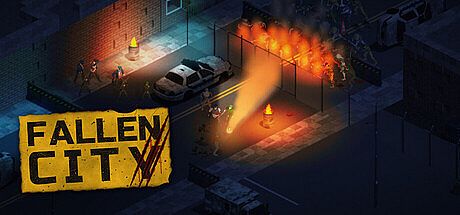


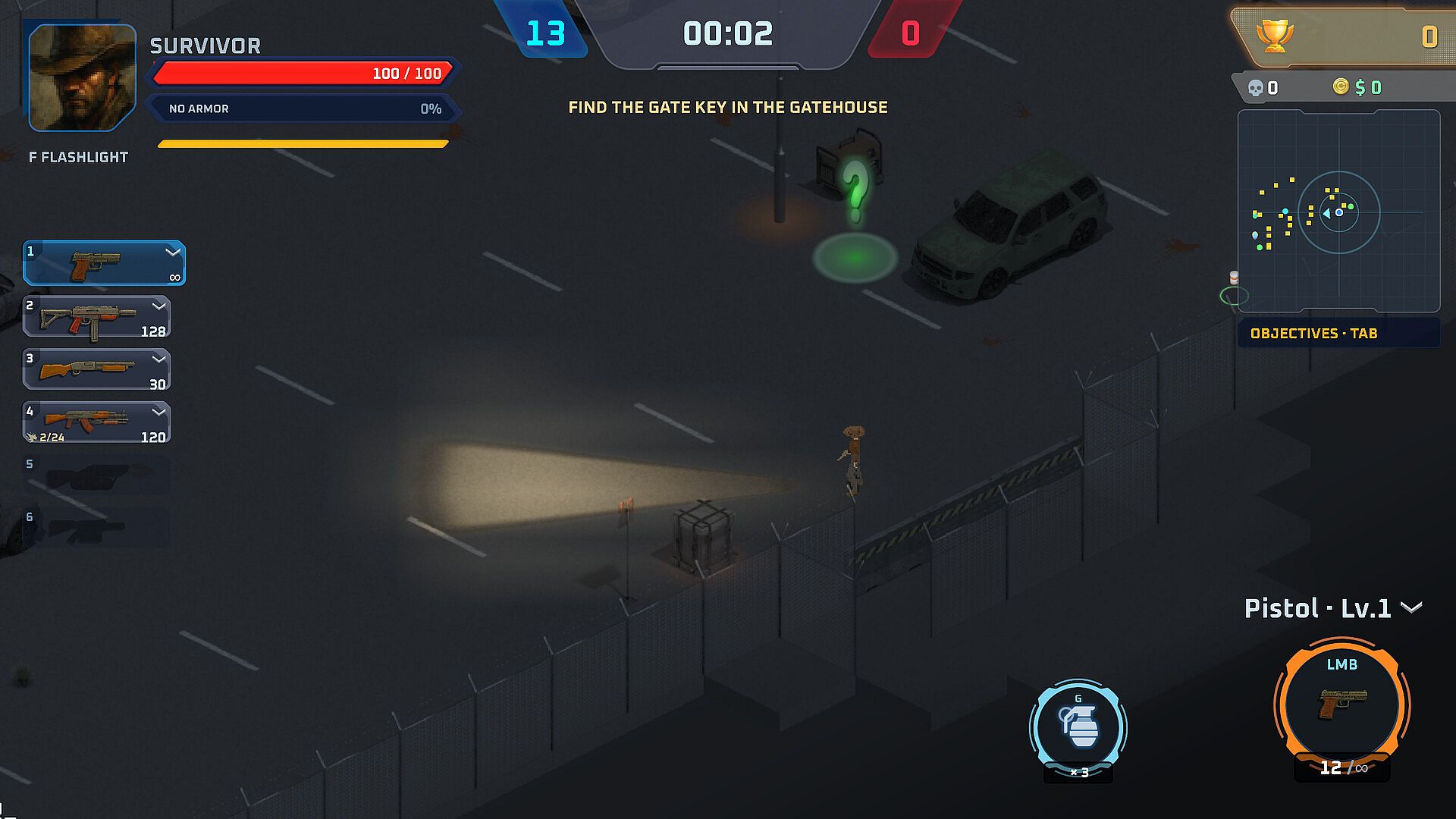
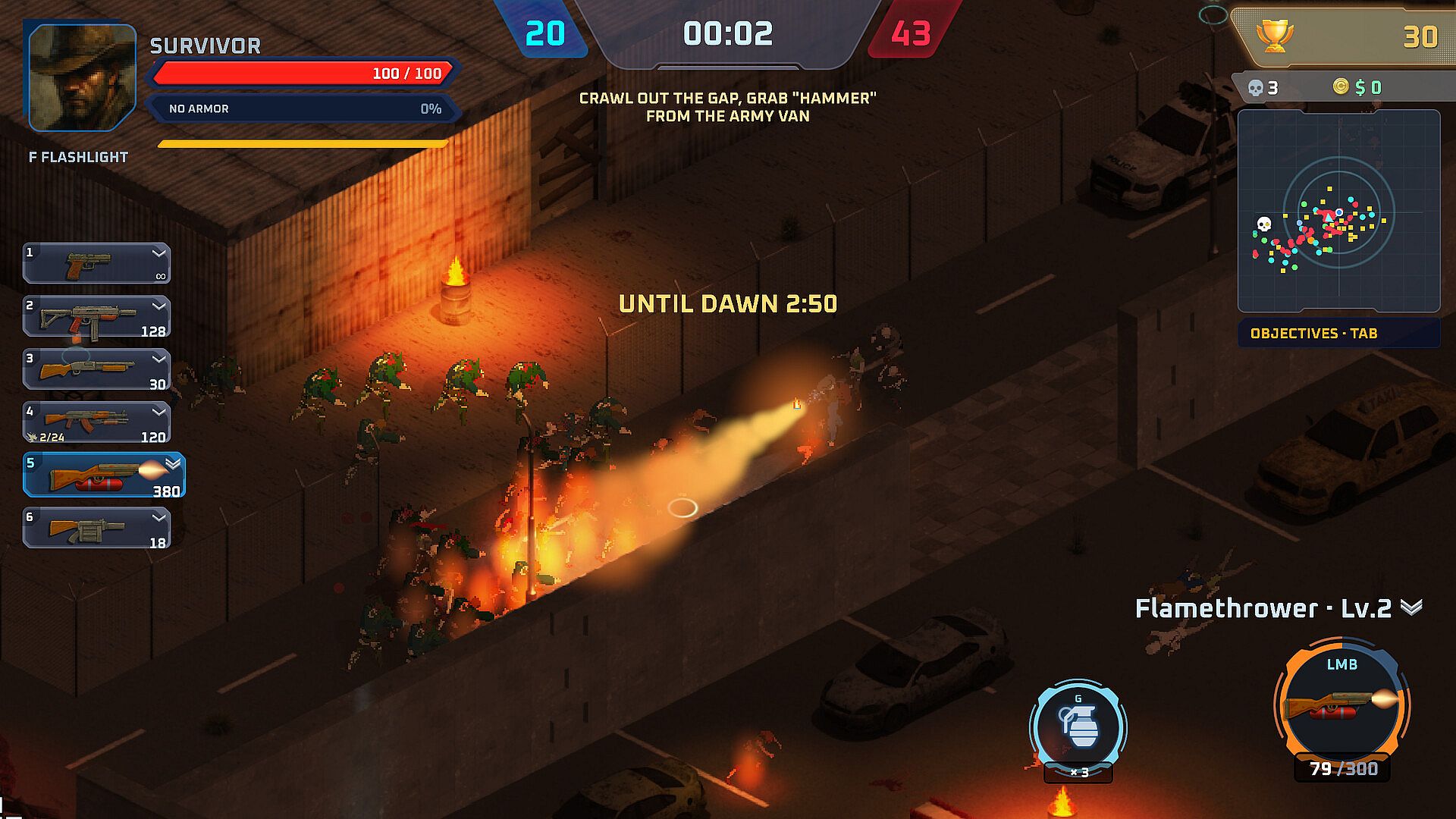
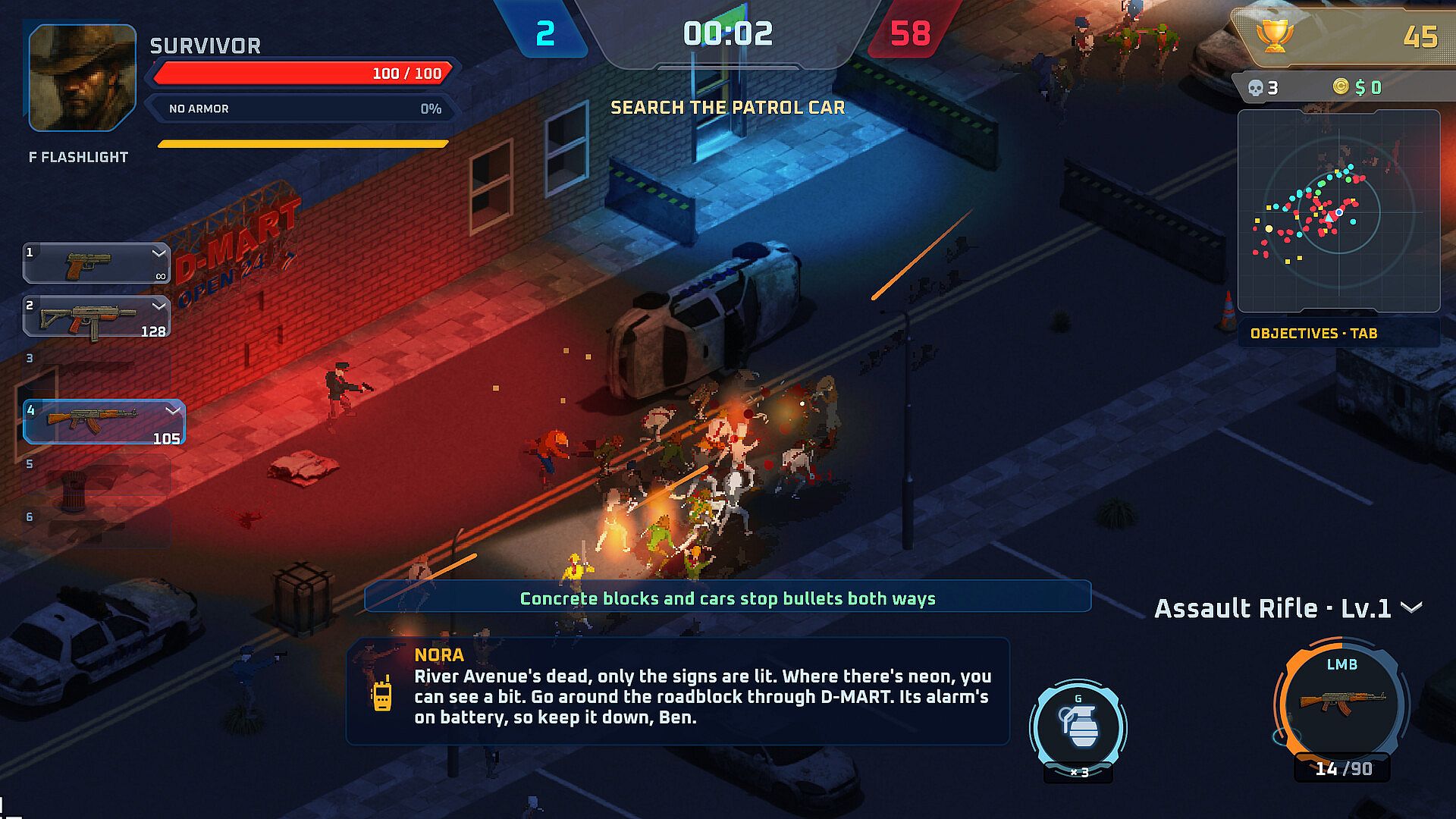
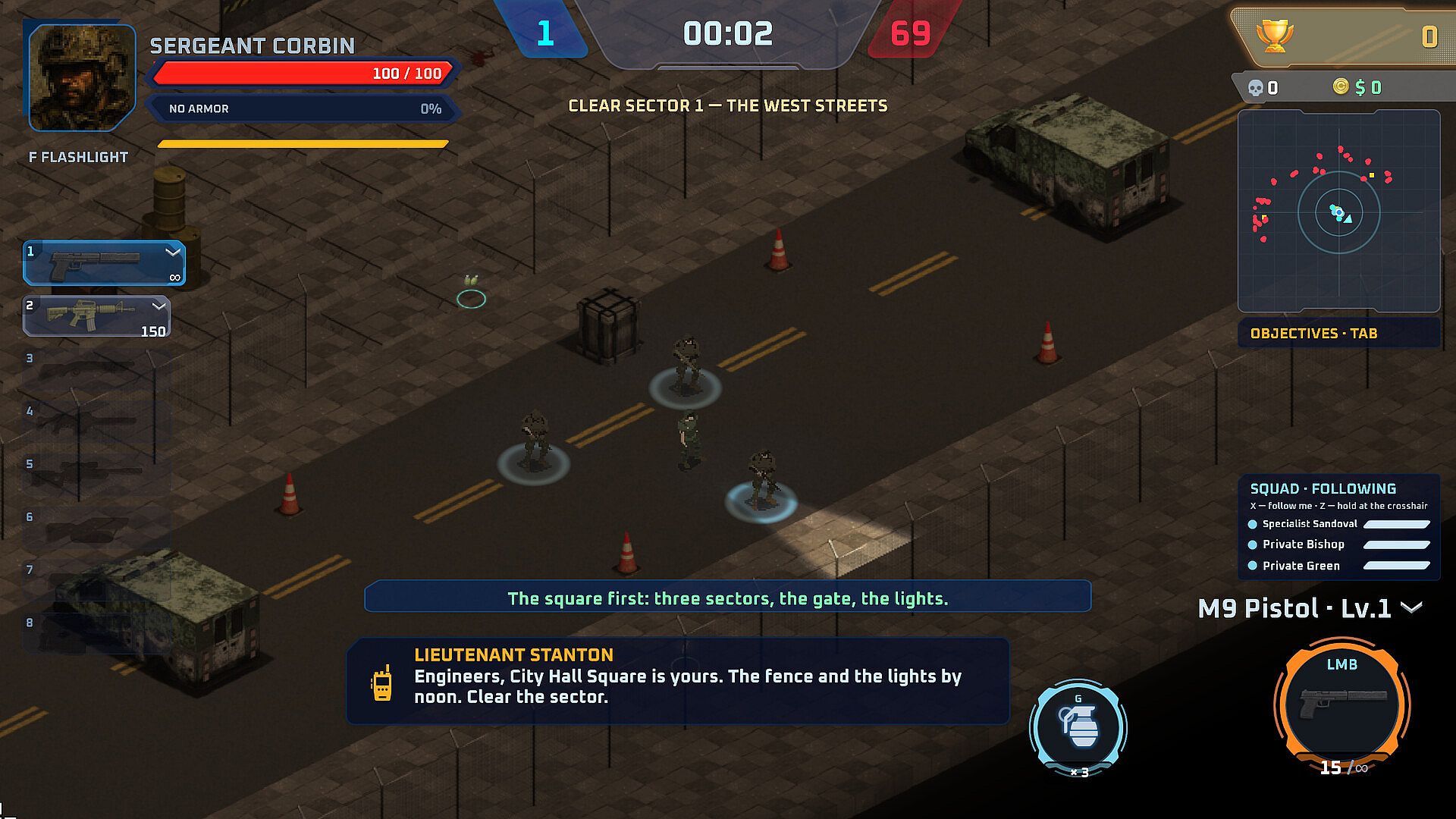
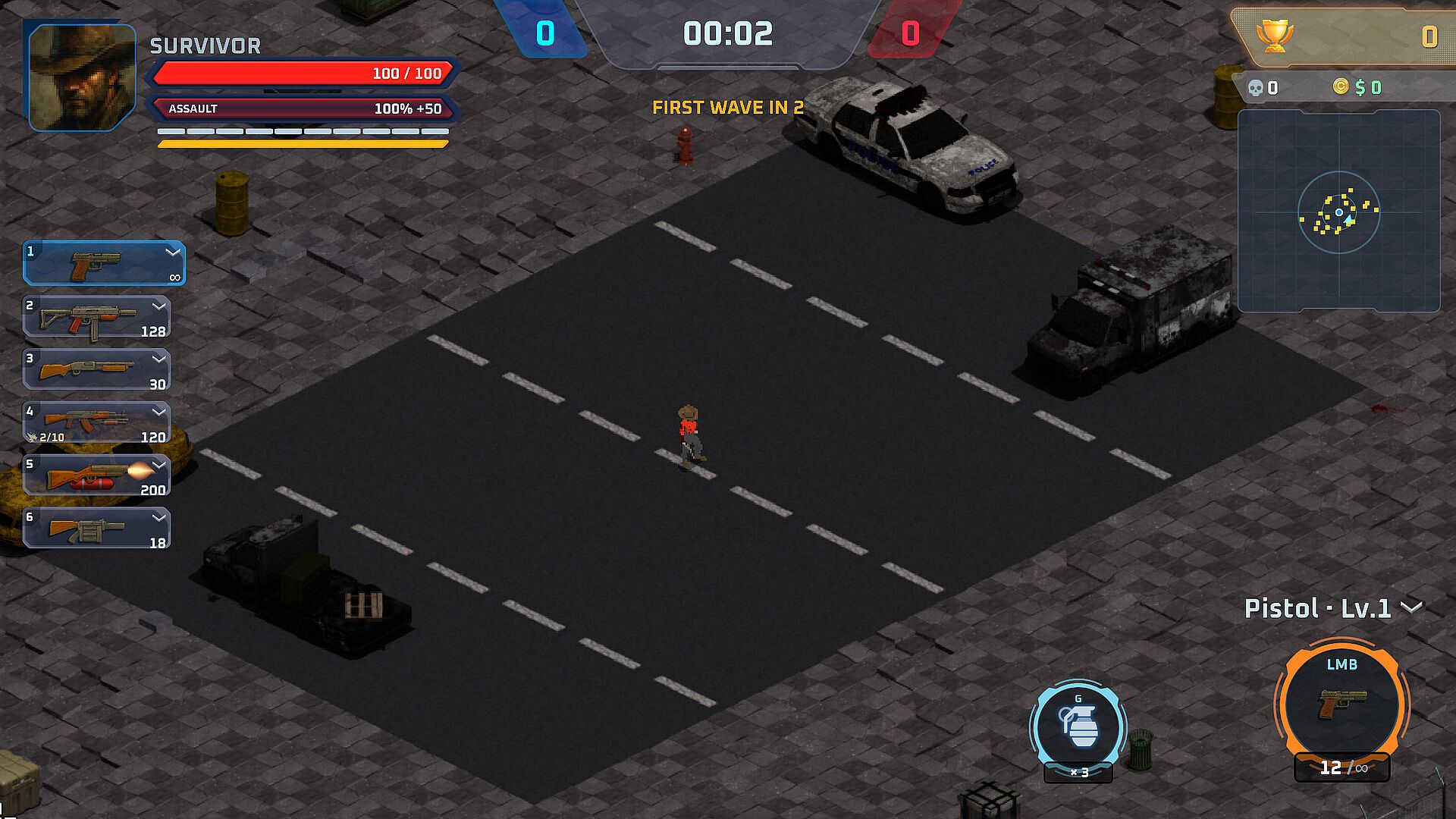
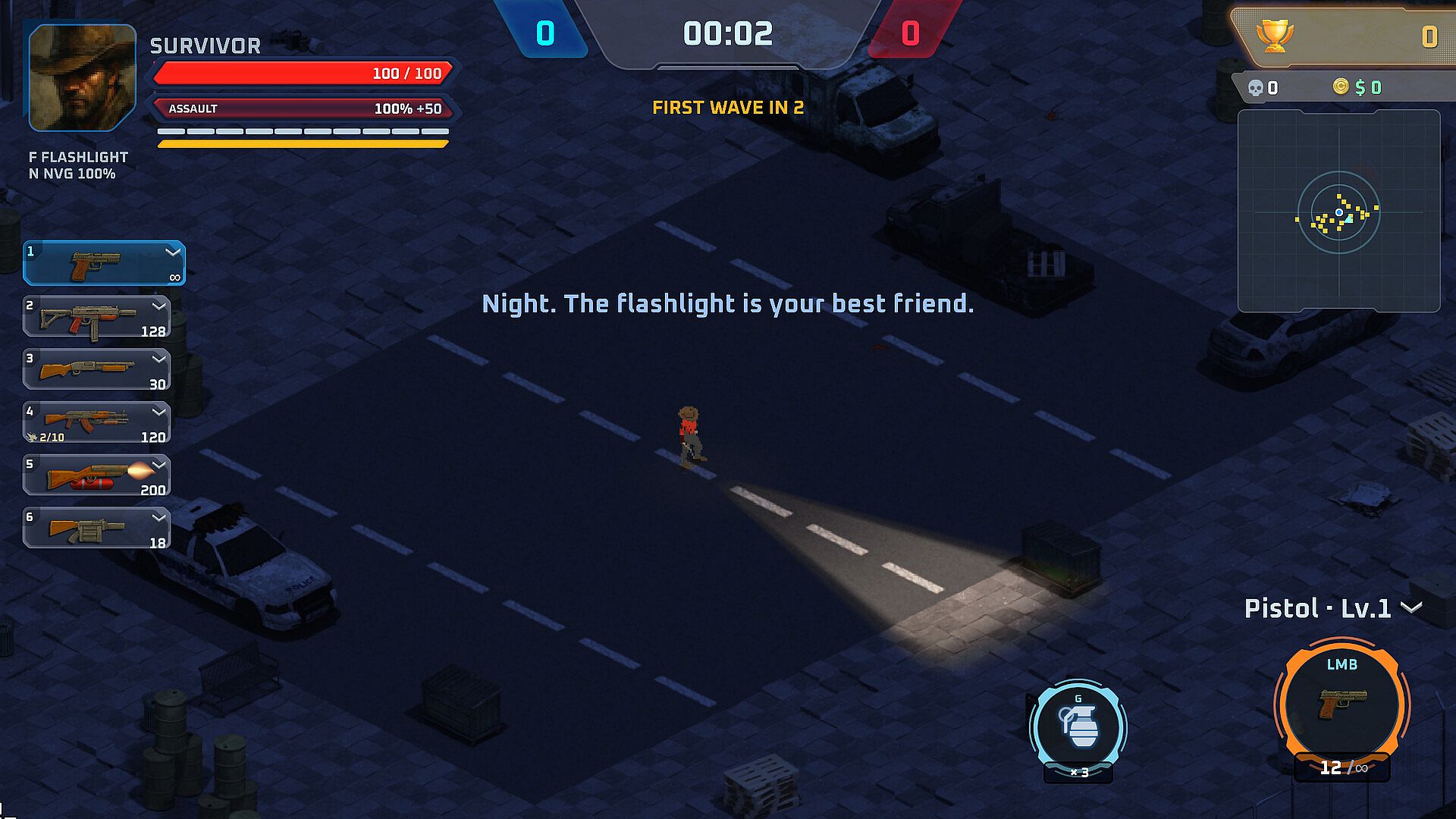
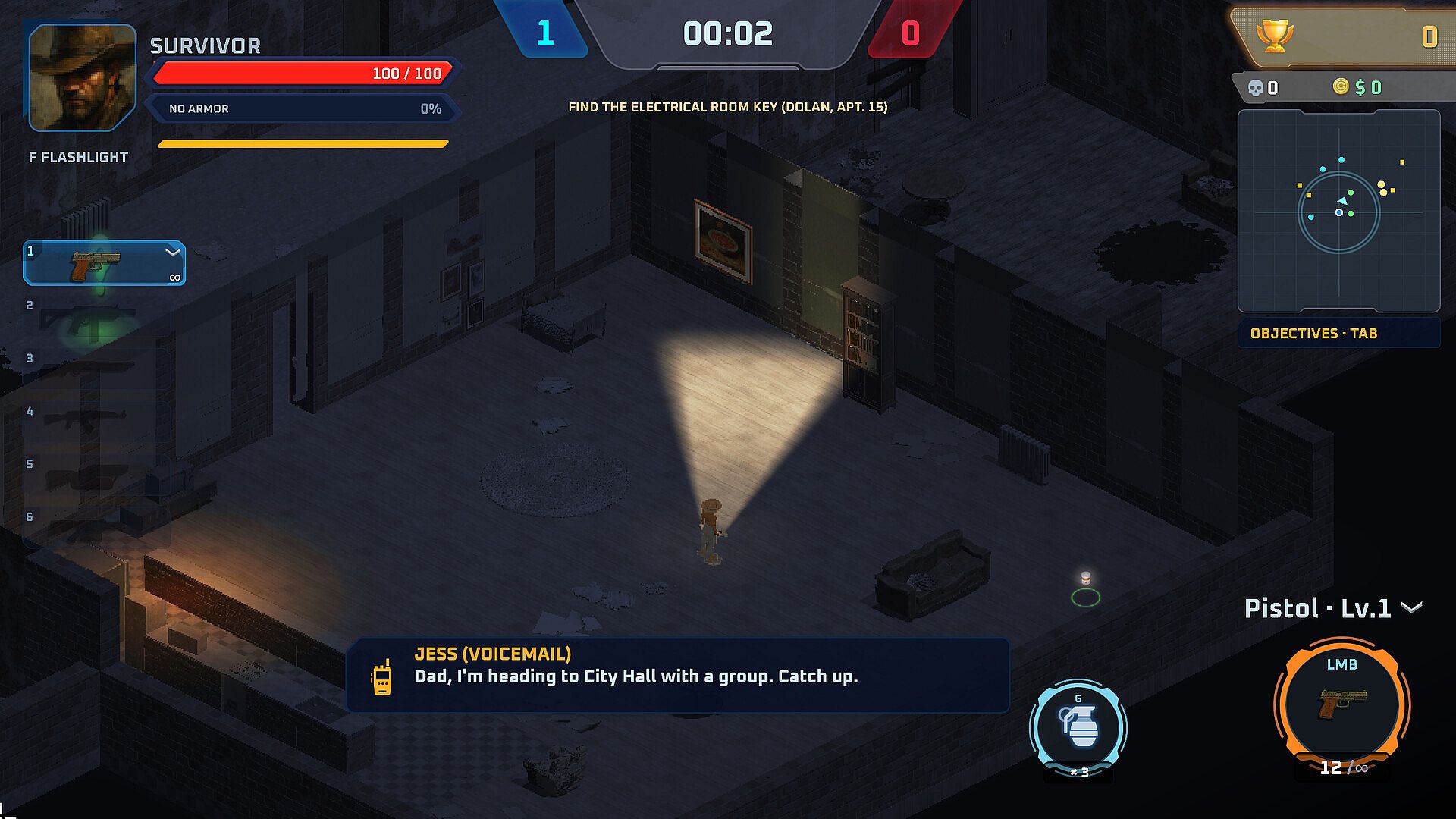
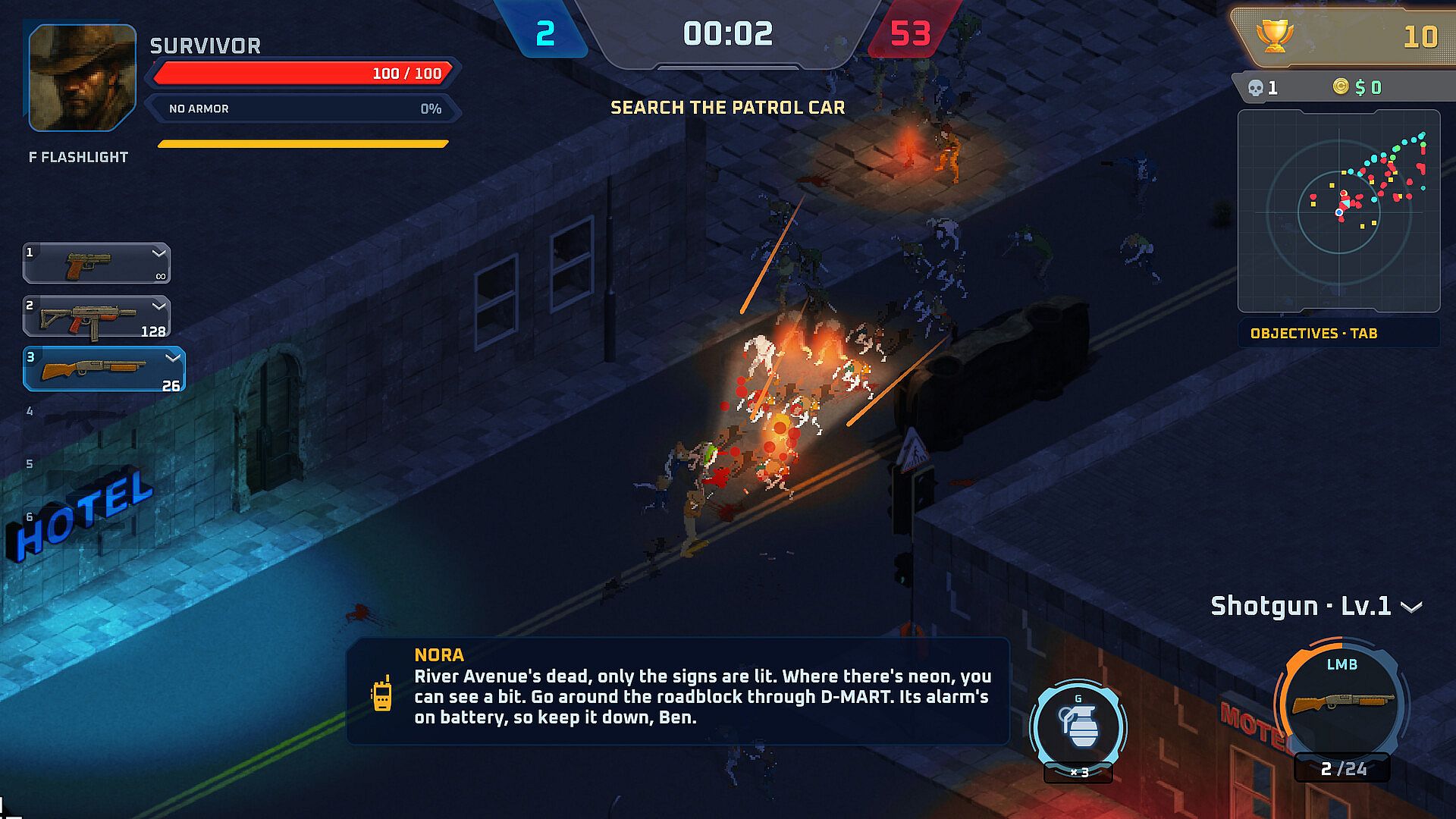
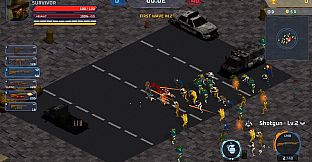
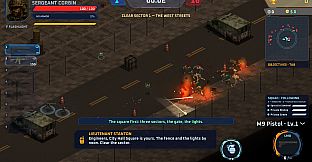
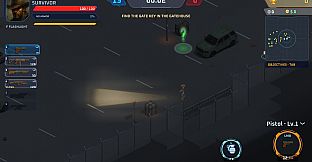
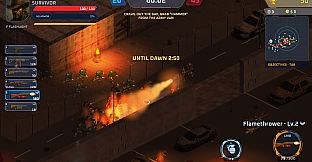
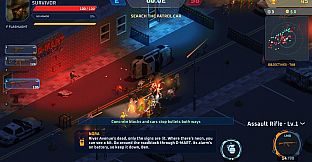
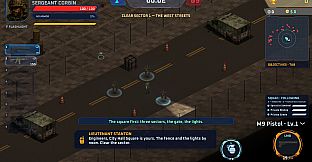
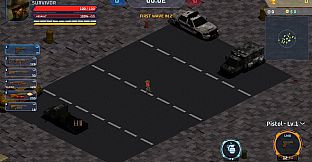
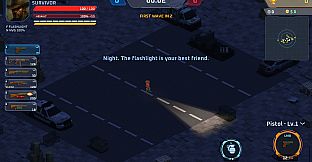
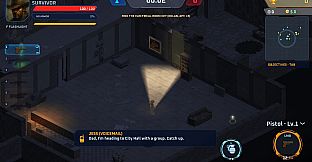
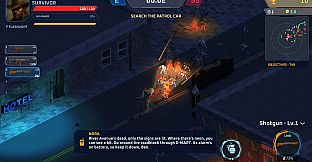
Fallen City is an isometric zombie shooter set in a blacked-out town overrun by the crimson, a red growth that raises the dead four minutes after they fall. Players control one of three protagonists across separate campaigns that unfold over the radio during the same outbreak in Stoneford on the Otter River. The game emphasizes large-scale combat against hundreds of enemies on screen at once, with light and fire serving as key tools against the infected.
Gameplay
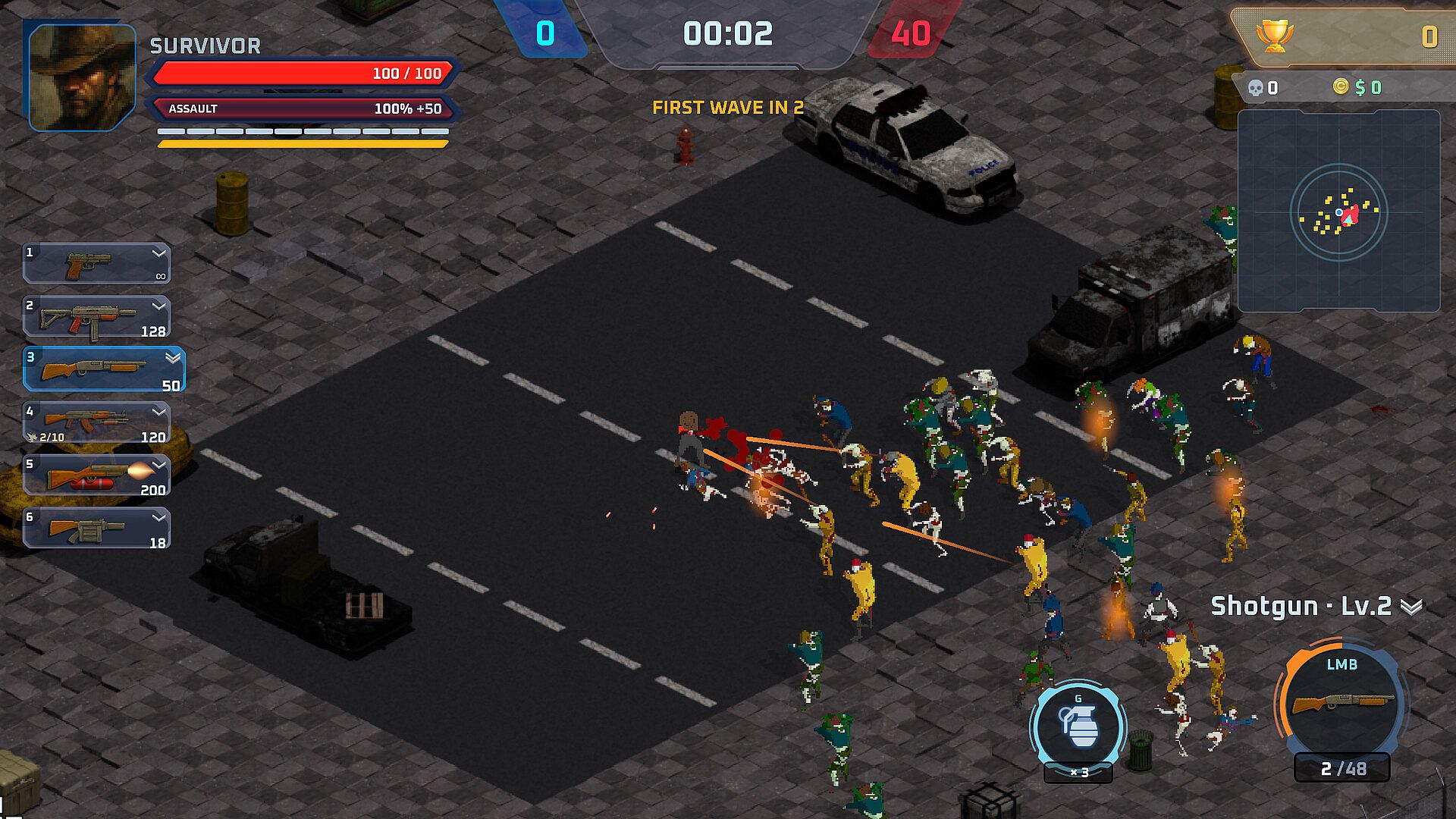
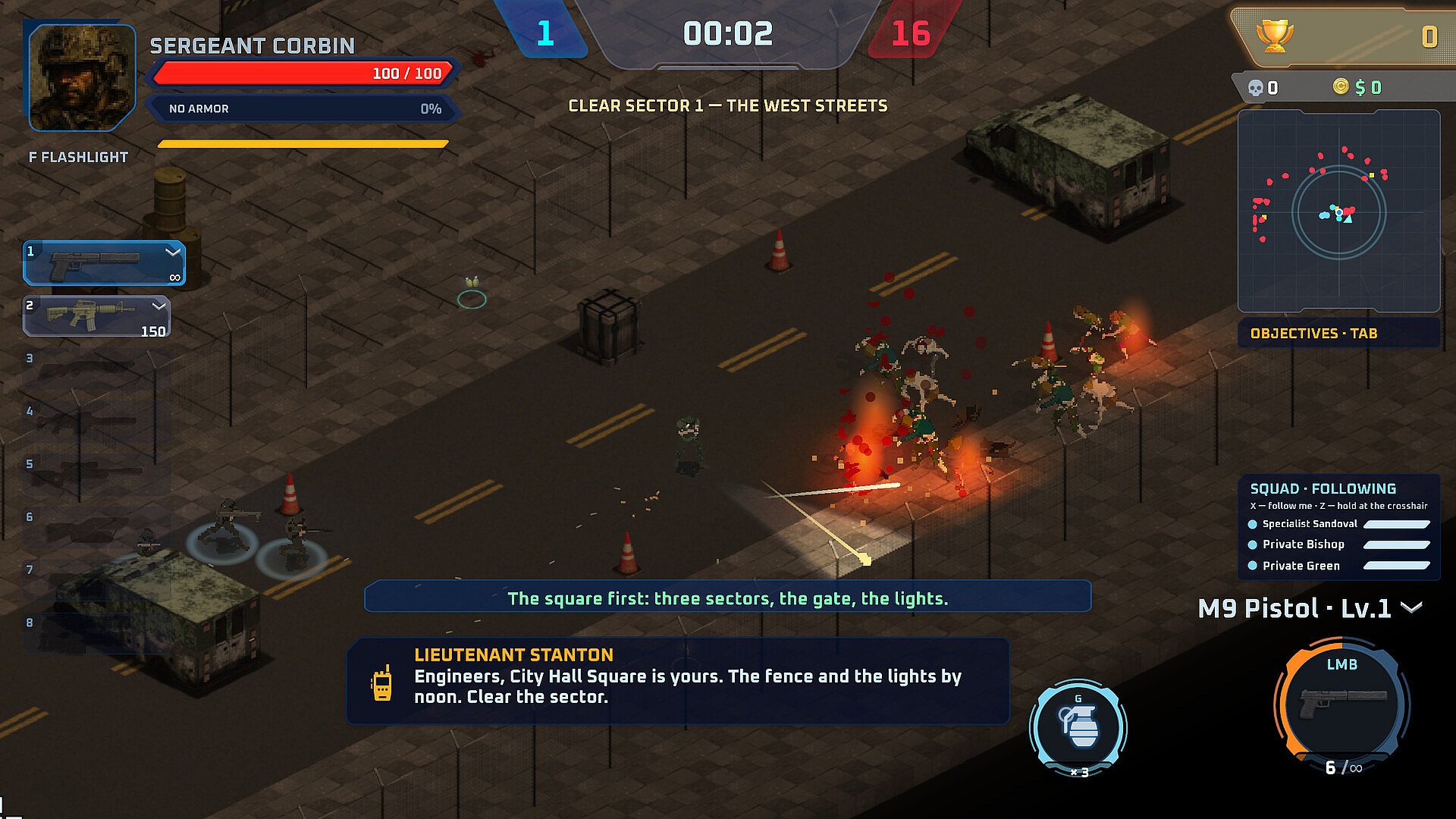
Combat revolves around an expanding arsenal tailored to each story. Weapons include pistols, SMGs, shotguns, assault rifles, machine guns, flamethrowers, grenade launchers, a minigun, a flare gun, and flashbangs. Players upgrade firearms between missions and attach underbarrel modules such as Thunder, Hail, Flame, or Hammer for varied effects. Armor vests and plates absorb damage that persists across levels, forcing careful resource management. Light mechanics play a central role: night stages rely on flashlights and night vision while lamps and floodlights provide temporary safety, and sunlight slows the dead. Hordes feature distinct enemy types including runners, brutes, spitters, gunners, radioactive variants, armored SWAT and firefighters, spiders, and infected animals. Boss encounters introduce unique attack patterns, phases, and weak points that require adaptation. Squad members assist in police and military campaigns, and civilians must be escorted to safety in certain sequences. The dark industrial soundtrack dynamically shifts between tension and intense combat sequences, and the game is fully voiced in English, Russian, and French.
Game Modes
Three narrative campaigns deliver the core experience through 75 chapters total. Night Without Light follows lineman Ben Halloran over a night, a day, and another night as he restores power under army orders to save his daughter. Blue Lights tracks Sergeant Joe Riley of Precinct 6 across twelve days of evacuations that end with a revelation about his destinations. Sector C places Sergeant Adam Corbin of Sapper Company on week-long sweeps that gain new purpose when the cordon collapses. Survival mode pits players against endless waves with a boss every fifth wave. Night Shift challenges players to hold out for five minutes. Both endless modes allow selection of a hero and custom arsenal. Multiplayer supports up to four players in the campaigns, Survival, and Night Shift through online co-op, with options for LAN, direct IP, or Steam connections. Bots fill empty slots. Separate Deathmatch and Team Deathmatch modes provide direct player-versus-player combat.
Story and Setting
The outbreak begins in late October when power fails in Stoneford, allowing the crimson to spread through darkness and heat. Only fire reliably destroys the infected. Each campaign presents the disaster from a different perspective, with radio communications linking the parallel threads. Environments span streets, hospitals, warehouses, and subway tunnels filled with the risen dead. The three viewpoints highlight civilian, police, and military responses without overlapping events, creating a layered view of the same crisis.
Is It Worth Playing?
Fallen City targets fans of classic top-down shooters who enjoy managing large enemy counts, upgrading gear, and balancing light-based tactics against resilient hordes. The isometric perspective and persistent armor damage create a deliberate pace suited to methodical play rather than run-and-gun action. Co-op and versus modes extend replay value for groups, while the three distinct campaigns offer varied starting weapons and objectives. A demo containing the first five chapters of each story plus Survival and Night Shift is available for testing the core loop before the full release. With no player reviews available yet, interest depends on preference for horde-based isometric shooters with narrative framing and light-as-weapon systems. Those who enjoy the 2000s-era style of screen-filling combat and incremental arsenal growth will find the most direct appeal.