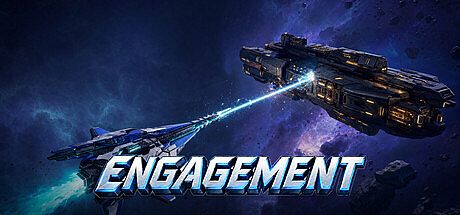


Engagement is a tactical space-duel game that emphasizes prediction and planning over raw reflexes. Players take on the role of ship captains in one-on-one confrontations set in open space, where the core loop revolves around queuing commands during brief pauses before committing to actions that play out in real time. The action and strategy genres blend here through careful management of ship systems, positioning, and opponent reads rather than fast-paced shooting or large-scale fleet battles.
Gameplay
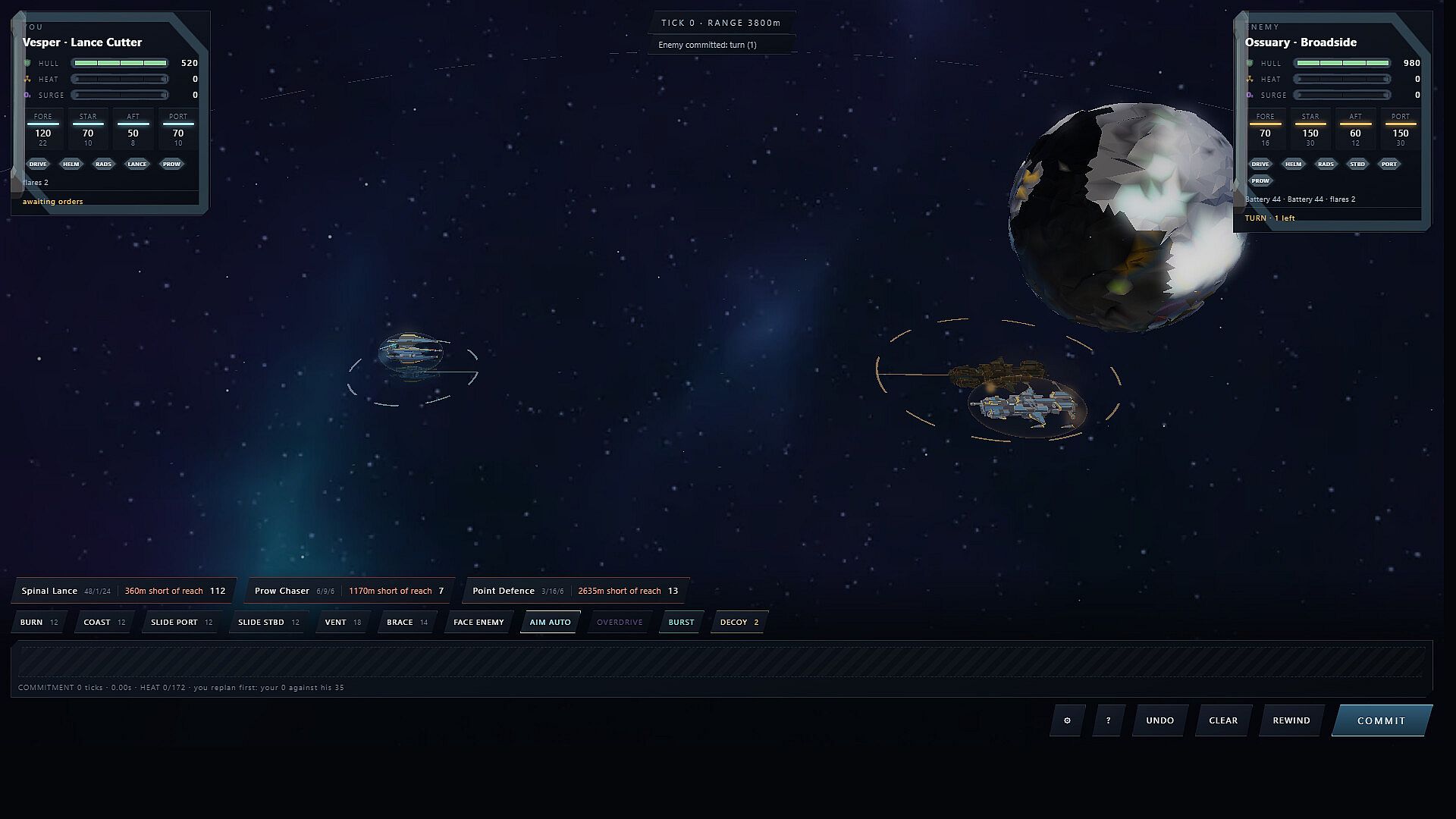
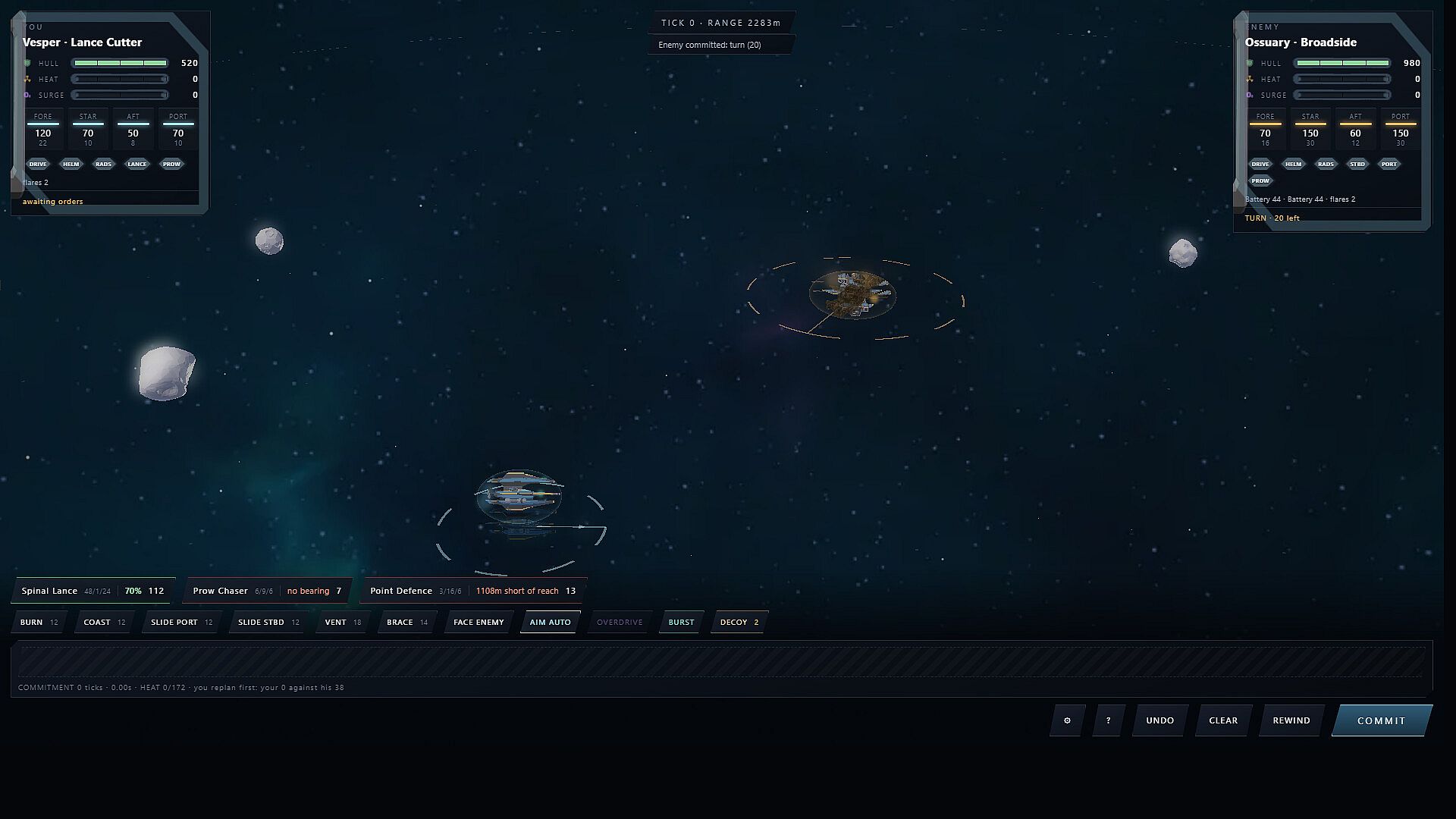
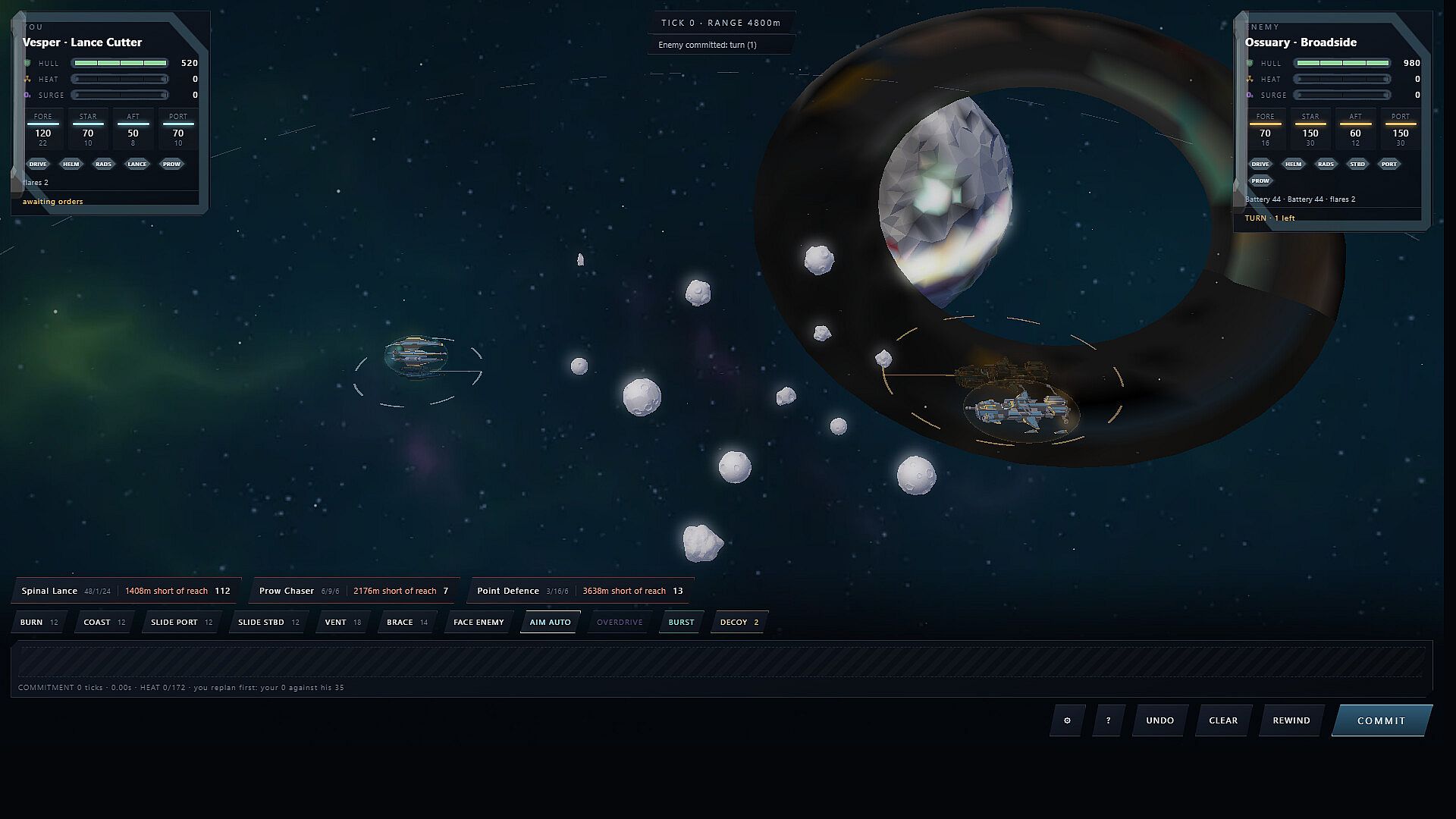
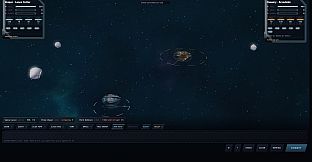
The central mechanic stops time while both captains select their next set of orders. Commands include burning for speed, turning onto a new bearing, bringing a weapon online, bracing a shield arc, or venting heat. Once committed, the simulation runs until one plan resolves first, granting that captain the initiative for the following decision cycle. Every action consumes ticks of time, so a lengthy weapon spin-up creates an opening for the opponent to maneuver or counter.
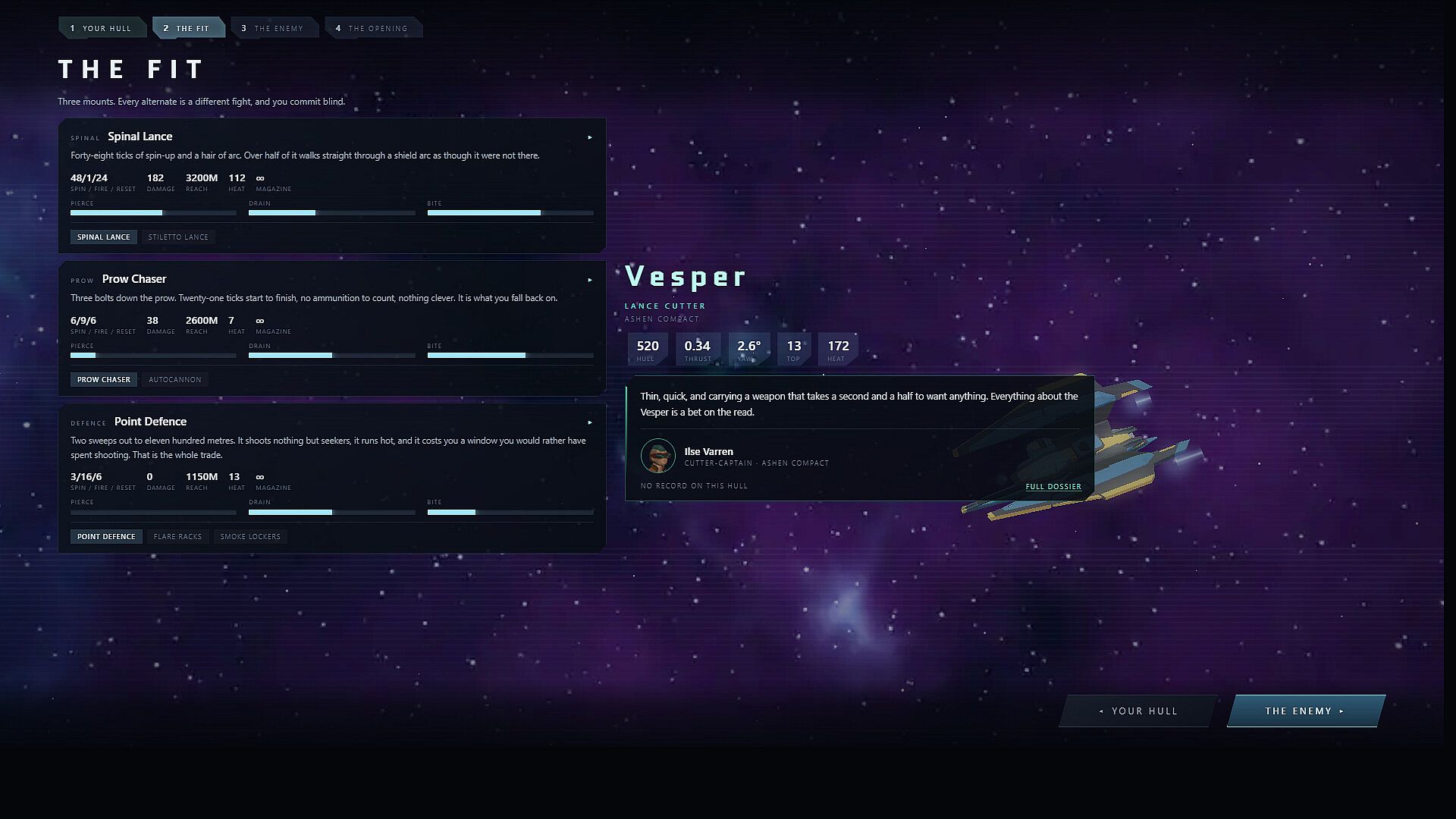
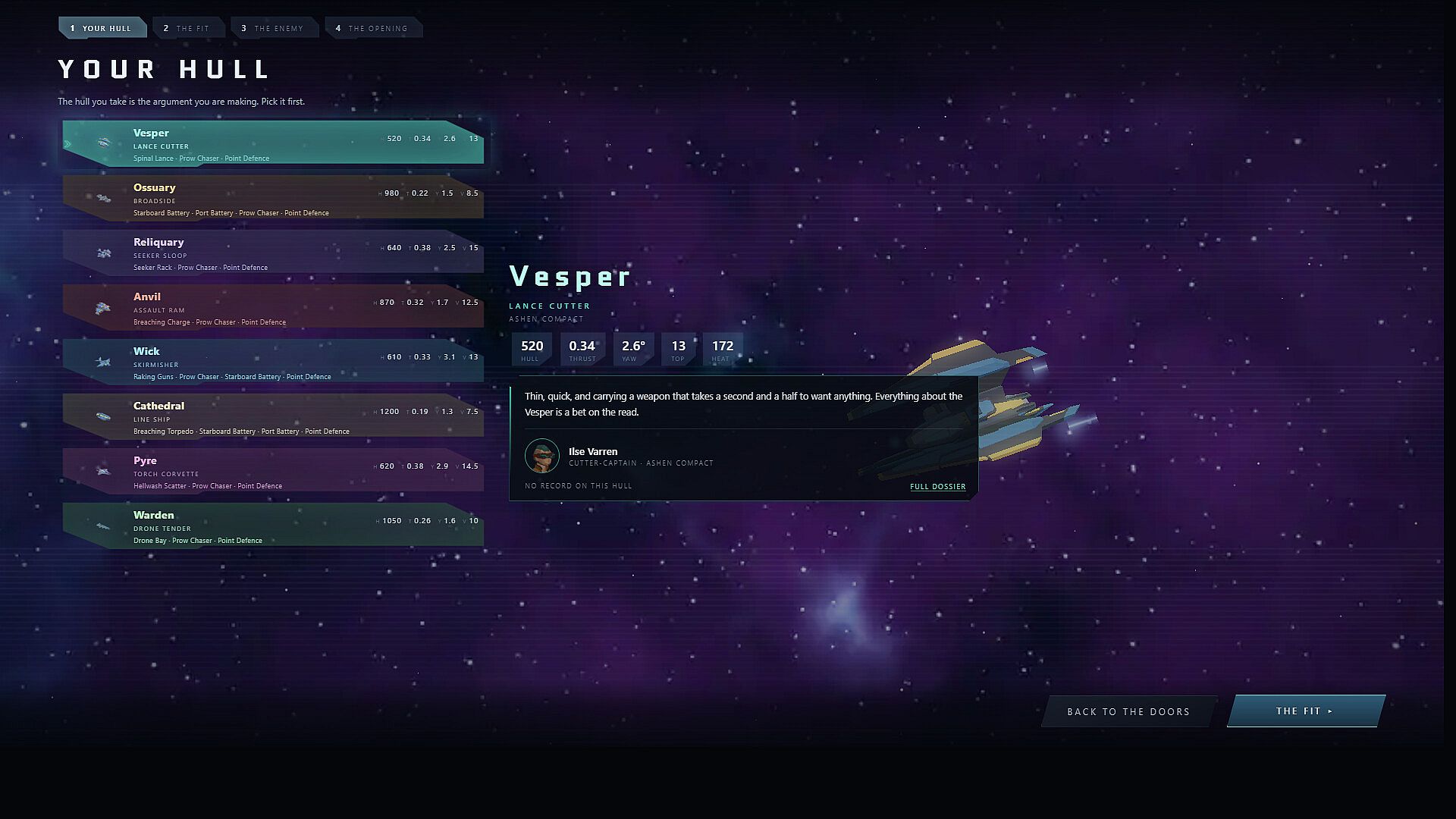
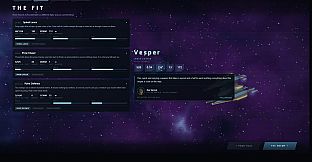
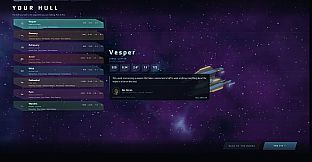
Hull choice defines the available options and playstyle. Eight distinct hulls exist, each with three hardpoints that support spinal lances, prow chasers, batteries, seeker racks, point defence, flares, and smoke. A lance cutter favors clean firing lines, while a broadside ship needs proper angles and an assault ram closes distance aggressively. Alternate equipment on each hull further customizes heat capacity, effective range, and defensive windows.
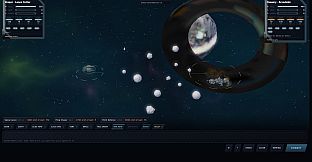
Weapon effects interact with ship systems in layered ways. Batteries strip shields, lances penetrate shield arcs, and seekers demand immediate responses. Point defence clears incoming threats but occupies a firing window. Damage accumulates as surge, which can overdrive subsequent weapons, while heavy hits stagger the target and disrupt its queued plan. Asteroids provide cover and block lines of fire. Momentum carries forward, requiring additional burns to reverse velocity, turning position and line of sight into limited resources.
Shield arcs, heat buildup, surge mechanics, burst movement, flares, smoke, and system damage all feed into the decision-making process. Information from prior exchanges becomes a tool: an opponent who has revealed a preferred bearing can be forced into a poor arc or a choice between defense and offense.
Game Modes
Engagement supports several formats built around its one-on-one duels. Machine opponents provide solo practice against AI captains. Local same-screen duels allow two players to compete directly on the same device. Best-of-three series structure matches into short sets with potential for comeback play. A gauntlet mode presents sequential challenges, and saved-duel viewing lets players review completed engagements to study timing and decision trees.
Opening scenarios set the initial conditions for each duel. Long Approach starts ships far apart with time to build velocity. Knife Range places them close for immediate exchanges. Crossing Pass and Stern Chase alter relative motion and pursuit dynamics. The Reef introduces asteroid fields as obstacles and cover, while The Drift involves recovering control of a disabled vessel. These setups combine with the eight hulls and their weapon fits to create varied tactical problems without requiring large maps or additional players.
Hulls and Equipment
Each of the eight hulls carries unique strengths tied to its hardpoints and alternate loadouts. Vesper, Ossuary, Reliquary, Anvil, Wick, Cathedral, Pyre, and Warden differ in how they handle speed, firepower arcs, and defensive options. Spinal lances reward precise alignment, seeker racks apply pressure from distance, and point defence plus flares create layered protection against incoming threats. Equipment swaps alter the heat budget and the ranges at which a hull performs best, encouraging players to adapt loadouts to specific openings or opponent tendencies.
System damage adds another layer, as critical hits can impair future commands and force replanning under pressure. Surge from accumulated damage offers temporary overdrive potential but risks instability if not managed.
Is It Worth Playing?
Engagement targets players who enjoy deliberate, information-driven tactical combat in a compact format. Its queued-order system and alternating replans reward anticipation and adaptation over twitch aiming or resource grinding. The variety of hulls, openings, and equipment creates replayability within short matches, while modes such as gauntlet and best-of-three provide structured progression and local competition.
Because the game remains in pre-release with a planned launch in Q4 2026 and no user reviews available yet, any final assessment depends on post-launch performance and balance updates. Those drawn to strategic space duels with clear cause-and-effect between commands and outcomes will likely find the core loop compelling once it arrives on PC. Machine opponents and saved-duel viewing further support solo study of the systems before moving into player matches.