


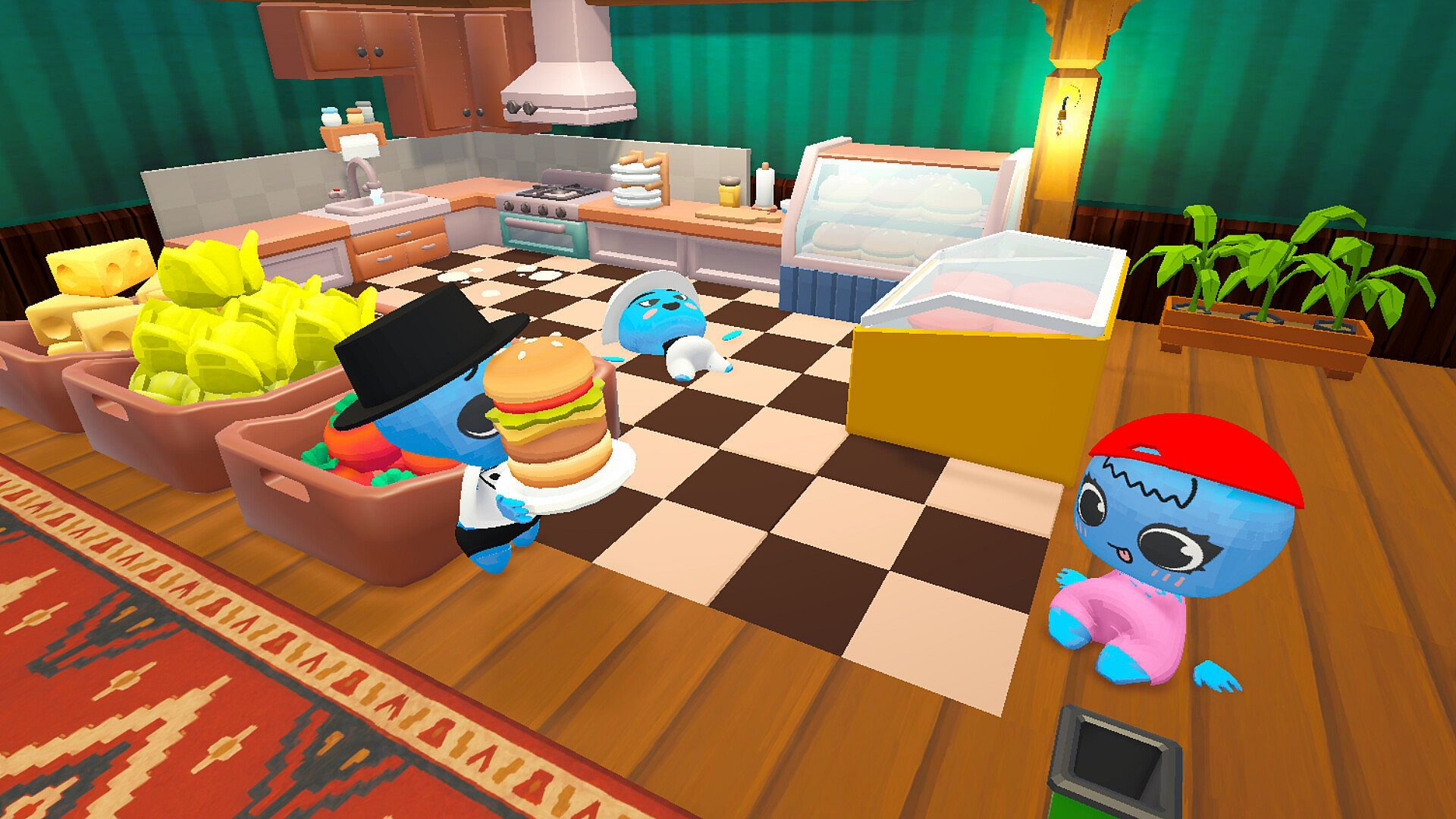
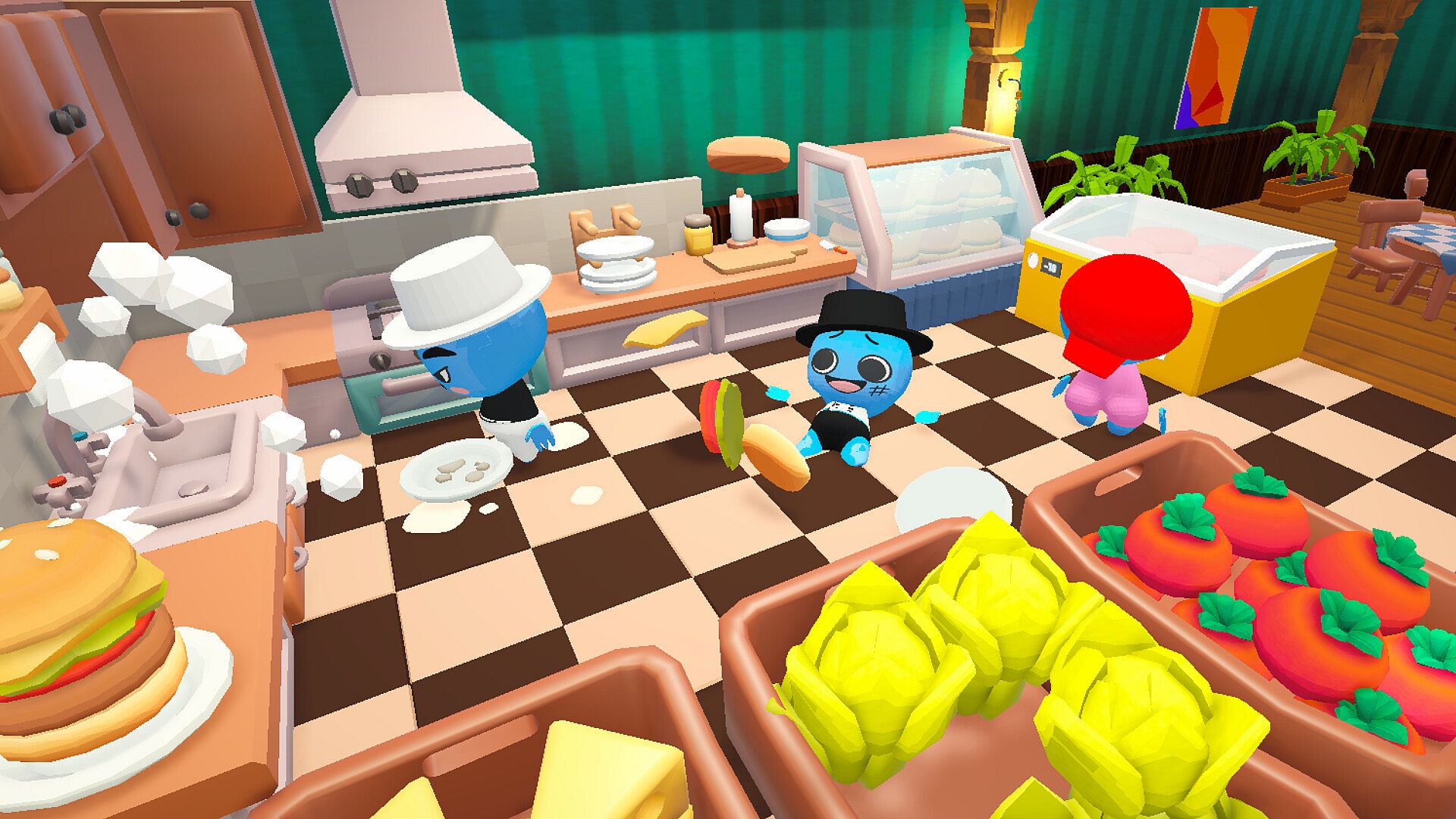
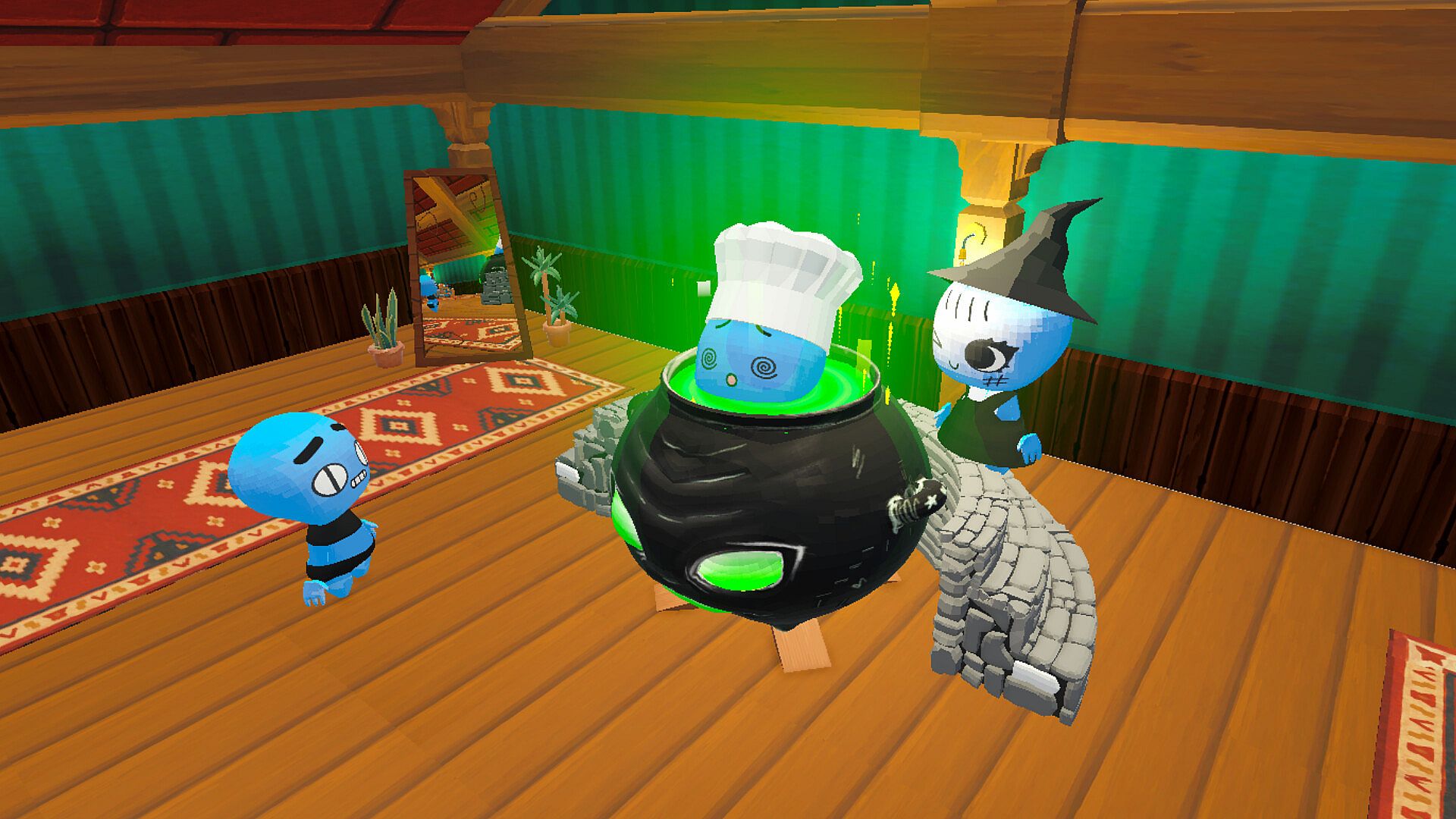


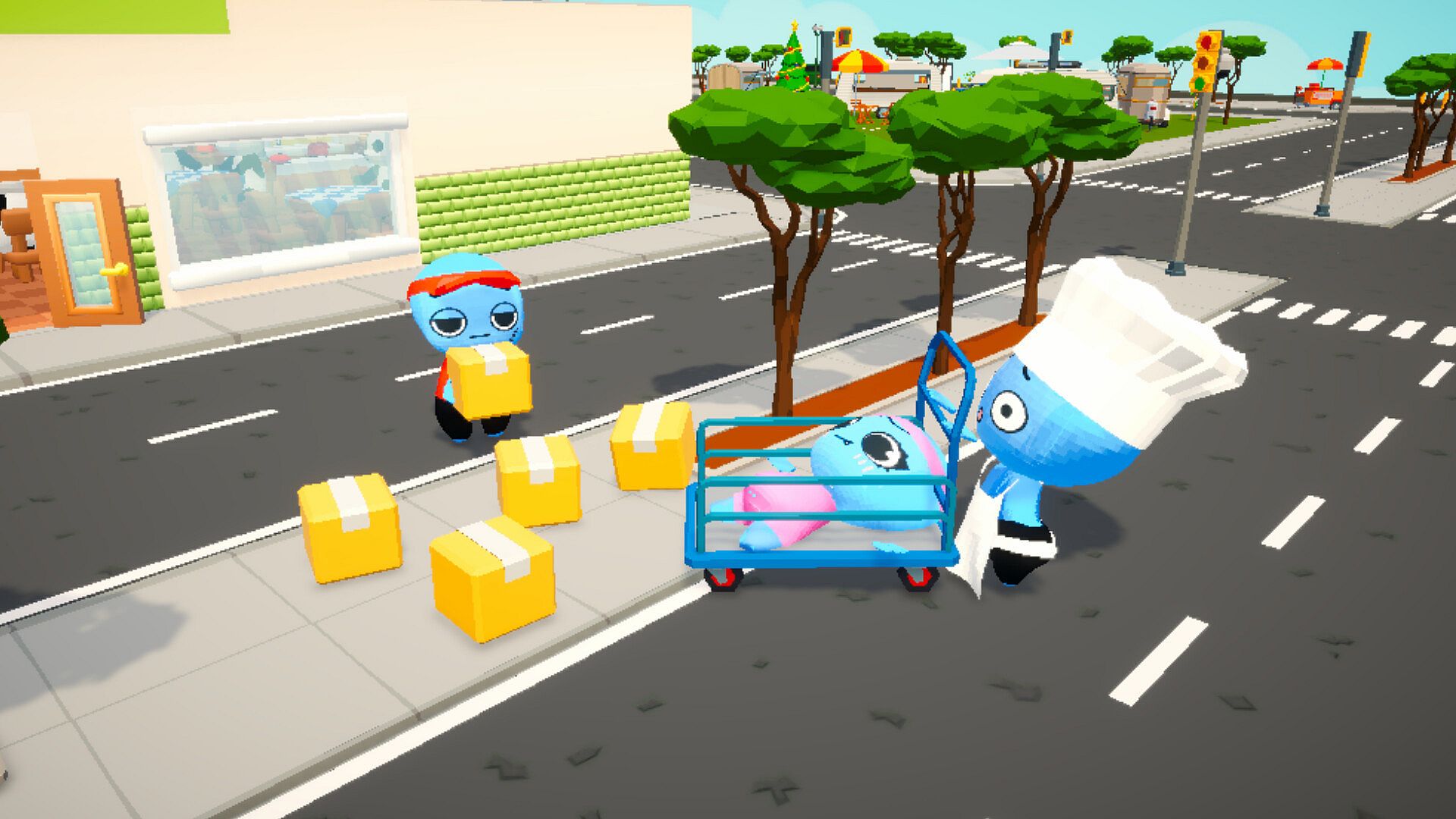






Ear We Go is an action strategy indie casual game built around cooperative restaurant management on PC. Players take on roles in a fragile order chain where a single slip can collapse the entire operation. The core loop centers on passing customer orders through a sequence of positions, preparing meals under pressure, and delivering them before time runs out. Failure at any step risks shutting down the restaurant and ending the session.
Gameplay
The experience revolves around maintaining a continuous flow from customer to kitchen and back. One player acts as the waiter who receives orders directly from diners. That information moves to the self-service cashier, who relays it onward to the chef. The chef prepares the meal and returns it along the same path for final delivery. Each role demands precise timing and attention, because a misheard order, delayed preparation, or dropped item disrupts the entire sequence.
Card choices introduce variety into every session. Selecting different cards modifies how the restaurant operates, shifting the balance of tasks or introducing new constraints. A well-timed card can streamline certain steps, while an ill-suited one can amplify existing pressures and turn a steady shift into disorder. Positioning matters as much as execution, since characters can only exchange information within specific zones of the restaurant. Players must coordinate movement and handoffs carefully to keep the chain intact.
Cooperation extends to one through seven participants. Smaller groups require individuals to handle multiple stations or switch roles fluidly, while larger teams divide responsibilities more narrowly. The limited communication range forces strategic placement and quick decisions about who moves where at any moment.
Game Modes
The primary focus remains on cooperative sessions that emphasize survival through the order chain. Runs vary naturally because card selections alter restaurant dynamics from one attempt to the next. This creates repeated playthroughs that feel distinct without requiring separate named modes. Players coordinate across the full team size range, adapting to the constraints of each configuration and the evolving challenges introduced by card effects.
Success depends on keeping food moving efficiently before deadlines expire. When the chain breaks repeatedly, the restaurant fails and the current run concludes. The emphasis stays on real-time decision making, spatial awareness, and reliable handoffs rather than competitive scoring or solo progression systems.
Core Mechanics and Challenges
Every element of the restaurant ties into the central survival objective. Orders must travel accurately through each station without distortion. Preparation happens under time pressure, and returns must reach customers promptly. Small errors compound quickly, turning manageable workloads into widespread chaos. Card selections serve as the main source of replayability, reshaping task priorities or adding complications that demand fresh coordination strategies.
Team size directly influences how roles are distributed. With fewer players, individuals often cover multiple positions and must anticipate needs across the chain. Larger groups allow specialization but increase the risk of miscommunication when players cannot speak freely outside designated areas. Spatial planning becomes a tactical layer equal in importance to the cooking and ordering steps themselves.
Who the Game Suits
Ear We Go appeals to groups that enjoy short, high-tension cooperative sessions where communication and positioning matter as much as individual skill. The casual accessibility of the premise combines with strategic depth from card choices and role coordination. Sessions scale with player count, making it suitable for both intimate two-person runs and larger parties that test organizational skills under pressure.
The indie scope keeps the focus narrow on the restaurant chain loop. There are no expansive single-player campaigns or competitive ladders. Instead, the draw lies in repeated cooperative attempts that reward precise teamwork and adaptive thinking when cards change the rules mid-session.
Is It Worth Playing?
The game delivers a focused cooperative experience centered on chain management and limited communication. Groups that value quick setup, variable runs through card effects, and the tension of keeping a fragile system running will find consistent engagement. The mechanics reward clear coordination and spatial awareness without requiring extensive tutorials or prior knowledge of similar titles.
Players seeking long-term progression systems, extensive single-player content, or competitive multiplayer structures may find the scope limited. The strength lies in its straightforward premise executed through repeatable cooperative pressure. Those who enjoy managing shared tasks under time constraints and adapting to changing conditions will likely return for additional runs as card combinations create fresh challenges each time.