

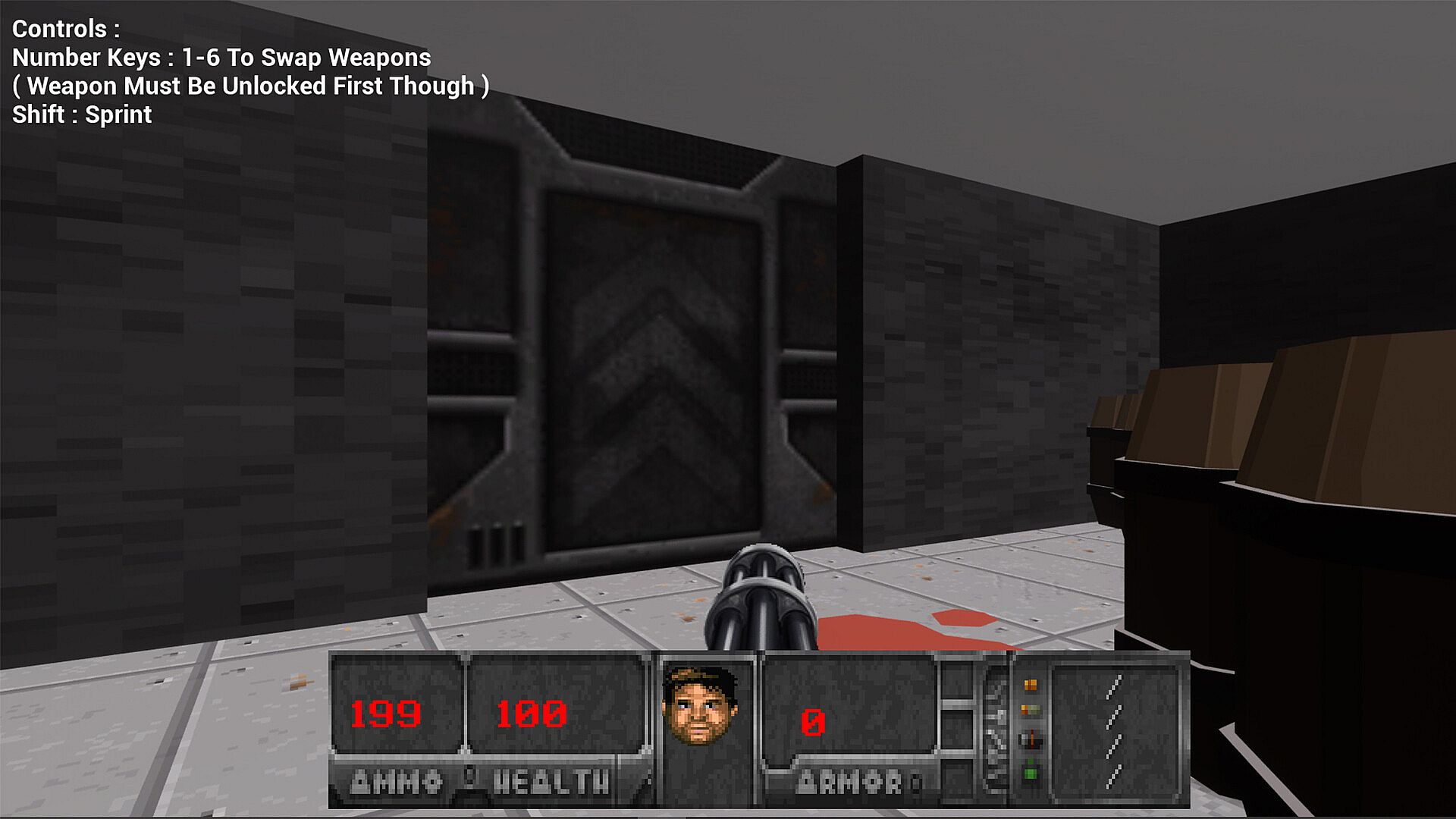
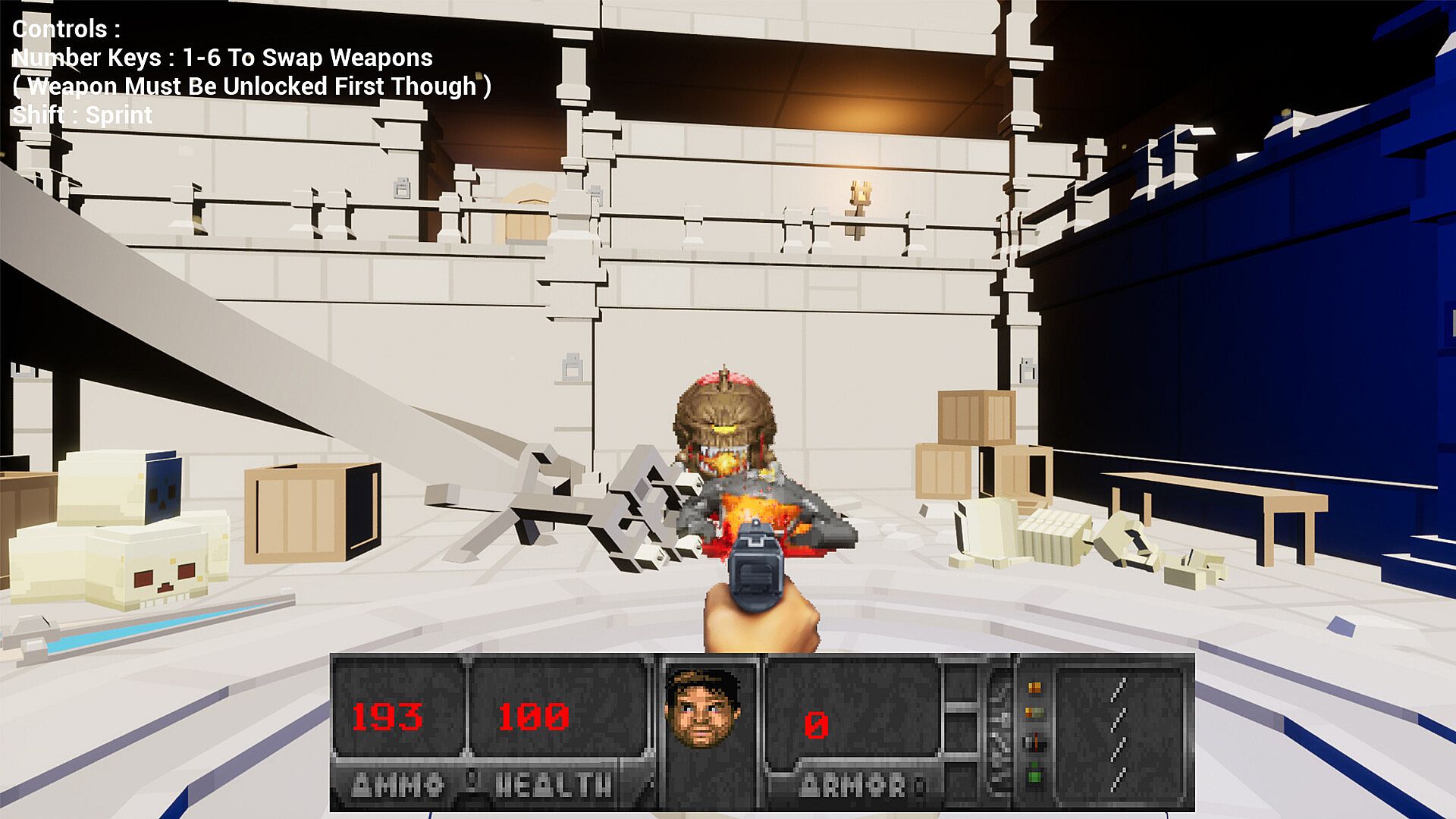
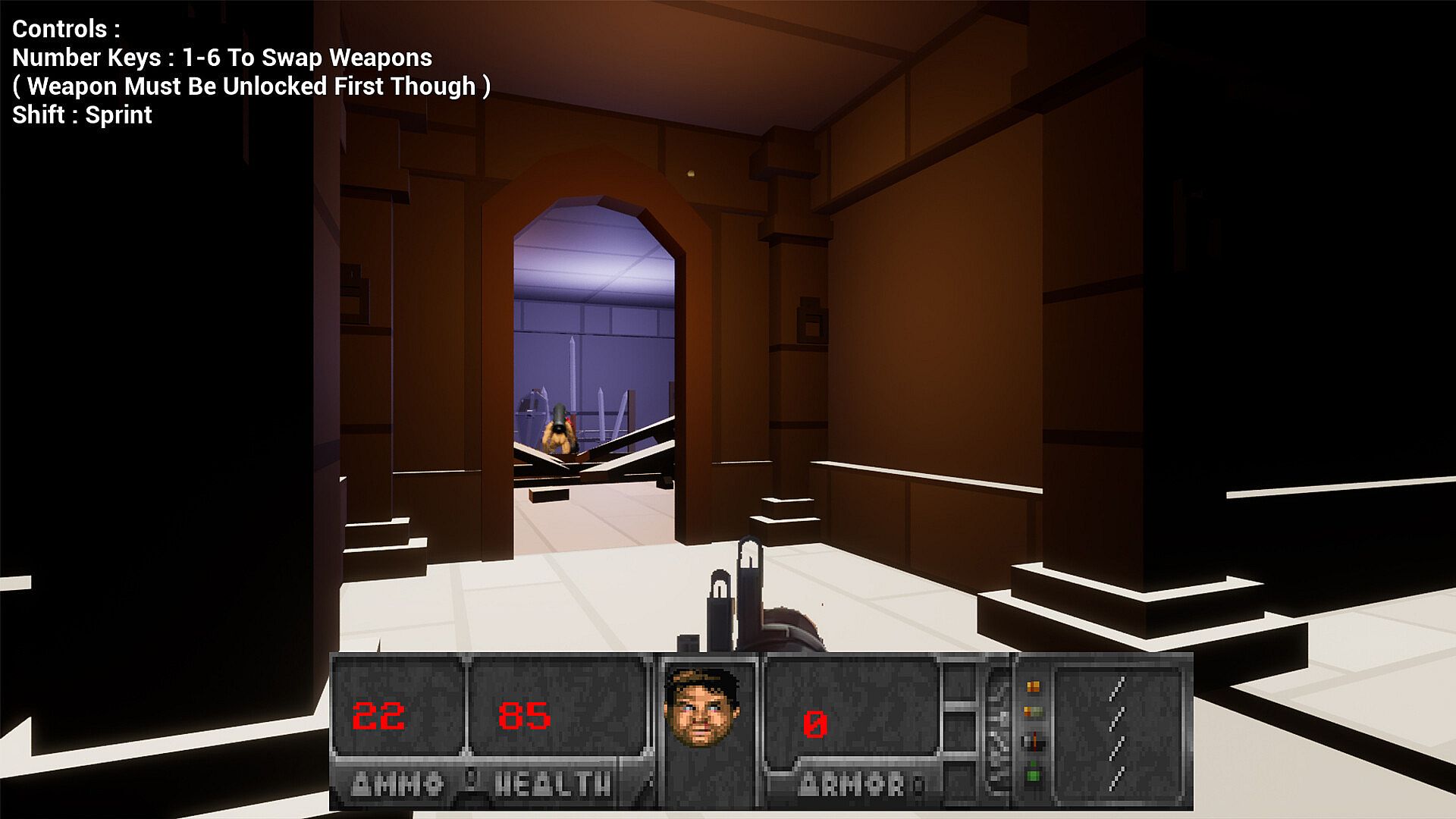
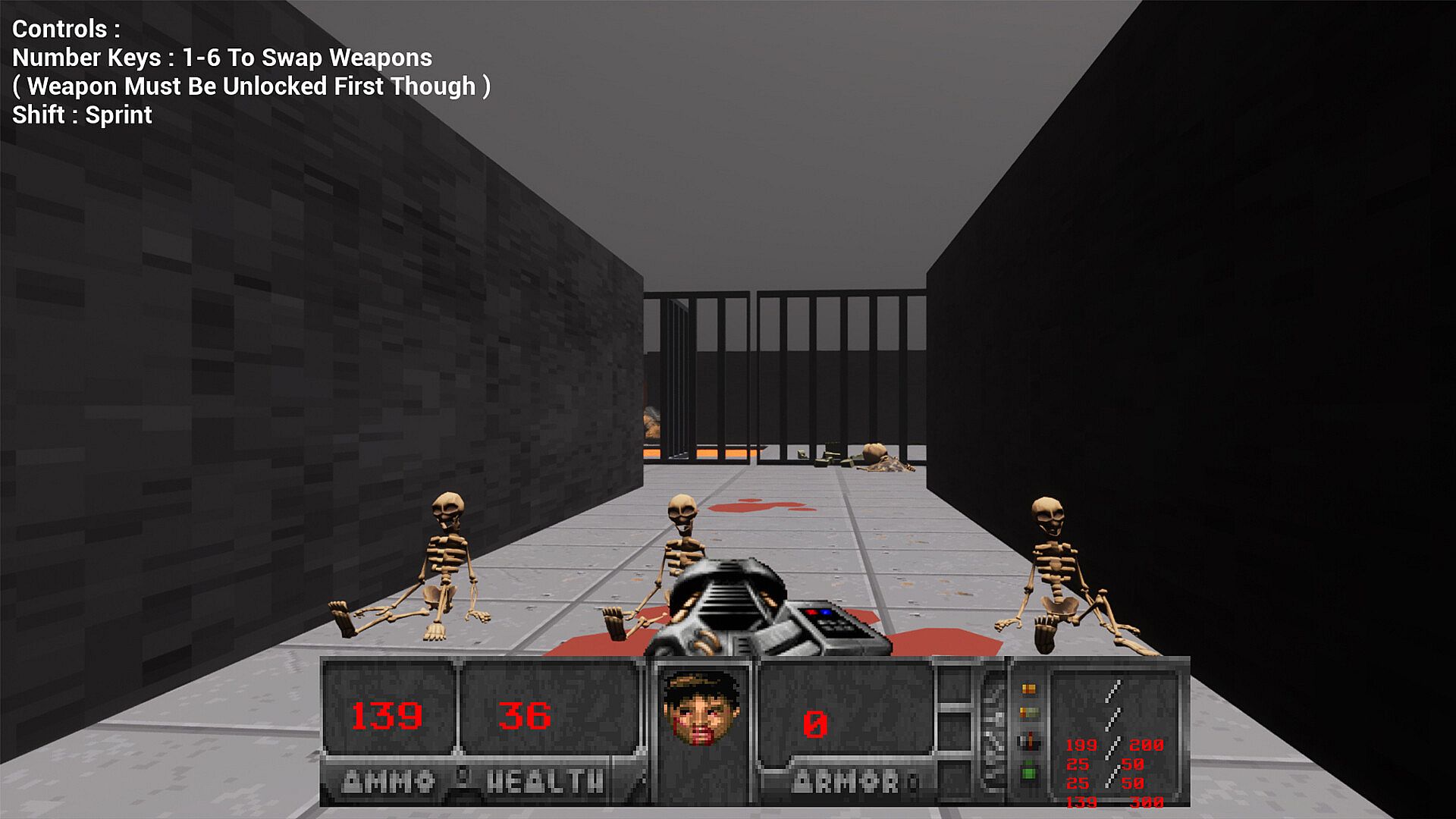
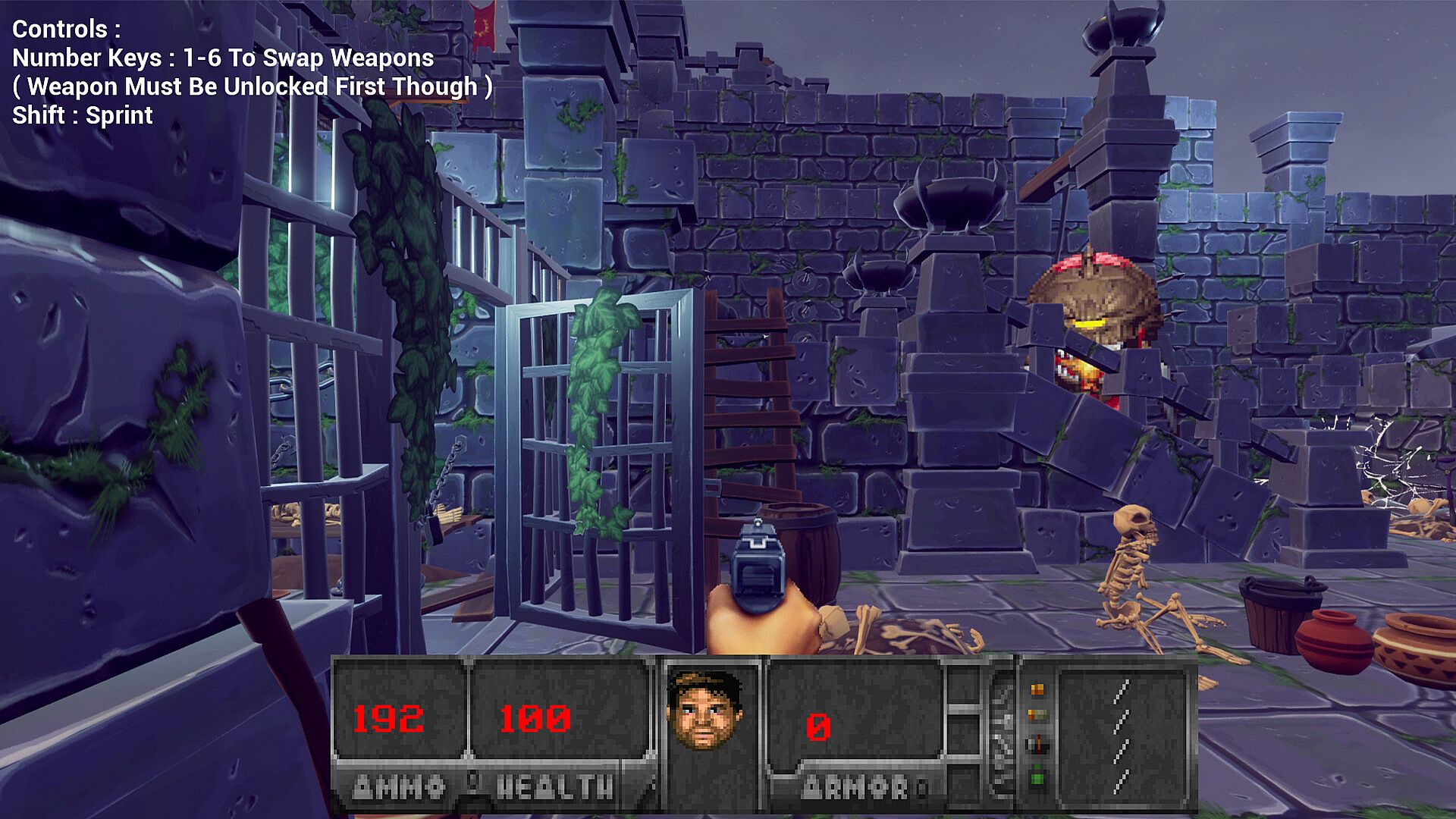
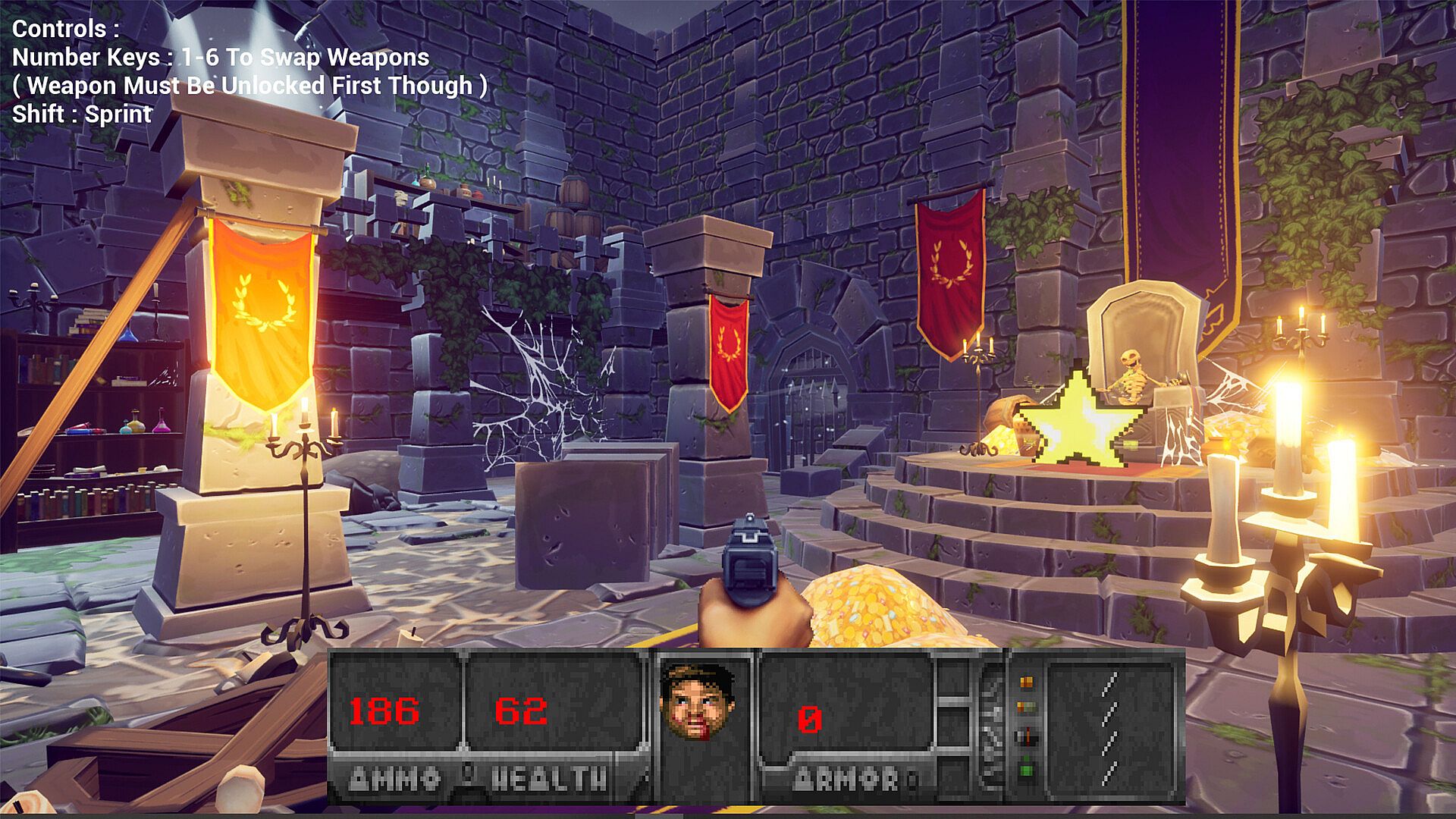
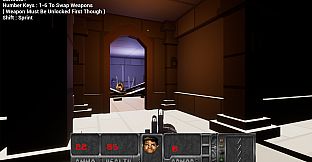
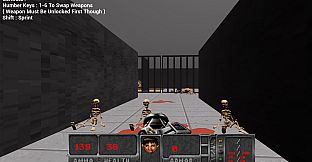
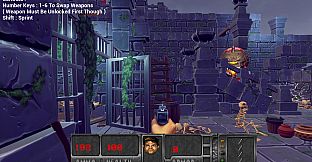
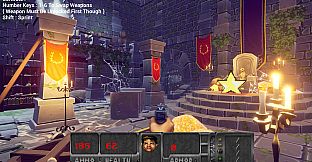
Doomlander is a retro-style first-person shooter that blends action and adventure elements on PC. Players take control of a super soldier tasked with navigating six distinct maps to locate stars that complete each level. The experience emphasizes exploration, resource management, and combat against a small roster of enemy types in environments reminiscent of classic shooters.
Gameplay
The core loop centers on progressing through linear levels by collecting stars while managing limited ammunition across a growing arsenal. Players begin each level equipped only with a pistol and must locate additional weapons such as a chainsaw for melee encounters, a machine gun, a shotgun, an electric gun, and a rocket launcher. Ammo conservation becomes essential because every firearm has finite reserves, forcing careful selection during fights.
Three enemy varieties populate the maps: melee-focused warriors that close distance quickly, shooting big brain monsters that fire from range, and shooting warrior enemies that combine movement with projectiles. A flamethrower enemy adds another threat that demands positioning awareness. Blue and red doors block progress and require corresponding keys found within the level to unlock, adding a light layer of backtracking and exploration to the otherwise straightforward objectives.
Side content includes locating one golden pile per level. These collectibles unlock Steam achievements and provide an optional completionist goal without altering the main path. The retro aesthetic extends to enemy and weapon designs that echo the visual and mechanical simplicity of early Doom titles while incorporating the described mechanics.
Game Modes
Doomlander operates as a single-player campaign structured around its six themed levels. Each map functions as a self-contained stage where the primary goal remains consistent: locate the required stars to finish the level. There are no separate named modes or multiplayer components described. Progression flows sequentially through the maps, with weapon pickups and key hunts integrated into the level design rather than presented as distinct playlists or variants.
The structure supports replay for achievement hunting via the golden piles, but the fundamental experience stays focused on the campaign's exploration and combat loop across the fixed set of levels.
Weapons and Combat
Combat revolves around switching between the starting pistol and collected firearms while watching ammo counts. The chainsaw serves as a close-range option when ammunition runs low, while longer-range tools like the shotgun, machine gun, electric gun, and rocket launcher handle different enemy behaviors. Limited reserves encourage mixing weapons rather than relying on a single favorite throughout a level.
Enemy encounters mix direct confrontation with the need to manage multiple threats simultaneously. Melee enemies pressure players up close, ranged shooters force cover usage or quick movement, and the flamethrower variant requires maintaining distance. Keys for colored doors often sit behind optional paths or guarded areas, tying exploration directly into combat flow.
Is It Worth Playing?
Doomlander suits players who enjoy short, focused retro FPS campaigns with clear objectives and light collection elements. The six-level structure keeps sessions manageable, and the emphasis on ammo management plus key hunts adds variety without overcomplicating the formula. Those seeking a modern take on classic shooter mechanics in a compact package will find the described systems align with that preference. Availability on PC makes it accessible for fans of the genre who appreciate straightforward progression over expansive features.