


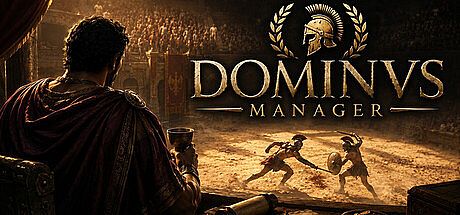


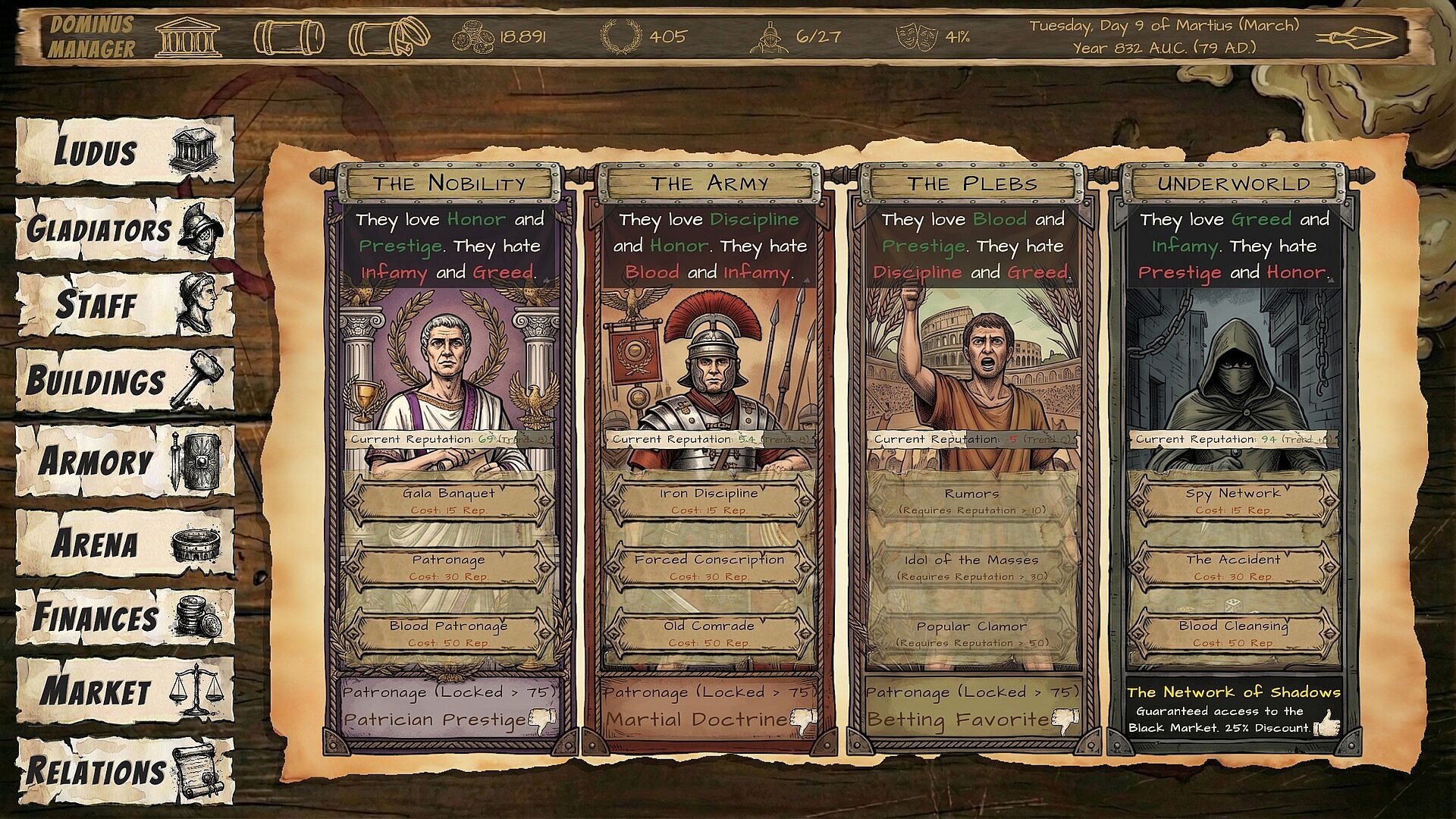
Dominus Gladiatus places players in charge of a gladiator school during the Roman Republic era. This strategy, indie, RPG, and simulation title on PC tasks users with transforming a basic ludus into a dominant operation through careful oversight of fighters, resources, and competition.
Gameplay
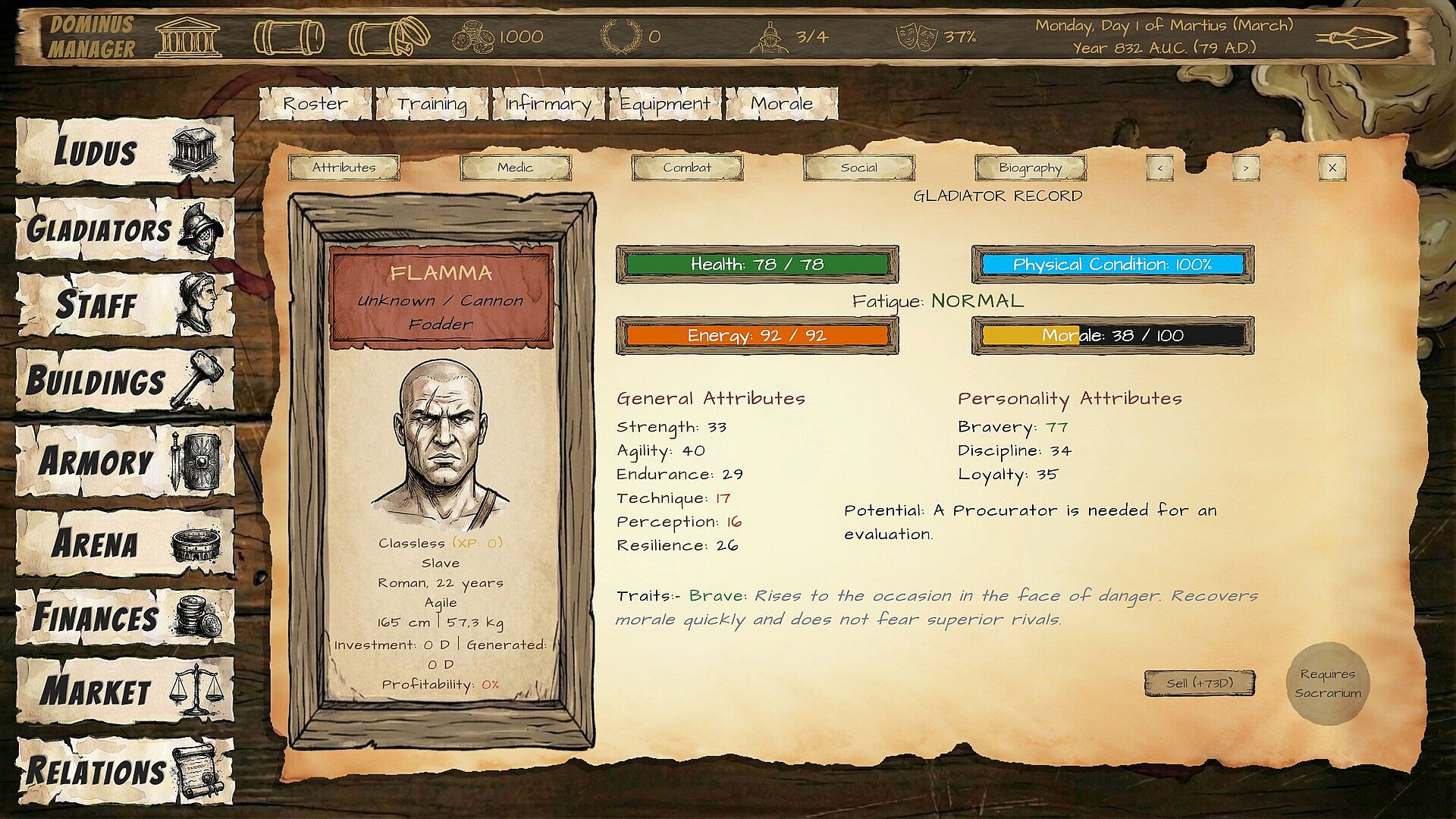
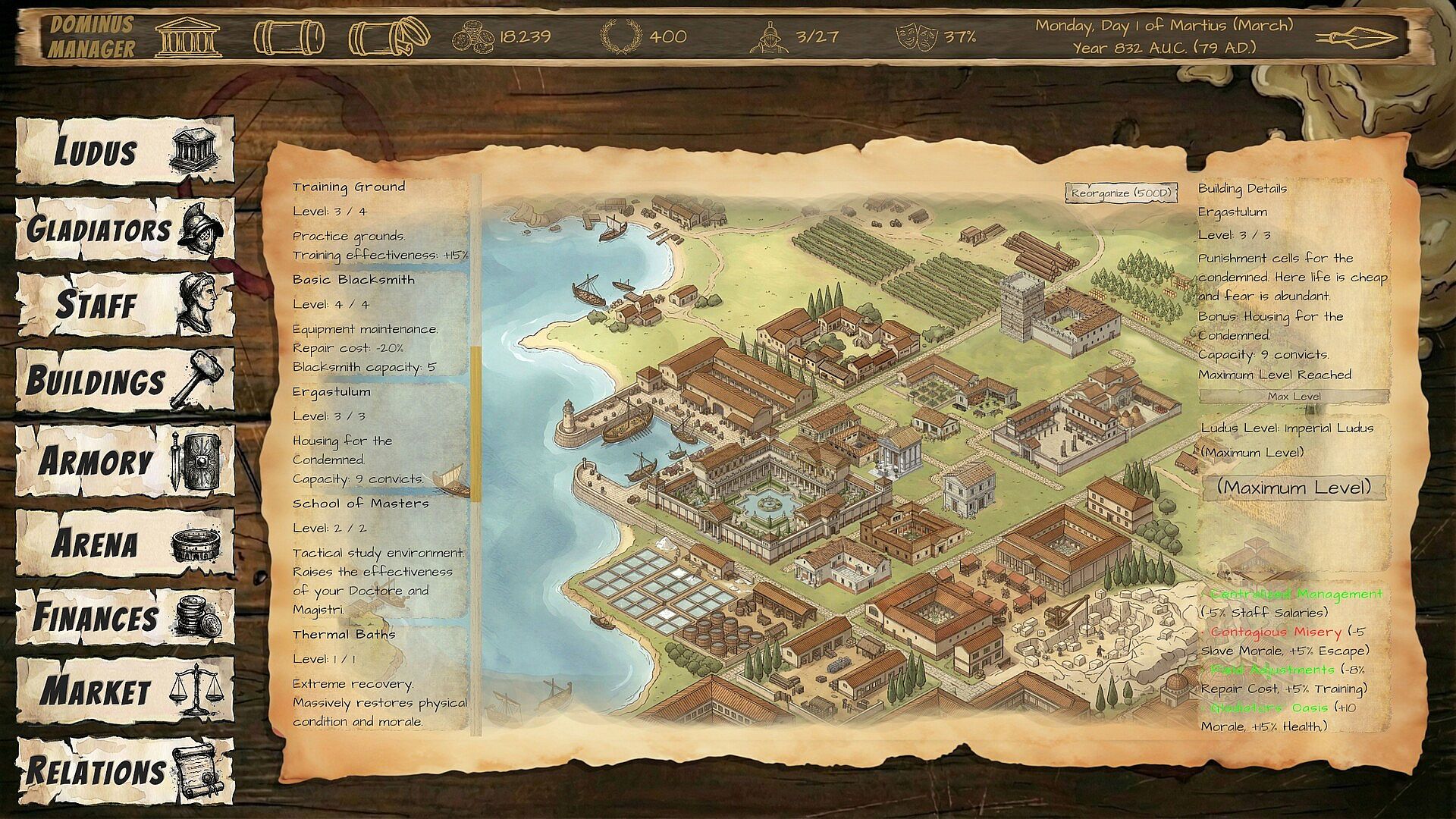
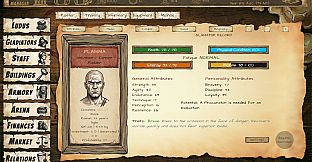
The core loop centers on daily management decisions that prepare gladiators for arena appearances. Players recruit candidates from various backgrounds, assign training regimens, and monitor physical condition alongside mental state. Facilities such as training areas, kitchens, and medical rooms require upgrades to support larger groups and better recovery rates. Equipment selection and skill development directly influence performance once matches begin.
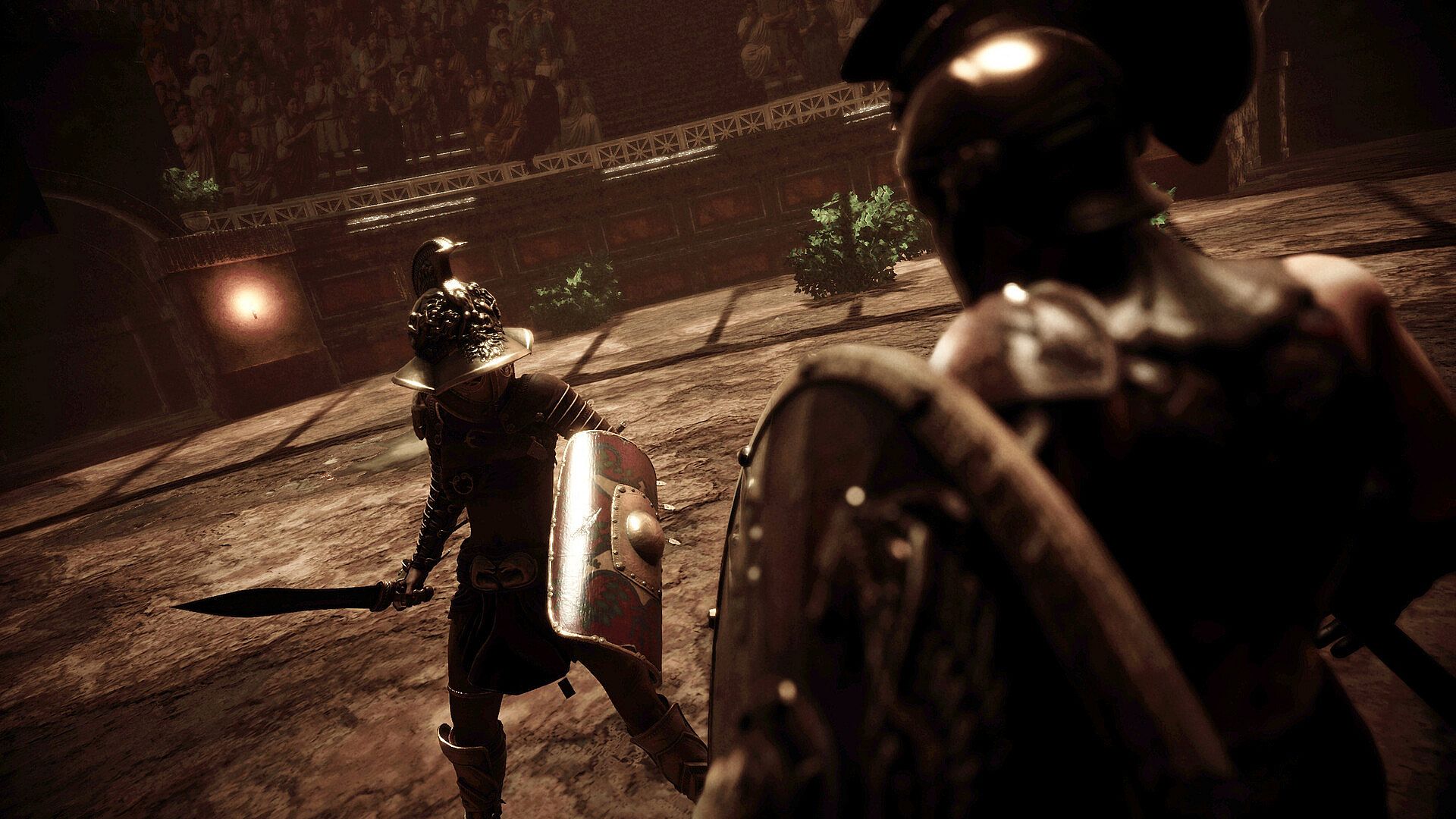
Combat unfolds as tactical auto-battler sequences featuring individual duels and group engagements. Preparation determines outcomes more than real-time input, with formations, weapon choices, and fighter abilities shaping results. Audience reactions can sway post-fight decisions on survival, adding another layer to each event. Rival schools run by artificial intelligence pursue their own rosters and schedules, creating ongoing pressure across the campaign.
Game Modes
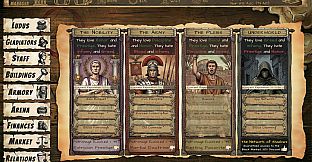
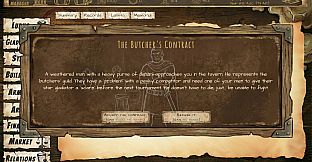
The primary experience follows a single-player campaign structured around a season of tournaments. Participants select one of several available Domini to lead while the remaining options serve as competing AI-controlled schools. Progress involves advancing through scheduled exhibitions and private contracts while balancing short-term gains against long-term stability of the roster.
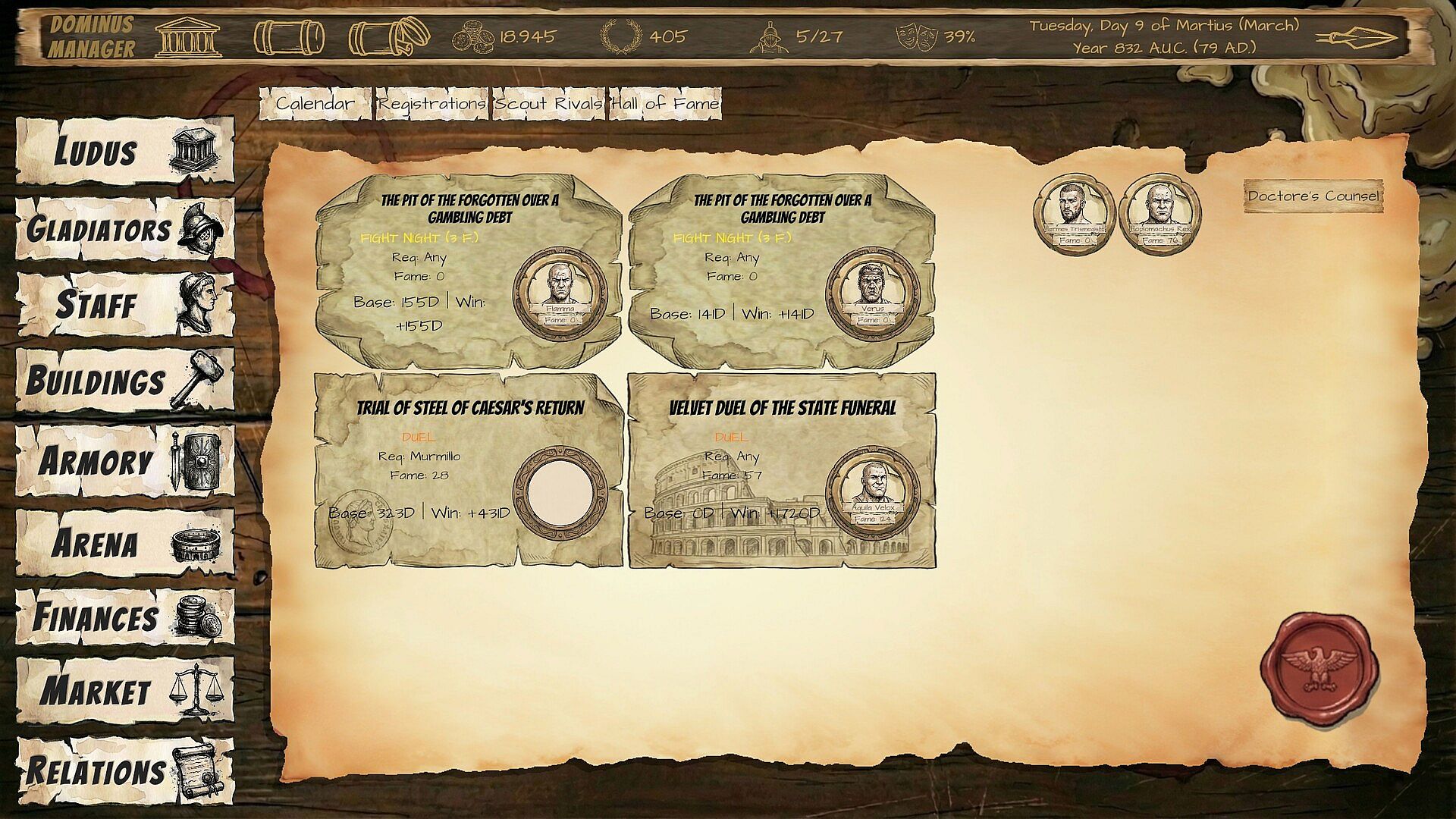
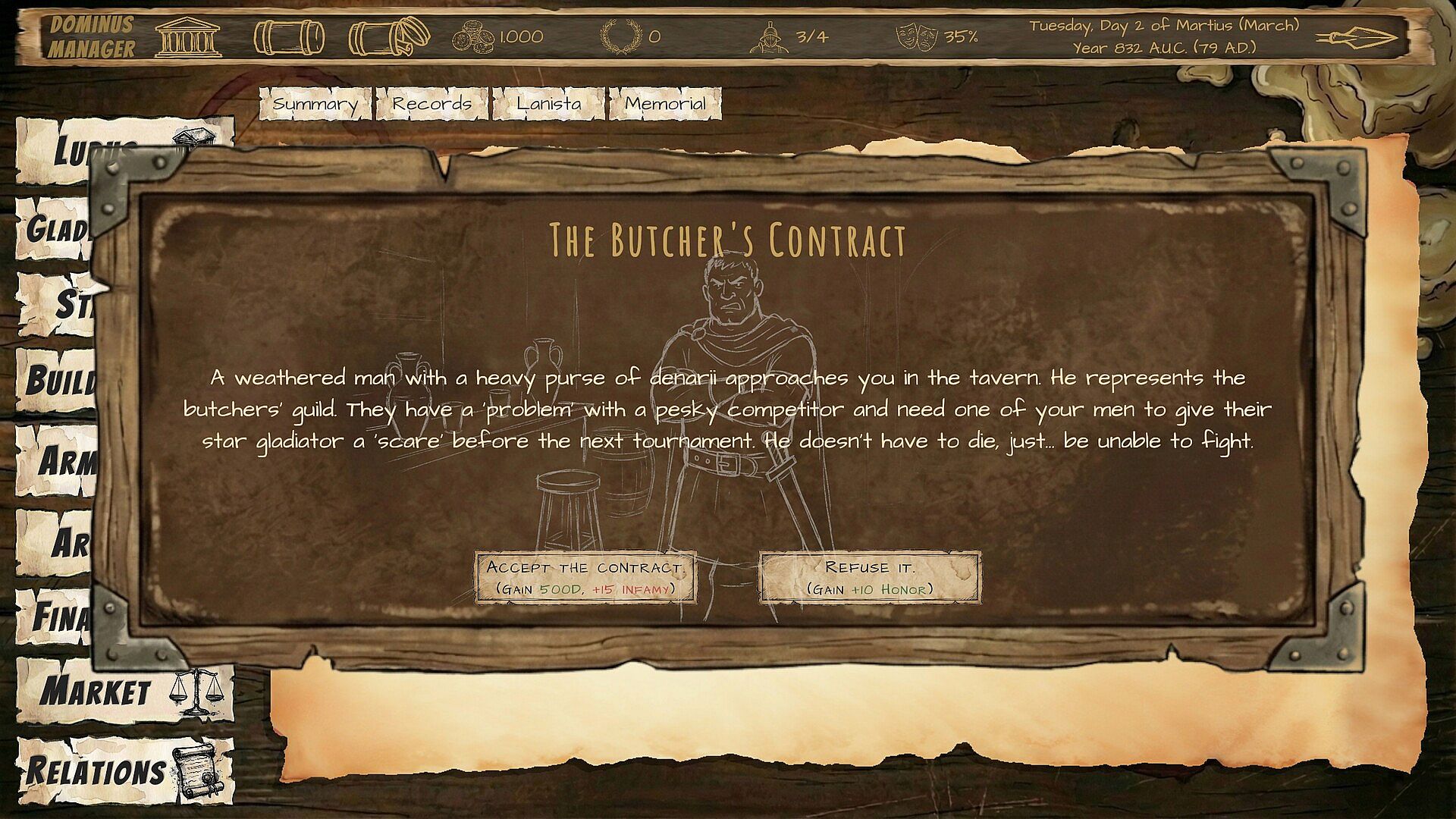
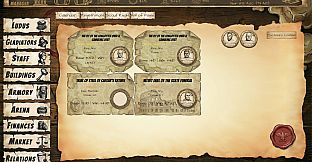
Preparation occurs on a calendar that highlights upcoming public events and optional side opportunities. Success builds prestige and income needed for expansion, though setbacks from injuries or poor morale can disrupt momentum. No separate multiplayer or additional modes appear in the current release.
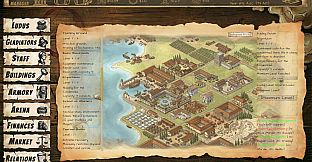
Building and Managing the Ludus
Expansion focuses on practical infrastructure improvements that support fighter development. Hiring staff members helps handle daily operations, freeing attention for scouting new talent and refining existing champions. Each gladiator carries individual traits that respond to workload, rest periods, and treatment of wounds sustained in prior bouts.
Financial tracking remains essential, as earnings from victories fund further growth. Overextending resources risks losing key fighters to exhaustion or unresolved injuries, forcing trade-offs between aggressive schedules and sustainable routines.
Is It Worth Playing?
The game launched on November 5, 2026, across PC via Steam along with PlayStation 5, Xbox Series X|S, and Nintendo Switch. A free demo was available prior to release for those wanting to test the management systems. One early review scored the title 7 out of 10, highlighting the strong central concept of running a gladiator school while noting that the loop can feel repetitive after initial hours and offers limited replay incentive without further updates.
This experience suits players who enjoy resource management, roster building, and indirect competition against AI opponents in a historical setting. Those seeking deeper strategic layers or varied endgame content may find the current scope modest. At its listed price point, the title delivers a focused simulation that rewards consistent attention to fighter welfare and scheduling. Continued developer support could address the noted shortcomings and extend its appeal.












